 how-to
Cast Iron Pan Steak: Sear, Cook Time & Doneness
Table of Contents
- What You'll Need Before You Start
- How to Sear Steak in Cast Iron
- Cast Iron Pan Steak Temperature: Preheating and Heat Control
- How Long to Cook Steak in a Cast Iron Skillet
- Finishing in the Oven and Managing Smoke
- Cleaning Cast Iron After Cooking Steak
- Troubleshooting: Gray Crust, Sticking, and Warping
- Conclusion
- Frequently Asked Questions
Last Updated: October 18, 2026
What You'll Need Before You Start
A cast iron pan steak turns out best with the right gear and a dry piece of meat.
Here is what we reach for at Browns Outpost before the burner goes on:
- A cast iron skillet, 25 to 30 cm
- Tongs with a firm grip
- A meat thermometer
The 10" Shallow Skillet suits most steaks: its low walls give the meat full contact with the cooking surface, which builds a real crust. For families, the 3-Piece Fry Pan Set covers a single steak and a full dinner.

Pick a Cut That Fits the Pan
Sirloin and chuck eye are the best picks for a cast iron pan steak; both fit a 25 cm skillet without curling.
Avoid cuts thicker than about 4 cm for stovetop-only cooking; they scorch outside before the middle catches up. Thick ribeyes and porterhouse work better with an oven finish, covered below.
Look for even thickness; an uneven cut cooks unevenly no matter how good the pan is.
Dry the Surface and Season It
Pat the steak completely dry with paper towels. Moisture is the enemy of browning: wet meat steams and turns gray.
Season both sides with salt and pepper right before it hits the pan, or season early and let it rest uncovered.
How to Sear Steak in Cast Iron
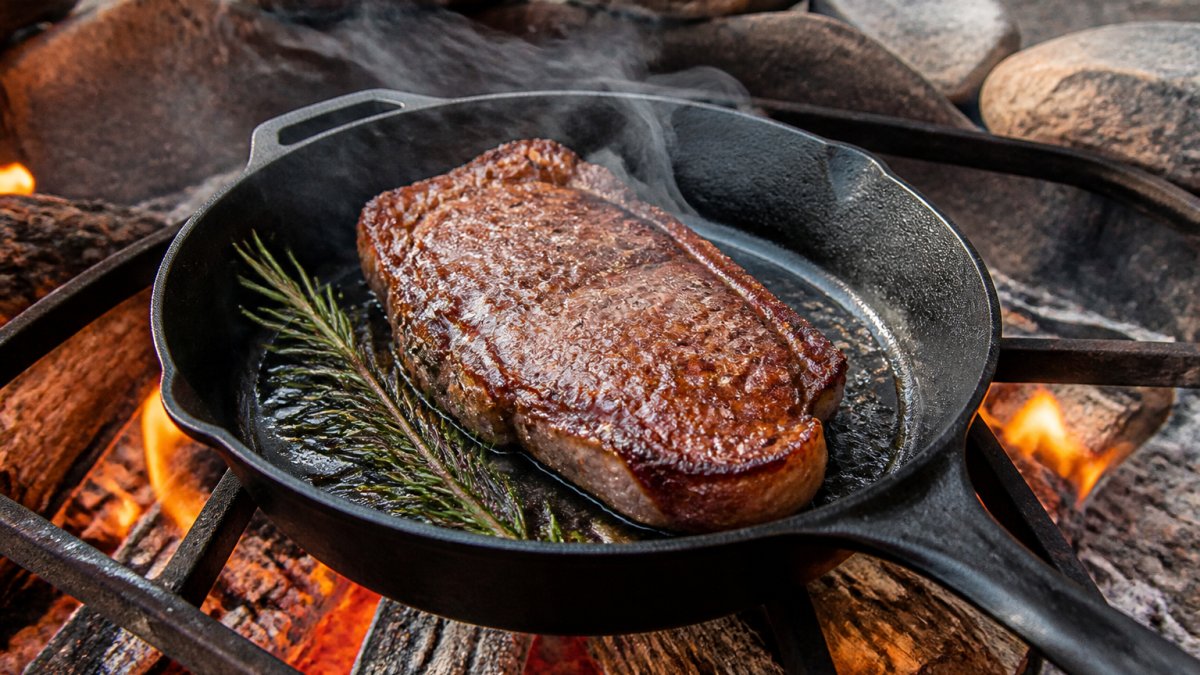
Searing steak in cast iron means cooking it over high heat in a preheated pan until a dark crust forms, then finishing to your target doneness.
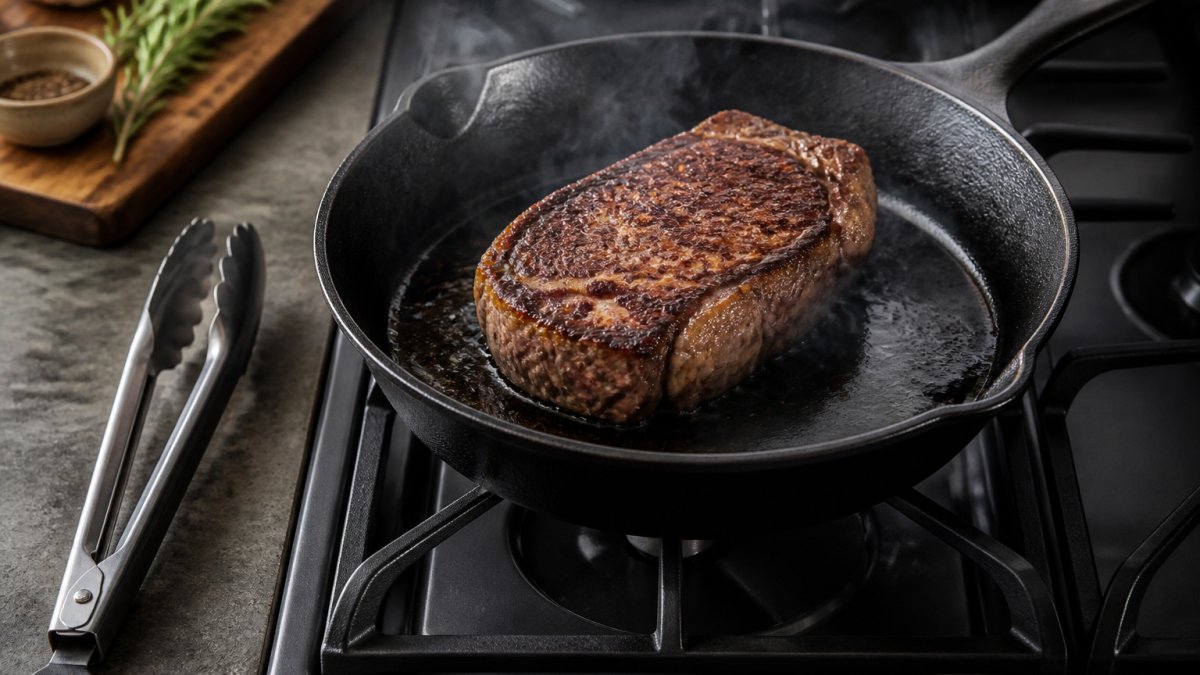
Follow these steps:
- Heat the dry pan over medium-high for 5 to 7 minutes.
- Add a thin film of oil once the pan is hot.
- Lay the steak down away from you to avoid splatter.
- Leave it alone for 2 to 3 minutes to build crust.
- Flip once and sear the other side.
- Add butter, garlic, and herbs, then baste.
- Move to the oven if the cut is thick.
Press the steak down gently for the first few seconds so the whole face browns evenly.
Cast Iron Pan Steak Temperature: Preheating and Heat Control
The right cast iron pan steak temperature starts with a fully preheated pan. Heat a dry skillet over medium-high for 5 to 7 minutes; a drop of water should sizzle and vanish on contact.
Heat control separates a good crust from a burnt one:
- Too hot: the outside blackens while the inside stays raw.
- Too cool: the steak releases water and boils instead of browning.
- Just right: steady sizzle, no billowing smoke, steady browning.
Cast iron holds heat better than steel, so drop the burner a notch after the first flip.
How Long to Cook Steak in a Cast Iron Skillet
How long to cook steak in a cast iron skillet depends on thickness and target doneness. A 2.5 cm steak needs about 3 to 4 minutes per side for medium-rare.
Doneness Temperatures and Thermometer Guidance
These are the target internal temperatures for beef steak. Pull the steak 3 to 6°C below the target and let carryover cooking finish the rise during rest.
| Doneness | Target Internal Temperature | Pull Temperature (before rest) |
|---|---|---|
| Rare | 49 to 52°C | 46 to 49°C |
| Medium-rare | 54 to 57°C | 51 to 54°C |
| Medium | 60 to 63°C | 57 to 60°C |
| Medium-well | 65 to 68°C | 62 to 65°C |
| Well-done | 71°C and up | 68°C and up |
Where to measure: Insert the probe into the thickest part, away from bone, fat, and the pan surface.
When to start checking: Probe about 2 minutes before the low end of your estimated time.
Timing by Thickness and Doneness
Times assume a preheated cast iron skillet over medium-high heat and a dry, seasoned steak. Add roughly 1 minute per side for every extra 0.5 cm of thickness.
| Thickness | Rare | Medium-rare | Medium | Medium-well | Well-done |
|---|---|---|---|---|---|
| 1.5 cm | 1.5 to 2 min/side | 2 min/side | 2.5 min/side | 3 min/side | 3.5 min/side |
| 2.5 cm | 2 to 2.5 min/side | 3 to 4 min/side | 4 to 5 min/side | 5 to 6 min/side | 6 to 7 min/side |
| 3.5 cm | 3 min/side | 4 to 5 min/side | 5 to 6 min/side | 6 to 7 min/side | 7 to 8 min/side |
| 4 cm+ | Use oven finish | Use oven finish | Use oven finish | Use oven finish | Use oven finish |
Thin cuts around 1.5 cm go from perfect to overcooked fast, so watch closely. Thick cuts above 4 cm are better seared on the stovetop and finished in a 200°C oven.
Resting and Carryover Cooking
Rest the steak for 5 to 10 minutes after it leaves the pan. Carryover cooking raises the internal temperature another 3 to 6°C, which is why you pull the steak below your target.
Rest on a wire rack over a plate so air circulates and the crust stays crisp. Tent loosely with foil if the kitchen is cool, but never wrap tightly, trapped steam softens the crust.
Finishing in the Oven and Managing Smoke
An oven finish is the move for thick cuts: sear both sides on the stovetop, then slide the whole pan into a 200°C (400°F) oven until the thermometer reads your target.
Oven-Finish Method for Thick Steaks
Use the oven finish when the steak is thicker than about 3 cm, or bone-in and the center needs steady heat. The stovetop builds the crust; the oven brings the interior to temperature without burning the surface.
- Preheat the oven to 200°C (400°F) with a rack in the middle position for even top and bottom heat; the top rack can scorch the crust before the center is done.
- Sear both sides on the stovetop as described above, about 2 to 3 minutes per side, until a dark crust forms.
- Add butter, garlic, and herbs if using, then transfer the whole oven-safe skillet to the middle rack. Cast iron is oven-safe, but check that any handle cover is rated for 200°C.
- Cook until the thermometer reads 3 to 6°C below your target doneness, then pull the pan. Carryover cooking finishes the rise while the steak rests.
- Rest the steak on a wire rack for 5 to 10 minutes before slicing.
A 4 cm steak typically needs 6 to 9 minutes in a 200°C oven after searing to reach medium-rare. Always confirm with a thermometer rather than trusting the clock.
Stovetop-Only vs. Oven-Finish: Which to Choose
| Steak Thickness | Best Method | Why |
|---|---|---|
| Under 2.5 cm | Stovetop only | Thin cuts overcook in the oven before the crust sets |
| 2.5 to 3.5 cm | Stovetop, optional oven finish | Either works; oven finish is more forgiving |
| Over 3.5 cm | Oven finish | The center needs steady ambient heat to reach target |
| Bone-in (porterhouse, ribeye) | Oven finish | Bone slows heat transfer; the oven evens it out |
Managing Smoke During High-Heat Searing
High heat plus oil equals smoke, and cast iron holds enough heat to keep it going. You can manage it better.
- Choose the right oil. Use a high smoke point oil: canola (about 205°C), avocado (about 270°C), or refined peanut oil (about 230°C). Butter and extra-virgin olive oil burn before the pan reaches searing heat; save butter for basting at the end.
- Ventilate before you start. Turn on the range hood on its highest setting before the pan goes on the burner. Without a hood, open a window and use a fan.
- Do not over-oil the pan. A thin film is enough. Pooled oil smokes more and can flare.
Cleaning Cast Iron After Cooking Steak
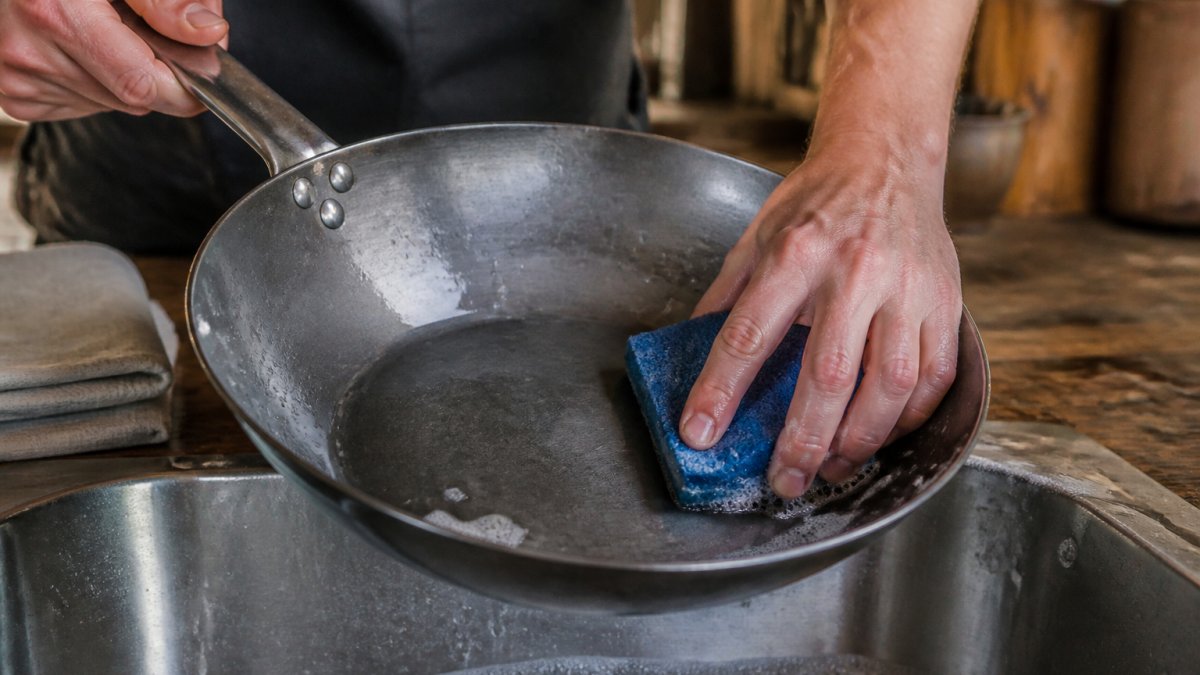
Cleaning cast iron after cooking steak takes about two minutes and protects the seasoning.
- Let the pan cool slightly, but not fully.
- Rinse with hot water and scrape off stuck bits.
- Skip soap unless the pan is heavily soiled.
- Dry it immediately on the burner over low heat.
- Rub in a thin coat of neutral oil.
Never soak cast iron or put it in the dishwasher. Water sitting in the pan is what causes rust, not the cooking itself.
For campers worried about rust in wet conditions, the fix is a dry pan and an oil coat after every use. Our 12" Roasting Pan is built for this routine, with deep walls that catch drippings for a pan sauce.

Troubleshooting: Gray Crust, Sticking, and Warping
A gray crust almost always means a wet steak, a cold pan, or too little fat. Here is how we diagnose the common problems:
| Problem | Likely Cause | Fix |
|---|---|---|
| Gray, pale crust | Wet surface or low heat | Dry the steak, preheat longer |
| Steak sticking | Pan not hot enough | Wait for the sizzle before adding meat |
| Uneven browning | Steak thicker on one side | Press flat, rotate the pan |
| Warping | Sudden temperature change | Heat and cool gradually |
| Bitter, burnt taste | Oil past smoke point | Use a higher smoke point oil |
Warping is rare in thick cast iron; thin steel pans warp, but a heavy cast pan holds its shape even over a hot fire. If a pan does rock, cool it slowly and reheat gently next time. Sticking is not a defect, a properly heated, well-seasoned skillet releases the steak on its own.
Conclusion
A great cast iron pan steak comes down to four things: a dry steak, a properly preheated pan, timing matched to thickness, and a thermometer to confirm doneness.
The pan matters too. At Browns Outpost, our cast iron cookware is backed by a lifetime warranty and tested over real campfires.
Ready to cook a steak worth remembering? Add the 10" Shallow Skillet to your cart and put a real crust on dinner tonight.
Frequently Asked Questions
How hot should a cast iron pan be for steak?
A cast iron pan steak temperature of about 230-260°C (450-500°F) gives you a proper sear. Preheat the dry pan over medium-high heat for 5-8 minutes before adding oil. A drop of water should sizzle and evaporate within a second or two. If the pan smokes heavily before the steak goes in, pull it off the heat for a minute. Too cool and the steak steams instead of browning; too hot and the outside burns before the center cooks.
How long do you cook a steak in a cast iron skillet?
For a 2.5 cm (1-inch) steak at medium-rare, plan roughly 2-3 minutes per side on the stovetop, then rest 5-10 minutes. A 4 cm (1.5-inch) steak usually needs 3-4 minutes per side plus 4-6 minutes in a 200°C (400°F) oven. Thinner cuts under 2 cm cook in about 90 seconds per side. Always confirm with a meat thermometer rather than relying on time alone, since pan heat and steak temperature vary.
Should you put oil in the pan or on the steak?
Both work, but oil in the pan is more common for cast iron pan steak. Use a high-smoke-point oil such as canola, grapeseed, or avocado, about 1-2 teaspoons for a 25 cm (10-inch) skillet. Coat the pan just before the steak goes in, not while it preheats. Salting the steak dry 30-45 minutes ahead and patting the surface dry matters more than which side the oil goes on. Butter burns too fast at searing heat, so add it at the end for basting.
How do you clean a cast iron pan after cooking steak?
Let the pan cool until it is warm but handleable, then rinse with hot water and scrub off stuck bits with a stiff brush or chainmail scrubber. Skip soap if you prefer, though a small amount of mild soap will not ruin modern seasoning. Dry it immediately on the stovetop over low heat for 2-3 minutes, then wipe a thin coat of neutral oil across the cooking surface. Never soak it or put it in the dishwasher, and store it dry.