 listicle
5 Easy Campfire Recipes for Beginners
Table of Contents
- Campfire Recipes for Beginners: Quick Comparison
- 1. Cast Iron Skillet Breakfast Hash
- 2. One-Pot Dutch Oven Chili
- 3. Foil Packet Meals Over Coals
- 4. Griddle Pancakes for a Crowd
- 5. Campfire Roasted Vegetables and Meat
- How to Cook Over Open Fire: Heat Control and Technique
- Campfire Cooking Essentials for Beginners
- Frequently Asked Questions
Last Updated: September 23, 2026
Campfire Recipes for Beginners: Quick Comparison
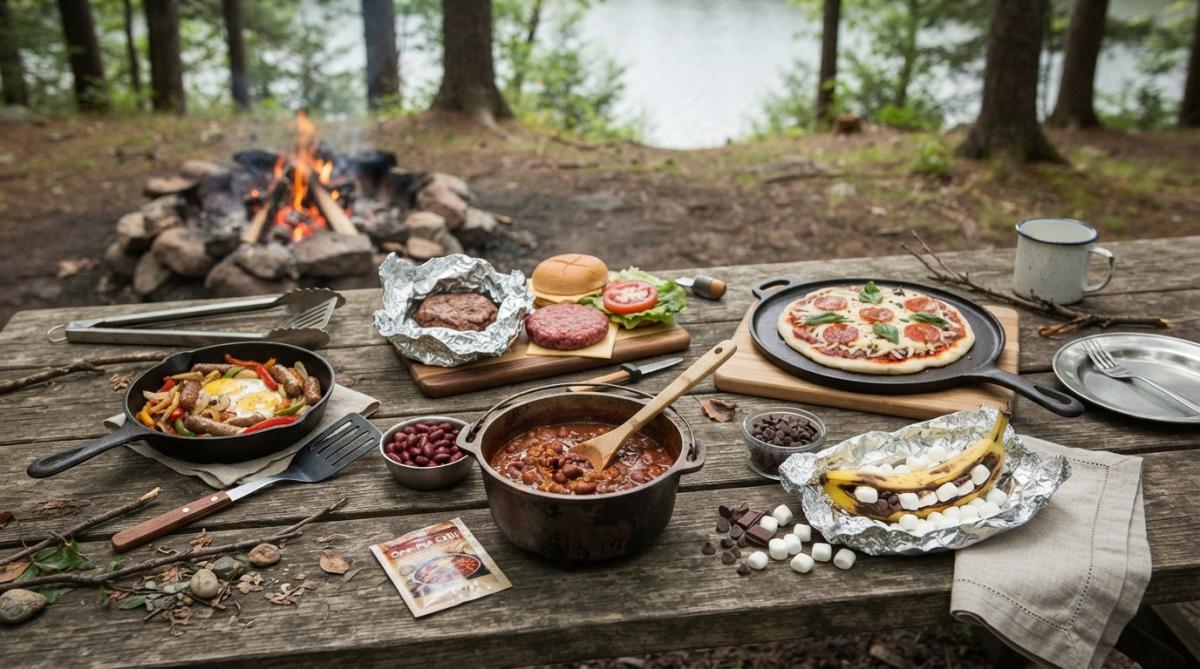
Cooking over an open fire doesn't require years of experience. These 5 easy campfire recipes for beginners work reliably over coals and flames with minimal gear.
Beginners succeed fastest when recipes match their equipment. A cast iron skillet behaves differently than a Dutch oven, and foil packets demand different heat management than griddle cooking. Choose recipes that fit what you have on hand.
| Recipe Type | Cook Time | Skill Level | Best Gear |
|---|---|---|---|
| Cast Iron Breakfast Hash | 15-20 minutes | Beginner | 10" Skillet |
| Dutch Oven Chili | 45-60 minutes | Beginner | 12" Dutch Oven |
| Foil Packet Meals | 20-30 minutes | Beginner | Foil + Coals |
| Griddle Pancakes | 10-15 minutes | Beginner | 16"×9" Griddle |
| Roasted Vegetables & Meat | 30-45 minutes | Beginner | Grill Grate |
1. Cast Iron Skillet Breakfast Hash
A breakfast hash over coals builds confidence fast: one pan, familiar ingredients, immediate feedback.

Start with diced potatoes, onions, and protein (bacon, sausage, or ham). A shallow cast iron skillet maximizes heat contact, creating a crust on the bottom while the center stays tender, unlike a deep Dutch oven, which traps steam.

Heat your skillet over coals for two minutes, then add diced potatoes first. Push them to the edges as they brown, creating space for onions and protein. Cook 12-15 minutes over medium coals until the bottom develops color and the top stays soft.
The skillet handle gets hot enough to burn your hand. Use a camp towel or heat-proof glove every time you touch it.
Once cooked through, crack eggs into the center if desired. Cover loosely with foil and let residual heat cook the eggs 3-4 minutes. Season aggressively.
2. One-Pot Dutch Oven Chili
A Dutch oven transforms camping meals from rushed to leisurely. Chili tolerates imperfect heat and improves with longer simmering.
Brown ground meat over coals (5 minutes per pound), then sauté onions and garlic in the rendered fat. Add drained beans, canned tomatoes, tomato paste, and broth. Return the meat to the pot.
A 12" Dutch oven feeds 4-6 people comfortably, giving enough volume so you're not constantly refilling bowls.
Move the pot away from direct coals onto a grate above the fire. Place coals on the lid for even heat. The pot should simmer gently (small bubbles every few seconds, not a rolling boil) for 45 minutes to an hour.
Stir every 15 minutes and adjust position: move further from coals if browning too dark, closer if barely simmering.
Add beans in the last 10 minutes. Taste and adjust seasoning at the end; salt dissolves slower in a cold pot.
3. Foil Packet Meals Over Coals
Foil packets are nearly impossible to burn. The foil distributes heat evenly and traps steam, steaming the food inside.
Lay out a double layer of heavy-duty foil. In the center, place protein, then vegetables, then seasonings and a small amount of liquid. Fold edges tightly twice to lock in steam.
Place the sealed packet on hot coals. Cook 20-25 minutes for chicken and vegetables, up to 30 minutes for thicker packets. The packet will puff slightly as steam builds, this is normal.
To check doneness, carefully open one corner of the foil and insert a fork into the thickest part of the protein. If it flakes easily, it's ready; if firm, reseal and cook 5 more minutes.
Each person can build their own packet with preferred ingredients, making foil packets ideal for group camping with varied dietary needs.
Foil packets stick to coals. Use a long stick or tongs to position them; never grab one with your hand.
4. Griddle Pancakes for a Crowd
For groups, a griddle like the 16"×9" Griddle solves the bottleneck of individual skillet pancakes by cooking 8-10 simultaneously.

Heat the griddle over coals for 3-4 minutes. It's ready when a water drop beads and skitters across the surface; campfire heat is more intense than stovetop.
Mix batter before reaching the fire: flour, baking powder, salt, sugar, eggs, milk, and melted butter. Whisk until just combined; lumps are fine.
Pour quarter-cup portions onto the griddle, spacing them an inch apart. The first batch cooks unevenly as the griddle adjusts; after that, temperature stabilizes.
Flip when edges look dry and bubbles form on the surface. Flip quickly to prevent sticking. The second side cooks in 60-90 seconds.
A griddle's flat surface handles bacon, eggs, and hash browns; one piece of gear covers breakfast entirely.
5. Campfire Roasted Vegetables and Meat
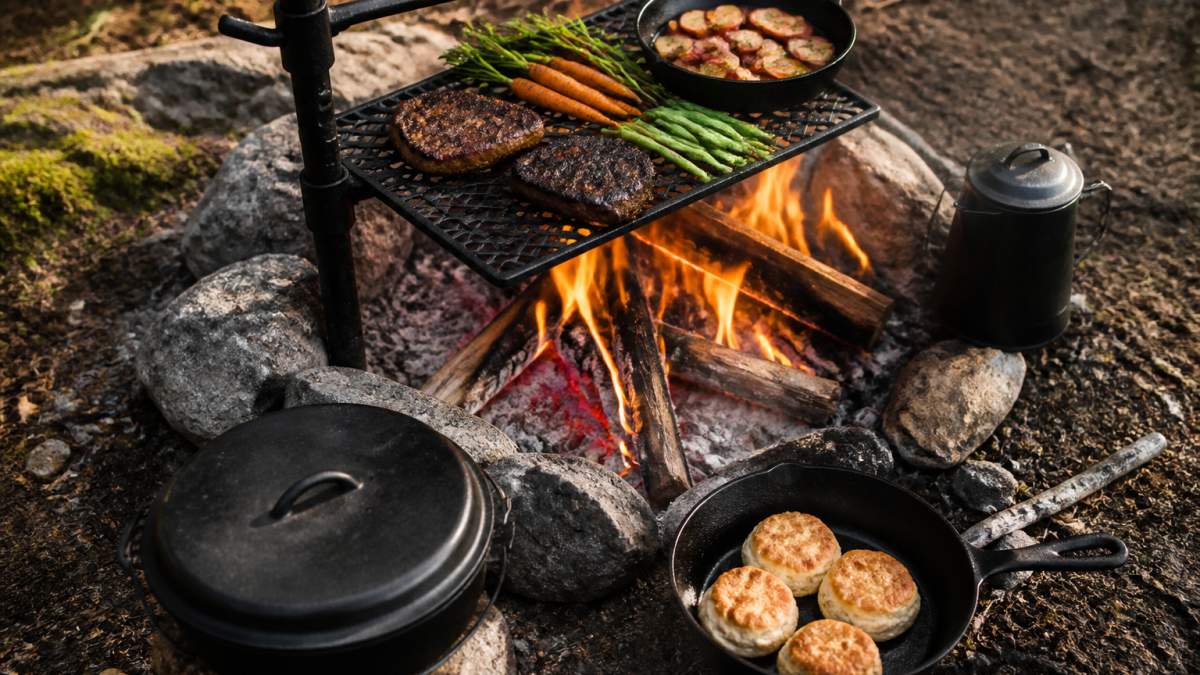
Roasting over an open fire is theatrical and forgiving. Meat and vegetables develop flavor from direct heat and smoke that you cannot replicate at home.
Slice vegetables at least half an inch thick (thin slices fall through the grate). Toss with oil, salt, and pepper. Position root vegetables closer to coals; softer vegetables higher, where heat is gentler.
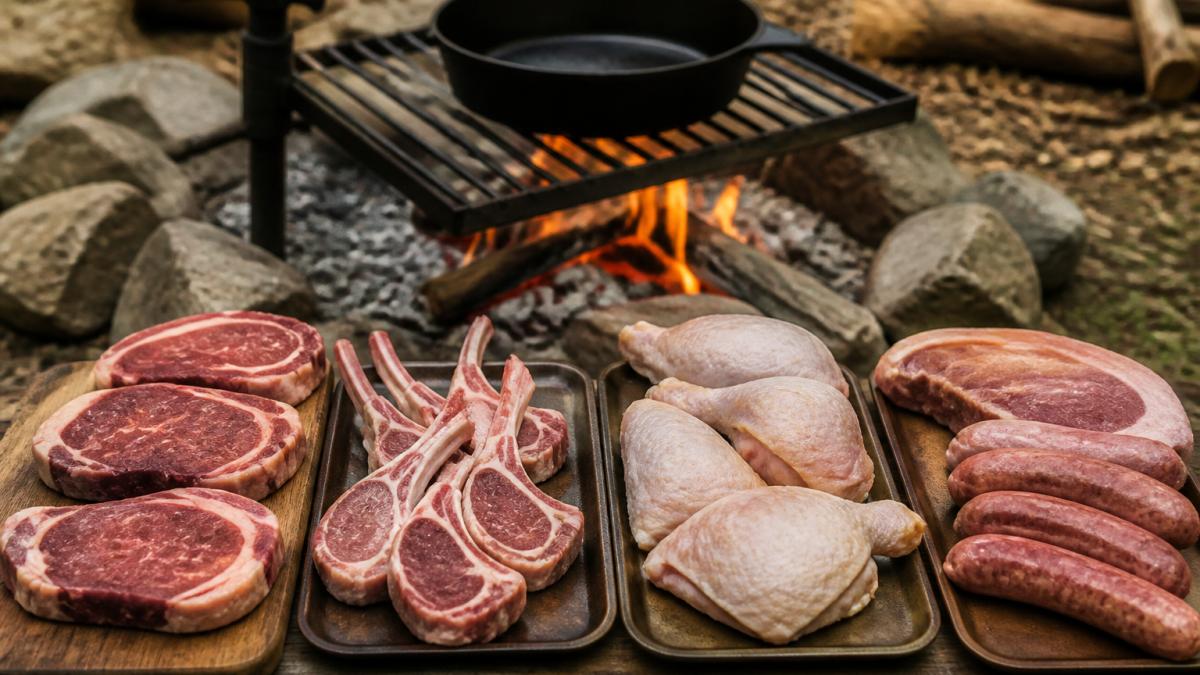
Choose meat cuts at least an inch thick; thin cuts dry out. Season generously 15 minutes before cooking so salt penetrates the surface.
An adjustable grill lets you dial in precise heat without moving the entire grill. Lower the grate for a hard sear on steaks; raise it for slower cooking of delicate fish or vegetables.
Position the grate about 6 inches above white coals for most proteins. You should be able to hold your hand under the grate for only 2-3 seconds before the heat forces you to pull away. This is medium-high heat.
Meat needs rest time after cooking. Remove it from the grill and let it sit for 5 minutes before cutting. This redistributes juices throughout the meat instead of letting them run onto the plate.
Vegetables can go straight to the plate. They're done when they're charred on the outside and tender inside, usually 8-12 minutes depending on thickness and distance from coals.
How to Cook Over Open Fire: Heat Control and Technique
The difference between burnt food and perfectly cooked meals is heat management. Campfire heat is not consistent like a stovetop. It changes as wood burns down, coals shift, and wind patterns shift. Beginners struggle because they're used to dialing a burner to medium and trusting it to stay there.
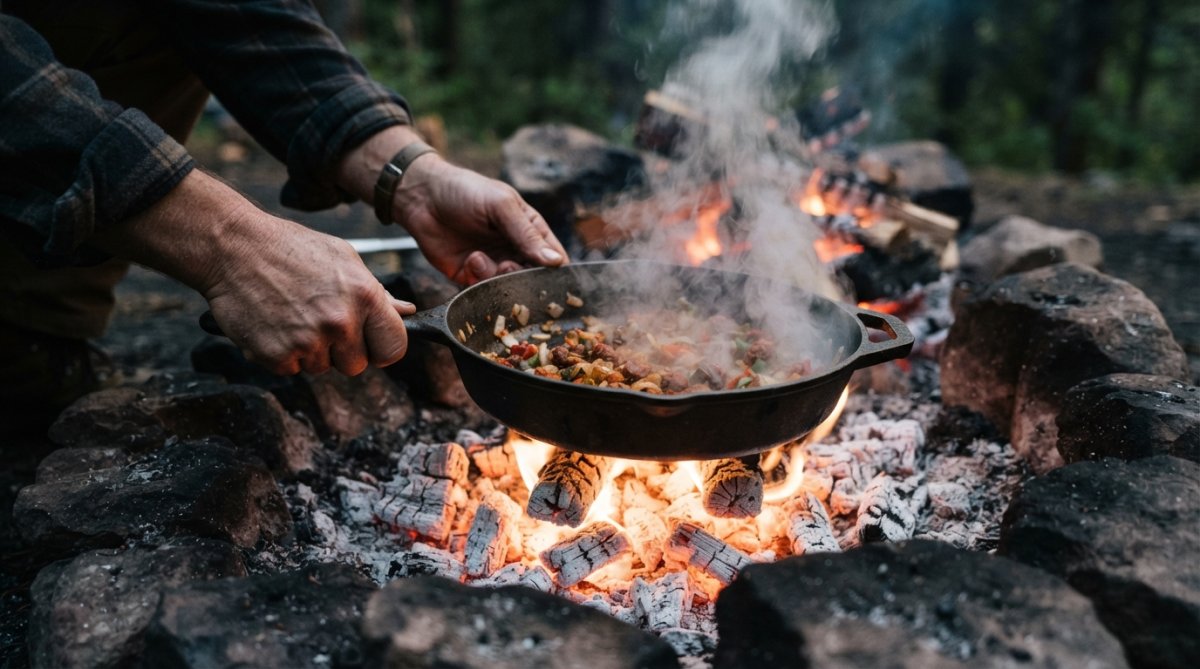
Start by understanding coal stages. Fresh coals are glowing red and extremely hot. After 10-15 minutes, they develop a white ash coating on the surface. This white-ash stage is when most cooking should happen.
Heat control techniques:
- Move the pot: Slide cookware closer to or further from coals to adjust temperature
- Add coals: Place fresh coals around (not under) a pot to increase heat gradually
- Remove coals: Pull coals away from the fire's perimeter to reduce heat
- Use a grill grate: A grate creates distance between coals and cookware, moderating temperature
- Cover with foil: Loosely covering a pan traps heat and speeds cooking
Campfire Cooking Essentials for Beginners
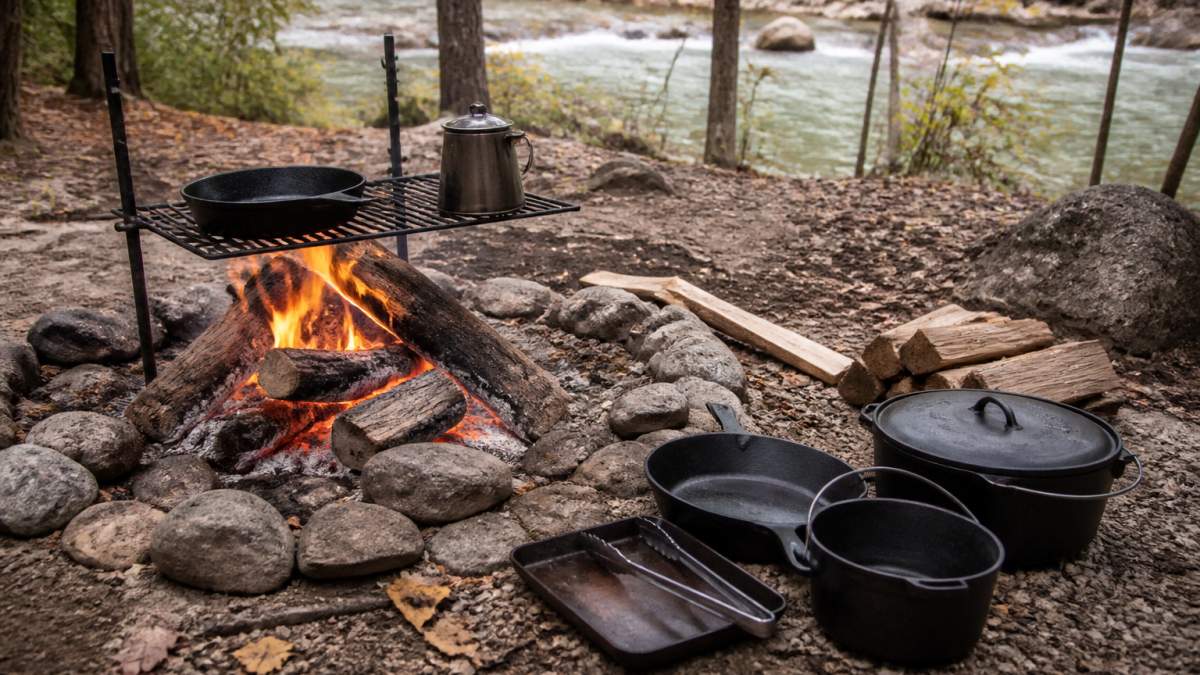
You don't need much gear to cook well over a fire. A single cast iron skillet, a grill grate, and foil packets will cover 80% of campfire meals. But certain tools make the experience dramatically easier.
Frequently Asked Questions
What are the easiest campfire recipes for beginners?
One-pot meals like chili, foil packet dinners, and skillet breakfasts work best for beginners. These recipes require minimal prep, forgiving heat control, and fewer dishes. Cast iron cookware like a 12-inch Dutch oven or 10-inch skillet handles temperature swings well, making mistakes less likely. Start with recipes that don't demand precise timing or complex technique; focus on getting comfortable with fire management first.
How do you keep food safe while camping in the wilderness?
Store perishable items in a cooler with ice packs and use them within 2-3 hours of opening. Keep raw meat separate from other foods and use separate utensils for handling it. Cook all meat to safe internal temperatures (71°C for poultry, 63°C for ground meat). Wash hands and utensils with clean water before and after food prep. Store cooked food away from insects and animals, and never leave food unattended near the fire.
What essential gear do I need for campfire cooking?
A cast iron skillet or Dutch oven, a grill grate or adjustable grill like the ANVIL, heat-resistant gloves, metal tongs, and a sturdy spatula are essentials. The 10-inch shallow skillet ($32.99) handles breakfast and sides, while the 12-inch Dutch oven ($52.99) manages stews and one-pot meals. An adjustable grill ($174.99) gives you precise heat control over any fire. Add a cooler, cutting board, and basic utensils, and you're ready to cook.
How do you control heat when cooking over an open fire?
Move your cookware closer to the flames for high heat and further away for low heat. Use an adjustable grill to raise or lower the grate itself. Build coals to the side of your fire and rotate your pot to manage temperature. Let your fire settle into steady coals rather than cooking over active flames; coals provide more even, controllable heat. Cast iron's heat retention means you don't need extreme temperatures; medium coals often deliver the heat you need.
Can I cook camping recipes with dietary restrictions?
Yes. Most campfire recipes adapt easily to dietary needs. Foil packets let you customize each portion with different proteins, vegetables, and seasonings. One-pot meals like chili work well for vegetarian versions using beans and lentils instead of meat. A cast iron griddle cooks gluten-free pancakes and breads just as well as regular ones. Plan your make-ahead meals at home, pack ingredients that suit your diet, and adjust seasoning and cooking time as needed over the fire.