 listicle
Best Meat for Open Fire Cooking: A Guide
Table of Contents
- Best Steak for Campfire Cooking
- Other Cuts That Work Well Over Flame
- Preparing Meat for Campfire Cooking
- Safe Internal Temperatures for Campfire Meat
- Campfire Cooking Gear Essentials
- Managing Fire Heat and Embers
- Vegetarian and Alternative Protein Options
- Common Mistakes to Avoid
- Frequently Asked Questions
Last Updated: October 2, 2026
Best Steak for Campfire Cooking
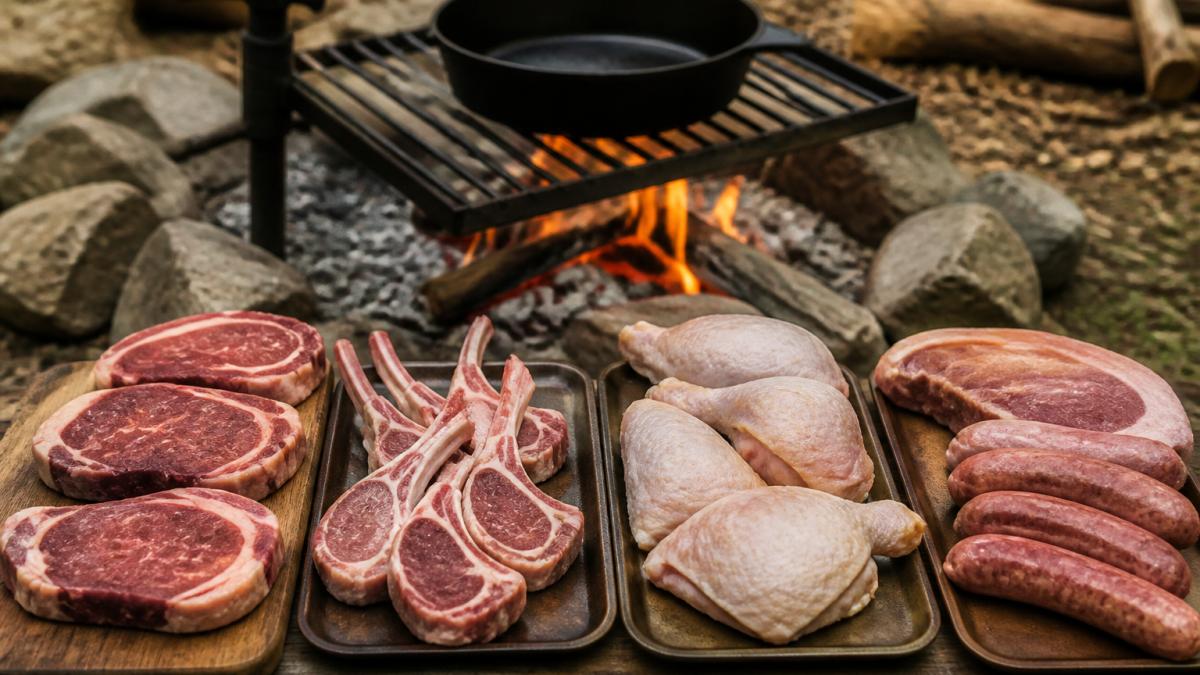
When you're cooking over an open fire, not all cuts are created equal. The best meat for open fire cooking needs enough fat to stay juicy over direct heat, enough structure to handle the flames without falling apart, and enough flavor to shine without a restaurant kitchen backing it up.
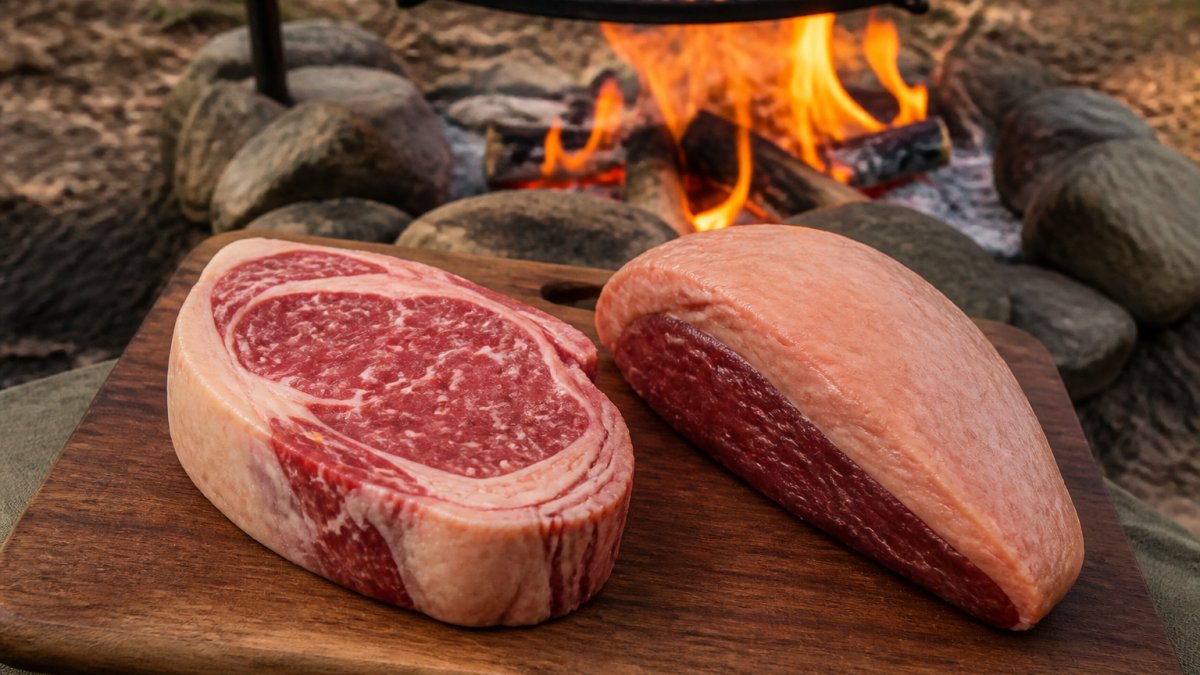
Ribeye: Fat and Flavor
Ribeye is the gold standard for open fire cooking.
A thick-cut ribeye (1.5 to 2 inches) is your friend here. The extra thickness gives you a window to develop a crust without overcooking the center.
Expect a ribeye to take 4-5 minutes per side over hot coals for medium-rare. The key is letting the fat render fully so it contributes to the flavor, not just melts away.
Picanha: The Camp Favorite
Picanha works best when you keep that fat cap intact and score it lightly before cooking. Position the fat cap facing the heat so it renders and bastes the meat.
A 2-pound picanha takes roughly 6-8 minutes per side over medium-hot coals for medium-rare. The lean meat means less margin for error than ribeye, but the fat cap compensates.
Flank Steak: Lean and Versatile
Flank steak is leaner than ribeye or picanha, which means it's less forgiving but also lighter to pack and faster to cook. It works best marinated, which adds moisture and flavor that compensates for the lower fat content.
Flank steak cooks quickly over direct heat, roughly 3-4 minutes per side for medium-rare. Don't let it sit too long over flames or it becomes tough.
Other Cuts That Work Well Over Flame
Shoulder and Brisket for Low-and-Slow
Tougher cuts like shoulder and brisket need time and low heat to break down the connective tissue. These aren't quick campfire meals, they're for the all-day cook over low coals or indirect heat.
A brisket flat or shoulder roast works best in a cast iron Dutch oven nestled in coals rather than directly over flame. The enclosed environment keeps moisture in while the heat breaks down the collagen into gelatin, which makes the meat tender and rich.
Plan 6-8 hours of cooking time for a 4-5 pound brisket over low coals. The low-and-slow approach transforms a tough, inexpensive cut into something memorable. The payoff justifies the patience.
Poultry and Game
Chicken and game birds cook well over open fire if you manage heat carefully. The leaner meat means it dries out quickly if exposed to direct flame, so indirect heat works better.
Game meats like venison and elk work similarly to beef, depending on the cut. Venison steaks benefit from marinating to add moisture. Ground game works in burgers if you add fat (beef or pork fat) to compensate for the leanness.
Preparing Meat for Campfire Cooking
Trimming the Fat Cap
Before you head to the fire, decide how much fat cap to keep. A quarter-inch is ideal: thick enough to protect the meat and render flavor, thin enough that it doesn't char before the meat cooks.
Pat the meat dry before cooking. Moisture on the surface steams rather than sears, so a dry surface gives you the crust you're after.
Marinating for Smoke Flavor
Marinating isn't required for fatty cuts like ribeye, but it's essential for leaner cuts and adds depth to any meat. A simple marinade of oil, acid (vinegar or citrus), and salt works.
Marinate for at least 2 hours, up to overnight. Don't over-marinate or the acid breaks down the meat's structure and makes it mushy. Remove the meat from the marinade 30 minutes before cooking and pat it dry so it can sear properly.
Safe Internal Temperatures for Campfire Meat
Using a Meat Thermometer
A meat thermometer removes guessing. Rare is 52°C (125°F), medium-rare is 57°C (135°F), medium is 63°C (145°F), and well-done is 71°C (160°F) for beef.
For poultry and game birds, the safe internal temperature is 74°C (165°F) measured in the thickest part of the thigh. Don't rely on color; a meat thermometer is the only reliable way to confirm doneness.
Resting Your Meat After Cooking
Resting is as important as cooking. When meat rests for 5-10 minutes after coming off the heat, the muscle fibers relax and reabsorb the juices. Cut into a steak immediately and the juices run onto the plate.
Tent the resting meat loosely with foil to keep it warm without trapping steam that softens the crust. A 2-inch steak needs at least 5 minutes; a larger roast needs 10-15 minutes.
Campfire Cooking Gear Essentials
Cast Iron vs. Carbon Steel
Cast iron and carbon steel both work over open fire, but they have different strengths. Cast iron is heavier and holds heat longer, which is ideal for searing and maintaining consistent temperature. It's slower to heat up but stays hot longer after you pull it from the fire.
The Lifetime Warranty ANVIL Grill →
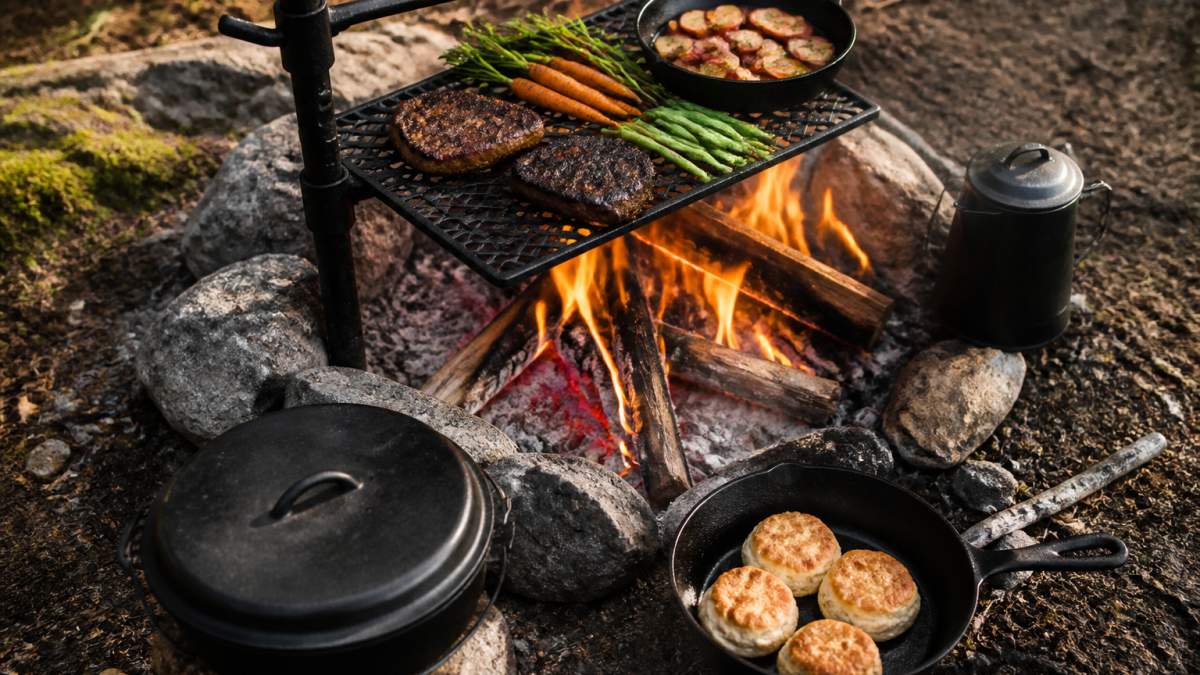
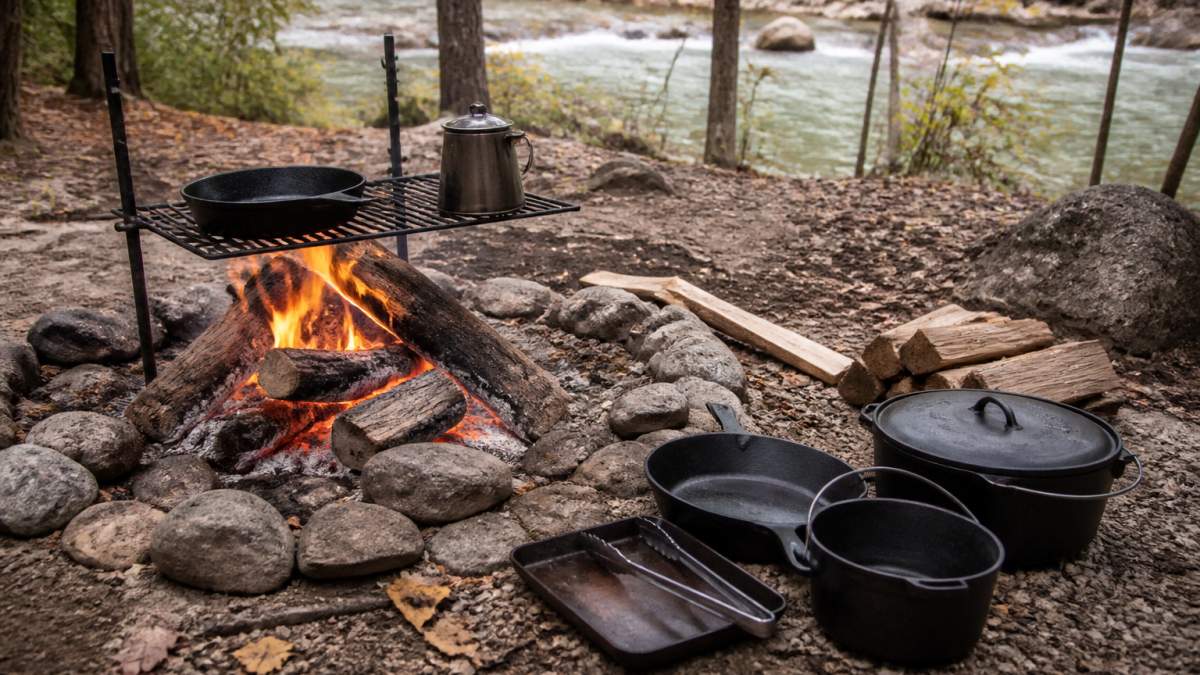
Carbon steel heats faster and is lighter to pack, but it cools faster once removed from heat. The Browns Outpost ANVIL adjustable campfire grill uses heavy carbon steel with adjustable height, letting you dial in exact heat control. The adjustable design means you can sear steaks over high heat, then shift to indirect heat for slower cooking, all on one grill.

For campfire cooking, cast iron pans like the Browns Outpost 12-inch roasting pan excel at searing. The deep walls catch drippings for a pan sauce, and the thick construction holds heat so well that the crust you get at the campsite rivals what you'd expect from a home kitchen. Cast iron doesn't warp over high heat the way thin steel can.
Adjustable Grill Height and Control
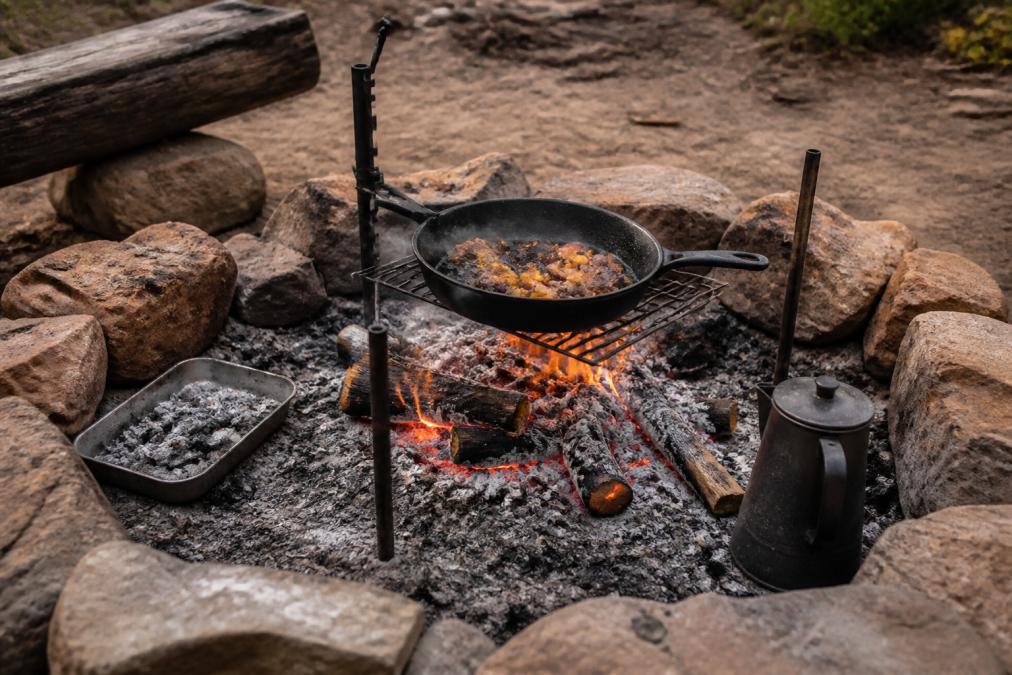
Heat control is everything in campfire cooking. An adjustable grill that raises and lowers lets you move meat closer to flames for searing or farther away for gentle cooking. The ANVIL grill's adjustable height system slides along a stake, locking at any height you need.
Without height adjustment, you're stuck with whatever heat the fire provides. With it, you can sear a steak quickly over hot coals, then shift it to cooler zones to finish cooking gently. This flexibility separates amateur campfire cooking from pro results.
Managing Fire Heat and Embers
Direct Heat for Searing
Direct heat over flames or hot coals is what creates the crust. Position meat directly above the hottest part of the fire. You want visible flames or glowing coals producing radiant heat.
The meat should sizzle loudly when it hits the grill. If it doesn't, the heat isn't hot enough. Wait for the flames to settle and the coals to glow red-orange before starting.
Indirect Heat for Slow Cooking
Indirect heat means the meat isn't directly above the flames. Build your fire to one side of the grill and position meat on the opposite side, or elevate the grill higher so the heat is gentler.
Indirect heat cooks slowly and evenly, which is why it's ideal for brisket and shoulder. The meat stays tender because it's not exposed to intense direct flame.
Choosing the Right Wood for Flavor
Hardwood like oak and mesquite add smoke flavor. Softwoods like pine create creosote that makes meat taste bitter, so avoid them. Oak is mild and pairs with most meats.
Let the wood burn down to coals before cooking. Cooking directly over flames imparts acrid smoke. Coals produce clean smoke that flavors without overwhelming. If you're using wood, add it gradually so it smolders rather than flares.
| Wood Type | Flavor Profile | Best For | Intensity |
|---|---|---|---|
| Oak | Mild, balanced | Beef, poultry, game | Medium |
| Mesquite | Bold, earthy | Beef, brisket | Strong |
| Hickory | Sweet, smoky | Pork, poultry | Medium-strong |
| Maple | Subtle, sweet | Poultry, fish | Light |
Vegetarian and Alternative Protein Options
Vegetables and plant-based proteins work over open fire if you prepare them properly. Portobello mushroom caps have enough structure to grill whole and develop a crust.
Tofu and tempeh are lean proteins that need care over fire. Press them to remove moisture, marinate for flavor and moisture, and keep them over indirect heat so they don't dry out.
Common Mistakes to Avoid
Starting with cold meat is the biggest mistake.
Flipping constantly is another trap. Flip once, halfway through cooking.
Cooking over flames instead of coals creates acrid smoke and charring without proper searing.
Skipping the meat thermometer leads to overcooking. Guess wrong and a steak meant for medium-rare becomes well-done.
Not letting meat rest means losing the juices. Resting for 5-10 minutes after cooking keeps the meat tender and juicy.
Cooking over open fire is simpler than most people think, but it demands the right gear. The Browns Outpost ANVIL adjustable campfire grill gives you the heat control that transforms a campfire into a professional cooking station. Adjustable height means you sear steaks at high heat, then shift to low-and-slow for tougher cuts, all without moving the meat. Paired with cast iron like the Browns Outpost 12-inch roasting pan, you get the durability and heat retention that turns a camping trip into a culinary experience. Both pieces are backed by a lifetime warranty and ship free over $75 CAD. Get started with Browns Outpost and cook like a pro, wherever the fire happens to be.
Frequently Asked Questions
What is the best cut of steak to cook on a campfire?
Ribeye and picanha are top choices for campfire cooking because their fat content keeps them juicy over high heat. Ribeye has excellent marbling throughout, while picanha features a protective fat cap that renders beautifully over open flame. Flank steak works well for those preferring leaner meat; slice it across the grain after cooking to maximize tenderness. The key is choosing cuts with enough fat to stay moist, since direct fire heat can dry out lean cuts quickly.
What safe internal temperatures should I use for campfire meat?
Beef steaks should reach 63°C (145°F) for medium-rare, 71°C (160°F) for medium, and 77°C (170°F) for well-done. Ground beef requires 71°C (160°F). Poultry must reach 74°C (165°F) throughout. Always use a meat thermometer to check doneness; don't rely on appearance alone over open fire, where flames can char the outside while leaving the inside undercooked. Let meat rest for 5-10 minutes after cooking to retain juices.
How do you prevent meat from burning over an open fire?
Use adjustable grill height to control temperature; raise the grate for lower, indirect heat and lower it for searing. Start with hot embers rather than active flames, and manage your fire by moving coals to create hot and cool zones. Pat meat dry before cooking to promote even browning instead of steaming. For thick cuts, sear quickly over direct heat, then move to indirect heat to finish cooking through. Cast iron pans distribute heat more evenly than direct grate cooking.
What campfire cooking gear essentials do I need?
An adjustable grill like the ANVIL ($174.99) lets you dial in exact heat over any fire, essential for consistent results. Cast iron cookware holds heat better than steel and develops superior crust; a 12-inch roasting pan ($48.99) handles steaks and roasts, while a 10-inch skillet ($32.99) works for smaller portions and sides. Heavy-duty tongs and a meat thermometer are non-negotiable. All Browns Outpost gear ships free over $75 CAD and carries a lifetime warranty.
Can you cook meat over an open fire safely?
Yes, open fire cooking is safe when you follow proper temperature guidelines and use clean equipment. Use a meat thermometer to verify internal temperatures reach safe levels; this is non-negotiable for food safety. Keep your cooking surface clean by burning off residue between uses, and allow cast iron to cool properly before storage. Never cook directly on flames; instead, use hot embers or adjust grill height to create manageable heat zones. Marinating meat before cooking adds flavor and can help prevent charring.