 listicle
7 Ways to Clean Cast Iron After Camping
Table of Contents
- Let the Pan Cool Before You Touch It
- Scrape and Wipe Out Food Debris First
- Use Hot Water, Salt, and a Scrubber to Clean Cast Iron
- Dry Thoroughly on Heat to Stop Rust Before It Starts
- Apply a Thin Oil Layer to Protect the Seasoning
- How to Reseason Cast Iron Pans Step by Step
- The Best Way to Remove Rust From Cast Iron
- Build an Essential Camping Kitchen Cleaning Kit
- Frequently Asked Questions
Last Updated: September 17, 2026
Let the Pan Cool Before You Touch It
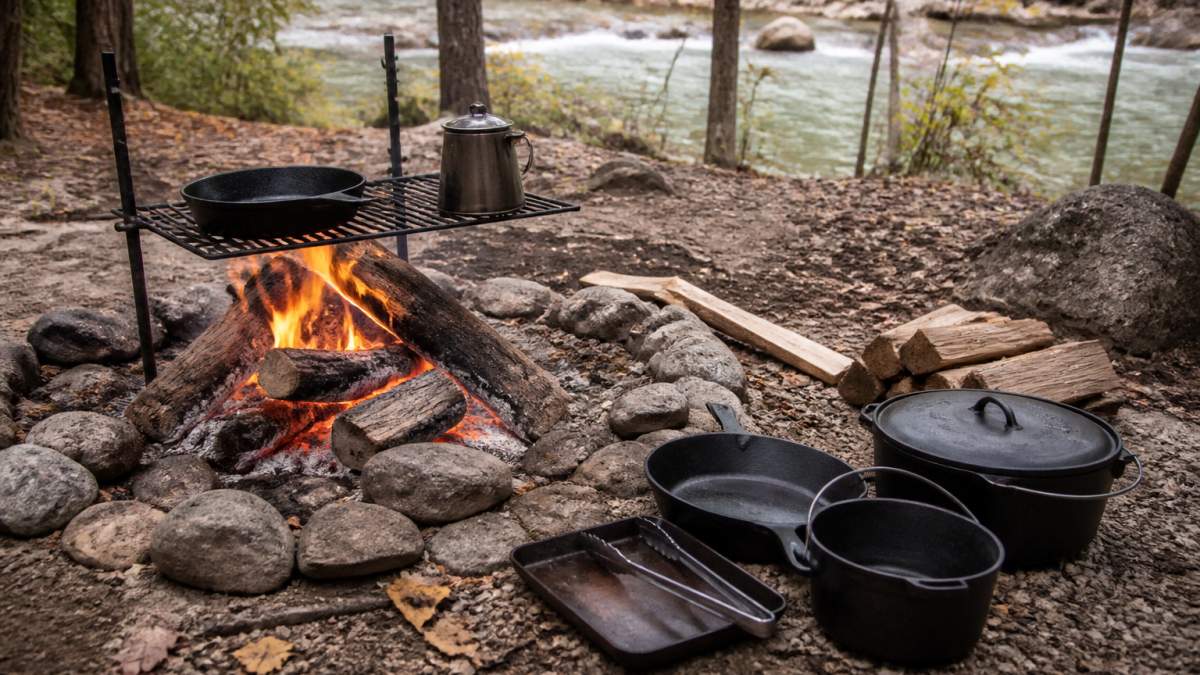
The first rule of camp cookware care is patience. Cast iron that just came off the fire holds enough heat to burn skin, warp a cold-water rinse into thermal shock, and crack a pan you paid good money for. Let it cool until you can hold your hand near the surface without flinching, usually 10 to 15 minutes after the coals die down.
Why does this matter so much? Because dunking a hot pan in cold water is the fastest way to ruin it. The metal contracts unevenly, the seasoning layer can flake, and if the pan was cheap or thin, it may crack outright. At Browns Outpost, we build our pans heavy on purpose so they shrug off campfire abuse, but even the toughest cast iron deserves a few minutes of rest before you clean cast iron.
Use that cooling window to eat, bank the fire, and set out your cleaning gear. By the time dinner is done, the pan is ready.
Scrape and Wipe Out Food Debris First
Get the bulk of the mess out before water ever touches the pan. A wooden spatula or a stiff scraper lifts most food debris, grease, and carbon buildup in under a minute. Tip the pan and pour off the fat into your fire pit or a waste tin, never onto the ground.
Then wipe the surface down with a paper towel or a coffee filter. Coffee filters are a camp kitchen hack worth knowing: they're lint-free, cheap, and soak up grease without leaving fibers behind like a torn rag will. Wipe until the paper comes away mostly clean.
Here's the part most guides skip. Scraping first means you use less water later, and water is the resource you have least of in the backcountry. On a fire ban or a dry camp, this step alone can carry most of the cleanup.
- Wooden spatula for the bulk scrape
- Paper towel or coffee filter for the grease wipe
- A small waste tin for fat and scraps
- A dedicated scrub rag kept separate from your dish towel
Once the pan is scraped and wiped, you've removed most of what would otherwise turn into sticky residue. What's left is the thin film of food and oil that needs a proper wash.
Use Hot Water, Salt, and a Scrubber to Clean Cast Iron
A well-seasoned pan rarely needs soap. Hot water, a scrubber, and a little abrasive do the job without stripping the seasoning you've worked to build. This is the core method for how to clean cast iron after a camping trip, and it takes about two minutes.
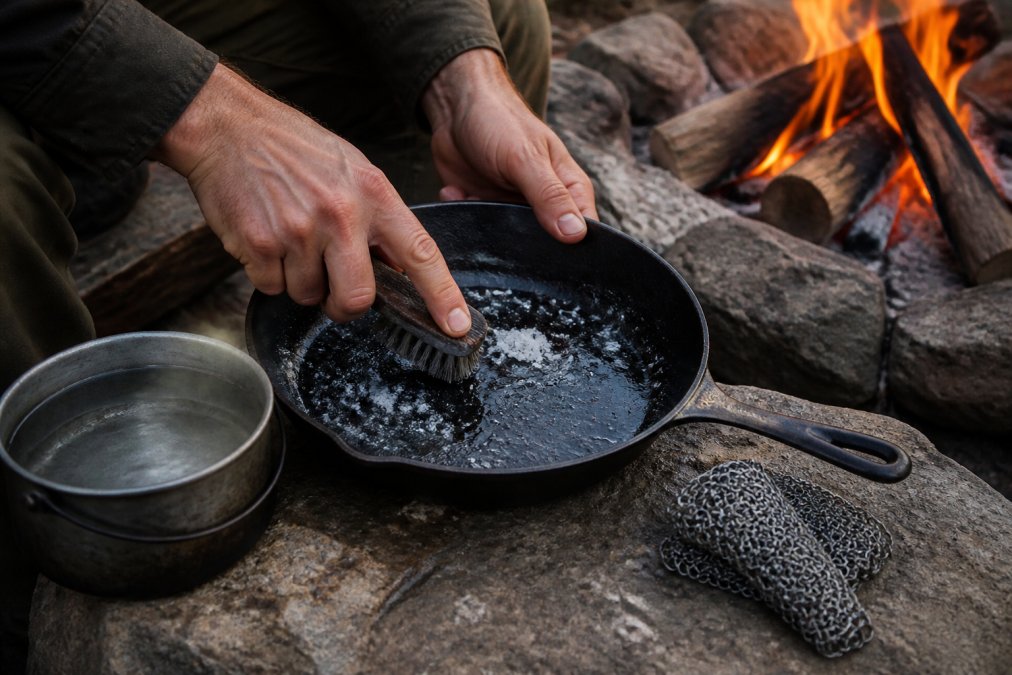
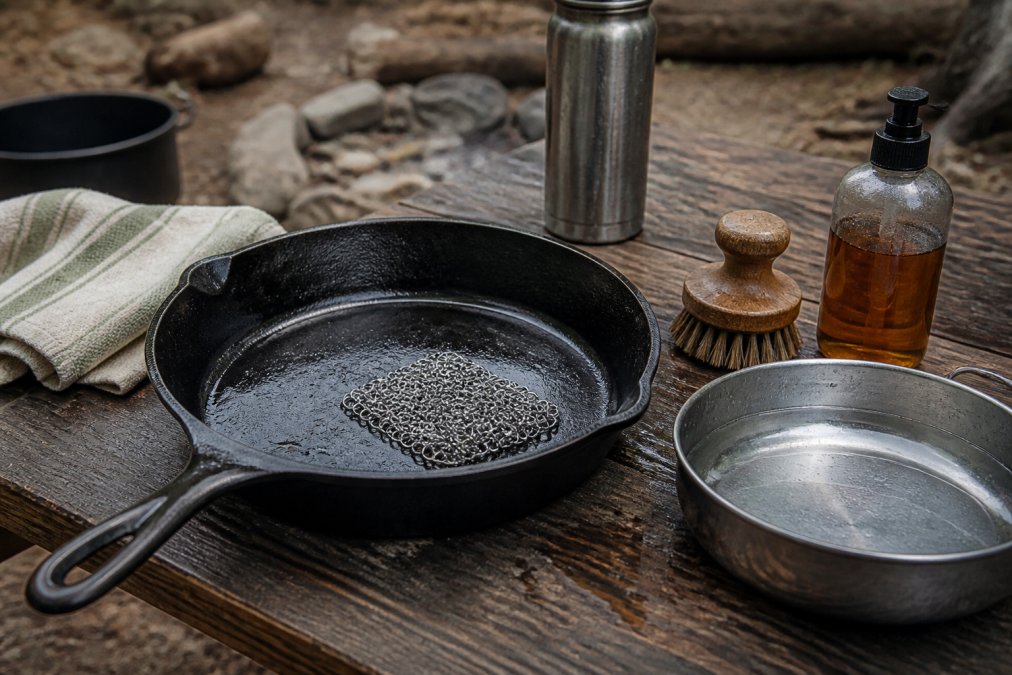
Heat a small pot of water until it's hot but not boiling. Pour a splash into the pan, add a spoonful of coarse salt, and scrub with a stiff brush or a scrubber. The salt acts as a mild abrasive, lifting stuck-on bits without scratching the surface.
Salt as an Abrasive for Stuck-On Residue
Coarse salt is the camp cook's secret weapon. It's abrasive enough to break down baked-on residue, but soft enough that it won't gouge the patina you've built up over years of cooking. For a stubborn patch, add a little oil to the salt and scrub in circles until the residue lifts.
Chainmail and Scrubbers for Carbon Buildup
When salt alone won't cut it, reach for a chainmail scrubber. Chainmail is the best tool for carbon buildup because it scrapes hard without removing seasoning the way steel wool does. Work it in small circles over the rough spots, then rinse and check again.
Dry Thoroughly on Heat to Stop Rust Before It Starts
Rust prevention starts the moment the pan leaves the water. Cast iron and moisture are enemies, and oxidation begins within minutes on a wet surface. The fix is simple: put the pan back on a heat source immediately after washing.
- Dry on heat, never with a towel alone
- Two to three minutes over coals or a burner
- Flip the pan to dry the underside and handle
- Watch for orange tint, the first sign of oxidation
Apply a Thin Oil Layer to Protect the Seasoning
The final step in the routine is also the easiest to skip, and skipping it is why so many pans rust in storage. A thin coat of oil after every wash keeps the seasoning glossy and creates a barrier against moisture.
How to Reseason Cast Iron Pans Step by Step
Reseasoning is the process of rebuilding the polymerized oil layer that makes cast iron non-stick. If your pan looks dull, feels sticky, or has patches of bare grey metal, it's time to reseason. The whole job takes about an hour, most of it hands-off.
- Scrub the pan down to bare metal with hot water and a chainmail scrubber. No soap needed.
- Dry it thoroughly on a heat source until every trace of moisture is gone.
- Apply a very thin layer of high-smoke-point oil to the entire pan, inside and out.
- Wipe off the excess with a clean paper towel until the surface looks dry.
- Place the pan upside down in an oven at 230°C (450°F) for one hour.
- Turn the oven off and let the pan cool inside, undisturbed, for at least an hour.
- Repeat the oil-and-bake cycle two or three times for a durable, dark patina.
The Best Way to Remove Rust From Cast Iron
Rust happens, even to careful cooks. A wet night, a forgotten pan, or a humid storage bin can leave you with a chalky orange surface. The good news is that rust is a surface problem, and cast iron is thick enough to take a real scrubbing without damage.
Build an Essential Camping Kitchen Cleaning Kit
A dedicated cleaning kit keeps your cast iron in shape and keeps your other gear clean. Pack it once, keep it in the camp box, and you'll never be caught scrubbing a pan with a sock again.
| Item | Purpose | Packs As |
|---|---|---|
| Chainmail scrubber | Carbon buildup, rust removal | Flat, 15 cm square |
| Coarse salt tin | Abrasive paste for stuck residue | Small screw-top jar |
| Stiff brush | General scrubbing | 20 cm handle |
| Wooden spatula | Scraping food debris | Flat, nests in pan |
| Coffee filters | Lint-free grease wipe | Flat stack |
| Neutral oil bottle | Post-wash protective layer | 100 ml squeeze bottle |
| Dedicated scrub rag | Washing, separate from dish towel | Rolled |
| Small waste tin | Fat and scrap disposal | Sealed, 500 ml |
Frequently Asked Questions
What should you not clean cast iron with?
Skip dish soap, steel wool, and the dishwasher. Soap strips the polymerized seasoning layer that makes cast iron non-stick, and steel wool scratches the surface down to bare metal, which invites rust. A dishwasher is worse: one cycle can remove a season you built over months. Stick to hot water, a stiff brush, coarse salt, or a chainmail scrubber. For heavy carbon buildup, scrape with a wooden spatula or a dedicated pan scraper instead of anything abrasive enough to gouge the iron.
How do you remove stubborn burnt-on food from cast iron?
Cover the stuck-on residue with hot water and let it sit for a few minutes to soften, then scrape with a wooden spatula. For tougher patches, make an abrasive salt paste with coarse salt and a little oil, scrub in circles, and rinse. A chainmail scrubber handles carbon buildup without damaging the seasoning. If food still won't budge, simmer a small amount of water in the pan over the fire, then scrape while warm. Avoid metal spatulas that can chip the patina.
How do you prevent rust on cast iron while camping?
Moisture is the enemy. After every wash, dry the pan immediately on a heat source, whether that's the campfire, a camp stove, or a portable burner, until every water spot disappears. Then wipe a thin coat of neutral cooking oil across the entire surface, inside and out, including the handle. Store the pan with a paper towel or coffee filter between stacked pieces to absorb any lingering dampness. A well-oiled pan resists oxidation even in wet backcountry conditions.
Do I need to reseason my cast iron after every camping trip?
No. If you dry the pan on heat and re-oil it after each use, the seasoning holds up for many trips. Reseason only when the surface looks dull, feels sticky, or food starts sticking. To reseason, scrub the pan clean, dry it, rub a thin layer of oil across the whole surface, and bake it upside down at 230°C (450°F) for an hour. The oil polymerizes into a hard protective layer. Do this two or three times for a solid rebuild.
What is the best way to remove rust from cast iron?
Scrub the rusted area with coarse salt and a little oil until bare iron shows. Rinse, dry immediately on heat, and reseason right away. Rust is oxidation, not damage, so the iron underneath is fine. The key is to strip the rust completely before reseasoning, or the new seasoning won't bond properly. Repeat the reseasoning step two or three times for a lasting fix.