 listicle
Best Adjustable Campfire Grill for Backcountry
Table of Contents
- Quick Comparison Table
- The Lifetime Warranty ANVIL Grill: Best Overall Adjustable Campfire Grill
- Is an Adjustable Campfire Grill Worth It?
- How to Cook Over an Open Fire with Adjustable Height Control
- Campfire Cooking Safety Tips for Adjustable Grills
- What to Look for in a Backcountry Adjustable Grill
- Conclusion: Choosing Your Adjustable Campfire Grill
Last Updated: August 22, 2026
Quick Comparison Table
| Grill Type | Best For | Key Advantage | Price Range |
|---|---|---|---|
| Adjustable stake grill | Backcountry cooking, variable heat control | Precise height adjustment over any fire | $150-$250 |
| Fixed-height grate | Car camping, simplicity | Lightweight, minimal setup | $50-$100 |
| Tripod grill | Group camping, stability | Wide cooking surface, stable legs | $100-$200 |
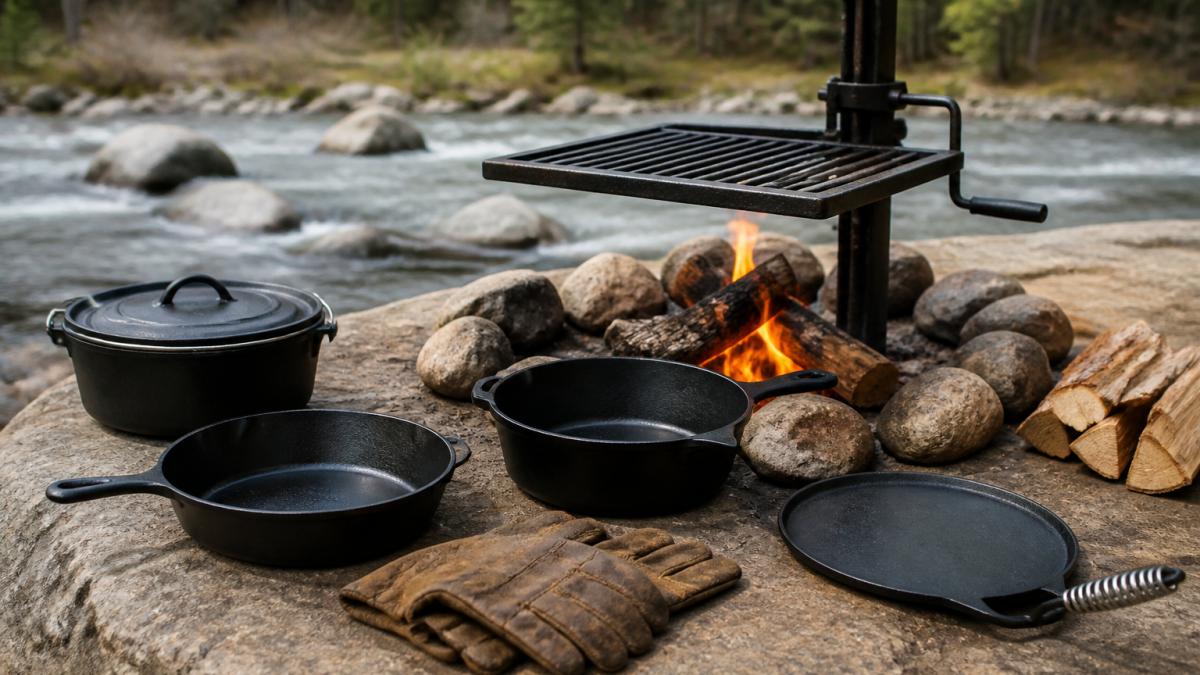
| Cast iron griddle | Breakfast cooking, versatility | Multi-use, works on any grate | $30-$60 |
The Lifetime Warranty ANVIL Grill: Best Overall Adjustable Campfire Grill
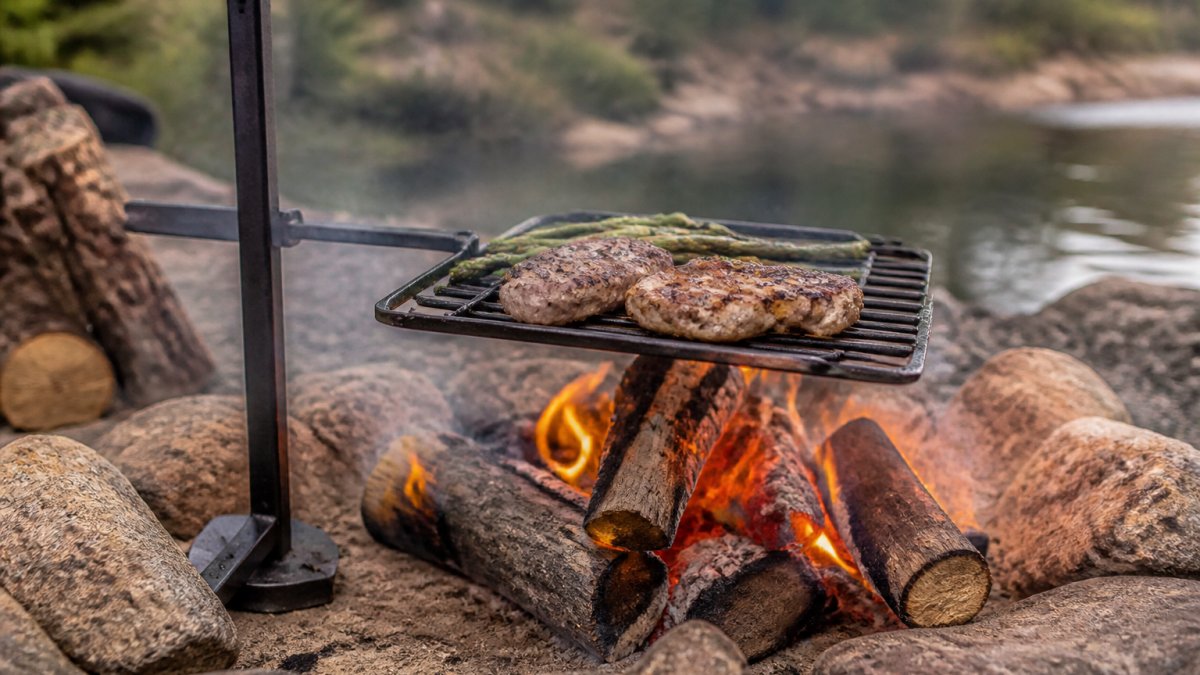
An adjustable campfire grill transforms how you cook over an open fire. Instead of guessing whether your food is too close or too far from the flames, you dial in the exact height you need, low for a hard sear, high for slow-smoking. The ANVIL Grill from Browns Outpost is purpose-built for this kind of control.


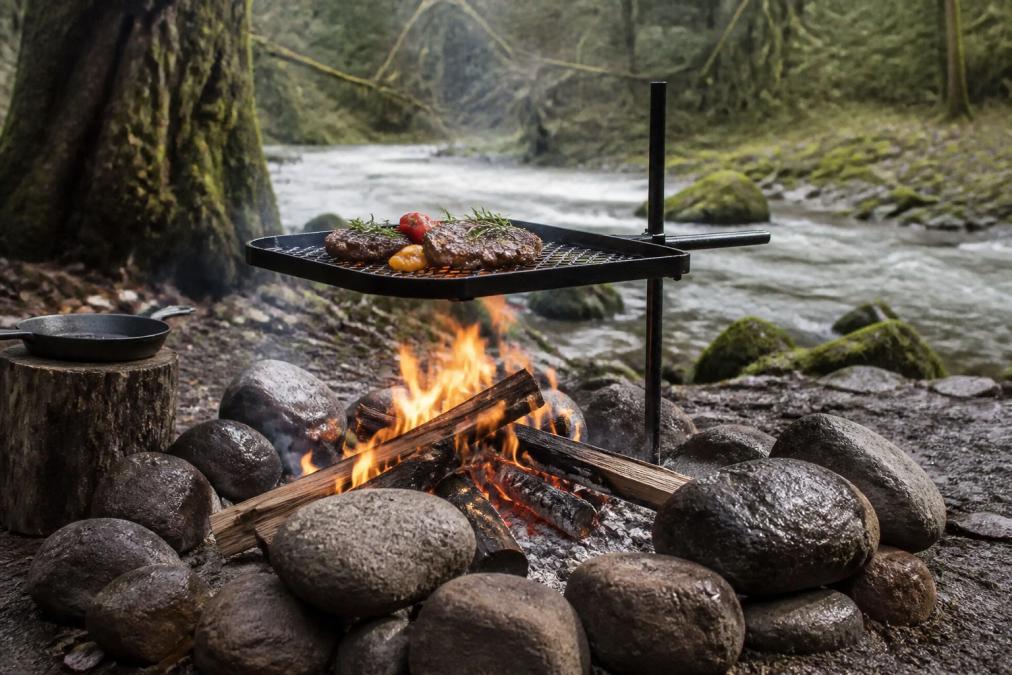
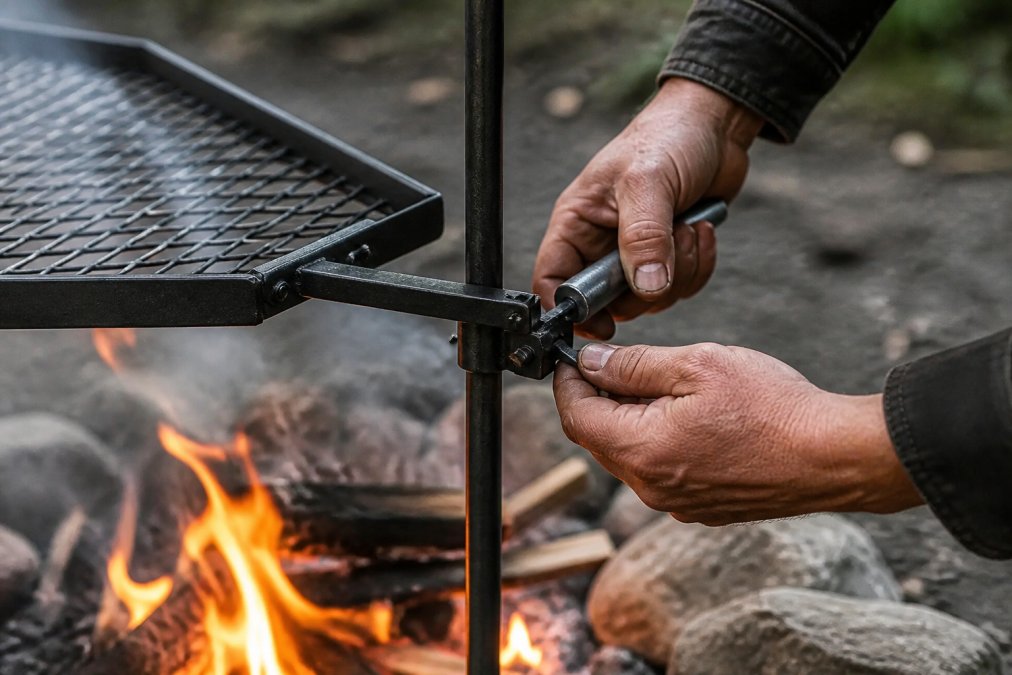
The ANVIL is hand-crafted from raw carbon steel and stakes directly into the ground at any campsite or fire ring. The grate slides and locks along the stake, letting you adjust height in seconds. This matters because real fire cooking isn't one-temperature cooking. You need to move meat away from intense heat to finish it gently, or drop it low to develop a crust. A fixed grill locks you into one approach. The ANVIL doesn't.
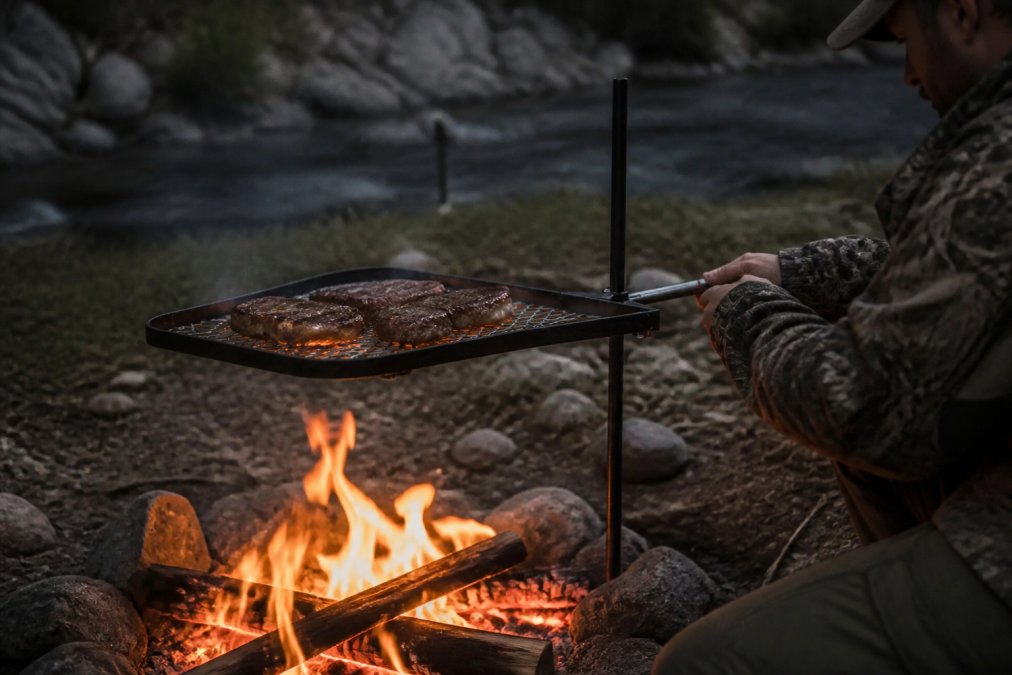
What makes this grill stand out in backcountry use is weight-to-utility ratio. At roughly 6 pounds (approximately 2.7 kilograms), it's heavy enough to handle direct flame without warping, yet light enough to pack into a remote camp (peer-reviewed research). The carbon steel construction resists rust better than chrome-plated alternatives when properly maintained. After cooking, you let residue burn off, brush clean while warm, and apply a light oil coat. Between trips, store it dry. This simple care routine keeps the finish intact for decades.
Dan D., a backcountry hunter, notes: "This grill has completely changed over-the-fire cooking for me. I have never had a grill this strong and durable, it's super versatile and easily holds an entire rear quarter from a deer." That's the real test: can it handle the weight and heat of serious outdoor cooking? The ANVIL passes it.
The lifetime warranty covers manufacturing defects, not damage from abuse or neglect, but genuine failures. If the grate cracks or the stake bends under normal use, Browns Outpost replaces it. That's confidence in build quality that most adjustable grills don't back up.
At $174.99 CAD, the ANVIL sits in the mid-to-premium range for adjustable grills. You're paying for carbon steel construction, adjustability, and a warranty that lasts your lifetime. For backcountry campers and hunters who cook regularly over open fire, it's a one-time investment.
Is an Adjustable Campfire Grill Worth It?
An adjustable grill is worth buying if you cook over open fire more than a few times per year and want real control over heat. If you're car camping once annually and throwing burgers on a fixed grate, a basic flat grill works fine. But if you're backcountry cooking, hunting trips, or serious about campfire cuisine, adjustability changes everything.
The core value is precision. Fixed-height grills force you into a single heat zone. You can't sear and slow-cook on the same grill without moving the entire fire or waiting for coals to cool. An adjustable grill solves this. You lower the grate for searing steaks, raise it for smoking ribs, and adjust mid-cook as needed. This flexibility means fewer burnt meals and better results.
Backcountry-specific weight-to-utility ratio is where adjustable grills shine. You're not at a car-camping site with unlimited gear. Every pound matters. A quality adjustable grill like the ANVIL weighs around 6 pounds (approximately 2.7 kilograms) and handles cooking for a full camp. A tripod grill might be lighter but offers less stability on uneven ground. A fixed grate is lighter still but gives you zero heat control. The adjustable design finds the balance.
Durability matters in remote conditions. When you're miles from resupply, gear failure is serious. A grill that warps under direct flame or rusts through after one wet camping trip becomes a liability. Heavy carbon steel construction resists both. Chrome-plated alternatives look shinier but corrode faster in backcountry moisture. Raw carbon steel, properly maintained, lasts decades.
Repairability is an underrated advantage. If a stake bends or a grate develops a crack in the field, what's your option? With a quality adjustable grill backed by a warranty, you have recourse. With cheap alternatives, you're stuck. For remote trips, that peace of mind justifies the investment.
The counterargument: adjustable grills cost more upfront. A basic fixed grate runs $40-$60. An adjustable grill runs $150-$250. If you're a casual camper, that's a hard sell. But if you're cooking over fire regularly, spread that cost across years of trips. The price per use drops quickly.
How to Cook Over an Open Fire with Adjustable Height Control
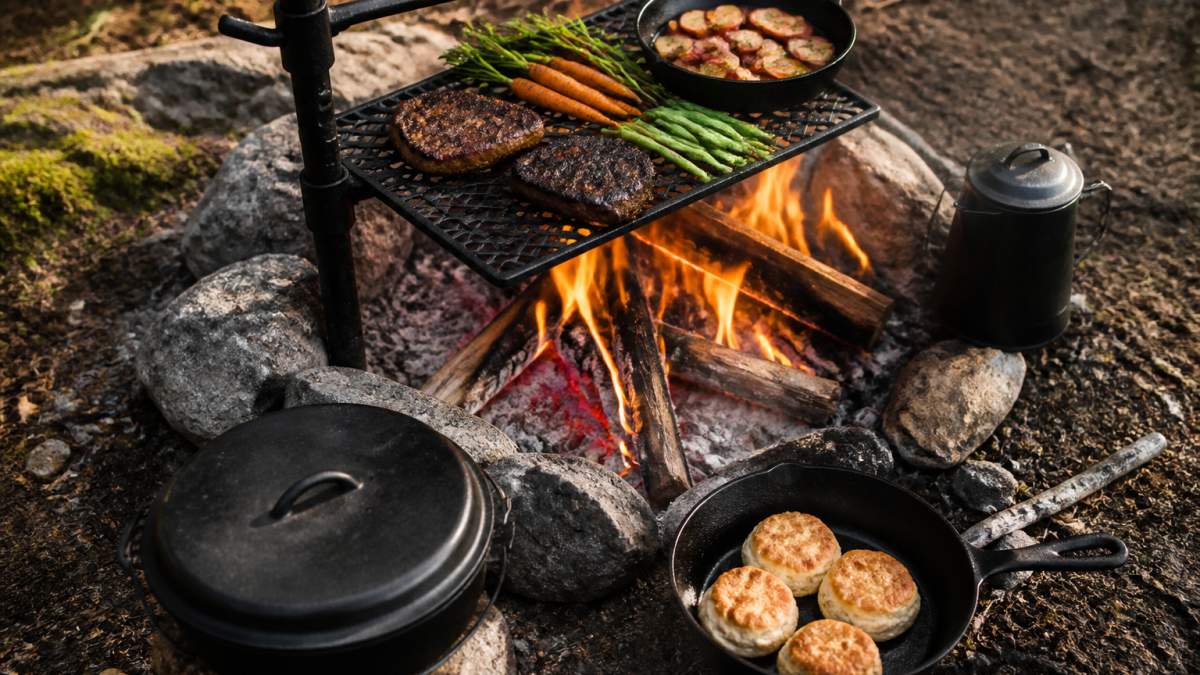
Cooking over an open fire with height control starts with understanding heat zones. The closer your grate sits to the flame, the more intense the heat. The farther away, the gentler the cooking. With an adjustable grill, you're managing this relationship actively.
Start by building your fire and letting it burn down to coals. Fresh flames are too unpredictable. Once you have a bed of hot coals with minimal active flame, position your grill. For searing meat, lower the grate until it's approximately 7.5-10 centimeters (3-4 inches) above the coals. You should feel significant heat radiating up. Place your meat on the grate and let it develop a crust without moving it. This takes 3-4 minutes per side for a steak approximately 2.5 centimeters (1 inch) thick.
Once the crust forms, raise the grate to approximately 15-20 centimeters (6-8 inches) above the coals to finish cooking gently. This prevents the outside from charring while the inside reaches the right temperature. For thicker cuts, this two-stage approach, sear low, finish high, is standard professional technique. An adjustable grill makes it practical over an open fire.
For slow-cooking items like ribs or whole chickens, keep the grate high from the start. Position it approximately 25-30 centimeters (10-12 inches) above the coals so heat is gentle and indirect. This takes longer, 45 minutes to an hour, but produces tender, evenly cooked results. The smoke from the fire flavors the meat as it cooks slowly.
Temperature control comes from two levers: grate height and fire intensity. If your grate is too high and food isn't cooking fast enough, add wood to intensify the coals. If it's cooking too fast, raise the grate higher or let the fire burn down. Most adjustable grills let you make height changes mid-cook without removing the grate, so you can dial in the perfect temperature as you go.
Thermal efficiency matters. Carbon steel holds and distributes heat better than thin metal. This means more consistent cooking across the grate surface. Hot spots are common with cheap grills. A quality adjustable grill like the ANVIL heats evenly, so your food cooks uniformly.
Use a simple test: hold your hand approximately 7.5 centimeters (3 inches) above the grate. If you can hold it there for 2 seconds, that's high heat (searing). If you can hold it for 5 seconds, that's medium (finishing). If you can hold it for 10+ seconds, that's low heat (slow-cooking). Adjust your grate height accordingly.
Campfire Cooking Safety Tips for Adjustable Grills
Safety over an open fire starts with stable positioning. Your grill must be secure on uneven ground. Before cooking, ensure the stake is driven deep enough that the grate doesn't wobble. A grill that shifts mid-cook can spill hot food or cause burns. Test stability by applying downward pressure before placing food on it.
Keep the fire contained. Your grill should sit directly over a fire ring or established fire pit, never on bare ground where flames can spread. Clear debris, dry grass, leaves, pine needles, from a radius of approximately 3 meters (10 feet) around the fire. Wind can carry embers. In backcountry settings where fire rings don't exist, create a clear mineral barrier before starting any fire.
Never leave a cooking grill unattended. Open flame cooking requires active monitoring. Hot food can ignite, wind can shift flames, or animals might approach the fire. Assign one person to watch the grill while others prepare food or set up camp.
Use proper tools. Long-handled tongs and spatulas keep your hands away from heat and flames. Short-handled utensils force you close to the fire, increasing burn risk. Wear long sleeves and avoid loose fabric that can catch flame. Keep a fire extinguisher or bucket of water nearby, not for fighting the fire, but for emergencies.
Allow the grill to cool before handling. After cooking, resist the urge to adjust or move the grate immediately. Carbon steel retains heat intensely. Wait at least 15 minutes before touching it bare-handed. Use gloves if you need to move it sooner.
Maintain proper clearance. Your grill should be positioned away from tents, gear, and vegetation. Embers can travel farther than you expect, especially in wind. A minimum clearance of approximately 4.5 meters (15 feet) from flammable materials is standard practice.
Understand fire behavior. Wind changes direction. Fires shift. Coals can flare unexpectedly. If you're unfamiliar with open-fire cooking, start with small, manageable fires before attempting large meals. Experience teaches you how fire responds to different conditions.
When finished, fully extinguish the fire. Drown coals with water, stir them, and drown again. The fire should be cold to the touch. In backcountry settings, pack out all ash and charred wood if regulations require it. Leave no trace of the fire.
What to Look for in a Backcountry Adjustable Grill
Material durability determines how long a grill lasts in harsh conditions. Heavy carbon steel is the gold standard for backcountry use. It resists warping under direct flame, doesn't corrode as quickly as chrome-plated alternatives, and improves with age if properly maintained. Avoid thin steel or aluminum, they warp easily and fail after a few intense fires.
Adjustability mechanism matters more than it sounds. The grate should slide smoothly and lock securely at any height. A stiff or unreliable locking mechanism becomes frustrating mid-cook. Test this before buying if possible. The ANVIL's stake-and-slide design is proven in field conditions, simple, reliable, and repairable if needed.
Weight-to-cooking-surface ratio is critical for backcountry trips. A grill that weighs 8 pounds (approximately 3.6 kilograms) but only cooks for two people is poor value. A 6-pound (approximately 2.7 kilograms) grill that handles four people is efficient. Calculate the surface area and compare it to weight. For remote camps, you want maximum utility per pound carried.
Packability affects whether you actually bring the grill. Does it disassemble into compact pieces? Does it fit in a pack without protruding awkwardly? The ANVIL stakes apart for transport, fitting into most expedition packs. Bulky grills that don't break down often stay home because they're too cumbersome to carry.
Heat distribution and control separate professional-grade grills from budget alternatives. A quality grill heats evenly across the cooking surface, preventing hot spots that burn food. Adjustable height is only half the equation, the grate itself must conduct heat uniformly. This requires solid construction and proper metal composition.
Corrosion resistance in wet conditions is non-negotiable for backcountry use. You'll cook in rain, pack the grill damp, and store it in humid conditions. Raw carbon steel, when properly seasoned and maintained, resists rust better than most alternatives. Chrome plating looks good initially but peels and corrodes. Stainless steel is rust-proof but conducts heat poorly and doesn't develop the seasoning that improves performance over time.
Warranty coverage tells you whether the manufacturer stands behind the product. A lifetime warranty against manufacturing defects signals confidence. Read the fine print, does it cover field damage or only defects? The ANVIL's lifetime warranty covers defects, giving you peace of mind without excusing negligence.
Repairability is the overlooked factor. If the grate cracks or the stake bends, can you replace just that part, or do you need a new grill? Quality manufacturers sell replacement parts. Cheap alternatives often force you to buy a new unit. For backcountry use, repairability extends the lifespan of your investment.
Multi-fuel versatility matters in remote settings. Your grill should work over campfires, coals, or backpacking stoves if needed. It should handle wood, charcoal, or propane without damage. The ANVIL works over any open fire, adapting to whatever fuel source you have available.
Frequently Asked Questions
What features should I look for in a backcountry adjustable campfire grill?
Prioritize weight-to-utility ratio, adjustable height for heat control, heavy-duty carbon steel or cast iron construction, packability when disassembled, and corrosion resistance. Look for grills that stake into the ground for stability over uneven terrain and allow you to sear low or slow-cook high without swapping equipment. Field-tested repairability matters too, simple designs with replaceable parts are easier to fix in remote conditions.
Is an adjustable campfire grill worth the investment?
Yes, if you cook over open fire regularly. Fixed-height grills force you to choose between searing and slow-cooking; adjustable models give you both. The ANVIL Grill at $174.99 with a lifetime warranty eliminates the need to buy multiple grills. Heavy carbon steel construction resists warping and lasts decades, making the per-use cost low over time compared to replacing cheaper options annually.
How do I maintain a carbon steel campfire grill in wet backcountry conditions?
Burn off residue over the fire after each cook, then brush clean while warm. Apply a light coat of neutral oil to the grate before packing. Store it dry between trips, moisture causes rust even in seasoned carbon steel. Pack it in a breathable bag, not plastic, to prevent condensation. In extended wet trips, oil the grate daily to maintain the protective finish.
Can I use an adjustable campfire grill in provincial parks?
Most provincial parks allow campfire cooking in designated fire pits or rings. Check your specific park's regulations before your trip, as some backcountry areas restrict open-flame cooking during fire season or in sensitive ecosystems. Adjustable grills that stake into the ground work in established fire rings, but always follow leave-no-trace principles and local fire management rules.
Choosing an adjustable campfire grill for backcountry cooking is an investment in reliable, versatile outdoor cooking. The ANVIL Grill delivers the control, durability, and packability that serious campers and hunters need. Its carbon steel construction, adjustable height mechanism, and lifetime warranty make it the top choice for remote trips where gear failure isn't an option. Get started with Browns Outpost and experience the difference that real heat control brings to your campfire cooking.
This article was written using GrandRanker