 listicle
Portable Campfire Grill for Backcountry Cooking
Table of Contents
- What Makes a Portable Campfire Grill Work in the Backcountry
- The Lifetime Warranty ANVIL Grill: Adjustable Campfire Grill Built for Open Fire
- Folding Campfire Grill vs Fixed Grate: What Folds Flat and What Doesn't
- Cast Iron Cookware That Pairs With a Backcountry Grill
- Is a Lightweight Camping Grill the Right Trade-Off for Your Trip?
- How to Clean a Campfire Grill and Keep Carbon Steel Rust-Free
- Fire Regulations, Leave No Trace, and Cooking Within the Rules
- Which Portable Campfire Grill Fits Your Trip
- Frequently Asked Questions
Last Updated: October 13, 2026
What Makes a Portable Campfire Grill Work in the Backcountry
A portable campfire grill is a packable cooking grate that stakes or folds over an open fire, letting you grill, sear, and slow-cook without hauling a full-size unit. At Browns Outpost, we build ours around three non-negotiables: pack flat, hold real weight, and survive years of fire.
Weight is the first filter. A grill that folds flat but weighs too much gets left in the truck. The second is stability. Sand, duff, and root-tangled ground all punish a wobbly stand.
Below: height control, packed size, fire rules, and which setup fits your trip.
The Lifetime Warranty ANVIL Grill: Adjustable Campfire Grill Built for Open Fire
Our top pick is the Lifetime Warranty ANVIL Grill at $174.99: 15 x 20 inches (38 x 50 cm) of heavy carbon steel grilling surface, 40 lb (20 kg) capacity, and it stakes straight into the ground with no setup.

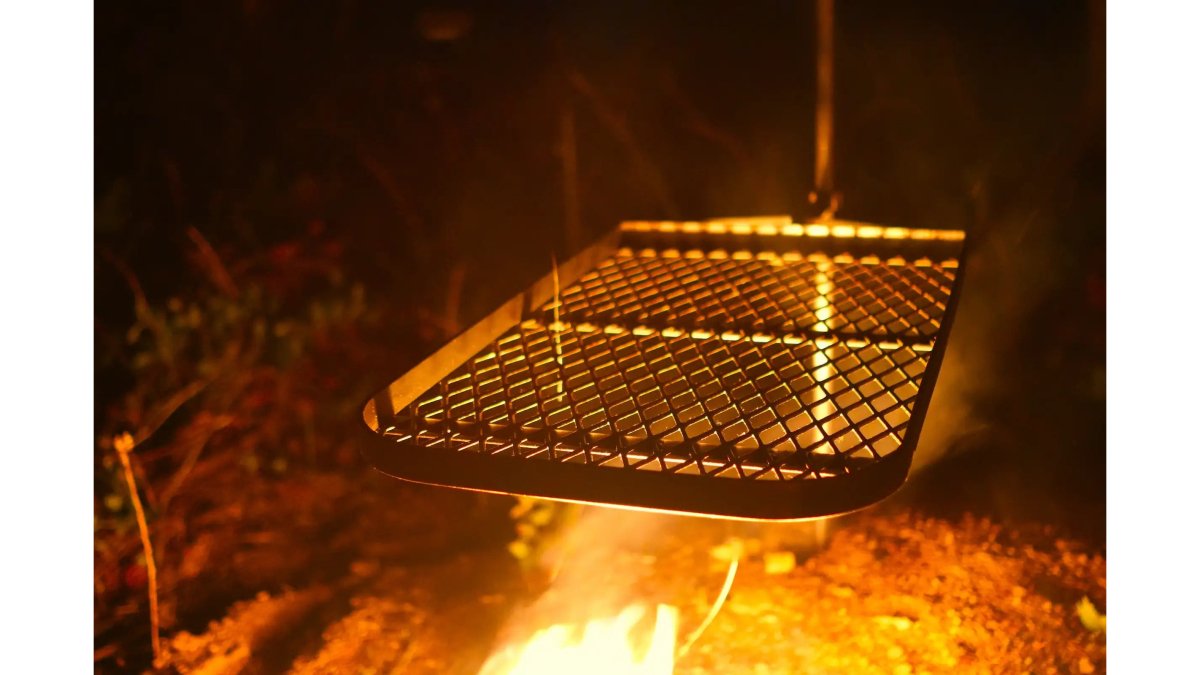
At 16.5 lbs it isn't a featherweight, but it's fixed camp gear, not something you strap to a pack for a 20 km day.
Height Adjustment and Heat Control in Practice
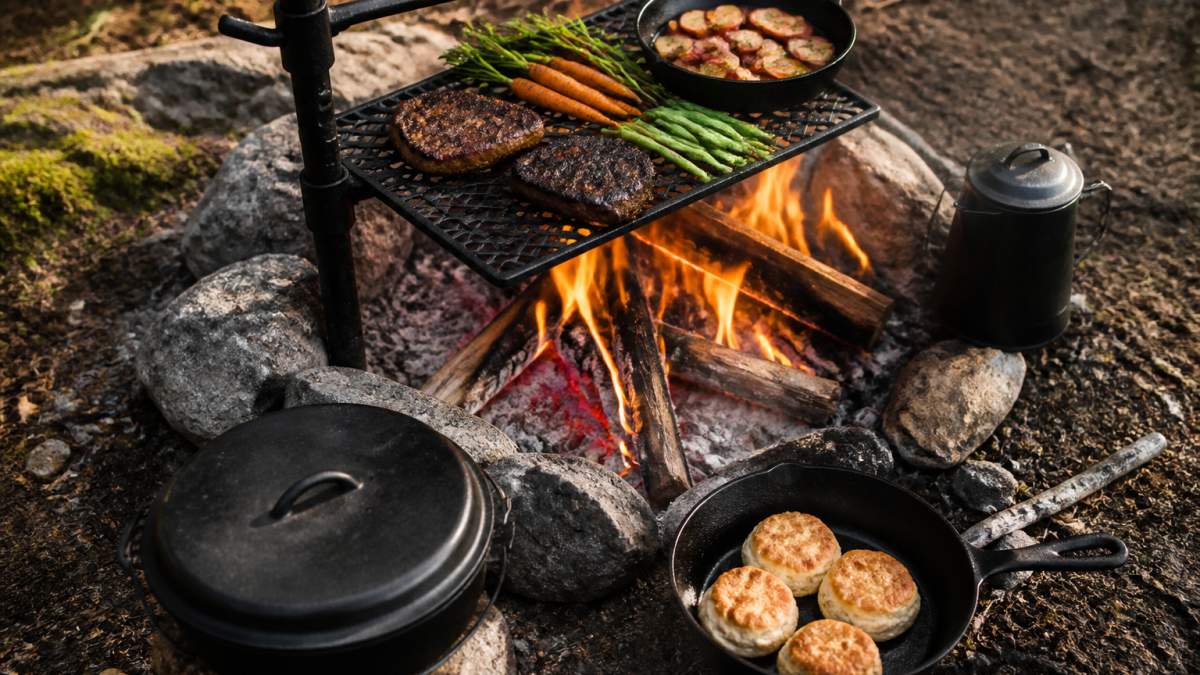
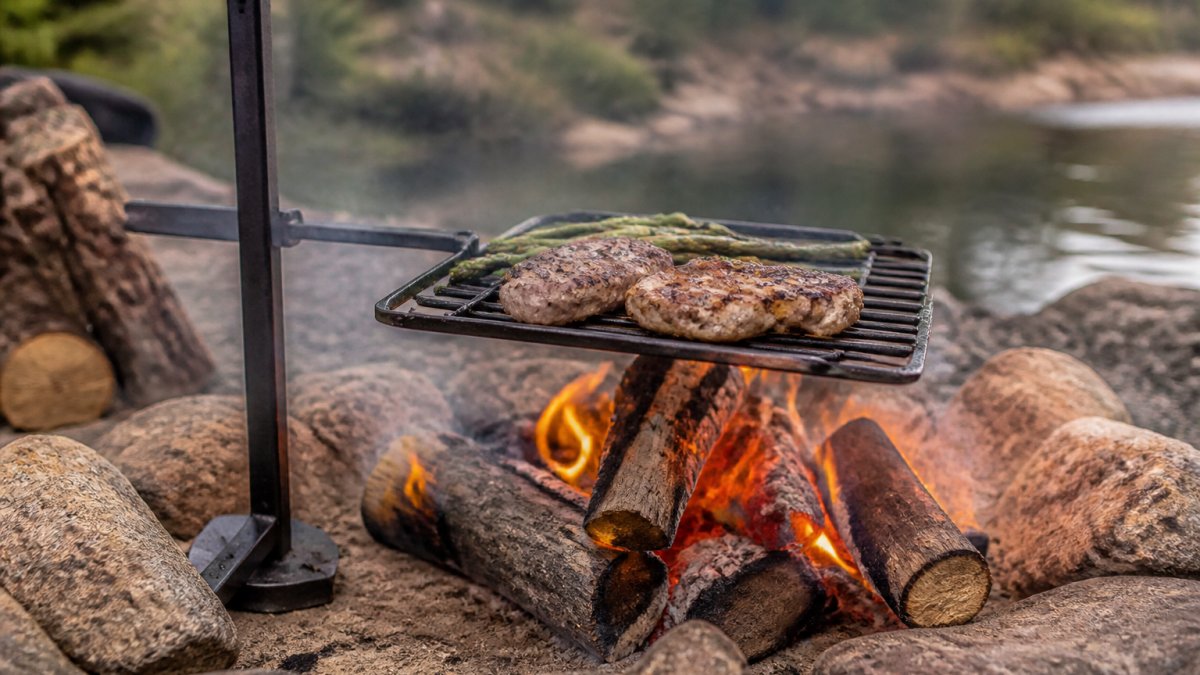
The grate slides and locks along the stake, so you set the height above the flame. Low over the coals for a hard sear, higher for low-and-slow, one adjustment replaces a whole rack of temperature guesswork.
Stability on Uneven Ground and Packed Size
The stake drives into soil, handling uneven ground better than a leg-based stand, and packs flat when the stakes come apart, no case needed. It fits a full-size fire pit or a rock ring.
Folding Campfire Grill vs Fixed Grate: What Folds Flat and What Doesn't
Packed size and weight, in real terms
Most folding grates in the 12 x 16 inch class pack to 3.8-6.4 cm thick and weigh 0.9-2.3 kg. For backpacking, packed volume against your pack's capacity matters more than weight.
How grate height and fire size change cooking
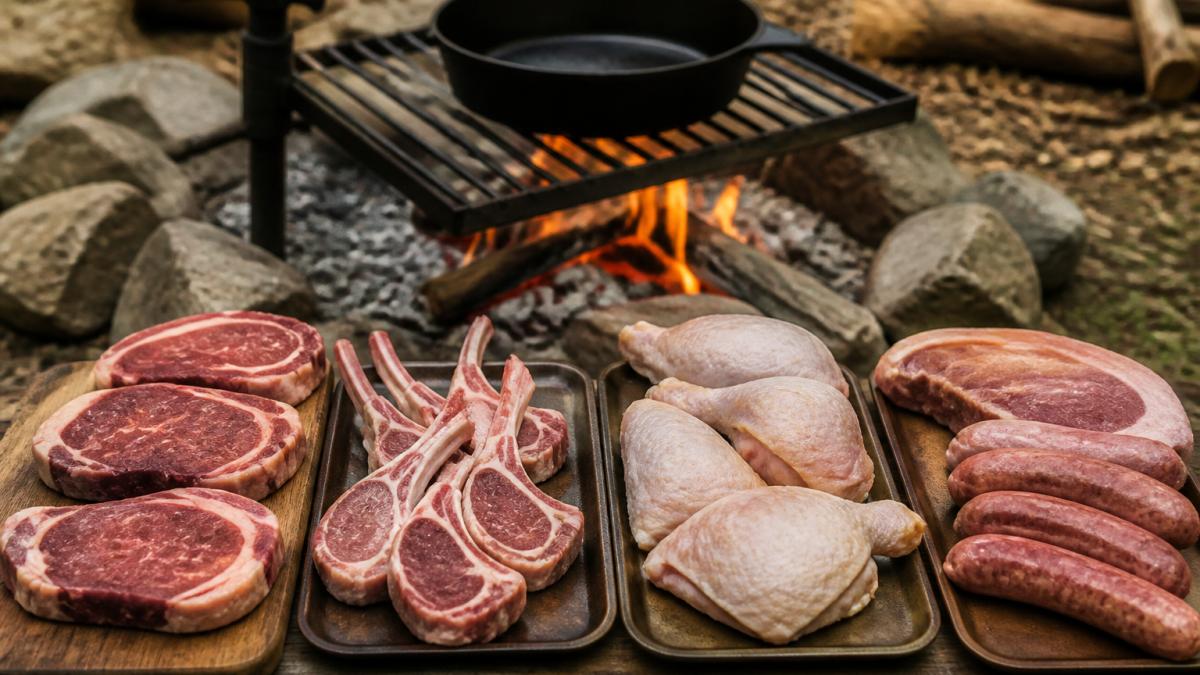
- Low over coals (5 to 10 cm): hard sear, fast crust, high risk of flare-ups from fat. Best for steaks, chops, and anything you want charred.
- Mid height (12.7 to 20.3 cm): the workhorse zone for burgers, sausages, vegetables, and fish. Enough heat to cook through without burning the outside.
- High (22.9 to 30.5 cm): low-and-slow, warming, and finishing. Useful when the fire is still flaming and you do not want to wait for coals.
Fire size matters as much as grate height.
Airflow and hot spots
Grates with wider spacing and thinner bars heat faster but cool quickly when food goes on.
Fuel compatibility
- Wood: the traditional backcountry fuel. Needs a coal bed, so plan 20 to 30 minutes of burn-down.
- Charcoal briquettes: consistent heat, easier to control, but heavy and often banned alongside wood during fire restrictions.
- Gas stoves: not a grill, but the compliant fallback when open flame is prohibited.
Stability on uneven ground
Staked grates drive into soil and handle sand, duff, and root-tangled ground better than leg-based stands, which need a flat footprint.
| Type | Packed Thickness | Typical Weight | Stability | Best For |
|---|---|---|---|---|
| Folding grate | 3.8-6.4 cm | 0.9-2.3 kg | Moderate on soft ground | Canoe trips, short hikes, solo |
| Staked fixed grate | Flat, stakes apart | 4.5-9.1 kg | High, drives into soil | Base camps, fire pits, groups |
| Legged stand | 10.2-15.2 cm | 2.3-5.4 kg | High on flat ground | Backyard, tailgating, car camping |
Cast Iron Cookware That Pairs With a Backcountry Grill
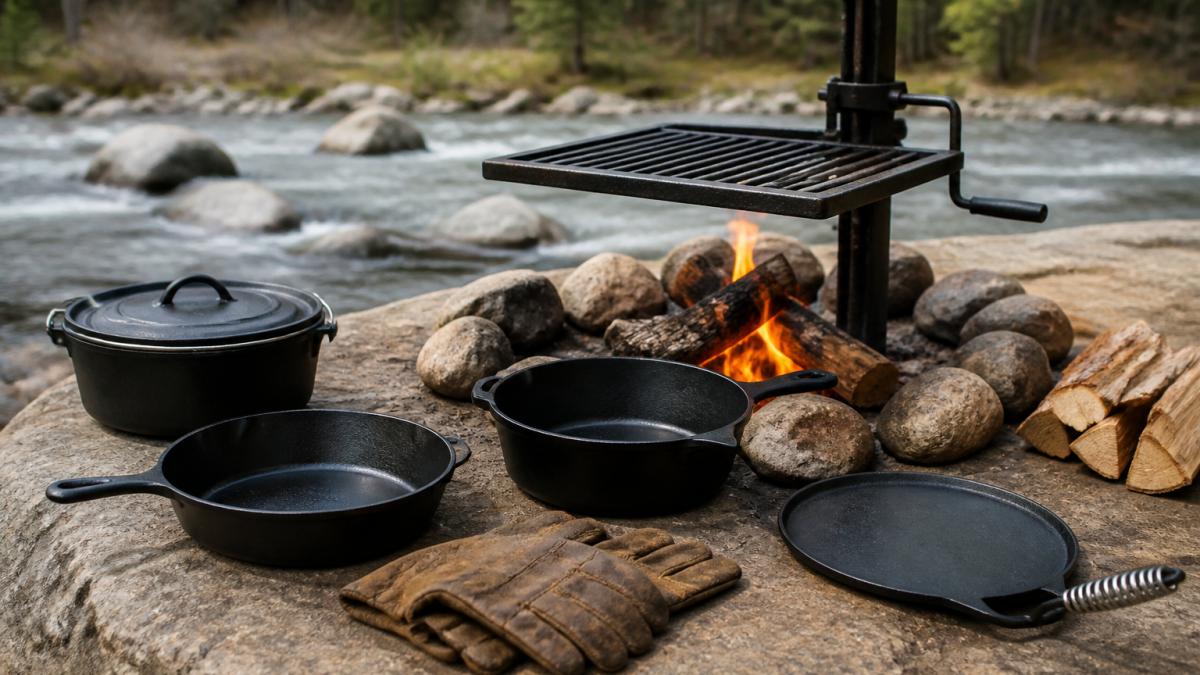
Cast iron is the natural partner for any grill grate: it holds heat, sears hard, and works over coals, on the grate, or on a home stovetop.
10" Shallow Skillet
The 10" Shallow Skillet at $32.99 is the pan you'll reach for every morning. Shallow walls mean maximum contact with the heat, so eggs and bacon come off with a proper crust, light enough to pack, tough enough to abuse.

3-Piece Fry Pan Set
The 3-Piece Fry Pan Set at $47.99 gives you 10, 8, and 6-inch pans that nest for compact storage; three pans take barely more room than one.

12" Roasting Pan
The 12" Roasting Pan at $48.99 is deep-walled to catch drippings for a pan sauce. Cast iron holds heat better than thin steel, so the campsite sear matches your kitchen's.
Is a Lightweight Camping Grill the Right Trade-Off for Your Trip?
A lightweight camping grill saves grams but usually gives up surface area, stability, or both, a fine trade solo, a poor one at base camp cooking for a group.
Ask yourself three questions before you buy light:
The Lifetime Warranty ANVIL Grill →
- How far am I carrying it?
- How many people am I feeding?
- Will I cook over coals, or do I need a raised grate?
If the answer is "a few kilometers" and "just me," go light. If it's "a short walk from the truck" and "the whole crew," weight stops mattering and cooking surface wins.
How to Clean a Campfire Grill and Keep Carbon Steel Rust-Free
Cleaning a campfire grill takes minutes if you do it while the metal is still warm: burn off residue over the fire, brush the grate clean, then wipe on a light coat of oil once it cools.
Carbon steel rusts when it stays wet. The fix is simple and consistent:
- Burn off food residue over the fire after cooking
- Brush the grate clean while it's still warm
- Oil the grate with a thin coat after each use
- Store it dry between trips
Fire Regulations, Leave No Trace, and Cooking Within the Rules
Campfire rules are not uniform, and the biggest mistake backcountry cooks make is assuming a fire is allowed because the site has a ring.
Where the rules come from
- Parks Canada manages national parks, national historic sites, and national marine conservation areas, setting its own fire rules inside those boundaries, including seasonal bans and designated-fire-pit-only requirements.
- Provincial and territorial park agencies (Ontario Parks, BC Parks, Alberta Parks, Sépaq in Quebec) set fire rules inside their park systems, often stricter than surrounding Crown land.
- Provincial and territorial wildfire authorities issue regional bans and restrictions that can change daily during dry periods, covering open fires, charcoal, and sometimes portable wood-burning units.
- Municipal bylaws apply on and near private land, and many restrict open burning outright inside town limits.
How fire bans actually work
A fire ban is usually triggered by fuel moisture, wind, and the regional fire danger rating.
Leave No Trace fire practice
Leave No Trace Canada's fire guidance centers on a few concrete habits:
- Use an existing fire ring wherever one exists. Building a new ring scars ground that may take years to recover.
- Keep the fire small. A cooking fire needs coals, not a bonfire. Small fires are easier to control and leave less ash.
- Use dead and downed wood only, and keep it local; hauling firewood across regions spreads invasive pests.
- Burn down to white ash. Half-burned wood and charcoal are what get left behind.
- Scatter cold ashes widely, well away from the site, and restore the ring to how you found it.
Ash and ground impact
Ash is the part most people get wrong. Ashes must be cold to the touch before you do anything with them; buried embers can reignite hours later.
When fires are banned
A portable gas camping stove is the compliant fallback in almost every jurisdiction that bans open flame, because it has a controllable, contained flame with no ember throw.
Which Portable Campfire Grill Fits Your Trip
Match the grill to the trip. A short walk to a fire pit calls for a staked grill with real surface area; a long backcountry approach calls for something that folds flat and disappears into your pack.
| Trip Type | Priority | Our Pick |
|---|---|---|
| Base camp, group cooking | Surface area, stability | ANVIL Grill, $174.99 |
| Solo backpacking | Packed size, weight | A folding grate |
| Canoe or car camping | Durability, versatility | ANVIL Grill + cast iron |
| Fire-ban season | Compliance | Portable gas stove |
For most backcountry cooks, the ANVIL Grill is the pick that lasts. It's the one piece of gear you buy once.
"This grill has completely changed over-the-fire cooking for me. I have never had a grill this strong and durable, it's super versatile and easily holds an entire rear quarter from a deer!", Dan D.
Frequently Asked Questions
What should I look for in a portable campfire grill for backcountry cooking?
Prioritize four things: a grate that packs flat or folds, enough cooking surface for your group (the ANVIL Grill offers 38 x 50 cm and handles 20 kg), adjustable height for heat control over an open fire, and a material that survives repeated fire exposure. Carbon steel and heavy-duty steel hold up better than thin stamped grates. Check the packed weight against your carry plan, and confirm the grill works over a fire pit, campsite ring, or staked directly into the ground.
Are folding campfire grills suitable for backpacking?
It depends on the model and your distance. A folding campfire grill that packs flat and weighs under 1 kg is realistic for short backcountry trips or canoe routes. The ANVIL Grill weighs 16.5 lbs (about 7.5 kg), so it suits base camps, vehicle-adjacent sites, and hunters rather than long-distance backpacking. For true ultralight trips, a simple folding grate under 1 kg is the more practical choice.
Is stainless steel or carbon steel better for a campfire grill?
Stainless steel resists rust with less maintenance but tends to be heavier and can warp under intense fire heat. Carbon steel heats faster, holds seasoning well, and handles high heat without warping, but needs oiling and dry storage to prevent rust. The ANVIL Grill uses heavy carbon steel with an acid-bathed, olive oil-seasoned finish, so it arrives ready to cook with no chemical coatings.
How do you clean and maintain a campfire grill after a backcountry trip?
Burn off food residue over the fire, then brush the grate clean while it's still warm. Once cool, apply a light coat of oil to the grate to prevent rust. Store the grill dry between uses. For cast iron cookware used alongside your grill, hand-wash with hot water only, dry immediately on heat, and re-oil after every use. Never put cast iron in a dishwasher, as one cycle strips the seasoning.
Can you use a portable campfire grill during a fire ban?
Usually not for open fire. Most fire bans prohibit open flames, including campfire rings and wood-burning fires, even with a grill. Some jurisdictions allow certified portable camp stoves using gas or liquid fuel during restrictions, so check the specific ban wording for your area before you travel. A grill designed for open fire, like the ANVIL Grill, should stay packed when a ban is active.
Open-fire cooking in the backcountry rewards gear that holds up, and most portable grills give out long before the trip does. Browns Outpost builds the ANVIL Grill with an adjustable height design, a heavy carbon steel grate, and a lifetime warranty, so it's the last campfire grill you buy. Pair it with our cast iron cookware and you get pro results over any fire. Get started with Browns Outpost and cook over real fire for a lifetime.