 listicle
Best Camping Cookware for Durability
Table of Contents
- What Makes Camping Cookware Actually Durable
- How to Cook Over Open Fire with Durable Gear
- Benefits of Carbon Steel Cookware for Camping
- Top Durable Camping Cookware Options
- 1. The Lifetime Warranty ANVIL Grill: Adjustable Control and Carbon Steel Durability
- 2. 3-Piece Fry Pan Set: Nesting Design Meets Cast Iron Longevity
- 3. 30 cm Dutch Oven: Heavy-Duty Construction for Long-Term Use
- 4. 25 cm Cauldron with Reversible Lid: Versatility Without Compromise
- 5. 40 cm × 23 cm Griddle: Flat-Surface Durability for Group Cooking
- 6. 25 cm Shallow Skillet: Packability and Abrasion Resistance
- 7. 30 cm Roasting Pan: Deep-Walled Heat Retention
- Maintenance and Care for Long-Term Durability
- Environmental Impact and Manufacturing
- Conclusion
Last Updated: August 18, 2026
What Makes Camping Cookware Actually Durable
Durability in camping cookware depends on material choice, construction method, and how the piece handles direct flame exposure without warping, cracking, or losing its seasoning. Cast iron, carbon steel, stainless steel, titanium, and anodized aluminum each perform differently under field conditions. The right choice depends on your cooking style, location, and weight tolerance.
Material Comparison: Stainless Steel vs. Titanium vs. Aluminum vs. Cast Iron
Cast iron is the durability standard. It's nearly indestructible under direct flame, won't warp, and improves with use as seasoning builds. The tradeoff is weight and maintenance, oil after every use, and rust happens fast in wet conditions if neglected.
Carbon steel splits the difference. It's lighter than cast iron, heats faster, and handles open flame without warping. Durability is nearly identical over time, but it requires the same oiling discipline. Browns Outpost's ANVIL Grill uses heavy carbon steel specifically because it combines cast iron's durability with better packability.

Stainless steel resists corrosion exceptionally well with no rust concerns in wet conditions. The problem is thermal efficiency, it doesn't distribute heat evenly, creating hot spots that scorch food on one side while leaving it raw on the other.
Titanium is expensive and overkill for most camping. It's nearly indestructible and weighs almost nothing, but titanium doesn't conduct heat well, so you're fighting uneven cooking the entire trip.
Anodized aluminum is lightweight and won't rust. Hard-anodized aluminum develops a non-stick surface over time. The durability issue: it can dent, and direct flame contact can damage the anodizing layer. It's fine for car camping but won't survive years of hard use like cast iron does.
Durability and Longevity Factors
Material thickness is foundational. Thin-walled cookware warps under extreme heat; heavy-gauge cast iron or carbon steel stays flat after years of campfire cooking.
Construction method matters too. Cast iron hand-poured and finished slowly resists cracking better than mass-produced pieces. Welded seams on handles and lids are stronger than riveted connections, which loosen over time.
Heat cycling is where most cookware fails. Cast iron and carbon steel handle repeated heating and cooling better than aluminum because they expand and contract more uniformly. Seasoning adds a protective layer that extends durability, a well-seasoned cast iron pan resists rust even in humid conditions.
Weight vs. Sturdiness Trade-offs
Cast iron is heavy. A 30 cm Dutch oven weighs roughly 3 kilograms. For car camping, that's fine; for backcountry hiking, it's a deal-breaker.
Carbon steel offers the best compromise, 30-40% lighter than cast iron while maintaining nearly identical durability and heat retention. The 3-Piece Fry Pan Set from Browns Outpost stacks into a compact bundle that fits in most camp boxes.
Titanium is the ultralight option but sacrifices cooking performance and costs significantly more. The real trade-off isn't just weight, it's packability and how well pieces nest together.
How to Cook Over Open Fire with Durable Gear
Open-fire cooking demands gear that won't fail when flames lick the sides and coals sit directly underneath. Cast iron and carbon steel thrive in these conditions; thin aluminum warps, and stainless steel develops hot spots.

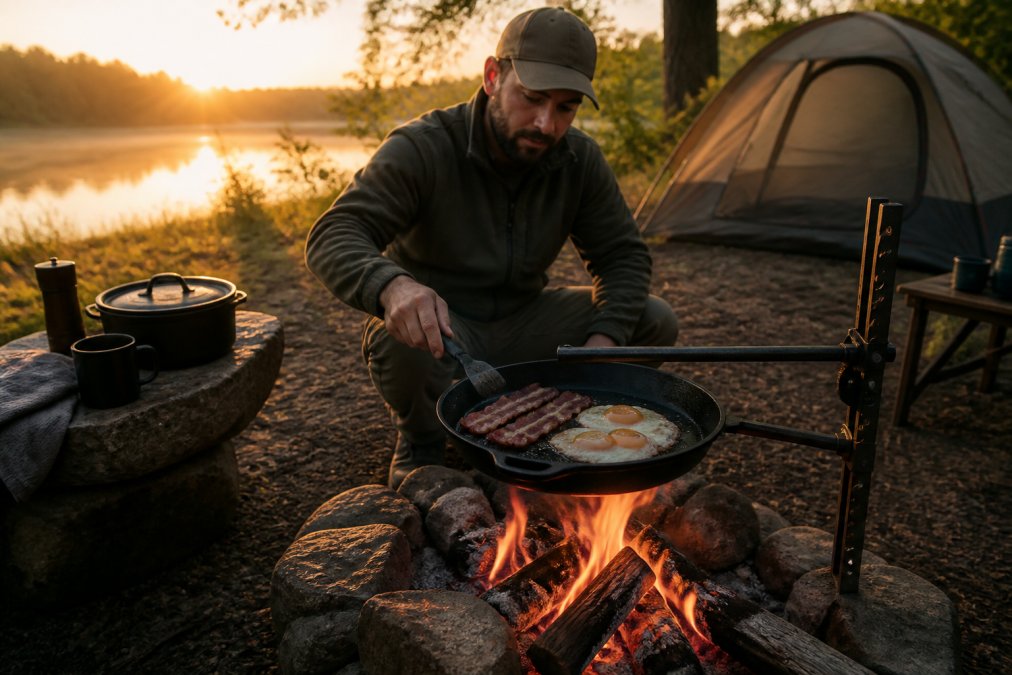
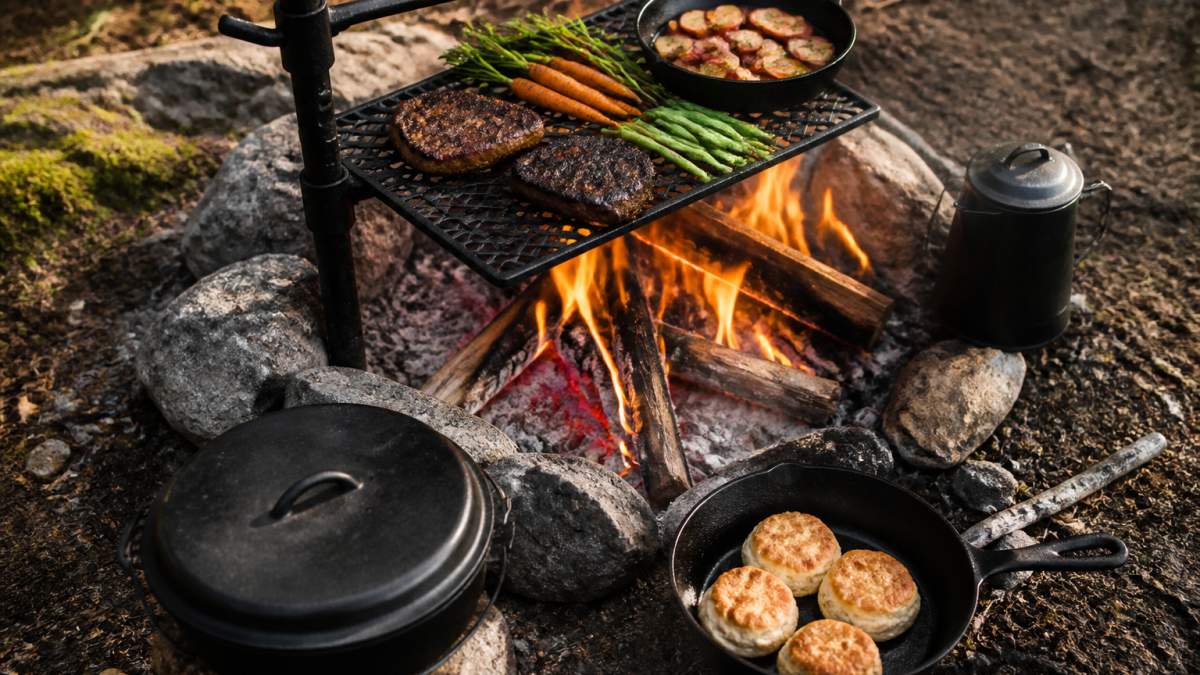
The key is adjustability. The ANVIL Grill's adjustable stake design lets you dial in precise height control, raise the grate for slow-cooking ribs, lower it for a hard sear on steaks.
Heat Distribution and Efficiency
Cast iron and carbon steel distribute heat evenly across the cooking surface with no hot spots or cold zones. Thermal mass, how much heat the cookware stores, matters enormously. Heavy cast iron holds heat longer after it leaves the fire, so food continues cooking evenly during resting.
Heat conductivity determines how fast the cookware reaches cooking temperature. Cast iron takes longer to heat up than aluminum but stays hot longer. A thick base (3mm or thicker) distributes flame heat smoothly across the entire cooking surface.
Campfire-Safe vs. Stove Cooking Compatibility
Cast iron and carbon steel work flawlessly over open flame, on grill grates, and on home stovetops. Stainless steel works everywhere but cooks poorly over campfire due to uneven heat distribution. Aluminum works on stovetops and car camping grill grates but direct flame exposure can damage the anodizing.
The ANVIL Grill's adjustable design works over any fire, firepit, backyard bonfire, or campsite ring, making it adaptable to whatever fire situation you encounter.
Benefits of Carbon Steel Cookware for Camping
Carbon steel heats faster than cast iron, weighs less, and maintains the same durability and heat retention over a lifetime. It requires the same seasoning discipline, oil after every use, dry storage between trips, but develops a non-stick surface that rivals any modern coating without chemical concerns.
For camping, carbon steel's lighter weight makes a real difference when packing multiple pieces. The 3-Piece Fry Pan Set nests together in a compact footprint. Carbon steel also handles acidic foods better than cast iron; tomato-based stews and citrus marinades won't strip seasoning the way they do on cast iron.

Coated vs. Uncoated Cookware Performance
Uncoated cast iron and carbon steel require seasoning maintenance but reward you with durability that outlasts any coating. Coated non-stick cookware offers convenience but has a finite lifespan, the coating eventually chips or wears through, especially under campfire abuse.
For camping, uncoated is the right choice. Maintenance is minimal, oil after use, dry storage. Durability is infinite.
Corrosion Resistance and Rust Prevention
Cast iron rusts if exposed to moisture without protection. Proper seasoning prevents rust by creating an oily barrier between the iron and moisture. Carbon steel behaves identically. Oil after every use, and rust won't develop even in wet conditions.
Stainless steel and titanium are genuinely rust-proof and won't corrode regardless of conditions. For most campers, the maintenance routine becomes automatic, oil the pan while warm, store it dry, and rust never becomes an issue.
Top Durable Camping Cookware Options
1. The Lifetime Warranty ANVIL Grill: Adjustable Control and Carbon Steel Durability
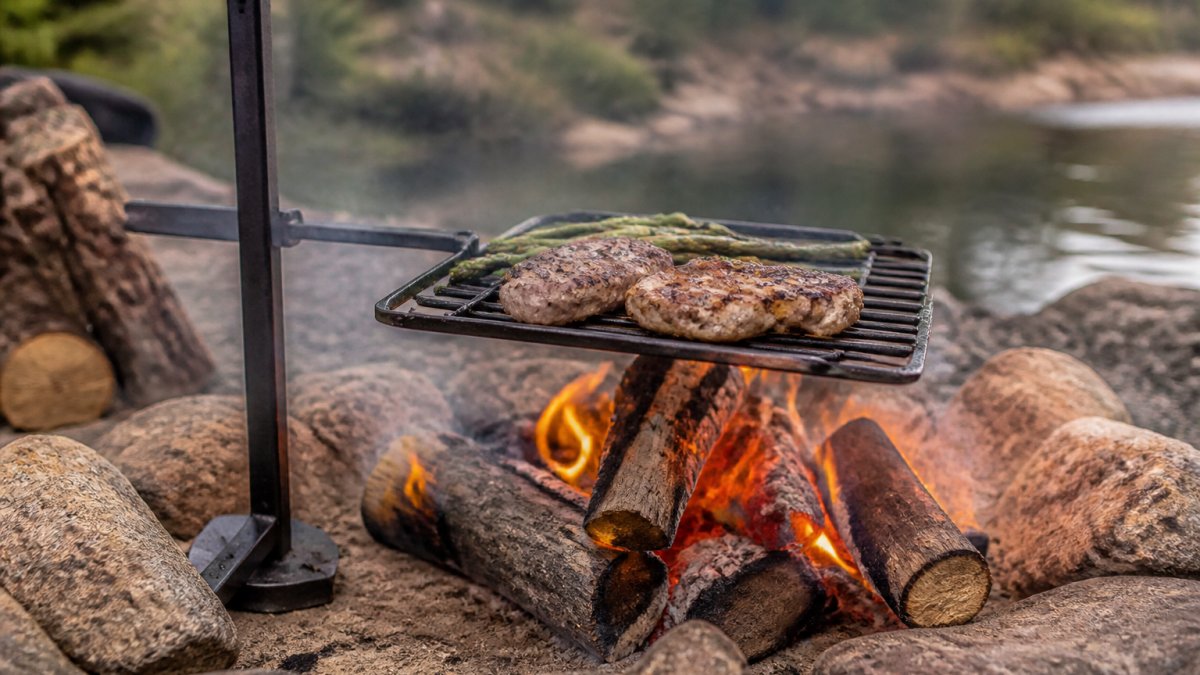
The ANVIL Grill is built for people who take fireside cooking seriously. Heavy carbon steel construction, adjustable height control, and a lifetime warranty against manufacturing defects make this the top pick for durability and versatility.
The adjustable stake design is the differentiator. You raise or lower the grate to control heat exposure precisely, low for a hard sear, high for slow-smoking. It works over any fire and stakes apart for transport. The carbon steel grate handles direct flame without warping.
At $174.99 CAD, it's an investment, but it's the last grill you'll buy. The lifetime warranty covers manufacturing defects, and durability means you're passing this to your kids.
2. 3-Piece Fry Pan Set: Nesting Design Meets Cast Iron Longevity
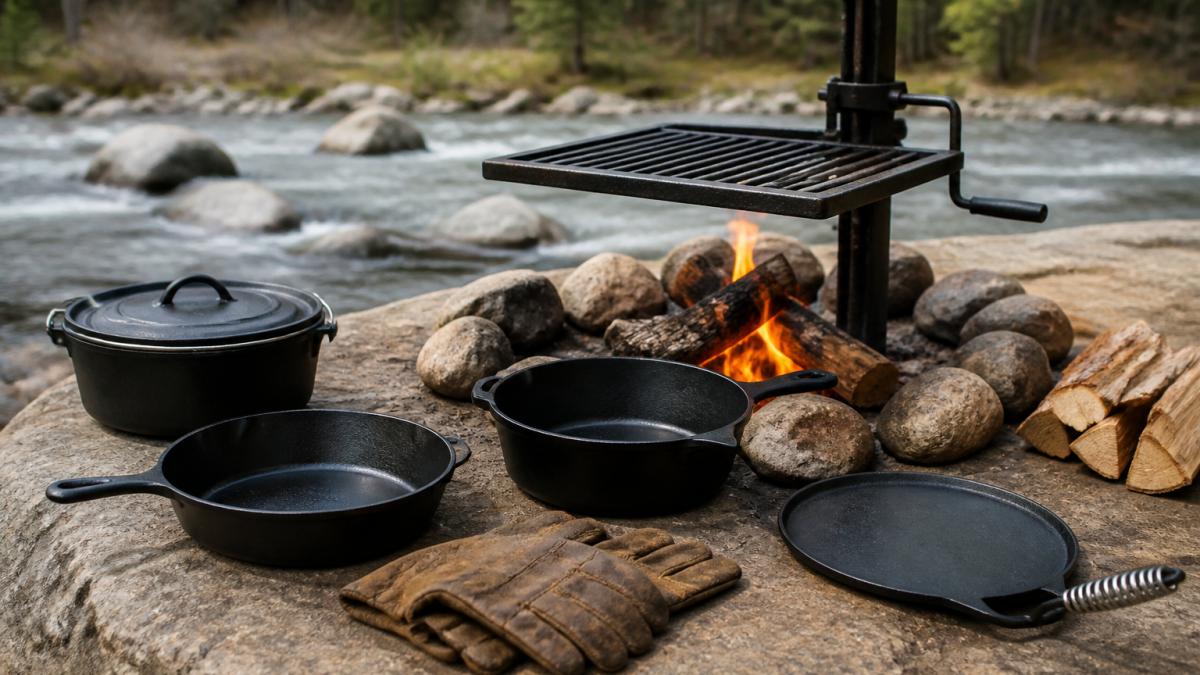
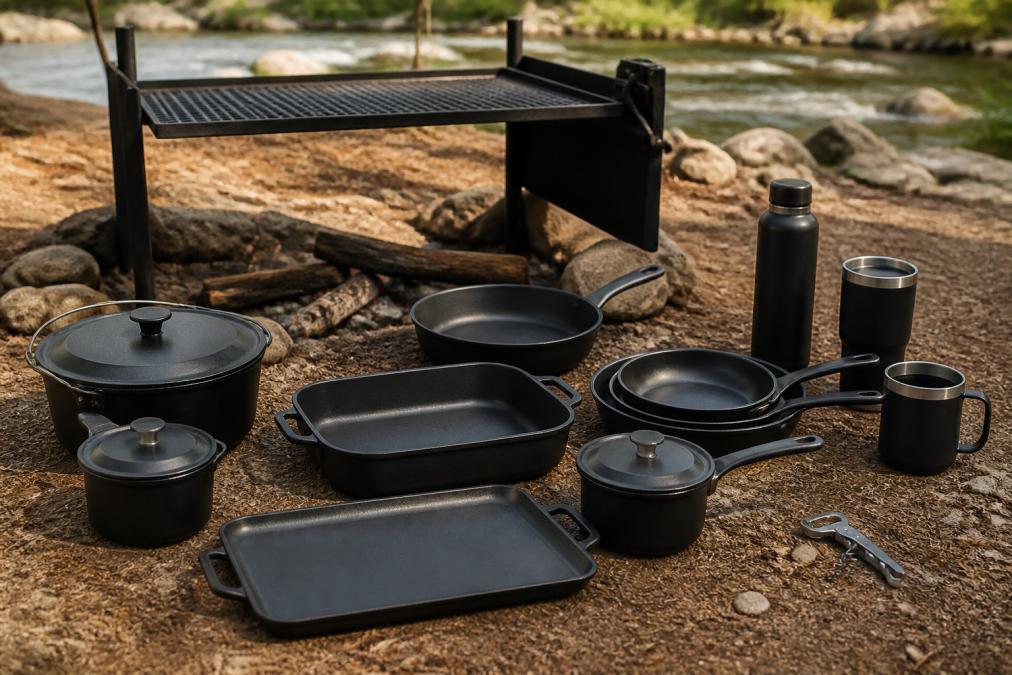
Three cast iron fry pans (25 cm, 20 cm, and 15 cm) covering everything from a single fried egg to a full skillet dinner. They nest together for compact storage, so you stop packing pans you don't need.
Cast iron's durability is unmatched. These pans will outlast you if maintained. At $47.99 CAD for all three, it's the best value for durable cast iron. Each pan is pre-seasoned and ready to cook on.
3. 30 cm Dutch Oven: Heavy-Duty Construction for Long-Term Use
The 30 cm Dutch oven is the workhorse of the camp kitchen, big enough to braise a shoulder of lamb, simmer a stew for six, or bake bread under coals. The flanged lid holds coals, turning it into a genuine camp oven for bread, cobbler, and casseroles.
At $52.99 CAD, it's cast heavy on purpose to hold heat like a furnace and shrug off the abuse a real fire dishes out, trip after trip. Comfortably serves 4-6 people for stews, chilis, or braises. This is generational gear.
4. 25 cm Cauldron with Reversible Lid: Versatility Without Compromise
A deep-bellied 25 cm cast iron cauldron with a reversible lid that doubles as a griddle. Flip it flat-side up and it's an extra cooking surface for biscuits, bacon, or a searing steak.
At $45.99 CAD, it delivers two tools in one. Built for open flame, it goes straight over coals, on a grill grate, or on the stovetop at home.
5. 40 cm × 23 cm Griddle: Flat-Surface Durability for Group Cooking
Forty by twenty-three centimetres of prime real estate for pancakes, eggs, and everything else. Sized to feed a whole campsite at once, with pancakes on one side and eggs and bacon on the other, all going simultaneously.
At $37.99 CAD, it's the pan for trips where everyone's hungry at the same time. Cast iron durability means it handles years of high-heat cooking without degrading.
6. 25 cm Shallow Skillet: Packability and Abrasion Resistance
The sear that never fails. Shallow walls mean maximum contact with heat. At $32.99 CAD, it's the entry point to durable cast iron camping cookware. Well-seasoned, it releases eggs cleanly without non-stick coating and works on every stovetop type, including induction.
7. 30 cm Roasting Pan: Deep-Walled Heat Retention
Deep enough to hold a roast and its juices, hot enough to put a real crust on a ribeye. The deep-walled construction catches drippings for a pan sauce instead of losing them to the fire.
At $48.99 CAD, it's the specialized tool for serious camp cooks. One pan works on campfire, grill grate, or stovetop at home with the same results everywhere.
| Cookware | Price | Best For | Key Durability Feature |
|---|---|---|---|
| ANVIL Grill | $174.99 | Adjustable heat control | Carbon steel, lifetime warranty |
| 3-Piece Fry Pan Set | $47.99 | Versatile sizing | Cast iron, nesting design |
| 30 cm Dutch Oven | $52.99 | Group cooking, baking | Heavy-gauge cast iron |
| 25 cm Cauldron | $45.99 | Flexible one-pot meals | Reversible lid, cast iron |
| 40 cm × 23 cm Griddle | $37.99 | Large-scale breakfasts | Flat cast iron surface |
| 25 cm Shallow Skillet | $32.99 | Daily use, packability | Lightweight cast iron |
| 30 cm Roasting Pan | $48.99 | Searing and roasting | Deep-walled cast iron |
Maintenance and Care for Long-Term Durability
Durability requires consistent maintenance. The routine is simple and takes minutes after every use.
Ease of Cleaning and Field Maintenance
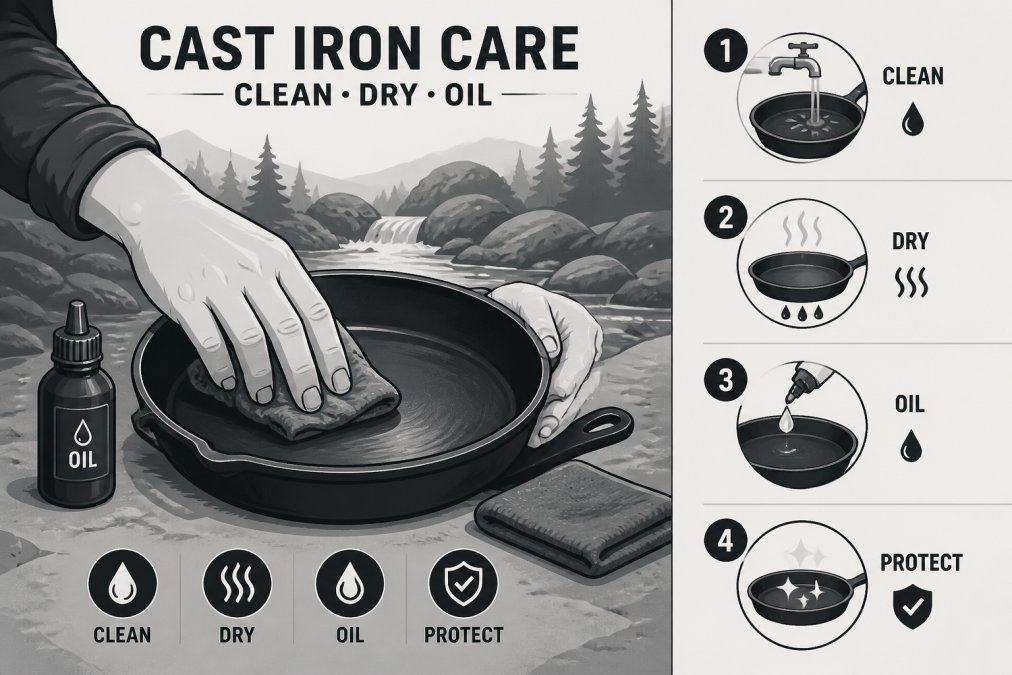
Hand-wash with hot water only, no soap, which strips seasoning in one wash. Dry immediately on heat so no water spot rusts the surface.
Re-oil after every use with a thin coat of neutral oil while the pan is still warm so the oil absorbs into the surface. Never use the dishwasher.
In the field, this means rinsing with hot water from your camp stove, drying over the fire, and oiling while warm. Total time: under two minutes per pan.
Repairability and Replacement Parts
Cast iron and carbon steel don't have parts that fail. There's no coating to chip, no non-stick layer to wear through, no handles that snap off under normal use.
If a handle does crack, cast iron can be re-welded or reinforced. Lids can be replaced if lost or damaged. This repairability is part of what makes cast iron generational gear, you're not replacing it when a coating fails.
Environmental Impact and Manufacturing
Cast iron manufacturing is resource-intensive upfront but offset by longevity. A cast iron pan used for 50 years has a lower environmental footprint per use than aluminum cookware replaced every 5-10 years.
Carbon steel has similar longevity with slightly lower manufacturing impact because it's lighter. For environmental responsibility, cast iron and carbon steel win, they last indefinitely, require only food-grade oil for maintenance, and never need replacement.
The best camping cookware for durability is cast iron or carbon steel, backed by consistent maintenance and proper storage. Browns Outpost delivers both through hand-crafted construction and a lifetime warranty. The ANVIL Grill's adjustable design solves the control problem that defeats most campfire cooking, while the Dutch ovens, skillets, and griddles provide versatility for any camp meal. Start with the 3-Piece Fry Pan Set at $47.99 CAD if you're new to cast iron, or invest in the ANVIL Grill at $174.99 CAD if you're serious about open-fire cooking. Either choice will outlast decades of trips.
Frequently Asked Questions
What is the most durable material for camping cookware?
Cast iron and raw carbon steel are the most durable materials for camping cookware. Cast iron handles direct flame contact without warping and improves with use as seasoning builds. Carbon steel offers similar durability with slightly less weight. Both resist corrosion when properly maintained and can last a lifetime with basic care. Aluminum and titanium are lighter but less heat-retentive; stainless steel doesn't season the same way and can develop hot spots over open flame.
How do I maintain durable camping cookware to prevent rust?
Hand-wash with hot water immediately after cooking, no soap needed. Dry completely on heat to prevent water spots. Apply a thin coat of neutral oil after each use while still warm; this maintains the seasoning layer and prevents rust. Store in a dry location between trips. Avoid the dishwasher, which strips seasoning in one cycle. If rust does appear, scrub with a stiff brush or steel wool and re-season. Proper oiling is the single most important step for long-term rust prevention.
Is cast iron or carbon steel better for campfire cooking?
Both excel at campfire cooking, but cast iron edges ahead for durability and heat retention. Cast iron is thicker, holds heat longer, and improves with age as seasoning deepens. Carbon steel is lighter and heats faster, making it better for packable trips. Cast iron handles direct coal contact without degradation; carbon steel does too but with slightly less mass. For stationary base camp cooking, cast iron's superior heat retention wins. For backpacking, carbon steel's weight advantage matters more. The Lifetime Warranty ANVIL Grill uses heavy carbon steel specifically to balance durability with adjustable height control over any fire.
What features make camping cookware truly durable?
True durability comes from material thickness, heat-resistant construction, and smart design. Heavy cast iron or carbon steel resists warping and denting under direct flame. Locking handles and pot grippers stay secure through rough handling. Nesting design reduces damage during transport. Reversible lids add functionality without extra pieces to break. Lifetime warranties back the construction quality. Avoid thin-walled cookware that dents easily or non-stick coatings that flake off with abrasion. Field-tested gear from manufacturers who actually use their products in real camping conditions proves durability better than marketing claims.
Why choose raw carbon steel over non-stick camping pans?
Raw carbon steel builds seasoning over time, improving non-stick properties naturally without coatings that flake or wear. Non-stick coatings fail quickly under campfire heat and rough handling, leaving you with bare, reactive cookware. Carbon steel's rugged construction withstands direct flame, abrasion, and metal utensils without degradation. It's repairable, if damaged, you season it again. Non-stick pans are disposable once the coating fails. For long-term durability and professional results, seasoned carbon steel outperforms non-stick every time, especially over open fire where heat control is less precise.
This article was written using GrandRanker