 listicle
Best Lodge Cast Iron Alternatives: 2026 Guide
Table of Contents
- Why Cast Iron Alternatives Matter for Outdoor Cooking
- Enameled vs Raw Cast Iron: Which Suits Your Needs
- Key Factors to Compare When Choosing Cast Iron
- How to Season a New Cast Iron Pan for Best Results
- Maintenance and Long-Term Care
- Top Cast Iron Alternatives for Outdoor Enthusiasts
- Conclusion
Last Updated: August 14, 2026
Why Cast Iron Alternatives Matter for Outdoor Cooking
Cast iron has dominated outdoor kitchens for centuries because it holds heat exceptionally well. But cast iron alternatives have evolved dramatically, and understanding when to choose raw cast iron, enameled versions, or carbon steel options can transform how you cook in the backcountry.
At Browns Outpost, we've spent years testing cookware across different conditions. The reality is that no single material works best for every situation. A 30 cm Dutch oven excels at slow-cooking stews over coals, but it's brutal to pack on a minimalist trip. A lightweight griddle feeds a crowd at breakfast, but it won't braise a shoulder of lamb. The best approach is understanding the trade-offs between weight, heat retention, durability, and versatility so you can build a system that matches your actual cooking style.

This guide covers the material science behind cast iron and its alternatives, walks you through the key factors that separate good outdoor cookware from gear that'll fail you miles from civilization, and shows you exactly which Browns Outpost products solve specific cooking challenges.
Enameled vs Raw Cast Iron: Which Suits Your Needs
Raw cast iron starts as bare metal. It requires seasoning, a process where polymerization of oils creates a non-stick patina through repeated heating. Raw cast iron responds instantly to heat changes, distributes heat evenly, and builds a better non-stick surface the more you use it. The downside: it demands attention. Moisture is the enemy. You'll hand-wash it immediately after cooking, dry it over heat, and oil it before storage. In wet conditions, rust becomes a real threat if you're not vigilant.
Enameled cast iron comes with a ceramic coating that seals the metal underneath. You can wash it with soap. You don't need to season it. It won't rust if you forget to dry it immediately. The trade-off is that the enamel coating, while durable, is not indestructible. Chips expose bare metal, which can rust. Thermal shock can crack the enamel. And enameled cast iron doesn't develop a better non-stick surface over time the way raw iron does.
For outdoor cooking, the choice depends on your environment and commitment level. Raw cast iron is best if you're willing to maintain it properly and value performance gains. Enameled makes sense if you're cooking in wet conditions, traveling with minimal gear for maintenance, or you want soap-and-water cleanup. Most serious outdoor cooks carry both: raw skillets for searing and high-heat cooking, enameled Dutch ovens for braising and stews.
Key Factors to Compare When Choosing Cast Iron
Not all cast iron performs the same way. Material composition, manufacturing process, weight, and surface finish determine whether a pan will be your workhorse or a regretted purchase.
Heat Retention and Thermal Mass
Cast iron's superpower is thermal mass, the ability to absorb and hold heat. A thick cast iron pan heats slowly but holds that temperature with remarkable stability, which is why searing a steak over coals produces a crust that thinner materials can't match. Over a campfire, heat is inconsistent. Cast iron's thermal mass acts as a buffer, smoothing out temperature swings.
The Browns Outpost 25 cm Shallow Skillet delivers this performance in a packable size. Its depth is engineered for maximum searing surface while the cast weight provides genuine heat retention without the bulk of a deep Dutch oven. For most camp cooks, this size handles 80% of what you'll actually cook.
Weight and Ergonomics for Portability
A 30 cm Dutch oven can weigh 2-3 kilograms. A full set of skillets adds another 3-4 kilograms to your pack. For car camping, this is fine. For backcountry trips, every gram matters.
Weight distribution matters as much as total weight. A pan with a poorly designed handle becomes exhausting to use over a fire. A well-designed handle balances the pan's weight and provides a comfortable grip. A rolled rim, where the edge is folded under, takes wear better and won't slice into your palm during cleanup.
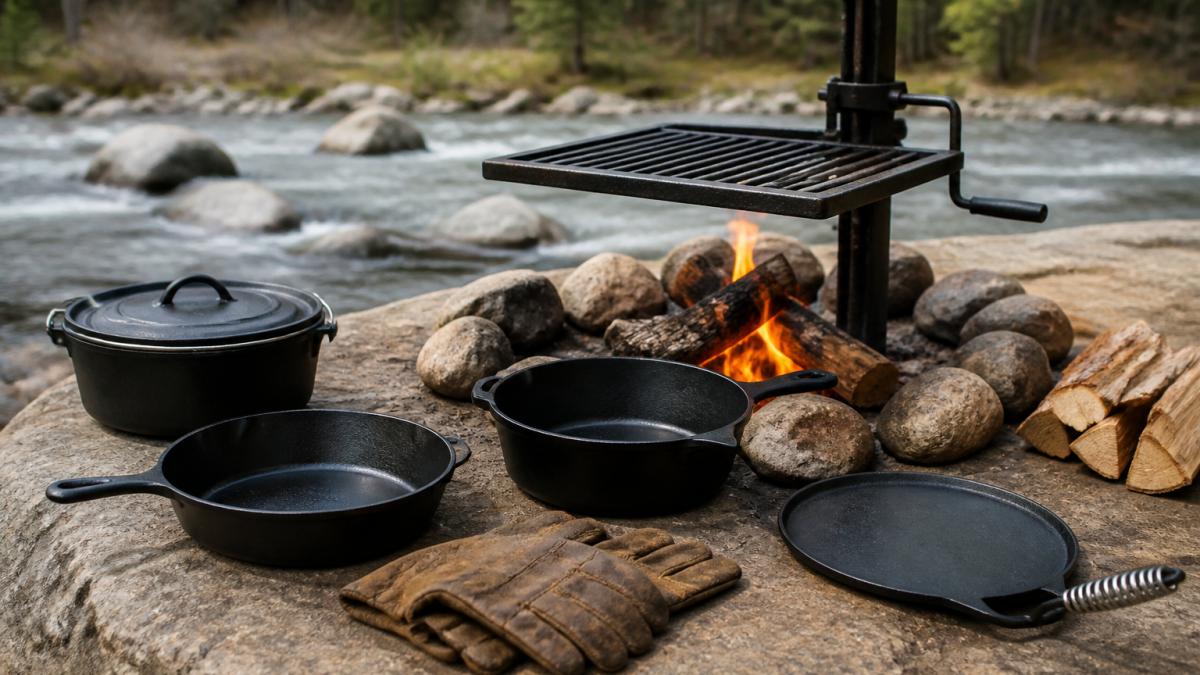
For accessibility, weight becomes a genuine consideration. Arthritis, aging hands, or shoulder issues mean that a 2-kilogram skillet might be unusable. This is where lighter carbon steel alternatives or smaller cast iron options like the 3-Piece Fry Pan Set become practical. Three smaller pans, 25 cm, 20 cm, and 15 cm skillets, give you the same versatility as one large pan while distributing weight across multiple pieces that are individually easier to handle.

Surface Finish and Cooking Performance
Cast iron comes in several finishes, each with different performance characteristics.
Sand-cast iron has a rougher, textured surface that provides grip for food, especially delicate items like fish fillets. The downside is that sand-cast surfaces are harder to clean.
Machined cast iron is smoother, creating a nearly polished cooking surface. Food releases more easily, and cleanup is simpler. A well-seasoned machined pan performs beautifully; a poorly seasoned one sticks worse than rougher alternatives.
Enameled surfaces are ceramic coatings that are naturally non-stick without seasoning and won't rust. But they don't improve with use the way raw iron does, and they can chip with metal utensils.
For outdoor cooking, the finish matters less than the seasoning. A rough sand-cast pan with excellent seasoning outperforms a machined pan with poor maintenance. The Browns Outpost cookware is hand-crafted raw carbon steel, which means you get a surface that builds seasoning over time. After 20-30 uses, the non-stick properties rival any commercial non-stick coating.
How to Season a New Cast Iron Pan for Best Results
Seasoning is polymerization. When you heat oil on cast iron, the oil bonds to the metal at a molecular level, creating a hard, dark layer. This layer prevents rust and creates a non-stick surface.
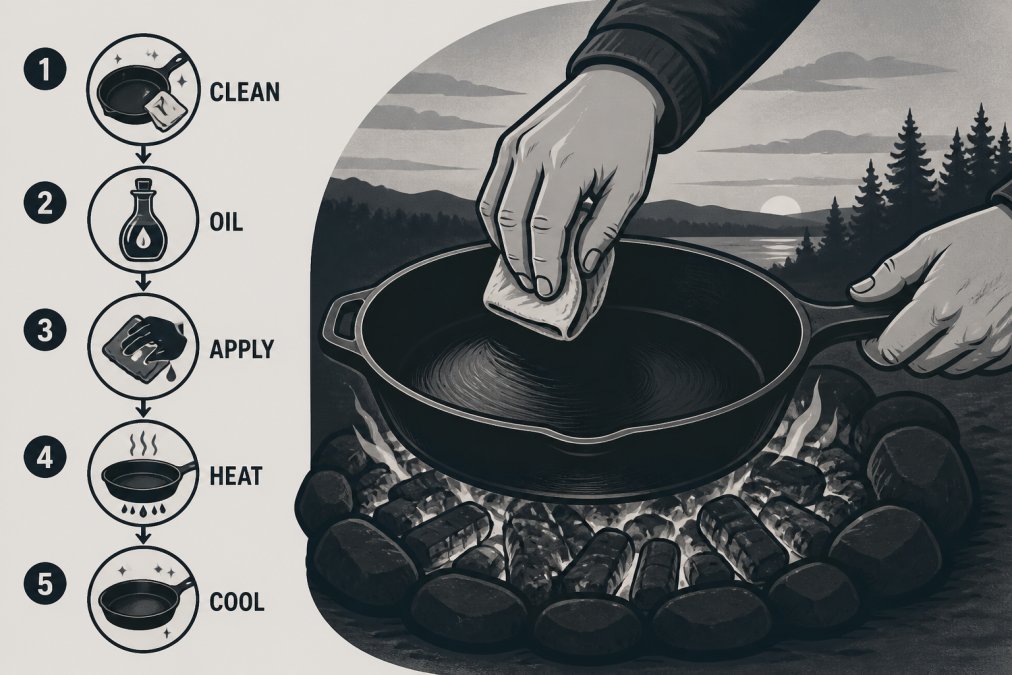
Start with a clean pan. Rinse it with hot water and a stiff brush to remove any factory dust or debris. Dry it completely, then place it on heat for 30 seconds to evaporate any remaining moisture.
Apply a thin layer of neutral oil. This is critical: thin. Most people apply too much oil, which creates a sticky, uneven layer that never fully polymerizes. Use a cloth or paper towel and wipe the oil on so lightly that you can barely see it.
Heat the pan over medium-high heat on your stovetop or over coals. You're looking for the oil to smoke slightly, that smoke is polymerization happening. Keep it there for 2-3 minutes, then remove it and let it cool. Repeat this process 3-4 times for a new pan, or 1-2 times after each cook to maintain seasoning.
The first 10-15 uses will feel imperfect. The seasoning layer is thin and incomplete. By use 30, a properly maintained pan releases food cleanly. By use 100, it rivals any non-stick surface.
Maintenance and Long-Term Care
Cast iron lasts generations if you maintain it properly. After every cook, rinse the pan with hot water while it's still warm. Use a stiff brush to remove food particles. For stuck-on food, add a small amount of salt and use a paper towel as an abrasive.
Dry the pan immediately. Use a cloth, then place the pan on heat for 30 seconds to evaporate any remaining moisture. This step prevents rust.
Apply a thin coat of neutral oil after every use. This maintains the seasoning layer and prevents oxidation. Use the same "barely visible" approach you used for initial seasoning.
Store the pan in a dry location. Avoid damp basements or outdoor storage. A kitchen cabinet or gear box works well.
For outdoor trips, bring a small bottle of neutral oil and a cloth. After cooking, rinse the pan with water from your camp source, dry it with a cloth, and apply a thin coat of oil. This 2-minute routine keeps your pan in perfect condition even on extended backcountry trips.
If rust develops, don't panic. Rust is surface-level and easily removed. Use a stiff brush, steel wool, or sand to scrub off the rust. Once the metal is clean and dry, re-season the pan by applying oil and heating it.
Enameled cast iron requires different care. Hand-wash with soap and water immediately after cooking. Avoid metal utensils that can chip the enamel, use wood or silicone instead. Don't subject it to thermal shock.
Top Cast Iron Alternatives for Outdoor Enthusiasts
The best cast iron alternative depends on your specific use case. Some trips demand raw cast iron's performance. Others prioritize weight and simplicity.
Versatile Skillet Sets for Every Trip
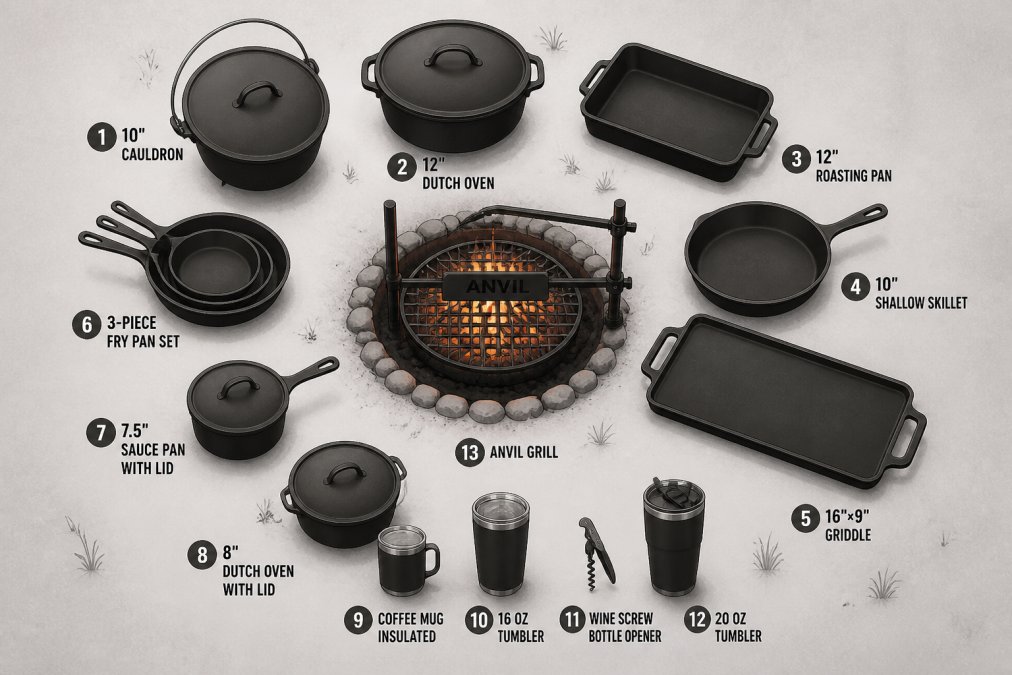
For most outdoor cooks, a set of skillets covers 90% of what you'll actually cook. The Browns Outpost 3-Piece Fry Pan Set delivers three sizes, 25 cm, 20 cm, and 15 cm, that nest together for compact packing. The 25 cm skillet handles full meals, searing steaks, cooking pasta, and frying eggs for a group. The 20 cm is perfect for sides, sauces, or cooking for two. The 15 cm handles melting butter, warming tortillas, or cooking a single portion. Together, they weigh less than a single 30 cm Dutch oven, and they stack for storage.
Each pan is hand-crafted raw carbon steel with the same heat retention and seasoning properties as traditional cast iron. They're oven-safe, work on any heat source including induction, and come with a lifetime warranty. At $47.99 CAD, the set costs less than most single-piece alternatives and gives you genuine flexibility.
| Skillet Size | Best For | Heat-Up Time |
|---|---|---|
| 25 cm | Full meals, searing, group cooking | 5-7 minutes over coals |
| 20 cm | Sides, sauces, cooking for two | 4-5 minutes |
| 15 cm | Single portions, melting, warming | 3-4 minutes |
Dutch Ovens and Cauldrons for Slow Cooking
Dutch ovens are the workhorse of camp cooking. The enclosed environment and heavy lid create ideal conditions for braising, stewing, and baking. Cast iron Dutch ovens hold heat so consistently that you can load coals on the lid and turn the pot into a functioning oven.
The Browns Outpost 30 cm Dutch Oven is sized for groups and holds 4-6 servings of stew, braise, or chili. The flanged lid accepts coals, transforming it into a camp oven. At $52.99 CAD, it's generational gear that will outlast you with proper maintenance.

For minimalist trips, the 20 cm Dutch Oven with Lid ($45.99 CAD) serves 1-2 people and packs more easily. The 25 cm Cauldron with Reversible Lid ($45.99 CAD) offers a different approach. The cauldron shape is purpose-built for soups, stews, and chili. The reversible lid flips to become a flat griddle surface, adding cooking versatility.
All three options are raw cast iron, which means they season and improve over time. The lid's flanged design holds coals securely, and the heavy walls distribute heat evenly.
Griddles and Roasting Pans for Large Groups
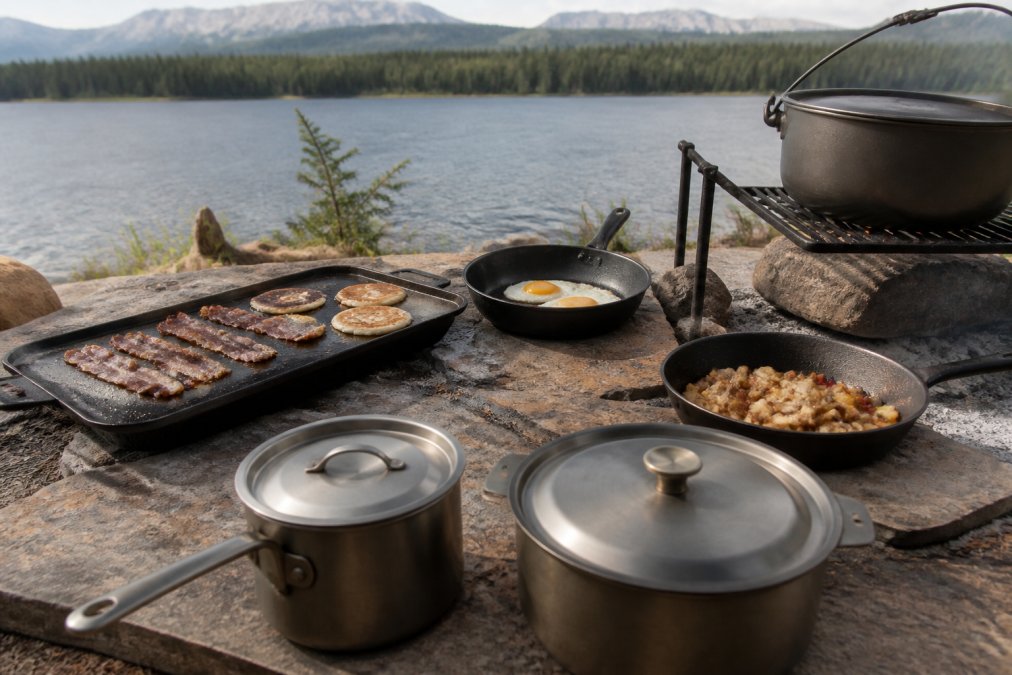
The Browns Outpost 40 cm x 23 cm Griddle ($37.99 CAD) covers 40 cm of flat cooking surface, meaning you can cook pancakes on one side and eggs and bacon on the other, all simultaneously. The flat surface provides maximum cooking area. Food slides easily across for flipping or repositioning. This griddle fits most standard grill grates.
For roasting and searing, the 30 cm Roasting Pan ($48.99 CAD) delivers deep walls that catch drippings for pan sauces. The depth is crucial for holding a full shoulder roast and its juices, then building a sauce right in the pan while the meat rests.
For smaller operations, the 19 cm Sauce Pan with Lid ($37.99 CAD) handles sides, sauces, and slow simmers. The fitted lid retains moisture and heat, essential for cooking rice, beans, or a reduction sauce.
Conclusion
Choosing the right cast iron alternative comes down to understanding your actual cooking patterns and environment. Raw cast iron excels at heat retention and performance, but it demands maintenance. Enameled versions trade some performance for simplicity. Lighter alternatives sacrifice thermal mass for portability.
Browns Outpost delivers hand-crafted raw carbon steel cookware that performs in conditions where other gear fails. The lifetime warranty backs every piece. Start with the 3-Piece Fry Pan Set or the 25 cm Shallow Skillet, add a Dutch oven or cauldron for slow cooking, and you've built a system that handles everything from weeknight car camping to remote backcountry expeditions. Free shipping over $75 CAD makes it accessible to get started right now.
Frequently Asked Questions
What are the best cast iron alternatives to Lodge?
High-quality cast iron alternatives include hand-cast raw carbon steel options designed for outdoor cooking, enameled cast iron for easier maintenance, and specialized pieces like Dutch ovens and griddles. The best choice depends on your cooking style, portability needs, and whether you prefer raw cast iron requiring seasoning or pre-finished enameled options. Raw cast iron develops superior non-stick properties over time and handles open-fire cooking exceptionally well.
Is enameled vs raw cast iron better for camping?
Raw cast iron excels for campfire cooking because it handles direct flame and coals without damage, develops excellent heat retention, and improves with use. Enameled cast iron offers easier cleanup and no seasoning maintenance, making it convenient for car camping. Raw cast iron is superior for backcountry trips where durability under extreme conditions matters most. Choose based on your trip type: enameled for convenience, raw for performance and authenticity.
How do I season a new cast iron pan properly?
Start by washing the new pan with hot water and a stiff brush to remove factory dust. Dry it completely over heat. Apply a very thin layer of neutral oil (vegetable or canola) using a cloth, then wipe off excess until the surface looks almost dry. Heat the pan over medium-high heat until it just starts to smoke, then let cool. Repeat this process 3-5 times for initial seasoning. After each use, wash with hot water, dry immediately on heat, and apply a light oil coat. This builds polymerization layers that create natural non-stick properties.
What should I look for when buying premium cast iron cookware?
Prioritize heat retention capability, which requires adequate thickness and thermal mass. Check surface finish smoothness, machined or hand-finished surfaces cook better than rough sand-cast ones. Verify oven-safe temperature ratings and induction compatibility if needed. Assess handle geometry for comfort during extended use. Look for lifetime warranties indicating manufacturer confidence. Consider weight distribution for portability on trips. Finally, evaluate the brand's reputation for durability and customer support in remote conditions.
How does raw cast iron compare to enameled cast iron for durability?
Raw cast iron improves with age, seasoning deepens, non-stick properties strengthen, and it becomes more resistant to corrosion as the patina builds. It withstands direct flame, thermal shock, and extreme conditions indefinitely. Enameled cast iron is durable but the enamel coating can chip, crack, or peel over time, especially under intense heat or physical stress. Raw cast iron requires more maintenance but lasts generations without degradation. Enameled cast iron requires less care but the coating is the limiting factor for longevity.
This article was written using GrandRanker