 listicle
Alternatives to Heavy Campfire Cooking Grates
Table of Contents
- Why Heavy Campfire Cooking Grates Are a Problem
- Lightweight Collapsible Fire Grate Options
- How to Clean Burnt Camping Cookware
- Cast Iron Cookware as a Direct-Heat Alternative
- Comparison Table: Alternatives to Heavy Campfire Cooking Grates
- DIY Campfire Grate Solutions and Safety Considerations
- Choosing the Right Alternative for Your Camping Style
- Conclusion
- Frequently Asked Questions
Last Updated: September 26, 2026
Why Heavy Campfire Cooking Grates Are a Problem
Most alternatives to heavy campfire cooking grates exist because the standard cast iron grate is a packing nightmare: several kilograms, no folding, and the space of a small tent in your vehicle, fine for car camping, miserable on a portage.
Lightweight Collapsible Fire Grate Options
A lightweight collapsible fire grate is a folding or nesting metal frame that supports cookware over a fire and packs flat. Most use stainless steel or aluminum, hinge at the joints, and stow in a canvas sleeve. The trade-off: they save weight and space, but thin metal warps under high heat and offers less cooking surface than a fixed grate.
What the weight numbers actually look like
A full-size cast iron grate runs 4-7 kg. A folding stainless grate in the same footprint lands between 400 g and 1.2 kg, and an ultralight titanium or wire-mesh option can drop under 150 g. That spread matters more than the marketing label: a 1 kg grate is still a kilogram on your back over a long portage.
Ultralight options most guides skip
Most roundups stop at folding stainless grates, too heavy for serious hikers. Three lighter categories exist:
- Titanium folding grates. 100-200 g, corrosion-resistant, handle direct flame, but flex under a heavy Dutch oven and cost more than stainless.
- Stainless wire mesh. Folds to phone size, weighs almost nothing, supports a small pot over coals, but not a full skillet.
- V-shaped or two-bar fire supports. Stainless rods or a notched Y-bracket that holds a pot over coals. Lightest option, but demands a steady coal bed and a level site.
What to check before you buy
- Material gauge. Thicker stainless resists warping better than thin aluminum but weighs more; titanium splits the difference at a higher price.
- Grate spacing. Wider bars let more flame through but drop smaller food; narrower bars hold more but block heat.
- Height adjustment. A grate you can raise or lower gives real control over direct heat; fixed-height grates force you to manage heat by moving coals.
- Joint construction. Welded or riveted joints outlast thin stamped tabs, a seized hinge is a grate that will not fold.
- Corrosion resistance. Stainless handles rust far better than carbon steel when wet; titanium is effectively rust-proof.
Matching the grate to the trip
- Car camping with a group: a full-size folding stainless grate, 800 g-1.2 kg, with a wide cooking surface.
- Weekend backpacking for two: a mid-weight folding grate around 400-600 g, or wire mesh for simple meals.
- Ultralight solo trips: titanium folding grate or wire mesh under 200 g, with one small pot.
- Cooking for a crowd over coals: skip the grate and use a cast iron griddle or Dutch oven directly on the coal bed.
How to Clean Burnt Camping Cookware
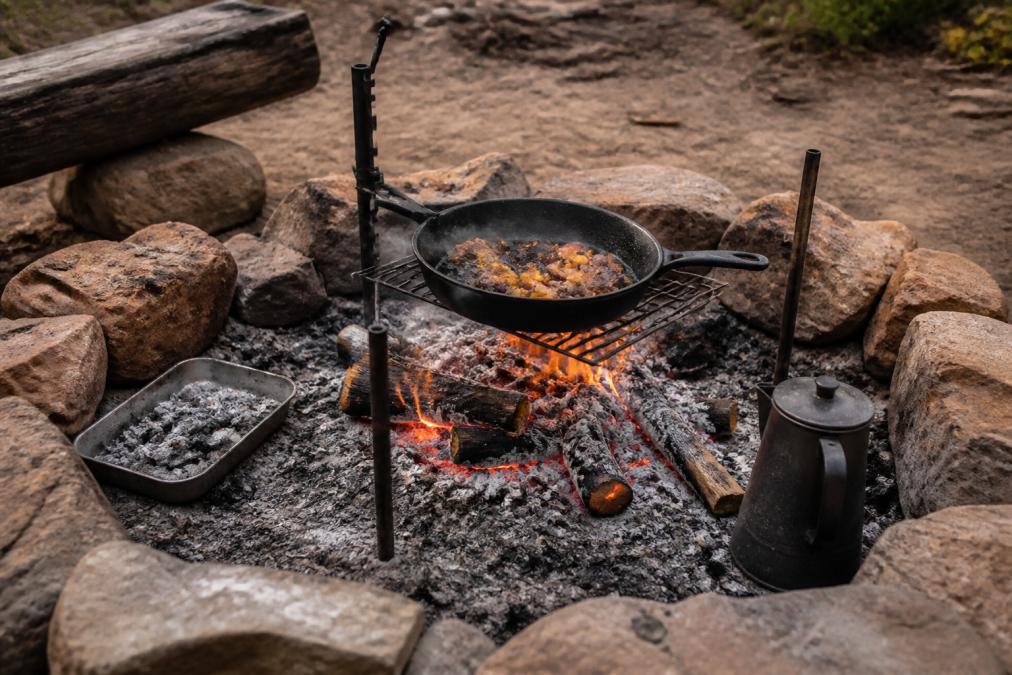
Learning how to clean burnt camping cookware is mostly about heat and patience, not scrubbing. Burned-on food releases when you reheat the pan with a little water, let it steam, and scrape with a wooden or plastic tool. Aggressive scouring strips seasoning and shortens any pan's life.

- Let the pan cool slightly, then add about 1 cm of water.
- Return it to low heat and let the water simmer for 5-10 minutes.
- Scrape the softened residue with a wooden spatula or a stiff brush.
- Pour off the water and wipe with a cloth.
- Dry the pan immediately on heat so no water spot gets a chance to rust.
- Re-oil with a thin coat of neutral oil while the metal is still warm.
Cast Iron Cookware as a Direct-Heat Alternative
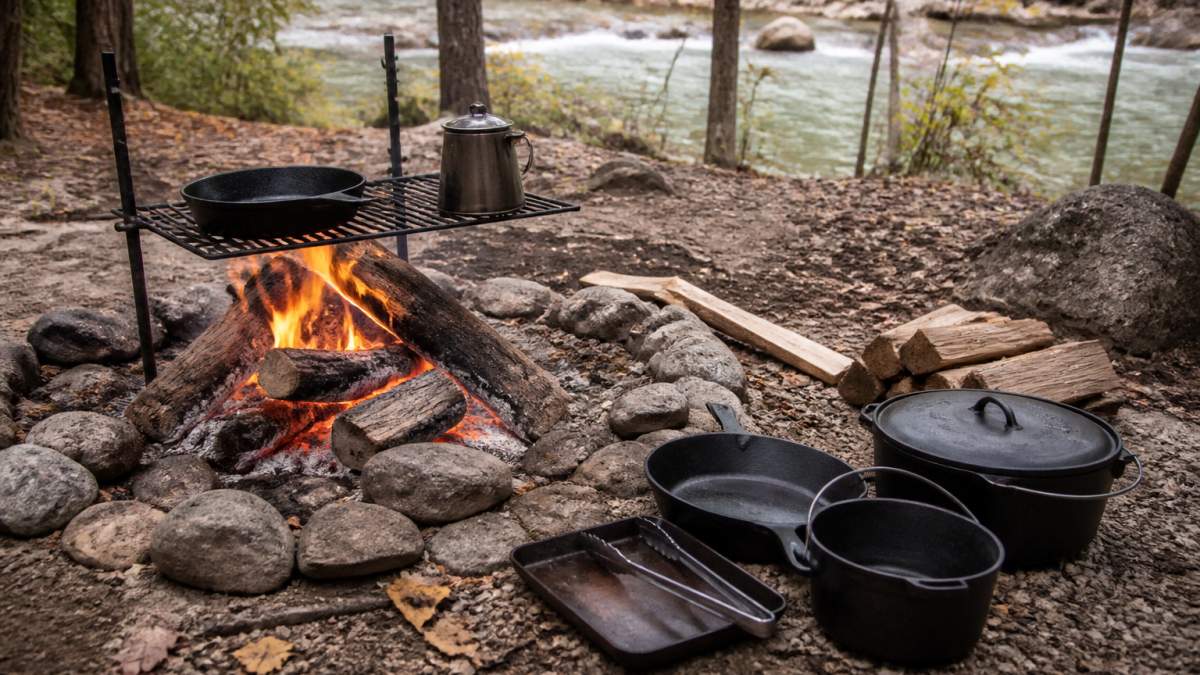
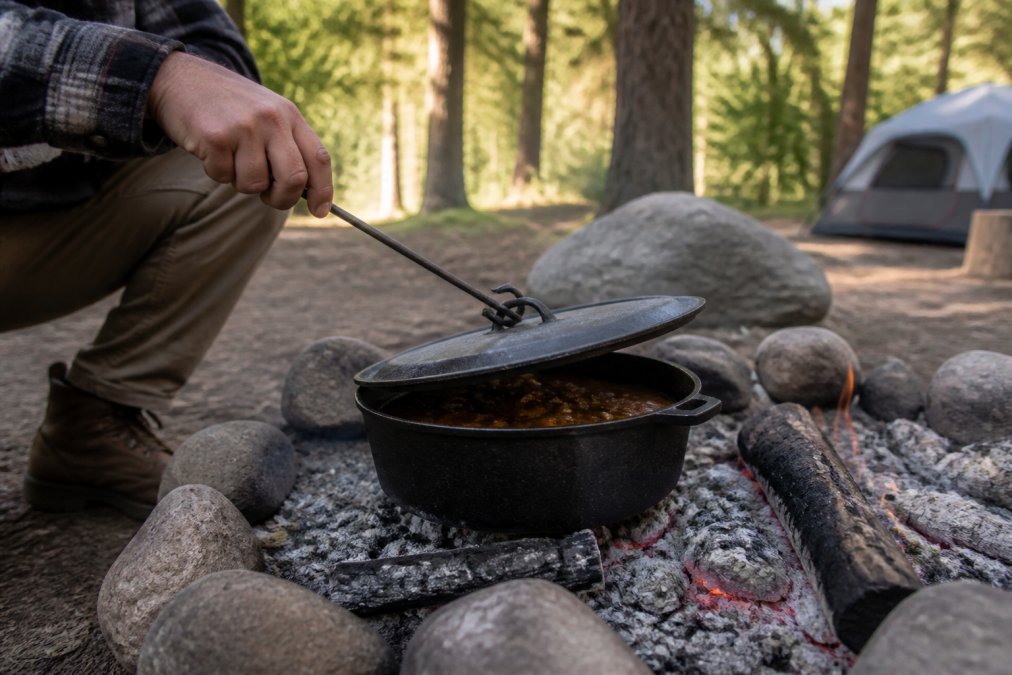
The most durable alternative to a heavy grate is no grate at all. Cast iron cookware can sit directly on a bed of coals, removing the grate from your pack entirely and putting the heat exactly where you want it. This is where a heavy pan earns its weight back.
Comparison Table: Alternatives to Heavy Campfire Cooking Grates
| Alternative | Best For | Weight Class | Heat Control | Starting Price |
|---|---|---|---|---|
| Collapsible fire grate | Car camping, groups | Light | Fixed or adjustable | Varies by brand |
| 10" Shallow Skillet | Fast breakfasts, searing | Moderate | Direct coals | $32.99 |
| 12" Dutch Oven | Braises, baking, groups | Heavy | Direct coals, lid coals | $52.99 |
| 8" Dutch Oven with Lid | Solo and two-person trips | Moderate | Direct coals, lid coals | $45.99 |
| 12" Roasting Pan | Steaks, pan sauces | Heavy | Direct coals | $48.99 |
| 16"×9" Griddle | Feeding a crowd at once | Moderate | Sits on grate | $37.99 |
| DIY grate | Ultralight backpacking | Lightest | Manual | Low cost |
The trade-off is clear: if weight is your only concern, a DIY or collapsible grate wins; if durability and cooking range matter more, cast iron wins without a separate grate in your pack.

DIY Campfire Grate Solutions and Safety Considerations
A DIY fire grate is the cheapest and lightest option, but also the one most likely to make you sick if you get it wrong. The rule: only use metal made for food contact, and never repurpose scrap you cannot identify.
The repurposed-metal problem nobody talks about
Forum threads are full of advice to grab an old BBQ grate or scrap metal and toss it over the fire, advice that ignores what the metal was coated with or used to hold.
10" Cauldron with Reversible Lid →
- Galvanized steel is coated in zinc; heated over a fire it releases zinc oxide fumes that cause metal fume fever, flu-like symptoms that hit hours later. Never cook on galvanized metal.
- Chrome-plated or painted racks can flake coatings into food and release fumes when heated past their rating.
- Salvaged automotive or industrial metal may have held motor oil, solvents, or chemicals that soak into the surface and survive a single wash.
- Unknown alloys may contain lead or cadmium in cheap imported hardware. If you cannot confirm the alloy, do not cook on it.
A safe DIY build
- Source a stainless cooling rack or food-grade grill grate.
- Support it on three or four rocks of equal height.
- Keep the grate level so pans do not slide.
- Build a small, even coal bed rather than a tall flame.
- Never leave the fire unattended.
For ultralight backpacking, the lightest option is often no grate at all. A stainless wire mesh that folds to phone size weighs almost nothing and supports a small pot over coals, it will not hold a Dutch oven, but it boils water and cooks a simple meal.

Leave No Trace and fire footprint
Grate design changes how much scar your fire leaves behind, a gap most camping guides ignore.
- Elevated grates and fire pans concentrate heat and ash in a smaller area, making cleanup and site recovery easier.
- Direct-on-coal cooking with cast iron or wire mesh often needs a smaller coal bed than a full grate fire, so less wood burned and less ash to scatter.
- Existing fire rings should always be used when present; a new ring scars the site and takes years to recover.
- Dead and downed wood only. Breaking branches off standing trees damages the site and is prohibited in many parks.
- Cold-out the coals. Douse, stir, and douse again until the ash is cool to the touch. Buried coals can reignite days later.
Choosing the Right Alternative for Your Camping Style
Match the alternative to the trip, not the catalogue. A car camper with a cooler and folding table can bring a full Dutch oven and a collapsible grate without thinking about weight; a backcountry hiker counting grams should carry a wire mesh and one small pan.
Use this decision framework:
- Car camping with a group: 12" Dutch Oven plus a 16"×9" Griddle. Feed everyone at once.
- Weekend trips for two: 8" Dutch Oven with Lid and a 10" Shallow Skillet. Real meals, small footprint.
- Solo minimalist trips: A stainless wire mesh and one small pan.
- Steak and sear nights: 12" Roasting Pan over direct coals.
- Sauces and sides: 7.5" Sauce Pan with Lid, which simmers evenly without hogging the fire.
Conclusion
The real challenge with campfire cooking is not finding the lightest option, it is finding gear that survives real fires, weather, and trips without failing. Thin grates warp, cheap hinges seize, and repurposed scrap metal can be genuinely unsafe.
Frequently Asked Questions
How do I make a DIY cooking grate for my outdoor fire pit?
Ensure the material is uncoated steel or cast iron, not galvanized or painted, to avoid toxic fumes when heated. Keep the grate stable and at least 10 cm above the coals for safe cooking.
What is the best material for a fire grate?
Cast iron holds heat well and resists warping. Avoid aluminum grates, which can soften at high temperatures, and never use galvanized metal, as it releases toxic fumes when heated.
Are carbon steel grills better than heavy-duty steel grates?
Carbon steel grills are lighter and heat up faster than heavy cast iron grates, making them easier to pack and maneuver. However, heavy-duty steel or cast iron grates retain heat longer and provide more even cooking over consistent coals. For car camping or backyard use where weight isn't a concern, cast iron offers superior durability and heat distribution. For backpacking, carbon steel is a practical compromise.
How do I clean burnt camping cookware without damaging it?
For cast iron, scrape off food residue with a stiff brush or chainmail scrubber, then rinse with hot water. Avoid soap, which strips seasoning. For stubborn burnt spots, simmer water in the pan for a few minutes to loosen debris, then scrub again. Dry immediately on heat and apply a thin coat of oil.
Can I use a lightweight collapsible fire grate for backpacking?
Collapsible grates may not support heavy cast iron pots.