 listicle
Durable Cast Iron for Backpacking: Top Picks
Table of Contents
- Why Durable Cast Iron for Backpacking Matters
- How to Choose Cast Iron for Open Fire Cooking
- Top Cast Iron Options for Backcountry Trips
- Carbon Steel vs Cast Iron for Backpacking
- Maintaining Cast Iron in the Wilderness
- Weight-to-Utility Ratio: What Actually Matters
- Ultralight Alternatives for Cast Iron Enthusiasts
- Conclusion
Last Updated: August 21, 2026
Why Durable Cast Iron for Backpacking Matters
Durable cast iron transforms how you cook in the wilderness. Unlike lightweight aluminum or titanium, cast iron delivers heat retention and versatility that turns simple camp meals into real food. A cast iron skillet will outlast your tent, sleeping bag, and probably several tents, gear you can hand to your kids someday and it'll still work the same way.
The weight penalty is real: a 25 cm skillet runs 1.2 kilograms. But cast iron's thermal mass is a feature, not a bug. It heats slowly, holds heat aggressively, and distributes it evenly, which means fewer burned edges, better searing, and intentional meals. For backcountry trips cooking over open flame or coals, cast iron performs better than anything lighter.
At Browns Outpost, we've built cast iron specifically for the wilderness. Every piece is hand-crafted raw carbon steel, seasoned and ready to cook on arrival. The lifetime warranty means if the piece fails, you get a replacement, a real promise when your cookware is your survival tool.

How to Choose Cast Iron for Open Fire Cooking
Choosing cast iron comes down to three decisions: size, shape, and weight tolerance.
Size determines what you can cook. A 15 cm skillet handles breakfast for one. A 20 cm handles sides and small mains. A 25 cm handles dinner for two or three. Start by asking: how many people am I cooking for?
Shape matters for specific meals. Skillets with shallow walls (like the Browns Outpost 25 cm Shallow Skillet at $32.99) heat fast and give maximum searing surface, ideal for breakfast and seared meat. Dutch ovens with deeper walls and lids hold braised dishes and stews. Sauce pans with lids (like the 19 cm Sauce Pan with Lid at $37.99) handle sides and simmering without the bulk of a full dutch oven.

Weight-to-utility ratio determines if it goes on the trip. A 25 cm skillet weighs 1.2 kilograms. A 3-piece fry pan set (25 cm, 20 cm, 15 cm) weighs about 2.2 kilograms but covers more scenarios. If the weight is 5% of your base pack weight or less, it's probably worth it. If it's 10% or more, you're carrying luxury.
Open flame tolerance is non-negotiable. Cast iron handles direct flame and extreme temperature swings that would destroy aluminum or titanium. Thicker castings (3mm or more) resist warping. Seasoning quality matters, a well-seasoned piece resists rust even in wet conditions. Browns Outpost cast iron ships pre-seasoned and ready to cook.
Maintenance burden changes with conditions. Dry backcountry trips? Cast iron is bulletproof. Wet conditions? You need proper seasoning, immediate drying after use, and a thin coat of neutral oil.
| Decision Point | Solo Trips | Couple Trips | Group Trips |
|---|---|---|---|
| Primary Pan | 15 cm or 20 cm skillet | 25 cm skillet | 25 cm cauldron + 20 cm skillet |
| Secondary Piece | None (optional) | 19 cm sauce pan | 3-piece fry pan set |
| Total Weight | 0.6-1.2 kg | 1.2-1.8 kg | 2.2-3.2 kg |
| Best For | Minimalist trips | Balanced cooking | Diverse menus |
Top Cast Iron Options for Backcountry Trips
25 cm Shallow Skillet: Fast Searing and Breakfast Staple
The 25 cm Shallow Skillet from Browns Outpost ($32.99) is the workhorse pan. Shallow walls mean maximum contact with heat, faster preheating, and aggressive searing you can't get from deeper pans. Breakfast happens here: bacon crisps in 4 minutes, eggs release cleanly from a well-seasoned surface, and the shallow profile lets you flip food easily.
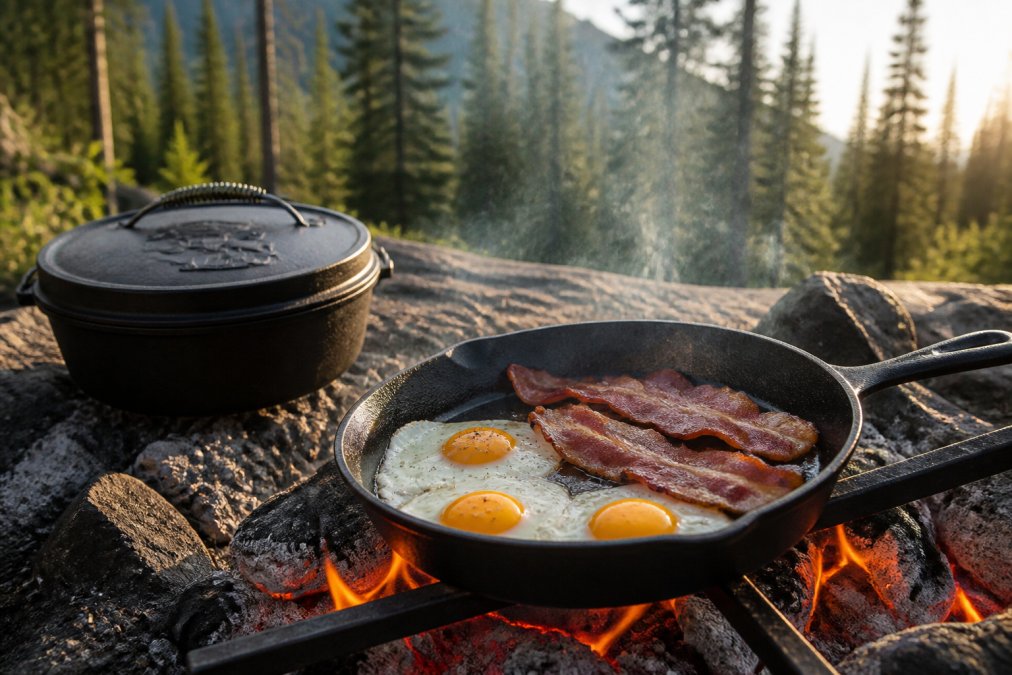
This excels at searing meat before braising and sautéing vegetables. At 1.2 kilograms, it's heavy enough to notice but light enough that most trips justify the weight. Heat distribution is even, no hot spots that burn edges while the center stays cool.
The tradeoff: you can't braise or slow-simmer the way you can in a dutch oven. If your trip menu is seared meat, eggs, and quick sides, this pan does everything. Browns Outpost backs this with a lifetime warranty.
20 cm Dutch Oven with Lid: Compact Braising Power
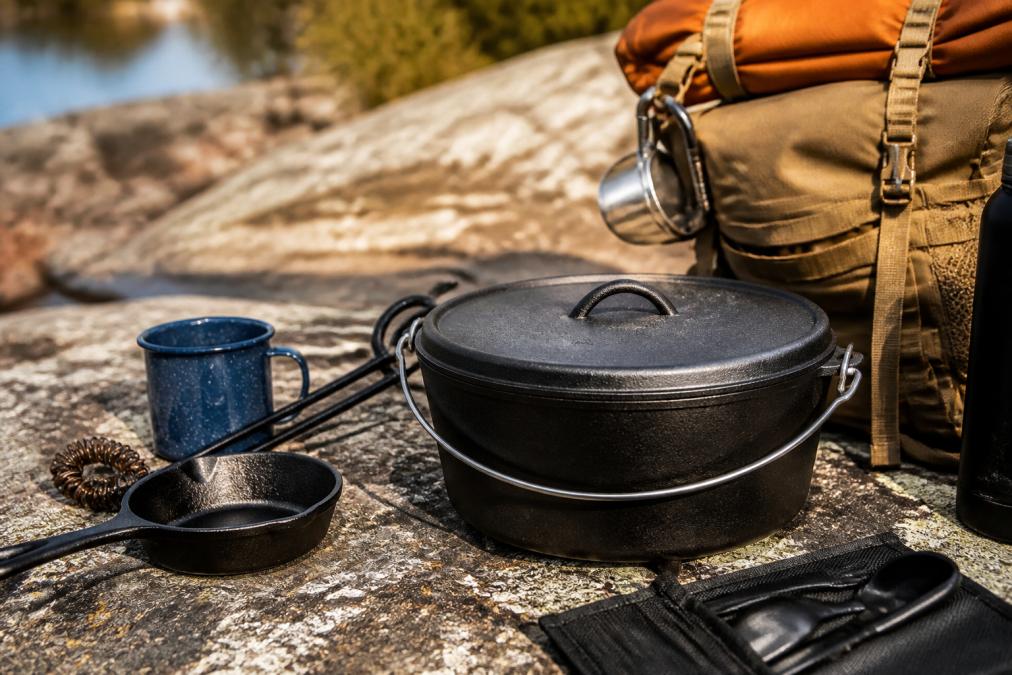
The 20 cm Dutch Oven with Lid ($45.99) splits the difference between weight and capability. It's small enough to fit in a pack but deep enough to braise, stew, and roast. The flanged lid holds coals for camp-oven baking, bread, biscuits, or small cakes with patient heat management. For two-person trips, this is the main cooking vessel.
A dutch oven's advantage is thermal stability. Deeper walls and a heavy lid trap heat and moisture, so braised dishes cook evenly without constant attention. At 1.4 kilograms, it adds weight if you're also packing a skillet. Many backpackers skip the dutch oven and pair a skillet with a sauce pan instead, trading braising capability for lighter overall weight.

3-Piece Fry Pan Set: Versatility Without Excess Weight
The 3-Piece Fry Pan Set ($47.99) includes 25 cm, 20 cm, and 15 cm skillets that nest together for compact packing. This is ideal for trips where you're cooking multiple dishes at once or want flexibility without committing to a single size. Three skillets weigh 2.2 kilograms total but nest into barely more space than a single 25 cm pan.
For a couple's trip with diverse meals, this set covers everything without forcing compromises. You can also leave the smaller pans behind if solo and save 0.8 kilograms.
19 cm Sauce Pan with Lid: Simmering and Sides
The 19 cm Sauce Pan with Lid ($37.99) handles simmering rice, cooking beans, reducing sauces, and slow-simmering sides. The fitted cast iron lid keeps moisture in, so rice cooks evenly and beans soften without drying out. At 0.8 kilograms, it's lighter than a skillet and adds a dimension skillets alone can't match.
Many backpackers pair a 25 cm skillet with this sauce pan, the skillet handles mains and breakfast, the sauce pan handles sides and starches. Together they weigh 2 kilograms and cover most camp cooking scenarios.
25 cm Cauldron with Reversible Lid: One-Pot Meals
The 25 cm Cauldron with Reversible Lid ($45.99) is the deepest, most versatile piece. The belly is deep enough for stews, chilis, and soups that feed a group. The reversible lid flips flat to become a griddle surface for biscuits or seared meat. Coals on the flanged lid turn it into a bread oven. At 1.6 kilograms, it's a commitment, you're packing this because you plan to use it.
Carbon Steel vs Cast Iron for Backpacking
Carbon steel and cast iron are fundamentally different, and the choice depends on your priorities.
Cast iron is heavier but more durable. A cast iron skillet weighs 1.2 kilograms and lasts a lifetime. Carbon steel is lighter (0.7 kilograms) but thinner and more prone to warping from extreme temperature swings. Cast iron's thermal mass heats slower but holds heat more aggressively. For open flame cooking where temperatures fluctuate wildly, cast iron's stability wins.
Seasoning and maintenance differ significantly. Cast iron develops a built-in non-stick surface as seasoning layers accumulate. Carbon steel requires more frequent seasoning. In the backcountry where you're hand-washing and drying by fire, cast iron's seasoning is more forgiving.
Rust resistance favors carbon steel in some scenarios. Carbon steel can be seasoned to resist rust, but a scratch exposes bare metal that rusts faster than cast iron. Cast iron rusts too, but thicker material means minor surface rust doesn't compromise the piece.
Cost and availability matter for replacement. Cast iron pieces are widely available and affordable (Browns Outpost skillets run $32-$47). Carbon steel is often pricier and harder to find in backcountry-appropriate sizes.
Cast iron wins for durability, heat stability, and low-maintenance seasoning.
Maintaining Cast Iron in the Wilderness
Maintaining cast iron in the wilderness is simpler than most guides suggest. Three rules cover 95% of what you need: wash immediately, dry completely, and oil lightly.
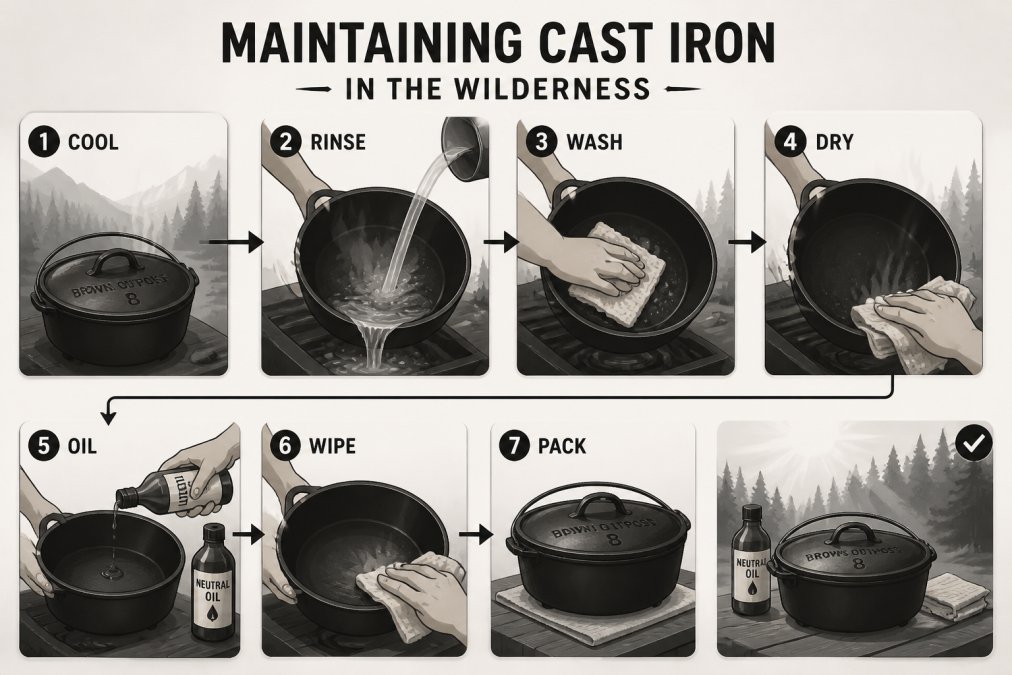
Wash immediately after cooking. Hot water and a cloth are all you need. Scrub away food residue while the pan is still warm. Soap is optional and not recommended; hot water removes food without stripping seasoning. If food is stuck, use a cloth or wooden scraper.
Dry completely before storing. Place the pan on a heat source and let it dry completely. Any water droplets left behind will rust. Once dry, apply a thin coat of neutral oil (canola, grapeseed, avocado oil) while the pan is still warm.
In wet conditions, be more aggressive. Dry by heat every single time. A thin coat of oil after every use is non-negotiable. If you notice surface rust, scrub it lightly with a cloth and re-oil immediately.
Never use the dishwasher or leave water sitting. Both strip seasoning and cause rust. Cast iron is hand-wash only.
Weight-to-Utility Ratio: What Actually Matters
Weight-to-utility ratio separates gear you'll actually use from gear you'll resent carrying. A 1.2-kilogram skillet is only worth it if you're cooking meals that justify the weight.
Lighter isn't always better. A 0.5-kilogram ultralight titanium skillet heats unevenly, doesn't hold heat, and requires constant attention to avoid burning ([EXTERNAL_LINK: National Library of Medicine | pmc.ncbi.nlm.nih.gov]). A 1.2-kilogram cast iron skillet heats evenly, holds heat, and requires less attention. The extra weight buys better meals and less frustration.
For most backpackers, the minimum weight that delivers desired meals is a 25 cm cast iron skillet (1.2 kg) plus a sauce pan (0.8 kg) for a total of 2 kilograms. That covers breakfast, lunch, dinner, and sides.
Ultralight Alternatives for Cast Iron Enthusiasts
If weight is your primary constraint, cast iron isn't the answer.
Titanium cookware weighs 40-50% less than cast iron but costs 3-4 times more. A titanium skillet (0.6 kg) costs $80-150 compared to cast iron ($32-47). Titanium doesn't develop seasoning the way cast iron does and doesn't hold heat as aggressively. For ultralight backpackers willing to pay premium prices, titanium is the answer.
Aluminum cookware is the lightest and cheapest option. A 25 cm aluminum skillet weighs 0.4 kilograms and costs $10-20. The downside: aluminum heats unevenly, warps easily over open flame, and doesn't hold heat. Meals often have burnt edges and cool centers.
Stainless steel cookware is durable and won't rust, but it's heavier than cast iron and doesn't develop non-stick properties. A stainless steel skillet (1.4 kg) weighs more than cast iron and requires oil or butter to prevent sticking every time.
Hybrid approach: cast iron skillet + ultralight pot. Many backpackers use a cast iron skillet for main cooking and pair it with a lightweight titanium or aluminum pot for boiling water or sides. A 25 cm cast iron skillet (1.2 kg) plus a 0.5-liter titanium pot (0.3 kg) totals 1.5 kilograms and covers most camp cooking scenarios.
Cast iron is heavier than alternatives, but the performance and durability justify the weight for most backpackers.
Conclusion
Choosing durable cast iron for backpacking is choosing to cook real meals in the wilderness. The weight penalty is real, but that weight buys you heat retention, durability, and the ability to sear, braise, and bake in ways lighter cookware simply can't match. A well-seasoned cast iron piece will outlast your tent and several generations of lighter gear.
Browns Outpost builds cast iron specifically for the backcountry. Every piece is hand-crafted raw carbon steel, pre-seasoned and ready to cook on arrival, and backed by a lifetime warranty. The 25 cm Shallow Skillet ($32.99) handles breakfast and seared meals. The 20 cm Dutch Oven with Lid ($45.99) enables braised stews and camp bread. The 3-Piece Fry Pan Set ($47.99) covers every size you'll actually reach for. Start with the skillet, add pieces based on the meals you want to cook, and you'll have a camp kitchen that delivers pro results for over-the-fire cooking.
Frequently Asked Questions
Is cast iron too heavy for backpacking?
Cast iron is heavier than ultralight alternatives, but the weight-to-utility ratio often justifies it. A 25 cm skillet weighs around 1.2 kg but delivers heat retention, durability, and versatility that lighter cookware cannot match. For car camping or base camps, the weight penalty is negligible. For minimalist backpacking trips, consider smaller pieces like the 20 cm Dutch oven or 15 cm skillet to reduce base weight while maintaining durable cast iron performance.
How do you clean cast iron while backpacking?
Hand-wash with hot water only, no soap needed. Dry immediately on heat to prevent rust and water spots. Apply a thin coat of neutral oil after each wash to maintain seasoning. In wet backcountry conditions, carry a small cloth and oil bottle. Never leave cast iron wet overnight. This simple maintenance routine keeps your cookware non-stick and corrosion resistant throughout your trip.
Can you use carbon steel instead of cast iron for camping?
Carbon steel is lighter and heats faster, making it appealing for ultralight backpacking. However, cast iron offers superior heat retention and thermal mass for cooking over open flame. Carbon steel requires more frequent re-seasoning and doesn't develop the same non-stick surface over time. For open-fire cooking where steady, reliable heat matters, durable cast iron outperforms carbon steel. Choose carbon steel only if weight is your primary concern.
How do you prevent rust on cast iron in humid outdoor conditions?
Oil your cast iron immediately after washing and drying. In humid environments, reapply a thin oil layer before packing it away. Store it in a breathable bag, not an airtight container, to allow moisture to escape. Avoid prolonged contact with wet ground or damp air. Pre-seasoned cast iron with a well-maintained coating resists rust far better than bare metal. Proper maintenance is your best defense against rust.
What size cast iron skillet is best for backpacking?
A 25 cm shallow skillet balances versatility and packability for most trips. It handles breakfast, searing meat, and sides without excessive weight. For minimalist trips, the 15 cm or 20 cm sizes reduce base weight. The 3-piece fry pan set (25 cm, 20 cm, and 15 cm) nests together for compact storage and covers every cooking need without packing redundant sizes. Choose based on trip length, group size, and how much you prioritize weight versus cooking flexibility.
This article was written using GrandRanker