 listicle
Durable Cookware for Backyard Grilling: 7 Best Cast Iron & Carbon Steel Options
Table of Contents
- Why Cast Iron and Carbon Steel Dominate Durable Cookware for Backyard Grilling
- Carbon Steel vs Cast Iron for Grilling: Which Material Wins
- Top 7 Durable Cookware Options for Backyard Grilling
- 1. The Lifetime Warranty ANVIL Grill: Heavy-Duty Adjustable Campfire Grill
- 2. 30 cm Roasting Pan: Cast Iron for Searing and Braising
- 3. 41x23 cm Griddle: Flat-Top Cast Iron for High-Volume Cooking
- 4. 30 cm Dutch Oven: Cast Iron Workhorse for Slow Cooking
- 5. 25 cm Shallow Skillet: Lightweight Cast Iron for Everyday Use
- 6. 3-Piece Fry Pan Set: Versatile Cast Iron in Multiple Sizes
- 7. 25 cm Cauldron with Reversible Lid: Two-in-One Cast Iron Pot
- How to Season Outdoor Cookware for Maximum Durability
- Heat Retention, Thermal Conductivity, and Why They Matter
- Long-Term Storage and Rust Prevention for Outdoor Cookware
- Conclusion: Investing in Cookware That Lasts a Lifetime
Last Updated: August 25, 2026
Why Cast Iron and Carbon Steel Dominate Durable Cookware for Backyard Grilling
Cast iron and carbon steel deliver what other materials cannot: exceptional heat retention, thermal conductivity that builds proper crust on protein, and the ability to withstand direct flame without warping. Cast iron is denser and heavier, holding heat longer and distributing it evenly. Carbon steel is lighter, heats faster, and offers similar durability with less weight. Both develop a natural patina through seasoning, a non-stick surface that improves with use, unlike coatings that degrade over time.
At Browns Outpost, we've built our cookware line around cast iron because backyard grilling demands reliability. Our hand-crafted raw carbon steel pieces handle unpredictable open-fire temperatures, from searing steaks to slow-smoking ribs. The lifetime warranty reflects confidence in the material: properly maintained cast iron and carbon steel outlast trends and most owners.
Durable cookware requires corrosion resistance. Unlike thin stainless steel or aluminum, cast iron and carbon steel won't fail when exposed to moisture, salt spray, or acidic wood smoke residue. They require maintenance, seasoning and proper storage, but that maintenance is straightforward.
Carbon Steel vs Cast Iron for Grilling: Which Material Wins
Cast iron typically ranges from 2-4 kg for a standard skillet (based on general cookware specifications). That mass absorbs heat slowly, holds it longer, and distributes it evenly across the cooking surface. It handles direct coal contact without degradation and prevents hot spots. The tradeoff is portability, weight adds up fast on backcountry trips.

Carbon steel is 30-40% lighter than equivalent cast iron (based on material density comparisons). It heats faster and responds more quickly to temperature changes. Heat retention is still excellent but won't hold temperature quite as long once removed from heat. For backyard grilling, this difference is negligible. For remote camping, it matters.
Both materials require seasoning to build a natural patina for food release and corrosion resistance (as recommended for food contact materials). Cast iron develops a darker, more durable patina over time. Carbon steel seasons faster but shows wear more visibly if maintenance lapses. Neither is "non-stick" in the modern sense, they're "naturally non-stick" when properly seasoned, improving with use rather than degrading.
For flare-up protection and indirect heat cooking, cast iron wins. Its mass absorbs heat spikes and prevents charring. Carbon steel can handle this but requires more active management.
| Characteristic | Cast Iron | Carbon Steel |
|---|---|---|
| Weight | 2-4 kg (heavier) | 1.2-2.5 kg (lighter) |
| Heat retention | Excellent (holds longest) | Excellent (good, not as long) |
| Heat-up speed | Moderate | Fast |
| Thermal conductivity | High (even heating) | High (responsive) |
| Seasoning time | Slow (darker patina) | Fast (visible patina) |
| Portability | Challenging | Better for travel |
| Direct coal contact | Excellent | Excellent |
| Price per piece | $45-$175 CAD | Similar to cast iron |
| Durability | Generational | Generational |
For backyard grilling, cast iron wins. For remote camping, carbon steel. For both, owning both makes sense, they're complementary tools.
Top 7 Durable Cookware Options for Backyard Grilling
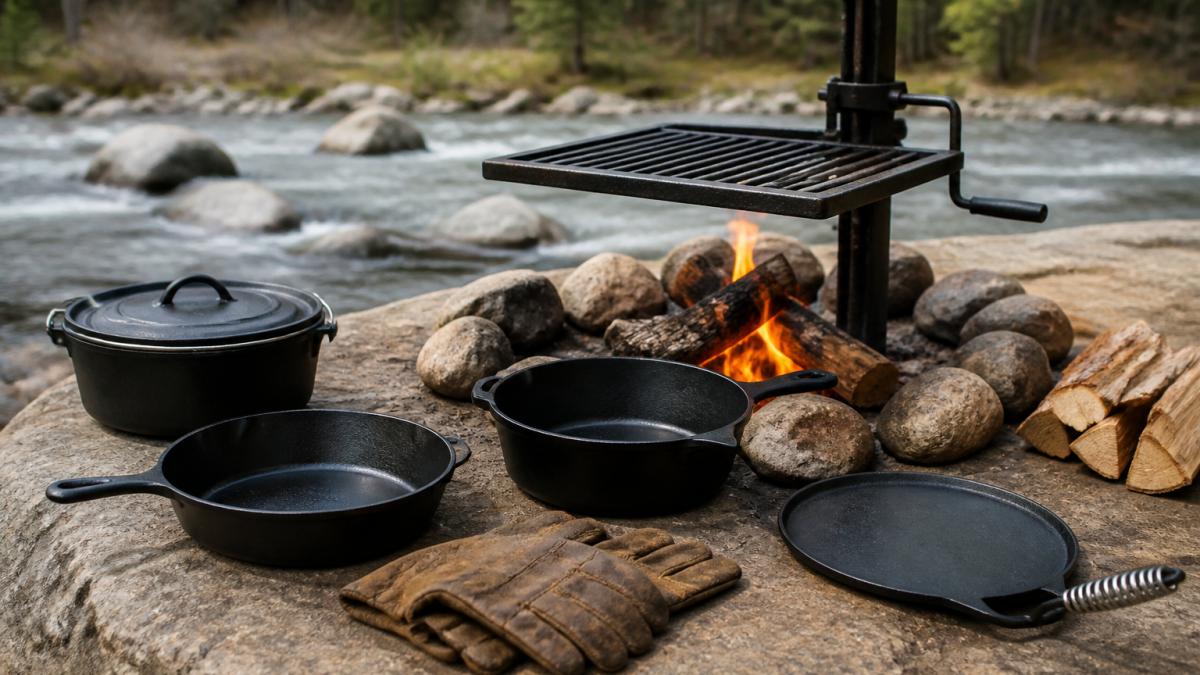
These seven options represent the best durable cookware for backyard grilling across different use cases and budgets. Each handles direct flame contact without warping.
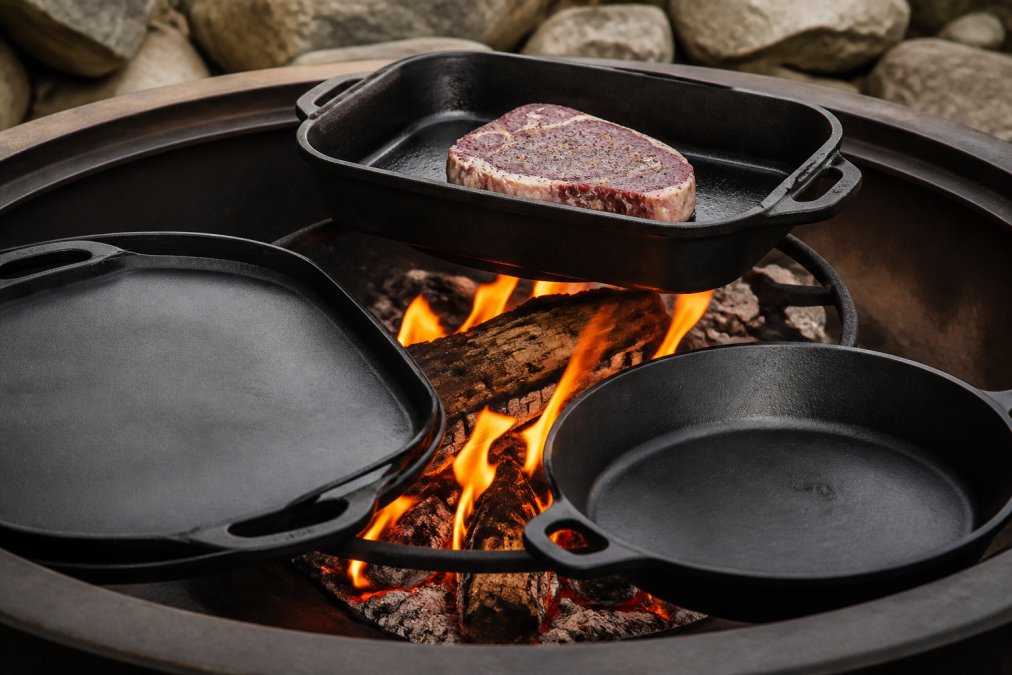
1. The Lifetime Warranty ANVIL Grill: Heavy-Duty Adjustable Campfire Grill
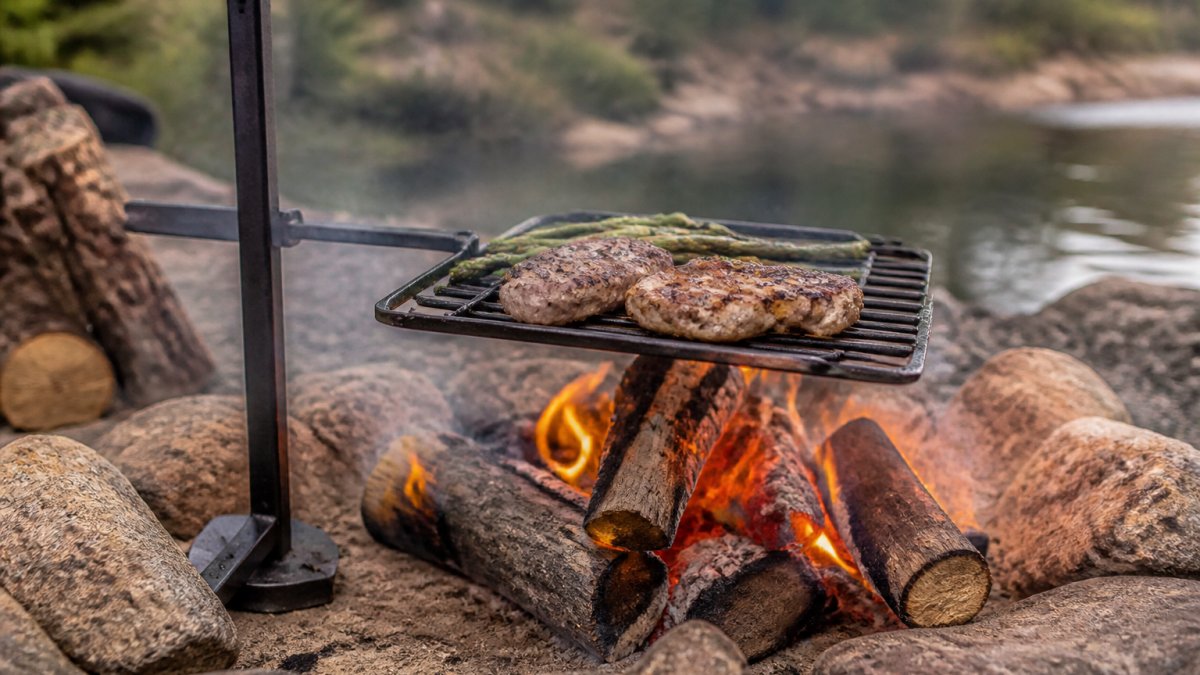
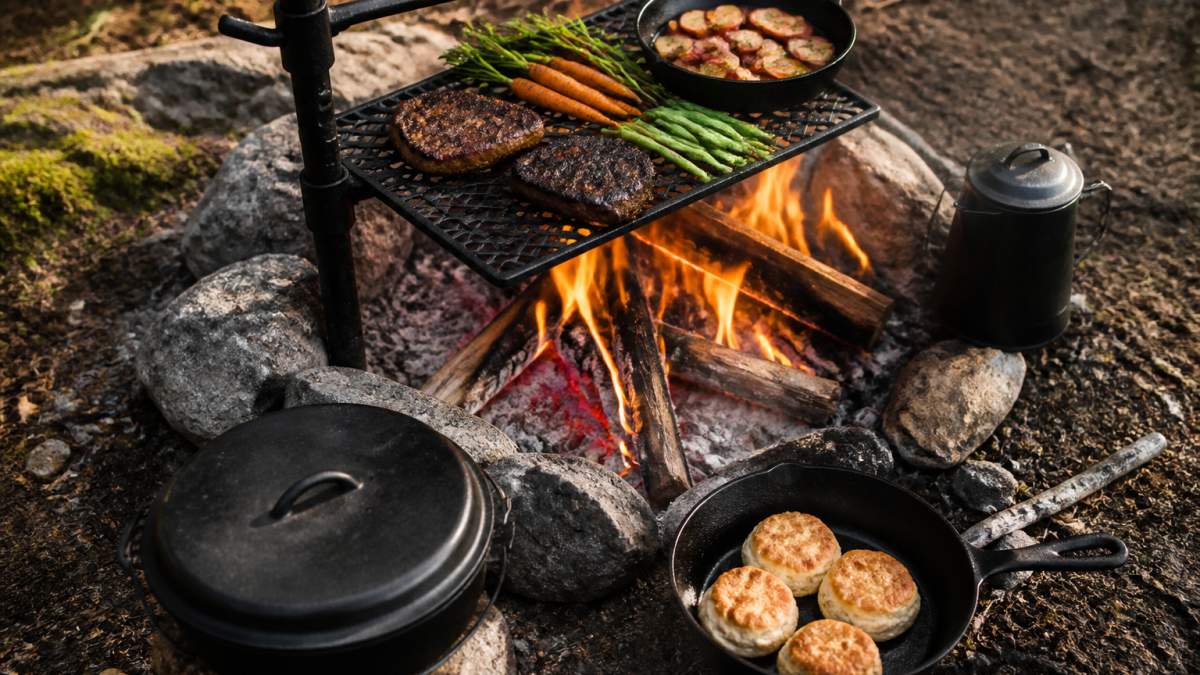
The ANVIL Grill is an adjustable grate system that stakes into the ground, letting you dial in exact height above the flame. Instead of guessing at heat, you control it. The heavy carbon steel grate handles direct flame contact. Sear a steak low and hot, then raise the grate for low-and-slow smoking without switching tools. The adjustable height mechanism is simple and reliable. It works over any fire and stakes apart for transport.

At $174.99 CAD, it's the most versatile option. One customer said: "I have never had a grill this strong and durable, it's super versatile and easily holds an entire rear quarter from a deer." Maintenance is straightforward: burn off residue, brush clean while warm, oil lightly, and store dry. The lifetime warranty covers manufacturing defects.
2. 30 cm Roasting Pan: Cast Iron for Searing and Braising
The 30 cm roasting pan sits at the intersection of versatility and performance. Deep walls catch drippings for pan sauces. Cast iron construction holds heat like a furnace, delivering the crust that separates restaurant-quality searing from backyard mediocrity. It works over a campfire, on a grill grate, or on a stovetop. Deep walls make it ideal for roasts that braise in their own juices.
At $48.99 CAD, it's an affordable entry point into cast iron cookware. It requires hand-washing only, immediate drying, and re-oiling after every use. Never the dishwasher.
3. 41x23 cm Griddle: Flat-Top Cast Iron for High-Volume Cooking
The griddle solves the problem of cooking for a crowd without bottlenecking portions. At 41 by 23 cm, it fits most camp grill grates with enough surface area for pancakes, eggs, and bacon simultaneously. The flat profile with minimal rim lets you flip and slide food freely.
At $37.99 CAD, it's the most affordable cast iron piece. The flat-top design is perfect for smash burgers, breakfast service, or high-volume cooking. Consistent heat distribution means no hot spots that char one side while leaving the other raw.
4. 30 cm Dutch Oven: Cast Iron Workhorse for Slow Cooking
The Dutch oven is generational gear. The 30 cm size feeds 4-6 people and handles everything from braised lamb shoulder to camp bread baked under coals. The flanged lid holds coals on top, turning the pot into a genuine camp oven. Thick cast walls spread heat evenly so nothing scorches.
At $52.99 CAD, it's a significant investment built to outlive the trip. The flanged lid is designed specifically for coal management, load coals on top and control temperature from above and below for proper crust. Once you own a Dutch oven, you'll find constant uses: stew, chili, braised meats, bread, cobbler.
5. 25 cm Shallow Skillet: Lightweight Cast Iron for Everyday Use
The shallow skillet is the workhorse of everyday cooking, whether over a campfire at sunrise or a stovetop at home. The 25 cm size is large enough for a full meal, small enough to be portable. Shallow walls maximize searing surface and allow food to release cleanly.
At $32.99 CAD, it's the most affordable single cast iron piece. It heats fast relative to heavier Dutch ovens and responds quickly to temperature changes. The shallow profile means better food release than deeper skillets, which matters when cooking bacon and eggs over uncertain fire.
6. 3-Piece Fry Pan Set: Versatile Cast Iron in Multiple Sizes
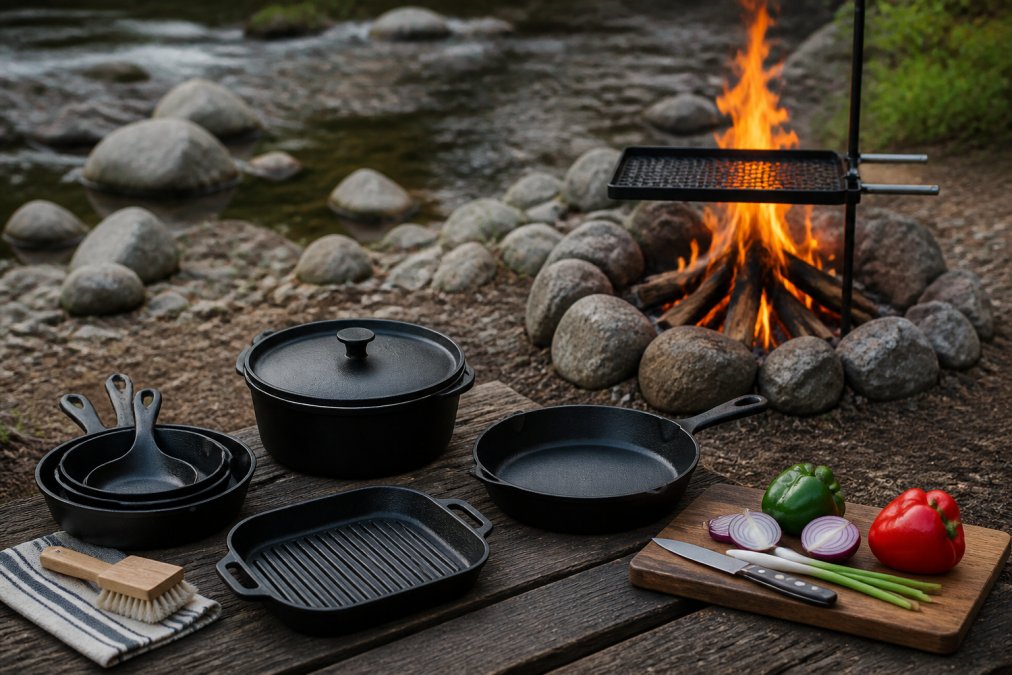
The 3-piece set includes 25, 20, and 15 cm skillets, covering everything from a full skillet dinner to a single fried egg. The pans nest together for compact packing. At $47.99 CAD, the set costs less than buying three skillets individually. The 25 cm handles most meals, the 20 cm covers sides and smaller portions, and the 15 cm melts butter or cooks a single egg without waste.
7. 25 cm Cauldron with Reversible Lid: Two-in-One Cast Iron Pot
The cauldron is a deep-bellied pot with a reversible lid that flips to become a flat griddle. One tool becomes two without adding weight or complexity. Deep walls handle stews, chilis, and soups without spillage. The lid-as-griddle adds cooking surface when needed.
At $45.99 CAD, it's mid-range pricing for a piece that does two jobs. The reversible lid is cast iron like the pot, distributing heat evenly whether covering the pot or sitting flat on a grate. This is ideal for one-pot meals that taste better cooked slow over real coals.
How to Season Outdoor Cookware for Maximum Durability
Seasoning is the foundation of cast iron and carbon steel longevity. A well-seasoned piece develops a natural patina that prevents rust, provides food release, and improves with every cook.
Initial Seasoning Before First Use
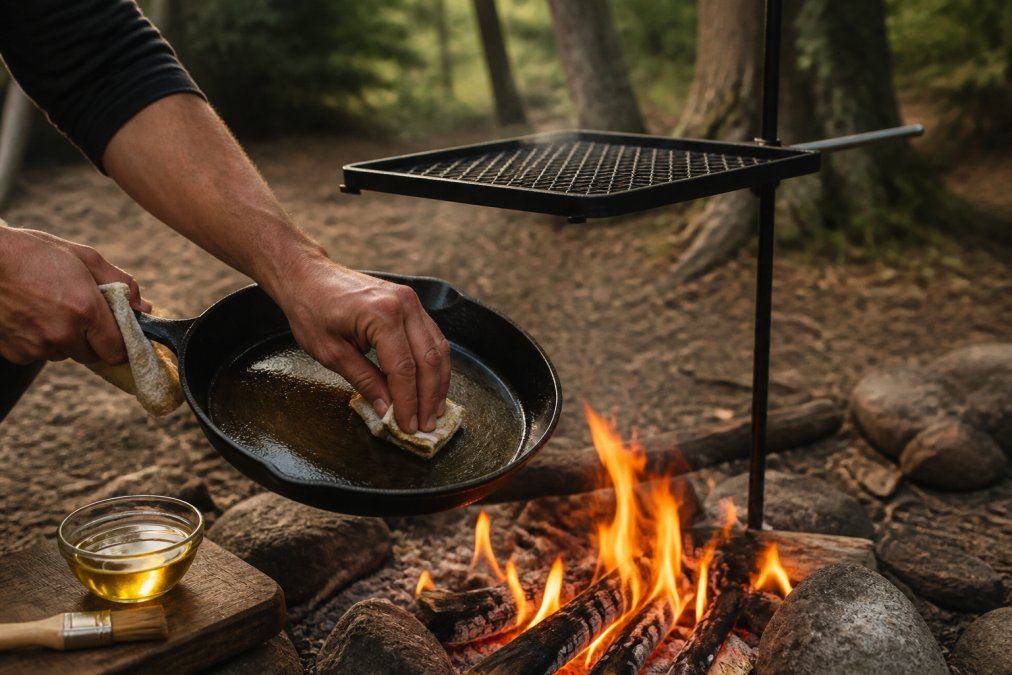
New cast iron and carbon steel arrive with factory seasoning, but it's thin. Building a solid foundation takes three to four cooks. Start with a fatty protein, bacon, sausage, or ribeye steak. Cook at medium-high heat for 5-10 minutes, then wipe the pan clean while warm. Don't leave residue; you want a thin, even layer of oil, not sticky buildup. Let cool completely before storing.
Repeat three to four times before your first serious cook. Each cycle builds the patina. After the fourth cook, the surface will feel slightly slick and release food more cleanly.
Maintenance Seasoning After Every Cook
After every use, while the pan is warm, rinse with hot water only, no soap, which strips seasoning. Scrub with a stiff brush or steel wool to remove food residue. Dry immediately on heat. While still warm, apply a thin coat of neutral oil using a paper towel. Wipe off excess so no oil sits on the surface; you want a microscopically thin layer.
This cycle takes 90 seconds and is the entire maintenance routine. Consistency matters more than intensity. One proper wipe-down after every cook beats aggressive restoration once a season.
Never use the dishwasher. Hand-washing is the only option for cast iron and carbon steel.
For long-term storage between trips, apply a light oil coat and store dry. If storing for weeks or months, check monthly. If you see rust spots, re-oil and let dry before putting back.
Heat Retention, Thermal Conductivity, and Why They Matter
Heat retention is how long a pan holds temperature after removal from heat. Cast iron retains heat longer than carbon steel, which retains it longer than stainless steel or aluminum. This matters for searing: once you place a cold steak on the pan, temperature drops. Poor heat retention means the pan won't recover fast enough, and you get gray meat instead of crust. Cast iron's mass absorbs and stores thermal energy, recovering quickly even when cooking multiple steaks.
Thermal conductivity is how quickly heat spreads across the cooking surface. Cast iron has good thermal conductivity; carbon steel has excellent thermal conductivity relative to its weight. Poor thermal conductivity develops hot spots where one side of food cooks faster than the other. Cast iron and carbon steel are both good enough to avoid this problem under normal conditions.
For backyard grilling, both are excellent. Cast iron is better for high-volume searing and maintaining consistent temperature. Carbon steel is better for responsive temperature control and lighter-duty work.
Long-Term Storage and Rust Prevention for Outdoor Cookware
Rust prevention starts with understanding what causes rust: moisture exposure combined with bare metal. The seasoning layer, the oiled patina, is your defense.
After your final cook of the season, clean thoroughly with hot water and a stiff brush. Dry completely on heat. While still warm, apply a light coat of neutral oil and wipe off excess. Store in a dry place. If storing for months in a humid environment, check monthly. If you see rust spots, scrub with steel wool, re-oil, and return to storage.
For remote storage in damp conditions, wrap each piece in cloth or newspaper after oiling. The cloth absorbs residual moisture and prevents direct contact with humid air.
If rust develops despite precautions, it's not permanent. Light surface rust can be scrubbed off with steel wool and re-seasoned. Heavy rust requires more aggressive restoration, but cast iron is forgiving.
Consistency is key to long-term durability. One light oil coat after every cook, stored dry, and checked monthly during long storage prevents rust entirely. This is normal care routine for gear built to last a lifetime.
Durable cookware for backyard grilling is the foundation of reliable outdoor cooking. Cast iron and carbon steel deliver results other materials can't match and improve with use. The Browns Outpost ANVIL Grill combined with a cast iron skillet or Dutch oven gives you versatility to handle any fire, any meal, and any condition. Start with one piece and build from there. Each addition becomes a tool you'll reach for for decades.

Frequently Asked Questions
Q: What makes cookware 'heavy-duty' for backyard grilling?
A: Heavy-duty cookware for backyard grilling combines thick-walled construction (typically cast iron or carbon steel), high heat retention, and corrosion resistance. Materials like cast iron hold steady temperatures without warping under direct flame, while the mass prevents hot spots. Thickness matters most, thinner cookware warps easily over intense outdoor heat, while cast iron's density ensures even heat distribution and years of reliable use.
Q: Is cast iron or stainless steel better for an outdoor grill?
A: Cast iron outperforms stainless steel for outdoor grilling. Cast iron retains heat longer, develops superior sear marks, and improves with age as seasoning builds. Stainless steel conducts heat unevenly and lacks the non-stick patina that cast iron builds over time. For backyard grilling, cast iron's thermal conductivity and durability make it the standard choice. Stainless steel works for stovetop cooking but struggles with the high, inconsistent temperatures of open-fire cooking.
Q: How do I maintain carbon steel cookware for outdoor use?
A: Carbon steel requires the same care as cast iron: hand-wash immediately after cooking with hot water and a brush, dry completely on heat to prevent rust, then apply a thin coat of neutral oil while warm. Store in a dry location between trips. After each use, avoid soaking and never use soap, it strips the seasoning layer. The carbon steel ANVIL grill should be brushed clean while warm, oiled lightly, and kept dry during storage to maintain its corrosion resistance.
Q: Can I use indoor cookware on an outdoor grill?
A: Most indoor cookware (non-stick, thin aluminum, glass lids) will fail outdoors. Non-stick coatings break down under direct flame and high heat. Thin cookware warps and conducts heat unevenly. Cast iron and carbon steel are specifically designed for outdoor use because they handle thermal shock, direct flame, and coals without damage. If you already own cast iron at home, it works perfectly over a campfire, that's one advantage of cast iron's versatility across kitchen and outdoor settings.
Q: What is the best long-lasting outdoor grill?
A: The best long-lasting outdoor grill combines adjustable height control, heavy carbon steel or cast iron construction, and a lifetime warranty. The ANVIL adjustable campfire grill ($174.99) delivers all three: it stakes into any fire, lets you dial in exact heat by raising or lowering the grate, and is backed by a lifetime warranty. Its carbon steel grate handles direct flame without warping, and the adjustability means you can sear low or smoke high on the same grill, one tool for every technique.
This article was written using GrandRanker