 listicle
Hand-Crafted Carbon Steel Skillet: Performance & Durability Guide
Table of Contents
- What Makes a Hand-Crafted Carbon Steel Skillet Different
- How to Season Carbon Steel Pans for Long-Term Performance
- Carbon Steel vs Cast Iron for Camping and Outdoor Cooking
- Best Carbon Steel Pan Maintenance Practices
- Cooking Performance and Heat Distribution
- Durability, Repair, and Heirloom Quality
- Why Hand-Crafted Carbon Steel Is Worth the Investment
Last Updated: August 19, 2026
What Makes a Hand-Crafted Carbon Steel Skillet Different
A hand-crafted carbon steel skillet is forged from raw carbon steel through traditional blacksmithing techniques, creating superior heat retention and durability compared to mass-produced alternatives. Unlike cast iron, which is brittle and prone to cracking, carbon steel combines iron's thermal properties with steel's flexibility and responsiveness, making it ideal for both campfire and home kitchen use.
Hand-forged skillets are shaped through repeated heating and hammering, which aligns the steel's molecular structure and creates a naturally non-stick patina over time. This process takes hours per pan, whereas laser-cut or stamped alternatives are produced in minutes. Browns Outpost specializes in hand-crafted raw carbon steel cookware built for outdoor enthusiasts who demand durability that lasts generations.
Hand-forged carbon steel undergoes stress relief during forging, reducing internal metal fatigue that causes warping over years of use. Mass-produced pans skip this step, making them prone to surface oxidation and uneven heat distribution after extended use. For outdoor cooking with extreme temperature swings, this structural integrity is non-negotiable.
How to Season Carbon Steel Pans for Long-Term Performance
Seasoning a carbon steel skillet builds the non-stick surface through repeated layers of polymerized oil, creating an iron oxide layer that protects the steel from rust. Carbon steel develops patina faster than cast iron due to its smoother surface and higher carbon content.
The most effective method involves high-heat oil application. Apply a thin coat of high-smoke-point oil (grapeseed, avocado, or canola), wipe away excess until the pan appears almost dry, then heat until it just begins to smoke. Let it cool completely and repeat 3-5 times before your first cook, then continue building patina with regular use.
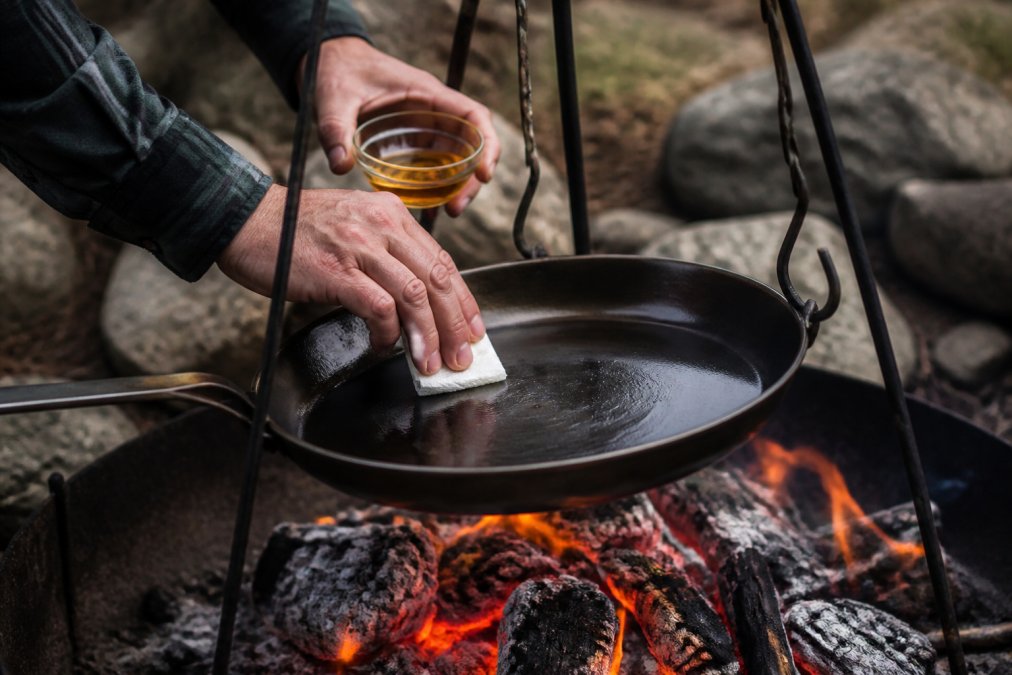
Pre-seasoned skillets from Browns Outpost arrive with an initial patina layer already established, allowing you to start cooking immediately while continuing to build the surface through regular use. This is particularly valuable for outdoor enthusiasts who don't have time to season a raw pan before a camping trip.
Common mistakes include using too much oil (which creates a sticky surface), cooking below the smoke point (which doesn't polymerize the oil), and washing immediately after seasoning (which removes the newly formed layer). The correct approach is patience: light coats, high heat, and allowing the pan to cool naturally.
For field seasoning during camping, wipe the pan clean while still warm, apply minimal oil, and wipe again until the pan looks almost dry. Over months and years of regular cooking, the seasoning deepens into a smooth, nearly non-stick surface.
Carbon Steel vs Cast Iron for Camping and Outdoor Cooking
Carbon steel and cast iron both excel at outdoor cooking, but they serve different needs. Cast iron is heavier and retains heat longer; carbon steel is lighter and responds faster to temperature changes. For camping, the choice depends on your priorities.
Cast iron skillets typically weigh 3kg to 4.5kg for a 30cm size, becoming a liability on multi-day backpacking trips. Carbon steel skillets of the same size weigh 1.8kg to 2.5kg, making a significant difference when carrying gear on foot. The lighter weight also reduces fatigue when holding the pan over flames.
Cast iron heats slowly but maintains temperature well, ideal for even cooking. Carbon steel heats quickly and cools quickly, giving you finer control over searing temperatures and reducing burning risk. For open-fire cooking where flames fluctuate, this responsiveness is a genuine advantage.
Carbon steel's lower mass and higher carbon content mean it recovers faster from accidental water exposure. Cast iron's thicker walls can trap moisture internally, leading to deep rust. A carbon steel pan left wet overnight can be restored with vigorous seasoning; cast iron may require grinding and refinishing.
Carbon steel's flexibility allows it to expand and contract without fracturing when exposed to thermal shock, making it safer for field conditions. For hunters and wilderness explorers preparing large meals, the versatility of carbon steel is unmatched. Dan D., a Browns Outpost customer, noted: "This grill has completely changed over-the-fire cooking for me. I have never had a grill this strong and durable, it's super versatile and easily holds an entire rear quarter from a deer!"
Best Carbon Steel Pan Maintenance Practices
Maintaining a carbon steel skillet requires consistency. Clean immediately after cooking with hot water and a soft cloth or brush; avoid harsh scrubbing that removes seasoning. For stuck-on food, coarse salt acts as a gentle abrasive without damaging the patina. Dry completely; any remaining moisture invites rust.
Store in a dry environment. If camping or storing in humid conditions, apply a light oil coat before putting the pan away. For long-term storage between seasons, wrap the pan in parchment paper or cloth to prevent moisture accumulation.
Rust spots occasionally appear, especially in wet conditions. Treat them immediately with fine steel wool or fine-grit sandpaper to remove surface rust, then wipe clean, dry thoroughly, and re-season. Deep rust requires more aggressive intervention, but caught early, rust is a minor maintenance task.
Avoid the dishwasher entirely. The high-heat drying cycle and aggressive detergents strip seasoning and accelerate rust formation. Hand washing takes 30 seconds and preserves the pan's integrity.
Avoid plunging a hot pan into cold water; let it cool gradually or add water slowly while still on heat. This prevents warping and extends the pan's lifespan.
Cooking Performance and Heat Distribution
The thermal conductivity of carbon steel makes it superior for high-heat cooking. The steel conducts heat quickly and evenly across the cooking surface, eliminating hot spots that cause uneven browning. This is particularly valuable for searing, where you need consistent, intense heat.
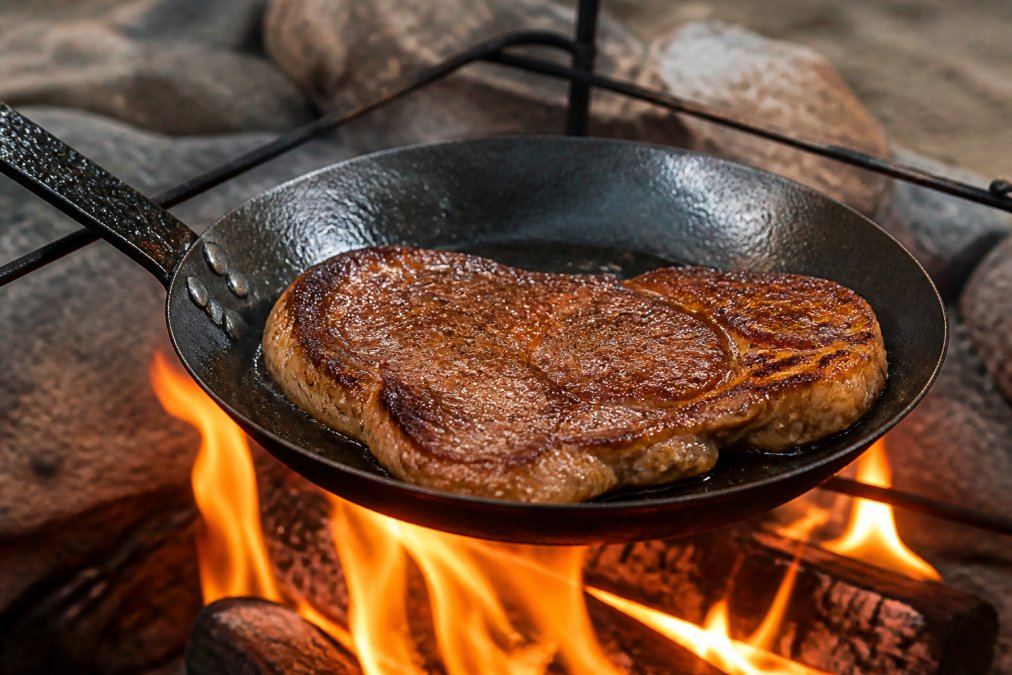
The pan depth on quality hand-forged skillets, typically 5cm to 7cm, provides versatility for both shallow sautéing and deeper braising. This stove-to-table capability means you can start a dish over flames, then finish it in coals without changing cookware.
Heat retention is excellent. A preheated carbon steel skillet maintains temperature well enough for consistent searing of multiple items without significant temperature drop between additions. This matters when cooking for a group in the backcountry.
The non-stick performance improves dramatically after proper seasoning. A well-seasoned carbon steel skillet rivals modern non-stick coatings without toxicity concerns or durability limitations. Unlike synthetic coatings that degrade with use, the seasoning strengthens over time, making older pans superior to new ones.
Responsiveness to temperature changes is where carbon steel excels. Over a campfire where flames fluctuate, the thin walls allow rapid cooling when you move the pan away from direct heat, providing fine control impossible with cast iron's thermal mass.
Durability, Repair, and Heirloom Quality
A properly maintained hand-forged carbon steel skillet becomes an heirloom piece, passed through generations with minimal degradation. The durability comes from both material properties and construction methods that eliminate weak points.
The riveted handle design, where the handle is mechanically attached through rivets rather than welded, creates a joint stronger than the surrounding steel. Riveted construction distributes stress across multiple connection points, making handle failure virtually impossible under normal use.
Repair of a damaged carbon steel skillet is straightforward. A dented surface can be carefully hammered out from the underside. Small cracks in the handle can be reinforced with additional rivets. Even severe rust can be ground out and the pan re-seasoned, restoring it to full functionality. This repairability is a core advantage over cast iron, which cannot be welded or significantly reshaped without losing structural integrity.
The heirloom quality stems from the metallurgical soundness of the material and the craftsmanship involved in its creation. A pan made through traditional blacksmithing has no internal flaws, no casting porosity, and no weak points introduced by mass-production shortcuts. These pans improve with age, developing deeper seasoning and smoother surfaces.
Browns Outpost backs this durability with a lifetime warranty on hand-crafted carbon steel cookware, reflecting confidence in the construction quality. Restoration of neglected pans is possible even after years of storage. A pan covered in surface rust can be restored through grinding, seasoning, and regular use.
Why Hand-Crafted Carbon Steel Is Worth the Investment
The cost of hand-forged carbon steel cookware, typically ranging from $120 to $300 for a quality skillet, reflects the labor-intensive forging process and superior material quality. When evaluated over a lifetime of use, the cost per cooking event becomes negligible compared to cheaper alternatives requiring replacement every few years.
Mass-produced pans arrive with internal flaws introduced during manufacturing. Hand-forged pans eliminate these flaws through the forging process itself, creating a structurally superior product that heats more evenly, responds faster to temperature changes, and maintains non-stick properties longer.
The environmental argument is compelling. A hand-forged skillet used for 50 years produces far less waste than five mass-produced pans replaced every decade. The heirloom quality means you're not contributing to landfill waste or driving demand for new manufacturing resources.
For outdoor enthusiasts and home cooks who value durability and performance, the investment in hand-crafted carbon steel is justified by both practical performance and long-term value. Browns Outpost's ANVIL adjustable campfire grill and hand-crafted carbon steel skillets represent this philosophy: professional-grade equipment built for a lifetime of reliable use in the field and at home.

The choice between budget cookware and hand-crafted carbon steel comes down to your commitment to outdoor cooking and your willingness to invest in quality that compounds over time. If you're serious about backcountry meals, campfire cooking, or building a kitchen toolkit that lasts generations, hand-forged carbon steel delivers both performance and durability that mass-produced alternatives cannot match. Start with Browns Outpost's hand-crafted carbon steel cookware and ANVIL grill system, backed by a lifetime warranty and engineered for the exact conditions you'll face in the field. Free shipping on orders over $75 CAD makes the investment accessible for serious outdoor cooks ready to upgrade.
Frequently Asked Questions
Are hand-crafted carbon steel pans worth the investment?
Yes, if you cook outdoors regularly or value durability over decades. Hand-crafted carbon steel skillets develop a natural non-stick patina with use, improve with age, and often come with lifetime warranties. Unlike mass-produced options, they're built for thermal conductivity and warp resistance. The upfront cost is higher, but they outlast cheaper alternatives by years and require no replacement, making them cost-effective long-term.
How does carbon steel compare to cast iron for campfire cooking?
Carbon steel heats faster and is lighter than cast iron, making it ideal for portable camping. Both develop seasoning, but carbon steel requires less maintenance in wet conditions and resists rust better due to its lower carbon content. Cast iron holds heat longer once hot, while carbon steel responds faster to temperature changes. For backyard grilling, carbon steel's quick response is an advantage; for slow-cooking over coals, cast iron excels.
What shouldn't I cook in a hand-crafted carbon steel skillet?
Avoid prolonged cooking with acidic foods like tomatoes or vinegar-based sauces, as they strip the seasoning. Don't leave wet food sitting in the pan or soak it overnight. Avoid cooking delicate fish that sticks easily until your seasoning is well-established. Acidic foods aren't permanently damaging, they just temporarily reduce the non-stick surface. After cooking acidic dishes, re-season the pan lightly with oil.
How do you properly season a hand-crafted carbon steel skillet?
Start with a thin layer of high-smoke-point oil (grapeseed, avocado, or vegetable oil) applied evenly across the surface. Wipe off excess until it's nearly dry. Heat the pan on medium-high heat until it smokes lightly, then cool. Repeat this process 3-5 times for initial seasoning. With regular cooking, the patina builds naturally. Maintenance seasoning is simple: wipe with oil after each use while still warm.
This article was written using GrandRanker