 blog
blog
Stainless Steel vs Cast Iron Campfire Grills: 2026 Guide
Table of Contents
- Stainless Steel vs Cast Iron Campfire Grills: How to Choose
- The Best Material for Campfire Cooking: Stainless, Cast Iron, or Carbon Steel
- Durability, Rust Resistance, and Thermal Shock
- Benefits of Carbon Steel Cookware for Open-Fire Grilling
- How to Season a Campfire Grill (and Keep It Non-Stick)
- Food Safety: Coatings, Leaching, and What to Avoid
- Verdict: Which Campfire Grill Material Fits Your Setup
- Frequently Asked Questions
Last Updated: October 3, 2026
Stainless Steel vs Cast Iron Campfire Grills: How to Choose
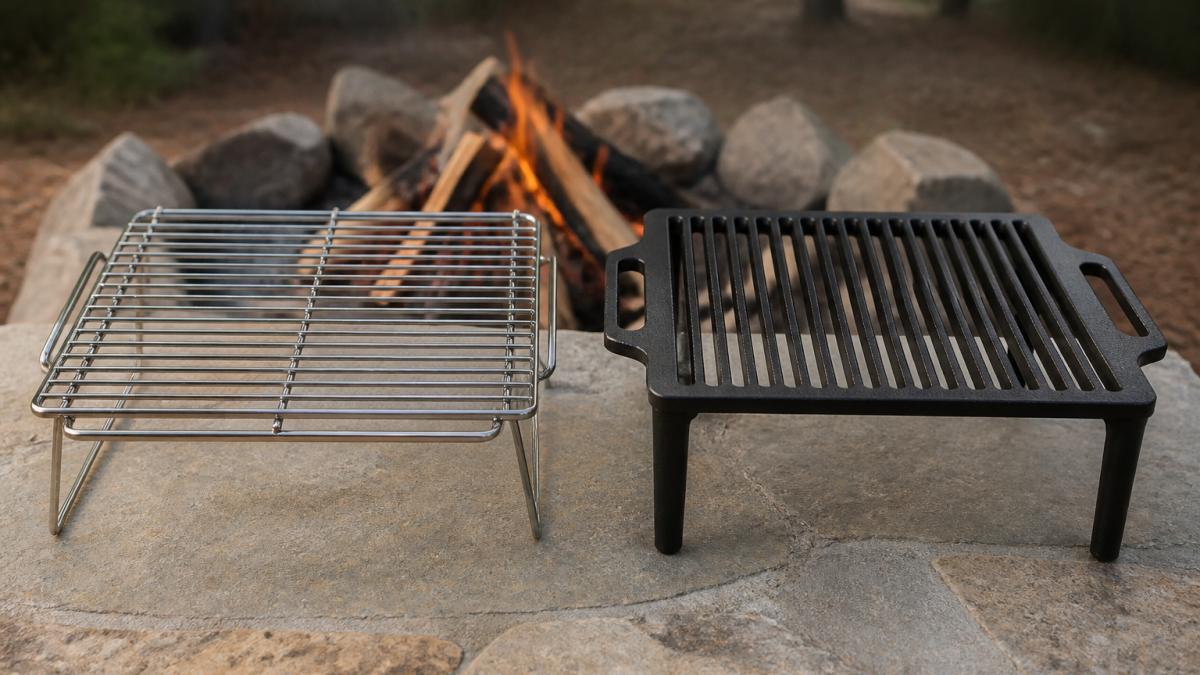
Stainless steel campfire grills win on corrosion resistance and easy cleanup, while cast iron campfire grills win on heat retention and searing power.
Here's the short version: stainless steel is the low-maintenance traveler, cast iron is the heavyweight sear machine, and carbon steel sits in the middle with the best weight-to-performance ratio of the three.
Most buying guides treat this as a simple "both are great" question. That's a cop-out. The materials behave very differently in the field, and picking wrong means lugging dead weight or fighting rust every trip.
The Best Material for Campfire Cooking: Stainless, Cast Iron, or Carbon Steel
The best material for campfire cooking depends on your priorities: stainless steel for rust resistance and easy cleaning, cast iron for heat retention and searing, and carbon steel for the best balance of both. Most campers are best served by carbon steel, which is lighter than cast iron and seasons like it.
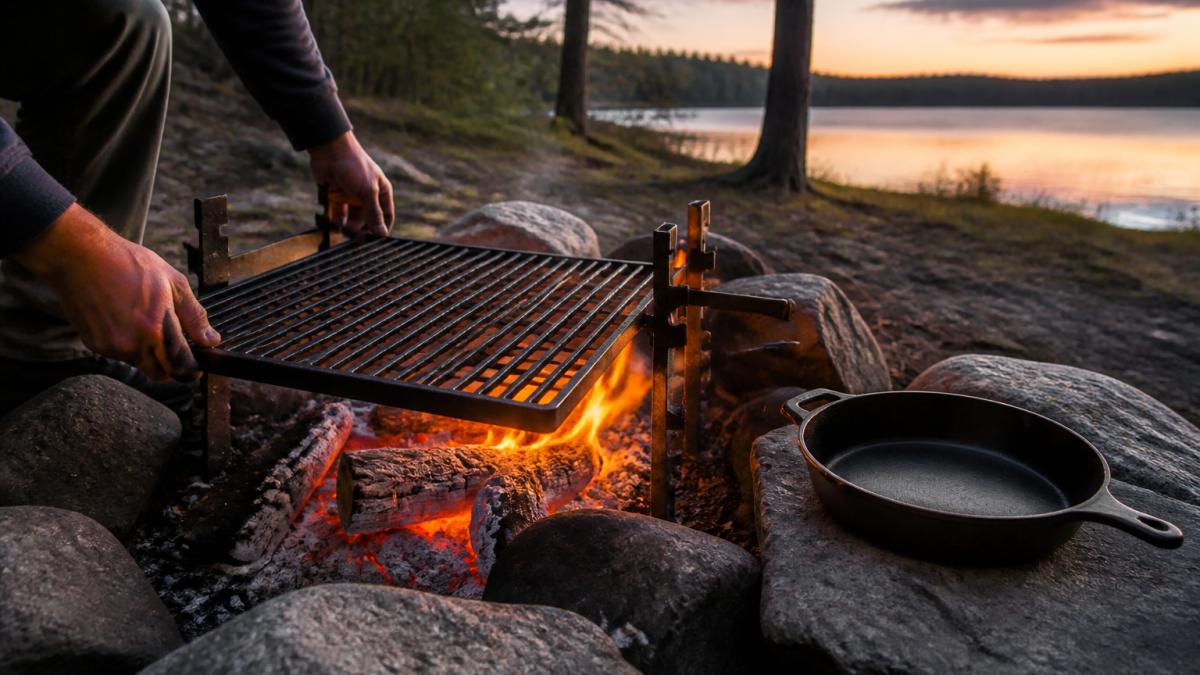
Here's how the three compare on the specs that actually matter at the fire:
| Material | Weight | Heat Retention | Rust Risk | Maintenance |
|---|---|---|---|---|
| Stainless steel | Moderate | Low to moderate | Very low | Low |
| Cast iron | Heavy | High | High if wet | High |
| Carbon steel | Moderate | High | Moderate | Medium |
Heat Retention and Distribution
Cast iron holds heat better than any common cookware material, which is why it sears so well. The trade-off is slow warm-up and uneven edges until it fully saturates. Stainless steel heats faster but loses that heat the moment cold food hits the surface, so it's better for quick cooking than long, steady heat. Carbon steel lands close to cast iron on retention at roughly half the weight.
Weight and Portability for Camping
Weight decides whether gear actually makes the trip. Cast iron is the heaviest option and gets punishing on a hike. Stainless steel is lighter but often built thinner, so it flexes and dents under heavy loads. Carbon steel gives you cast-iron-style performance without the backache, and gear like the ANVIL grill packs down flat with no case needed.

Durability, Rust Resistance, and Thermal Shock
Stainless steel resists rust best because its chromium content forms a passive oxide layer that self-repairs when scratched in the presence of oxygen. Cast iron has no such protection; it rusts within hours when exposed to moisture, and carbon steel sits between the two, rusting faster than stainless but slower than bare cast iron. The bigger hidden risk is thermal shock: dropping a hot grate into cold water or snow can warp or crack it, especially thin stainless.
How Thermal Shock Actually Breaks a Grate
Thermal shock occurs when a material experiences a rapid temperature change that causes uneven expansion or contraction. The surface cools faster than the core, creating internal stress. Cast iron is thick and brittle, so it cracks when the temperature gradient is steep enough.
A common pattern in the field: a camper pulls a glowing grate off the fire and plunges it into a snowbank or a bucket of lake water to cool it fast. The grate hisses, steams, and either warps into a rocking horse or develops a hairline crack that spreads on the next cook.
Rust: The Real Timeline
Rust prevention comes down to one habit: dry your gear completely before storage. But the timeline matters. Cast iron left wet in a damp pack can show surface rust overnight. Carbon steel takes a bit longer, often a day or two, depending on humidity.
Cast iron and carbon steel both need a thin oil coat after every use to block surface oxidation. The oil fills the pores of the metal and creates a hydrophobic barrier.
Abrasive Cleaning and the Protective Layer
Corrosion resistance isn't just about the metal. Abrasive cleaning strips the protective layer on seasoned cookware, so scrub gently and re-oil. Steel wool or harsh scouring pads remove the polymerized oil layer that makes cast iron and carbon steel non-stick and rust-resistant. Once that layer is gone, the bare metal is exposed and rust starts immediately. Stainless steel can handle more abrasive cleaning without losing its oxide layer, but even it will scratch and lose its polished finish over time. A simple maintenance routine beats any coating.
Field Repair and Longevity
If rust appears on cast iron or carbon steel, it is not a death sentence. Scrub the rust off with steel wool, wash and dry the metal, then re-season it with a thin oil coat and heat. The grate will recover. Warped stainless steel is harder to fix; once it bends, it rarely sits flat again. Cracked cast iron cannot be repaired in the field and should be retired. This is why carbon steel is often chosen: it bends before it breaks, and it can be re-seasoned after rust without losing structural integrity.
Benefits of Carbon Steel Cookware for Open-Fire Grilling
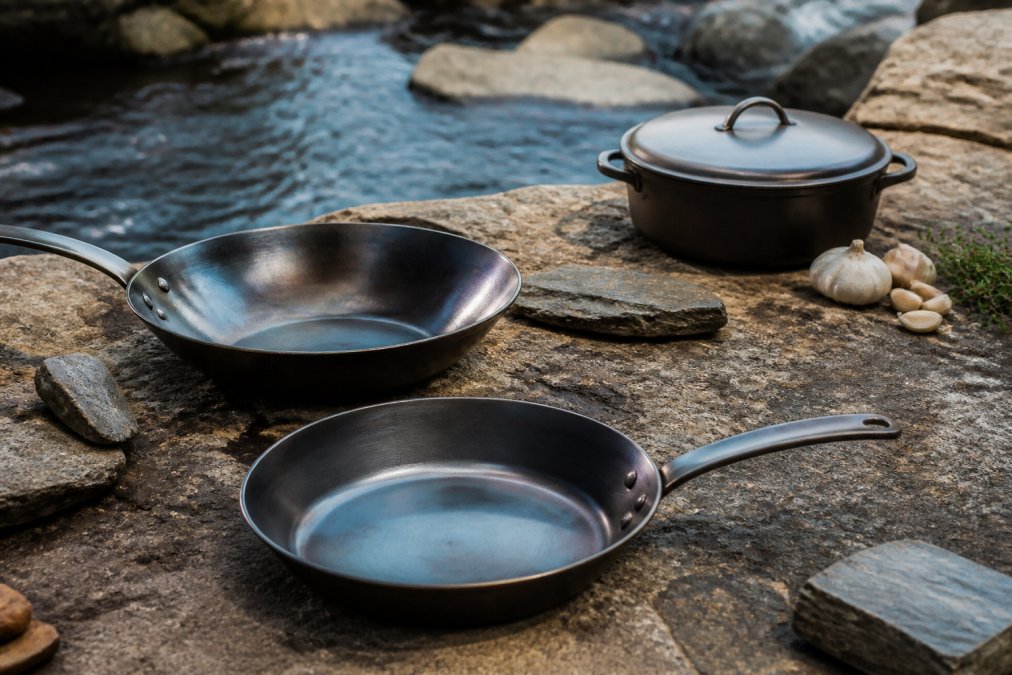
Carbon steel cookware offers the heat retention of cast iron with noticeably less weight, and it seasons into a natural non-stick surface over time. It's the material we build around at Browns Outpost because it handles direct heat, holds up to heavy-duty use, and works across a fire pit, campsite ring, or backyard bonfire.
The benefits stack up quickly for campfire grills:
- Lighter than cast iron for the same cooking surface
- Seasons like cast iron, building non-stick properties with use
- Handles high heat without warping the way thin steel can
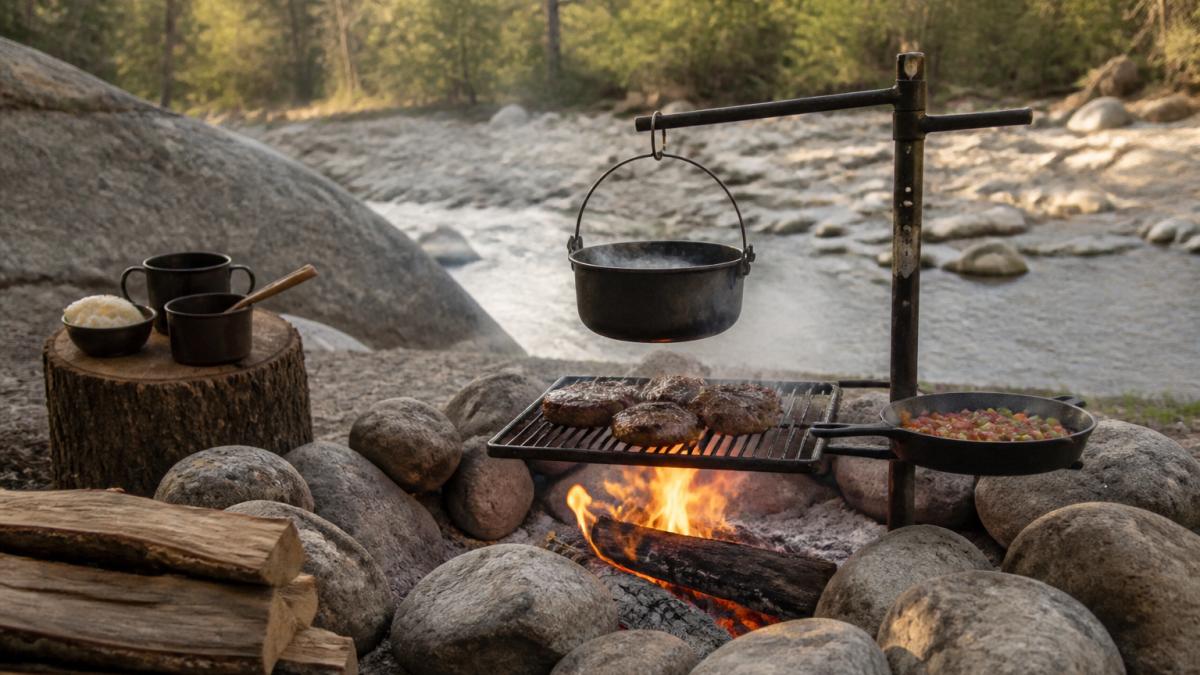
- Works with any fire, from a fire pit to a backcountry ring
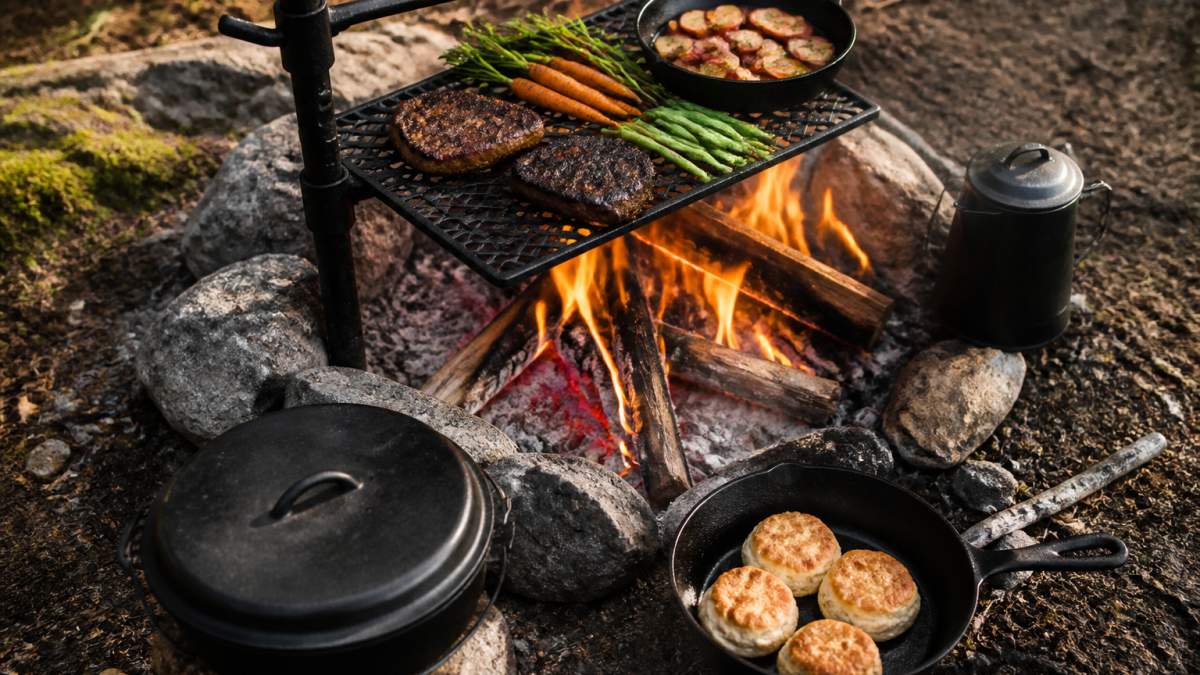
Carbon steel does need the same oil-and-dry care as cast iron, so it's not maintenance-free. But for cooks who want pro results over the fire without hauling a heavy-duty cast iron setup, it's a smart pick. Our ANVIL grill uses hand-crafted raw carbon steel for exactly this reason.
The Lifetime Warranty ANVIL Grill →
How to Season a Campfire Grill (and Keep It Non-Stick)
To season a campfire grill, heat it, coat it in a thin layer of oil, and let it bake onto the surface until it darkens. Repeat this a few times before first use. Seasoning builds the non-stick properties that make food release cleanly and protects the metal from rust.
Here's the routine we recommend:
- Scrub the bare metal with hot water and a stiff brush to remove any residue.
- Dry it completely over heat so no moisture remains.
- Apply a thin coat of neutral oil across the entire cooking surface.
- Heat it over the fire until the oil darkens and stops smoking.
- Repeat two or three times for a solid base layer.
Cleaning and Maintenance Routine
After every cook, burn off residue over the fire and brush the grate clean while it's still warm. Once it cools, wipe on a light oil coat and store it dry. Skip the dishwasher entirely on cast iron and carbon steel; one cycle strips seasoning and invites rust. Stainless steel can take more abrasive cleaning, but gentle is always safer for long-term durability.
| Task | When | Why It Matters |
|---|---|---|
| Burn off residue | After every cook | Prevents stuck-on food and buildup |
| Brush while warm | After every cook | Easier cleaning, protects surface |
| Oil the grate | After every use | Blocks rust and builds seasoning |
| Store dry | Between trips | Prevents surface oxidation |
Food Safety: Coatings, Leaching, and What to Avoid
Food safety with campfire grills comes down to the surface finish. Bare, seasoned carbon steel and cast iron are safe for direct heat. The risk is in cheap plated or coated grates, which can leach chemicals or flake into food when overheated. Avoid anything with an unknown non-stick coating over an open flame.
Seasoning Flakes vs. Chemical Leaching
A common concern with cast iron is the appearance of black flakes in food. These are almost always carbonized oil from the seasoning layer, not the metal itself. They are harmless if swallowed, though unpleasant. The seasoning layer is polymerized oil, a plastic-like film that forms when oil is heated past its smoke point.
Chemical leaching is different. It happens when a non-stick coating, chrome plating, or unknown finish breaks down under high heat and releases compounds into food. Polytetrafluoroethylene (PTFE), commonly known as Teflon, can release toxic fumes when heated above 500°F (260°C), a temperature easily reached over a hot campfire.
What Food-Grade Stainless Steel Actually Means
Chromium-nickel stainless steel, often labeled 304 or 18/8, is considered food-grade and stable for cooking. The chromium content forms a passive layer that prevents the metal from reacting with food. But you should still avoid scratched or pitted surfaces where the metal has broken down. Deep scratches can harbor bacteria and, in low-quality stainless, may expose inclusions that can corrode. For any cookware, Health Canada's food safety guidance on cookware materials is worth a read before you buy.
How to Identify a Safe Surface
A chemical-free surface is the simplest safety rule. Look for bare metal: cast iron, carbon steel, or uncoated stainless steel. If a grate's finish is a mystery, treat it as a risk and look for bare metal instead. Avoid anything described as "non-stick" unless it explicitly states it is ceramic or seasoned oil.
Our ANVIL grill is acid-bathed and pre-seasoned with olive oil, with no coatings and no Teflon, so there's nothing to leach. If a grate's finish is a mystery, treat it as a risk and look for bare metal instead.
Verdict: Which Campfire Grill Material Fits Your Setup
Pick stainless steel if you want low-maintenance, rust-resistant gear and mostly cook quick meals. Pick cast iron if you want maximum heat retention and don't mind the weight or the care. Pick carbon steel if you want the best of both: cast-iron-style searing without the bulk.
It seasons like cast iron, resists rust better than bare iron, and travels far lighter. That's the balance we build into every Browns Outpost grill, from the adjustable ANVIL to our 12-inch roasting pan, all backed by a lifetime warranty and free shipping over $75 CAD.

Choosing the right material is the hard part.
Frequently Asked Questions
Is cast iron or stainless steel better for open-fire cooking?
Cast iron holds heat longer and gives a better sear, but it's heavy and rusts if left wet. Stainless steel resists corrosion and cleans up easily, though it doesn't retain heat as well. For campfire grills, carbon steel offers a middle ground: lighter than cast iron, seasons like it, and works over any open fire.
Do stainless steel campfire grills rust?
Stainless steel resists rust better than carbon steel or cast iron, but it isn't rust-proof. Prolonged exposure to moisture, acidic foods, or salt can still cause surface oxidation. Rinsing and drying after each use keeps stainless grills in good shape. Carbon steel and cast iron need oiling after every cook to prevent rust.
How do you clean a cast iron campfire grill?
Burn off food residue over the fire, then brush the grate clean while it's still warm. Avoid soap and abrasive cleaning pads, which strip the seasoning. Dry the grill completely, then apply a thin coat of neutral oil. Store it dry between trips. This maintenance routine keeps cast iron non-stick and rust-free for years.
Is carbon steel a better alternative to cast iron for camping?
Carbon steel weighs less than cast iron while offering similar heat retention and seasoning properties. It heats faster and responds quicker to temperature changes. The trade-off: carbon steel can warp under extreme thermal shock if heated unevenly. For campfire grills, carbon steel balances portability with cooking performance.
The real challenge isn't picking a material, it's finding gear that holds up trip after trip without constant repairs. Browns Outpost builds hand-crafted raw carbon steel cookware with a lifetime warranty, an adjustable campfire grill design, and free shipping over $75 CAD. Get started with Browns Outpost and cook over the fire with gear that lasts a lifetime.