 blog
blog
Best Carbon Steel Cookware 2026
Table of Contents
- What Is Carbon Steel Cookware?
- How to Season Carbon Steel for Lasting Performance
- Carbon Steel vs Cast Iron for Camping and Outdoor Cooking
- Best Carbon Steel Skillet for Induction and Open-Fire Use
- Why Carbon Steel Cookware Delivers Professional Results
- Maintenance and Rust Prevention in Wet Conditions
- Frequently Asked Questions
Last Updated: September 2, 2026
What Is Carbon Steel Cookware?
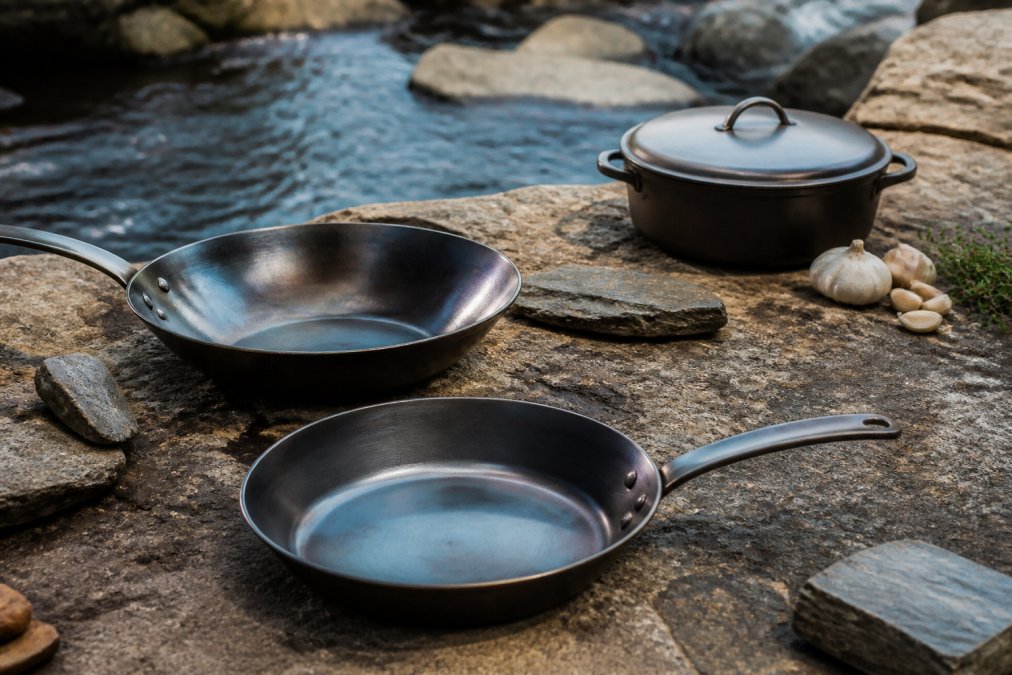
Carbon steel cookware is a hybrid between cast iron and stainless steel, combining heat retention and durability with lighter weight and responsiveness. Unlike cast iron, carbon steel develops a natural non-stick patina through seasoning while remaining thin enough to heat quickly and evenly. The material consists of 98% iron and 2% carbon, creating a surface that bonds strongly with oils and fats during polymerization, the chemical reaction where heat transforms applied oil into a protective, slick coating.
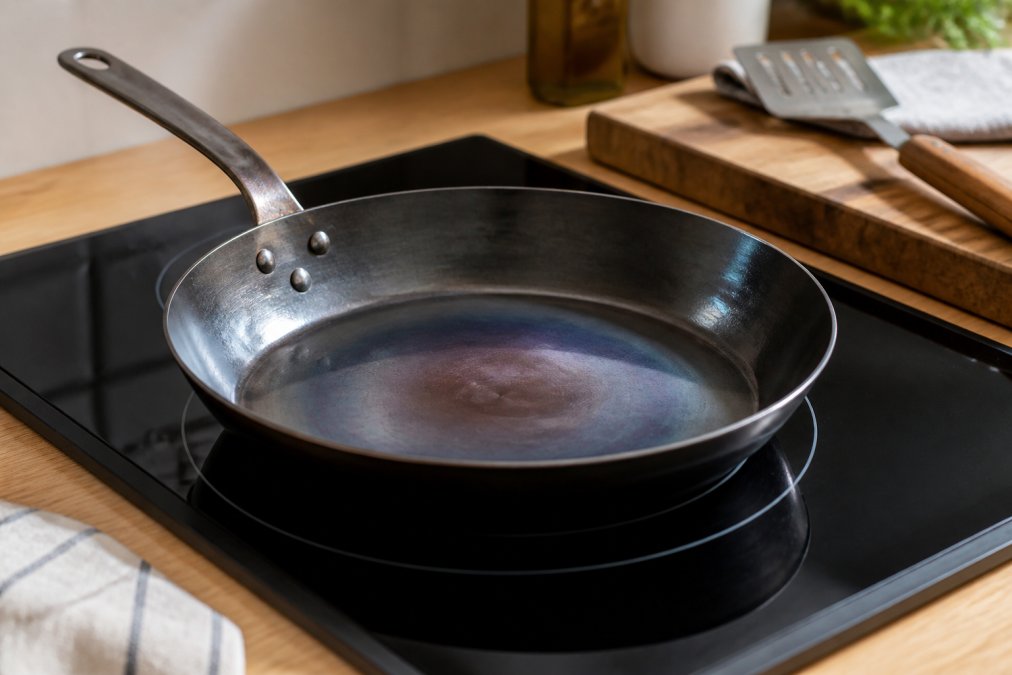
This makes carbon steel exceptionally versatile for high-heat searing, slow-cooking, and everything in between. The seasoning builds over time, improving non-stick properties with each use. For outdoor enthusiasts, hunters, and wilderness campers, carbon steel delivers professional culinary results without the fragility of delicate cookware or the weight penalty of traditional cast iron.
At Browns Outpost, we've engineered our carbon steel gear specifically for open-fire cooking and backcountry conditions. Our hand-crafted raw carbon steel surfaces withstand intense heat, wet conditions, and heavy use. A lifetime warranty backs every piece, ensuring your investment performs for decades.
How to Season Carbon Steel for Lasting Performance
Seasoning carbon steel creates a durable, non-stick surface through repeated layers of polymerization. Apply a thin coat of high-smoke-point oil, heat the pan until it smokes, cool it, and repeat. Each layer bonds to the previous one, building resilience and improving performance over time.
Initial Seasoning: Building Your Foundation
Start with a clean, dry surface. Use neutral oil with a high smoke point, vegetable, canola, or grapeseed oil work well. Avoid olive oil and butter; their lower smoke points burn before polymerization occurs. Apply oil sparingly with a cloth, then wipe away excess until the pan looks almost dry. Thin layers produce better results than thick ones.
Heat the pan in an oven at 200°C for 15 minutes, then increase to 260°C and bake for an hour (peer-reviewed research). This sustained heat forces oil into the iron's pores. Once cooled completely, you've completed one layer. Most people apply 3-5 layers before the pan develops reliable non-stick properties.
For outdoor cooking, seasoning accelerates through use. Every time you cook with fat, searing meat, frying vegetables, cooking bacon, you're adding microscopic layers of polymerized oil. High-heat searing builds patina faster than low-temperature cooking. After a few camping trips, your pan will develop the dark, glossy finish that signals mature seasoning.
The key mistake is rushing the process or applying too much oil. Thick, uneven seasoning peels and flakes. Thin, consistent layers bond permanently.
Rescuing Flaking or Uneven Seasoning
If your pan develops flaking, sticky patches, or uneven seasoning, the issue is usually thick layers that didn't polymerize fully or oil buildup in low spots. This is fixable.
For light flaking, use a stiff brush or steel wool to gently scrub away loose seasoning while cool. Remove only what's peeling, then re-season that area by heating with a thin coat of oil until it smokes. One or two layers usually restores evenness.
For sticky patches or heavy buildup, strip and restart. Place the pan in a 260°C oven for 30 minutes, then remove and let cool slightly. Use coarse steel wool or a brass brush to scrub away all seasoning down to bare metal. Once bare, wash with hot water and soap (the only time soap is appropriate), dry completely, and begin initial seasoning again with 3-5 thin layers.
Stripping is maintenance, not failure. Professional cooks strip and re-season pans regularly to maintain peak performance.
Long-Term Patina Evolution
As your pan ages with regular use, the seasoning evolves. In the first 6-12 months of active cooking, the patina darkens from brown to deep charcoal or black, and non-stick properties improve noticeably. After 1-2 years of heavy use, a well-maintained pan develops a mirror-like finish in high-use areas while sides may show lighter, textured patina. This variation indicates proper seasoning, high-heat zones have thicker, more durable layers.
Over decades, heavily used pans may develop slight texture or micro-cracks (crazing) in the surface. This does not compromise function; the pan still performs excellently. If crazing bothers you aesthetically, a light strip-and-re-season restores the smooth finish.
Carbon Steel vs Cast Iron for Camping and Outdoor Cooking
Both materials excel outdoors but serve different purposes. Cast iron is heavier, thicker, and retains heat longer, ideal for slow-cooking stews. Carbon steel is lighter, heats faster, and responds quickly to temperature changes, making it superior for high-heat searing and stovetop cooking.
For backpacking and remote camping, carbon steel wins decisively. A carbon steel skillet weighs 30-40% less than equivalent cast iron, which compounds across a full camp kitchen. Cast iron makes sense for car camping where weight isn't a constraint.
Carbon steel heats more evenly and responds faster to flame adjustments, giving finer control over searing temperatures. Cast iron's superior heat retention maintains temperature longer once removed from heat, useful for keeping food warm but less useful for precise cooking.
Seasoning maintenance is comparable, though carbon steel's thinner surface means patina develops faster with use. Both resist rust when properly seasoned and stored dry.
For professional results in the field, carbon steel delivers better performance through thermal responsiveness and lighter weight.
Best Carbon Steel Skillet for Induction and Open-Fire Use
Carbon steel's versatility across heat sources, open flame, electric coil, gas, and induction, is one of its strongest advantages. However, induction cooktops present specific challenges that generic carbon steel pans don't always handle well.
Induction Compatibility and Magnetic Properties
Induction cooktops generate a magnetic field that heats ferromagnetic cookware directly. Carbon steel, being primarily iron, is naturally magnetic and works on induction. However, not all carbon steel pans perform equally. The thickness and flatness of the bottom directly affect induction efficiency and longevity.
A quality induction-compatible carbon steel pan should have a flat bottom and a minimum thickness of 2.5-3 mm at the base. Thinner pans heat unevenly on induction and are prone to warping under the intense magnetic field. When a thin pan warps, it loses contact with the cooktop, causing the burner to cycle on and off and potentially damaging the pan's structure.
When testing carbon steel for induction use, place the pan on a cold induction burner and run it at maximum heat for 5 minutes without liquid. A quality pan will remain flat and heat evenly. A poor-quality pan may warp visibly.
Heat Distribution and Responsiveness on Induction
Carbon steel's thin construction makes it highly responsive on induction, heating almost instantly when the burner activates. This is advantageous for precise cooking, you can adjust temperature rapidly. However, hot spots are more pronounced than in thicker stainless steel or cast iron. A carbon steel skillet will have a noticeably hotter zone directly above the burner coil, with cooler zones toward the edges.
For high-heat searing, this is beneficial; the intense heat zone is ideal for building a crust on meat or vegetables. For low-temperature cooking, you'll need to rotate the pan occasionally or use lower heat and allow time for distribution.
Long-Term Durability Under Induction Stress
Repeated thermal cycling on induction can stress carbon steel if not properly constructed. The magnetic field generates heat rapidly, and if the pan cools quickly, the temperature differential can cause micro-stress in the metal. Over years of heavy induction use, poorly made pans may develop stress cracks or permanent warping.
A well-made carbon steel pan with even thickness and proper metallurgy will withstand thousands of induction cycles without degradation. Key indicators of quality are consistent thickness, a flat bottom that remains flat after heating, and a handle that doesn't loosen or develop cracks. Riveted handles are more durable than welded handles under thermal stress.
Choosing a Pan for Dual Use (Induction and Open Fire)
If you cook on both induction at home and open flame while camping, your pan needs to excel at both. Ideal specifications are:
- Bottom thickness: 2.5-3 mm minimum for induction stability
- Overall weight: 1.2-1.8 kg for a 25-30 cm skillet
- Bottom flatness: Perfectly flat when cold; minimal dome when heated
- Handle construction: Riveted, not welded, for durability under thermal stress
- Surface finish: Raw or lightly pre-seasoned
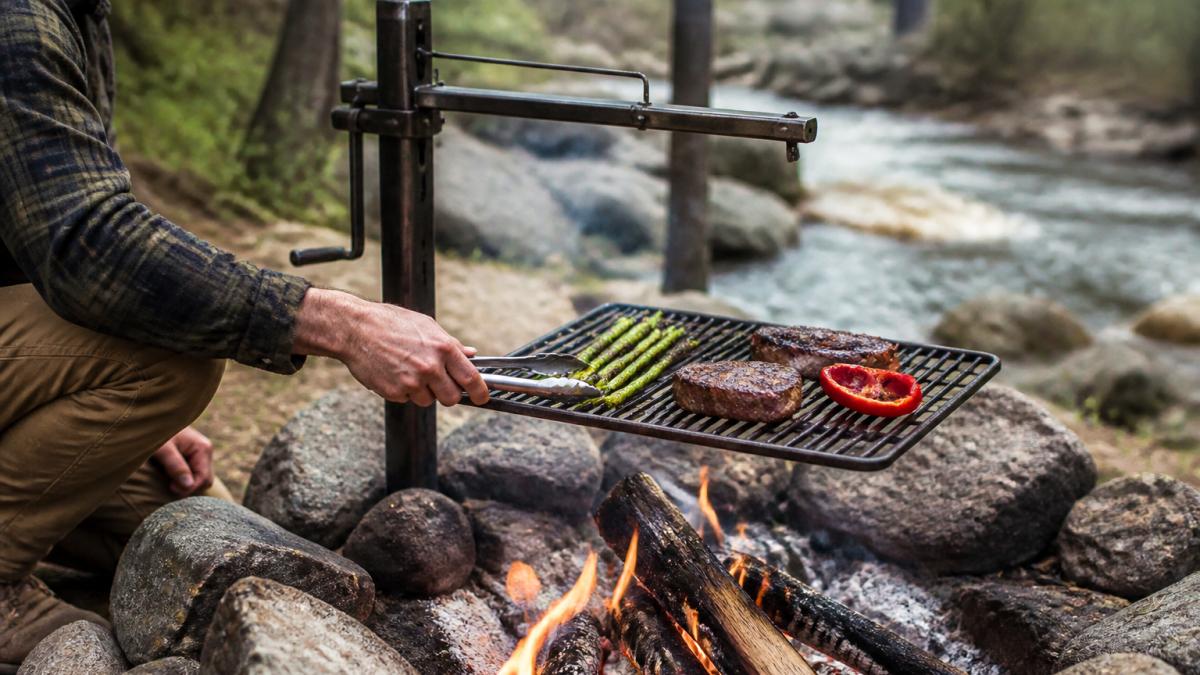
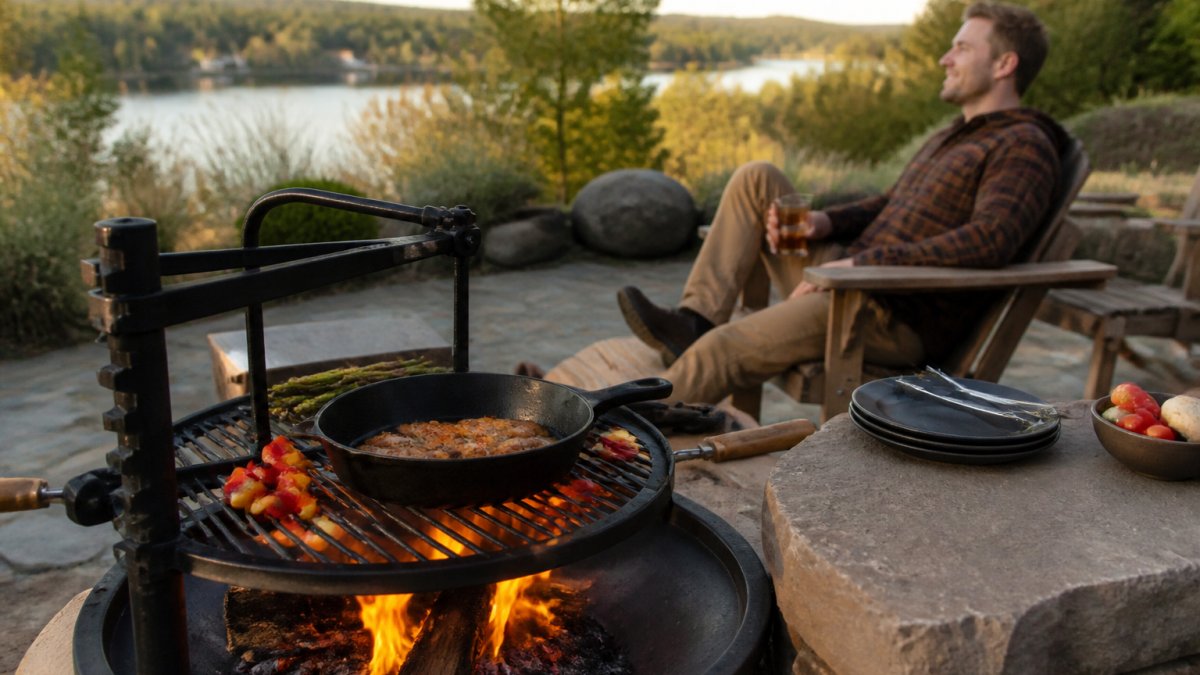
The Browns Outpost Lifetime Warranty ANVIL Grill represents the professional standard for open-fire cooking with its adjustable height mechanism and hand-crafted raw carbon steel. The flat bottom and 3 mm thickness ensure stable induction heating without warping. Carbon steel's responsiveness makes induction cooking efficient; the pan heats almost instantly when the burner activates.
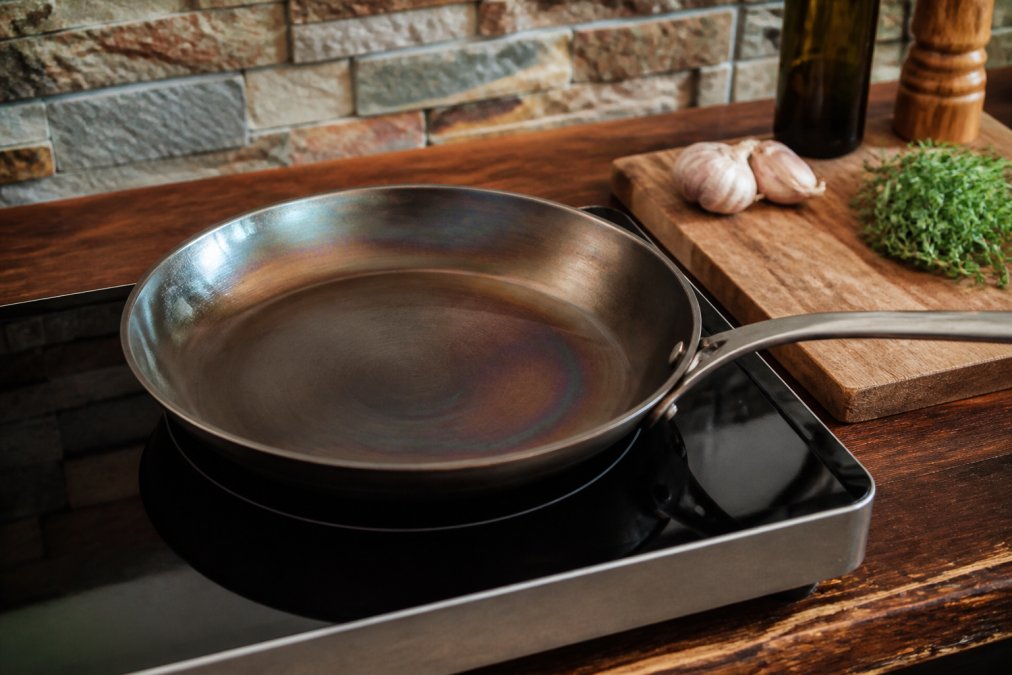
This versatility, equally at home over an open fire or on an induction cooktop, makes it the single most useful piece of cookware for outdoor enthusiasts who also cook at home. At $174.99 CAD with free shipping over $75, the investment is justified by durability and versatility. The lifetime warranty means you're not replacing it every few seasons like cheaper alternatives, and it covers warping or structural failure under normal use.
Why Carbon Steel Cookware Delivers Professional Results
Professional kitchens favor carbon steel because it responds to technique. Unlike non-stick cookware that forgives poor heat management or cast iron that masks timing mistakes with massive thermal mass, carbon steel demands precision and rewards it. A chef can feel the pan's temperature through the handle, adjust heat instantly, and achieve the exact sear or sauté they're targeting.
This responsiveness comes from thermal conductivity. Carbon steel transfers heat efficiently from the flame to the food, creating the Maillard reaction, the chemical process that builds flavor through browning. High-heat searing produces a golden crust on meat or vegetables while maintaining a tender interior.
Durability compounds the professional advantage. A carbon steel pan used daily for decades actually improves with age. The seasoning thickens, the patina darkens, and non-stick properties strengthen. A well-maintained carbon steel pan becomes a kitchen heirloom.
For outdoor cooking, carbon steel's lightweight construction makes it practical for serious camp cooks. You can carry multiple pans without exhausting yourself. The adjustable grill design of the ANVIL lets you manage heat over flames with precision impossible on a static grate. Professional camp cooks, guides, and outfitters depend on carbon steel because it performs under demanding conditions where equipment failure means meal failure.
Maintenance and Rust Prevention in Wet Conditions
Rust prevention in wet camping conditions requires understanding why rust forms: iron oxidizes when exposed to moisture without protective seasoning. The seasoning layer is your barrier. Keep it intact, and rust won't develop.
After cooking, clean the pan while still warm. Use hot water and a stiff brush or steel wool to remove food residue. Dry immediately with a cloth; don't let water sit on the surface. For stubborn stuck-on food, use coarse salt as an abrasive with a bit of oil.
Once dry, apply a thin protective oil layer. This creates a moisture barrier that prevents rust during storage. In wet camping conditions, store the pan in a dry location, inside a tent, wrapped in cloth, or in a sealed bag.
If rust does appear, address it immediately. Light surface rust scrubs away with steel wool and oil. Once cleaned, re-season that area by heating with oil until it smokes. Rust doesn't mean the pan is ruined; it means the seasoning was compromised and needs restoration.
The biggest mistake is using soap or letting the pan air-dry. Soap strips away the protective oil layer, and air-drying in humid conditions invites oxidation. Dry immediately, apply oil, and store dry. This simple routine prevents 99% of rust problems.
Carbon steel cookware delivers unmatched versatility for outdoor cooks who demand professional results and durability that lasts a lifetime. Whether you're searing meat over a campfire, cooking on an induction cooktop, or feeding a hunting crew in remote conditions, carbon steel responds to technique and improves with use. The seasoning process is straightforward, maintenance is simple, and the long-term value justifies the initial investment.
Browns Outpost's Lifetime Warranty ANVIL Grill combines hand-crafted raw carbon steel with an adjustable height mechanism that gives you precise heat control over any open fire. Built for tough, durable construction and backed by our commitment to professional results, it's the equipment choice for serious outdoor enthusiasts. With free shipping over $75 CAD and a lifetime warranty covering every component, you're investing in gear that performs for decades. ADD TO CART and start building your outdoor cooking legacy today.

Frequently Asked Questions
How do I properly season carbon steel cookware for outdoor use?
Seasoning carbon steel builds a polymerized oil coating that prevents rust and creates non-stick properties. Heat the pan over medium-high heat until it smokes lightly, apply a thin layer of high-smoke-point oil (vegetable or grapeseed), wipe off excess with a cloth, and let cool. Repeat 3-4 times for initial seasoning. Each time you cook with fat or oil, you add to the patina. For outdoor camping, a well-seasoned pan develops a darker, more resilient finish over time.
What's the difference between carbon steel and cast iron for camping?
Carbon steel is lighter, heats faster, and develops patina more quickly than cast iron. Cast iron is thicker and retains heat longer, but carbon steel's lower weight makes it ideal for backpacking and remote trips. Both require seasoning and maintenance, but carbon steel responds faster to oil coating and offers better heat distribution for high-heat searing. For car camping where weight isn't critical, cast iron's thermal conductivity wins; for wilderness trips, carbon steel's durability and portability make it the choice.
Can carbon steel cookware work on induction cooktops?
Yes, carbon steel works on induction because it's a reactive metal with ferrous content. However, thin carbon steel may warp under intense induction heat, so look for heavier-gauge options. Open-fire cooking doesn't require induction compatibility, but if you plan dual use, choose a thicker skillet (3mm or more) to resist warping. The ANVIL adjustable grill excels over open flames and campfires, offering superior heat control through adjustable height rather than relying on cooktop compatibility.
Is carbon steel cookware worth the investment compared to cheaper alternatives?
Carbon steel costs more upfront but lasts a lifetime with proper care. Hand-crafted options like the ANVIL grill deliver professional-grade durability and come with lifetime warranties, meaning you won't replace them. Cheaper mass-produced grills often warp, rust, or fail after a season or two. For outdoor enthusiasts, hunters, and serious home cooks, the durability and resilience of quality carbon steel justify the investment. You're paying for equipment that handles large-scale cooking, withstands isolation and wet conditions, and performs reliably for decades.
This article was written using GrandRanker