 blog
blog
Adjustable Campfire Grill Reviews: What Matters
Table of Contents
- What Makes a Quality Adjustable Campfire Grill
- Best Campfire Grill for Your Cooking Style
- Heavy-Duty Campfire Grill Durability and Longevity
- Campfire Grill Temperature Control: Technique Over Gadgets
- How to Clean a Campfire Grill and Prevent Rust
- Common Mistakes When Choosing an Adjustable Campfire Grill
- Frequently Asked Questions
Last Updated: October 8, 2026
What Makes a Quality Adjustable Campfire Grill
A quality adjustable campfire grill combines three core strengths: precise height control, durable materials that resist rust and warping, and a design that works reliably over any open flame without fuss. Most people assume all campfire grills are basically the same, a metal grate on some stakes. They're not. The difference between a grill that lasts a season and one that lasts decades comes down to material choice, adjustability, and how well it handles the stresses of repeated heating and cooling.
At Browns Outpost, we've found that the best adjustable campfire grills share a common trait: they prioritize function over complexity. No electronic controls, no plastic components that melt, no assembly manuals that make you question your life choices. Just steel, adjustment, and reliability.

Height Adjustment and Grate Position
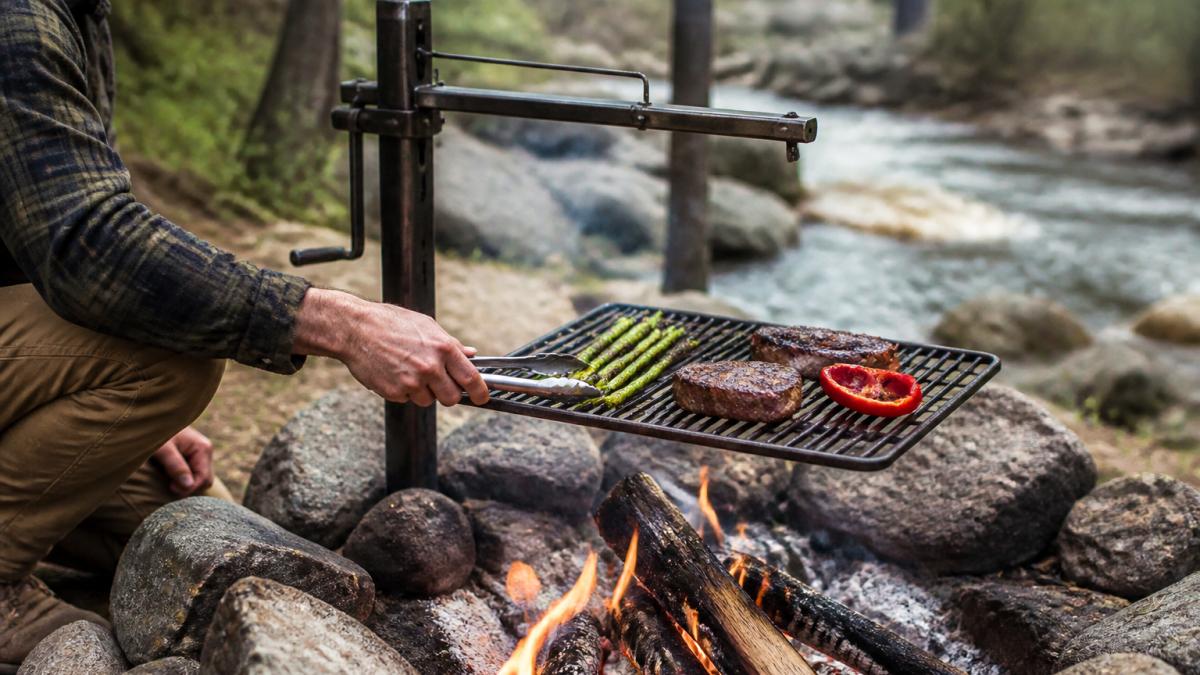
The ability to raise or lower your cooking surface directly above the flame is non-negotiable. Without it, you're stuck with either scorched food or raw meat. A quality adjustable campfire grill lets you dial in the exact distance between your food and the heat source, which means the difference between searing a steak and charring it.
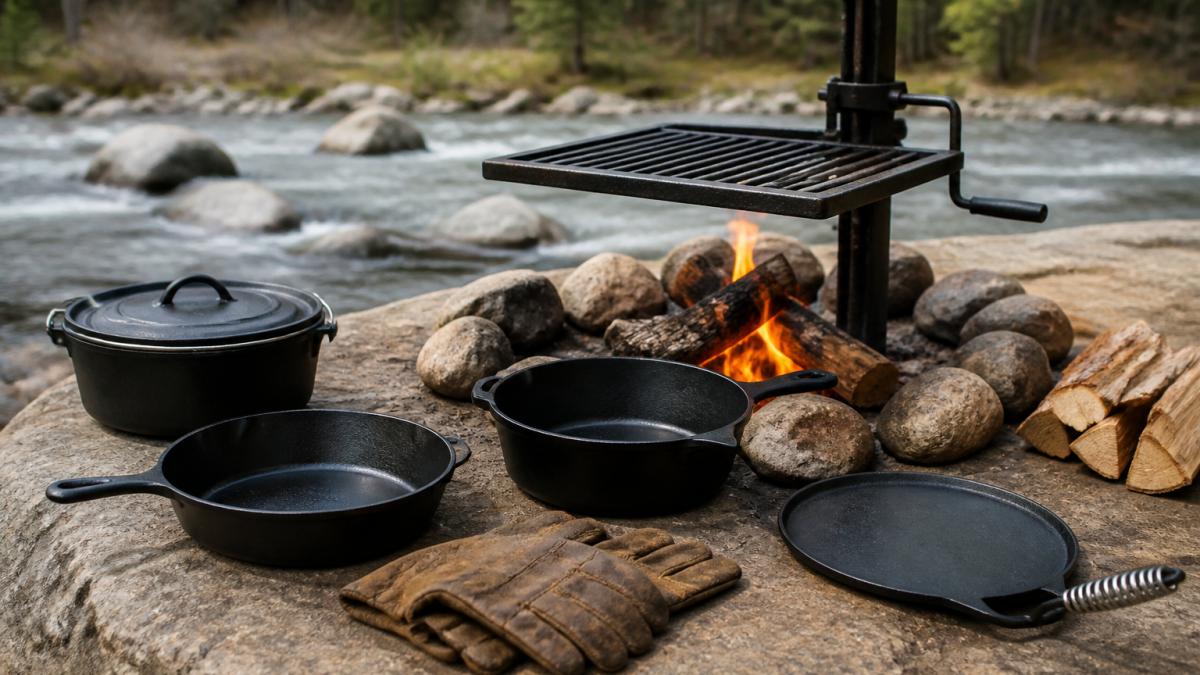
The best systems use a simple vertical stake with locking positions or a sliding mechanism. You push the grate up or down, lock it in place, and it stays there. No drift, no slipping, no adjustments mid-cook. When you're managing an open fire with wind, temperature fluctuations, and uneven heat distribution, the last thing you want is wondering whether your grill just shifted.
Material and Build Quality
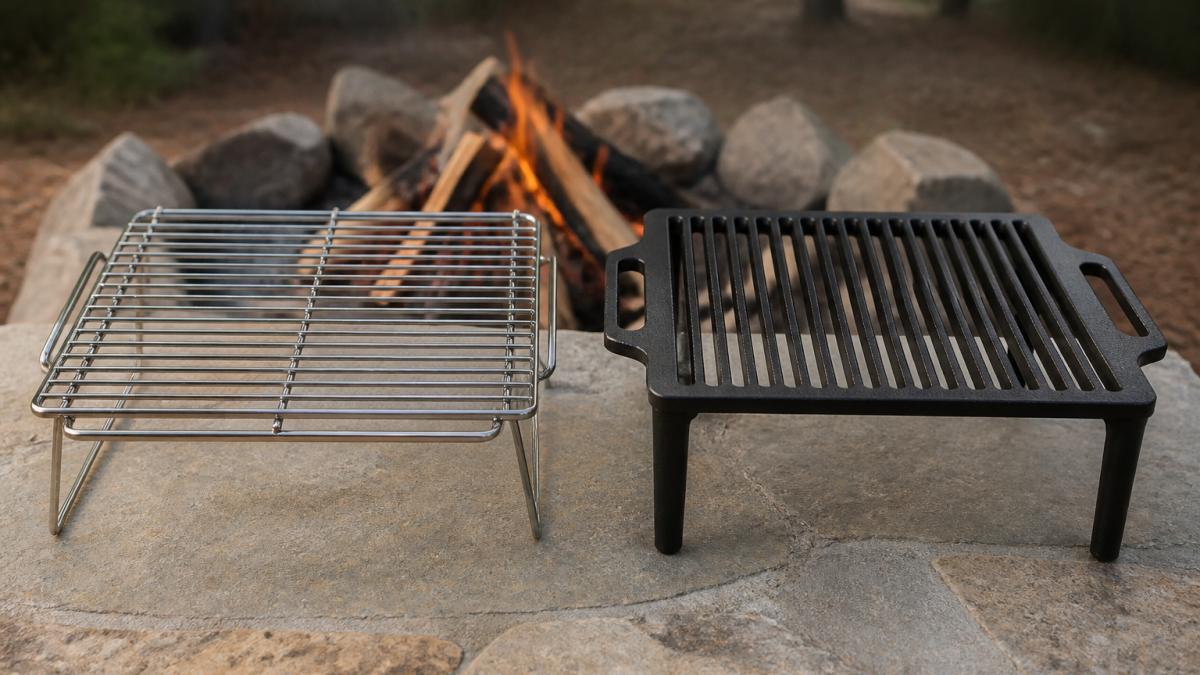
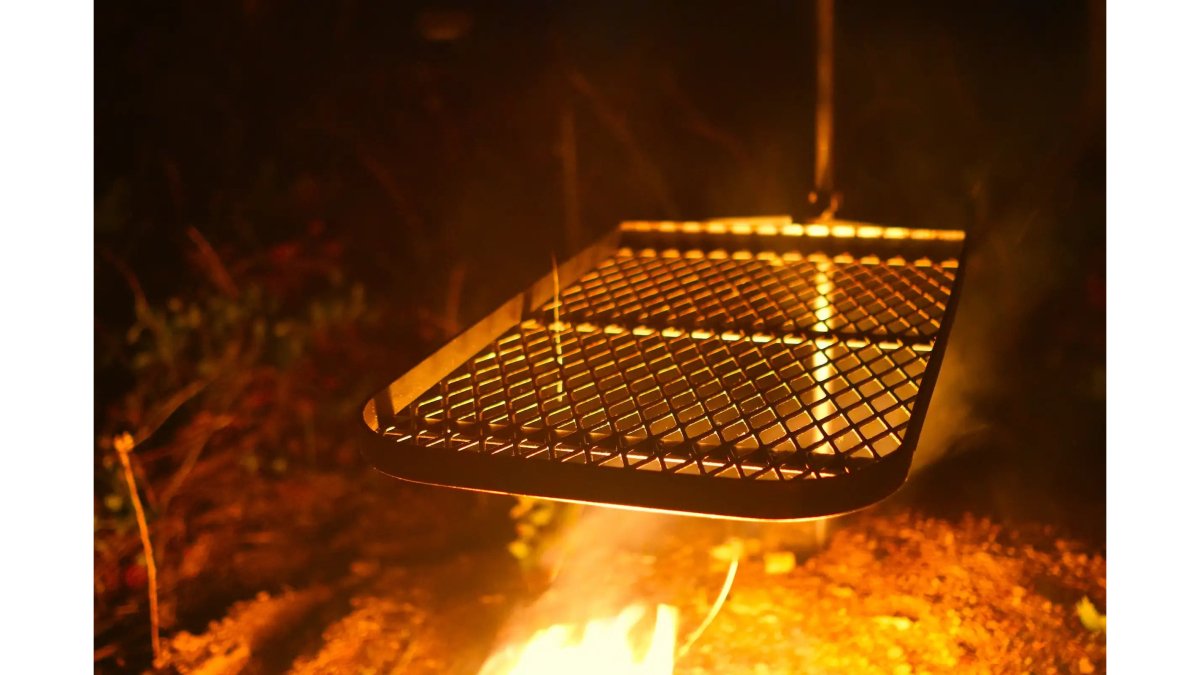
Heavy carbon steel is the gold standard for campfire cooking. It heats evenly, develops a natural seasoning over time, and, when properly maintained, actually improves with age. Unlike stainless steel, carbon steel gives you performance that matches its price.
The thickness matters. Thin steel warps under intense heat. Thick steel (like the 16.5 lb grates we use) distributes heat evenly and bounces back from the stress of repeated temperature swings. A quality grill won't bend, warp, or develop hot spots that cook one side of your food while leaving the other raw.
Pre-seasoning also matters. A grill that arrives acid-bathed and seasoned with food-grade oil (no chemical coatings, no Teflon) is ready to cook immediately and builds its seasoning layer with every use.
Portability and Packed Size
If your grill doesn't fit in your truck bed or pack without taking up half your gear space, it's not portable, it's just heavy. A quality adjustable campfire grill breaks down flat. The stakes separate from the grate, and the whole thing slides into a pack or under a seat. Weight should be under 20 lbs so one person can carry it without struggle.
Portability also means simplicity. No bolts, no assembly, no tools required. You arrive at your camp, position the stakes in the ground, slide the grate to your desired height, and cook. Breakdown is just as fast.
Best Campfire Grill for Your Cooking Style
Different cooking situations demand different approaches. A grill that excels at high-heat searing might struggle with low-and-slow camp cooking, and vice versa. Understanding what you'll actually cook over open flame determines whether you need maximum adjustability or whether a simpler setup works fine.
High-Heat Searing Over Open Flame
If you're cooking steaks, burgers, or seared fish over a hot fire, you need a grill that can sit close to intense flame without warping. The sweet spot is usually 7.5 to 10 cm above the coals or active flame, where you get a hard sear without burning the outside before the inside cooks.
A heavy-duty adjustable campfire grill with multiple locking positions gives you that precision. You can drop the grate low for maximum heat transfer, sear hard for 2-3 minutes per side, then raise it slightly if the fire gets too aggressive. The ability to make micro-adjustments separates a perfectly cooked steak from a charred disaster.
Low-and-Slow Camp Cooking
Stews, soups, and slow-roasted meats need consistent, moderate heat, usually 15 to 20 cm above the coals. At this distance, the grate sits above the intense heat zone but still benefits from the fire's warmth. You're not trying to sear; you're trying to maintain a gentle simmer or slow braise.
An adjustable grill shines here because you can raise the cooking surface high enough to avoid scorching the bottom of your pot while still getting enough heat to cook through. You'll also have room to manage the fire underneath, pushing coals around, adding wood, or pulling the grate back if the heat spikes.
Backyard Bonfire Versatility
Backyard bonfire cooking is different from campfire cooking. Your fire pit is larger, the fire is often less controlled, and you might be cooking for a group. You need a grill that handles variable heat and accommodates different sized cookware, from a small cast iron skillet to a large Dutch oven.
An adjustable campfire grill works for this because it lets you position your cookware at the exact height that matches your fire's current output. As the fire settles or builds, you adjust once instead of moving your entire pot.
Heavy-Duty Campfire Grill Durability and Longevity
A campfire grill is one of the few pieces of outdoor gear that gets better with use. But only if it's built right. Poor construction fails in years. Quality construction lasts decades and costs less per year than buying replacements.
Steel Grades and Corrosion Resistance
Not all carbon steel is equal. The acid-bathing process, where the steel is treated with an acid wash before seasoning, removes mill scale and impurities that would otherwise trap moisture and cause rust.
The Lifetime Warranty ANVIL Grill →
Once seasoned with oil, a quality carbon steel grate develops a protective patina. You'll see surface rust occasionally if you're cooking in damp conditions, but it wipes away with a cloth and oil.
Load Capacity and Stability
A quality adjustable campfire grill should handle 18 kg or more without sagging or tilting.
Stability also depends on how the stakes anchor into the ground. The best designs have wide, flat stakes that dig in firmly and resist shifting when you move pots around. A grill that rocks or slides is dangerous and makes cooking frustrating.
Campfire Grill Temperature Control: Technique Over Gadgets
Here's what most guides get wrong about campfire cooking: they treat temperature control like it's a problem to solve with equipment. It's not. It's a skill you develop through practice and observation.
A quality adjustable grill gives you the tool, precise height adjustment. How you use it is technique. You learn to read the fire, feel the heat with your hand at different distances, and adjust the grate height based on what you're cooking and how the fire is performing that day.
This is actually an advantage. You're not dependent on a thermometer or a dial. You develop intuition. You learn that a fire with visible flames is hotter than one with just glowing coals. You recognize when the heat is dropping and adjust before your food suffers. This is the kind of knowledge that makes you a better outdoor cook.
How to Clean a Campfire Grill and Prevent Rust
Maintenance is simple, but consistency matters. A grill that gets cleaned and oiled after every use lasts indefinitely. A grill that gets ignored develops rust that eventually compromises the steel.
Post-Cooking Maintenance
While the grate is still warm (but cool enough to touch), brush off food residue with a stiff brush. The warmth makes debris easier to remove. Then wipe the entire surface with a cloth lightly coated with food-grade oil. This prevents moisture from settling on the steel and initiating rust.
If you're cooking over a fire, you can also burn off light residue by holding the grate over the flames for 30 seconds and brushing it clean. This carbonizes leftover food and makes wiping easier.
Seasonal Storage
Between camping trips or at the end of the season, store your grill in a dry place. A garage, shed, or even under a tarp works fine. The key is keeping moisture away. If you live in a humid climate, a light coat of oil before storage adds extra protection.
If you notice surface rust during storage, it's not a disaster. Wipe it away with a cloth and oil, then store again. The seasoning layer will rebuild with the next use.
Common Mistakes When Choosing an Adjustable Campfire Grill
Most people make one of three mistakes: they buy too light (thinking portability matters more than durability), they overthink adjustability (assuming more positions are automatically better), or they ignore maintenance (expecting the grill to stay rust-free without effort).
A lightweight grill that warps after two seasons costs more in the long run than a heavier, quality grill that lasts a lifetime. An adjustable grill with five locking positions is more than enough, most cooks use only two or three.
The Browns Outpost ANVIL grill addresses these directly. At 16.5 lbs, it's heavy enough to stay stable and distribute heat evenly, but light enough that one person carries it without complaint. The adjustable height mechanism is simple, slide and lock, with no complexity to fail. And the carbon steel, when maintained with a post-cook oil wipe, develops a natural rust-resistant patina that improves with use.
Frequently Asked Questions
What should I look for in an adjustable campfire grill?
Prioritize adjustable height to control heat, heavy carbon steel or stainless steel construction for durability, and a grate large enough for your typical meal size. Stability matters, the grill should sit level and secure over any fire. Check whether it packs flat for transport and verify the warranty covers manufacturing defects. An adjustable campfire grill that handles at least 20 kg of weight will serve most outdoor cooking needs without warping.
Are adjustable campfire grills better than fixed grates?
Yes, for most outdoor cooking. Adjustable models let you raise the grate for high-heat searing or lower it for gentle slow-cooking, giving you one tool instead of two. Fixed grates lock you into one cooking zone. Adjustable grills cost more upfront but provide versatility that fixed options cannot match. If you cook over fire only occasionally, a fixed grate may suffice; regular outdoor cooks benefit from the control.
How do you control cooking temperature on a campfire grill?
Adjust the grate height above the flame, the primary tool for campfire grill temperature control. Lower the grate for intense direct heat; raise it to create distance and reduce heat intensity. Move coals or wood to one side to create hot and cool zones. Use the fire itself: more wood means higher heat, less wood means lower heat. This hands-on approach requires attention but gives precise results once you learn the rhythm of your fire.
How often do I need to clean a campfire grill?
Clean immediately after each cooking session while the grate is still warm. Burn off food residue over the fire, then brush with a stiff brush while warm. Oil the grate lightly after cooling to prevent rust. Between trips, store it dry in a cool place. Heavy use in wet conditions may require more frequent oiling. A well-maintained campfire grill resists rust and lasts decades without deep cleaning.
Choosing an adjustable campfire grill is about matching durability to your cooking style and committing to basic maintenance. A quality grill built from heavy carbon steel, designed for precise heat control, and backed by a lifetime warranty removes the guesswork. The Browns Outpost ANVIL delivers exactly that, professional-grade performance over any open flame, with free shipping on orders over $75 CAD. Get started with the ANVIL and cook like you mean it.