 comparison
Best Adjustagrill Alternative for Outdoor Enthusiasts
Table of Contents
- Why an Adjustagrill Alternative Makes Sense for Open-Fire Cooks
- Quick Comparison: Adjustagrill Alternative Options at a Glance
- The ANVIL Adjustable Campfire Grill: Height Control That Changes the Cook
- What Makes a Heavy-Duty Campfire Grill Worth Packing
- Portable Campfire Grill Setup: Packability, Transport and Fuel Reality
- Campfire Cooking Grate Care, Safety and Long-Term Durability
- Cast Iron Cookware That Pairs With Any Campfire Grate
- Which Setup Fits Your Fire? A Decision Framework
- Frequently Asked Questions
Last Updated: October 19, 2026
Why an Adjustagrill Alternative Makes Sense for Open-Fire Cooks
The problem with most campfire grills isn't the fire. It's the fixed grate. You build a good bed of coals, set the grate on top, and then you're stuck negotiating with the heat by moving food around instead of moving the cooking surface.
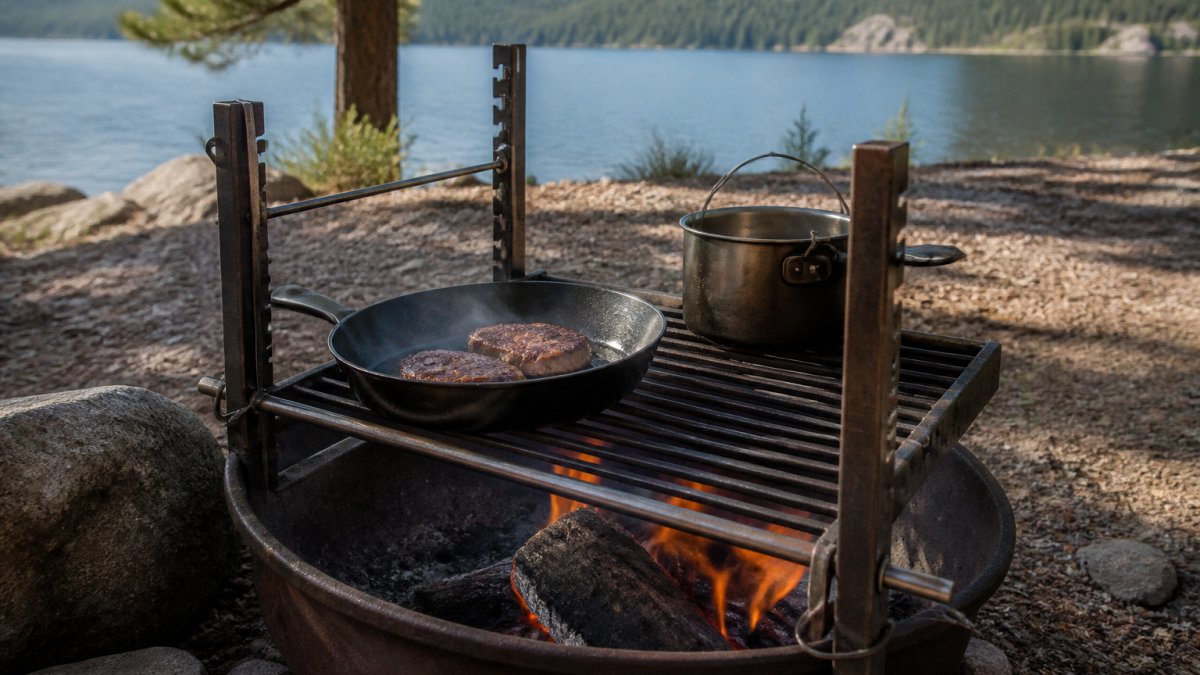
That's the case for an Adjustagrill alternative built around height control rather than gadgetry. At Browns Outpost, we make the ANVIL grill for exactly this reason: a carbon steel grate that slides and locks along a stake, so you set the distance between food and flame instead of hoping for the best.

Below, we'll break down what actually matters in a portable campfire grill, how the options compare, and which setup fits the way you cook.
Quick Comparison: Adjustagrill Alternative Options at a Glance
Here's the short version before the detail. Every option below is a Browns Outpost piece, and they're built to work together rather than compete.
| Setup | Price (CAD) | Best For | Key Strength |
|---|---|---|---|
| ANVIL Adjustable Campfire Grill | $174.99 | Open-fire cooking with heat control | Adjustable height, 38 x 50 cm surface |
| 12" Dutch Oven | $52.99 | Stews, braises, camp bread | Even heat, flanged lid holds coals |
| 12" Roasting Pan | $48.99 | Searing and pan sauces | Deep walls catch drippings |
| 10" Cauldron with Reversible Lid | $45.99 | One-pot meals | Lid doubles as a griddle |
| 10" Shallow Skillet | $32.99 | Fast breakfasts | Quick heat, maximum sear contact |
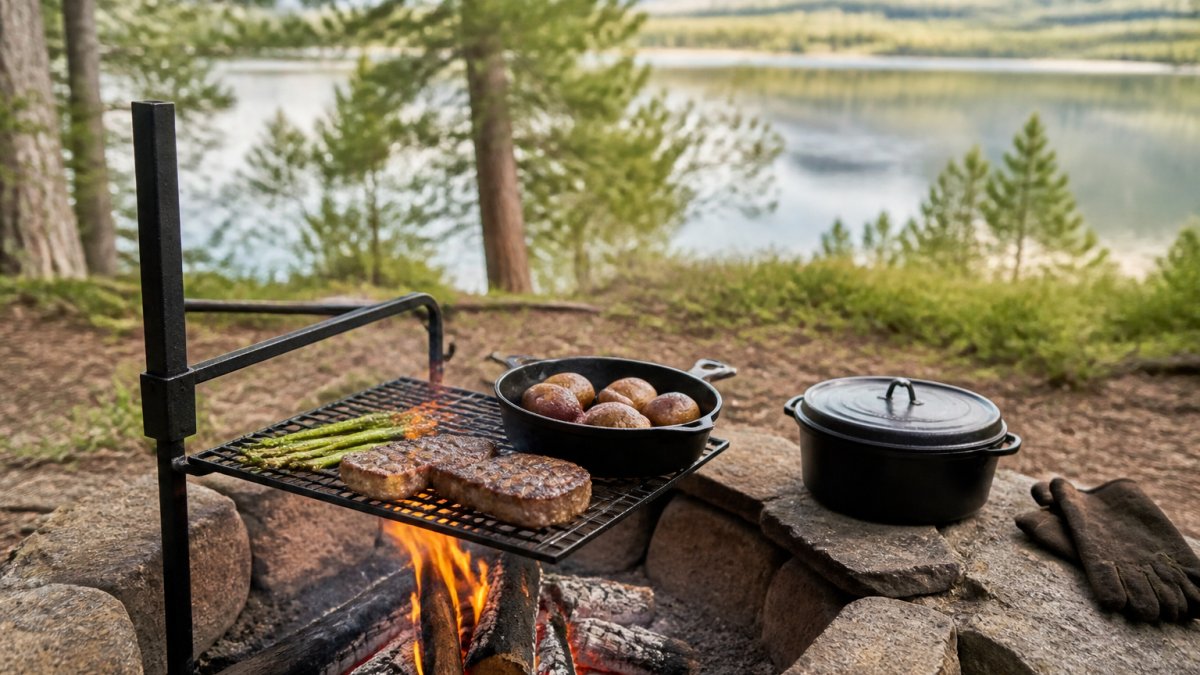
The pattern is deliberate: one adjustable grate handles the fire, and cast iron handles the food. That combination covers searing, smoking, low-and-slow braising, and baking without a single propane connection.

The ANVIL Adjustable Campfire Grill: Height Control That Changes the Cook
Height control is the feature that separates a real cooking tool from a grate you balance on rocks.
The surface measures 38 x 50 cm and handles 40 lb (20 kg) without complaint. It's heavy carbon steel, acid-bathed and pre-seasoned with olive oil, with no coatings to flake off.
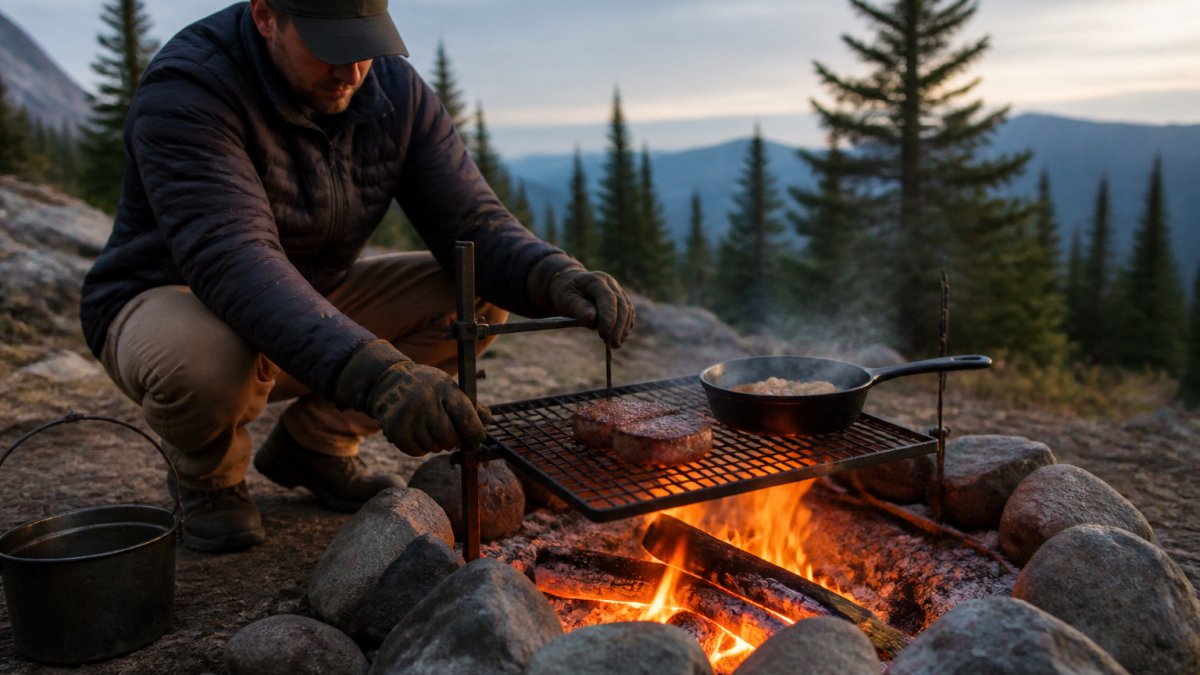
What most reviews miss is that adjustability isn't a convenience feature. It's the difference between cooking on a fire and cooking with a fire.
What Makes a Heavy-Duty Campfire Grill Worth Packing
A heavy-duty campfire grill earns its place in the truck by surviving the trip, not by being light. Thin grates warp, sag, and lose their coating within a season. Carbon steel at this thickness holds heat and takes abuse.
Dan Dueck, a Browns Outpost customer, put it plainly: "This grill has completely changed over-the-fire cooking for me. I have never had a grill this strong and durable."
Three things separate durable gear from disposable gear:
- Material thickness. Heat retention comes from mass. Thin steel cools the moment food lands on it.
- Surface treatment. Acid-bathed and oil-seasoned steel develops a natural non-stick layer instead of relying on a coating that wears through.
- Repairability. A steel grate can be re-oiled and re-seasoned indefinitely. A coated one cannot.
That last point is why the lifetime warranty against manufacturing defects matters. Buy once, maintain it, and it keeps working.
Portable Campfire Grill Setup: Packability, Transport and Fuel Reality
Portability comes down to two questions: does it pack flat, and does it need fuel you have to carry? The ANVIL answers both favorably.
Setup is a two-step sequence: drive the stake into firm ground, slide the grate onto the stake, and lock it at your starting height. No tools, no assembly, no leveling.
Fuel is the bigger story, and it splits into three practical questions: availability, consumption, and refill logistics.
- Availability. A wood-fired grill runs on wood, which you can often gather locally where rules allow, or buy as bundled firewood at many campgrounds and hardware stores. A gas grill runs on propane, which means sourcing a cylinder, a hose, and a regulator before the trip and finding refills or exchanges along the way.
- Consumption. Wood consumption depends on the fire you build and the cooking time, not on a fixed burn rate. A long braise uses more fuel than a quick sear. Propane consumption is more predictable per burner-hour, but the fuel itself must be carried.
- Refill logistics. For a weekend trip, a small bundle of wood or a partial propane cylinder is usually enough. For a week or more, wood can be restocked locally in many regions, while propane requires planning refill or exchange stops. Remote trips favor wood because the fuel supply is distributed rather than centralized.
There is also a cost dimension. Propane cylinders, hoses, and regulators are an upfront cost on top of the grill, and exchanges or refills are recurring. Wood may be free where gathering is permitted, or purchased per bundle.
The Lifetime Warranty ANVIL Grill →
For overlanding and fishing-trip setups where vehicle space is fixed, the flat-packed grate and stake bundle leaves room for cast iron, coolers, and tackle. For hike-in base camps, the 16.5 lb weight is a real consideration, and the grill is best treated as a base-camp tool rather than a backpacking item.
Campfire Cooking Grate Care, Safety and Long-Term Durability
Care for a carbon steel grate is three habits, not a routine. Burn off residue over the fire after cooking, brush it clean while warm, and apply a light coat of oil once it cools. Store it dry between trips. That's the whole maintenance schedule, and it's why the grate outlasts coated alternatives.
Safety around any open-fire grill follows the same fundamentals, but the details matter more than the headlines:
- Fire restrictions. Check local fire restrictions before you light anything. Bans change with weather and season, and they can prohibit open flames, charcoal, or specific stove types. A wood-fired grill is subject to those rules, so confirm before you pack.
- Surface protection. On grass, duff, or dry organic ground, clear a bare area or use a fireproof mat under the fire to prevent ground scarring and stray embers. On rock, check that the surface is stable and not flaking. On sand, expect the stake to hold poorly and test it before loading.
- Safe use on varied surfaces. Never place a hot grate directly on vehicle paint, plastic tables, or dry vegetation. Let it cool fully before breakdown, and keep the cooking area clear of overhanging branches and dry grass.
- Cleanup and waste. Pack out food scraps, ash, and any packaging. Where ash disposal is permitted, scatter cooled ash thinly and well away from water sources. Grease and food residue should not be dumped at the site.
- Low-impact cooking. Use existing fire rings where provided, keep fires small, and prefer dead and downed wood where gathering is allowed. In heavily used areas, a contained fire or a stove may be the lower-impact choice.
Durability over years comes down to seasoning discipline. A grate that's oiled after every use keeps building its layer. One that's left wet in a truck bed starts over. The lifetime warranty against manufacturing defects covers the build, but the seasoning layer is the user's responsibility, and it is the difference between a grate that lasts a season and one that lasts a decade.
Cast Iron Cookware That Pairs With Any Campfire Grate
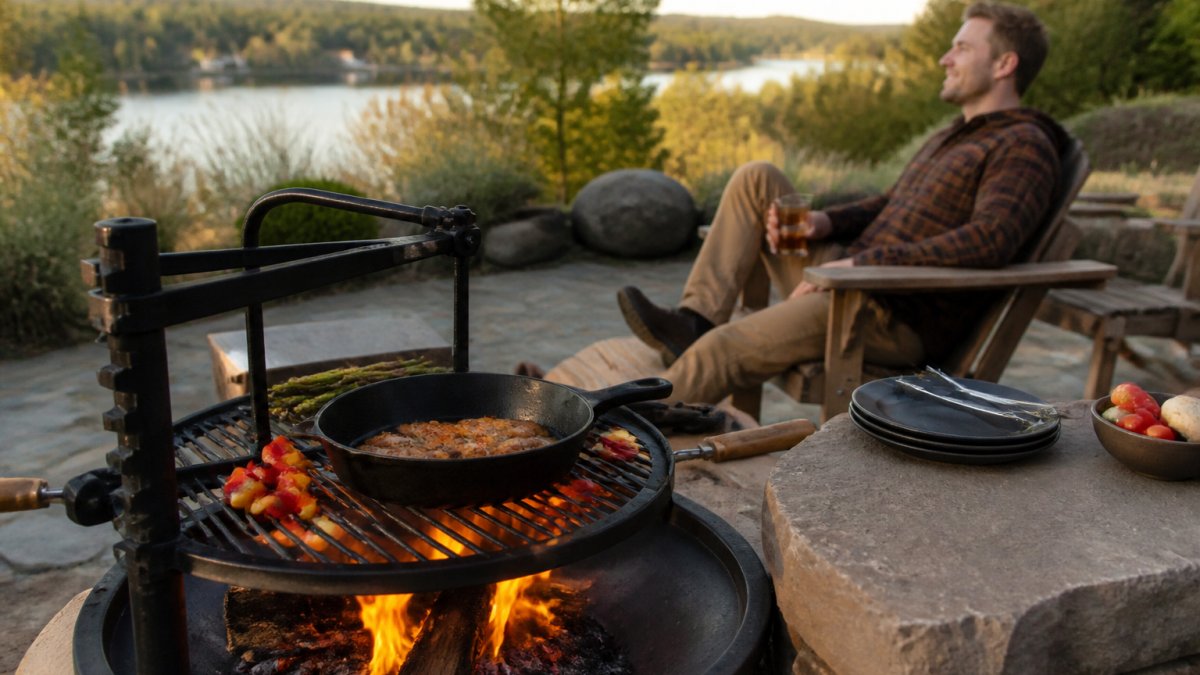
Cast iron and an adjustable grate are a natural pair because both are built around heat management. The grate controls distance from the flame; the cast iron controls how evenly that heat spreads through the food.
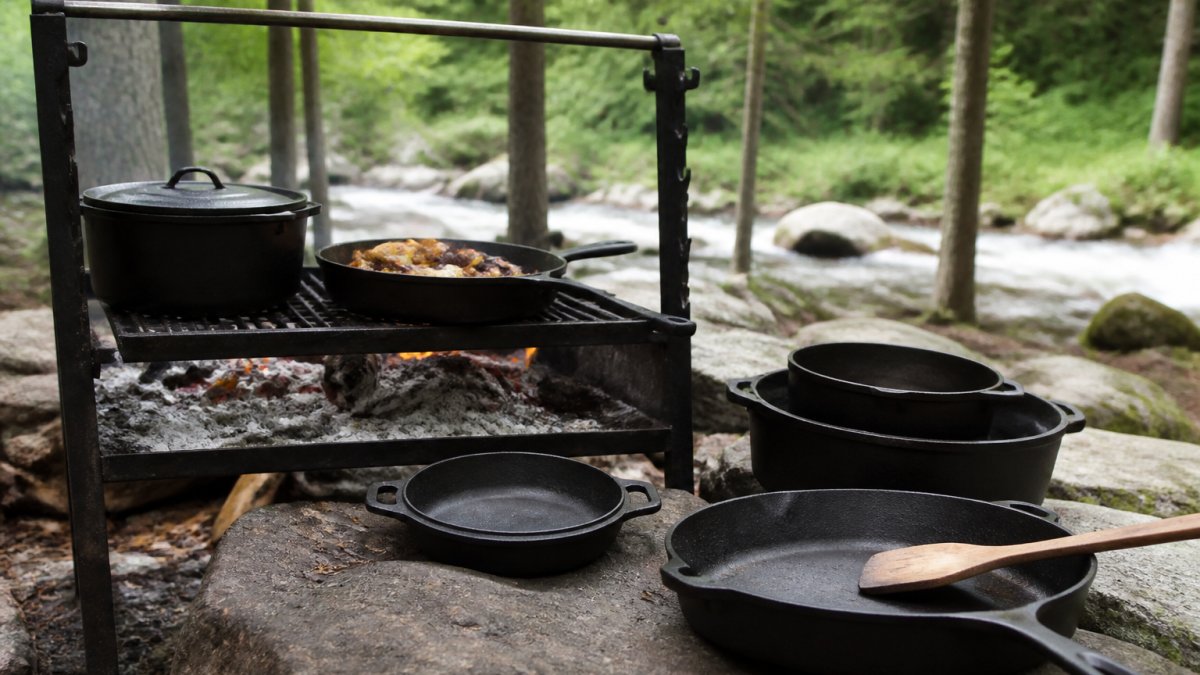
Our 12" Dutch Oven ($52.99) handles braises and stews for four to six people, and its flanged lid holds coals for camp-oven baking. The 12" Roasting Pan ($48.99) has deep walls for catching drippings and building a pan sauce. The 10" Cauldron with Reversible Lid ($45.99) flips its lid into a griddle surface.

All four are hand-wash only, oiled after each use, and never dishwashed. That's the trade: more care, far longer life.
Campers who want one fire, one grate, and a small stack of cast iron that covers every meal of the trip without propane.
Which Setup Fits Your Fire? A Decision Framework
Match the setup to how you actually cook, not to what looks impressive in a catalog.
- Backyard firepit, weekend family meals: ANVIL grill plus the 10" Shallow Skillet. Small footprint, full control.
- Campsite cooking for a group: ANVIL grill plus the 12" Dutch Oven. The oven feeds the crowd; the grate handles the sear.
- Hunting camp or remote trip: ANVIL grill plus the 12" Roasting Pan. Durable, packable, and built for large cuts.
- One-pot minimalists: ANVIL grill plus the 10" Cauldron. Soup, stew, chili, or bread from a single vessel.
The throughline across every setup is the same: control the heat with the grate, then let cast iron do the rest. That's what separates a good camp meal from a frustrating one.
Frequently Asked Questions
What is the best alternative to an adjustable campfire grill?
The best adjustagrill alternative depends on how you cook. If you want one tool that handles searing and slow cooking over any open fire, a height-adjustable carbon steel grill like the ANVIL Grill ($174.99 CAD) covers both. If you already own cast iron, add a heavy-duty campfire cooking grate and pair it with a 12-inch Dutch Oven ($52.99 CAD) for braises and bread. Look for variable height control, a stable stake or base, and a surface that handles a full load without flexing.
What should I look for in a heavy-duty campfire grill?
Start with the grate material and thickness. Heavy carbon steel holds heat and resists warping better than thin wire grates. Check the load rating: the ANVIL Grill handles 40 lb (20 kg) and offers 38 x 50 cm of grilling surface. Confirm the stake or base is stable on uneven ground, that height adjusts and locks, and that the surface is pre-seasoned rather than coated. A lifetime warranty against manufacturing defects is a strong signal the build is meant to last.
Are adjustable campfire grills worth it for camping?
Yes, if you cook more than hot dogs. Height control lets you lower the grate for a hard sear and raise it for low-and-slow cooking, which is hard to do with a fixed grate. The ANVIL Grill packs down flat with no case needed, weighs 16.5 lb, and works over a firepit, campsite ring, or backyard bonfire. For campers who want one grill for every technique, the adjustability replaces several fixed-height tools.
Can you cook over a campfire without a grill?
You can, using a cast iron skillet or Dutch oven set directly on coals, or by wrapping food in foil. But a campfire cooking grate gives you a stable surface for searing, turning, and moving food without losing it to the flames. A 10-inch shallow skillet ($32.99 CAD) works well on coals for breakfast, while a 12-inch Dutch Oven ($52.99 CAD) handles stews and bread with coals on the flanged lid. A grate plus one cast iron piece covers most camp meals.
How do you choose a grill for both camping and backyard cooking?
Pick one that stakes into the ground for campsites and sits over a firepit at home. The ANVIL Grill is designed for both: it works over campfires, firepits, and backyard bonfires, and the stake breaks down for transport. Check the grilling surface against your group size: 38 x 50 cm fits four to six people comfortably. If you also cook at home, cast iron like the 12-inch roasting pan ($48.99 CAD) moves from fire to stovetop to oven without changing results.