 comparison
Why Carbon Steel Is Better for Camping: 2026 Guide
Table of Contents
- Why Carbon Steel Camping Cookware Earns Its Place in the Pack
- Carbon Steel vs Cast Iron for Camping: Weight, Heat, and Durability
- Carbon Steel vs Stainless Steel Skillet: Which Handles Open Fire Better
- How to Season a Carbon Steel Pan for Camp Cooking
- Carbon Steel Cookware Pros and Cons: The Honest Trade-Offs
- Care in Wet and Remote Conditions: Rust, Cleaning, and Drying
- Matching Carbon Steel to Your Camping Style and Fire Setup
- Conclusion
- Frequently Asked Questions
Last Updated: October 17, 2026
Why Carbon Steel Camping Cookware Earns Its Place in the Pack
Carbon steel camping cookware is a thin-gauge steel pan or grate that heats fast, weighs less than cast iron, and takes a hard sear over an open fire: cast-iron-style cooking without the cast-iron weight. This guide covers the material comparisons, the seasoning routine, and the honest trade-offs.
Carbon Steel vs Cast Iron for Camping: Weight, Heat, and Durability
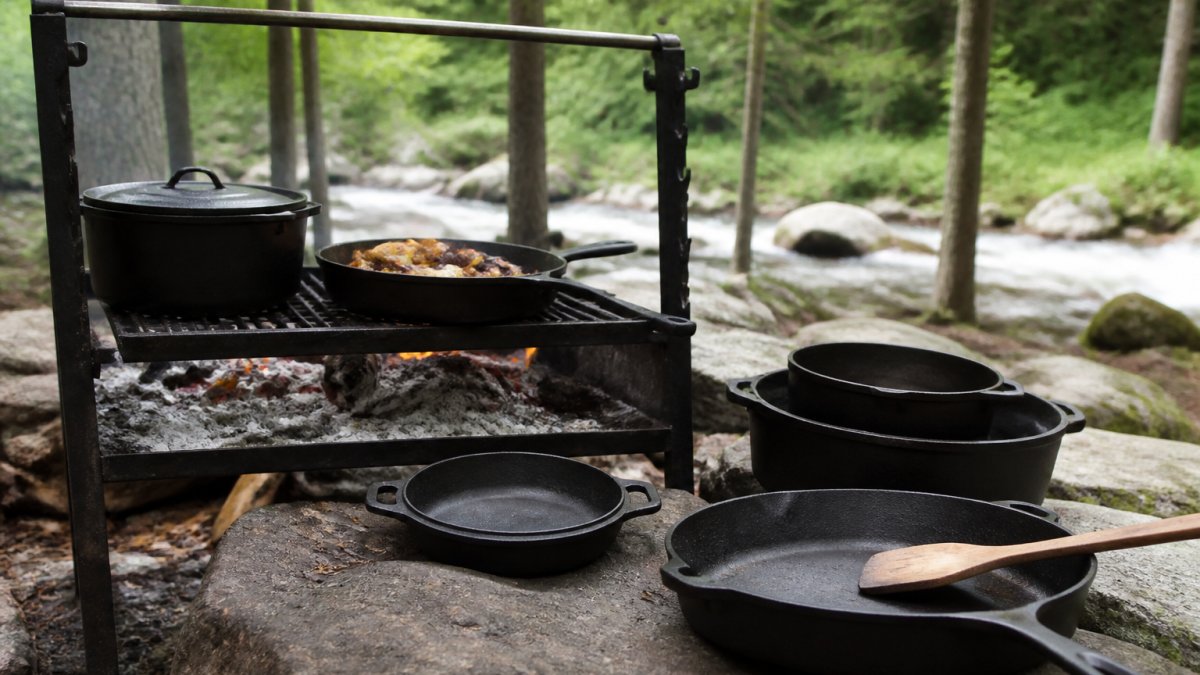
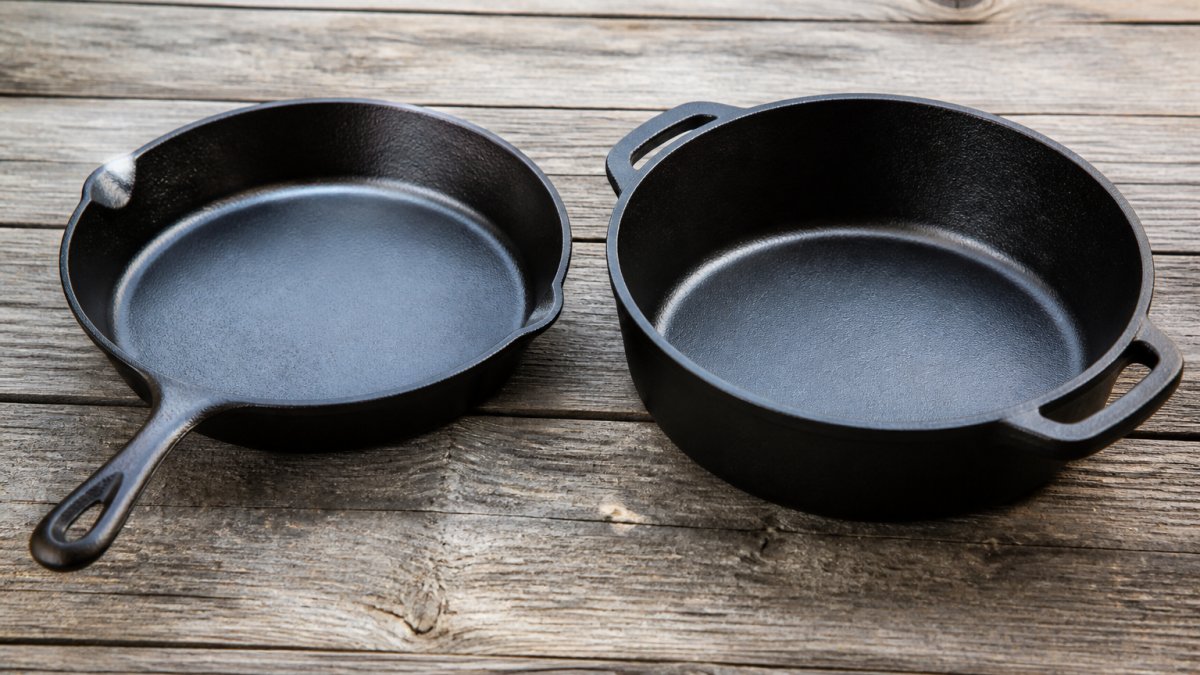
Carbon steel wins on weight and heat-up speed; cast iron wins on heat retention and forgiveness.
Cast iron still earns its spot for large-group cooking and slow stews; carbon steel pulls ahead for quick sears, single-pan meals, and trips where you carry your camp kitchen on your back.
- Heat-up time: carbon steel reaches cooking temperature faster because the metal is thinner.
- Heat retention: cast iron stays hot longer after you add food.
- Weight: carbon steel is dramatically lighter for the same surface area.
A common mistake is buying cast iron for solo trips and leaving it home because it's too heavy.
Carbon Steel vs Stainless Steel Skillet: Which Handles Open Fire Better
Carbon steel handles open fire better than stainless steel because it takes seasoning, distributes heat more evenly, and doesn't develop the scorching hot spots thin stainless does over a direct flame.
Stainless is non-reactive and won't rust, making it great for boiling and acidic sauces, but bare stainless has no nonstick surface, so eggs and fish stick badly, and thin stainless warps or scorches over a hot campfire.
- Best for searing meat: carbon steel, thanks to its seasoning and heat responsiveness.
- Best for acidic sauces and boiling: stainless steel, which won't react with food.
- Best for open fire: carbon steel, which handles direct flame without warping.
How to Season a Carbon Steel Pan for Camp Cooking
Seasoning a carbon steel pan means baking thin layers of oil onto the metal to build a slick, rust-resistant cooking surface. Do it once at home, then maintain it with quick oil coats after each camp cook; the process takes about an hour of oven time.
- Scrub off factory coating. Wash the pan with hot water and a little soap to remove the protective oil, then dry it completely.
- Heat and oil thinly. Warm the pan, then wipe on a very thin coat of a high-smoke-point oil. Too much oil turns sticky.
- Bake it on. Place the pan upside down in an oven at roughly 230°C (450°F) for about an hour, with a tray underneath to catch drips.
- Repeat. Two or three thin layers build a more durable seasoning than one thick coat.
- Cook on it. Fry fatty foods like bacon or potatoes a few times to strengthen the surface.
At camp, no oven is needed: after cooking, burn off residue over the fire, brush the pan clean while warm, and wipe on a light oil coat before it cools.
Carbon Steel Cookware Pros and Cons: The Honest Trade-Offs
Carbon steel cookware's pros are fast heat, light weight, and a durable seasoned surface; its cons are rust risk, required maintenance, and a break-in period.
Pros, with the mechanism
- Fast heat-up: thin steel has low thermal mass, so it reaches searing temperature quickly and responds when you move it closer to or farther from the fire, the real advantage over cast iron.
- Light for the surface area: a thin-gauge carbon steel skillet is dramatically lighter than a cast iron pan of the same cooking surface, which suits pack trips. The advantage shrinks with thick steel or a large grate.
- Seasoned, near-nonstick surface: polymerized oil fills the microscopic pores of the steel, so food releases with less fat once seasoning is established, improving with use rather than degrading like a factory coating.
Cons, with the mechanism
- Rust risk: bare steel oxidizes when moisture sits on it, so a damp pan in a closed bag can show surface rust overnight. The fix is drying and oiling, not a special coating.
- Maintenance load: seasoning is a habit, not a one-time event, every cook ends with a clean, dry, oiled pan, more attention than stainless demands.
- Acid sensitivity: until seasoning is well built, acidic foods (tomato, citrus, vinegar) can strip the oil layer and impart a metallic taste. Cook acidic dishes in stainless or a well-seasoned pan.
- Hot spots on thin steel: a thin pan over a concentrated coal bed can scorch in the center before the edges catch up. Even coal beds and pan movement manage this.
Field-test framing: what actually changes between materials
A controlled comparison, same meal, same heat source, same wind, isolates the variables that matter. Cook a sear and a wet dish on carbon steel, cast iron, and stainless over both a camp stove and a fire.
| Material | Weight | Heat-Up Speed | Heat Retention | Rust Risk | Best For |
|---|---|---|---|---|---|
| Carbon steel | Light | Fast | Moderate | Moderate | Open-fire searing, pack trips |
| Cast iron | Heavy | Slow | High | Moderate | Large-group, slow cooking |
| Stainless steel | Light-medium | Fast | Low-moderate | Low | Boiling, acidic foods |
The honest verdict: if you want zero maintenance, carbon steel is the wrong material. If you want a light pan that sears like cast iron and you're willing to dry and oil it, nothing else comes close.
Care in Wet and Remote Conditions: Rust, Cleaning, and Drying
Rust is carbon steel's real weakness in wet and remote conditions, and drying is the fix: never store a carbon steel pan wet. In rain, humidity, or after washing, dry it immediately and oil it before it goes back in the pack.
A practical remote-condition routine:
- Wipe dry right away. Use a cloth, then finish over residual fire heat to drive off moisture.
- Oil before storage. A thin coat of oil is the barrier between steel and humid air.
- Pack it dry. Don't seal a damp pan in a bag where condensation can form.
- Carry a small cloth and oil. A dedicated rag and a small oil container solve most field problems.
In sustained rain, cook, dry over the fire, oil, and store the pan somewhere it won't sit in water.
The Lifetime Warranty ANVIL Grill →
Matching Carbon Steel to Your Camping Style and Fire Setup
Match your carbon steel to how you actually camp, not how you imagine you will. Pan diameter, steel thickness, handle design, and group size change packed weight, fuel use, and fire behavior, treat carbon steel as a family of tools, not one universal pan.
How pan size and thickness drive packed weight
Packed weight scales with cooking surface and steel gauge. A thin-gauge 20-24 cm skillet is the lightest practical option for one or two people; a 28-30 cm pan adds surface area and handle length, and weight climbs with both.
A practical sizing rule most campers converge on:
- 1-2 people: a 20-24 cm skillet, thin gauge, short handle.
- 3-4 people: a 26-28 cm skillet or a shallow pan with a lid.
- 5+ people or basecamp: a large grate or two pans; weight matters less than surface area and stability.
Handles matter more than buyers expect. A long handle moves the grip away from the fire but adds packed length; a detachable handle saves space but adds a failure point.
Fuel use and cooking efficiency
Carbon steel's fast heat-up is also a fuel story: thin metal reaches cooking temperature with less burner time than cast iron, which matters when rationing canister fuel on a multi-day trip. A lid and windscreen often save more fuel than switching pan materials; the biggest gains come from matching pan diameter to burner diameter and blocking wind.
Safety and campfire compatibility
Over an open fire, the pan is only half the system: handle heat, hot spots, and uneven coals decide whether dinner works. Carbon steel conducts heat to the handle, so use a glove or detachable handle and keep the grip away from the flames. Thin steel can develop hot spots over a concentrated coal bed; spread coals evenly and move the pan rather than cranking the fire.
Decision guide by camping style
| Camping style | Priority | Recommended carbon steel setup | Watch-outs |
|---|---|---|---|
| Backpacking | Low packed weight | 20-24 cm thin skillet, detachable handle | Handle length, lid weight |
| Car camping | Versatility | 26-28 cm skillet plus a lid | Packed bulk, not weight |
| Overlanding | Durability and surface area | Large skillet or grate, thicker steel | Storage space, rust in damp vehicles |
| Group cooking | Surface area and stability | Grate or two large pans, bail handles | Uneven fire, handle heat |
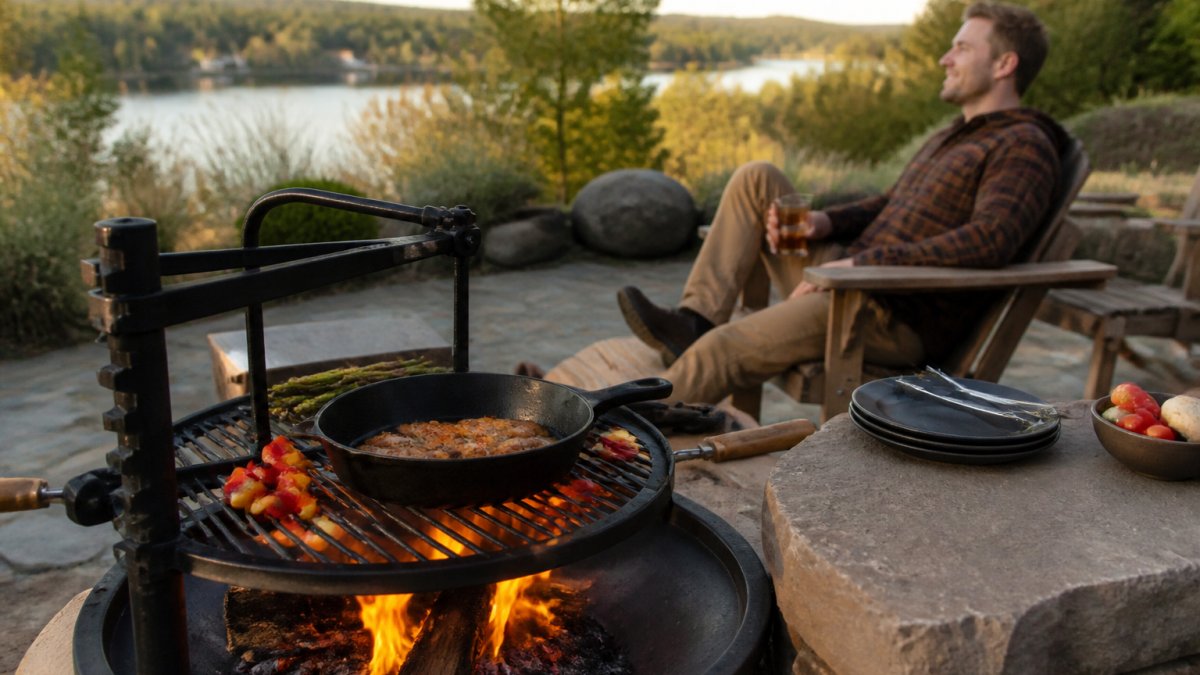
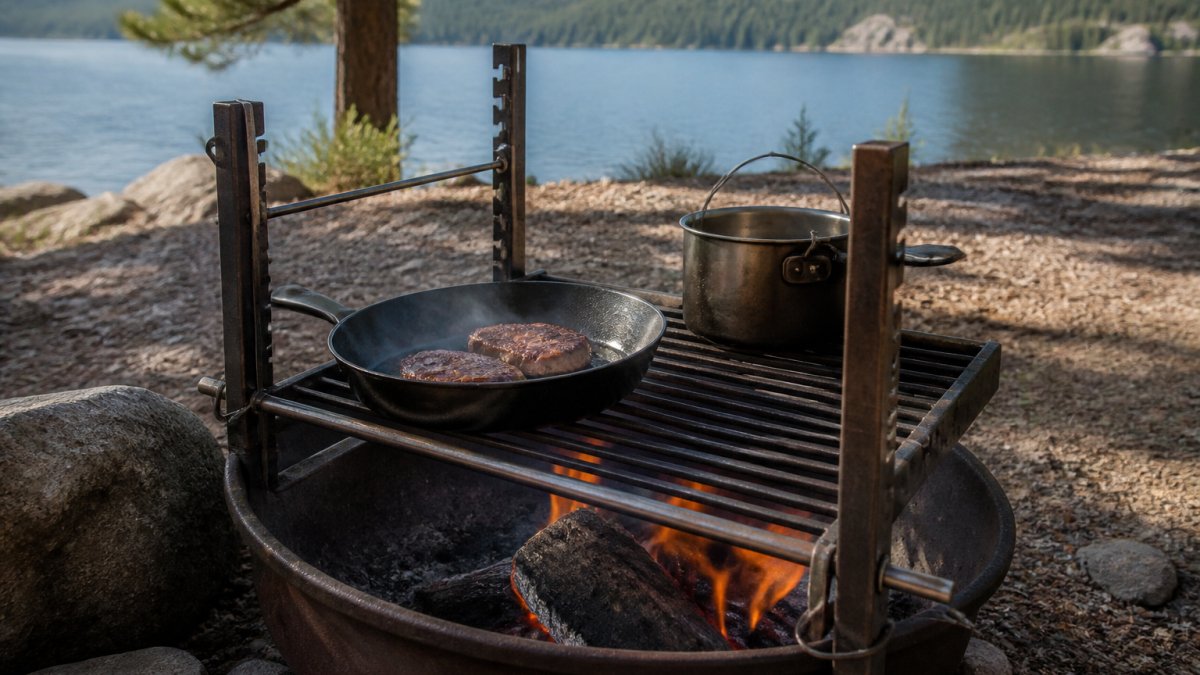
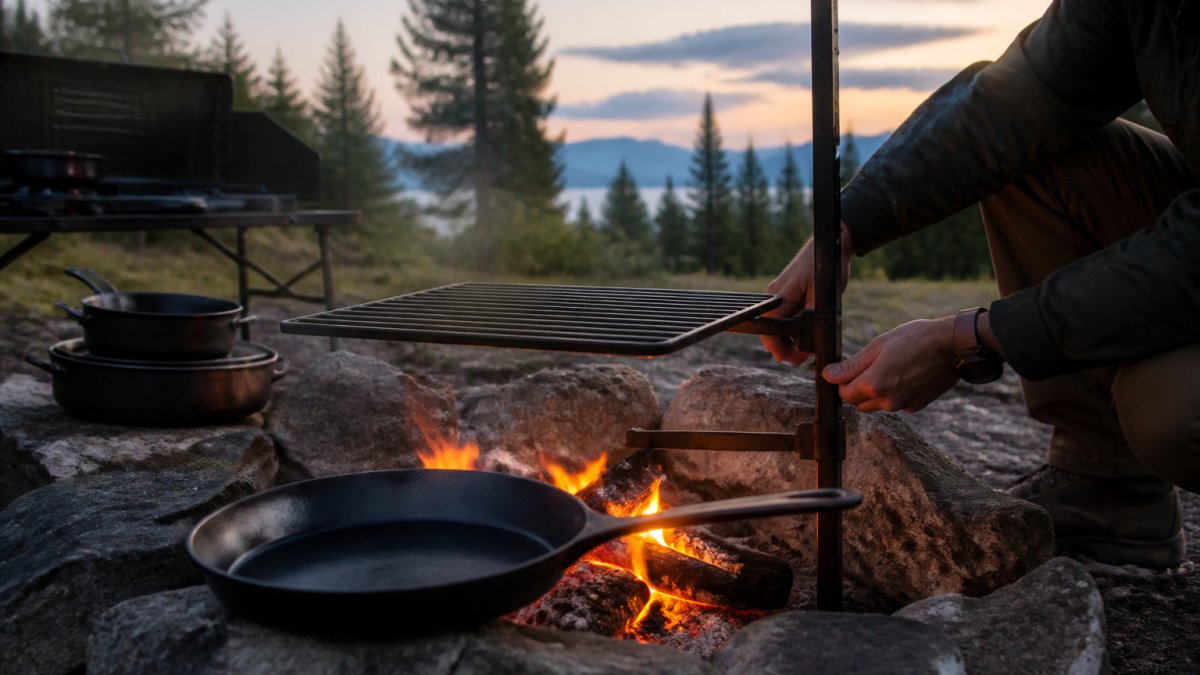
For campfire cooking, an adjustable setup gives you the temperature control a fixed grate can't. Browns Outpost builds the ANVIL Grill for exactly this: a heavy carbon steel grate with a stake that lets you raise or lower it over any fire.

For campers who want pro results over the fire without hauling a full cook set, adjustable height changes how you cook: lower it for a hard sear, raise it for low-and-slow.
Conclusion
The challenge with camp cooking isn't the food, it's matching your gear to your fire and your pack. Carbon steel solves most of that: light enough to carry, fast enough to sear, and durable enough to last when you care for it. If you want a carbon steel setup built for open-fire cooking, Browns Outpost's ANVIL Grill brings adjustable height, a heavy carbon steel grate, and a lifetime warranty, with free shipping over $75 CAD.
Frequently Asked Questions
Which is better for camping, carbon steel or cast iron?
Carbon steel wins on portability. A carbon steel skillet of the same cooking surface weighs roughly half what cast iron does, and it heats up faster over a camp stove or open fire. Cast iron holds heat longer once it is hot, which suits slow stews and large batches. For most campers packing gear on their back or in a vehicle, carbon steel camping cookware offers the better weight-to-performance ratio, while cast iron still makes sense for base camps where weight does not matter.
Does carbon steel heat up faster than cast iron?
Yes. Carbon steel is thinner and responds to temperature changes quickly, so a pan reaches searing heat in a couple of minutes over a camp stove. That responsiveness also means you can pull the pan off the flame and the cooking stops almost immediately, which helps prevent burnt food. Cast iron takes longer to heat and longer to cool, so it is less forgiving when you are adjusting heat over a live fire.
How do you keep carbon steel cookware from rusting outdoors?
Dry it completely and oil it after every use. Over the fire, burn off food residue, brush the surface while warm, then wipe on a thin coat of oil before packing. In wet or remote conditions, carry a small cloth for drying and a sealed container of oil. If rust appears, scrub it off with steel wool, re-season the patch, and the pan is back in service. Moisture left on the surface is the main cause of rust, not the steel itself.
Is carbon steel cookware good for cooking over a campfire?
It is one of the best materials for open-fire cooking. Carbon steel tolerates direct flame, hot coals, and temperature swings that would warp thinner aluminum or damage nonstick coatings. A carbon steel skillet or grill grate can sit right over embers, and the seasoning layer builds up with each cook. For campfire cooking, choose a thick gauge and a handle you can grip with a glove, and adjust the height above the flame to control heat.