 comparison
Agawa Canyon Alternative for Heavy Duty Grilling
Table of Contents
- What Makes a Campfire Grill Heavy-Duty
- Agawa Canyon Alternative for Heavy Duty Grilling: The ANVIL Grill
- Best Adjustable Campfire Grill for Heavy Cookware
- Cast Iron Cookware That Pairs With Heavy Duty Grilling
- How to Clean Burnt Camping Cookware
- Corrosion Resistance and Long-Term Care
- Conclusion
- Frequently Asked Questions
Last Updated: September 16, 2026
What Makes a Campfire Grill Heavy-Duty
A heavy-duty campfire grill is a cooking grate built to hold substantial weight, resist sustained direct flame, and stay stable over an open fire. The difference is immediately apparent when you set a loaded cast iron pan on it.
Material Durability and Heat Resistance
Carbon steel and cast iron are the two materials that excel in real campfire cooking. Both handle direct flame without warping and improve with use.
Weight Capacity and Load-Bearing Specs
Load-bearing capacity is the specification most grill listings omit, yet it determines whether your grill can handle a full cast iron setup.
| Specification | Light-Duty Grill | Heavy-Duty Grill |
|---|---|---|
| Grate material | Thin stainless or coated steel | Carbon steel or cast iron |
| Load capacity | 10-15 lb | 40 lb (20 kg) |
| Heat retention | Low, food cools fast | High, holds searing heat |
| Height adjustment | Fixed or 2 positions | Variable, all-position |
| Lifespan | 1-3 seasons | Decades with care |
Agawa Canyon Alternative for Heavy Duty Grilling: The ANVIL Grill
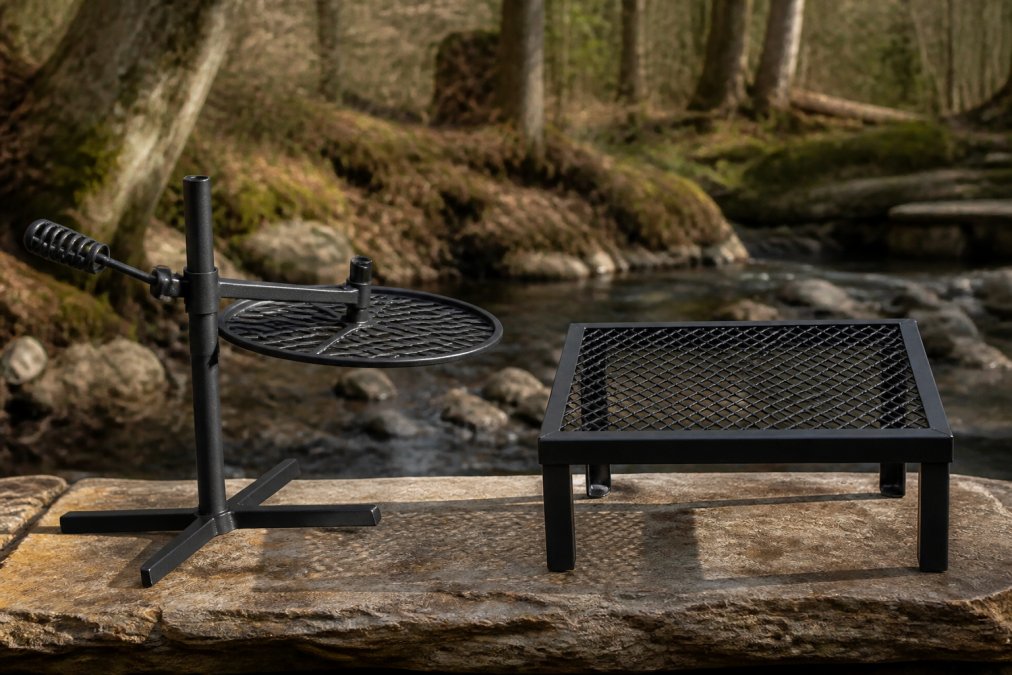
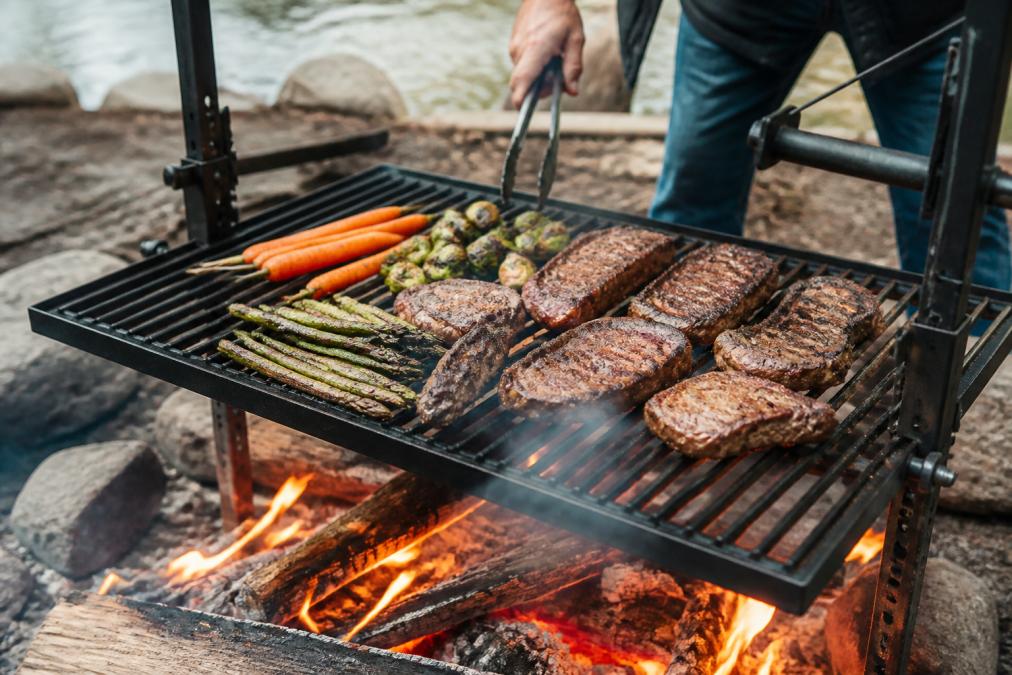
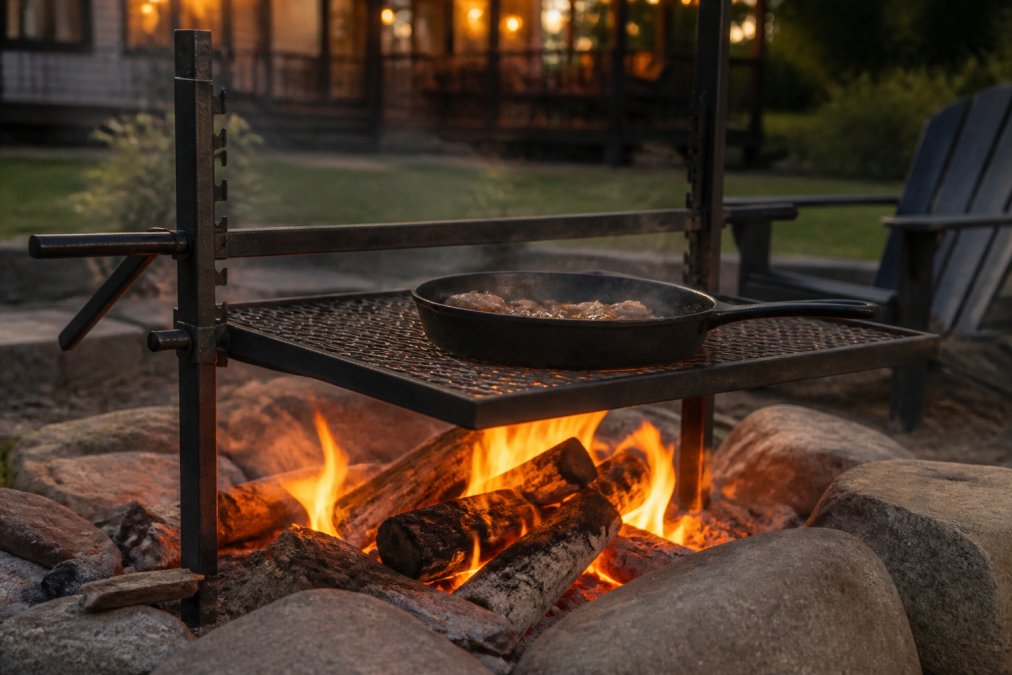
For campers seeking a strong grilling experience without excessive weight, the ANVIL Grill offers a practical alternative. It features a 15 x 20 inch (38 x 50 cm) carbon steel grate mounted on an adjustable stake that packs flat.
Adjustable Height and Direct Flame Control
Height adjustment is your primary method for controlling heat over an open fire, and its importance often surpasses that of the fuel itself.
Setup, Stability, and Packability
Setup is quick: drive the stake, slide the grate on, and lock it at your desired height. There's no assembly, tools, or hardware to lose in the dark.
Best Adjustable Campfire Grill for Heavy Cookware
The best adjustable campfire grill for heavy cookware will have a load rating that exceeds the combined weight of your heaviest pan and its contents, along with a locking mechanism that reliably holds its position under that load. All other features are secondary.
Cast Iron Cookware That Pairs With Heavy Duty Grilling
Cast iron is the ideal cookware for a heavy-duty grate, as both materials behave similarly under heat: they absorb, store, and release thermal energy slowly.
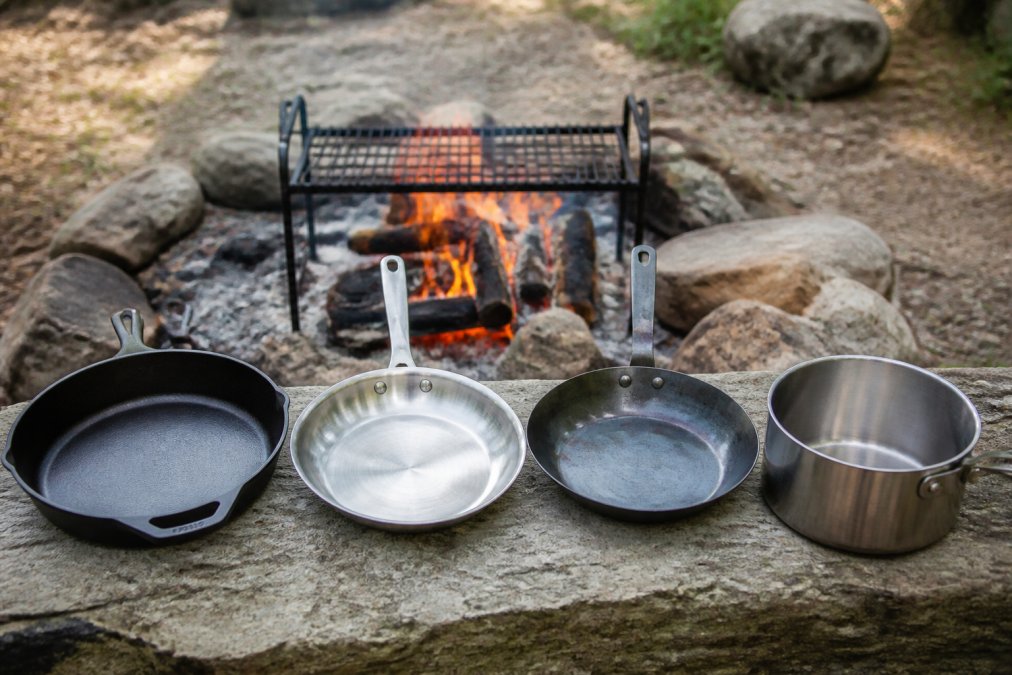
Three pieces of cast iron cookware cover most cooking needs:
- 12" Roasting Pan ($48.99) - Its deep walls capture drippings for making pan sauces instead of losing them to the fire. The thick cast iron is substantial enough to achieve a proper sear on a ribeye.
- 16"×9" Griddle ($37.99) - This flat, low-rimmed surface is sized to sit flush across most camp and backyard grill grates, perfect for cooking pancakes, eggs, and bacon simultaneously.
- The ANVIL Grill ($174.99) - A 15 x 20 inch carbon steel surface with a 40 lb capacity and variable height adjustment.
How to Clean Burnt Camping Cookware
Cleaning burnt camping cookware primarily involves heat, water, and a stiff brush, applied in that order. Using soap and abrasive scrubbing pads can damage the seasoning.
- Burn it off. Place the pan back over the fire or coals until the burnt residue carbonizes and loosens. This crucial step, often skipped, does most of the work.
- Brush while warm. Use a stiff brush or a chainmail scrubber on the hot surface. Burnt food releases easily at this stage.
- Add hot water for stubborn spots. A small amount of hot water in a warm pan can lift stuck residue without requiring prolonged soaking.
- Dry on heat. Return the pan to the fire or a stovetop burner until all moisture has evaporated. Residual water is the primary cause of rust on cast iron, not ambient humidity.
- Oil immediately. Apply a thin coat of neutral oil while the pan is still warm. This step maintains the non-stick surface and prevents rust.
Corrosion Resistance and Long-Term Care
Corrosion resistance in carbon steel and cast iron is a function of the seasoning layer, not the base metal itself. This is a common misconception that leads to premature wear.
How the Common Materials Actually Age
Material choice sets the baseline for corrosion resistance, and the differences become evident after multiple seasons of heavy use:
- Bare carbon steel. Offers excellent heat conductivity but has zero inherent corrosion resistance without seasoning. Every scratch can become a rust initiation point until re-oiled. It's best suited for dry, inland environments and for users who meticulously maintain their gear.
- Cast iron. Similar to carbon steel, it's slightly more porous, allowing it to hold seasoning well once established. However, it rusts more quickly if the seasoning layer is compromised.
- Thin stainless grates. Resist rust with minimal care, explaining their prevalence in budget-friendly options. The trade-off is heat retention; their thin gauge allows heat to pass through rapidly, causing food to cool quickly upon contact.
- Coated or porcelain-enameled steel. The coating serves as the corrosion barrier. Once chipped, which is inevitable under heavy cookware, moisture can penetrate beneath the edge, leading to rust that spreads unseen under the finish.
Coastal and Humid Environments: The Real Test
Salt air accelerates rust on bare steel more aggressively than inland humidity, affecting areas often overlooked, such as the underside of the grate, the stake connection, and the interior of any tubing or hinges. A grill used near saltwater requires a more rigorous maintenance routine than one in a dry climate.
Adjustments for coastal or persistently humid conditions include:
- Frequency, not method. The same dry-on-heat, oil-warm routine should be applied after every use, not just intermittently.
- Thicker oil coats between trips. A more substantial film of neutral oil acts as a protective barrier; a light wipe that appears dry is insufficient in salt-laden air.
- Storage matters as much as cooking. A grill stored in a damp shed or vehicle overnight will rust faster than one used daily. Bringing it indoors or storing it oiled and covered is essential.
- Inspect the connection points. Stakes, locks, and hardware are the first areas where coatings fail. Applying a drop of oil to these points on each trip prevents seizing, which can prematurely end a grill's functional life.
A Season-by-Season Maintenance Schedule
Long-term upkeep is minimal once the seasoning is well-established, but it is not negligible. A consistent maintenance schedule ensures a carbon steel grate remains functional for decades:
- Every cook. Burn off residue, brush while warm, oil the surface, and dry on heat before storing.
- Every few trips. Re-oil the stake, lock, and any hardware. Check for scratches in the seasoning and touch them up with a thin coat of oil.
- Start of season. Inspect the entire grate for rust spots. Scrub them out, re-season the bare metal, and verify the lock still holds position securely under load.
- End of season. Perform a deep clean, apply a heavier protective oil coat, and store the grill dry and covered.
Conclusion
The true challenge of heavy-duty campfire cooking lies not in finding a grill that fits over a fire, but in finding one that maintains its integrity after a season of use with cast iron, exposure to weather, and contact with uneven ground. Browns Outpost builds carbon steel and cast iron cookware designed for open-fire cooking, each piece backed by a lifetime warranty and free shipping on orders over $75 CAD. Invest in Browns Outpost gear and experience campfire cooking with equipment built to last.
Frequently Asked Questions
What makes a campfire grill truly heavy-duty?
A heavy-duty campfire grill needs thick carbon steel or cast iron construction, a load-bearing capacity that handles full cast iron cookware, and a stable base that won't tip on uneven ground. The ANVIL Grill uses heavy carbon steel with a 15 x 20 inch surface and handles 40 lb (20 kg), which is enough for a full roasting pan loaded with meat. Adjustable height and all-position locking also matter because they let you control heat without compromising stability.
Are carbon steel grills better than stainless steel for open-fire cooking?
Carbon steel handles direct flame and high heat without warping, and it holds heat better than thin stainless steel. It also seasons over time, building a natural non-stick surface. The trade-off is maintenance: carbon steel needs oiling after each use and dry storage to prevent rust. Stainless resists corrosion with less care but typically weighs more and doesn't develop the same searing surface. For heavy duty grilling over open fire, carbon steel gives better heat retention and a lighter carry weight.
How do adjustable campfire grills improve cooking results?
Adjustable height lets you dial in exact heat by raising or lowering the grate over the flame. Low position gives a hard sear on steaks; high position lets you slow-cook or keep food warm without burning. The ANVIL Grill slides and locks along its stake for all-position use, so you can move the grate mid-cook as the fire shifts. That control is the difference between a charred exterior with a raw center and a properly cooked piece of meat.
How do you clean burnt camping cookware without damaging it?
For cast iron or carbon steel, burn off residue over the fire, then brush clean while the metal is still warm. For stubborn burnt patches, simmer water in the pan to loosen debris, scrape with a stiff brush, then dry immediately on heat. Never use soap or a dishwasher on seasoned cast iron because it strips the seasoning in one cycle. After cleaning, apply a thin coat of neutral oil to protect the surface and prevent rust between trips.
Is a lifetime warranty important when buying outdoor grilling gear?
A lifetime warranty matters when you're spending on heavy-duty gear because it signals the manufacturer expects the product to outlast normal wear. The ANVIL Grill carries a lifetime warranty against manufacturing defects, which means one purchase instead of replacing a warped or broken grill every few seasons. For campers who cook over fire regularly, that coverage turns a higher upfront cost into a lower long-term one.