 comparison
Portable Swivel Grill vs Stationary Grate: Which Wins?
Table of Contents
- Portable Swivel Grill vs Stationary Grate: Quick Comparison Table
- How Heat Control Works on Each Setup
- Adjustable Campfire Grill Benefits for Real Cooking
- Carbon Steel vs Stainless Steel Grill Grates
- Stability, Setup, and Terrain Compatibility
- Portability, Weight, and Packing for Camp
- Cooking Surface Area and Group Cooking
- How to Clean Burnt Camping Cookware After a Fire
- Frequently Asked Questions
Last Updated: September 24, 2026
Portable Swivel Grill vs Stationary Grate: Quick Comparison Table
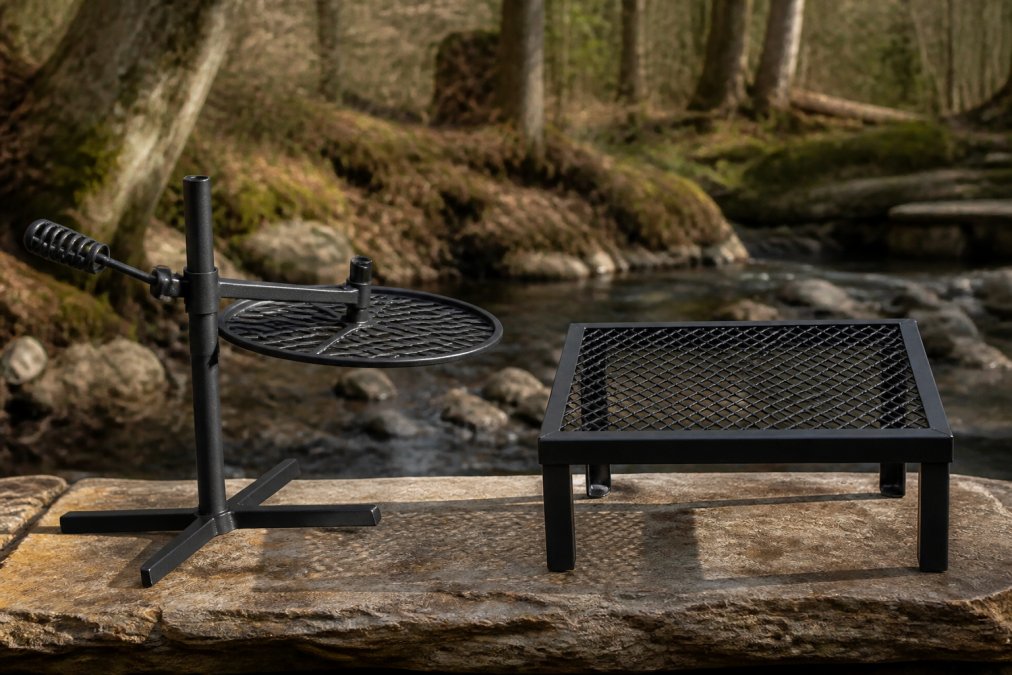
The choice between a portable swivel grill and a stationary grate comes down to one question: do you want to move the food or move the fire? A swivel grill lets you raise, lower, and swing the cooking surface over the flames; a stationary grate locks you into one height and position.
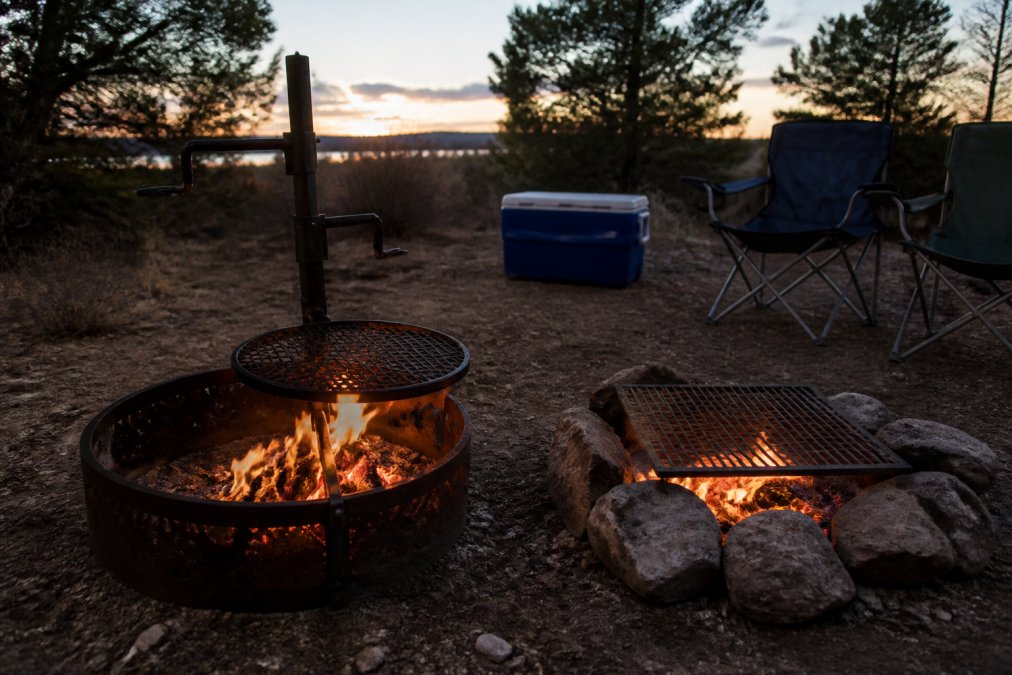
This comparison from Browns Outpost breaks down where each design wins.
| Feature | Portable Swivel Grill | Stationary Grate |
|---|---|---|
| Heat control | Adjustable height, swivel arm | Fixed distance only |
| Setup | Ground stake, no tools | Rocks or built-in legs |
| Portability | Packs flat, 16.5 lbs | Bulky, varies by model |
| Cooking surface | 38 x 50 cm (ANVIL) | Varies, often smaller |
| Best for | Sear and slow-cook on one fire | Simple quick meals |
| Price | $174.99 | Varies widely |
How Heat Control Works on Each Setup
A swivel grill controls heat by changing the distance between food and flame: down for a hard sear, up for low-and-slow cooking. A stationary grate sits at one height, so you manage heat by moving coals or waiting for the fire to die down.
Adjustable Height and the Swivel Arm
The swivel arm separates these two designs. On a portable swivel grill, the grate slides and locks along a vertical stake, and the arm swings it clear of the fire so you can check food or add wood without lifting anything hot.
Fixed Distance and Direct vs Indirect Heat
A stationary grate gives you direct heat only. The food sits at a set distance, and your only lever is fire management: adding fuel, spreading coals, or waiting.
Adjustable Campfire Grill Benefits for Real Cooking
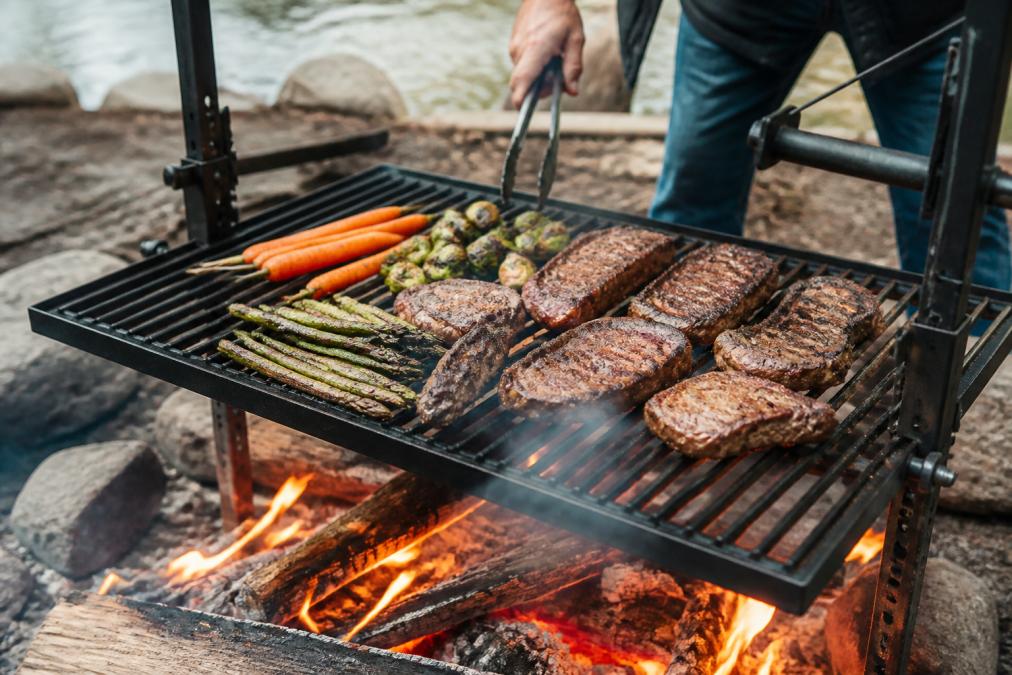
The biggest adjustable campfire grill benefit is temperature precision without rebuilding your fire. Cook a steak at high heat, then raise the same grate to finish vegetables gently, no second fire, no waiting.
Three practical wins stand out:
- Searing and roasting on one setup. Low for a hard sear, high for slow roasting.
- Fewer burnt meals. You react to flare-ups by raising the grate, not by moving food.
- Less fire management. The fire stays put; the grill does the adjusting.
Carbon Steel vs Stainless Steel Grill Grates
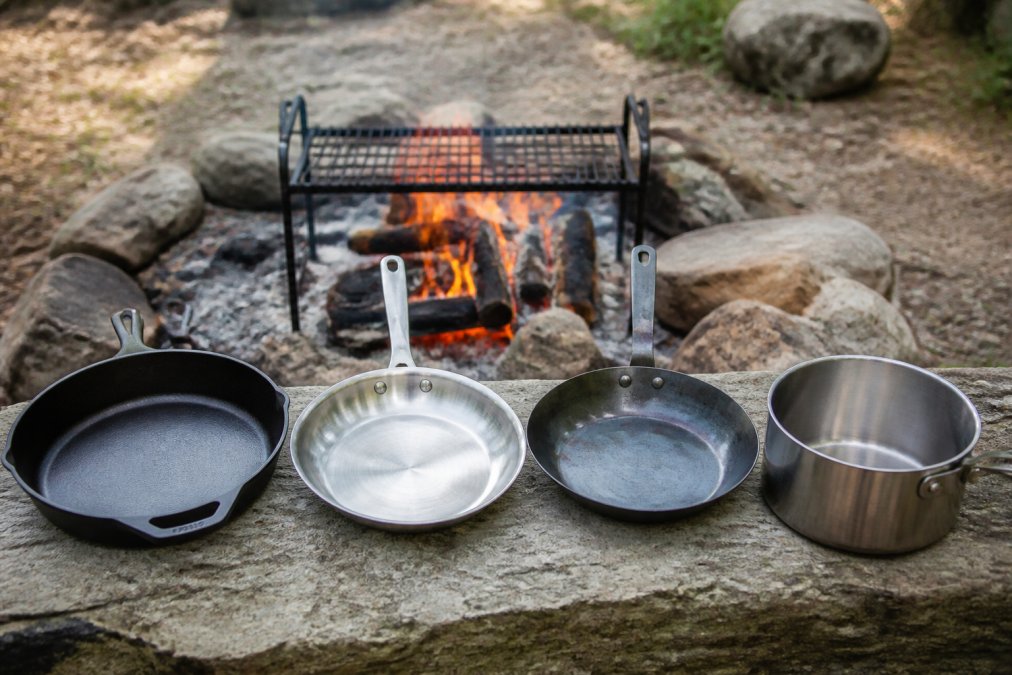
Carbon steel and stainless steel both resist rust when cared for, but they behave differently over a fire. Carbon steel heats faster and holds seasoning better; stainless steel resists corrosion with less maintenance.
Here is the practical split:
- Carbon steel: lighter for its strength, takes seasoning, excellent heat retention, needs drying and oiling after use.
- Stainless steel: rust-resistant out of the box, easy to clean, heavier, and prone to warping on thin grates.
Long-Term Heat Warping Across Seasons
Heat warping is cumulative: every fire cycle expands the metal, every cooldown contracts it. You see it first as a slight rock, then a permanent bow, and food cooks unevenly from then on.
A few patterns hold across most campfire grates:
- Carbon steel (5 mm and up): thicker cross-section distributes heat more evenly and tolerates repeated cycles far better. It will discolor and patina, but it tends to stay flat.
- Cast iron: the most warp-resistant in normal use, but heavy and brittle, a dropped grate can crack rather than bend.
How to Slow Warping on Any Grate
You cannot eliminate heat cycling, but you can reduce the stress that causes warping:
- Heat gradually. Let the grate warm over a moderate fire before you build a hot coal bed under it.
- Avoid quenching. Never dunk a hot grate in cold water or snow to clean it, the sudden contraction is what bends metal.
- Rotate the grate. If you always cook on the same side, flip or rotate it between trips so wear is even.
- Store flat and dry. A grate stored leaning against a wall or stacked under gear can take a set.
- Match thickness to use.
Stability, Setup, and Terrain Compatibility
Stability comes down to how each design meets the ground. A swivel grill stakes into soil, gravel, or grass; a stationary grate depends on rocks or built-in legs, which limits placement.
The Lifetime Warranty ANVIL Grill →
Ground Stakes vs Fixed Legs
A ground stake is the more versatile anchor. On the ANVIL Grill, the stake drives into the ground and the grate slides and locks along it. Setup takes seconds and needs no tools.
Matching the Grate to Your Fire Pit Type
Stone fire rings (established campsites). A stone ring gives you a fixed, roughly level rim. A stationary grate can rest on the stones, which is simple but locks you to the ring's height. A swivel grill stakes into the ground beside the ring, so the arm swings over the fire from outside the stones, keeping your hands clear of the hot rim and letting you adjust height regardless of ring height. The catch: you need enough bare soil next to the ring to drive the stake, so bring a small mallet on packed or gravel-covered sites.
Weight Capacity and Stability Under Load
Stability is not just about the anchor, it is about what happens when you load the grate. The ANVIL Grill handles 40 lb (20 kg) without flexing, covering a full meal for four to six people plus a cast iron pan. A lighter stationary grate may hold the same weight on paper but sag in the middle, tilting food toward the fire.
Two things to check before you buy:
- Anchor depth. A stake that only goes a few centimeters into soft soil will pull out under load. Look for a stake long enough to reach firm ground.
- Locking mechanism. A grate that slides freely on the stake can drop when you load it. A positive lock, a pin, a collar, or a friction clamp, keeps the height where you set it.
Portability, Weight, and Packing for Camp
Portability favors the swivel grill, and it is not close. The ANVIL Grill weighs 16.5 lbs and packs down flat, and the stake comes apart for transport, no bulky frame, no case needed.
Cooking Surface Area and Group Cooking
Cooking surface area decides whether a grill works for a group or just one person. The ANVIL Grill offers 38 x 50 cm of grilling surface and handles 40 lb (20 kg) without flexing, enough for a full meal for four to six people at once.
How to Clean Burnt Camping Cookware After a Fire
Cleaning burnt camping cookware after a fire starts before the pan cools: burn off residue over the fire, then brush the grate clean while it is still warm. Waiting until everything is cold makes the job harder.
Follow these steps:
- Scrape while warm. Use a stiff brush or a metal spatula to lift burnt bits off the grate.
- Burn off stubborn residue. Put the grate back over the fire for a few minutes, then brush again.
- Oil the surface. A light coat of neutral oil after each use prevents rust.
- Store dry. Keep the steel dry between trips. Moisture is what causes rust, not the fire.
- Skip soap on cast iron. Hand-wash with hot water only, then dry immediately on heat.
Frequently Asked Questions
Is a portable swivel grill easier to clean than a stationary grate?
The swivel grill usually wins here because the grate lifts off the stake and can be brushed or scraped flat on the ground, while a stationary grate often has to be cleaned in place over hot coals. Either way, burn off food residue over the fire, brush while the metal is still warm, then wipe on a thin coat of oil. A carbon steel grate like the ANVIL takes that routine well and resists rust when stored dry.
What are the primary benefits of a swivel grill over a fixed grate?
The main adjustable campfire grill benefits are heat control and versatility. You raise or lower the grate to set distance from the flame, so the same surface handles a hard sear on a steak and a slow roast without moving the fire. The swivel arm lets you swing food off the heat instantly when something is done, which a stationary grate cannot do. One grill covers searing, roasting, and simmering.
Which material is better for heavy-duty campfire cooking: carbon steel or stainless steel?
Carbon steel holds and transfers heat faster, which is why most serious over-fire grates use it, and it seasons like cast iron for a natural non-stick surface. Stainless steel resists rust with less upkeep. The trade-off in carbon steel vs stainless steel grill grates comes down to maintenance: carbon steel needs oiling and dry storage, stainless tolerates neglect.
Can you use a swivel grill on uneven terrain?
Yes, and this is one of its real advantages. A swivel grill with a ground stake drives into soil, sand, or gravel and stays put regardless of how level the ground is around the fire. A stationary grate depends on rocks or a fire ring to sit flat, so a sloped or rocky site can leave it wobbling. Staking also keeps the cooking surface at a consistent height above the coals.
How do you stabilize a stationary grate over a fire pit?
Stationary grates rely on the fire pit rim, stacked rocks, or built-in legs to hold position. On a standard fire ring the grate sits across the rim, which works until the logs settle and drop the coal bed. You can level it with flat stones under the legs, but the height is then fixed. If you cook over fire often, a staked adjustable design removes that problem entirely.