 ultimate-guide
Benefits of Cooking Over Wood Fire: 2026 Guide
Table of Contents
- Why Wood Fire Cooking Delivers Better Flavor and Heat
- Health and Nutrition: What Wood Fire Cooking Does to Your Food
- The Best Wood for Campfire Cooking: Species, Seasoning, and Smoke
- Essential Campfire Cooking Gear for Open-Fire Results
- Safety Tips for Open Fire Cooking: Fire Management and Equipment Care
- Wood-Fired Cooking Techniques: Searing, Roasting, Baking, and Indirect Heat
- Frequently Asked Questions
Last Updated: September 25, 2026
Why Wood Fire Cooking Delivers Better Flavor and Heat
The benefits of cooking over wood fire start with two things no gas burner can replicate: radiant heat and smoke. This guide from Browns Outpost covers what changes in the food, which wood to burn, and how to manage an open fire safely.
Radiant Heat vs. Convective Heat: What Changes in the Food
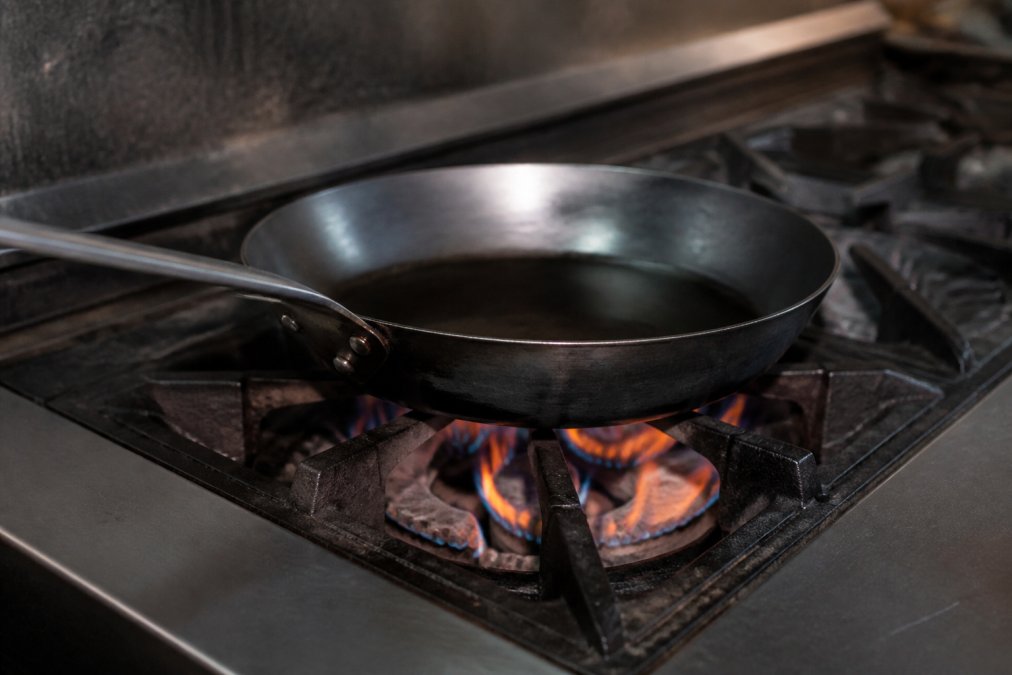
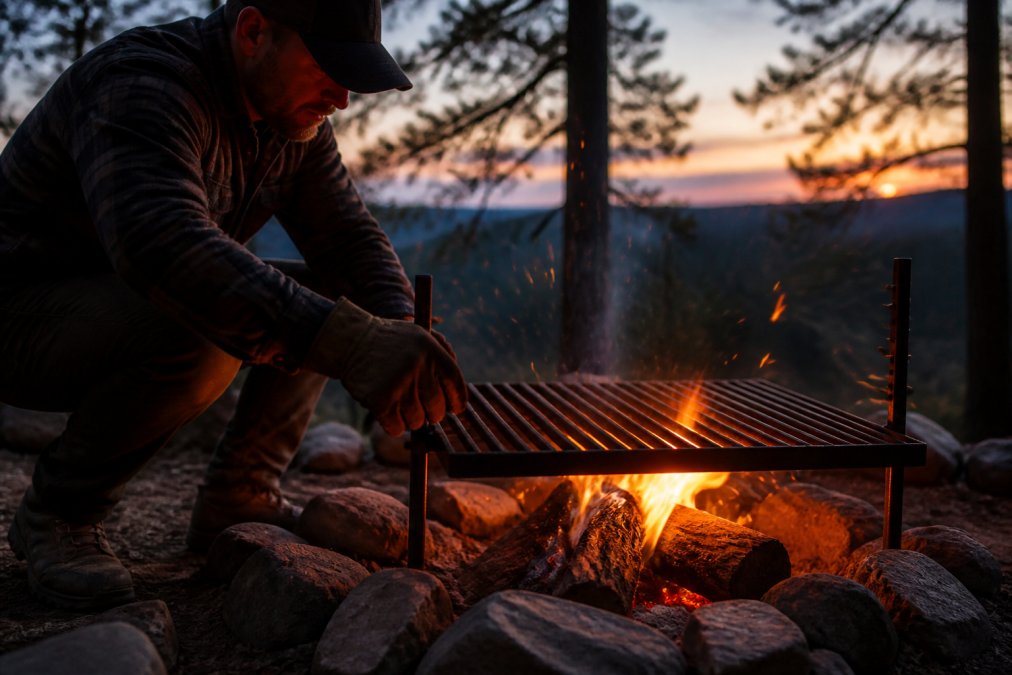
Radiant heat transfers energy in straight lines from the coals to whatever faces them; convective heat wraps around the food in moving air. Wood fire gives you both at once, which is why a steak cooked over coals tastes different from one cooked on a propane grill. The radiant component browns the surface quickly while the interior cooks gently, and controlling that balance is why adjustable height matters more than raw BTU output.
Smoke Infusion and the Maillard Reaction
The Maillard reaction is the browning of proteins and sugars under high heat that creates hundreds of new aromatic compounds. It starts above 140°C at the surface, easy to hit over coals and hard in a lukewarm pan. Smoke infusion happens alongside it: aromatic compounds from burning hardwood settle on the food and build the flavor of a wood-fired oven or a proper campfire steak. Neither process needs added fat.
Health and Nutrition: What Wood Fire Cooking Does to Your Food
Cooking over wood fire changes your food in three measurable ways: less added fat, different moisture behavior, and selective nutrient loss and gain. Here is what actually happens.
Less Added Fat, Without Losing Crust
Radiant heat browns food directly, so you do not need a pool of oil for color and texture. On a propane grill or in a pan, fat carries heat to the surface; over coals, the coals are the medium. A steak, fish, or vegetable can develop a Maillard crust with a thin wipe of oil instead of a quarter cup, a real reduction in added fat per serving that comes from the method, not a diet rule.
What High Heat Does to Nutrients
The honest answer is that high-temperature cooking is a trade-off, not a free win.
- Water-soluble vitamins (C and several B vitamins) are heat-sensitive and leach into cooking liquid. Fast, dry cooking over coals limits both the time at temperature and the liquid contact, which generally preserves more of them than a long braise or a boil.
- Fat-soluble vitamins (A, D, E, K) are more stable under heat but can render out of meat with fat drippings. Cooking over a grate rather than in a pan means those drippings fall into the fire instead of pooling around the food.
- Minerals (iron, zinc, calcium) are not destroyed by heat. If anything, concentrating food by driving off water raises their density per bite.
- Antioxidant compounds in vegetables respond variably. Some are degraded by high heat; others become more bioavailable when cell walls break down. The direction depends on the specific vegetable and the time at temperature.
The Compounds You Do Not Want
High-heat cooking of meat over any open flame or hot surface can form heterocyclic amines (HCAs) and polycyclic aromatic hydrocarbons (PAHs), especially when fat drips onto a hot surface and smoke rises back onto the food. You cannot eliminate them, but you can reduce them:
- Avoid prolonged direct contact between meat and open flame; cook over coals, not in the fire.
- Trim excess fat so less drips and smokes.
- Flip meat regularly rather than leaving one side to char.
- Keep the grate at a height where you get browning, not blackening.
The Best Wood for Campfire Cooking: Species, Seasoning, and Smoke
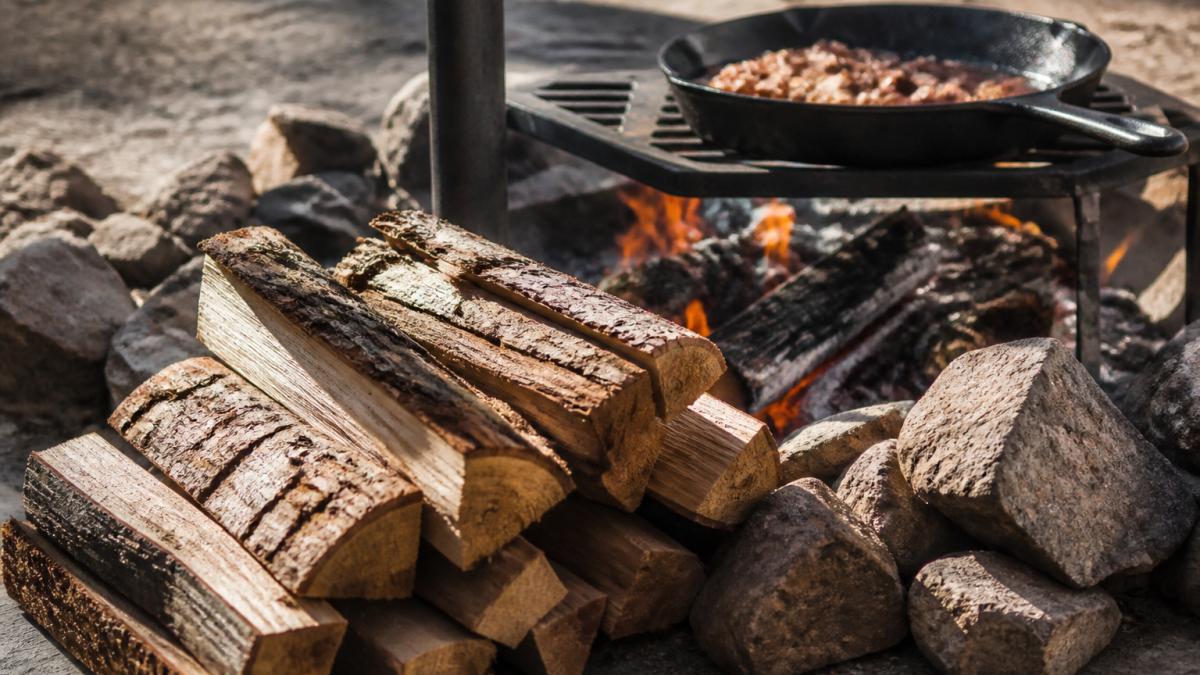
The best wood for campfire cooking is dry, seasoned hardwood. Hardwood burns hotter and longer than softwood, produces more coals, and gives off cleaner smoke. Softwoods like pine and spruce are full of resin; they pop, throw sparks, and leave a tarry creosote taste on anything you cook over them.
- Oak and maple: mild, steady heat, good all-purpose coals for roasting and baking
- Hickory and mesquite: strong smoke, best for beef and game where a heavy flavor profile works
- Apple and cherry: sweeter, lighter smoke, ideal for poultry and pork
- Birch: fast, hot burn, useful for getting coals going but not for long cooks
Hardwood vs. Charcoal: Which Fuel Suits Which Technique
Charcoal is wood burned down without oxygen, so it lights faster, burns predictably, and gives steady heat with minimal smoke. Hardwood gives you smoke infusion, live flame, and the radiant character that defines wood-fired cooking. Neither is better in the abstract.
The Lifetime Warranty ANVIL Grill →
| Fuel | Heat Control | Smoke Flavor | Best For |
|---|---|---|---|
| Seasoned hardwood | Moderate, needs coal management | Strong, species-dependent | Searing, roasting, baking, long cooks |
| Lump charcoal | High, steady and predictable | Light | Grilling, quick sears, weeknight cooks |
| Briquettes | High, very consistent | Minimal | Baking, dutch oven work, beginners |
| Softwood | Poor, fast and erratic | Unpleasant, resinous | Not recommended for cooking |
Essential Campfire Cooking Gear for Open-Fire Results
Essential campfire cooking gear comes down to a heat source you can control, a surface that holds heat, and tools that survive being dropped in the dirt.

| Gear | What It Does | Best For |
|---|---|---|
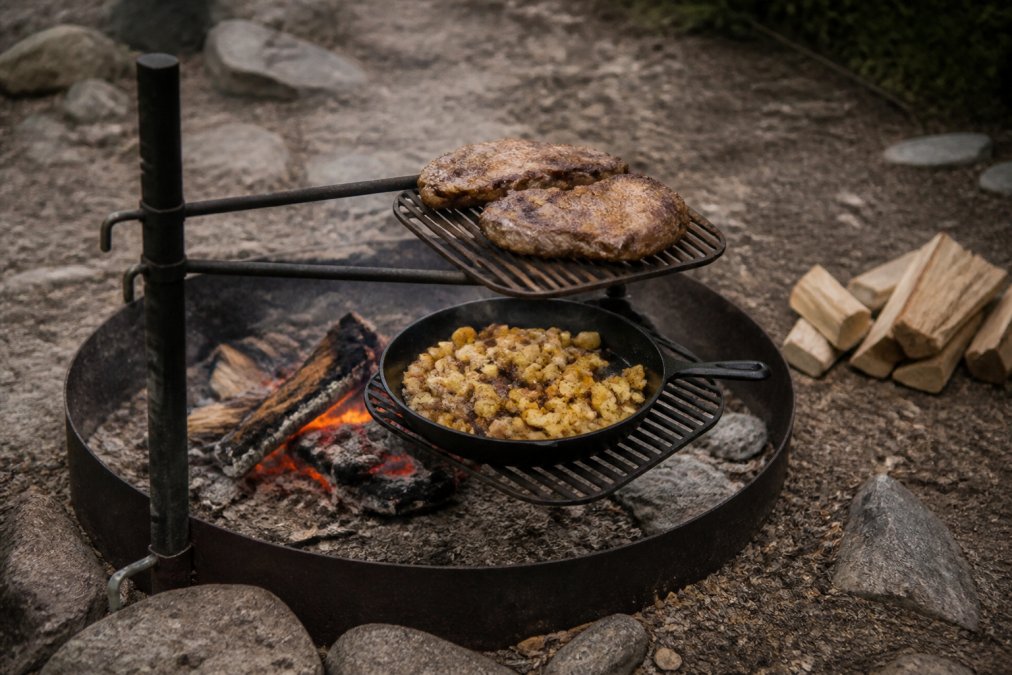
| ANVIL adjustable grill | Variable-height carbon steel grate over any fire | Searing, grilling, all-round open-fire cooking |
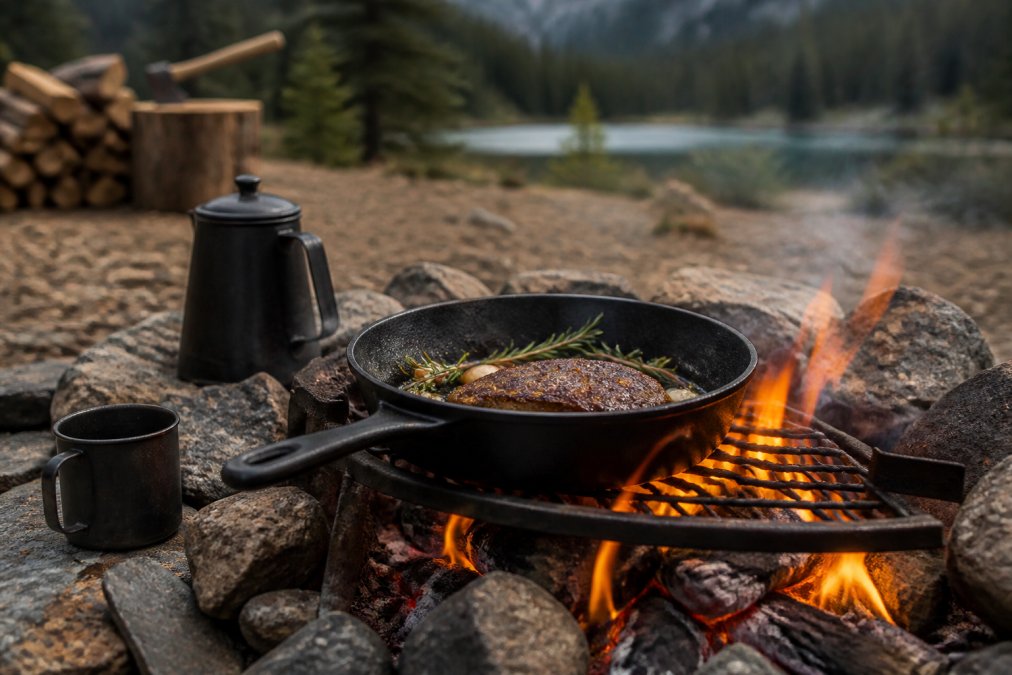
| 12" dutch oven | Even cast iron heat, lid holds coals for baking | Stews, braises, camp bread |
| 10" cauldron | Deep pot with reversible lid that doubles as a griddle | One-pot meals, soups, chili |
| 16" x 9" griddle | Flat cast iron surface, no rim | Pancakes, eggs, bacon, smash burgers |
Safety Tips for Open Fire Cooking: Fire Management and Equipment Care
Safety around an open fire splits into three areas: what you burn, where you burn it, and how you handle the gear afterward. Getting the first one wrong is the most common and least discussed mistake.
Safe Wood Selection: What Never Goes in a Cooking Fire
Not all wood is cooking wood. Some of it is actively hazardous when burned under food.
- Never burn pressure-treated lumber (Staying Safe around Treated Wood). It is impregnated with preservatives that release toxic compounds in smoke, and those compounds deposit on the food. This is the single most dangerous mistake in campfire cooking.
- Never burn painted, stained, or varnished wood. The finishes release heavy metals and volatile compounds when burned.
- Never burn plywood, particleboard, or MDF. The binders and adhesives are not designed to burn cleanly, and the smoke is not food-safe.
- Avoid driftwood from saltwater. It carries salt that can corrode metal gear and leaves a residue on food.
- Avoid softwoods for cooking. Pine, spruce, fir, and cedar are resinous. They pop, throw sparks, and coat food with a tarry creosote taste. They are fine for a warming fire, not a cooking fire.
Fire Management: Site, Conditions, and Rules
- Build the fire in an existing ring or on bare mineral soil, never on duff, roots, or dry grass.
- Clear a minimum of three meters of bare ground around the fire, and check overhead for low branches.
- Keep a water source and a shovel within arm's reach before you light anything.
- Never leave a fire unattended, even for a few minutes.
- Check local fire restrictions before you light anything; bans change with conditions and are enforced.
- Drown the fire, stir the ashes, drown again, and check with the back of your hand before you walk away. Cold to the touch is the only safe test.
Equipment Care: The Routine That Prevents Rust
- Burn off food residue over the fire, then brush the grate clean while it is still warm.
- Wipe a thin coat of oil across the surface after every use, while the metal is still warm enough to open its pores.
- Store everything dry. Never put cast iron in a dishwasher, which strips the seasoning in one cycle.
- Re-season any spot that looks dull or grey before the next cook.
A lifetime warranty against manufacturing defects covers build quality, not rust from neglect. Treat the steel well and it outlasts the trip, the season, and probably you.
Wood-Fired Cooking Techniques: Searing, Roasting, Baking, and Indirect Heat
Wood-fired cooking techniques split into two families: direct and indirect heat. Direct heat means food sits over coals or flame. Indirect heat means food sits beside the fire and cooks by reflected radiant heat, closer to how a wood-fired oven works.
- Searing: grate set low, right over the hottest coals. Fast, high heat for crust and color. Steaks, chops, game.
- Roasting: grate raised, food over moderate coals with a lid or foil if you have one. Even cooking for larger cuts.
- Baking: coals on the lid of a dutch oven, heat from above and below. Bread, cobbler, casseroles.
- Indirect heat: food moved to the edge of the fire, lid on, cooked by ambient and reflected heat. Whole birds, ribs, anything that needs time.
Frequently Asked Questions
Is cooking over a wood fire healthy?
Wood fire cooking avoids the additives and binders found in charcoal briquettes, and the high heat of an open flame can reduce the need for added fats. However, research on wood smoke and health is mixed. The key is burning well-seasoned hardwood, cooking over hot coals rather than thick smoke, and not charring food to the point of heavy blackening. Using a heavy carbon steel grate or cast iron cookware also limits direct contact with open flame.
What types of wood are best for outdoor cooking?
Hardwoods like oak, maple, hickory, apple, and cherry are the best wood for campfire cooking. They burn hot, produce long-lasting coals, and add clean flavor. Avoid softwoods such as pine and cedar, which burn fast and leave resinous soot. Never burn pressure-treated or painted wood. Season your wood for at least six months so it lights easily and produces less smoke.
Does wood-fired cooking require special equipment?
You can cook over a wood fire with a simple stick, but durable gear makes a difference. Essential campfire cooking gear includes an adjustable grill like the ANVIL Grill ($174.99), which lets you raise or lower the grate to control heat without moving the fire. A cast iron Dutch oven or cauldron handles stews and bread. A flat griddle works for breakfast. All Browns Outpost gear is backed by a lifetime warranty.
How does wood-fired cooking compare to charcoal or gas?
Wood fire delivers radiant heat and smoke infusion that gas cannot replicate, and it produces a more complex flavor profile than charcoal. Charcoal burns more consistently and is easier to control for beginners. Gas offers instant temperature control but no smoke flavor. Wood fire sits between them: more flavor than charcoal, more heat variability than gas, which is why an adjustable grate matters for temperature control.