 ultimate-guide
Best Wood for Open Fire Cooking: A Guide
Table of Contents
- Why Hardwoods Are Superior for Cooking
- Hardwood vs Softwood for Campfire Cooking
- Best Wood Species for Flavor Profiles
- Firewood Moisture Content for Cooking
- Campfire Cooking Gear Essentials
- Woods to Avoid for Open Fire Cooking
- Troubleshooting Smoke and Heat Issues
- Frequently Asked Questions
Last Updated: September 29, 2026
Why Hardwoods Are Superior for Cooking
Hardwoods burn hotter, longer, and cleaner than softwoods, producing the steady heat and smoke profile essential for open fire cooking. Wood choice determines whether you get a reliable ember bed or a frustrating mess of sparks and resin.
Hardwoods like oak, maple, and hickory are denser and release energy more gradually, building thick coals that radiate consistent heat for searing or low-and-slow cooking. Softwoods like pine and spruce ignite quickly but burn fast, requiring constant feeding and producing excessive smoke and creosote.
Hardwoods generate less creosote and sap, creating a predictable, clean-burning fuel source that won't impart unpleasant flavors to your food.
Hardwood vs Softwood for Campfire Cooking
Softwoods (pine, spruce, fir) are abundant and easy to split but packed with sap and resin, making them poor choices for cooking fires.
Hardwoods (oak, maple, ash, birch, hickory) take longer to season but deliver higher BTU output and a stable ember bed essential for temperature control.
| Characteristic | Hardwood | Softwood |
|---|---|---|
| Burn temperature | Higher, steadier | Lower, inconsistent |
| Smoke output | Minimal when seasoned | Heavy, resinous |
| Creosote buildup | Low | High |
| Ember bed quality | Thick, stable | Thin, unstable |
| Seasoning time | 12-18 months | 6-12 months |
| Best for cooking | Yes | No |
Softwoods ignite faster but produce excessive smoke that flavors food with bitter, acrid notes instead of clean aromatic smoke.
Best Wood Species for Flavor Profiles
Different hardwoods impart distinct flavors. Match smoke intensity to protein and cooking method: bold smoke for heavy meat and long cooks, light smoke for delicate fish and quick sears.
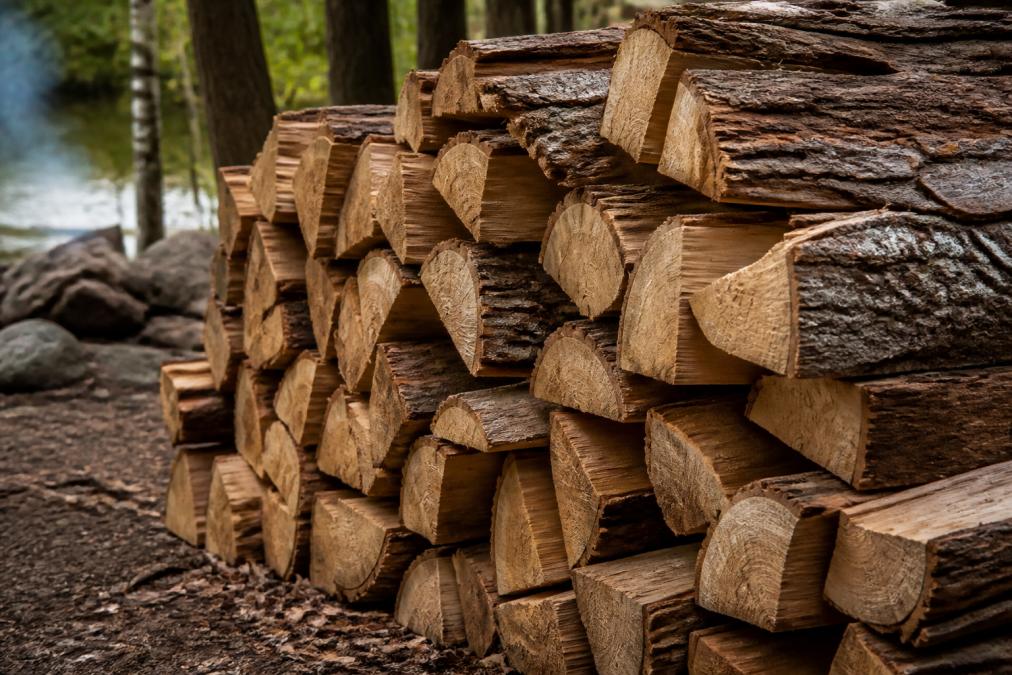
Oak produces bold, heavy smoke ideal for beef, venison, and game meats. Works well for long cooks (brisket, ribs, whole birds) with consistent burn time.
Hickory delivers sweeter smoke with bacon-like character, pairing well with pork, poultry, and fish. Difficult to over-smoke; the most versatile choice for mixed menus.
Maple offers mild, slightly sweet smoke for fish, seafood, vegetables, and light poultry. Works well as a secondary wood to soften stronger hardwoods.
Ash burns clean with minimal flavor impact, ideal for high-temperature searing and delicate items where smoke should be subtle.
Birch produces clean, slightly spicy smoke that complements lamb, game birds, and duck.
Cherry and Apple produce mild, sweet, fruity smoke ideal for poultry, fish, and pork. Often used as secondary woods to add complexity.
Walnut creates strong, bitter smoke; use sparingly with strong meats only, or blend with milder woods at a 1:3 ratio.
Practical Pairing Framework:
- High-heat searing (steaks, chops): Ash or oak. You need a wood that produces minimal smoke at high temperatures so you can see and control your sear.
- Low-and-slow (ribs, brisket, whole birds): Hickory or oak. These woods deliver consistent smoke over 4-12 hour cooks without becoming acrid.
- Fish and seafood: Maple, apple, or cherry. Light smoke that enhances without masking delicate flavors.
- Vegetables and cheese: Apple, cherry, or maple. Sweet, subtle smoke that complements without overwhelming.
- Game meats (venison, duck, elk): Oak, birch, or hickory. Strong meats need assertive smoke; these woods won't get lost.
- Mixed menu (multiple proteins): Hickory as your base, with apple or cherry as a secondary wood. This combination is forgiving and works across most dishes.
Firewood Moisture Content for Cooking
Moisture content is critical. Wood above 20% moisture content smolders, producing thick smoke and unstable heat. Properly seasoned hardwood sits at 15-20% moisture content for efficient, clean burning.
How to Identify Seasoned Firewood
Seasoned firewood has loose or missing bark, feels light relative to size, and shows pale, dry interiors when split.
Strike two pieces together: seasoned wood produces a hollow ring; green wood produces a dull thud.
The Lifetime Warranty ANVIL Grill →
Stack wood in a way that allows air circulation. A covered stack with open sides dries faster than a tightly packed pile. Hardwood typically needs 12-18 months to reach ideal moisture content, depending on climate and wood species. Pine and other softwoods dry faster but remain unsuitable for cooking regardless of moisture level.
Campfire Cooking Gear Essentials
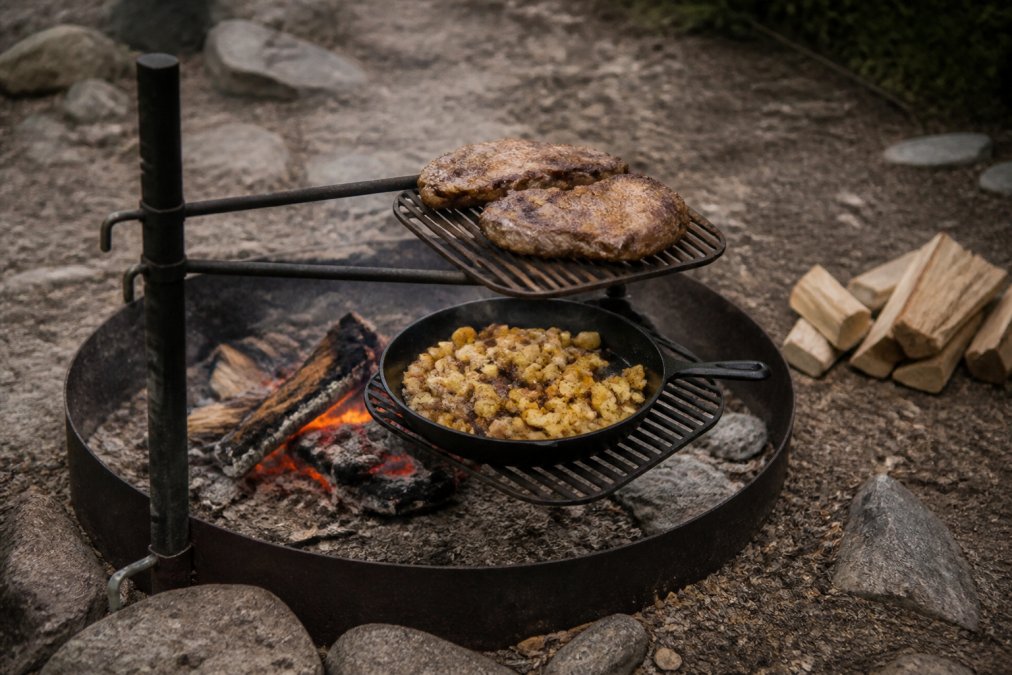
The best wood for open fire cooking is only half the equation. You need gear that can handle the heat and deliver consistent results. The Lifetime Warranty ANVIL Grill is purpose-built for this, a heavy carbon steel grate that adjusts to any height, letting you dial in exact heat from any fire. At $174.99, it handles 40 pounds of weight and works over any campfire, fire pit, or backyard bonfire without requiring setup or a case.

Cast iron cookware is non-negotiable for open fire cooking. The 10" Shallow Skillet at $32.99 heats fast and holds temperature, making it ideal for searing and quick cooking. For slow-cooked meals, the 12" Dutch Oven at $52.99 distributes heat evenly and lets you bake bread under coals. The 10" Cauldron with Reversible Lid at $45.99 handles soups, stews, and one-pot meals while the reversible lid doubles as a griddle.


Having multiple sizes prevents you from choosing between packing light and packing right. The 3-Piece Fry Pan Set at $47.99 gives you 10-inch, 8-inch, and 6-inch pans that nest together, covering everything from full meals to single servings without excess bulk. All Browns Outpost gear carries a lifetime warranty and ships free over $75 CAD.
Woods to Avoid for Open Fire Cooking
Softwoods are the obvious choice to avoid, but there are other woods that have no place near your cooking fire. Treated wood, anything painted, stained, or chemically treated, releases toxins when burned. Pressure-treated lumber contains arsenic compounds that become airborne in smoke (Staying Safe around Treated Wood). Plywood and particle board release formaldehyde. Never burn these materials, even if they're convenient.
Wet or green wood is another category to avoid entirely. Green hardwood is still inferior to seasoned softwood for cooking because the moisture content dominates the burn characteristics. The wood spends its energy evaporating water, producing heavy smoke and inconsistent heat. You'll fight the fire the entire time you're trying to cook.
Some hardwoods are poor choices for cooking despite being suitable for heating. Black walnut produces an intensely bitter smoke that overpowers most foods. Eucalyptus and some tropical hardwoods contain compounds that create unpleasant or even toxic smoke. Stick with common hardwoods you can identify: oak, hickory, maple, ash, birch. If you're unsure about a wood species, don't use it for cooking.
Regional Wood Availability and Sustainable Sourcing
The best wood for your region is the wood that grows there. Sourcing locally reduces transportation emissions and supports sustainable forestry practices. Understanding what hardwoods are native to your area helps you find affordable, seasoned firewood while supporting responsible harvesting.
In eastern regions, oak, hickory, and maple are abundant and widely available from firewood suppliers. These are your go-to species; they're reliable, affordable, and well-suited to the climate.
When sourcing firewood, ask your supplier three questions:
- What species is this wood? Reputable suppliers can identify their product. If they can't or won't, find another supplier.
- How long has it been seasoned? Look for wood that's been split and stacked for at least 12 months. Ask about the moisture content if they have a meter.
- Where was it harvested? Sustainable suppliers source from managed forests or arboricultural waste (trees removed for safety or development). Avoid suppliers who can't trace their source.
Sustainability Considerations
- Managed forests with documented replanting and rotation schedules
- Arboricultural waste (trees removed by municipalities or certified arborists for safety, disease, or development)
- Storm-damaged wood salvaged after weather events
- Mill waste from lumber operations (sawmill offcuts and rejected logs)
Troubleshooting Smoke and Heat Issues
Excessive smoke usually points to moisture content or softwood. If your fire is producing thick, dark smoke, the wood is either too wet or contains too much resin. The fix is simple: stop using that wood and switch to properly seasoned hardwood. The smoke should be barely visible once your coals are established.
Frequently Asked Questions
What is the best wood to burn on an open fire for cooking?
Hardwoods like oak, maple, hickory, and ash are best for open fire cooking. They burn slower, produce consistent heat, and create minimal smoke. Avoid softwoods like pine and spruce, which contain high resin content and produce excessive creosote and smoke that affects food flavor. Seasoned hardwood with moisture content below 20% delivers the cleanest burn and most reliable cooking heat.
How does firewood moisture content affect cooking performance?
Moisture content directly impacts burn quality and heat output. Seasoned wood with 15-20% moisture content burns efficiently, producing steady heat and minimal smoke. Green wood (above 50% moisture) wastes energy evaporating water, creates excessive smoke that imparts bitter flavors, and produces creosote buildup. Kiln-dried wood is ideal for consistent combustion and clean flavor infusion into your food.
What is the difference between hardwood and softwood for campfire cooking?
Hardwoods (oak, maple, hickory) have higher density, burn slower, and provide sustained, predictable heat, essential for cooking. Softwoods (pine, spruce, fir) contain sap and resin that create excessive smoke, spark, and creosote. Hardwoods produce aromatic smoke that enhances food flavor; softwoods produce acrid smoke that ruins it. For open fire cooking, hardwoods are non-negotiable for temperature control and food quality.
Are there specific woods that should never be used for cooking?
Never use treated, painted, or chemically-coated wood; these release toxic fumes when burned. Avoid softwoods like pine, spruce, fir, and cedar for cooking fires due to high resin and sap content. Don't burn wet or green wood; it produces excessive smoke and creosote. Plywood, particle board, and driftwood also contain harmful chemicals. Stick to untreated, seasoned hardwoods for safe, clean cooking.