 ultimate-guide
Is Carbon Steel Safe for High Heat Cooking?
Table of Contents
- What Makes Carbon Steel Safe for High Heat Cooking
- Is Carbon Steel Non-Toxic? What It Releases at High Temperatures
- Carbon Steel Skillet vs Stainless Steel for Searing
- Carbon Steel vs Cast Iron: High-Heat Performance Compared
- How to Season Carbon Steel for Outdoor Use
- Thermal Shock and Warp Resistance in Outdoor Cooking
- Pros, Cons, and Who Carbon Steel Is For
- Conclusion
- Frequently Asked Questions
Last Updated: September 12, 2026
What Makes Carbon Steel Safe for High Heat Cooking
Carbon steel is safe for high heat cooking because it is a simple iron-carbon alloy with no chemical coatings that break down under extreme temperatures. Its safety profile comes down to how you season and maintain it, not any hidden risk in the metal.
This guide from Browns Outpost covers what carbon steel releases at temperature, how it compares to stainless steel and cast iron, and how to season it for safe open-fire cooking.
Carbon Content and Iron Alloy Basics
Carbon steel is an iron alloy containing roughly 0.05% to 2% carbon, which hardens the metal without the chromium that defines stainless steel. That low alloy composition is why it heats fast and takes high heat without the coating failures of synthetic non-stick surfaces. The metal is reactive, so it needs a seasoned surface to protect it from moisture and acidic foods.
High-Heat Tolerance and Temperature Limits
Carbon steel has no meaningful melting concern in any home or campfire scenario: iron melts at roughly 1,370°C (2,500°F), far beyond what a firepit or gas burner produces (PubMed). The real limit is your seasoning layer. Most cooking oils break down between 175°C and 270°C (350°F to 520°F), so the practical ceiling is set by how well your seasoning tolerates heat, not the metal.
Is Carbon Steel Non-Toxic? What It Releases at High Temperatures
Carbon steel is non-toxic for cooking because it is essentially iron and a small amount of carbon, with no chemical non-stick coating to degrade. Whether the pan leaches anything harmful depends on the seasoning layer, the food, and the cook time, not the metal itself.
What Actually Happens at High Heat
At searing temperatures, three things can move from a carbon steel pan into food: iron, trace elements from the alloy, and fragments of the seasoning layer. None behave like the chemicals people worry about in coated pans.
- Iron transfer. Uncoated iron cookware releases small amounts of iron into food, and the amount rises with acidity, moisture, and contact time. A quick sear on a well-seasoned pan transfers very little; a 30-minute tomato simmer in a bare pan transfers noticeably more. For most people this is a dietary source, not a hazard, the body regulates iron absorption. People with hemochromatosis or other iron-loading disorders are the exception and should treat uncoated iron cookware like iron supplements: with a conversation with their clinician.
- Trace elements. Safety depends on what went into the metal. Clean, single-source carbon steel has a predictable composition; scrap or mixed recycled metal can carry undisclosed trace heavy metals. This is the most controllable variable in the safety question, and it is a sourcing decision, not a cooking decision.
- Seasoning breakdown. A polymerized oil layer is a plastic-like film, but it is not PTFE or PFAS. Overheated past its tolerance it does not release the fluorinated compounds associated with non-stick coatings; it carbonizes, flakes, and burns off. Ingesting small flakes of carbonized oil is unpleasant but is not the same exposure pathway as PFAS from a degraded synthetic coating.
The Comparison That Actually Matters
The reason "is carbon steel safe for high heat" is a real question is that the alternative most people are switching from, synthetic non-stick, has a documented failure mode at high heat. PTFE coatings degrade at temperatures well below what a carbon steel pan can take, and fumes from an overheated non-stick pan are a known cause of polymer fume fever, a short-lived but unpleasant flu-like reaction. Carbon steel has no equivalent failure mode: overheat it and you damage the seasoning, not your lungs.
That does not make carbon steel risk-free. It makes the risk different in kind: a maintenance and sourcing question rather than a coating-degradation question.
Reactivity with Acidic Foods
Acidic foods are the one place carbon steel shows its reactive side. Tomatoes, wine, vinegar, and citrus strip seasoning and can give food a metallic taste if the pan sits with them for long: acid dissolves the iron oxide and polymerized oil at the surface, exposing bare metal that reacts with the food. Keep long-simmered acidic dishes in enameled or stainless cookware, and use carbon steel for searing, stir-frying, and sautéing where contact time is short. A well-established patina handles brief acidic contact without issue.
If you do cook something acidic and the pan tastes metallic, you have not ruined it. Scrub, dry, and re-season a thin layer, and the pan is back to normal.
Carbon Steel Skillet vs Stainless Steel for Searing
A carbon steel skillet beats stainless steel for searing because it transfers heat faster and develops a non-stick surface that releases meat cleanly. Stainless steel is more forgiving with acidic sauces and never needs seasoning, but it needs more fat and gives a less reliable crust.
| Factor | Carbon Steel | Stainless Steel |
|---|---|---|
| Heat distribution | Fast, even | Slower, prone to hot spots |
| Searing crust | Excellent | Good with enough fat |
| Non-stick surface | Builds with seasoning | None |
| Acidic foods | Reactive | Unreactive |
| Maintenance | Season and dry | Wash and go |
| Induction compatible | Yes, if magnetic | Usually yes |
The trade-off is maintenance. Stainless steel tolerates neglect; carbon steel rewards the ten minutes you spend drying and oiling it after each cook.
Carbon Steel vs Cast Iron: High-Heat Performance Compared
Cast iron and carbon steel both sear well, but carbon steel wins on responsiveness and weight. Cast iron holds heat longer once hot, suiting long, steady cooks. Carbon steel heats faster, cools faster, and weighs noticeably less, which matters when carrying gear to a campsite.
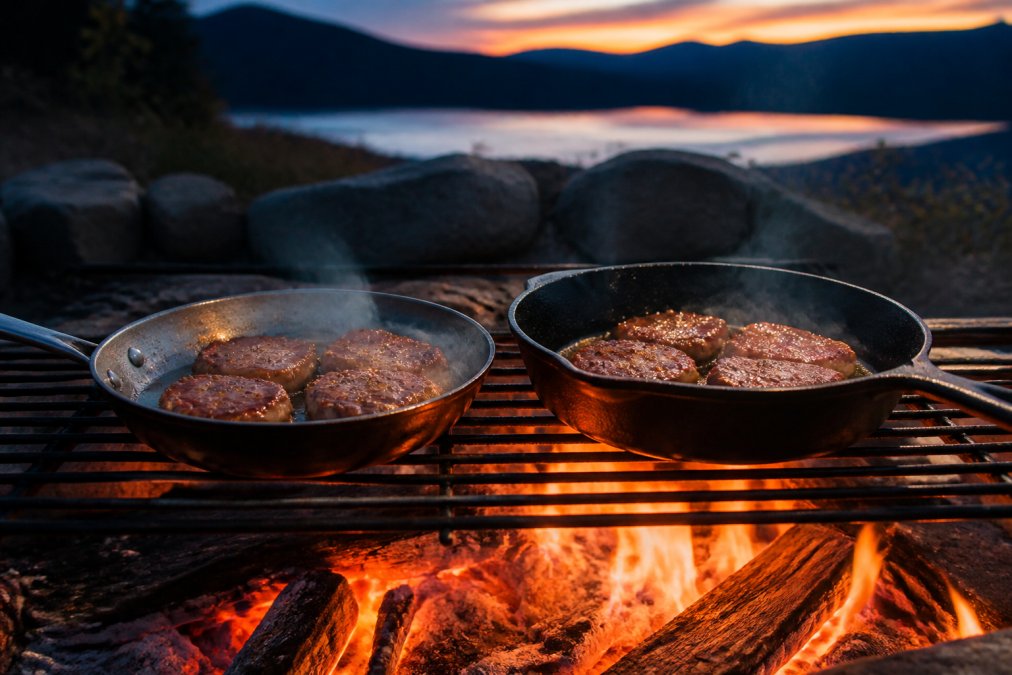
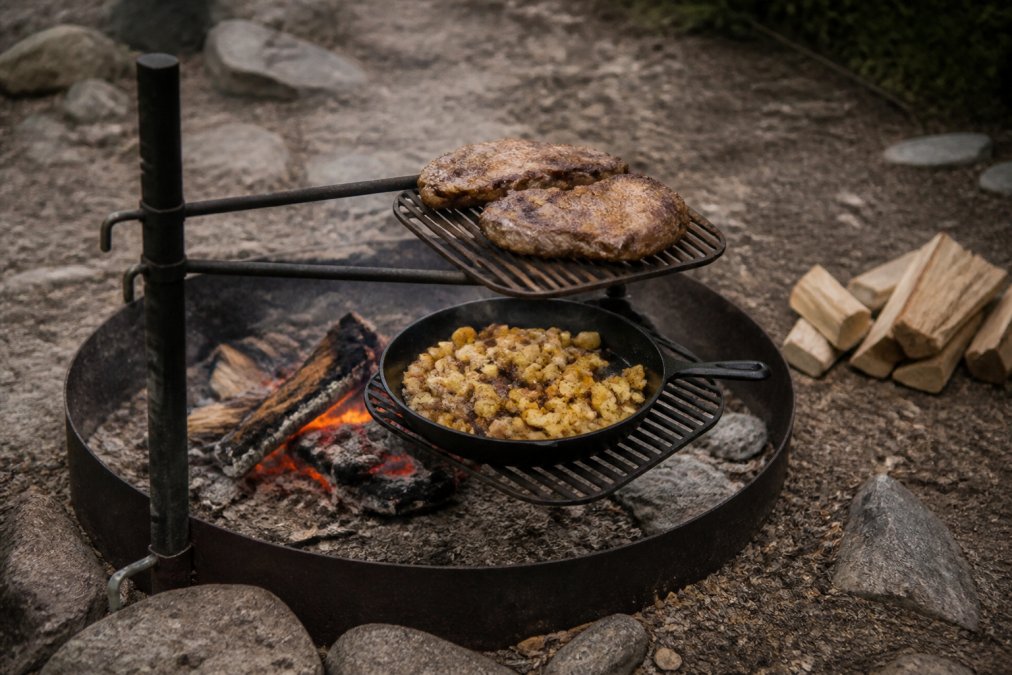
For open-fire cooking, the weight difference is the deciding factor for most people. A carbon steel surface like the one on the ANVIL grill gives you the searing performance of cast iron without the bulk, and the adjustable height lets you dial in exact heat over any fire.

How to Season Carbon Steel for Outdoor Use
Seasoning carbon steel means baking thin layers of oil onto the surface until they polymerize into a hard, non-stick patina. Do it before your first cook and after any deep clean, and the pan improves with every use.
- Scrub off any factory protective wax with hot water and a stiff brush
- Dry the pan completely over heat
- Apply a thin coat of high-smoke-point oil across the whole surface
- Heat until the oil darkens and stops smoking
- Repeat the thin oil layers two or three times
- Cook fatty foods first to build the patina further
Choosing the Right Seasoning Oil and Its Smoke Point
The best seasoning oil has a high smoke point and a thin consistency that spreads evenly. Flaxseed, grapeseed, canola, and avocado oil all work; apply layers so thin they look almost dry before heating. Too much oil at once produces a sticky, uneven surface instead of a hard patina. Low-smoke-point oils burn off before they polymerize, which is why butter and extra-virgin olive oil are poor seasoning choices even though they are fine for cooking.
Thermal Shock and Warp Resistance in Outdoor Cooking
Thermal shock is the rapid, uneven temperature change that cracks or warps cookware. Carbon steel resists it far better than thin stamped pans, but only if you respect the two transitions that cause most failures.
What Thermal Shock Actually Does to Metal
Metal expands when heated and contracts when cooled. When one part of a pan changes temperature much faster than another, the regions want to occupy different sizes at once, creating internal stress. If the stress exceeds what the gauge and shape can absorb, the pan warps, usually a dome in the center or a rock in the base, and thin or brittle cookware can crack.
Carbon steel is ductile and forgiving, which is why it survives campfire cooking that would destroy thinner materials. But it is not immune. The two transitions that cause almost all warping:
- Hot pan into cold water. Plunging a screaming-hot skillet into a sink of cold water cools the base far faster than the walls. The base contracts, the walls resist, and the pan domes. This is the single most common cause of warped carbon steel.
- Cold pan onto a roaring fire. Dropping a room-temperature pan directly onto a hot bed of coals or a high-output burner heats the center of the base before the rest of the pan catches up. The same uneven expansion occurs in reverse.
Gauge, Shape, and Why Some Pans Resist Better
Thickness is the main defense. A heavier gauge base spreads heat more evenly and has more material to absorb stress before deforming. Thin stamped pans, the kind sold as budget "carbon steel", warp first because there is less metal to distribute the load. A thick, flat base with a slight curve or reinforced rim also resists better than a perfectly flat disc, because the shape gives stress somewhere to go.
For open-fire cooking, construction matters more than marketing: a pan built from heavier stock with a flat, stable base handles the uneven heat of a firepit without the metal fatigue that ruins lighter cookware.
How to Avoid Warping in Practice
- Let the pan cool gradually before washing. Set it aside on a cool, dry surface and let it come down on its own. The ten minutes you wait is cheaper than a replacement pan.
- Never shock a hot surface with cold liquid. No cold water, no ice, no frozen food straight from the freezer into a hot pan.
- Preheat gradually. Bring the pan up to temperature over a few minutes rather than slamming it onto maximum heat. This applies to induction and gas as much as to fire.
- Match the pan to the heat source. A wide pan over a small, intense fire concentrates heat in the center. Spread the coals or use a grate that distributes the heat.
- Dry over low heat, not high. After washing, warm the pan gently to drive off moisture, then oil it. High heat on a wet pan is a stress event, not a shortcut.
A little patience keeps the metal flat for decades, and it costs nothing but a few minutes of waiting.
Pros, Cons, and Who Carbon Steel Is For
Carbon steel suits anyone cooking over high heat who wants a durable, chemical-free surface. It is not for people who want zero maintenance or who cook long-simmered acidic dishes in the same pan.
Pros:
- Handles extreme heat with no coating to fail
- Builds a natural non-stick surface
- Lighter than cast iron, faster to heat
- Induction compatible and oven-safe
- Lasts for decades with basic care
Cons:
- Requires seasoning and drying after use
- Reacts with acidic foods
- Can rust if stored wet
For over-the-fire cooking specifically, the combination of high-heat tolerance and adjustable heat control is hard to beat. The Lifetime Warranty ANVIL Grill puts a 15 x 20 inch carbon steel surface over any open fire, backed by a lifetime warranty and free shipping over $75 CAD.
Conclusion
High-heat cooking asks a lot of your cookware, and most pans fail at the seasoning layer long before the metal gives out. Carbon steel avoids that problem because there is no chemical coating to break down, just iron, carbon, and a patina you build yourself.
At Browns Outpost, we build raw carbon steel gear for exactly this kind of cooking: hand-crafted construction, a lifetime warranty, and an adjustable campfire grill design that lets you control heat over any fire. The ANVIL grill handles 40 lb (20 kg) without flexing and ships free over $75 CAD. Get started with Browns Outpost and cook over an open fire with gear built to last a lifetime.
Frequently Asked Questions
Does carbon steel leach chemicals at high temperatures?
Carbon steel is an iron-carbon alloy with no chemical coatings, so there are no synthetic chemicals to leach. What can transfer into food is small amounts of iron, which is a nutrient your body needs. Acidic foods like tomato sauce or vinegar will pull more iron into the dish, which is normal and generally not a health concern for most people. The seasoning layer, a polymerized oil patina, also stays stable at normal cooking temperatures.
Is carbon steel safe for campfire cooking?
Yes. Carbon steel handles open-fire heat well because it tolerates high temperatures without warping or releasing harmful compounds. The main things to manage are thermal shock (don't plunge a hot pan into cold water) and rust prevention (dry and oil it after every use). A carbon steel grill like the ANVIL is built for exactly this: adjustable height over any open fire, heavy-gauge construction, and a surface that seasons into a natural non-stick patina with use.
What should you not cook on carbon steel?
Avoid long-simmering acidic dishes like tomato sauce, wine reductions, or vinegar-heavy braises in a freshly seasoned pan. The acid strips the seasoning layer and can leave a metallic taste in the food. You can cook acidic ingredients briefly, such as deglazing a pan after searing, without problems. Also skip boiling water for extended periods, which removes seasoning. For high-heat searing, stir-frying, and sautéing, carbon steel is one of the best surfaces available.
Is carbon steel safe on an induction cooktop?
Carbon steel is induction compatible because it's a ferrous metal, meaning a magnet will stick to it. That magnetic property is what induction cooktops require to generate heat. The main practical note is that thin carbon steel pans can warp on induction if heated too fast on high power. Start on medium, let the pan heat evenly, then raise the temperature. Heavy-gauge carbon steel, like the cookware and grills built for outdoor use, resists warping better than thin stamped pans.