 listicle
Best Portable Campfire Cooking Equipment for Camping
Table of Contents
- What Makes the Best Portable Campfire Cooking Equipment
- Portable Campfire Grill Setup: The ANVIL Adjustable Grill
- Essential Cast Iron Cookware for Open Fire Cooking
- Campfire Cooking Safety Tips You Need to Know
- How to Clean Cast Iron Cookware After Outdoor Use
- Choosing the Right Gear for Your Cooking Style
- Conclusion
- Frequently Asked Questions
Last Updated: September 1, 2026
What Makes the Best Portable Campfire Cooking Equipment
Portable campfire cooking equipment separates outdoor cooks who eat well from those who survive on charred hot dogs and lukewarm beans. The difference comes down to three things: heat control, durability, and versatility over an open flame.
Most campers underestimate how much their cookware matters. Cast iron holds heat like nothing else. Carbon steel grates adjust to dial in exact temperatures. These aren't luxury features, they're the foundation of meals that actually taste good in the backcountry.
At Browns Outpost, we've spent years refining what works when cooking over real fire. The portable campfire cooking equipment you choose determines whether you're managing heat or controlling it. The best gear handles abuse without complaint and lasts long enough to pass down to the next generation.
Portable Campfire Grill Setup: The ANVIL Adjustable Grill
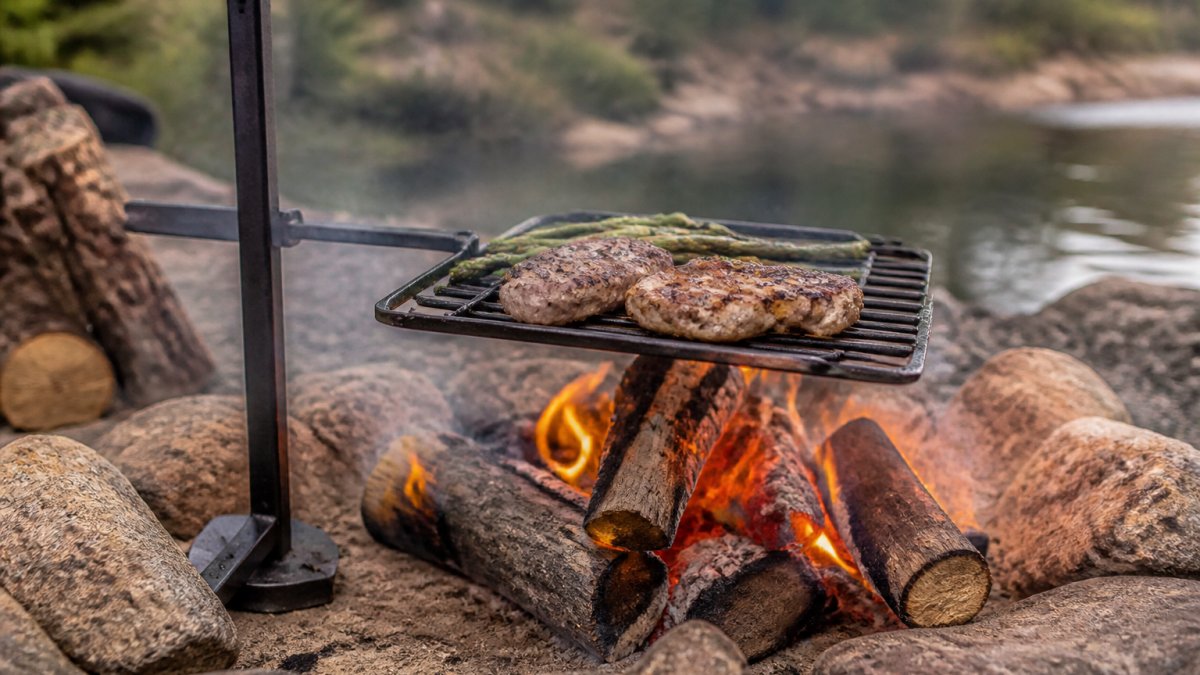
An adjustable grill transforms campfire cooking from guesswork into technique. The ANVIL Adjustable Grill ($174.99) does exactly one thing better than anything else on the market: it lets you control heat by adjusting the grate height over any fire.

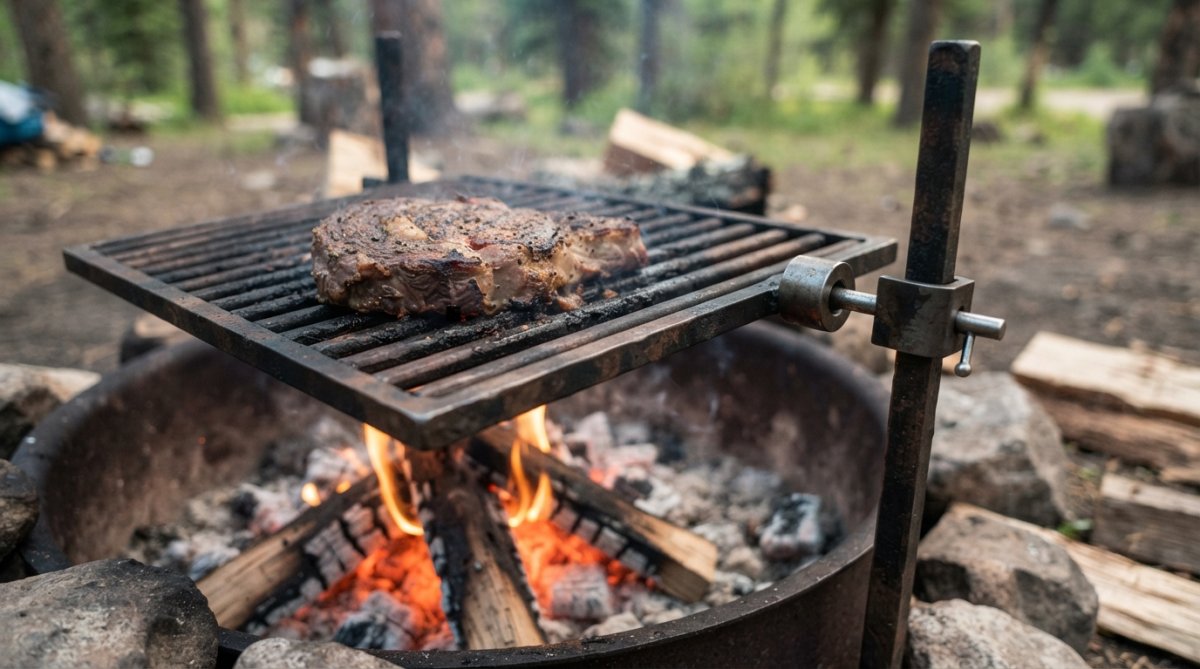
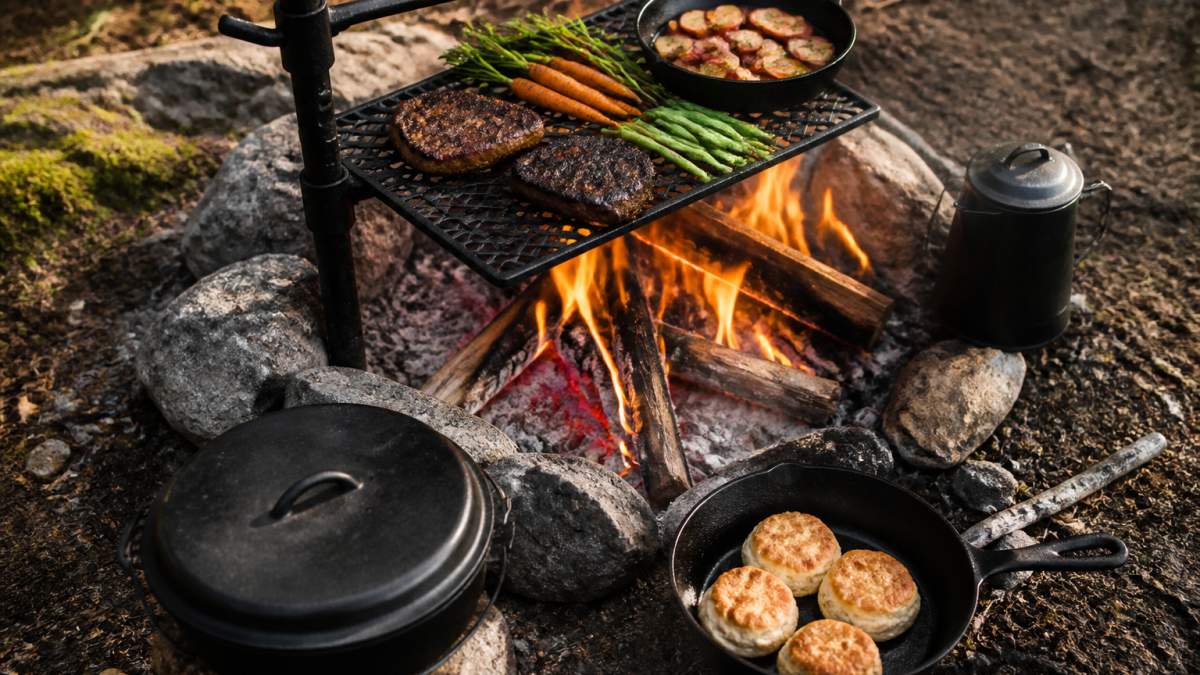
Most portable grills force you to move food around the fire to find the right temperature. The ANVIL works the opposite way. Raise the grate for low-and-slow cooking, perfect for braising venison or smoking fish. Lower it for a screaming hot sear that puts a crust on a ribeye in under three minutes. The grate slides and locks along a heavy carbon steel stake, adjusting smoothly without fiddling.
What makes this design different is the simplicity. No hinges to break. No complex mechanisms. Stakes into the ground, and you're cooking. The grate itself is acid-bathed and pre-seasoned with olive oil, just raw carbon steel that gets better with use. It weighs 16.5 pounds and packs flat for transport. The lifetime warranty backs the build quality, so you're covered for life.
Essential Cast Iron Cookware for Open Fire Cooking
Cast iron cookware is non-negotiable for campfire cooking. It handles direct flame, doesn't warp under extreme heat, and improves with every use as the seasoning layer builds. Most importantly, it distributes heat evenly across the entire cooking surface.
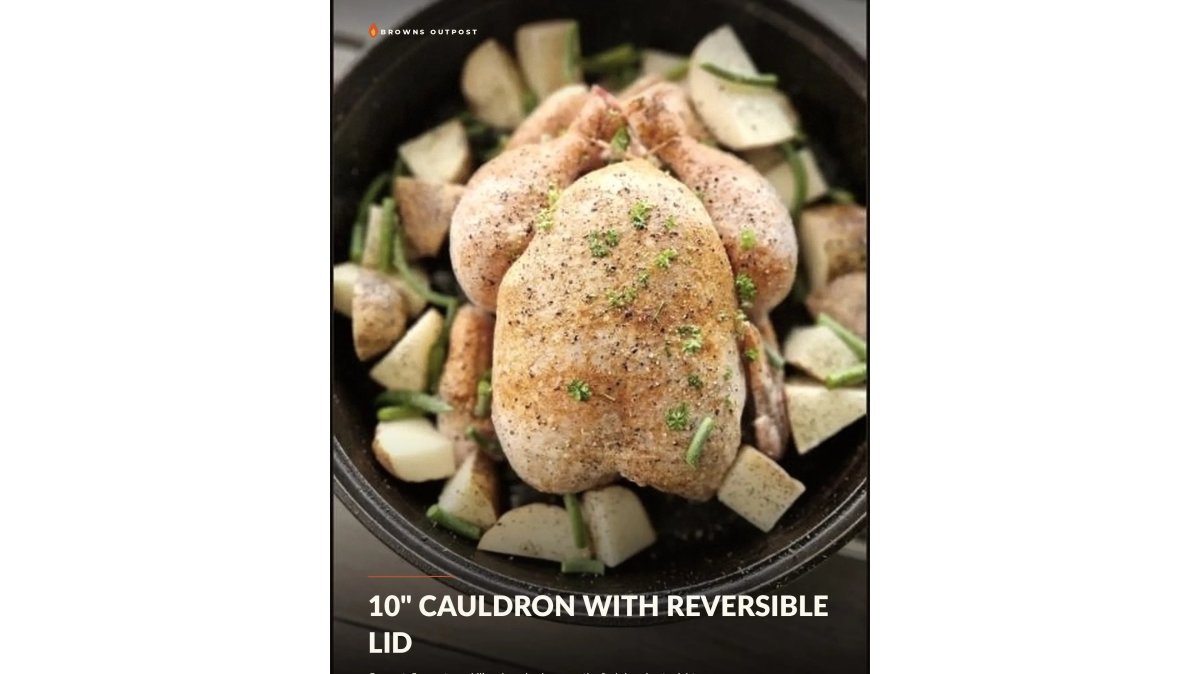
The challenge with cast iron is choosing the right pieces for your trips. Packing too much wastes space and weight; packing too little means compromising on what you want to eat. The solution is matching your cookware to your cooking style and group size.
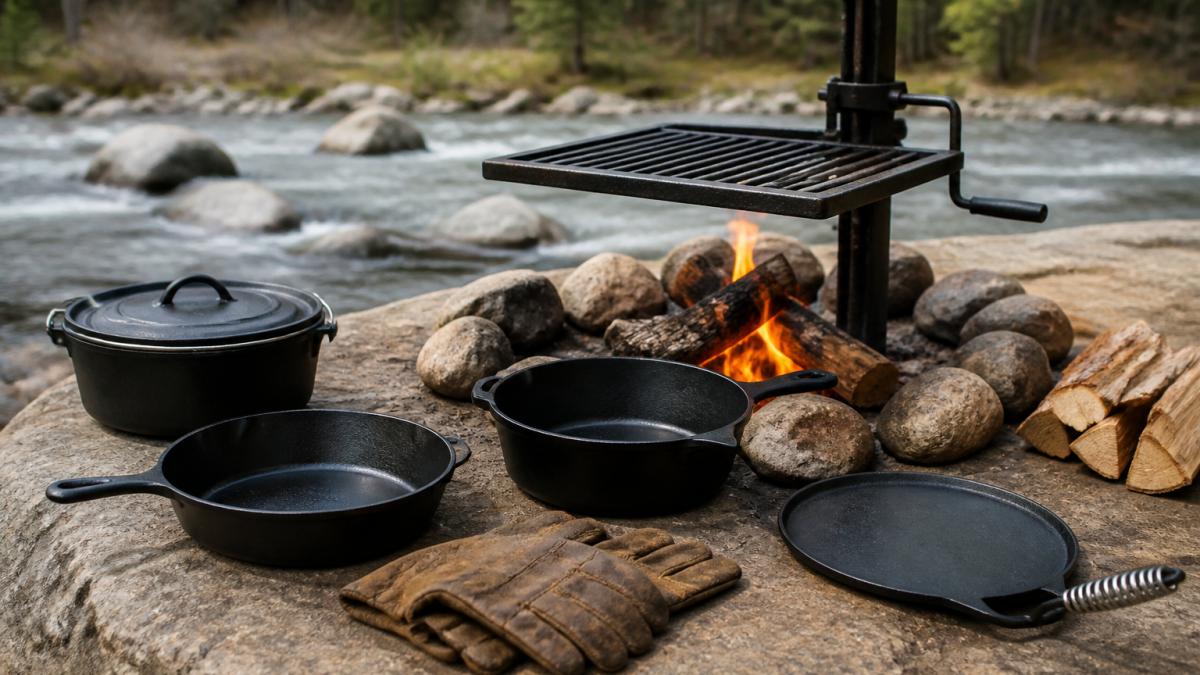
For most campers, three pieces handle 80% of what you'll cook: a griddle for breakfast, a skillet for dinner, and a Dutch oven for slow-cooked meals or bread. The 40 cm x 23 cm Griddle ($37.99) sits flat over most grill grates and lets you cook pancakes on one side and bacon on the other simultaneously. The 25 cm Shallow Skillet ($32.99) is the workhorse, with shallow walls that maximize searing surface for restaurant-quality crust on steaks and proper browning on vegetables. For groups or longer trips, the 3-Piece Fry Pan Set ($47.99) gives you flexibility with sizes that nest together for compact packing.

Dutch Ovens for Slow-Cooked Camp Meals
A Dutch oven separates casual camping from real outdoor cooking. The 30 cm Dutch Oven ($52.99) is built thick enough to hold steady, even heat for hours. Braise a shoulder of lamb, simmer a stew for six, or bake bread under coals, the flanged lid holds coals on top, turning it into a genuine camp oven.
The thick cast walls spread temperature evenly so nothing scorches on one side while staying raw on the other. For minimalist trips where every ounce counts, the 20 cm Dutch Oven with Lid ($45.99) delivers the same performance at smaller scale. Cast iron Dutch ovens are generational gear that don't wear out; the seasoning layer only improves with use.
Skillets and Griddles for Searing and Breakfast
The difference between a skillet and a griddle is the rim. Skillets have curved, sloped sides for flipping and sliding food. Griddles are flat edge-to-edge, giving you continuous cooking surface. For campfire cooking, you want both.
The 25 cm Shallow Skillet handles searing, frying, and browning with maximum contact with heat for consistent crust on meat and proper caramelization on vegetables. The 40 cm x 23 cm Griddle is purpose-built for feeding a group, pancakes on one side, eggs and bacon on the other, all cooking simultaneously.
Campfire Cooking Safety Tips You Need to Know
Open fire cooking introduces hazards that your home kitchen doesn't have. Uncontrolled flames, extreme heat, and heavy hot cookware require respect and preparation.
Thermal burns are the most common injury (peer-reviewed research). Cast iron and carbon steel retain heat long after removal from the fire. Always assume cookware is hot. Use long-handled tools, tongs, spatulas, and forks that keep your hands at least 30 centimeters from the cooking surface (the CDC). Wear heat-resistant gloves rated for campfire use, not cotton or synthetic materials that melt or catch fire.
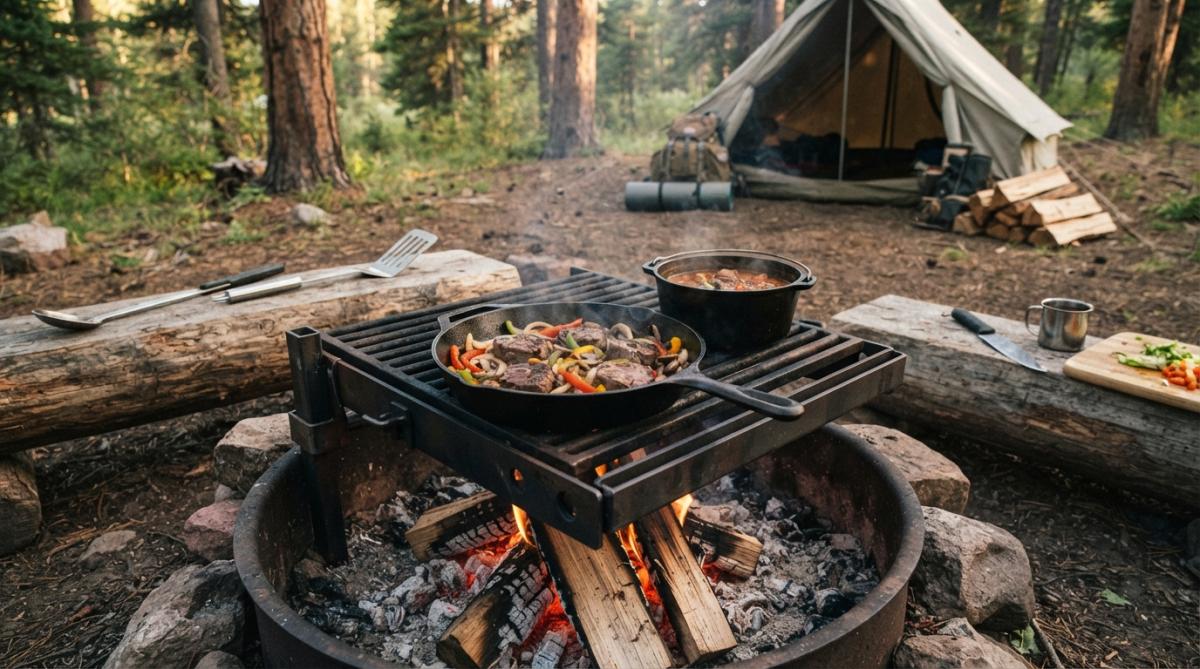
Fire management is safety. Build a cooking fire with hot coals rather than active flames. Coals provide steady, controllable heat. If using an adjustable grill, position it high enough that flames don't lick the grate. Never leave cooking food unattended. Grease fires start fast and spread faster. Keep a fire extinguisher or large pot of water nearby, not within reach of flames, but accessible if something goes wrong. If a grease fire occurs, smother it with a metal lid or cover, never water.
Cookware placement matters. Secure your grill or cooking setup so it won't shift or tip. Test stability before placing food on it. Check your equipment before trips. Cracks in cast iron can worsen under thermal stress. Grill grates should lock securely at every height. Handles should be tight.
How to Clean Cast Iron Cookware After Outdoor Use
Cast iron maintenance in the field is simpler than most people think. The goal is removing food residue while preserving the seasoning layer.
Immediately after cooking, while the pan is still warm, scrub it with hot water and a stiff brush. Don't use soap, it strips seasoning. Brush away food particles, then rinse with clean water. Dry it completely on heat by placing it back over low coals for 30 seconds to ensure all moisture evaporates. Water is cast iron's enemy.
Once dry, apply a thin coat of neutral oil, vegetable, canola, or olive oil all work. Use a paper towel or cloth to wipe the oil across the entire surface, inside and out. This prevents rust and builds the seasoning layer. At home after your trip, repeat the same process. Hand-wash only; dishwashers strip seasoning in a single cycle.
Rust happens. If you find rust spots, scrub them with a stiff brush and steel wool, then re-oil. Light rust won't affect cooking. Storage between trips should be dry and cool. Don't store cast iron in a damp garage or basement. Don't wrap it in plastic; moisture gets trapped. Stack cookware with paper towels between pieces to prevent sticking.
| Maintenance Task | When | How | Why |
|---|---|---|---|
| Clean after cooking | Immediately while warm | Brush with hot water, no soap | Prevents food from hardening and rust from forming |
| Dry thoroughly | Right after cleaning | Place on heat for 30 seconds | Water causes rust; heat evaporates all moisture |
| Oil the surface | After drying | Thin coat of neutral oil with cloth | Builds seasoning layer and prevents oxidation |
| Full inspection | Before each trip | Check for cracks, rust, secure handles | Identifies problems before they become dangerous |
Choosing the Right Gear for Your Cooking Style
Not every cook needs the same equipment. A solo backpacker has different requirements than a family camping group or a hunting expedition.
Solo trips or two-person backpacking calls for ultralight solutions. The 20 cm Dutch Oven ($45.99) and 25 cm Shallow Skillet ($32.99) together weigh less than 4 kilograms and handle everything from breakfast eggs to slow-cooked dinners. Pair them with the ANVIL Adjustable Grill for heat control.
Family trips or base camp cooking justify bringing more cookware. The 30 cm Dutch Oven ($52.99), 40 cm x 23 cm Griddle ($37.99), and 25 cm Shallow Skillet give you flexibility for different meals and let you cook for groups efficiently. The ANVIL Grill becomes essential for managing breakfast cooking at low heat while dinner simmers at high heat.
Hunting expeditions or trips where you're processing large game require heavy-duty equipment. The 30 cm Roasting Pan ($48.99) gives you deep walls and heat retention for braising large cuts. The 25 cm Cauldron with Reversible Lid ($45.99) doubles as both a cooking pot and griddle surface.
Weight-to-performance ratio should guide your decisions. Cast iron is heavy, but its heat retention and durability justify the weight for most trips. A 25 cm skillet weighs about 1.4 kilograms but outperforms multiple lightweight alternatives combined.
Conclusion
Portable campfire cooking equipment isn't about having the most gear, it's about having the right gear that actually works when you need it. The ANVIL Adjustable Grill gives you heat control that transforms cooking from luck into technique. Cast iron cookware handles open flame better than anything else and improves with every use.
Get started with Browns Outpost and build a cooking system backed by a lifetime warranty. Our hand-crafted carbon steel ANVIL Grill and cast iron cookware are designed for tough conditions and real results. Free shipping over $75 CAD means you can add to your setup without overthinking the cost. Start with the ANVIL and one cast iron piece, the 25 cm Shallow Skillet or 30 cm Dutch Oven, and you have everything needed for professional-grade campfire cooking that lasts a lifetime.

Frequently Asked Questions
What is the best material for portable campfire cooking equipment?
Cast iron and carbon steel are top choices for campfire cooking. Both materials distribute heat evenly, develop natural non-stick seasoning over time, and improve with use. Cast iron is heavier but retains heat longer, making it ideal for slow-cooked meals. Carbon steel, like the ANVIL grill, is lighter and heats faster while still offering excellent durability. Both withstand direct flame and coals without warping, and both can last a lifetime with proper care.
How do I choose a portable campfire grill?
Look for adjustable height control so you can manage heat intensity over varying fire sizes. Weight matters for packability, but avoid ultra-light materials that won't hold steady heat. The ANVIL adjustable grill offers variable height adjustment, stakes into any ground, and weighs 16.5 lbs, balancing portability with durable construction. Check that the grate is wide enough for your typical meal size and that the grill nests flat for transport.
Is cast iron or carbon steel better for camping?
Both excel outdoors, but they serve different purposes. Cast iron excels at heat retention and is better for Dutch ovens, skillets, and griddles where you're cooking in the pan itself. Carbon steel, used in the ANVIL grill, is superior for grates and grills because it's lighter, heats faster, and handles direct flame efficiently. Many campers bring both: a carbon steel grill grate for searing and a cast iron skillet or Dutch oven for other cooking methods.
How do I maintain cast iron cookware in wet camping conditions?
After each use, burn off food residue over the fire, then brush clean while warm. Immediately dry the cookware on heat to prevent water spots and rust. Apply a thin coat of neutral oil while still warm to maintain seasoning. Store in a dry location between uses. If rust spots appear, scrub with a wire brush or steel wool, then re-season. Cast iron actually improves in wet conditions if you stay consistent with drying and oiling after every meal.
This article was written using GrandRanker