 how-to
How to Prevent Cast Iron Rust While Camping
Table of Contents
- Why Cast Iron Rusts in Camping Conditions
- How to Clean Cast Iron at Camp
- Drying Techniques for Camp Settings
- Best Oil for Cast Iron Seasoning in the Field
- Removing Rust from Cast Iron Pans at the Campsite
- Essential Tools and Supplies for Camp Maintenance
- Storage Strategies During Multi-Week Trips and Humid Seasons
- Common Mistakes to Avoid
Last Updated: August 16, 2026
Why Cast Iron Rusts in Camping Conditions
Cast iron rusts because moisture, oxygen, and the absence of a protective oil layer create ideal conditions for oxidation. Camping amplifies this problem: you're cooking in high-humidity environments near water, storing cookware in damp tents, and lacking the controlled indoor storage that protects cast iron at home. A skillet that sits safely in your kitchen for months will develop flash rust in a single damp night at camp without proper care.
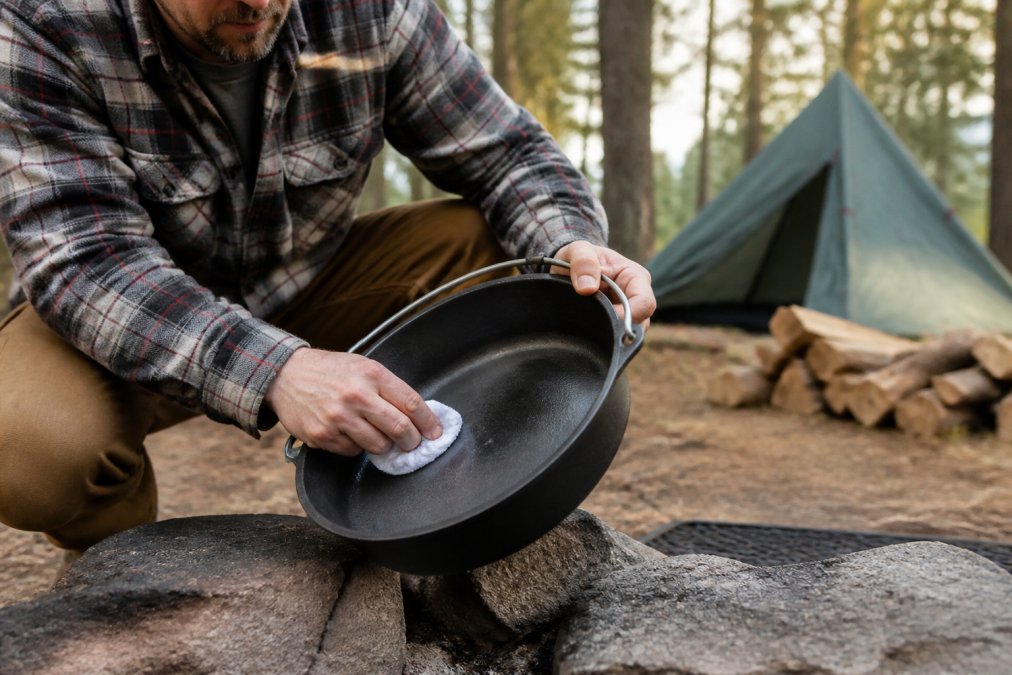
The chemistry is straightforward: iron oxidizes when exposed to water and oxygen. The strategies that work at home, washing with soap, air-drying on a rack, storing in a dry cabinet, fail outdoors. You need field-specific techniques designed for high humidity, limited water access, and campfire cooking. The good news: preventing rust is entirely manageable once you understand why it happens and which methods actually work in camp conditions.
How to Clean Cast Iron at Camp
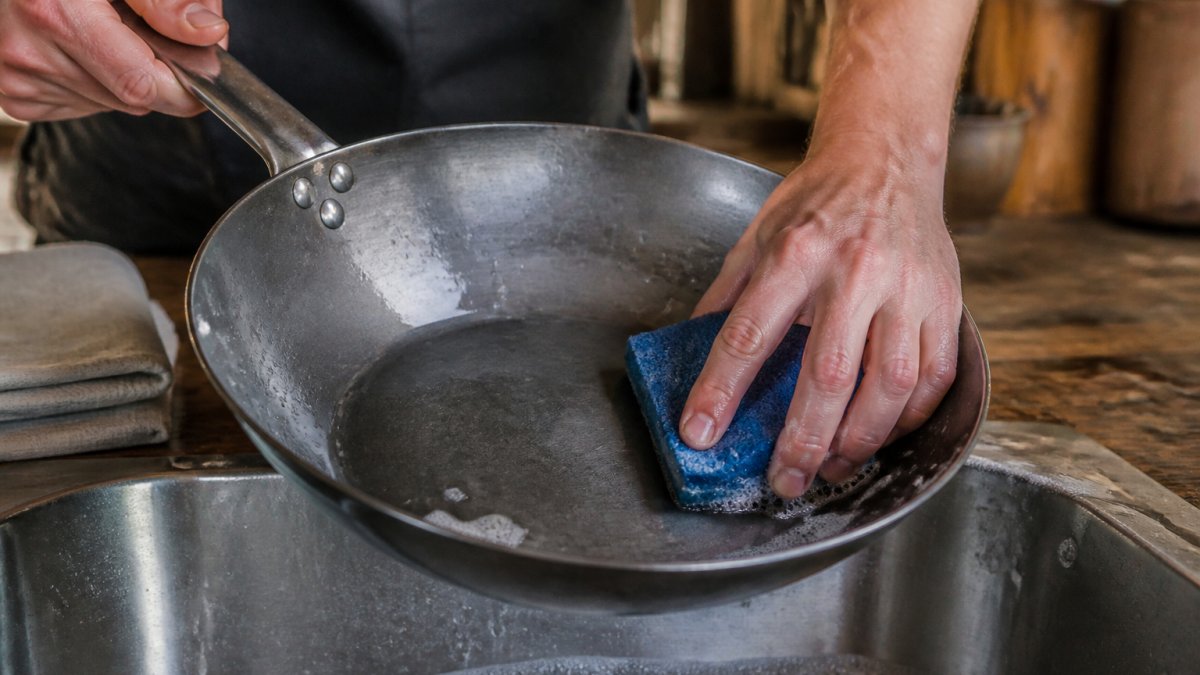
Cleaning cast iron at camp prioritizes removing food residue while minimizing moisture exposure. While your skillet is still warm from cooking, use a dry cloth or paper towel to wipe away loose food. For stubborn residue, sprinkle coarse salt directly onto the warm pan and scrub with a cloth. The salt acts like fine sandpaper, breaking down carbonized buildup without water.
If you must use water, do it while the pan is warm and use minimal water, a quick rinse, not a soak. Dry immediately with a cloth. The key difference from home cleaning is speed and minimalism: prioritize dryness over perfection.
For cast iron like the 10" Shallow Skillet from Browns Outpost, the raw carbon steel construction means seasoning builds over time. You're preserving that protective carbonized layer, not stripping it clean.

Preventing Food Buildup Between Meals
Clean immediately after each meal while the pan is warm. Don't let food sit overnight. Store cast iron in a dry location inside your tent or RV, covered loosely with cloth to allow air circulation. For multi-day trips, wipe cast iron lightly with an oiled cloth once daily to refresh the protective layer and prevent flash rust.
Drying Techniques for Camp Settings
Thorough drying is the single most important step in preventing rust.
Heat-Based Drying Methods
Immediately after cleaning, place your skillet on a low heat source for 60 to 90 seconds. This evaporates surface moisture and water trapped in pores. You'll see steam rising, that's moisture leaving. Once steam stops, your pan is dry. Don't leave it on heat too long; you're drying, not seasoning.
Managing Humidity and Condensation in Tents
Inside a tent, condensation forms every night as warm air cools. If your cast iron is stored inside, condensation will form on it even if you dried it perfectly after dinner. This is the primary cause of flash rust on camping trips.
Store cast iron outside the tent in a weatherproof box or bag placed away from your sleeping area. If outdoor storage isn't possible, store it in the driest part of your tent near the entrance where air circulates better. Wrap it loosely in cloth (not plastic, which traps moisture). For long trips, check your cast iron every morning and wipe off any condensation immediately.
Best Oil for Cast Iron Seasoning in the Field
Vegetable oil and canola oil are your best options, they have a high smoke point and polymerize effectively when heated. The critical technique is using a thin coat. Apply oil sparingly, a light coating that looks almost dry when finished. Wipe the oil on, then wipe most of it back off. The goal is a nearly invisible protective layer, not a visible shine.
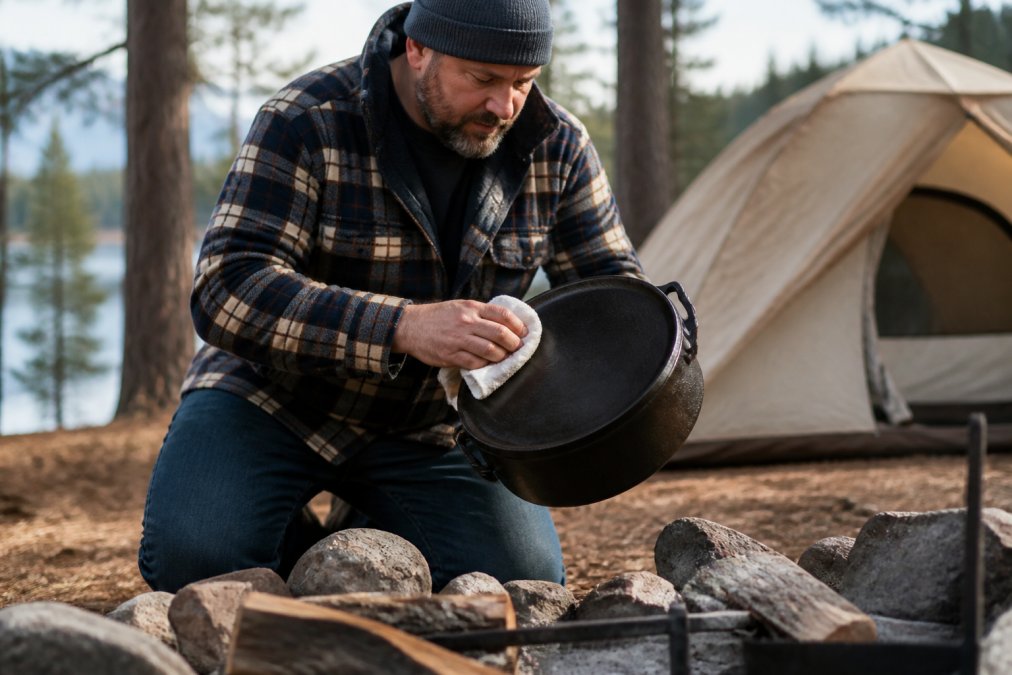
Apply oil immediately after drying your cast iron while the metal is still warm. For multiple pieces like the 3-Piece Fry Pan Set from Browns Outpost, oil each individually and stack with cloth separators between layers.

Removing Rust from Cast Iron Pans at the Campsite
Flash rust appears as orange-brown discoloration and removes easily if caught early. Sprinkle coarse salt on the rusted area, add a small amount of oil, and scrub in circular motions with a cloth. The salt acts as an abrasive while the oil prevents rust from re-forming. This takes two to three minutes for most surface rust.
For heavier rust, use a steel wool pad or fine abrasive cloth. Scrub firmly until bare metal shows, then immediately wipe clean and apply oil. Never use water-based rust removers or vinegar at camp, moisture lingers and often causes more rust than it solves.
Essential Tools and Supplies for Camp Maintenance
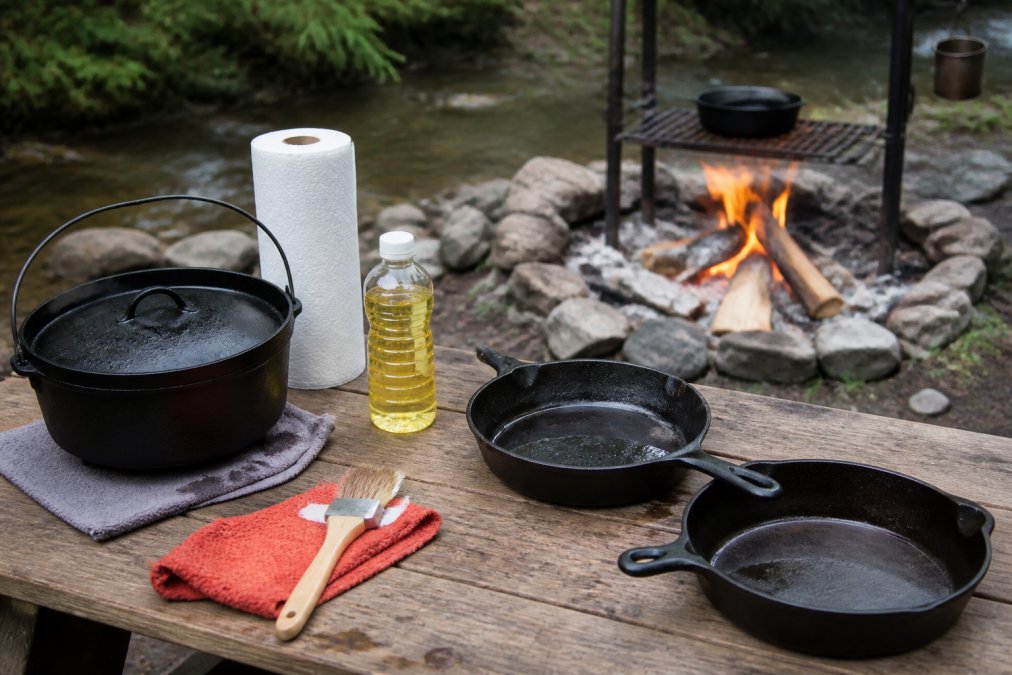
Pack coarse salt (roughly one cup for a week-long trip), several cloth or paper towels, a small bottle of vegetable or canola oil in a leak-proof container, a fine steel wool pad or abrasive cloth, a small brush for crevices, heat-resistant gloves or tongs, and a dry cloth for final drying. Store all supplies in a waterproof bag. Your maintenance kit should weigh under 500 grams and fit in a small stuff sack.
Storage Strategies During Multi-Week Trips and Humid Seasons
For trips longer than a week, establish a maintenance schedule: every three days, wipe each piece of cast iron with an oiled cloth. This takes five minutes total and prevents rust from establishing. Store pieces separately, not stacked, to allow air circulation.
During humid seasons when humidity exceeds 80 percent, increase maintenance frequency. Wipe cast iron daily, even if you're not cooking. For long-term storage between trips, clean and dry thoroughly, apply a light coat of oil, and store in a cool, dry location. Place a small container of food-grade silica gel near your cookware to absorb ambient moisture.
Common Mistakes to Avoid
Applying too much oil. A visible shine isn't protection, it's excess oil that attracts dust and moisture. Use so little oil that the pan looks almost dry.
Storing cast iron in sealed containers. Plastic boxes and sealed bags trap condensation. Use breathable storage like cloth bags or open boxes.
Cleaning with soap. At camp, soap removes seasoning and leaves residue that attracts moisture. Stick to salt and cloth.
Leaving wet cast iron unattended. Water causes rust within minutes. Dry immediately after any water contact.
Assuming home maintenance works at camp. Camp cooking requires field-specific techniques. Humidity, moisture exposure, and storage conditions are fundamentally different.
Keeping cast iron rust-free while camping comes down to three habits: clean immediately after cooking, dry thoroughly using heat or cloth, and store where condensation won't form overnight.
If you're serious about camp cooking, invest in quality cast iron built for field conditions. Browns Outpost's hand-crafted cast iron cookware, from the 10" Shallow Skillet to the 30 cm Dutch Oven, is designed for campfire use and backed by a lifetime warranty. The raw carbon steel construction means your seasoning builds with every use. Start with one piece that matches your cooking style, master the maintenance techniques in this guide, and you'll have reliable cookware for decades of camping trips.

Frequently Asked Questions
What is the best way to dry cast iron at a campsite?
Dry cast iron immediately after cleaning using residual heat from the camp stove or fire. Wipe the pan thoroughly with a paper towel or cloth to remove all moisture, then hold it near the heat source for 30-60 seconds to evaporate any remaining water. This prevents flash rust from forming. For extra protection in humid conditions, apply a thin coating of high smoke point oil while the pan is still warm, the heat helps the oil polymerize into a protective layer.
How do you store cast iron in a tent or trailer to prevent rust?
Store cast iron in the driest location possible, away from direct moisture and condensation. In tents, place pans in a sealed bag with food-grade silica packets to absorb humidity. In trailers or RVs, store them in a well-ventilated cabinet away from exterior walls where condensation forms. Never store cast iron while damp. A thin coating of oil before storage provides additional corrosion protection. Check pans daily during multi-week trips for signs of flash rust, especially in high-humidity environments.
Can you leave cast iron outside while camping?
Avoid leaving cast iron exposed outdoors, especially overnight. Moisture from dew, rain, and humidity accelerates oxidation and flash rust formation. Always store cast iron inside your tent, trailer, or under a protective cover. If you must leave it outside temporarily, place it upside down to prevent water pooling and cover it with a dry cloth. In wet or humid camping conditions, even brief outdoor exposure can trigger corrosion, so bring pans inside immediately after cooking and cleaning.
Should you re-season cast iron after every camping meal?
You don't need to fully re-season after every meal, but maintaining the protective layer is essential. After cleaning and drying, wipe a thin coating of oil onto the pan while it's still warm from the camp stove. This touch-up takes seconds and keeps the carbonized layer intact. Full seasoning (multiple oil layers baked on high heat) is best done at home before trips or after the season ends. Regular maintenance with light oil applications between meals prevents rust buildup and maintains the non-stick surface.
This article was written using GrandRanker