 listicle
Campfire Cooking Gear for Hunters: Essential Equipment
Table of Contents
- 1. The ANVIL Grill: Adjustable Height Control for Any Fire
- 2. Best Cast Iron for Camping: Cookware That Outlasts the Trip
- 3. How to Cook Wild Game Over a Fire: Field-to-Table Techniques
- 4. Campfire Cooking Safety Tips: Protecting Yourself and Your Gear
- 5. Lightweight Solutions for Backcountry Hunters
- 6. Maintaining Cast Iron in Remote Locations
- 7. Packing and Organizing Your Campfire Kitchen
- Conclusion
Last Updated: August 26, 2026
The ANVIL Grill: Adjustable Height Control for Any Fire
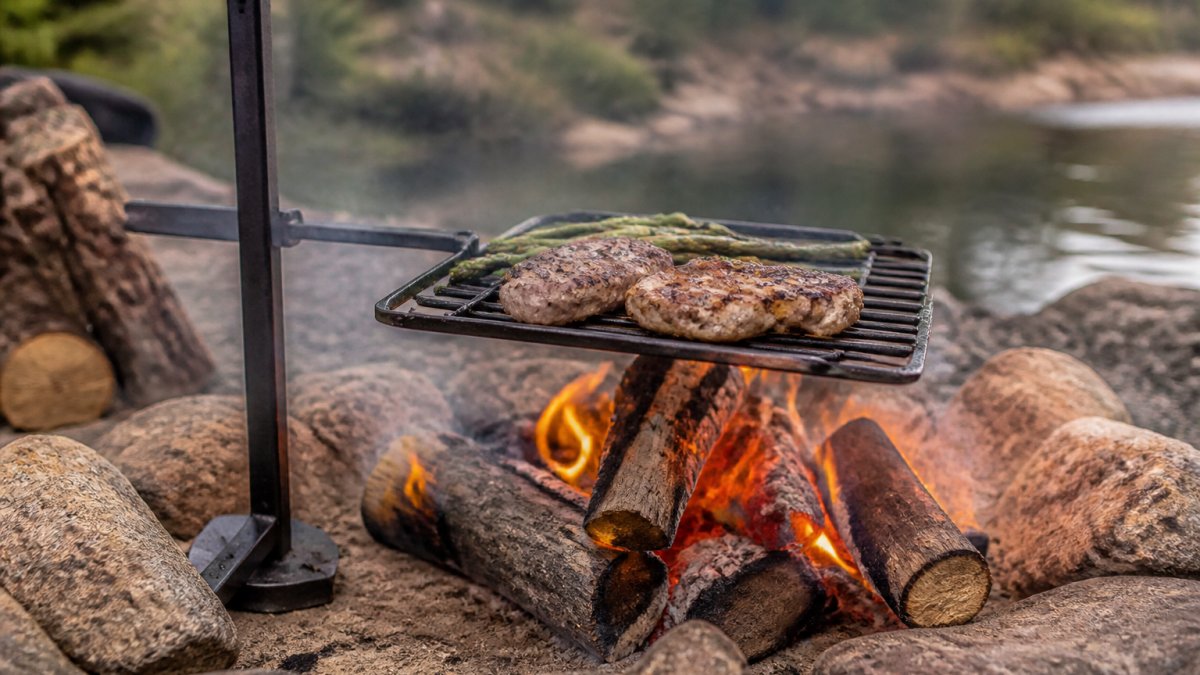
When cooking over open flame, you need control. A fixed-height grill forces you to choose between searing steaks or slow-smoking ribs. The ANVIL Grill solves this by letting you adjust the grate height precisely, dialing in exact heat exposure without moving the fire or cookware.
This adjustable campfire grill stakes directly into the ground over any fire, backyard bonfire, fire ring, or remote backcountry site. The heavy carbon steel grate handles direct flame without warping, and the design packs down for transport. Hand-crafted raw carbon steel construction is backed by a lifetime warranty.

The ANVIL costs $174.99 CAD and qualifies for free shipping over $75 CAD. For hunters cooking wild game at camp, this grill becomes the foundation of your campfire kitchen. A customer named Dan D. described it plainly: "I have never had a grill this strong and durable, it's super versatile and easily holds an entire rear quarter from a deer."
Care is straightforward: burn off residue after cooking while warm, brush clean, apply light oil, and store dry.
Best Cast Iron for Camping: Cookware That Outlasts the Trip
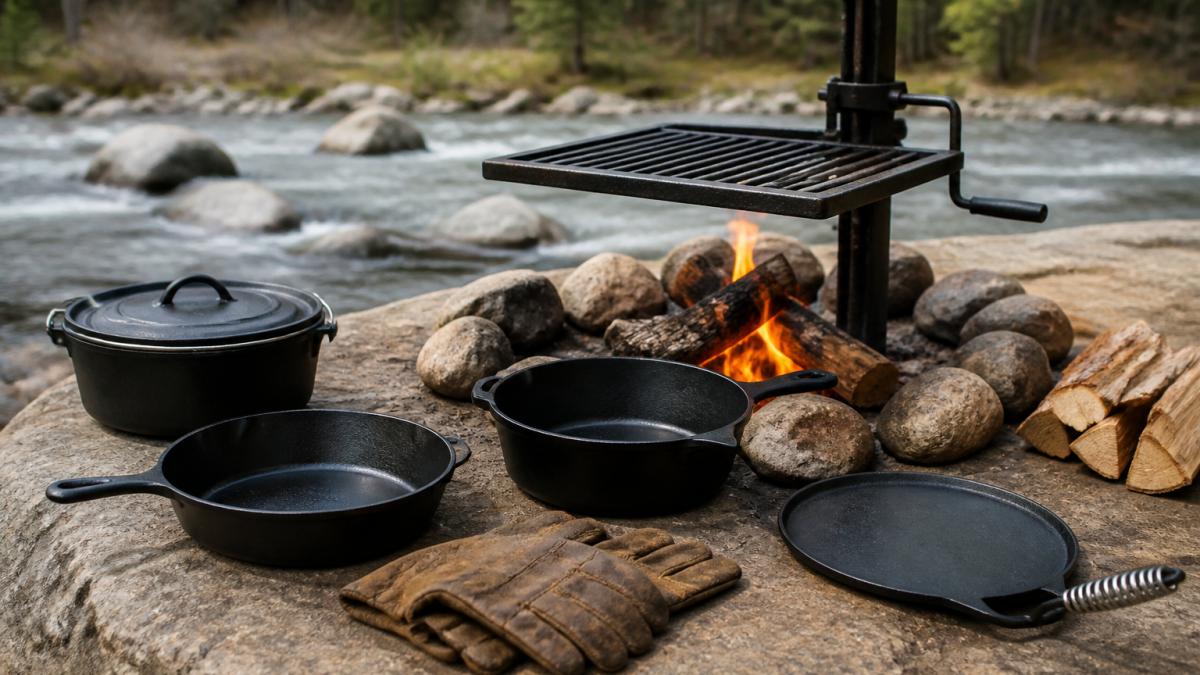
Cast iron distributes heat evenly, holds thermal efficiency better than any other material, and improves with use (peer-reviewed research). Browns Outpost cast iron is hand-cast raw carbon steel, arriving heavier and thicker than mass-produced alternatives. The lifetime warranty covers manufacturing defects.
Dutch Ovens for Slow-Cooked Meals
A dutch oven braises, stews, roasts, and bakes. When you load coals on the flanged lid, it becomes a genuine camp oven for bread, cobbler, or casserole. The thick cast walls spread heat evenly.

Browns Outpost offers two sizes: the 30 cm ($52.99 CAD) for feeding a full camp, and the 20 cm ($45.99 CAD) for backcountry trips where pack weight matters. The 30 cm comfortably serves 4-6 people. The 20 cm is sized for minimalist trips, still a real dutch oven without the footprint.
Both come with flanged lids that hold coals for camp-oven baking. The difference between a dutch oven and a cauldron is the flanged lid design: the dutch oven's lid is built specifically for coal placement on top, making it ideal for baking bread or pastries. A cauldron's reversible lid flips flat to become a griddle surface, making it more versatile for quick cooking but less ideal for baking.
Skillets and Griddles for Fast Cooking
Not every meal is a slow braise. The 25 cm shallow skillet ($32.99 CAD) is designed for fast cooking: bacon, eggs, pancakes. The shallow walls maximize heat contact for faster searing and better crust development.
For larger groups, the 40x23 cm griddle ($37.99 CAD) lets you cook pancakes on one side and eggs and bacon on the other simultaneously, eliminating cooking bottlenecks. The 3-piece fry pan set ($47.99 CAD) includes 25, 20, and 15 cm skillets that nest together for compact packing, covering everything from a single fried egg to a full skillet dinner.
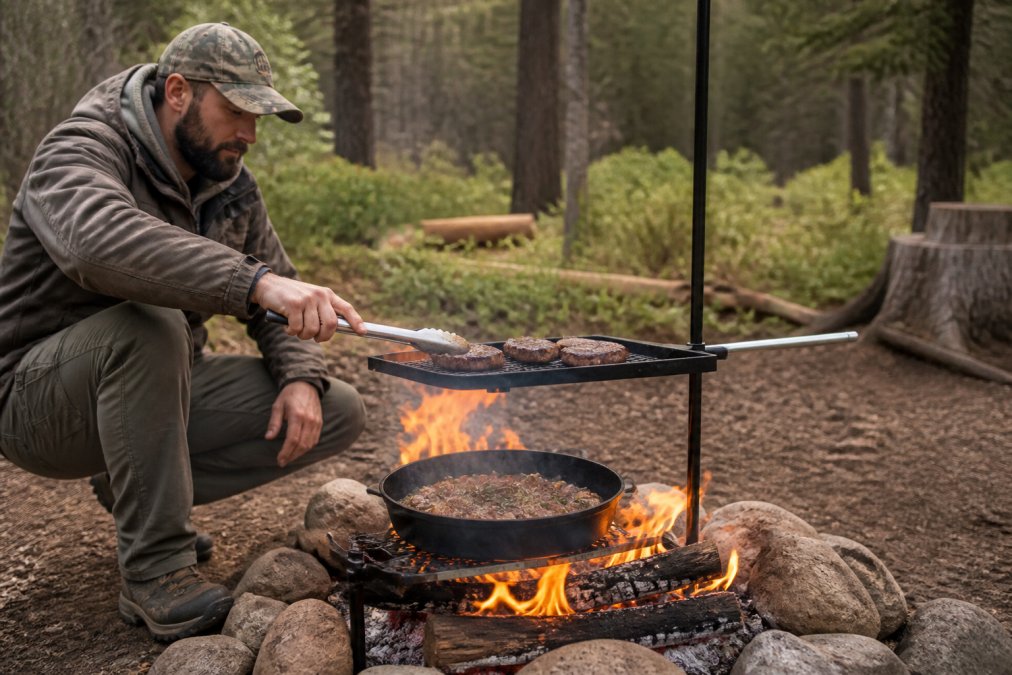
How to Cook Wild Game Over a Fire: Field-to-Table Techniques
Cooking wild game over an open fire requires different technique than domestic meat. Wild game is leaner and dries out faster without proper heat management.
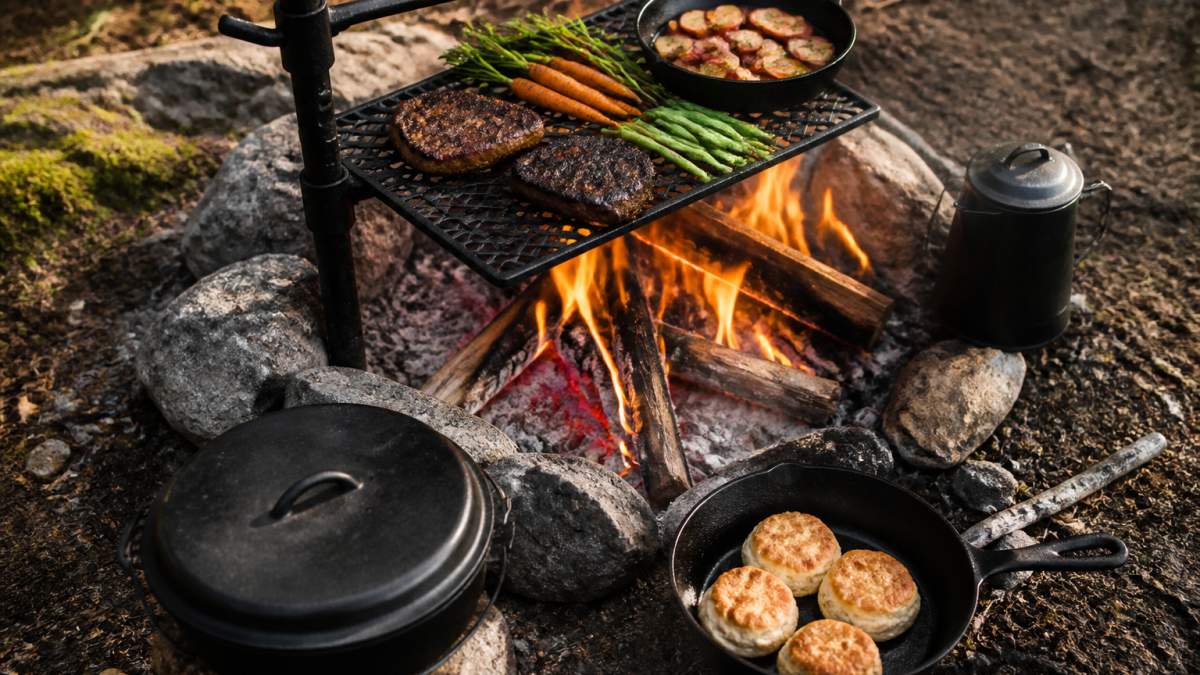
Start with a hot sear. Get your cast iron grill or skillet smoking over direct flame, then sear the meat hard on both sides for 2-3 minutes per side for a backstrap or venison steak. Once you've got color, move the meat to a cooler part of the fire. The ANVIL's adjustable height becomes invaluable here: raise the grate 15-20 cm above the coals and let the meat finish cooking slowly.
For larger cuts like a shoulder or hindquarter, use a dutch oven. Season the meat, sear it hard in the bottom of the pot, then add liquid (water, broth, or foraged wild plants), cover with the lid, and braise low and slow for 2-3 hours. Load coals on top of the flanged lid to create even heat from above and below.
Wild game is safest when cooked to medium or medium-well, 71-74°C internal temperature ([EXTERNAL_LINK: Health Canada food safety guidelines | canada.ca/en/health-canada]). Use an instant-read thermometer if available, or the touch test: when the meat feels as firm as the fleshy part of your palm when your thumb touches your middle finger, it's medium.
Campfire Cooking Safety Tips: Protecting Yourself and Your Gear
Open-fire cooking has real risks. Burns are the most obvious, but there's also smoke inhalation, fire spread, and gear damage. Always wear long sleeves and keep your hair tied back. Use long-handled utensils so your hands stay away from flame and heat radiation.
Establish a clear work zone around your fire. Keep water nearby, either a bucket or a camp stove for boiling water. A cooking fire should be hot coals with minimal flame, not a raging bonfire. Flames are unpredictable; coals give steady, controllable heat.
Never leave cookware unattended over an active fire. Cast iron conducts heat intensely; a handle left in the sun or near flame will burn you badly. Use a leather glove or cloth to handle hot cookware.
For the gear itself: don't pour cold water on hot cookware; thermal shock can cause cracking or warping. Let it cool slightly, then wash with warm water. Store gear in a dry place between trips; wet storage is how rust starts. Before each trip, inspect your grill and cookware for damage.
Lightweight Solutions for Backcountry Hunters
When hiking miles into remote terrain, every ounce matters. The smart approach is choosing gear that's both light and capable, not cutting weight by cutting capability.
The 20 cm dutch oven ($45.99 CAD) is the backcountry choice. It weighs less than the 30 cm but still handles real cooking for one or two people. Pair it with the 15 cm skillet from the 3-piece set and you've got fast and slow cooking in under 1.8 kilograms of cast iron. The 25 cm shallow skillet ($32.99 CAD) is another solid choice: it heats faster than a deep dutch oven and still gives you the thermal mass that makes cast iron worth carrying.

The ANVIL grill ($174.99 CAD) is heavier than a lightweight camp grill, but it's built to last a lifetime. For hunters planning to use the same gear for decades, the weight investment pays off in durability. The grate disassembles from the stake for transport, packing smaller than expected.
Consider nesting cookware. The 3-piece fry pan set nests together. A cauldron with reversible lid serves double duty as both pot and griddle, saving weight compared to carrying separate pieces.
Real weight-to-calorie efficiency comes from cooking technique. A dutch oven braise uses less fuel than a skillet because it holds heat and cooks slowly. A griddle cooks multiple items at once, meaning fewer cooking cycles and less fuel burned.
Maintaining Cast Iron in Remote Locations
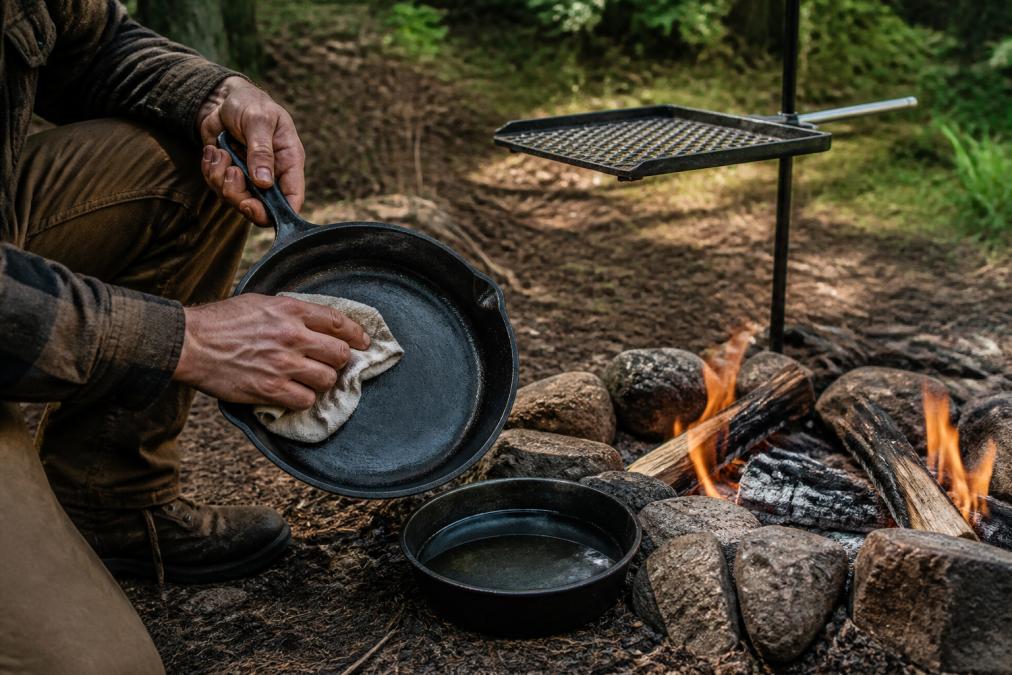
Cast iron maintenance in the field is simpler than most people think, but requires consistency. The enemy isn't rust, it's water spotting and incomplete drying.
After cooking, let the cookware cool slightly. Wash with hot water only, no soap, which strips seasoning. Use a cloth or soft brush to remove food residue. Dry immediately on the fire or camp stove for 30 seconds. This critical step evaporates all water, preventing spotting and oxidation.
Once dry, apply a thin coat of neutral oil (vegetable, canola, or any cooking oil) while the cookware is still warm. This re-oils the seasoning layer and protects it between uses. Wipe off excess oil with a clean cloth.
Store your cookware in a dry place. If camping in wet conditions, wrap it in cloth or pack it in a dry bag. Never store wet cast iron. Between trips, keep it in a cool, dry location.
If you notice rust spots in the field, scrub the spot with a scouring pad or fine steel wool while warm, then re-oil immediately. A little rust is cosmetic and doesn't affect cooking performance. With basic care, wash, dry on heat, oil, store dry, your cookware will outlast you. Cast iron improves with age as seasoning layers build up.
Packing and Organizing Your Campfire Kitchen
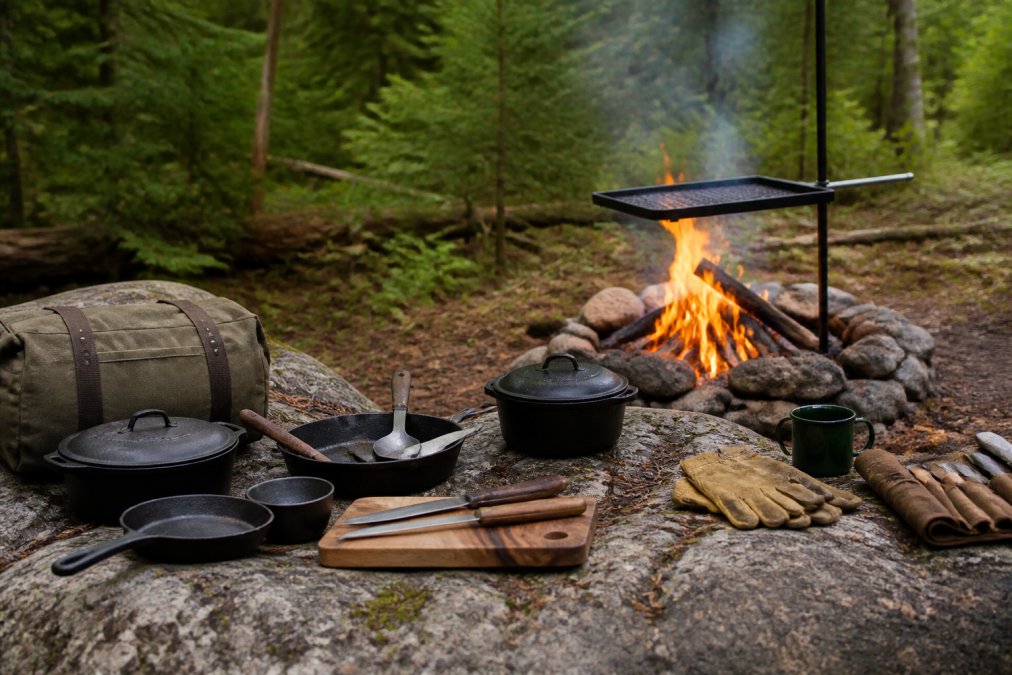
How you pack your gear determines cooking efficiency and space usage. Start by identifying what you actually use. Most hunters overpack cookware they never touch. Instead, commit to a specific menu before the trip, then pack exactly what you need.
Group your cookware by function. Fast cooking (skillets, griddles) goes in one area. Slow cooking (dutch ovens, cauldrons) in another. Utensils, cleaning supplies, and fire tools in a third.
Use nesting cookware to save space. The 3-piece fry pan set stacks together. A dutch oven with its lid fits inside a larger cauldron. The ANVIL grill disassembles into the stake and grate, packing flat.
For remote trips, consider a camp kitchen box, a weatherproof container holding your cookware, utensils, and fire tools in one organized unit. Label compartments so everyone knows where things go.
Pack cast iron last, on top of heavier gear, so you're not crushing it under your tent. Wrap each piece in cloth to prevent clanging and protect the seasoning layer from moisture.
| Gear Type | Best For | Weight Range | Nesting Potential |
|---|---|---|---|
| 20 cm Dutch Oven | Backcountry, 1-2 people | ~1.4 kg | High (fits in larger pots) |
| 30 cm Dutch Oven | Base camp, 4-6 people | ~2.7 kg | Moderate |
| 25 cm Shallow Skillet | Fast cooking, searing | ~1.1 kg | High (nests with other skillets) |
| 40x23 cm Griddle | Large groups, pancakes | ~1.8 kg | Low (large surface area) |
| 3-Piece Fry Pan Set | Versatility, multiple sizes | ~2.3 kg | High (nests together) |
| ANVIL Grill | Any fire, all cooking styles | ~3.6 kg | Moderate (disassembles) |
Campfire cooking gear for hunters isn't about having the most tools, it's about having the right tools that actually work over an open fire. The ANVIL Grill gives you heat control that transforms how you cook wild game, while hand-cast raw carbon steel cookware from Browns Outpost outlasts cheaper alternatives by decades. With proper maintenance habits, your gear becomes better with every trip. Start with the ANVIL and a 30 cm dutch oven, add skillets as your cooking evolves, and you've built a campfire kitchen that handles everything from quick breakfast to slow-cooked venison braise. Get started with Browns Outpost and build gear that's built to last a lifetime.
Frequently Asked Questions
Q: What equipment do I need to cook with while camping?
A: Start with a heat source (campfire grill or portable stove), cookware (cast iron skillet or Dutch oven), utensils (tongs, spatula, long-handled spoon), and cleaning supplies (biodegradable soap, scouring pad, cloth). The ANVIL Grill ($174.99) provides adjustable height control for any fire, while a 25 cm skillet ($32.99) or 30 cm Dutch oven ($52.99) covers most meals. Add a griddle for group breakfasts or a cauldron for one-pot stews. For backcountry trips, prioritize nesting cookware and lightweight options to reduce pack weight.
Q: What is the best material for campfire cookware?
A: Cast iron is the gold standard for campfire cooking. It distributes heat evenly, retains thermal energy longer than aluminum or titanium, and improves with use as seasoning builds. Cast iron handles direct flame and coal contact without warping, making it ideal for hunters who cook over open fires. Stainless steel works for boiling water or making coffee, but lacks the heat retention needed for searing or slow-cooking wild game. Anodized aluminum is lightweight for backcountry trips but doesn't match cast iron's durability or cooking performance.
Q: How do you pack cooking gear for a backcountry hunt?
A: Choose nesting cookware to save space: the 3-piece fry pan set ($47.99) stacks together, and a 20 cm Dutch oven ($45.99) fits inside a larger skillet. Wrap cast iron in cloth to prevent rust and protect your pack. Pack a compact portable stove and fuel canister as backup to your campfire cooking. Include a mess kit with essential utensils, biodegradable soap, and a scouring pad. Aim to keep your cooking kit under 2-3 kg by selecting multi-use pieces like a cauldron with reversible lid that works as both pot and griddle.
Q: How does your cast iron hold up better in wet backcountry conditions?
A: Browns Outpost cast iron is hand-crafted raw carbon steel, cast heavy to resist corrosion from moisture and cold weather. The key is post-use maintenance: dry immediately after washing (never leave water sitting), apply a thin coat of neutral oil while warm, and store in a dry spot in your pack. Unlike lighter aluminum or titanium options, the thermal mass of cast iron actually performs better in cold weather because it holds heat longer once heated. The lifetime warranty covers manufacturing defects, ensuring your gear survives years of backcountry use if properly maintained.
Q: Can I use the ANVIL Grill on a small backyard setup, or is it overkill for family cooking?
A: The ANVIL ($174.99) is built for any fire size, from a small backyard ring to a full campsite fire pit. Its adjustable height lets you dial in precise heat for searing steaks low and hot or slow-smoking ribs high and cool, control you can't get from a fixed grill. For weekend family cooking, this versatility means one grill handles breakfast eggs, lunch burgers, and dinner roasts without repositioning or waiting for coals to cool. It stakes into the ground anywhere and packs down flat, so it's equally at home in a backyard or at a remote hunting camp.
This article was written using GrandRanker