 how-to
How to Clean Outdoor Grill: Step-by-Step Guide
Table of Contents
- What You'll Need Before Starting
- Safety Precautions Before Cleaning Your Grill
- How to Clean Outdoor Grill Grates
- How to Clean Cast Iron Grill Grates
- Cleaning Exterior Surfaces and Interior Firebox
- Best Grill Cleaning Tools and Natural Solutions
- How Often to Clean Barbecue and Maintenance Schedule
- Post-Cleaning Rust Prevention and Seasoning
Last Updated: August 11, 2026
What You'll Need Before Starting
Before you grab a brush and start scrubbing, gather the right supplies. A proper setup makes the difference between a frustrating experience and one where the work actually gets done. You'll want a sturdy wire brush designed for grill grates, this is non-negotiable. A long-handled brush keeps your hands away from heat, which matters whether you're cleaning a cold grill or burning off residue on a hot one.
Beyond the brush, stock up on basic household items: white vinegar, baking soda, and soapy water. These natural cleaners handle most buildup without harsh chemicals. If you're dealing with stubborn grease or carbonized residue that won't budge, a degreaser rated for outdoor use works, but start with gentler options first. Have a bucket or spray bottle ready, along with microfiber cloths or old rags for wiping down surfaces.
Safety gear matters more than most people realize. Heat-resistant gloves protect your hands if you're cleaning while the grill is warm. Eye protection keeps debris out of your eyes when you're scrubbing aggressively. A dust mask helps if you're dealing with heavy carbon buildup that creates fine particles. Finally, have a garden hose nearby for rinsing, you'll need water pressure to clear away loosened debris and cleaning solutions.
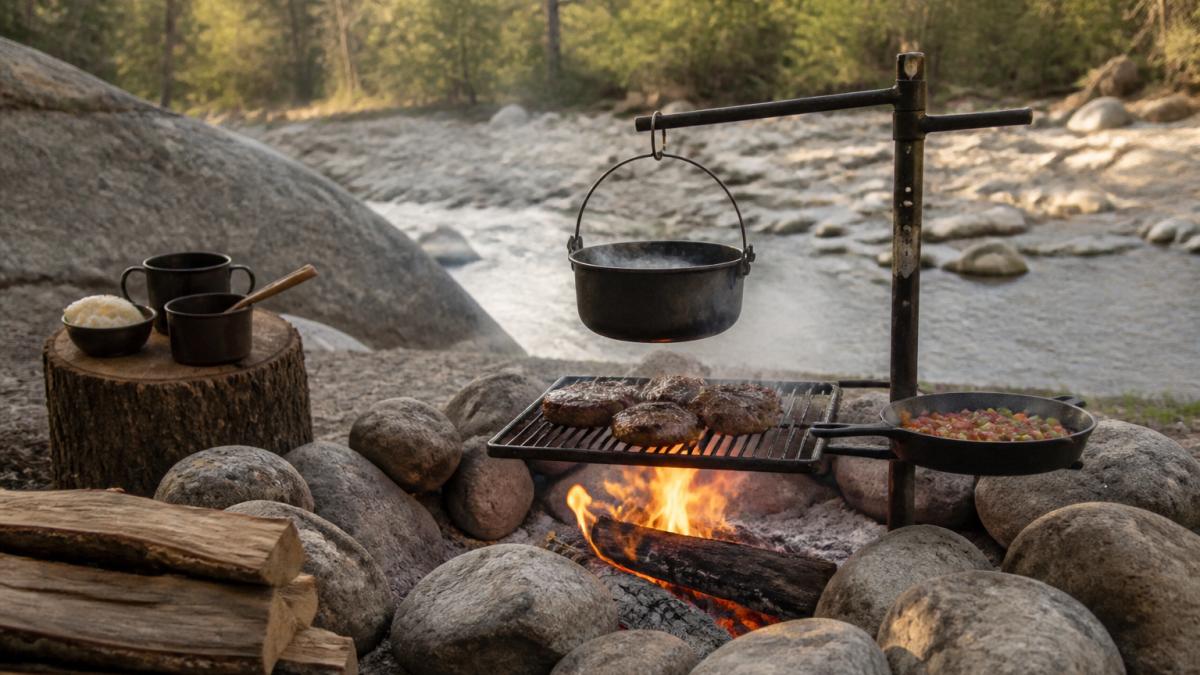
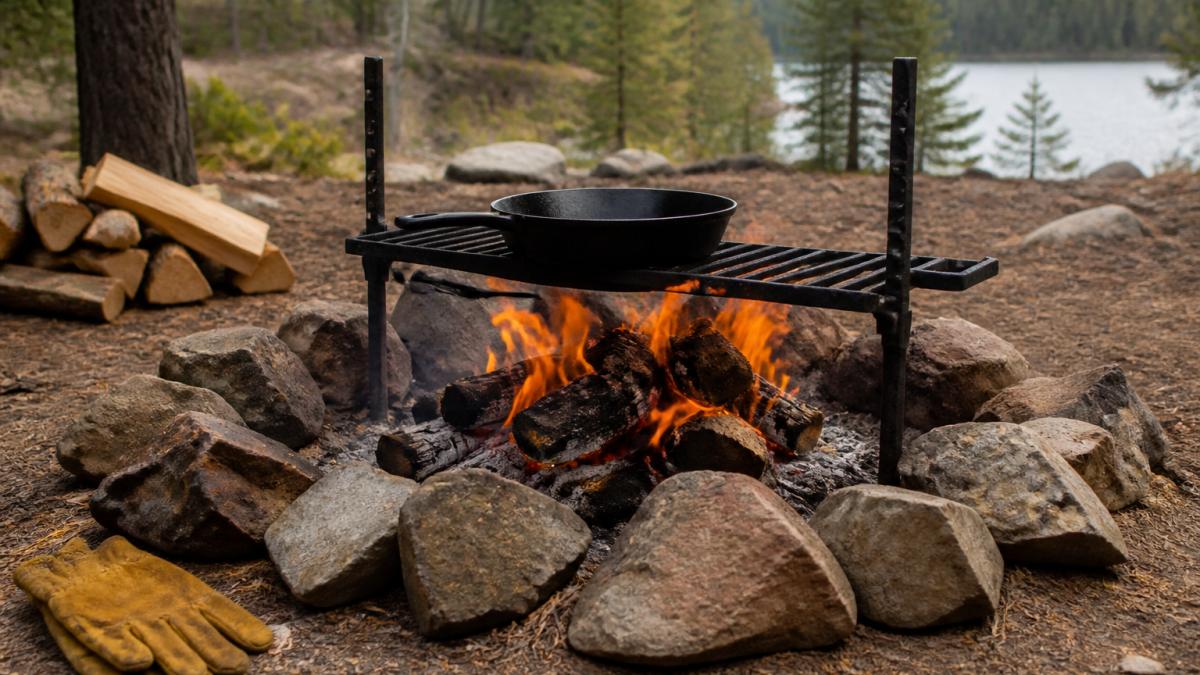
If you own a quality grill like the ANVIL from Browns Outpost, you're working with hand-crafted raw carbon steel that rewards proper care. The adjustable design means you can position the grates for easier access during cleaning, which saves time and effort.

Safety Precautions Before Cleaning Your Grill
Never underestimate the importance of safety when cleaning outdoor grill equipment. The biggest mistake people make is rushing into cleaning without thinking through the hazards. A cold grill is always your safest starting point, never clean a hot grill unless you're burning off residue intentionally, which is a different process.
Check your grill's condition before you begin. Look for any loose parts, damaged grates, or structural issues. If something looks compromised, address it before cleaning. Ensure the grill is in a stable position and won't tip if you apply pressure while scrubbing. On uneven ground, this becomes critical, a grill that shifts during cleaning can cause injury.
Ventilation matters when using chemical degreasers. Work outdoors in open air, never in an enclosed space like a garage or shed. Fumes from chemical cleaners can accumulate quickly in confined areas. If you're using vinegar or baking soda solutions, ventilation is less critical, but fresh air is still preferable. Wear gloves to protect your skin from both the cleaning agents and any sharp edges on grates or the firebox.
Keep children and pets away from your workspace. Cleaning supplies, especially chemical degreasers, are hazardous if ingested. Sharp grates and tools create injury risks. Establish a clear zone around your grill and keep people out until you've finished and rinsed everything thoroughly.
How to Clean Outdoor Grill Grates
Cleaning grill grates properly removes grease buildup and carbonized residue that accumulates from cooking. The process varies slightly depending on whether you're doing routine maintenance or tackling a grill that hasn't been cleaned in months.
Burning Off Residue
The fastest way to break down stuck-on food and grease is to burn it off. Heat your grill to high temperature for 10-15 minutes with the lid closed. The intense heat carbonizes buildup on the grates, turning it to ash that's easier to scrub away. This method works exceptionally well for routine cleaning after cooking sessions.
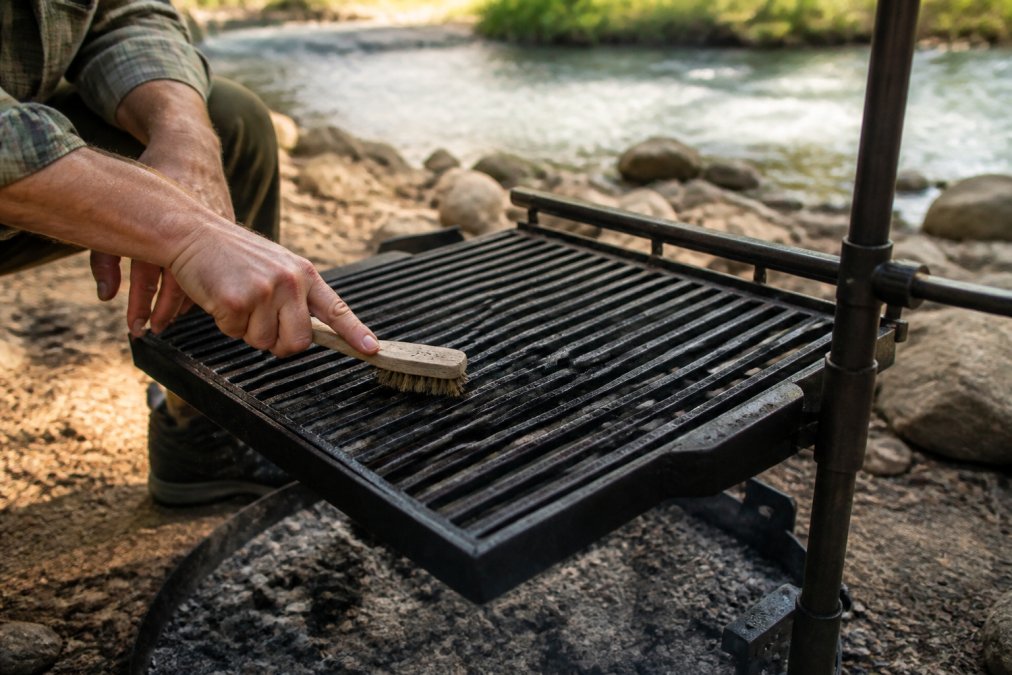
Once the grill cools slightly, hot enough to handle briefly but not scorching, use your wire brush to scrub the grates vigorously. Work the brush back and forth across the surface, applying firm pressure. The carbonized residue should flake off in chunks. Pay special attention to the spaces between grates where grease tends to pool. Keep scrubbing until most of the black buildup is gone.
Scrubbing and Soaking
For stubborn buildup that burning alone won't remove, soak the grates. Remove them from the grill if possible, most modern grills have grates that lift out easily. Fill a bathtub or large container with hot water and add a cup of white vinegar and half a cup of baking soda. The mixture will fizz; that's the chemical reaction breaking down grease.
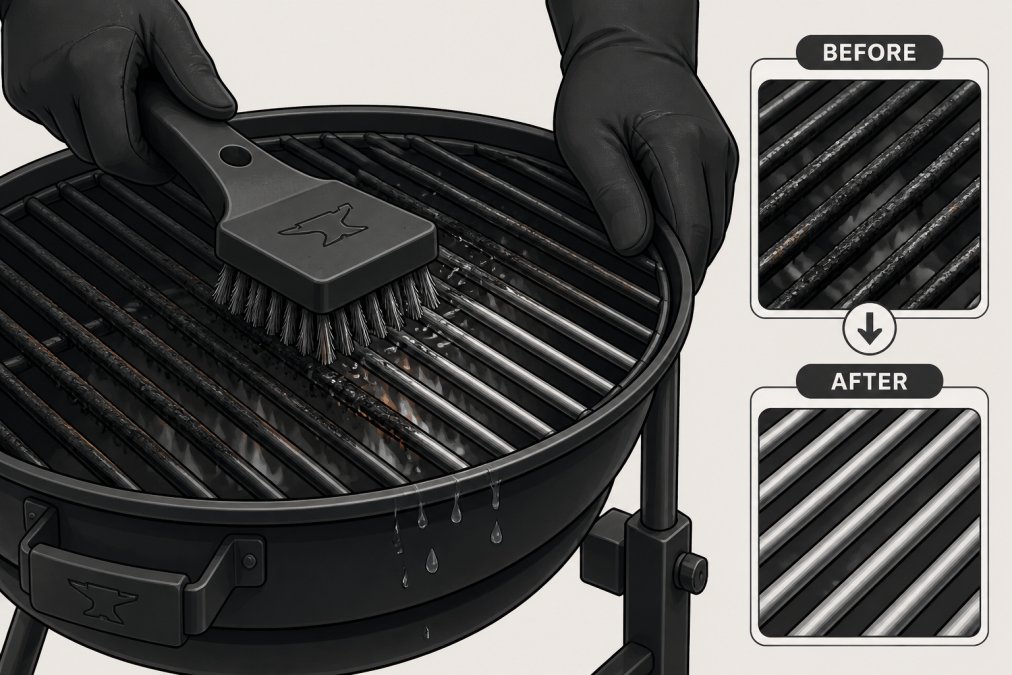
Let the grates soak for at least 30 minutes, longer if the buildup is heavy. After soaking, scrub them with your wire brush under running water. The vinegar and baking soda soften the grease, making it easier to remove. Rinse thoroughly with clean water until no vinegar smell remains, residual vinegar can affect the taste of food cooked on the grates.
If you don't want to remove the grates, create a cleaning paste with baking soda and water. Apply it directly to the grates, let it sit for 15 minutes, then scrub with your wire brush and rinse. This approach works well for grills where grate removal is difficult or for routine maintenance between deeper cleans.
How to Clean Cast Iron Grill Grates
Cast iron grates require a gentler approach than other materials because you're protecting the seasoning, the built-up layer of oil that prevents rust and improves non-stick properties. Aggressive scrubbing can damage this protective layer, so adjust your technique accordingly.
Start by burning off loose debris at high heat for 10 minutes, just as you would with other grate materials. Once cooled slightly, use your wire brush, but apply less pressure than you would on stainless steel or porcelain-enameled grates. Focus on removing food particles and loose carbon rather than trying to strip the surface clean.
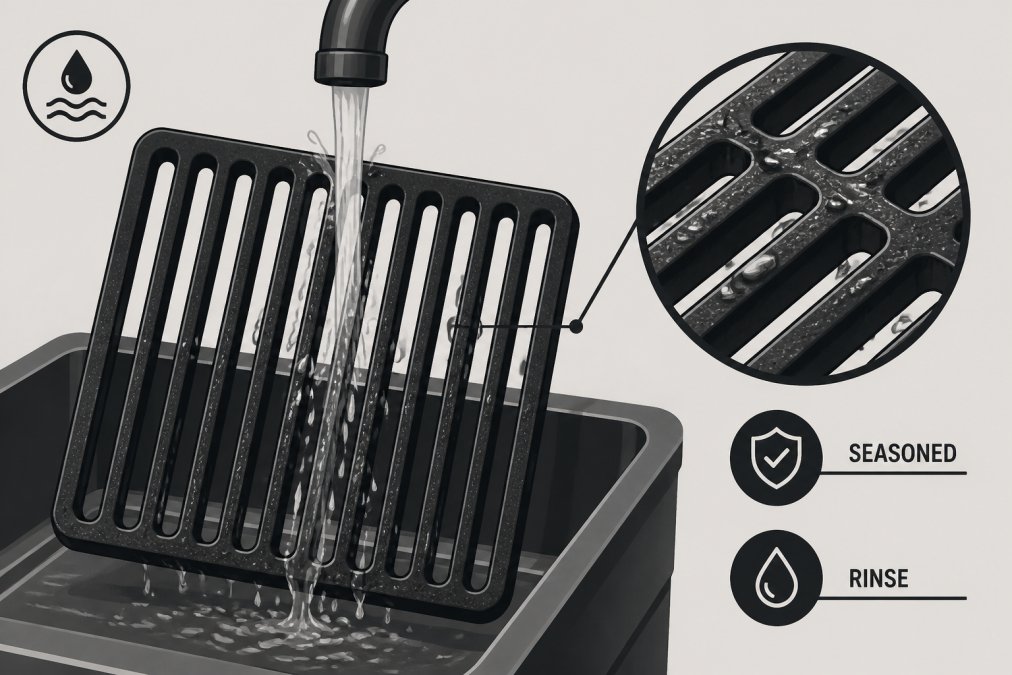
For stubborn spots, make a paste of baking soda and water, avoid soaking cast iron for extended periods, as prolonged water exposure promotes rust. Apply the paste, let it sit for 10 minutes, then gently scrub and rinse immediately. Dry the grates thoroughly with a cloth as soon as you finish rinsing. Any moisture left on cast iron will begin the rusting process within hours.
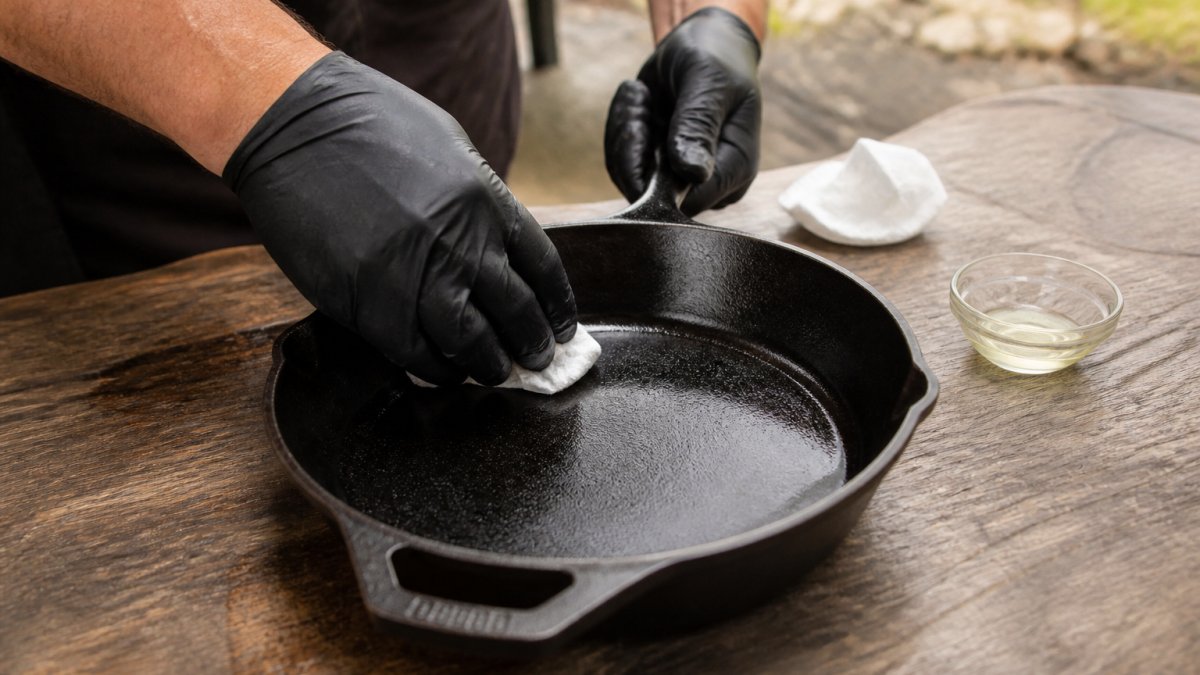
After cleaning, apply a thin coat of high-heat cooking oil to the grates while they're still warm. This restores the seasoning and protects against rust. Use an oil with a high smoke point like avocado oil or grapeseed oil. Wipe away excess oil with a clean cloth, you want a thin, even coating, not a thick layer that will become sticky.
Cleaning Exterior Surfaces and Interior Firebox
The exterior of your grill accumulates dust, pollen, and weathering that affects both appearance and function. For stainless steel surfaces, use a microfiber cloth with a small amount of white vinegar. Wipe in the direction of the grain to avoid streaking. For painted or powder-coated exteriors, use soapy water and a soft cloth, avoid abrasive scrubbing that can damage the finish.
The interior firebox collects ash, grease drippings, and burnt food particles. These accumulate over time and can affect heat distribution and airflow. Remove the grates and flavorizer bars (if your grill has them) to access the firebox. Use a grill brush or stiff-bristled brush to scrape buildup from the sides and bottom. Push debris toward the front opening where you can sweep it out with a small broom or dustpan.
For grease buildup on the interior walls, spray with a degreaser rated for grills, let it sit for 10 minutes, then scrub and rinse. Some grills have removable drip trays underneath, empty these completely and wash with soapy water. A clean drip tray improves drainage and prevents grease from accumulating in hard-to-reach areas.
Check heat plates or flavorizer bars for blockages. These components distribute heat evenly across the cooking surface. Grease and debris can clog them, causing uneven heating. Clean them thoroughly with your wire brush and rinse before reinstalling.
Best Grill Cleaning Tools and Natural Solutions
The right tools make grill cleaning faster and more effective. Understanding the difference between natural and chemical cleaners helps you choose the approach that fits your situation and values.
Wire Brushes and Abrasive Tools
A quality wire brush is the foundation of grill cleaning. Brass bristles work well on most grate materials and are less likely to damage surfaces than steel bristles. Steel bristles are more aggressive and suit heavily carbonized buildup, but they can scratch stainless steel or porcelain-enameled surfaces if you're not careful.
Long-handled brushes keep your hands at a safe distance from heat and sharp edges. Look for brushes with ergonomic handles that won't slip when wet. Replace your brush when bristles become worn or bent, a worn brush is less effective and more likely to leave bristles behind on your grates.
Abrasive sponges and steel wool work for smaller areas or detailed cleaning, but they're more labor-intensive than a brush for large grate surfaces. Save them for targeting specific spots or for grills with intricate designs where a brush can't reach effectively.
Natural Cleaners vs. Chemical Degreasers
White vinegar and baking soda are the gold standard for natural grill cleaning. Vinegar's acidity cuts through grease, while baking soda provides mild abrasive action. Together, they create a fizzing reaction that breaks down stubborn buildup without toxic fumes. This combination works on most grill materials and is safe for cast iron when used properly.
Lemon juice works similarly to vinegar and adds a pleasant scent. Salt can be used as a gentle abrasive when combined with oil or water. These household items are inexpensive, non-toxic, and readily available. For routine cleaning, natural solutions handle the job effectively.
Chemical degreasers are stronger and work faster on heavy grease buildup. They're necessary when natural cleaners can't break down years of accumulated residue. Choose degreasers labeled specifically for grills or outdoor cooking equipment, general-purpose degreasers may contain ingredients that aren't safe for food-contact surfaces. Always follow manufacturer instructions, wear gloves, and ensure excellent ventilation.
The trade-off is straightforward: natural cleaners are safer and gentler but require more elbow grease and time. Chemical degreasers work faster but require more caution during use and rinsing. For regular maintenance, natural solutions suffice. For deep cleaning or heavily neglected grills, chemical degreasers earn their place in your toolkit.
How Often to Clean Barbecue and Maintenance Schedule
Cleaning frequency depends on how often you use your grill and the conditions where it's stored. A grill used weekly needs more frequent attention than one used monthly. The environment matters too, coastal areas with salt air, regions with high humidity, or places where grills sit unused for months all affect how quickly buildup accumulates.
Establish a routine based on usage. After each cooking session, do a quick burn-off: heat the grill to high for 5-10 minutes with the lid closed, then brush the grates while warm. This removes food particles and prevents grease from hardening. It takes 10 minutes and prevents the need for deeper cleaning as often.
Deep clean your grill monthly during active cooking season. This involves removing grates, soaking them if needed, scrubbing the firebox, and cleaning all exterior surfaces. If you use your grill year-round, maintain this schedule. During off-season months when you're using it infrequently, every 6-8 weeks is sufficient.
Seasonal deep cleaning is essential before and after extended storage. Before storing your grill for winter, clean it thoroughly, dry all components completely, and apply protective oil to metal surfaces. When you bring it out in spring, repeat the process. This prevents rust and ensures your grill is ready for the cooking season.
| Cleaning Frequency | Task | Time Required |
|---|---|---|
| After each use | Burn off and brush grates | 10 minutes |
| Weekly (if used frequently) | Quick grate scrub and exterior wipe | 15 minutes |
| Monthly | Deep clean grates, firebox, and exterior | 45-60 minutes |
| Seasonally | Pre-storage and post-storage cleaning | 60-90 minutes |
Post-Cleaning Rust Prevention and Seasoning
Rust prevention is where most grill maintenance fails. People clean thoroughly, then leave the grill exposed to the elements without protection. Rust develops rapidly on bare metal, especially in humid climates or near salt water.
Immediately after cleaning, apply a protective coating to all metal surfaces. For cast iron grates, use high-heat cooking oil as described earlier. For stainless steel, use a stainless steel protectant or a thin coat of mineral oil. For the grill's exterior and interior surfaces, apply a grill-specific protectant spray designed to create a water-resistant barrier.
Cover your grill when not in use. A fitted grill cover protects against rain, dust, and UV damage. Ensure the grill is completely dry before covering it, trapping moisture under a cover accelerates rust. In winter or during extended storage, store your grill in a dry location if possible. If outdoor storage is your only option, a heavy-duty cover is essential.
For cast iron specifically, seasoning is maintenance, not just cleaning. Each time you cook, the heat and oil build up the protective layer. Each time you clean, you're partially removing it. Restoring seasoning after cleaning ensures the protection continues. Over time, well-maintained cast iron becomes more non-stick and rust-resistant, not less.
If rust appears despite your efforts, address it immediately. Light surface rust can be removed with a wire brush and re-seasoning. Heavy rust that pits the metal surface requires grate replacement. Catching rust early prevents the problem from spreading.
For grills made with quality materials like the hand-crafted carbon steel used in Browns Outpost's ANVIL adjustable campfire grill, rust prevention is straightforward because the material responds well to seasoning. A thin coat of oil after each cleaning maintains the surface for years of reliable use. The lifetime warranty backs the durability of these grills, which speaks to how well they hold up when maintained properly.
Cleaning your outdoor grill regularly extends its lifespan and ensures better cooking results. A well-maintained grill heats evenly, cooks food faster, and produces better flavor. The work you invest in cleaning pays dividends every time you cook. If you're serious about outdoor cooking, investing in a quality grill built to last, like the ANVIL from Browns Outpost, makes maintenance easier and more rewarding. Get started with a grill designed for durability and enjoy professional culinary results for a lifetime.
Frequently Asked Questions
What is the best way to clean an outdoor grill?
The most effective method combines heat and mechanical scrubbing. Start by burning off residue at high temperature for 15 minutes, then scrub the grill grates with a wire brush while still warm. For stubborn grease, soak grates in soapy water or use a natural paste of baking soda and white vinegar. Rinse thoroughly and dry to prevent rust. This approach works for gas, charcoal, and cast iron grills.
How often should you deep clean your barbecue?
Deep clean your grill every 3 to 6 months, depending on use frequency. For regular users, aim for seasonal deep cleaning before and after heavy summer use. Perform light cleaning after every cook: scrape grates while warm and wipe surfaces. Cast iron requires more frequent seasoning maintenance. This schedule prevents grease buildup and extends grill lifespan significantly.
Can I use Dawn dish soap to clean my grill?
Yes, dish soap like Dawn works well for grill cleaning. Mix it with warm water to create a soapy solution for soaking grates and scrubbing surfaces. It effectively cuts through grease without damaging most grill materials. Rinse thoroughly afterward to remove all soap residue. For cast iron, use sparingly and dry immediately to prevent rust formation.
What should you never use to clean a grill?
Avoid oven cleaner, steel wool, and harsh abrasive materials that can damage grill surfaces and leave toxic residue. Never use acidic cleaners on stainless steel without proper rinsing. Avoid high-pressure washers that can strip seasoning from cast iron. Don't use bleach or ammonia-based products. Stick to wire brushes, baking soda, vinegar, and mild degreasers for safe, effective cleaning.
This article was written using GrandRanker