 how-to
How to Reseason Cast Iron Pans Step by Step
Table of Contents
- Why Reseasoning Cast Iron Matters
- Preparation and Cleaning Before Reseasoning
- Removing Rust and Old Seasoning
- How to Clean Cast Iron After Cooking
- Best Oil for Seasoning Cast Iron
- How to Reseason Cast Iron in the Oven
- Troubleshooting Sticky or Gummy Surfaces
- Restoration vs. Maintenance Seasoning
Last Updated: October 1, 2026
Why Reseasoning Cast Iron Matters
A well-seasoned cast iron skillet is non-stick without chemicals. It's also built to last decades. But seasoning breaks down over time, especially with heavy use or outdoor cooking.
Reseasoning restores that protective layer. It prevents rust. It brings back the non-stick surface you need for cooking eggs, searing meat, or baking bread over a campfire.
The good news: reseasoning cast iron is straightforward. You don't need special tools or expensive products. Just oil, heat, and time.
At Browns Outpost, we've helped thousands of outdoor cooks maintain their cast iron through seasons of heavy use. Whether your pan shows rust spots or just needs a refresh, the process is the same. This guide walks you through every step to reseason cast iron properly.

Preparation and Cleaning Before Reseasoning
Before you commit to a full reseasoning cycle, assess your pan's current condition. This determines whether you need a quick maintenance touch-up or a full restoration.
Assessing Your Pan's Condition
Signs your pan needs maintenance oiling only (not full reseasoning):
- The surface is smooth and mostly non-stick
- There are no rust spots or discoloration
- Food releases reasonably well when cooking
- The pan looks darker and well-developed
Signs your pan needs full restoration:
- Visible rust spots, even small ones
- A dull, grey, or patchy appearance
- Food sticks significantly during cooking
- The surface feels rough or pitted
- Heavy, flaking buildup that won't wash away
- The pan has been neglected or stored in damp conditions
If your pan shows restoration signs, proceed with the full oven reseasoning method below. If it's in good shape and just needs refreshing, you can skip ahead to the maintenance routine in the daily care section.
Cleaning the Pan Before Reseasoning
Start with a clean surface. Remove food residue, old grease, and any loose debris.
What you'll need:
- Hot water
- Dish brush or cloth
- Dry towel or cloth
- Heat source (stovetop or campfire)
Steps:
Rinse the pan under hot water. Use a stiff brush to scrub away stuck-on food. A small amount of mild dish soap is acceptable at this stage; you're cleaning, not cooking. Rinse thoroughly to remove all soap residue.
Dry the pan completely. Use a clean towel and make sure no moisture remains. Water left on the surface will cause rust and interfere with oil adhesion during reseasoning.
Heat the pan on a stovetop or over coals for 2-3 minutes. This drives off any remaining moisture and opens the pores of the cast iron, allowing the seasoning oil to bond more effectively. You'll see steam rise from the surface.
Let it cool just enough to handle safely. The pan should be warm, not hot, around 50-60°C (120-140°F) is ideal. A warm pan helps the oil absorb more evenly during the reseasoning process.
Your cast iron is now ready for the next step.
Removing Rust and Old Seasoning
If your pan has rust spots or heavily carbonized buildup, you'll need to remove it first.
For light surface rust:
Make a paste with coarse salt and a small amount of oil. Use a cloth to scrub the rusty areas in circular motions. The salt acts as an abrasive without damaging the cast iron.
Wipe away the paste and dry thoroughly.
For heavy rust or thick carbonized buildup:
Use steel wool or a stiff brush. Scrub in circular motions until the rust is gone and the surface is smooth.
For very stubborn buildup, you can use a wire brush attachment on a drill, but go slowly. You don't want to remove too much metal.
After scrubbing, wash with hot water, dry completely, and heat the pan briefly to remove all moisture.
How to Clean Cast Iron After Cooking
Proper cleaning between uses keeps rust away and extends the life of your seasoning.
Immediate after-cook routine:
Let the pan cool slightly. While it's still warm, rinse under hot water.
Use a soft brush or cloth to remove food particles. A small amount of mild soap is okay now; the seasoning is thick enough to handle it. Rinse thoroughly.
Dry completely with a clean cloth. Moisture is your enemy.
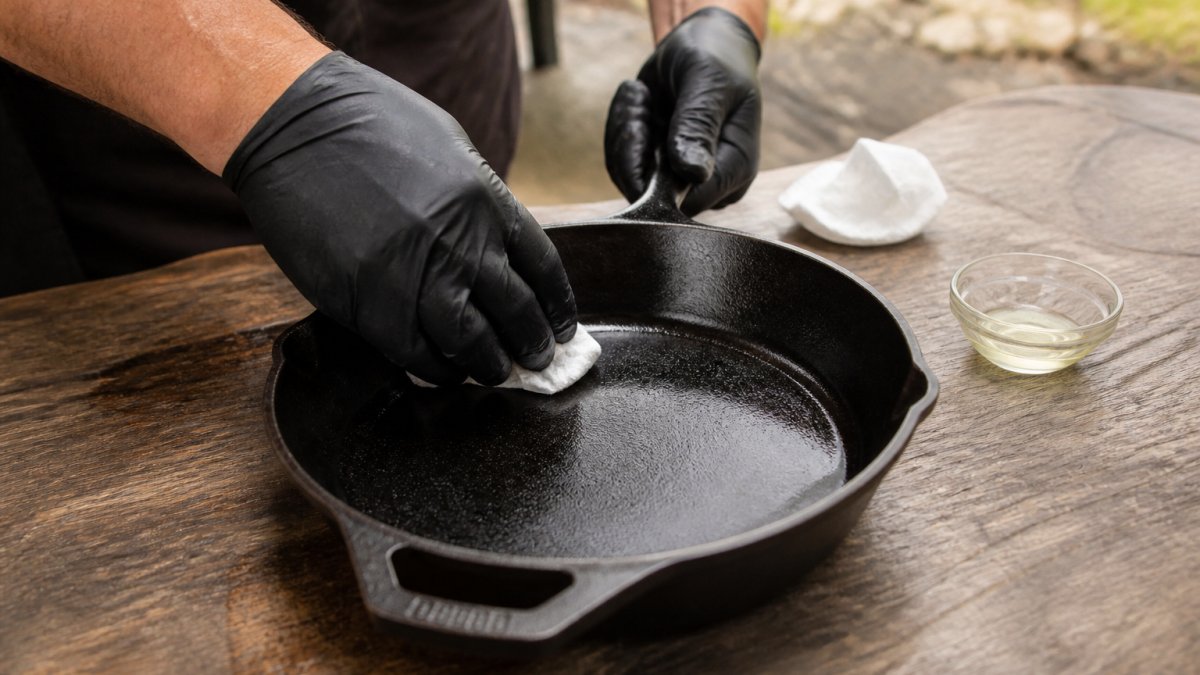
Apply a thin coat of neutral oil while the pan is still warm. The warmth helps the oil absorb into the surface. Buff away any excess with a lint-free cloth.
This simple routine after every use keeps your seasoning strong and prevents rust from forming.
Best Oil for Seasoning Cast Iron
Not all oils work equally well for seasoning. The best choice depends on smoke point and how the oil polymerizes.
Smoke point is the temperature at which an oil breaks down and smokes. For seasoning cast iron, you want an oil with a high smoke point so it can withstand oven temperatures without burning off.
Smoke Point Comparison
| Oil Type | Smoke Point | Best For | Notes |
|---|---|---|---|
| Grapeseed oil | 420°F (216°C) | Oven seasoning | Clean finish, high heat tolerance |
| Vegetable oil | 400°F (204°C) | General seasoning | Affordable, accessible |
| Canola oil | 400°F (204°C) | Maintenance | Budget-friendly option |
| Flaxseed oil | 225°F (107°C) | Light touch-ups | Lower smoke point, avoid oven use |
| Avocado oil | 520°F (271°C) | Deep oven seasoning | Excellent polymerization, premium cost |
The best choice for oven reseasoning is grapeseed oil or avocado oil. Both have high smoke points and polymerize cleanly, leaving a smooth, non-stick surface without sticky buildup.
For maintenance oiling after cooking, vegetable or canola oil works fine. You're not heating it to high temperatures, so smoke point matters less.
Avoid butter, coconut oil, and specialty oils. They break down too easily or leave residue.
How to Reseason Cast Iron in the Oven
This is the core reseasoning method. It builds durable, even layers of seasoning across the entire pan.
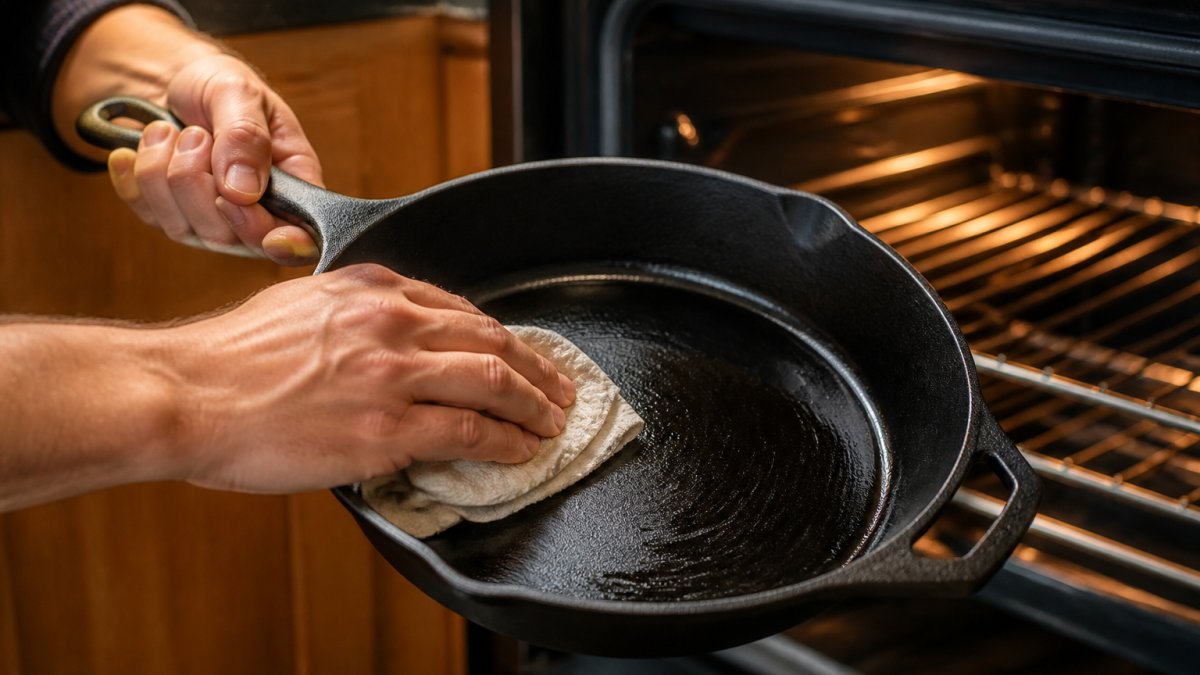
What you'll need:
- Cast iron pan (cleaned and dried)
- High smoke-point oil (grapeseed or avocado)
- Lint-free cloth or paper towel
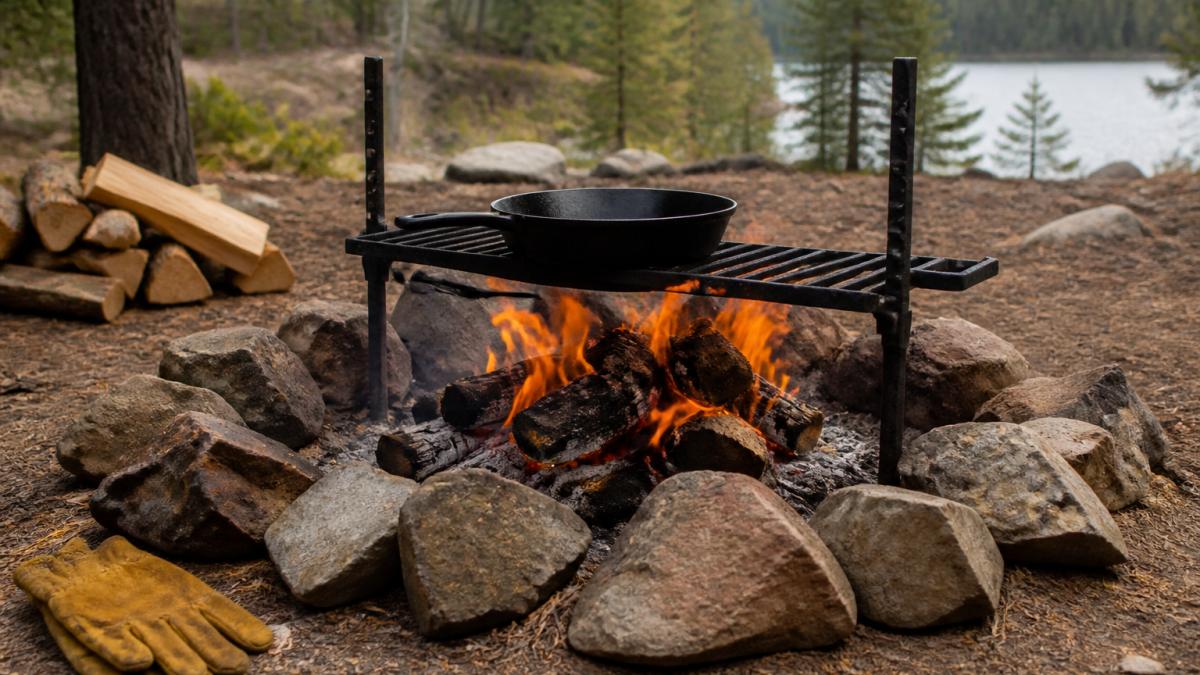
- Oven or campfire with a grill grate
- Baking sheet or foil
Steps:
Apply a very thin layer of oil to the entire pan. Use a cloth and rub it in completely. The layer should be so thin you can barely see it; excess oil creates sticky, gummy surfaces.
Buff away any remaining oil with a clean cloth. This step is critical. Most people apply too much oil. Less is better.
Temperature and Baking Duration
Bake for 30 minutes at 200°C (400°F). This temperature is hot enough to polymerize the oil without burning it off.
Why this temperature works:
- 200°C is above the smoke point of most oils, so polymerization happens quickly
- It's hot enough to create a durable bond without damaging the cast iron
- Most home ovens handle this temperature reliably
Building Multiple Layers
One coat of seasoning helps. Multiple coats create a stronger, more non-stick surface.
Troubleshooting Sticky or Gummy Surfaces
A sticky or gummy cast iron pan is one of the most common reseasoning mistakes. The good news: it's fixable, and understanding why it happened prevents it next time.
Why Your Pan Feels Sticky
Stickiness occurs when too much oil is applied during reseasoning. Excess oil doesn't fully polymerize in the oven; instead, it cures into a tacky, uneven layer that feels gummy to the touch and can flake or peel during cooking.
Fixing a Sticky Pan: Three Approaches
For light stickiness (pan is slightly tacky but still usable):
Place the pan back in the oven at 200°C (400°F) for another 30-60 minutes. This can help the remaining oil polymerize. If it remains sticky, you may need to scrub it lightly with steel wool and reapply a very thin layer of oil, buffing thoroughly before baking again.
For severe stickiness (thick, flaking, or heavily compromised layer):
You'll need to strip the pan and start over. Scrub the pan vigorously with steel wool or a wire brush to remove the sticky layer. Once clean and dry, proceed with the oven reseasoning method, ensuring you apply only a micro-thin layer of oil and buff it until it appears almost dry.
Prevention: The Buffing Rule
The single best way to avoid stickiness is aggressive buffing. After applying oil, use a clean, lint-free cloth and buff the pan until it looks almost dry. If you can see any shine or wetness, buff more.
Restoration vs. Maintenance Seasoning
These are two different processes. Understanding the difference saves time and effort.
Restoration seasoning is the oven method described above. Use it when:
- The pan has lost its non-stick surface
- Rust has damaged the seasoning layer
- You're bringing an old or neglected pan back to life
Maintenance seasoning is a lighter process performed after each use. It involves a quick wipe-down with oil and a light buffing. This helps maintain the existing seasoning and prevent rust.
Frequently Asked Questions
What is the easiest way to reseason cast iron?
The oven method is the simplest and most reliable. Clean your pan thoroughly with hot water, dry it completely, apply a very thin layer of high smoke-point oil, wipe off excess, and bake at 200°C for one hour. The key is using minimal oil—too much creates a sticky, gummy surface instead of a smooth, durable patina. Repeat this process 3-6 times for a strong non-stick finish.
How do you know if cast iron is properly seasoned?
A well-seasoned cast iron pan has a dark, smooth, semi-gloss surface with no sticky residue. Food should release cleanly without sticking, and the surface should feel slick when dry. If your pan is dull, rough, or sticky, it needs reseasoning. Proper seasoning develops through multiple thin layers of polymerization, not a single thick coat.
What are the best oils for seasoning cast iron?
Vegetable oil, grapeseed oil, and flaxseed oil are excellent choices because they have high smoke points (around 200°C or higher) and polymerize effectively. Avoid butter and olive oil—they have low smoke points and create uneven seasoning. Grapeseed oil is particularly popular for cast iron restoration because it produces a durable, non-stick carbonized layer without becoming sticky.
Can you reseason cast iron if it has rust?
Yes, but you must remove the rust first. Use steel wool or coarse salt with a small amount of oil to scrub away rust spots, then wash thoroughly with warm soapy water and dry completely. Once the rust is gone, follow the standard reseasoning process. For severe rust, you may need multiple cleaning sessions before reseasoning begins.