 how-to
How to Control Heat Over Open Fire: A 2026 Guide
Table of Contents
- Why Coals Beat Flames for Controlling Heat
- Building a Fire That Gives You Control
- How to Set Up Campfire Cooking Heat Zones
- Cooking Over Hot Coals: Moving and Managing Heat
- Using an Adjustable Campfire Grill for Precise Heat
- Troubleshooting Temperature Swings and Flare-Ups
- Conclusion
- Frequently Asked Questions
Last Updated: October 14, 2026
Why Coals Beat Flames for Controlling Heat
Learning how to control heat over open fire starts with one shift in thinking: stop cooking over flames and start cooking over coals. Flames are unpredictable and scorch food fast. Hot coals give you steady, even heat you can actually manage.
At Browns Outpost, we build gear for exactly this kind of cooking, so we watch how people handle a fire. The pattern is always the same. New cooks chase the biggest flame. Experienced cooks wait for embers.
Here's why coals win:
- Steady output. Coals release heat slowly and evenly, with no sudden spikes.
- No flare-ups. Dripping fat on flames causes burning. Coals don't flare the same way.
- Real control. You can move, spread, or bank coals to change heat in seconds.
- Better flavor. Cooking over embers gives clean smoke, not soot.
The Canadian Centre for Occupational Health and Safety guide to fire safety makes the same point about fire behavior: the hot fuel bed, not the visible flame, drives sustained heat.
Building a Fire That Gives You Control
A controllable fire starts with the right structure. Build small, build in layers, and keep airflow open.
Start with a bed of ash and a few small pieces of kindling. Add larger firewood in a loose crisscross so oxygen can move through. Fire needs airflow, and a smothered fire gives you smoke instead of heat.
A common mistake is piling wood too tightly. That traps the fire, and you end up with a smoky, weak heat source. Leave gaps.
Once the wood burns down, you have a coal bed. This is your cooking fuel. From here, every heat adjustment comes from how you arrange those coals.
Choosing the Best Wood for Campfire Cooking
Hardwoods make the best wood for campfire cooking because they burn longer and produce denser coals. Softwoods like pine burn hot and fast, then leave you with ash and nothing to cook on.
Look for maple, oak, birch, or fruit woods. Seasoned wood, meaning dry wood, burns cleaner and gives more usable coals. Wet or green wood smokes heavily and struggles to hold heat.
Avoid treated or painted lumber entirely. It releases chemicals you don't want near food.
Reading the Burn Stages: Flame, Ember, Coal
A fire moves through three stages, and each one cooks differently.
- Flame stage. Bright fire, high heat, hard to control. Good for boiling, bad for searing.
- Ember stage. Flames drop, coals glow bright orange. This is peak cooking heat.
- Coal stage. Coals dim to a steady red-gray. Gentle, even heat for slow cooking.
Most open-fire cooking happens in the ember and coal stages. Wait for the flames to settle before you put food on.
How to Set Up Campfire Cooking Heat Zones
Campfire cooking heat zones let you cook several things at once without burning any of them. You rake your coals into separate areas, each with a different heat level, then move food between them as needed.
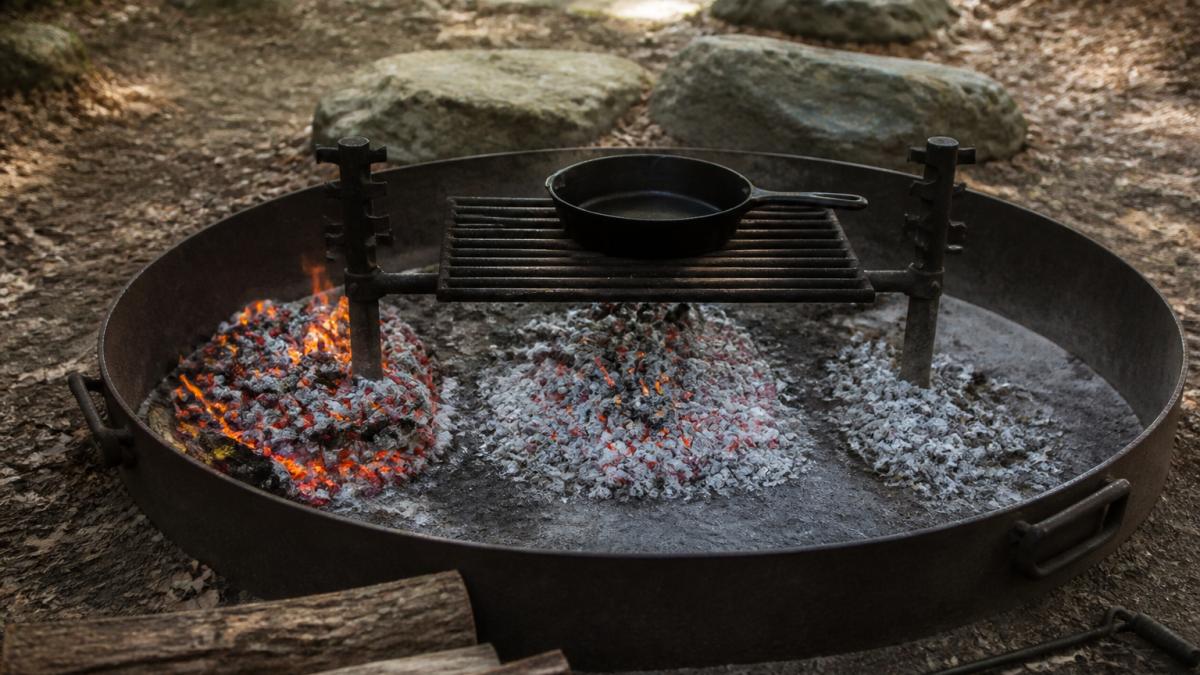
To build zones, use a fire poker or shovel to move coals:
- High heat zone. A deep, piled coal bed. Best for searing and quick cooking.
- Medium heat zone. An even, single layer of coals. Good for most cooking.
- Low heat zone. A thin scatter of coals. Ideal for simmering and keeping food warm.
Leave one area with no coals at all. That's your safe zone for resting food or pulling a pan off the heat fast.
The Low, Medium, and High Heat Setup
A simple hand test tells you which zone is which. Hold your palm at cooking height above the coals and count.
| Heat Level | Coal Depth | Hand Test | Best For |
|---|---|---|---|
| High | Deep pile, 3+ layers | 2-3 seconds | Searing, steak, quick veg |
| Medium | Even single layer | 4-5 seconds | Most cooking, eggs, fish |
| Low | Thin scatter | 6-8 seconds | Simmering, warming, slow cook |
This is the part most guides skip. You don't need a thermometer to read your fire. You need a consistent test and a bit of practice.
Cooking Over Hot Coals: Moving and Managing Heat
Cooking over hot coals is really a game of moving heat, not fighting it. When a pan runs too hot, you don't turn down a dial. You move coals or move the pan.
Here's how to adjust on the fly:
The Lifetime Warranty ANVIL Grill →
- Add coals under the pan to raise heat fast.
- Remove coals with tongs or a shovel to drop heat.
- Spread coals to lower intensity across a wider area.
- Bank coals to one side to create a hot spot and a cool zone.
- Rotate cookware a quarter turn to even out hot spots.
Manage the flames too. If flames jump up, pull coals apart and let them settle. You want embers doing the work, not fire.
Using an Adjustable Campfire Grill for Precise Heat
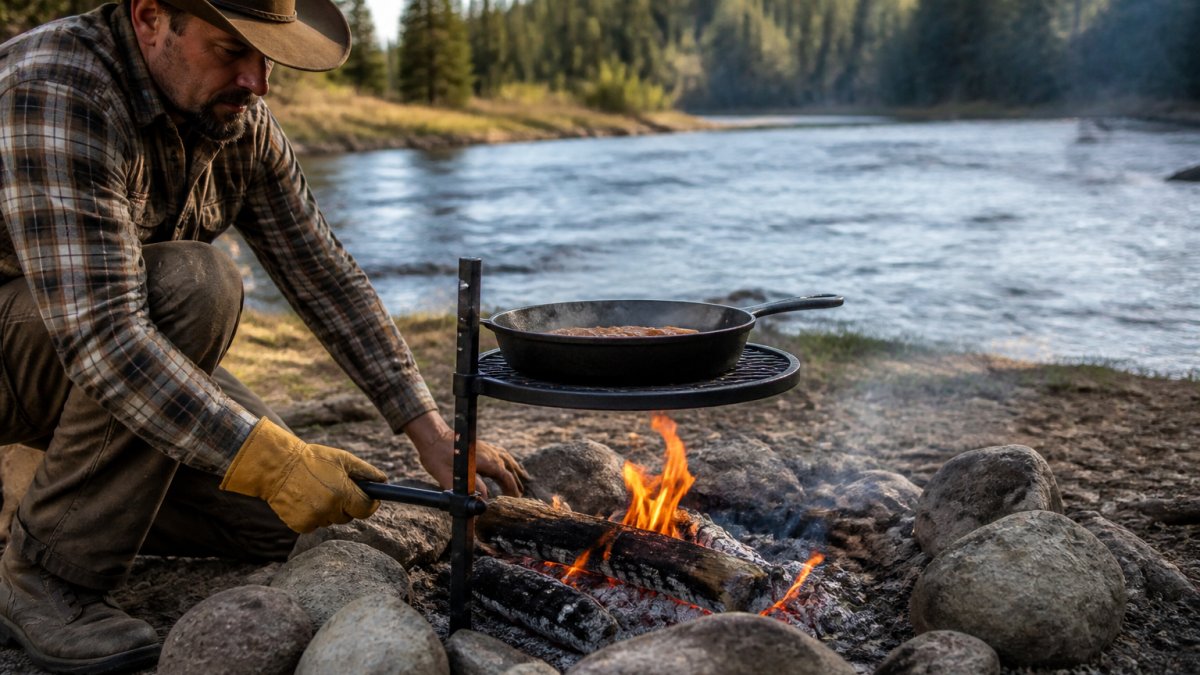
An adjustable campfire grill gives you a second control lever: height. Instead of only moving coals, you raise or lower the grate to fine-tune heat.
This is where our ANVIL Grill earns its keep. The grate slides and locks along a heavy carbon steel stake, so you set the height above the flame and lock it in. Low for high heat. High for low-and-slow. One grill, every technique.

It stakes into the ground over a firepit, campsite ring, or backyard bonfire, no setup required, and packs down flat for transport. The surface is acid-bathed and pre-seasoned with olive oil, so there are no chemical coatings.
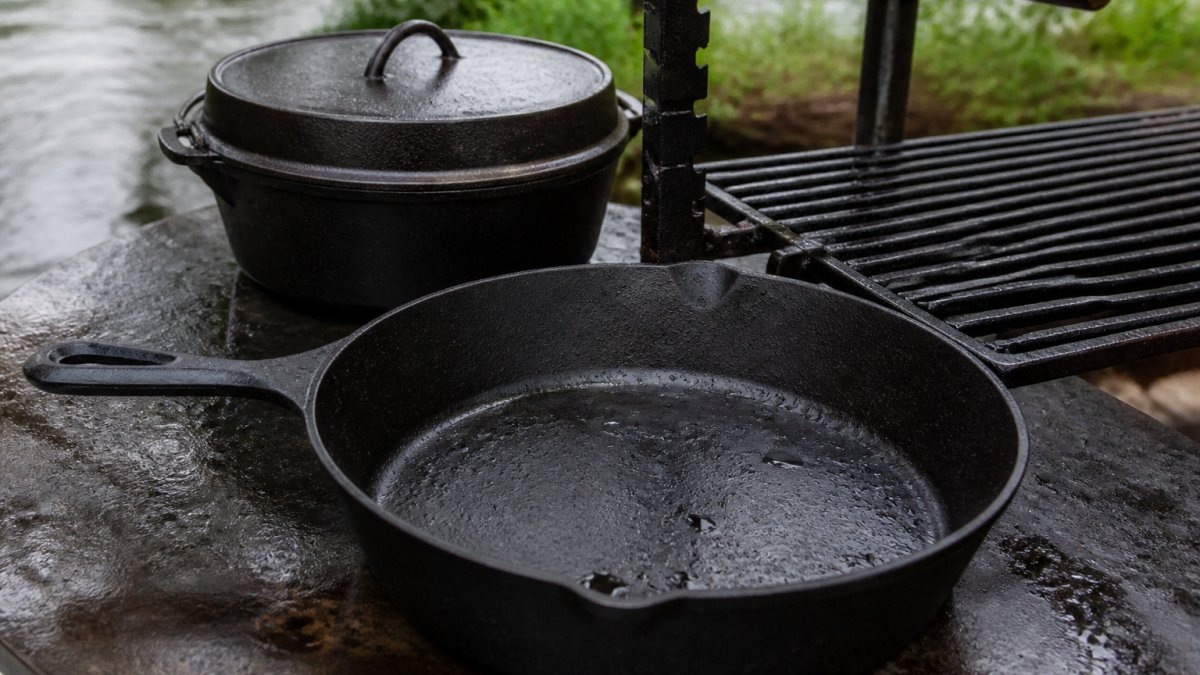
Pair it with cast iron and you get pro results over the fire. Our 10" Shallow Skillet heats fast and sears hard, while the 12" Dutch Oven holds steady, even heat for braises and camp-oven baking with coals on the flanged lid. Every piece is backed by a lifetime warranty.


The Parks Canada guidance on campfire safety is worth a read before your next trip. It covers building, managing, and fully putting out a fire.
Troubleshooting Temperature Swings and Flare-Ups
Most temperature problems trace back to four variables: fuel, airflow, moisture, and wind. Diagnose the cause before you react, because the fix for a weak fire and the fix for a flare-up pull in opposite directions.
Diagnose by symptom
| Symptom | Likely Cause | Fix |
|---|---|---|
| Sudden flare-up | Fat or marinade hitting open flame | Move food to the cool zone, close the lid or tent with foil, let flames die to embers |
| Fire running hot and fast | Softwood or small kindling still flaming | Stop adding fuel, spread coals, wait for the flame stage to pass |
| Heat dropping mid-cook | Coals past peak, ash smothering the bed | Rake ash aside, add 3-5 fresh coals to the edge of the bed |
| Smoky, weak fire | Wet or green wood, or wood packed too tight | Open the stack, add dry seasoned wood, stoke gently |
| Uneven cooking | Coal bed not level, or wind pushing heat to one side | Rake coals level, rotate the pan, add a windbreak |
| Food cooking too fast on one side | Hot spot from a thick coal pile | Spread that pile, rotate the cookware a quarter turn every few minutes |
| Food cooking too slow overall | Grate too high, or too few coals | Lower the grate one notch, add coals under the pan |
Fuel type and burn stage matter more than most cooks think
Hardwoods like maple, oak, and birch burn longer and hold denser coals, so heat stays steady for 30-45 minutes before you need to top up. Softwoods like pine and spruce flame hot and collapse to ash in 15-20 minutes, which is why a pine fire swings hard and then dies.
Burn stage drives the swing too. The flame stage is the hottest and least stable. The ember stage is the steadiest. The coal stage is the coolest and longest-lasting. If your heat is jumping around, you are probably still cooking in the flame stage. Wait for the embers.
Wind and weather
Wind is the most underrated cause of temperature swings. A steady breeze pulls heat off the coal bed and pushes it to one side of the pan. A gusty wind makes the fire breathe in cycles, so heat pulses. Build a windbreak from rocks, a log, or a folding screen on the windward side, and expect to add 2-3 coals to compensate for the heat the wind carries away.
Cold ambient temperatures do the same thing. A fire that reads medium at 20 C (68 F) will read closer to low at 0 C (32 F). Plan for it.
Flare-up control
Fat flare-ups are the most common open-fire problem. Three habits prevent most of them:
- Trim fat before cooking. A 1 cm (0.4 in) fat cap is plenty for flavor without feeding the flames.
- Keep a cool zone open. Any pan or piece of food that starts to flare goes there immediately.
- Use a lid or foil tent. Cutting oxygen to the flame kills it in seconds without dumping water on the coals.
Keep a spray bottle of water for small flare-ups, but spray the flame, not the coal bed. Dumping water on coals drops your cooking heat for 10-15 minutes. Never use a chemical fire starter on a cooking fire, and never add lighter fluid to a live bed.
Conclusion
The hardest part of open-fire cooking isn't the fire. It's patience. Waiting for coals instead of flames, then reading your heat zones before you commit the food.
We built Browns Outpost gear to make that control easier. The ANVIL Grill adjusts in height so you dial in exact heat, our cast iron holds temperature like it should, and every piece carries a lifetime warranty with free shipping over $75 CAD.
Get started with Browns Outpost and cook over the fire with the control of a real kitchen.
Frequently Asked Questions
How do you control the heat when cooking over an open fire?
Control heat by managing coals, not flames. Rake hot coals into zones of different thickness, move coals to or from under your cookware, and raise or lower your grate. An adjustable campfire grill like the ANVIL lets you change height without touching the fire. For quick drops, spread coals apart; to increase heat, bank them closer together.
Is it better to cook over flames or hot coals?
Hot coals give steadier, more predictable heat than flames. Flames fluctuate with every gust of wind and deposit soot on your food. Wait until the fire burns down to a bed of glowing embers, usually 20 to 30 minutes after lighting. Coals radiate even heat you can adjust by spreading or banking them.
How do you make different heat zones in a campfire?
Rake coals into three sections: a thick pile for high heat, a single layer for medium, and a sparse scatter for low. Leave one area with no coals as a safety zone. This setup lets you sear over the hot pile, cook through over medium, and hold food warm on the low side without moving the fire.
What type of wood is best for cooking over an open fire?
Hardwoods like oak, maple, and birch burn hot and long, producing good coals for cooking. Avoid softwoods such as pine or spruce, which burn fast and leave little coal bed. Seasoned wood, dried for at least six months, lights easier and produces less smoke. Never use treated or painted wood.