 how-to
Maintaining Cast Iron Gear in Humid Conditions
Table of Contents
- What You'll Need Before You Start
- Step 1: Clean and Dry Your Cast Iron Gear After Every Use
- Step 2: How to Prevent Rust on Cast Iron in Humid Conditions
- Step 3: The Best Oil for Seasoning Cast Iron
- Step 4: How to Store Cast Iron Cookware in Humid Climates
- Step 5: How to Reseason Cast Iron Pans Step by Step
- Common Mistakes That Rust Cast Iron Gear
- Conclusion
- Frequently Asked Questions
Last Updated: October 12, 2026
What You'll Need Before You Start
Maintaining cast iron gear in humid conditions comes down to one rule: water is the enemy, and oil is the shield. Humidity speeds up rust, so every step below is about removing moisture fast and sealing the metal before rust can start.
Here at Browns Outpost, we build our cast iron for open-fire cooking, and we know how quickly damp air can undo a good seasoning layer. The steps below work for any cast iron gear, not just cookware.
Gather these before you begin:
- Clean rags or paper towels
- A stiff brush or chain mail scrubber
- Hot water (no soap needed)
Step 1: Clean and Dry Your Cast Iron Gear After Every Use
Clean your cast iron gear while it's still warm, then dry it on heat immediately. This two-part habit is what keeps rust away in humid conditions.
Warm metal releases food faster and dries quicker. Cold, wet cast iron sitting in damp air is exactly where rust starts.
Scrub Away Food Residue and Excess Grease
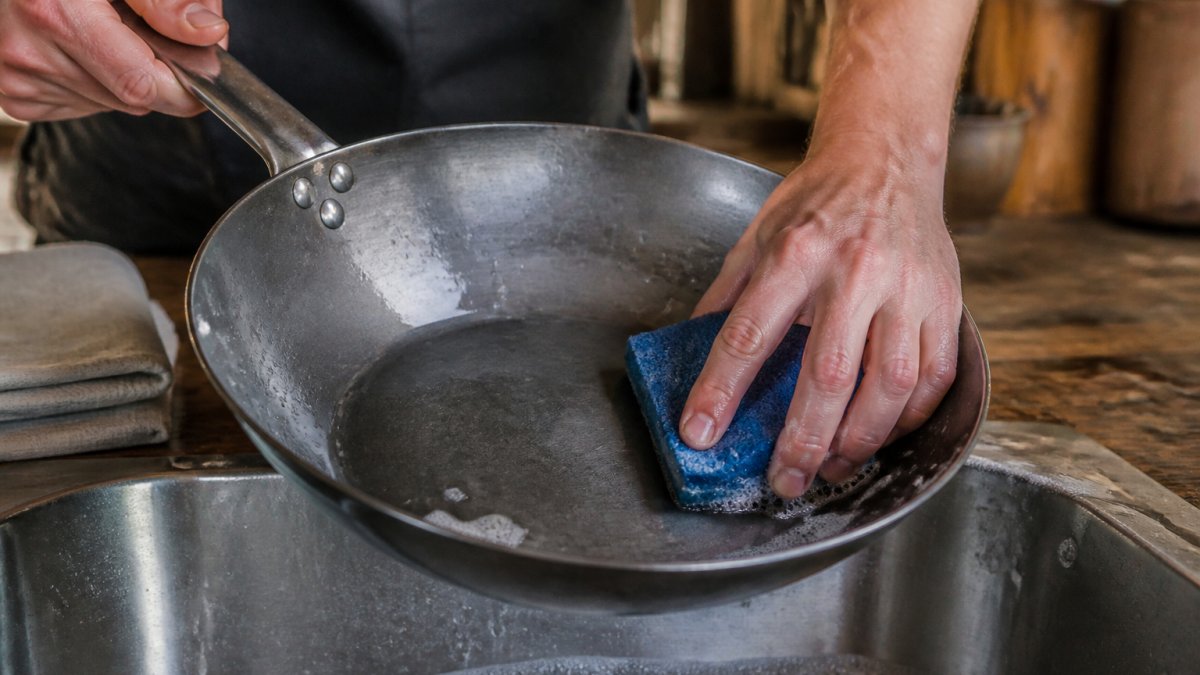
Scrub the pan under hot running water with a stiff brush or chain mail scrubber. The goal is to lift food residue and excess grease without stripping the seasoning.
- Skip the soap for everyday cleaning
- Use coarse salt for stuck-on bits
- Rinse with hot water, never cold
Cold water makes grease set up and cling. Hot water lets it slide off, which means less scrubbing and less damage to the protective layer.
Dry With Heat, Not Just a Towel
A towel alone leaves moisture in the pores of cast iron. Heat drives it out completely.
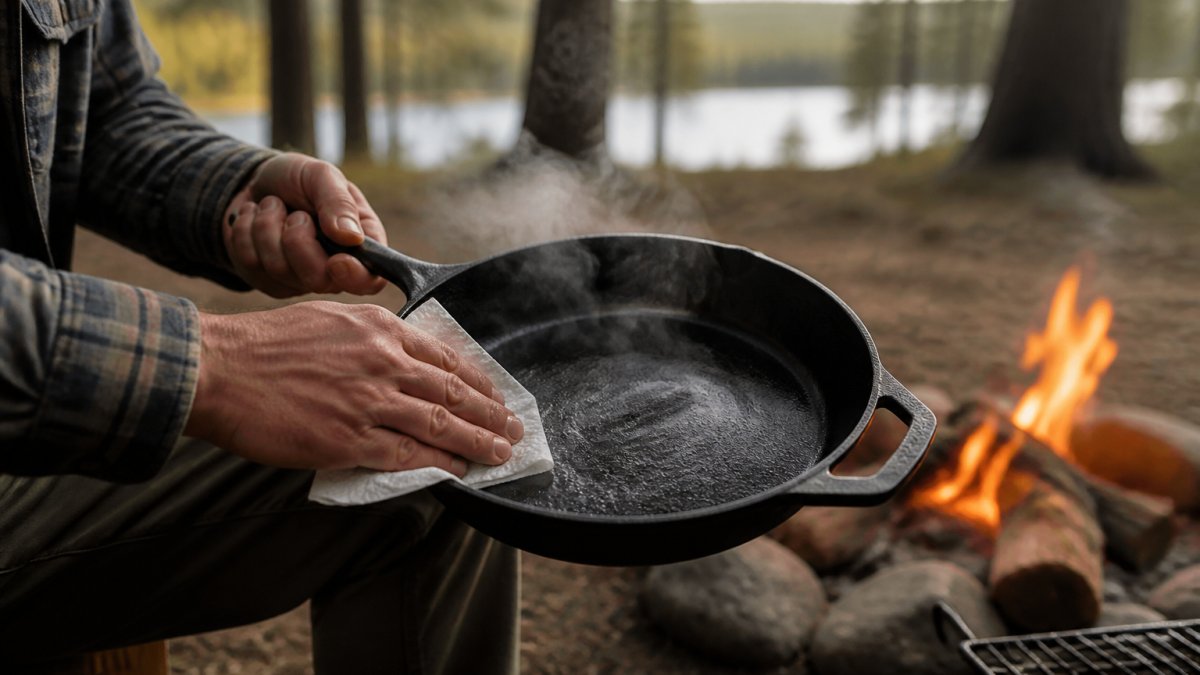
Set the pan on a stovetop burner over low heat for a few minutes. You should see the last of the water evaporate and the metal go fully dry. If you're at camp, rest it near the fire, not in the flames.
Step 2: How to Prevent Rust on Cast Iron in Humid Conditions
To prevent rust on cast iron, remove every trace of moisture and cover the metal with a thin layer of oil after each use. Humidity makes this harder because moisture in the air condenses on cool metal.
Here's how to stay ahead of it:
- Dry on heat, then let the pan cool slightly
- Wipe on a thin layer of cooking oil while it's still warm
- Buff off any excess so the surface isn't tacky
That thin layer of oil is your protective layer. Too much oil turns sticky and traps dust. Too little and the metal is exposed to the damp air.
Step 3: The Best Oil for Seasoning Cast Iron
For cookware, the best seasoning oil is a neutral cooking oil with a high smoke point, such as canola, grapeseed, or vegetable oil. These polymerize into a hard, dry protective layer when heated. Avoid olive oil and butter for the seasoning step; they stay tacky and collect dust.
| Oil |
|---|
| Canola |
| Grapeseed |
| Vegetable |
| Olive |
Flaxseed oil dries hard but can flake if applied too thick. A thin coat of neutral oil, applied often, holds up better in humid air.
Seasoning Oil Is Not Gear Lubricant
Here is where most guides stop, and where they get cast iron gears wrong. A polymerized cooking-oil coating protects a pan because nothing moves against it. A gear has teeth sliding under load, and a dried, gummy seasoning layer will bind, chip, and trap grit in the tooth roots. Do not season a working gear the way you season a skillet.
Cast iron gears need two separate products:
- A protective coating for the exposed faces, shafts, and housing bores that sit idle. A corrosion-inhibiting oil or a dry-film rust preventative works here. These go on thin and stay put without gumming.
- An operational lubricant for the meshing teeth and bearings. This is what carries load and sheds moisture while the gear turns.
Choosing an Operational Lubricant
Match the lubricant to how the gear actually runs:
- Low speed, high load, open gearing: a heavy, tacky open-gear lubricant or a grease with good water resistance. These cling to the tooth flank and resist being thrown off.
- Enclosed gearbox: a gear oil of the viscosity the manufacturer specifies. Do not substitute a lighter oil to "be safe"; too thin a film lets metal contact metal and generates heat that pulls in moisture.
- Intermittent or seasonal use: a grease that resists washout and stays in place through months of sitting is better than a thin oil that drains off the teeth.
Two properties matter most in humid conditions:
- Water resistance. A lubricant that emulsifies with condensation turns milky and loses its film strength. Look for products rated to resist water washout.
- Adhesion. The lubricant has to stay on the tooth flank, not pool in the bottom of the housing where it does no good.
Coatings Versus Lubricants: A Quick Rule
If the surface does not move against another surface, protect it with a coating. If it does move, lubricate it. A gear shaft sitting in a humid shed needs a coating. The same shaft spinning in a housing needs a lubricant. Many cast iron assemblies need both, applied to different areas.
For cookware, keep the neutral-oil routine.
Step 4: How to Store Cast Iron Cookware in Humid Climates
To store cast iron cookware in humid climates, keep it oiled, uncovered, and away from damp air. Air circulation matters as much as the oil coating.
A few storage habits make a real difference:
10" Cauldron with Reversible Lid →
- Leave the lid off so air can move
- Place a paper towel between stacked pans
- Add a moisture absorber nearby
Moisture absorbers like silica gel packets or a small dish of rice pull damp air away from the metal.
For long-term storage or seasonal shutdown, oil the pan a little heavier, wrap it in a paper towel, and check it monthly.
Step 5: How to Reseason Cast Iron Pans Step by Step
To reseason cast iron pans step by step, scrub off any rust, dry the metal fully, then bake on thin coats of oil until the surface turns dark and glossy. This restores the protective layer and gets you back to cooking.
Follow these steps:
- Scrub off surface rust with steel wool or a stainless steel scrubber
- Wash and rinse with hot water
- Dry completely on heat
- Wipe on a thin layer of neutral oil
- Buff off the excess with a clean rag
- Bake upside down at 230°C (450°F) for one hour
- Let it cool, then repeat if needed
One or two rounds usually do it. For heavy rust, repeat the oil-and-bake cycle a few times. Each round builds the seasoning back up.
Common Mistakes That Rust Cast Iron Gear
The biggest mistake is trusting a towel instead of heat. Everything else follows from there.
Watch for these:
- Air-drying instead of heat-drying
- Using cold water, which leaves grease behind
- Applying oil too thick, which turns sticky
Measure the Humidity, Do Not Guess
Humid air is not one condition. Relative humidity (RH) tells you how much moisture the air is holding, and it changes what you need to do.
- Below about 50% RH: normal care is enough. Dry on heat, oil thin, store ventilated.
- 50-70% RH: condensation on cool metal overnight becomes likely. Keep gear oiled, keep air moving, and check weekly.
- Above 70% RH: assume bare metal will flash-rust. Use a corrosion-inhibiting coating on idle surfaces, run a dehumidifier in the storage space if it is enclosed, and inspect every few days.
A cheap hygrometer, the same kind sold for cigar humidors or greenhouses, gives you a number instead of a feeling. Place it in the storage area, not on the wall outside it. If you cannot measure, a dehumidifier set to hold the space near 45-50% RH does the job for you.
Inspection Schedule and Warning Signs
A condition-based check beats a calendar, but a calendar keeps you honest. In humid weather, inspect every two weeks. In a dry season, monthly is enough.
At each inspection, look for:
- Orange or reddish spots, surface rust. Wipes off easily if caught early.
- A gritty or rough feel, rust starting under the coating, or grit trapped in lubricant.
- A dull, dry surface, the protective film has worn off.
Removing Rust and Assessing Damage
For light surface rust, scrub with steel wool or a stainless steel scrubber, wash with hot water, dry on heat, and recoat.
For heavier rust, a rust-dissolving product followed by a fine abrasive pad works, but keep abrasives away from the tooth flanks. After cleaning, look closely at the metal:
- Surface rust only: recoat and return to service.
- Light pitting on non-working faces: recoat, monitor, and expect a shorter service life.
- Pitting on tooth flanks or shaft journals: the gear has lost load-bearing area. Replace it rather than risk a failure under load.
Long-Term Storage and Seasonal Shutdown
Equipment that will sit unused through a humid season needs more than a wipe-down:
- Clean off old lubricant and any grit.
- Dry the metal fully on heat or with moving air.
- Apply a corrosion-inhibiting coating to all bare surfaces, including shafts and bores.
- Apply fresh operational lubricant to the teeth and bearings.
- Wrap in paper or breathable cloth, not sealed plastic, which traps condensation.
- Store off cold concrete, in a ventilated space, with a moisture absorber nearby.
- Recheck monthly and recoat any surface that has dried out.
A quick inspection beats a big cleanup later. Surface rust caught in a week is a wipe. Surface rust caught in a season is a replacement.
Conclusion
Humid air is hard on cast iron, but the routine is simple: clean it, dry it on heat, oil it thin, and store it where air can move. Do that and rust rarely gets a foothold.
Browns Outpost builds cast iron cookware for exactly this kind of use, with heavy-duty construction and a lifetime warranty behind every piece. Our 10" Cauldron with Reversible Lid, 12" Dutch Oven, and 10" Shallow Skillet are all made to handle damp campsites and open fires alike, and every order over $75 CAD ships free.

Get started with Browns Outpost and keep your cast iron ready for the next fire.
Frequently Asked Questions
How do you keep cast iron from rusting in humid conditions?
Dry your cast iron gear immediately after washing, using heat to evaporate all moisture. Apply a thin layer of oil while the metal is still warm, then store it in a dry place with good air circulation. In humid climates, keep lids off and add a moisture absorber like silica gel to your storage area. Re-oil every few weeks during long storage periods to maintain the protective layer.
How often should you reseason cast iron?
Reseason when the surface looks dull, feels sticky, or food starts sticking. In humid conditions, check your cast iron gear monthly. If you see gray patches or minor surface rust, a full reseasoning is due. For regularly used cookware, a quick oil coat after each wash keeps the seasoning strong. Full reseasoning every few months is typical for gear stored in damp environments.
What is the best way to store cast iron in a humid environment?
Store cast iron cookware with the lid off to allow air circulation. Place a paper towel or moisture absorber like silica gel nearby to control humidity. Keep pieces in a cool, dry cabinet rather than near stoves or windows where condensation forms. For long-term storage, coat with oil, wrap in a breathable cloth, and check monthly for any signs of surface rust.
Can cast iron be left outside overnight?
Leaving cast iron gear outside overnight in humid conditions invites rust. Overnight dew and temperature drops cause condensation on the metal surface, which attacks the seasoning layer. If you must leave it out, cover it loosely and re-oil in the morning. For campers, bring cast iron cookware inside the tent or vehicle when possible, especially in damp or rainy weather.