 how-to
How to Clean Carbon Steel Cookware Properly
Table of Contents
- The Post-Cooking Routine: Clean Carbon Steel Cookware Without Stripping the Seasoning
- How to Clean a Carbon Steel Pan With Stuck-On Food
- Can You Use Soap on Carbon Steel Pans?
- How to Remove Sticky Oil Buildup From a Carbon Steel Pan
- How to Season a Carbon Steel Pan After Cleaning
- Drying and Storing Carbon Steel Cookware to Prevent Rust
- Conclusion: Build a Cleaning Habit That Protects Your Cookware
- Frequently Asked Questions
Last Updated: October 12, 2026
The Post-Cooking Routine: Clean Carbon Steel Cookware Without Stripping the Seasoning
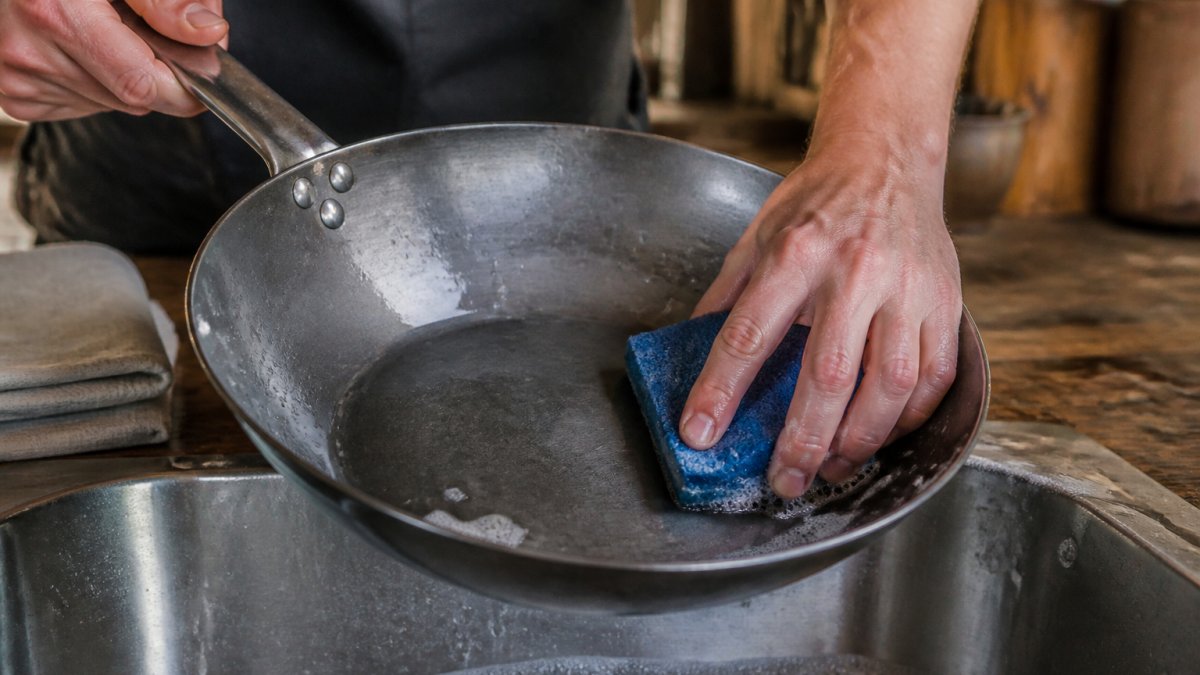
Learning how to clean carbon steel cookware properly comes down to one habit: clean it while it is still warm, use hot water, and skip anything that attacks the seasoning layer.
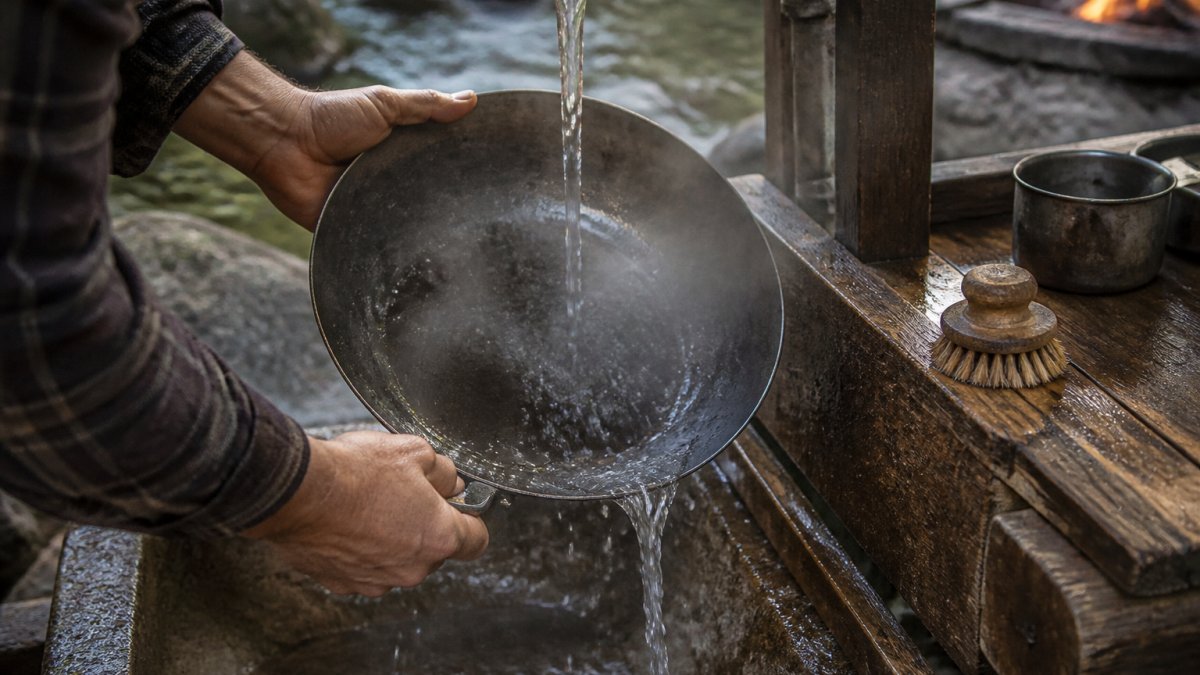
At Browns Outpost, we build our gear from hand-crafted raw carbon steel, so we think about this surface constantly. We have seen what happens when people treat a carbon steel pan like a nonstick one.
The seasoning layer is the whole point. It is a hard, baked-on coat of polymerized oil that bonds to the steel. That coat is what makes the pan release food and protects the metal from rust.
Why the Seasoning Layer Matters More Than a Spotless Pan
A pan that looks perfectly clean but has lost its patina will stick and rust. A pan with a dark, uneven patina that cooks beautifully is a healthy pan.
So the goal is not sterile steel. The goal is a clean cooking surface with the seasoning layer intact. That single shift in thinking changes every step that follows.
The basic routine for a normal cook:
- Let the pan cool until it is warm, not cold.
- Pour in hot water and wipe with a cloth or paper towel.
- Scrub gently with a scrub sponge if needed.
- Rinse, then dry it immediately on the stovetop.
- Add a thin coat of oil.
That is the whole routine. Most nights, it takes two minutes.
How to Clean a Carbon Steel Pan With Stuck-On Food
Stuck-on food is normal, and it does not mean you ruined the pan. The fix is hot water and a short simmer, never a hard scrape.
Here is the step-by-step method:
- Set the pan on the burner and add about a cup of warm water.
- Bring it to a simmer for one to two minutes. The steam lifts the cooked-on food.
- Lift the food with a spatula. Use a metal spatula if the food is stubborn. It will not hurt the steel.
- Scrub the rest with a scrub brush or scrub sponge under hot running water.
- Dry immediately and re-oil.
For a gentle scrub on light residue, a spoonful of salt and a little oil works well. The salt acts as a mild abrasive while the oil keeps the surface slick. Rub with a cloth or paper towel, then rinse.
What most guides miss is that a metal spatula is a tool, not a threat. On a seasoned carbon steel pan, you can scrape with confidence. The seasoning layer is bonded to the steel, not sitting on top of it like a coating.
Can You Use Soap on Carbon Steel Pans?
Yes, you can use dish soap on a carbon steel pan, but the answer depends on how the seasoning was built, not on a blanket rule.
The old prohibition came from lye-based soaps and harsh detergents that could saponify a young, soft seasoning layer. Modern dish liquids are formulated very differently.
What soap can do is attack the weak points: thin, patchy, or freshly applied seasoning that has not fully polymerized. That is why the advice splits.
Here is how to decide:
| Pan condition | Soap? | Reason |
|---|---|---|
| Well-seasoned, black, glassy | Yes, a few drops | Bonded patina resists mild surfactant |
| New pan, one or two seasonings | No | Soft layer can be degraded before it sets |
| Sticky or gummy oil film | Yes | Soap cuts the unpolymerized residue |
| Visible rust or bare gray spots | No | Strip, dry, reseason first, soap is irrelevant here |
| After cooking acidic foods (tomatoes, wine) | Yes, briefly | Acid dulls seasoning; a gentle wash removes residue before re-oiling |
How to wash with soap without harming the pan:
- Use the smallest amount that cuts the grease, a drop or two on a sponge is usually enough.
- Wash in warm water, not boiling. Extreme heat plus detergent is harder on a young patina.
- Do not let the pan sit in soapy water. Wash, rinse, and move on.
- Dry immediately on the stovetop and apply a thin oil coat.
The real risk is not the soap itself. It is prolonged soaking. A pan left in the sink overnight, soapy or not, will lose seasoning at the edges and start to rust in any thin spots.
For everyday post-cooking cleanup, hot water and a cloth are still enough. Reach for soap when the pan is greasy, sticky, or has cooked something acidic.
How to Remove Sticky Oil Buildup From a Carbon Steel Pan
Sticky oil buildup is not the same problem as burnt-on food, and treating them the same way is why so many people damage their seasoning.
Here is a decision tree by mess type, from gentlest to most aggressive:
Light residue (a normal cook): Hot water, a cloth, and a thin oil coat. No scrub needed. This is the two-minute routine.
Sticky oil film (tacky, grabs food):
The Lifetime Warranty ANVIL Grill →
- Heat the pan over medium heat for one minute.
- Add a spoonful of coarse salt and a splash of high-smoke-point oil.
- Scrub with a cloth or paper towel until the tacky film lifts.
- Wipe out the salt and oil with a clean rag.
- Rinse with hot water, dry on the burner, and reseason with a very thin oil coat.
The salt acts as a mild abrasive; the oil keeps it slick and lifts the gummy layer rather than grinding it into the steel.
Heavy sticky buildup (thick, gummy, uneven): Simmer an inch of water in the pan for two to three minutes first. The heat softens the film. Pour it out, then repeat the salt-and-oil scrub.
Burnt-on carbon (black, crusted, hard): This is the one case where a metal spatula earns its keep. Simmer water in the pan, then scrape with a metal spatula or a chainmail scrubber.
What causes sticky buildup in the first place:
- Oil applied too thick after cleaning
- Cooking at low heat so the oil never reaches its smoke point
- Re-oiling a pan that still had a wet or tacky layer underneath
- Using a low-smoke-point oil that breaks down before it polymerizes
The fix is not more scrubbing. It is a thinner oil coat and enough heat to polymerize it.
How to Season a Carbon Steel Pan After Cleaning
Seasoning a carbon steel pan after cleaning takes three steps: dry it completely, heat it, and apply a very thin coat of oil. Do this any time the pan looks dull, gray, or patchy after washing.
What you need:
- A lint-free towel or paper towel
- A high smoke point oil
- A stovetop burner or oven
The steps:
- Dry the pan on the stovetop burner over medium heat until every trace of moisture is gone.
- Add a few drops of oil and spread it with a cloth across the whole cooking surface.
- Wipe off the excess with a clean, dry cloth.
- Heat until it just smokes, then let it cool. The oil bonds to the steel as it polymerizes.
- Repeat two or three times for a fresh pan.
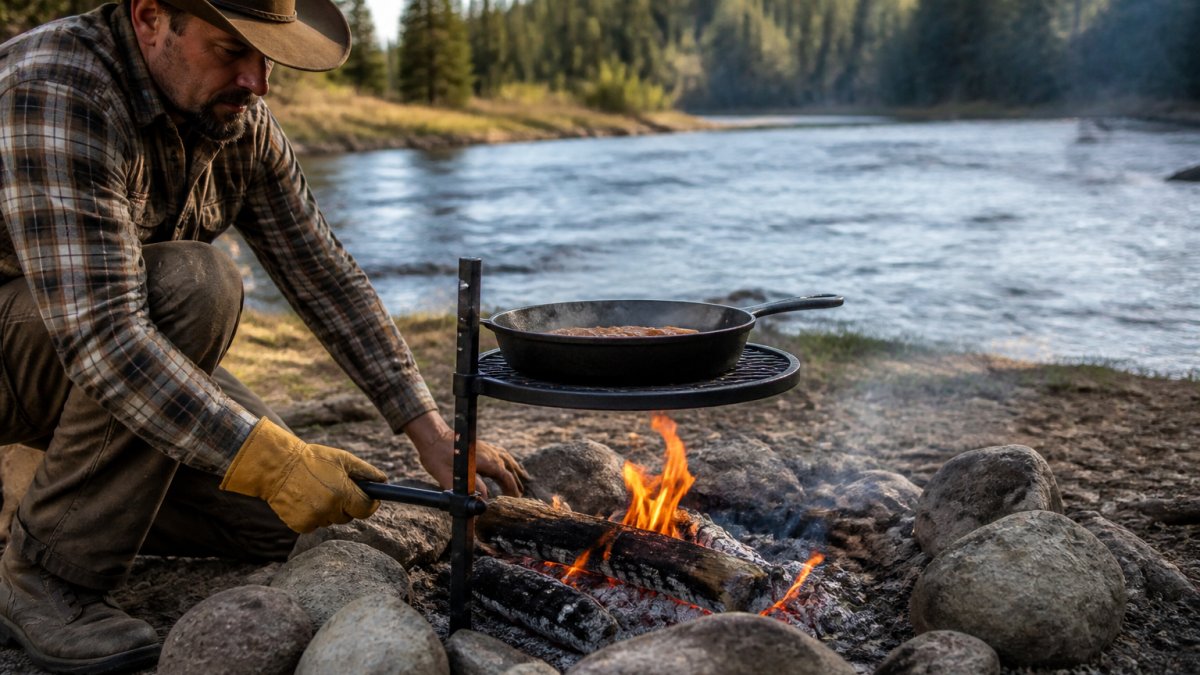
Where does the Browns Outpost ANVIL grill fit into this? Our carbon steel grate follows the same rules. After cooking, burn off residue over the fire, brush it clean while warm, and oil the grate with a light coat. It is the same care routine, just over open flame instead of a burner.

If you accidentally scrub down to bare gray steel, do not panic. Clean it, dry it, and run the seasoning steps above. The patina rebuilds with use.
Drying and Storing Carbon Steel Cookware to Prevent Rust
Rust is the number one enemy of carbon steel, and moisture is the only cause. Dry your pan immediately after every wash, and store it somewhere dry.
Our drying checklist:
- Dry on the stovetop burner over medium heat, not with a towel alone
- Let the pan cool fully before storing
- Add a light coat of oil before it goes away
- Hang it or stack it with a cloth between pans
- Keep it away from damp cabinets or steamy spots
A pan that air-dries on a rack will rust at the edges and in any thin spots. Heat drying drives off every bit of moisture, including the water hiding in the rivets and handle joints.
For campers, this matters even more. Wet conditions are hard on carbon steel. The Parks Canada outdoor safety guidance stresses keeping gear dry in wet conditions, and cookware is no exception.
If you do spot rust, scrub it off with steel wool or a scrub brush, wash the pan, dry it, and reseason. Surface rust is easy to fix. Rust that has been sitting for weeks is a bigger job.
Conclusion: Build a Cleaning Habit That Protects Your Cookware
The challenge with carbon steel is not the cleaning itself. It is building a routine you will actually follow after a long day of cooking. Skip it once and you can usually recover. Skip it for a week and you are scrubbing rust.
Our gear is built for people who cook over fire, in the backyard, or at a campsite far from a kitchen sink. That is why we back every piece with a lifetime warranty and free shipping over $75 CAD. Our ANVIL grill is made from hand-crafted raw carbon steel, adjusts to any height over the fire, and packs down flat for the trip home.
Get started with Browns Outpost and keep your carbon steel cooking like new for a lifetime.
Frequently Asked Questions
What's the best way to clean a carbon steel frying pan?
Wipe out excess oil and food residue with a paper towel while the pan is still warm. Rinse under hot running water and scrub with a sponge or scrub brush. If food is stuck, simmer water in the pan for a minute to loosen it, then scrape gently. Dry immediately on a stovetop burner or in an oven, then apply a thin coat of oil. This routine protects the seasoning layer and prevents rust without harsh chemicals.
Can you use soap to clean a carbon steel pan?
Yes, a small amount of mild dish soap is safe for carbon steel. Modern dish soaps are not aggressive enough to strip a well-established seasoning layer in one wash. Use soap when you have greasy residue, sticky oil buildup, or cooked-on food that plain hot water won't lift. After washing, rinse thoroughly, dry the pan immediately, and re-oil the cooking surface to maintain the patina.
Why does my carbon steel pan feel sticky to the touch?
A sticky surface usually means too much oil was left on the pan after cleaning, or the seasoning was applied in a layer that was too thick. Excess oil that doesn't polymerize turns gummy. To fix it, scrub the pan with hot water and a small amount of dish soap, dry it completely, then apply a very thin coat of oil and heat it until it just smokes. Repeat if needed.
Should you season a carbon steel pan after every use?
You don't need a full oven seasoning after every use. A quick stovetop touch-up is enough: dry the pan, add a few drops of oil, and wipe it across the cooking surface with a lint-free towel or paper towel. Heat the pan until the oil just begins to smoke, then let it cool. This maintains the seasoning layer between deeper seasoning sessions.