 how-to
How to Cook Over Open Fire: A Complete 2026 Guide
Table of Contents
- How to Build a Cooking Fire That Actually Works
- Best Campfire Cooking Gear for Open Fire Results
- How to Cook Over Open Fire: Direct vs. Indirect Heat
- Managing Coals, Embers, and Temperature Control
- Campfire Safety Regulations Canada: What You Must Know
- Troubleshooting Open Fire Cooking and Scaling for Groups
- Cleaning Your Gear and Cooking with Leave No Trace Principles
- Conclusion
Last Updated: August 8, 2026
How to Build a Cooking Fire That Actually Works
A cooking fire and a warmth fire are fundamentally different. At Browns Outpost, we've watched countless campers struggle with scorched meals and uneven heat because they built the wrong kind of fire. The difference comes down to wood selection, fire structure, and patience.
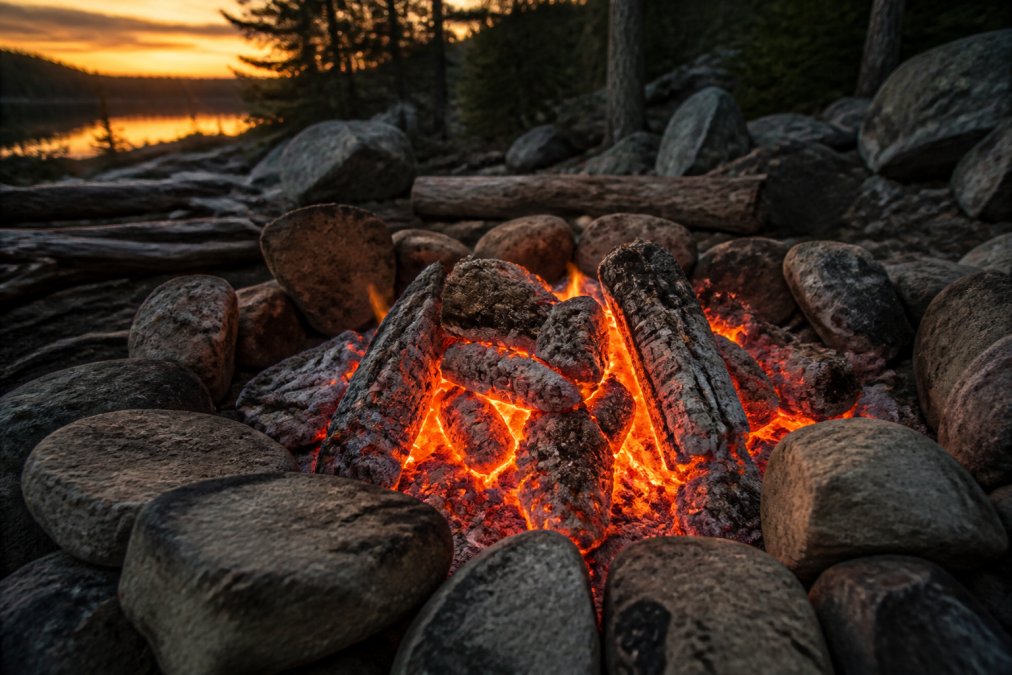
Firewood Selection and Heat Profiles
Hardwoods like maple, oak, birch, and ash burn long and hot, producing dense coals with excellent thermal mass for braising, roasting, and sustained grilling. Softwoods like pine and spruce ignite fast but burn with resinous, uneven flames that spike unpredictably and produce heavy creosote smoke affecting food flavor. Reserve softwoods for fire-starting only.
| Wood Species | Burn Quality | Best Cooking Use |
|---|---|---|
| Maple | Long, even coals | Braising, roasting |
| Oak | Dense, sustained heat | Grilling, searing |
| Birch | Medium heat, clean burn | General campfire cooking |
| Ash | Consistent coals, low smoke | All-purpose cooking |
| Cherry | Aromatic, medium coals | Smoking, flavor grilling |
| Pine (softwood) | Fast, resinous, uneven | Fire-starting only |
Source firewood locally. According to Canadian Food Inspection Agency guidelines on firewood movement, moving firewood across provincial or regional boundaries spreads invasive species and tree pests.
Building Your Fire for Cooking vs. Warmth
A cooking fire burns low and produces coals, not high flames. Start with a small teepee or log-cabin structure using dry kindling. Once it catches, add medium splits of hardwood. Build a coal bed 2 to 5 centimetres deep over 45 to 60 minutes of burning.
Push active flames to one side of your fire pit and cook over the coal bed on the other. This two-zone setup gives you direct heat for searing and a cooler zone for slower cooking.
Best Campfire Cooking Gear for Open Fire Results
The right gear makes the difference between fighting your fire and working with it.
Cast Iron Skillets and Dutch Ovens
Cast iron is definitive for open-fire cooking. Its thermal mass absorbs and holds heat evenly, searing meat cleanly and handling high direct heat. A Dutch oven extends your range into braising, baking, stewing, and roasting, functioning as a portable outdoor oven when you place coals on the lid.
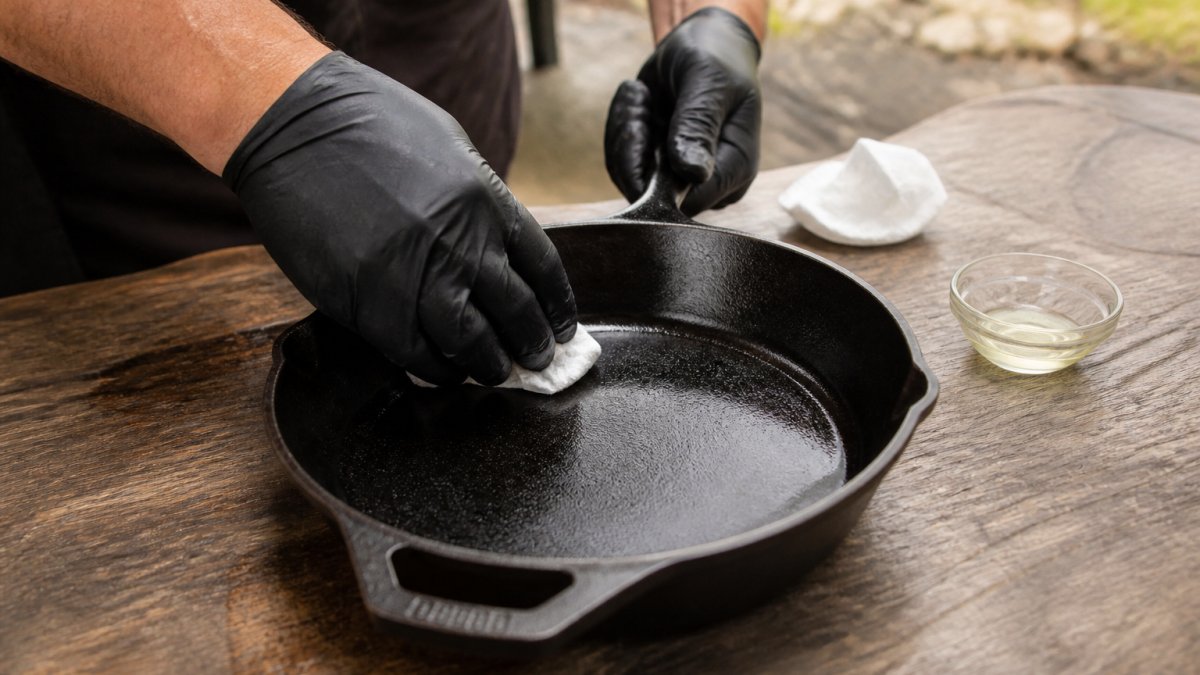
Wipe the cooking surface with a thin layer of oil after each use while warm. This prevents rust from forming overnight. Browns Outpost cast iron is hand-crafted from raw carbon steel, which responds to heat faster than traditional cast iron and builds natural non-stick seasoning with use. It's backed by a lifetime warranty.
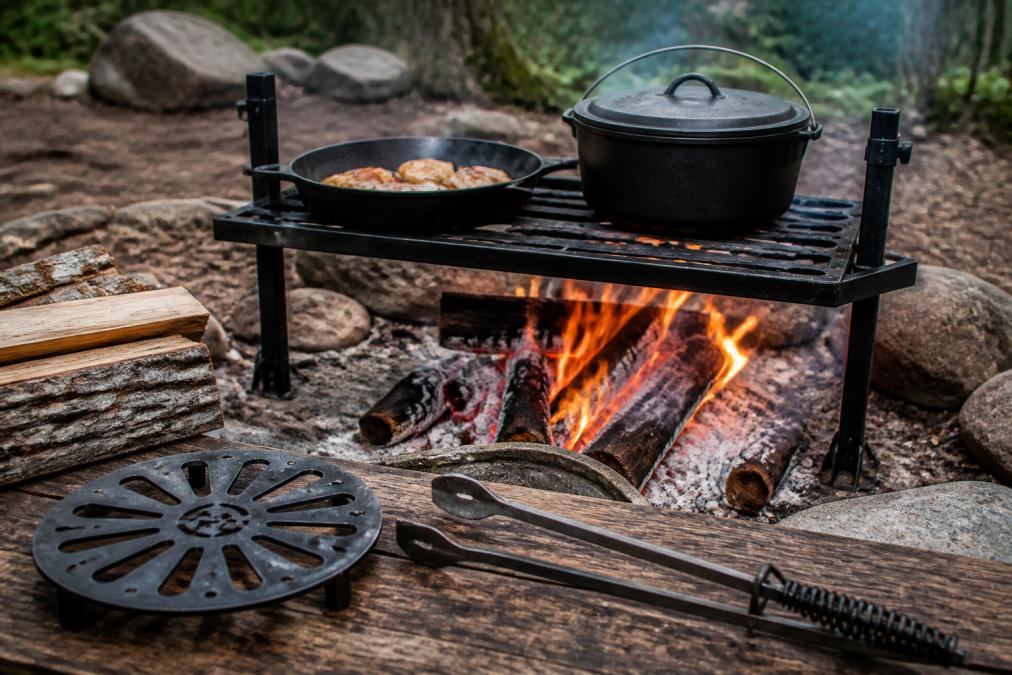
Grill Grates, Trivets, and Adjustable Rigs
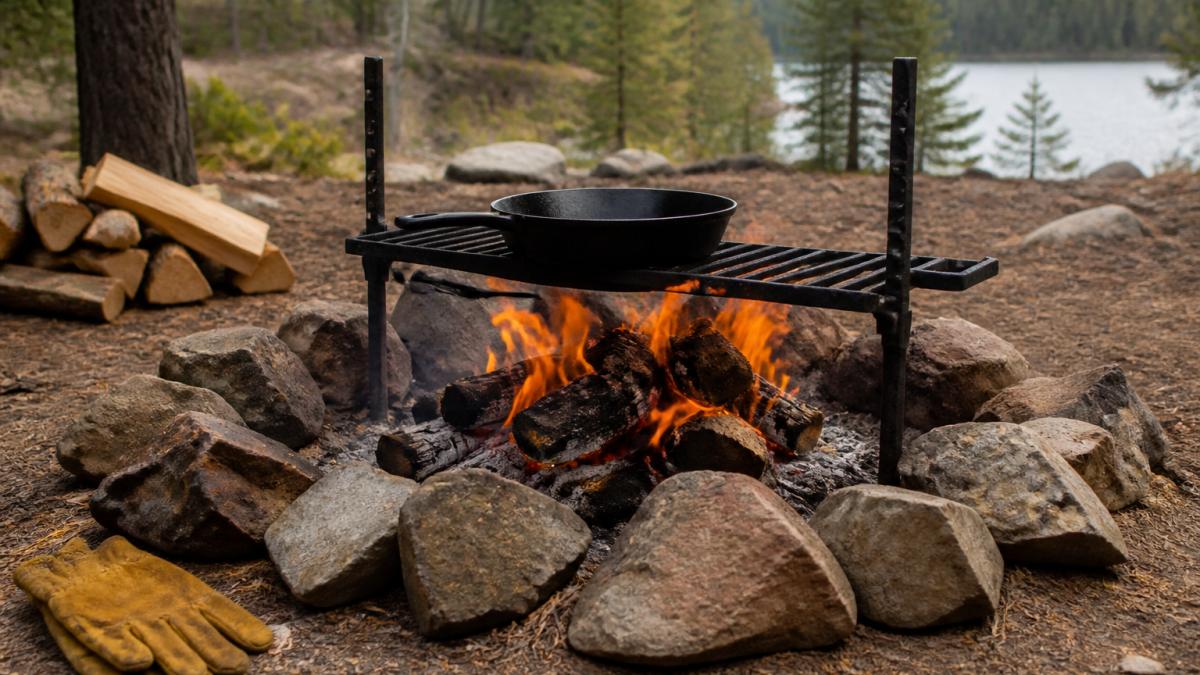
A fixed grill grate gives you one temperature: whatever the fire is doing. An adjustable grill rig lets you raise or lower your cooking surface, giving you real temperature control without moving the fire.
The Browns Outpost ANVIL adjustable campfire grill is built for this. One customer, Dan D., said: "This grill has completely changed over-the-fire cooking for me. I have never had a grill this strong and durable, it's super versatile and easily holds an entire rear quarter from a deer!" Trivets elevate Dutch ovens off direct coals, preventing scorching while allowing heat circulation. Long-handled tongs keep your hands clear of radiant heat.
How to Cook Over Open Fire: Direct vs. Indirect Heat
Direct heat comes from flame or glowing coals positioned directly beneath your food. Indirect heat surrounds food with ambient warmth, cooking it from all sides without charring.
Searing and Grilling Over Direct Flame
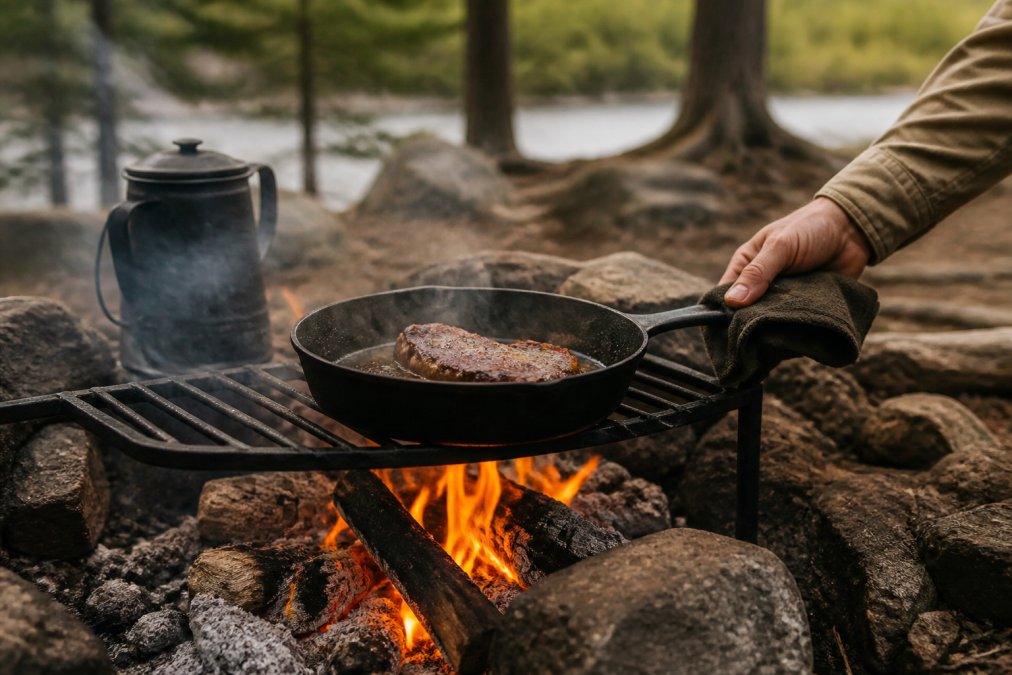
Place your grill grate or skillet directly over your coal bed and preheat for 3 to 5 minutes before adding food. A properly preheated cast iron surface sears meat without sticking and develops the crust that seals in moisture. Keep a spray bottle of water nearby to knock down unexpected flare-ups when fat drips onto coals.
Braising, Roasting, and Suspended Cooking with Indirect Heat
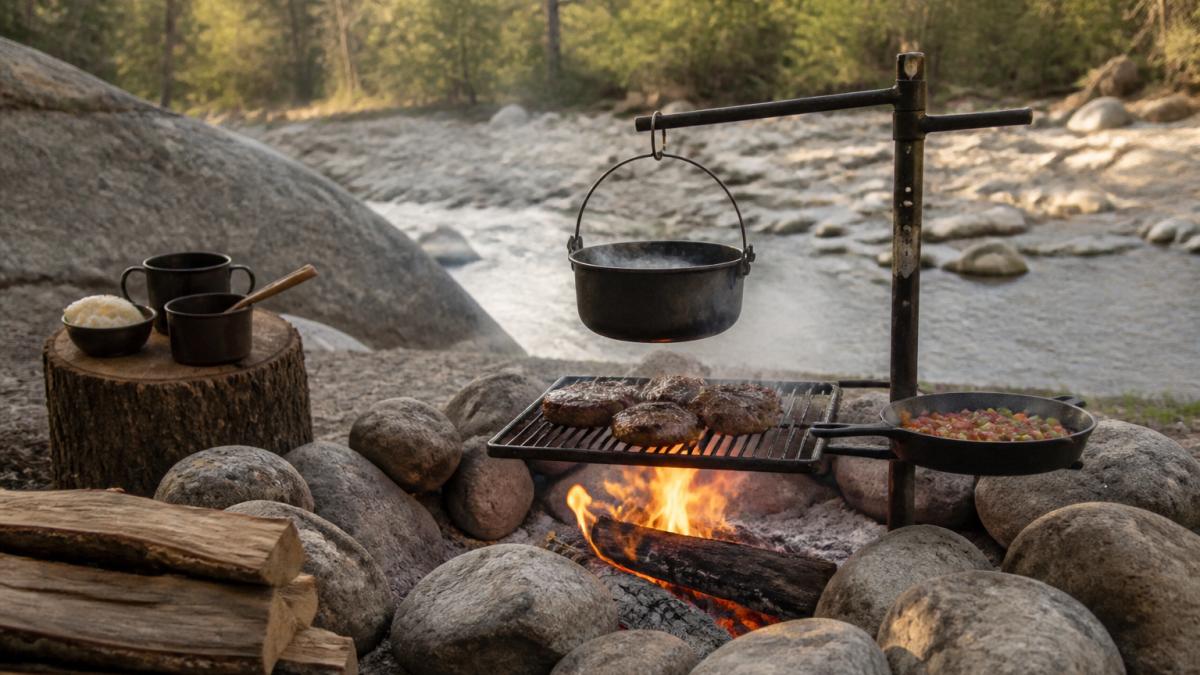
Nestle your Dutch oven beside the fire or use a trivet to elevate it above a moderate coal bed. Place additional coals on the lid to create top-down heat, mimicking a conventional oven for bread, stews, braised meats, and roasted vegetables. Suspended cooking, where food hangs over the fire on a tripod or spit, uses radiant heat and convective warmth but requires consistent fire and regular rotation.
Managing Coals, Embers, and Temperature Control
Temperature control over open fire is about coal management, not flame management. Once you have a solid coal bed, add one or two splits of hardwood every 20 to 30 minutes to replenish coals without generating excessive flame. Spread coals evenly using a long-handled poker.
A thin layer of ash insulates coals and helps them hold heat longer. Rake excess ash to the edges periodically to keep your coal bed active. To estimate cooking surface temperature without a thermometer: hold your hand 10 centimetres above the grill grate. Two to three seconds indicates medium-high heat suitable for searing. Four to five seconds indicates medium heat for sustained grilling.
According to Parks Canada's campfire and outdoor cooking guidance, using established fire pits where available concentrates heat and reduces ground impact while creating a more stable cooking environment.
Campfire Safety Regulations Canada: What You Must Know
Campfire safety regulations in Canada are managed at the provincial and territorial level, with additional rules in national parks under Parks Canada jurisdiction. Regulations vary significantly by region and season.
Key points that apply broadly:
- Fire bans: Provincial governments issue fire bans during high fire-danger periods. Check your provincial forestry website before your trip.
- Designated fire pits: Many parks require fires only in designated fire pits. Open ground fires are often prohibited.
- Fire size restrictions: Many jurisdictions limit campfire size. A cooking fire should be small and controlled.
- Attendance: Never leave a campfire unattended.
- Extinguishing: Fires must be fully extinguished before leaving. Pour water, stir the ash bed, and pour again until no steam remains.
For current fire ban status, consult Natural Resources Canada's fire weather and ban information or your provincial forestry authority.
Troubleshooting Open Fire Cooking and Scaling for Groups
Food burns on the outside, raw inside: Your fire is too hot or your cooking surface is too close to coals. Raise your grill grate or move cast iron to the cooler zone. For thick cuts, sear over direct heat then finish with indirect heat.
Food sticks to the grill grate: The grate wasn't preheated long enough or hasn't been seasoned. Preheat for at least 5 minutes and brush with oil before adding food.
Uneven cooking: Your coal bed isn't level. Spread coals evenly and rotate food 90 degrees halfway through cooking.
Scaling for groups: Solo cooking is straightforward with one cast iron skillet or small Dutch oven. Cooking for six or more requires planning. Use multiple cooking surfaces simultaneously, stagger your menu so not everything needs the same heat at once, and build a larger coal bed from the start. An adjustable grill rig with wide cooking surface becomes essential. The ANVIL's load capacity makes it practical for large cuts and multiple pieces simultaneously.
Cleaning Your Gear and Cooking with Leave No Trace Principles
Clean cast iron while still warm. Pour out excess grease, add a small amount of water, and use a stiff brush to remove food residue. Avoid dish soap, which strips seasoning. Dry the pan completely over low heat for 2 to 3 minutes, then apply a thin coat of oil.
For grill grates, burn off residue while the fire is active, then brush with a wire brush once cool. Store grates dry to prevent rust.
Leave No Trace principles apply directly to open-fire cooking. As outlined in Leave No Trace Canada's campfire guidelines, use existing fire rings where available, keep fires small, burn wood completely to ash, and pack out all food waste including grease. Never bury food scraps or pour cooking grease on the ground or in water sources.
Allow ash to cool completely, then scatter it widely away from camp, water sources, and trails.
| Cleaning Task | When to Do It | Method |
|---|---|---|
| Cast iron skillet | While still warm | Hot water, stiff brush, dry over heat, oil |
| Dutch oven | After cooling slightly | Hot water, brush, dry completely, oil lid and base |
| Grill grate | While fire is still active | Burn off residue, wire brush when cool |
| Fire pit ash | After fully cooled (12+ hours) | Scatter widely, away from water and trails |
Cooking over real fire takes practice, the right gear, and an understanding of fire behavior. The technical side, from wood selection to coal management to heat zone control, is learnable. Browns Outpost's ANVIL adjustable campfire grill and hand-crafted cast iron cookware are built specifically for this kind of cooking: heavy-duty construction, lifetime warranty, and adjustable design that gives you real temperature control over an open flame. Get started with Browns Outpost and add professional open-fire results to every trip.
Frequently Asked Questions
How do you control the temperature when cooking over an open fire?
Temperature control comes down to coals, not flames. Let your fire burn down to a steady bed of glowing embers before cooking. Raise or lower your grill grate to increase or reduce heat. Push coals together for more intensity, spread them out for gentler, indirect heat. An adjustable grill rig gives you the most precise control without having to move the fire itself. Hardwoods like oak and maple produce longer-lasting, hotter coals than softwoods.
What safety precautions should I take when cooking over an open fire in Canada?
Check your provincial fire authority's current fire ban status before lighting any campfire, bans are enforced under provincial legislation like Ontario's Forest Fires Prevention Act. Keep a bucket of water within reach, clear a 1-metre perimeter of dry material around your fire pit, and never leave a fire unattended. Use long-handled tongs and heat-resistant gloves. Fully extinguish coals with water and stir ash until cold to the touch before leaving the site.
Do I need special equipment to cook over an open fire?
A few key pieces make a real difference. A grill grate or adjustable campfire grill holds your cookware at the right height above coals. Cast iron skillets and Dutch ovens are the most practical cookware because their thermal mass handles the uneven heat of a fire far better than thin pans. Long-handled tongs, a heat-resistant glove, and a trivet for resting hot cookware round out a functional outdoor kitchen setup. You don't need a large kit, quality over quantity is the right approach.
What are the best foods to cook over an open fire?
Thick-cut steaks, bone-in chicken, whole fish, and pork chops are well-suited to direct heat grilling over coals. Dutch ovens open up braised dishes, stews, chili, and even bread or cobblers using indirect heat. Root vegetables, corn, and potatoes roast well directly in embers wrapped in foil. For groups, a large rear quarter of venison or a whole chicken suspended above indirect heat produces impressive results with minimal active effort once the fire is set correctly.
This article was written using GrandRanker