 how-to
How to Maintain Carbon Steel: Complete Care Guide
Table of Contents
- Why Carbon Steel Maintenance Matters
- Daily Cleaning Methods for Carbon Steel
- The Carbon Steel Seasoning Process
- How to Remove Rust from Carbon Steel
- Moisture Control and Long-Term Storage
- Do's and Don'ts of Carbon Steel Care
- Troubleshooting Common Issues
- Conclusion
Last Updated: August 15, 2026
Why Carbon Steel Maintenance Matters
Carbon steel requires consistent care to build and protect the seasoning layer that makes it non-stick and rust-resistant. Properly maintained carbon steel develops a natural patina that improves with use, lasts a lifetime, and performs beautifully over open flames where other cookware fails.
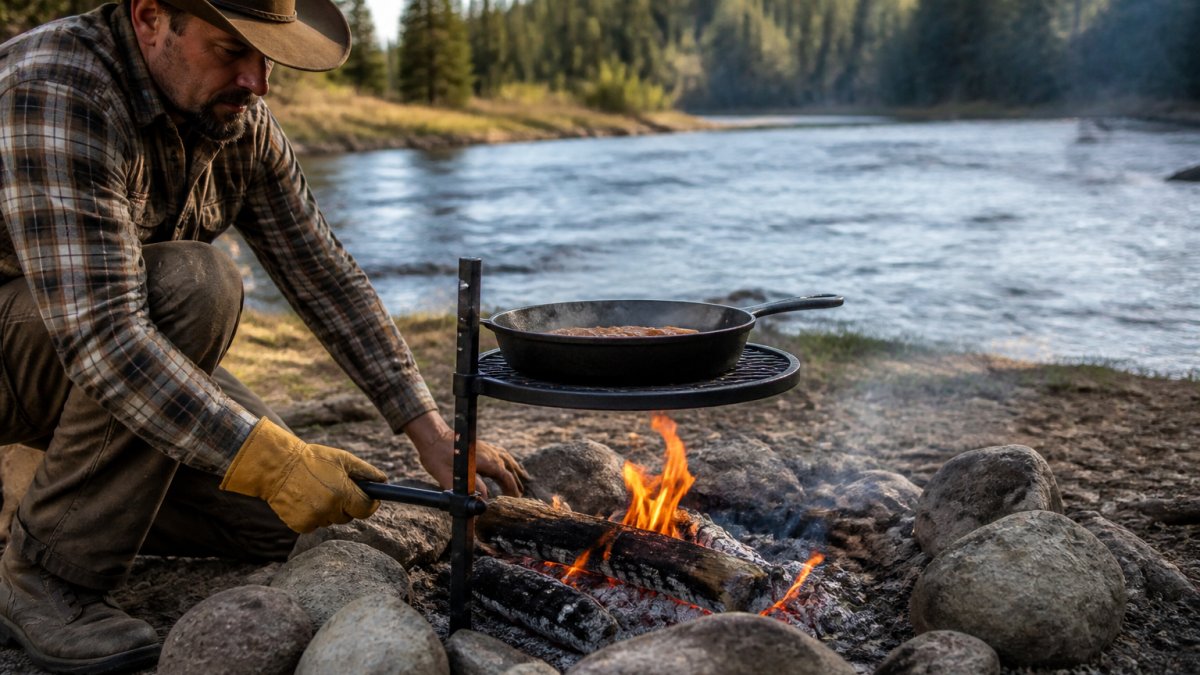
At Browns Outpost, we craft carbon steel gear specifically for outdoor enthusiasts who cook over fire. Our ANVIL adjustable campfire grill and hand-crafted carbon steel cookware are built to withstand harsh conditions, wet campsites, high heat, and heavy use. The core principle is simple: carbon steel needs moisture prevention, protective seasoning, and immediate drying after use. Master these fundamentals, and your carbon steel becomes an extension of your cooking technique.

Daily Cleaning Methods for Carbon Steel
Cleaning carbon steel immediately after cooking is non-negotiable. Heat and moisture are carbon steel's enemies, so speed matters.
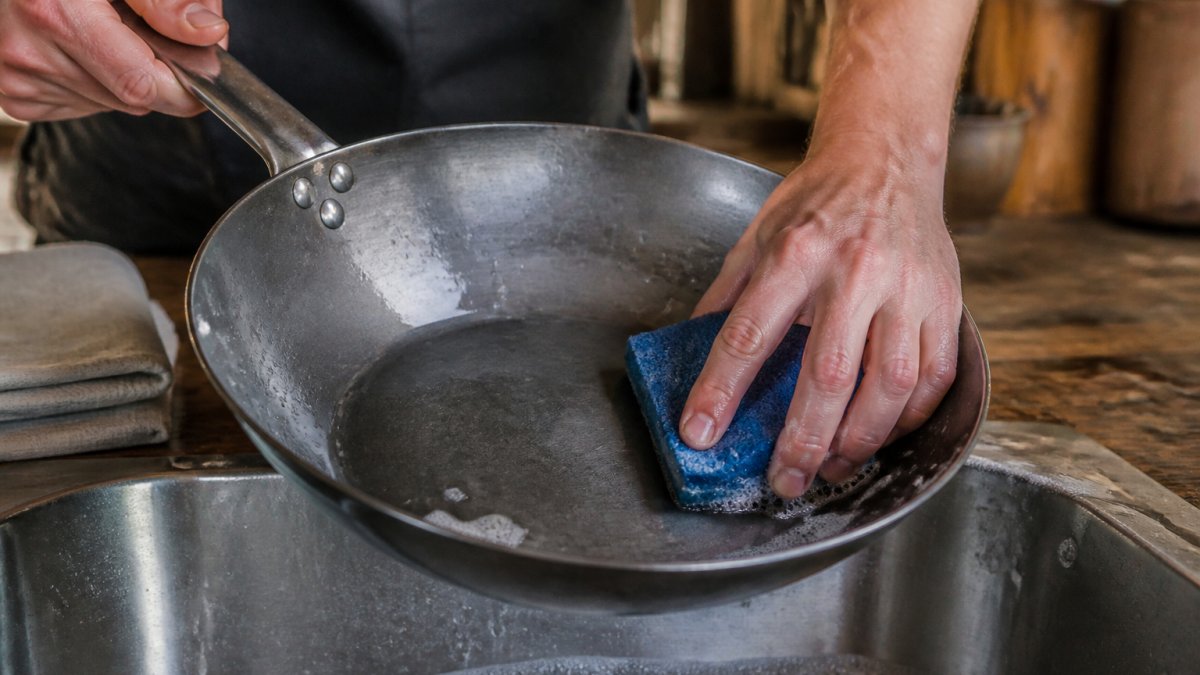
Hand washing and immediate drying: Wash your carbon steel pan by hand, never in the dishwasher. Use warm water and a soft cloth or sponge to wipe away food residue. A small amount of mild dish soap is acceptable, modern soaps are gentler than the old myth suggests. The real risk isn't soap; it's leaving the pan wet.
Dry immediately with a clean cloth while the pan is still warm. This prevents water spots and oxidization. Don't let the pan air-dry. Place the clean pan back on low heat for 30 seconds to ensure complete drying.
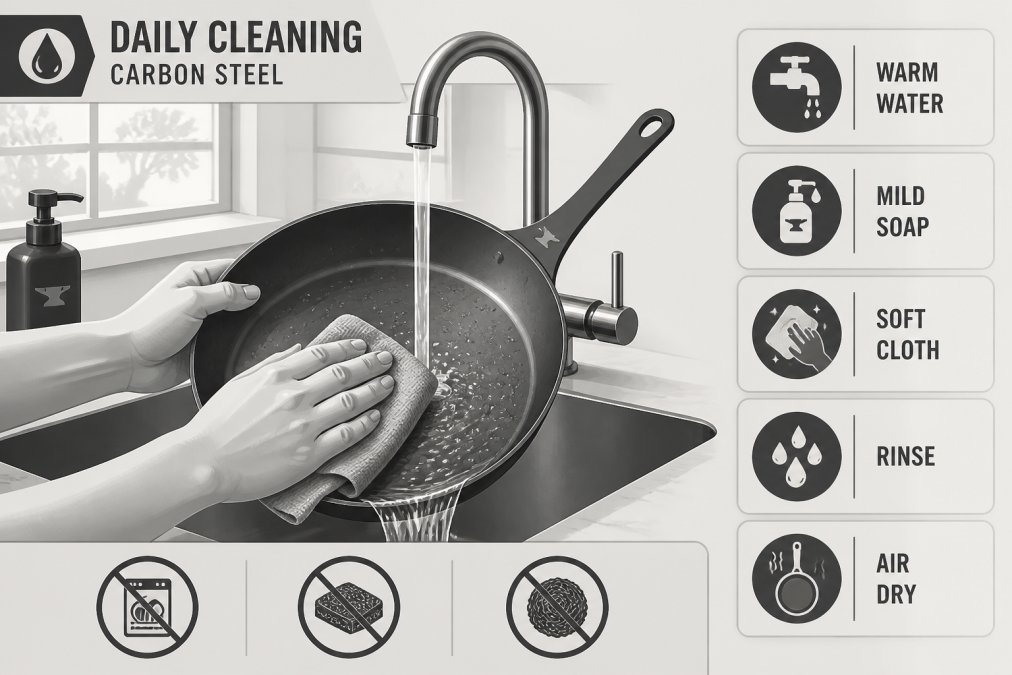
Removing stuck-on food and residue: For stubborn, burnt-on food, avoid harsh scouring pads that damage the seasoning. Instead, use coarse salt and a small amount of neutral oil. Sprinkle salt directly onto the warm pan, then scrub in circular motions with a folded cloth. The salt acts as a gentle abrasive while the oil protects the seasoning underneath. For really stubborn buildup, add a tablespoon of water to create a paste with the salt, let it sit for a minute, then scrub.
Avoid acidic cleaners like vinegar or lemon juice during regular cleaning, save these only for rust removal.
The Carbon Steel Seasoning Process
Seasoning is the foundation of carbon steel maintenance. It's the process of building a protective layer through heat and oil polymerization, where oil bonds to the metal surface and hardens into a non-stick coating.
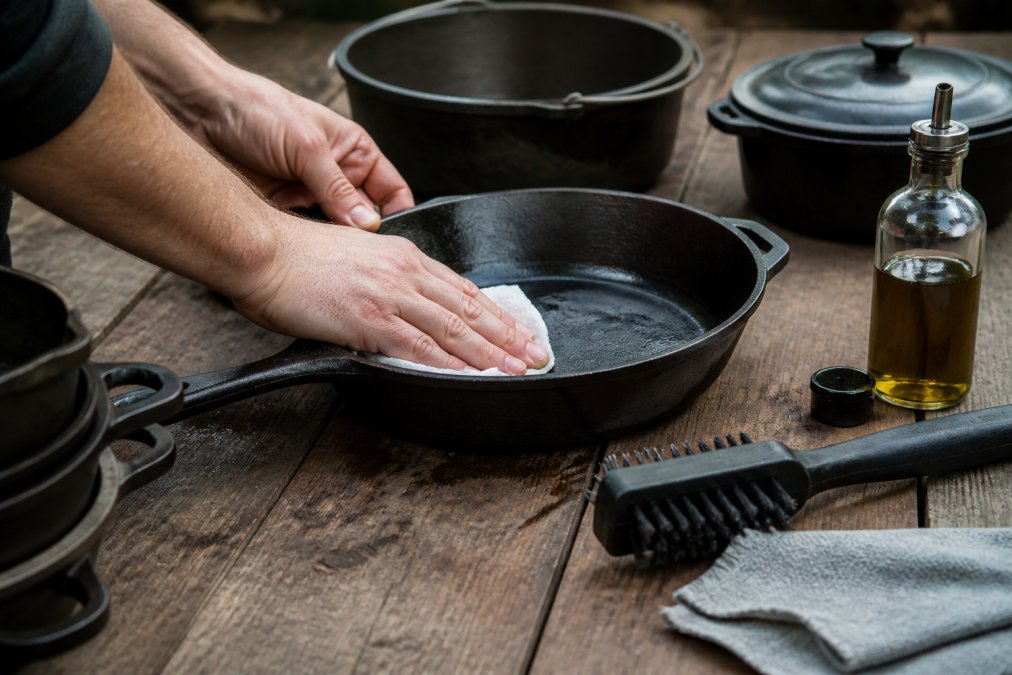
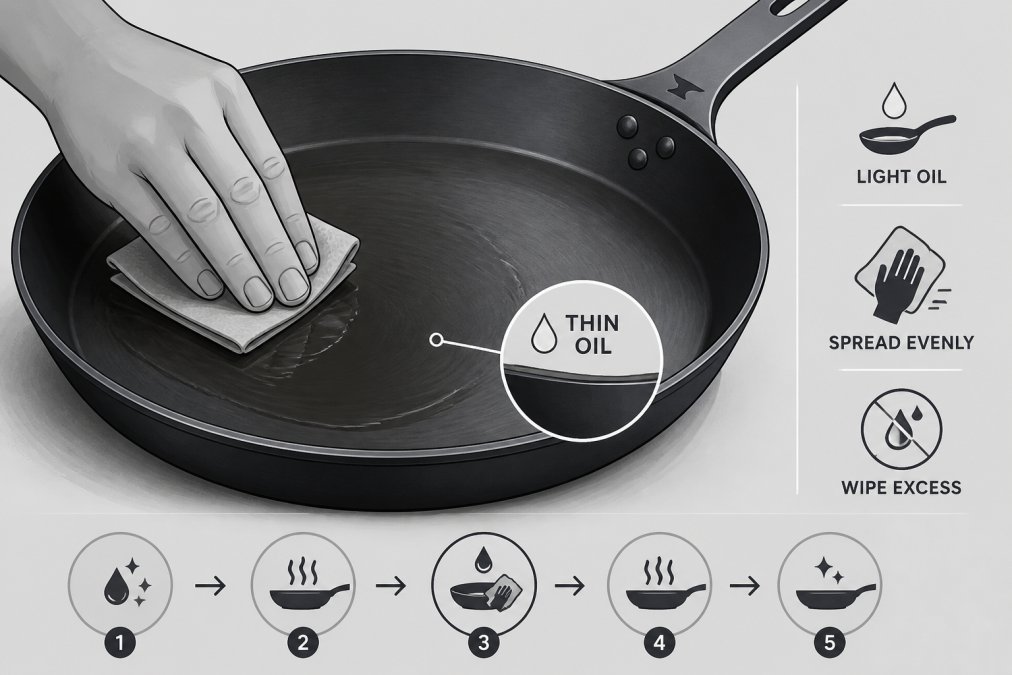
Building and maintaining your protective coating: Start with a clean, dry pan. Apply a very thin layer of neutral oil to the entire surface using a cloth. The key word is thin, excess oil creates sticky buildup instead of a smooth patina. Wipe off almost all the oil, leaving barely a visible sheen.
Heat the pan on the stovetop or over fire until it just begins to smoke. This heat triggers polymerization, the chemical process where the oil bonds permanently to the metal. Let it cool completely, then repeat 3-5 times for a new pan. For ongoing maintenance, season your carbon steel after every few uses. This is especially important for outdoor cookware exposed to moisture and temperature swings.
Best oil for seasoning carbon steel: Choose a neutral oil with a high smoke point. Grapeseed oil, flaxseed oil, and refined vegetable oil all work well. Grapeseed oil is popular because it has a smoke point around 232°C and creates a smooth finish. Flaxseed oil produces a darker, harder patina but can flake if applied too thickly. Vegetable oil is affordable and effective for regular maintenance.
Never use olive oil or unrefined oils, their low smoke points and strong flavors don't suit seasoning.
How to Remove Rust from Carbon Steel
Rust happens with exposure to moisture, humidity, or salt air. The good news is that rust on carbon steel is reversible, it's surface rust, not structural damage.
Identifying rust versus healthy patina versus burnt carbon: A healthy patina is dark, smooth, and protective. It looks almost black or deep brown and feels dry to the touch. Rust appears as reddish-brown spots or a rough, flaking texture. New rust is bright orange-red; older rust darkens but remains rough and uneven. Burnt-on carbon, often mistaken for rust, is black or dark gray, feels bumpy or crusty, and appears in high-heat zones where food has repeatedly caramelized.
To distinguish: patina is smooth and protective, rust is rough and reddish, and burnt carbon is bumpy and black. A light wipe with a damp cloth helps, patina stays put, rust comes off on the cloth, and burnt carbon partially flakes away.
Restoration techniques for different rust stages: For light surface rust (small reddish spots covering less than 5% of the cooking surface), use white vinegar or a paste of baking soda and water. Dampen a cloth with white vinegar and scrub the affected area in circular motions. For stubborn rust, make a paste with baking soda and a small amount of water, then scrub with a cloth or soft-bristled brush.
For moderate rust (widespread discoloration or rough patches), start with vinegar or baking soda paste, then follow with fine steel wool (0000 grade) to gently smooth the affected area. Avoid wire brushes for moderate rust, they're too aggressive.
For heavy rust or deep pitting, a wire brush or medium-grade steel wool can remove thick rust, but this requires thorough re-seasoning afterward. After wire brushing, immediately wash the pan, dry it completely, and apply a thin layer of oil. Heat the pan to polymerize the oil and prevent flash rust.
Once rust is removed, dry the pan completely and immediately re-season by applying a very thin layer of high-smoke-point oil and heating it on the stovetop until it just begins to smoke. Repeat 2-3 times to rebuild the protective coating.
Prevention in high-humidity climates: Store carbon steel in a cool, dry place, never in a damp basement, garage, or outdoor shed. If you must store it in a humid space, use a dry storage box with ventilation holes and place a desiccant packet inside. Silica gel packets or unscented cat litter in a breathable cloth work well.
Before storing, apply a thin protective layer of oil to the entire pan, including the handle and underside. Wipe away excess oil so the pan doesn't feel greasy. Wrap the pan in a cloth or paper towel (never plastic, which traps moisture) and store it in the desiccant-equipped box. Check stored pans monthly during high-humidity seasons.
Moisture Control and Long-Term Storage
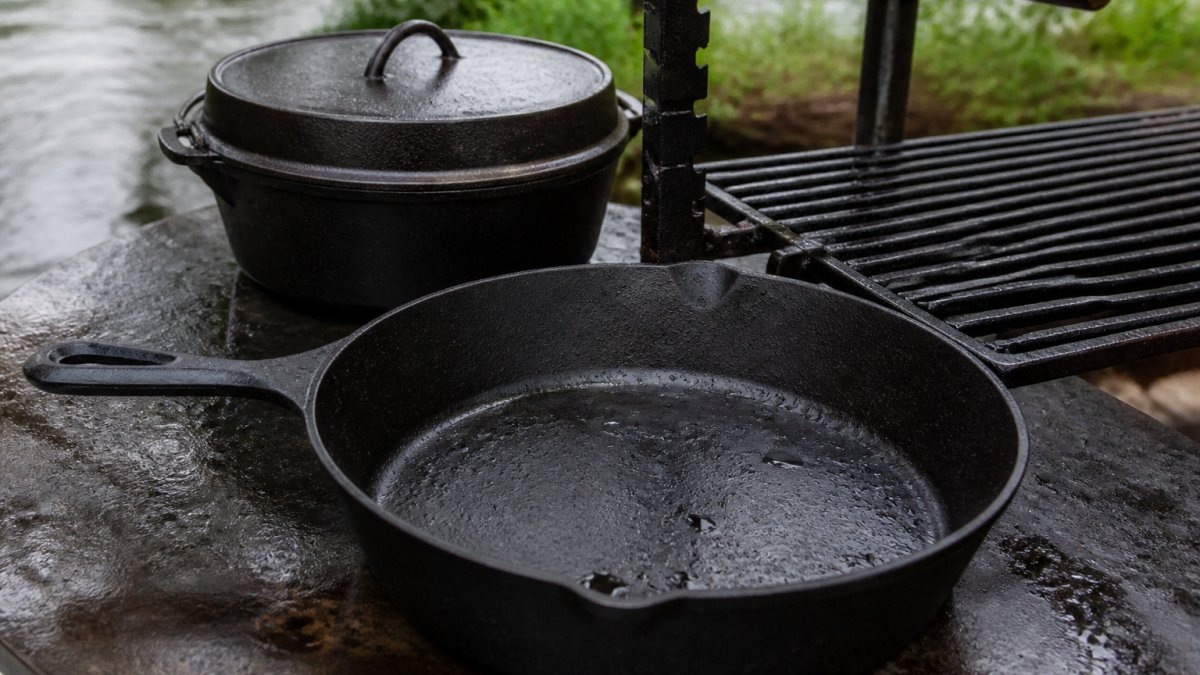
Moisture is carbon steel's primary enemy. Store carbon steel in a cool, dry place and avoid damp basements or outdoor storage without protection. Ensure the pan is completely dry before packing it away. A thin layer of protective oil before storage creates a barrier against humidity.
Wrap the pan in a cloth or paper towel to prevent moisture from condensing on the surface. Never wrap it in plastic. If storing multiple pieces, stack them with cloth between each layer to allow air circulation. Check stored carbon steel monthly, a quick visual inspection catches early rust before it becomes a problem.
Do's and Don'ts of Carbon Steel Care
Do's:
- Hand wash immediately after cooking
- Dry thoroughly with a cloth while warm
- Season regularly to maintain the protective coating
- Use coarse salt and oil for stuck-on food
- Store in a dry location
- Inspect periodically for signs of rust
- Use high-heat cooking methods
Don'ts:
- Don't use the dishwasher
- Don't let the pan air-dry or sit wet
- Don't use acidic cleaners during regular cleaning
- Don't apply thick layers of oil when seasoning
- Don't store in humid environments without protection
- Don't use abrasive scouring pads
- Don't assume rust means the pan is ruined
Consistency beats intensity. A quick daily routine prevents problems that would require hours of restoration work.
Troubleshooting Common Issues
Acidic food damage and patina stripping: Acidic foods, tomatoes, wine, vinegar, citrus, or fermented foods, dissolve the oil layer that makes carbon steel non-stick. If you cook tomato sauce and notice the pan becomes sticky, the seasoning has been partially stripped.
Prevention: Add a thin layer of fat (oil, butter, or lard) to the pan before cooking acidic dishes. For long-cooking acidic dishes (30+ minutes), use a stainless steel or enameled cast iron pan instead.
Recovery: After cooking acidic food, clean the pan immediately and re-season right away. Apply a very thin layer of high-smoke-point oil and heat until it just begins to smoke. Repeat 2-3 times. For frequent acidic cooking, plan to re-season every 2-3 uses instead of every 5-6.
Sticky or gummy surface: This usually means too much oil was applied during seasoning or oil with a low smoke point was used. Wipe the pan with a dry cloth and heat it on the stove until excess oil burns off. Then re-season with a very thin layer of oil. If stickiness persists, the pan may have been seasoned with low-smoke-point oil. Strip the pan back to bare metal using a wire brush, then start fresh with thin layers of grapeseed or refined vegetable oil.
Food sticking during cooking: If food sticks despite a dark patina, the seasoning may be worn in certain spots. Address this by seasoning more frequently (every 2-3 uses) and ensuring you're using enough fat when cooking. Preheat the pan properly, heat it for 1-2 minutes over medium-high heat before adding food.
Discoloration or dull appearance: Carbon steel naturally darkens with use. If the surface looks dull and lifeless, re-season with a few cycles of heating with thin oil applications. If the pan has a grayish or whitish haze, it may be oxidation from prolonged moisture exposure. Wipe the pan with a cloth dampened in white vinegar to remove oxidation, then dry thoroughly and re-season.
Rust spots: Follow the rust removal process outlined in the previous section. Address rust immediately, don't let it sit for weeks. After removing rust, re-season the affected area 2-3 times to rebuild protection.
Thermal shock damage: If a hot pan is exposed to cold water suddenly, the metal can crack or warp. Always cool carbon steel slowly. Never pour cold water into a hot pan or submerge it in cold water. Thermal shock is permanent damage, so prevention is critical.
Flaking or peeling seasoning: This happens when seasoning is applied too thickly or when oil with a low smoke point is used. Strip the pan back to bare metal using a wire brush, then start fresh with thin layers of high-smoke-point oil. Build up 5-7 thin layers rather than 2-3 thick ones.
Uneven seasoning or bare spots: If certain areas have lost seasoning while others remain dark, season the entire pan but focus extra attention on the bare or light spots. Apply oil to those areas first, heat the pan, and repeat the seasoning cycle 2-3 additional times. Over time, regular cooking will even out the patina.
Frequently Asked Questions
Should I oil my carbon steel pan after every use?
Yes, a light oiling after each use helps maintain your protective coating. After cleaning and stovetop drying, wipe a thin layer of neutral oil across the entire surface while it's still warm. This ongoing maintenance prevents rust and strengthens the non-stick patina through polymerization. For outdoor cooking, this step is especially important in humid or wet conditions.
What is the best oil for seasoning carbon steel?
Neutral oils with high smoke points work best: grapeseed oil, flaxseed oil, or refined vegetable oil. These oils polymerize effectively at cooking temperatures, building a durable protective coating. Avoid butter or olive oil, which have lower smoke points and can become rancid. For outdoor cooking where your pan faces temperature swings, grapeseed oil's stability makes it ideal for maintaining your seasoning through multiple heat cycles.
How do you remove rust from carbon steel?
For light surface rust, scrub with coarse salt and a neutral oil, using circular motions with an abrasive sponge. For heavier rust, soak the affected area in white vinegar for 30 minutes, then scrub and rinse thoroughly. After rust removal, immediately dry the pan completely (stovetop drying works well) and apply a thin layer of oil. Re-season the area by heating it on the stove to restore the protective coating.
Can you use soap on carbon steel?
Yes, you can use mild dish soap on carbon steel. Unlike cast iron myths, modern soap won't strip seasoning. Use warm water and a soft cloth to hand wash after cooking, then dry immediately with a clean cloth. Avoid prolonged soaking or dishwasher use, which can cause thermal shock and moisture damage. The key is drying quickly to prevent oxidization and rust formation.
This article was written using GrandRanker