 comparison
Is an Adjustable Campfire Grill Worth It? Honest Answer
Table of Contents
- What You Actually Get With an Adjustable Campfire Grill
- Swivel Campfire Grill vs Tripod: Which Setup Wins?
- Durability That Actually Matters: Steel, Coatings, and Corrosion
- The Best Campfire Grill for Camping: What to Look For
- How to Clean Campfire Grill Grates the Right Way
- Is the Adjustable Campfire Grill Worth It for Your Situation?
- Conclusion
Last Updated: August 7, 2026
What You Actually Get With an Adjustable Campfire Grill
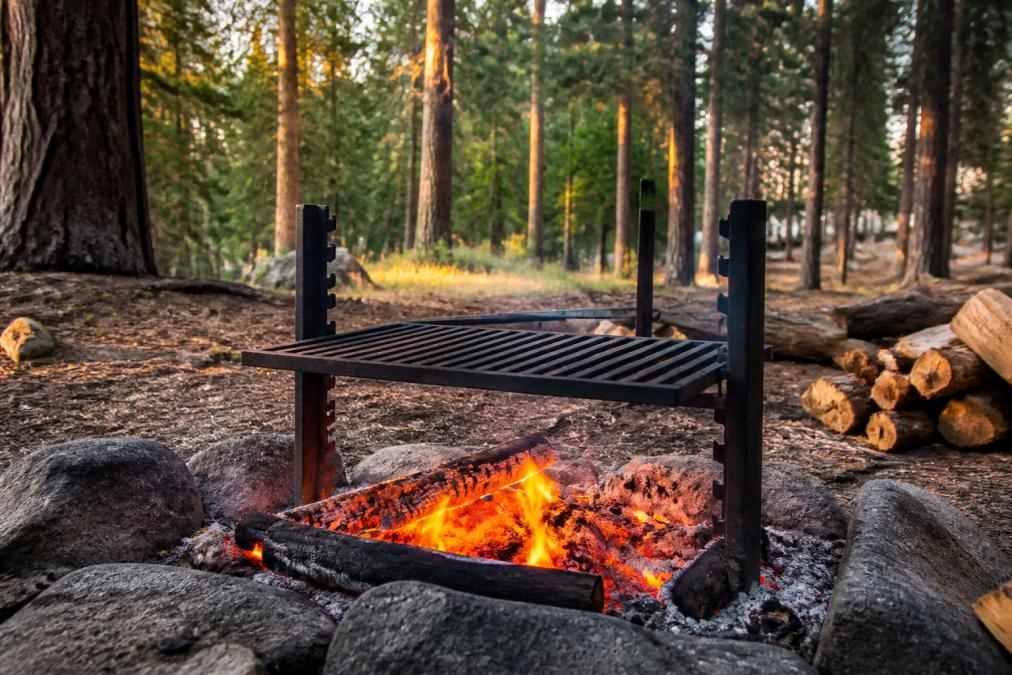
An adjustable campfire grill is a cooking platform mounted over an open fire that lets you raise or lower the grate to control heat exposure, giving you genuine temperature control without moving the wood or waiting for coals to die down. At Browns Outpost, we've built the ANVIL specifically around this idea: that real fire management starts with controlling distance, not guessing at it.
An adjustable campfire grill is worth it when you cook over open fire regularly and want genuine heat control rather than guessing. The quality of the steel, the mechanism, and the cooking surface determine whether you get pro results or frustration.
Height Adjustment and Heat Control
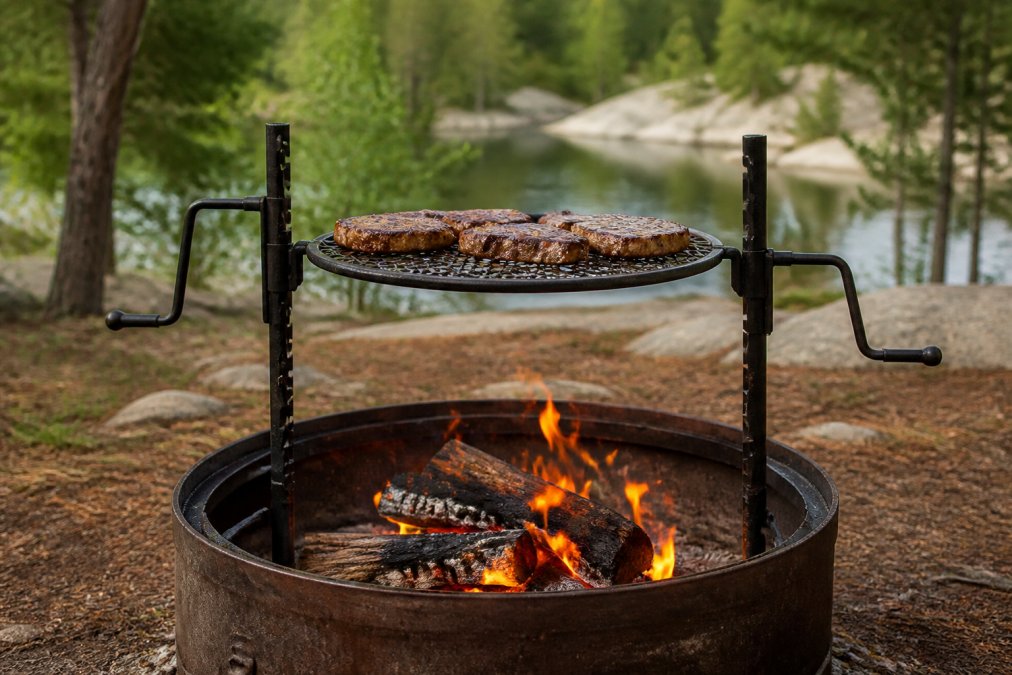
Height adjustment separates a campfire grill from a simple grate dropped on rocks. By moving the cooking surface closer to or farther from the fire, you shift between direct heat for searing and indirect heat for slow cooking. A swivel mechanism or telescoping post lets you make this adjustment mid-cook without touching the fire.
Fire intensity changes constantly as wood burns down. Without height adjustment, you're reacting to the fire instead of cooking with it. With it, you're in control. Cooking height also affects heat distribution across the grate. Closer to the flame concentrates heat at the center; raising the grate lets radiant heat spread evenly. For large cuts like a rear quarter of venison, that even distribution is the difference between properly cooked results and charred exterior with raw interior.
Cooking Surface Area and Versatility
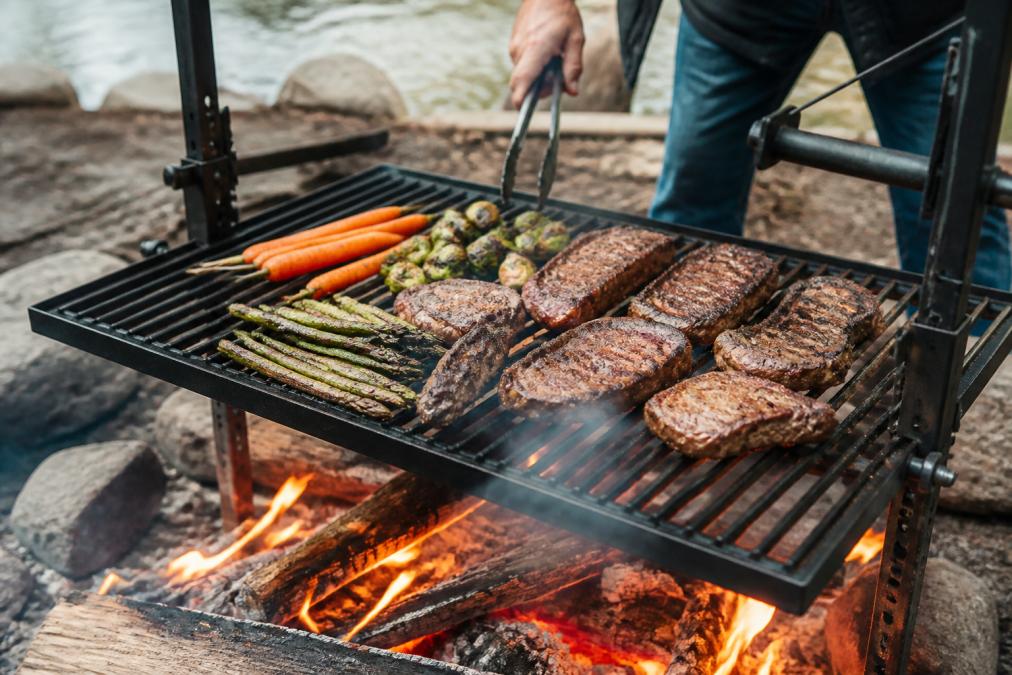
Cooking surface area determines what you can actually cook. A small grate handles steaks and fish fillets. A larger surface lets you run multiple pots, a griddle attachment, and direct-heat items simultaneously, which matters when feeding a group or running a camp kitchen.
An adjustable campfire grill handles:
- Direct searing over high heat
- Slow-roasting with the grate raised high
- Boiling water and simmering with a pot holder or hanging pot
- Griddle cooking with a flat plate attachment
- Smoking with indirect heat and wood chips
The ANVIL's hand-crafted raw carbon steel construction supports this range without warping or losing structural integrity over sustained heat.
Swivel Campfire Grill vs Tripod: Which Setup Wins?
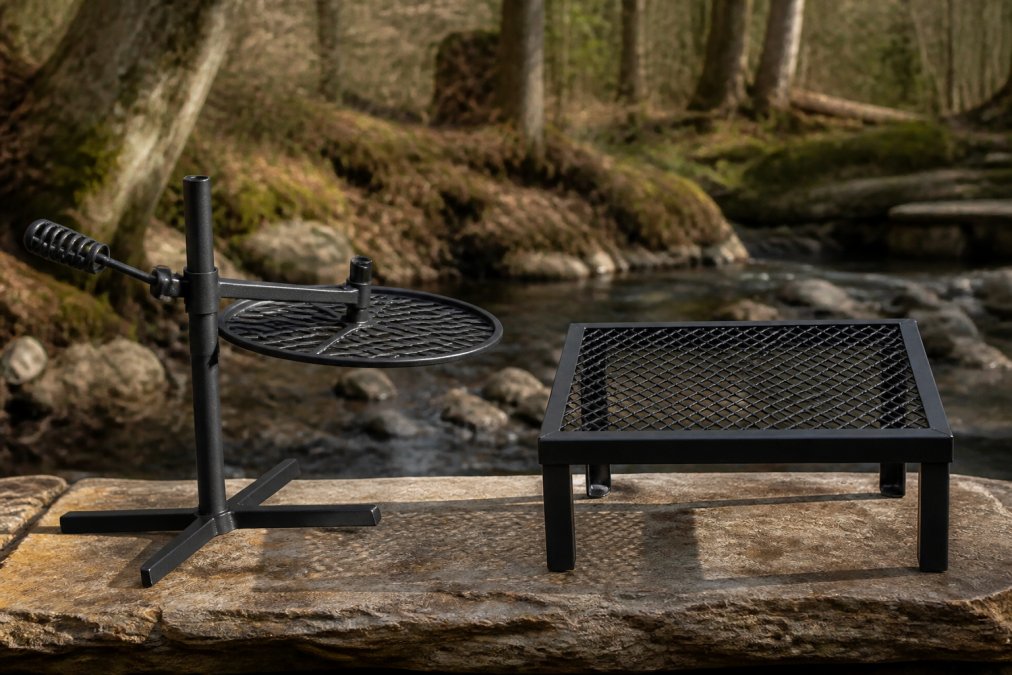
A swivel campfire grill mounts on a single post driven into the ground and rotates the grate out from over the fire for safe access. A tripod suspends a pot or grate from a chain above the fire using three legs that spread wide for stability. Both work and serve different purposes.
| Feature | Swivel Campfire Grill | Tripod Setup |
|---|---|---|
| Heat control method | Height adjustment via post | Chain length adjustment |
| Cooking surface | Full grate for multiple items | Single pot or small grate |
| Stability on flat ground | High | High |
| Stability on uneven terrain | Moderate (post-dependent) | High (three-point contact) |
| Setup speed | Fast | Moderate |
| Portability | Compact | Bulkier |
| Best for | Grilling, versatile cooking | Boiling, stewing, single-pot meals |
Stability on Uneven Terrain
Setup stability on uneven terrain matters more than most guides acknowledge, especially in backcountry cooking where level ground is rare.
A swivel grill's stability depends on how well the post seats into the ground. On soft soil, a well-designed post drives in securely. On rocky ground or hardpan, seating the post is harder, and a poorly anchored post under heavy load is a safety risk. Look for posts with a wide base plate or foot design that distributes weight laterally.
Tripods sidestep this problem. Three-point contact naturally self-levels on irregular surfaces. For true backcountry cooking where terrain is unpredictable, a tripod is more reliable. For established campsites with relatively flat surroundings, a swivel grill wins on versatility and cooking surface area.
Setup Speed and Portability
A swivel campfire grill with a collapsible design typically sets up in under five minutes: drive the post, attach the arm, level the grate. A tripod takes slightly longer because you're adjusting three legs to even out on uneven ground and then hanging your cooking vessel.
For backpacking where weight matters, a collapsible swivel grill often packs flatter and lighter than a tripod. For car camping where weight isn't a constraint, either works. The ANVIL's design prioritizes both portability and heavy-duty construction.
Durability That Actually Matters: Steel, Coatings, and Corrosion
The gauge of steel in a campfire grill predicts its lifespan better than any other single factor. Thin steel warps under sustained high heat and corrodes faster when exposed to moisture.
According to the Canadian Conservation Institute's guidance on metal corrosion, carbon steel is highly susceptible to rust when exposed to moisture and oxygen without protective treatment. Raw carbon steel needs to be seasoned and maintained, but when it is, it builds a natural non-stick, rust-resistant patina that improves with use.
Heavy-duty steel at the right gauge holds heat better, distributes it evenly, and resists the warping that ruins cheaper grates after a season.
Weight Capacity and Long-Term Corrosion Resistance
A grate that handles a cast iron skillet and a full pot of water simultaneously needs to support significant load over a pivot point or post. Undersized welds and thin stock fail under this stress, usually progressively.
Long-term corrosion resistance comes down to two factors: the base material and maintenance routine. Stainless steel resists rust passively but is often thinner gauge for the price. Raw carbon steel requires active maintenance and seasoning with oil after each use, but builds a more durable cooking surface over time and handles higher heat without degrading.
As noted by the Canadian Centre for Occupational Health and Safety's guidance on metal surface treatments, high-temperature coatings on cookware should be verified as food-safe before use over open flame.
Health and Safety of Coatings
Some cheaper grates use coatings that are not rated for sustained high heat. When these burn off, they can release compounds you don't want near food.
Raw carbon steel has no coating to burn off. The Browns Outpost ANVIL is built from hand-crafted raw carbon steel with no chemical coatings. That's a meaningful health and safety distinction compared to coated alternatives, especially when cooking directly over open flame at high temperatures.
The Best Campfire Grill for Camping: What to Look For
The best campfire grill for camping works reliably in conditions harder on gear than any kitchen. Wind, rain, uneven ground, high heat, and rough transport all stress equipment.
Prioritize these factors when evaluating any campfire grill:
- Steel gauge: Heavier is better for durability and heat distribution. Look for specifications, not just marketing language.
- Cooking surface area: Match to your group size.
- Height adjustment mechanism: Test smoothness and how it locks. A loose mechanism that shifts mid-cook is dangerous.
- Assembly instructions: Should be simple enough to execute in the dark.
- Collapsible design: Essential for backpacking; useful but not critical for car camping.
- Warranty: A lifetime warranty signals manufacturer confidence and provides recourse if something fails.
For fire pit accessories that complement a campfire grill, check that pot holders, griddle attachments, and charcoal management tools are compatible with your grill's cooking surface dimensions.
Backyard Use vs Backcountry Cooking
Backyard use actually puts sustained stress on a campfire grill that backcountry trips don't. Weekend family cooking means repeated heating and cooling cycles, heavier loads, and longer cumulative cook times. A grill built for backcountry cooking handles this easily.
The real difference is portability requirements. Backcountry cooking demands lighter weight and smaller packed dimensions. Backyard use can accommodate a heavier, larger cooking surface. If you're primarily cooking in your backyard, prioritize surface area and stability over packed weight. If you're heading into the bush, collapsible design and total pack weight matter more.
Dan D., a Browns Outpost customer, said: "This grill has completely changed over-the-fire cooking for me. I have never had a grill this strong and durable, it's super versatile and easily holds an entire rear quarter from a deer!"
How to Clean Campfire Grill Grates the Right Way
Cleaning campfire grill grates correctly extends their life and keeps the cooking surface performing well. The method differs depending on whether you're working with raw carbon steel or a coated grate.
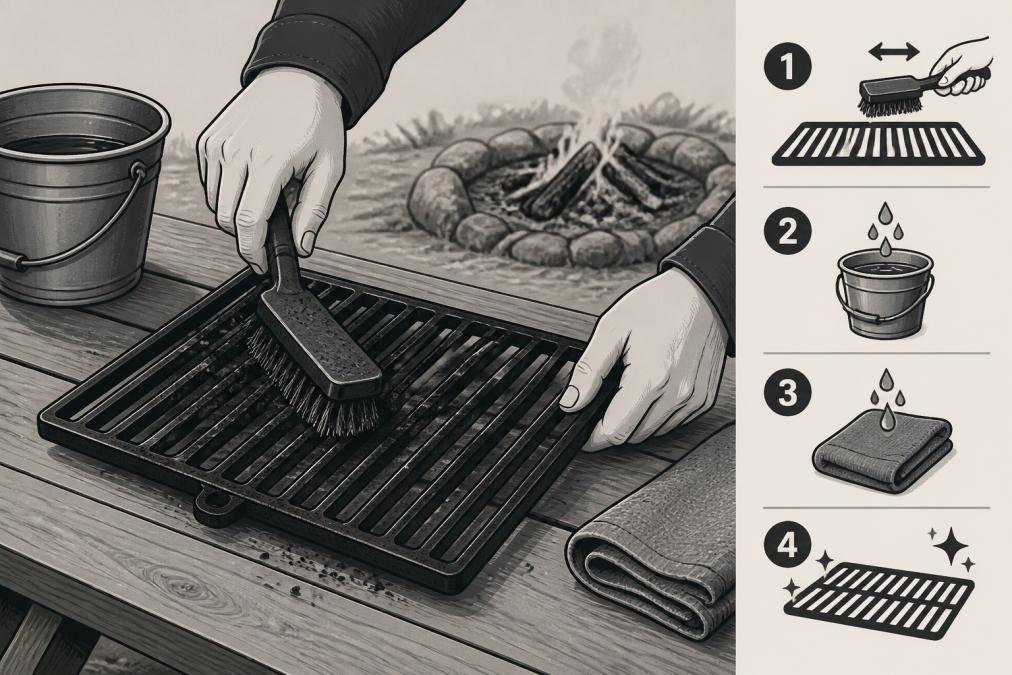
For raw carbon steel grates (like the ANVIL):
- While the grate is still warm (not hot), use a stiff wire brush to scrub off food residue and ash.
- Wipe the surface with a dry cloth to remove loose debris.
- Apply a thin layer of high-smoke-point oil (flaxseed, grapeseed, or refined coconut oil) with a cloth or paper towel.
- Allow the oil to absorb into the steel.
- Store in a dry location. If storing long-term, wrap in cloth or paper to prevent moisture contact.
The biggest mistake with carbon steel grill grates is using soap. Soap strips the seasoning layer you've built up over multiple cooks. Water is fine for rinsing; soap is not.
According to Health Canada's guidance on safe cookware and food contact materials, maintaining clean cooking surfaces and avoiding chemical contamination of food contact materials is a core food safety principle. For campfire grill grates, that means keeping the seasoning layer intact and avoiding harsh cleaning agents.
Checklist for post-trip grate maintenance:
- Brush off ash and food debris while grate is warm
- Wipe dry with a cloth, never leave moisture on the surface
- Apply a thin coat of oil to all surfaces, including the underside
- Inspect for any rust spots; address immediately with steel wool and re-season
- Store dry, away from humidity
Is the Adjustable Campfire Grill Worth It for Your Situation?
An adjustable campfire grill is worth it when you cook over open fire more than a handful of times per year, want genuine heat control, and are willing to invest in gear that lasts. It is not worth it if you're looking for the cheapest option to use once and store indefinitely.
| Your Situation | Worth It? | What to Prioritize |
|---|---|---|
| Weekend backyard fire pit cooking | Yes | Cooking surface area, stability |
| Backcountry hunting or wilderness camping | Yes | Collapsible design, weight, steel gauge |
| Occasional car camping, 2-3 trips/year | Yes, if quality | Durability, lifetime warranty |
| Solo ultralight backpacking | Maybe | Weight is the deciding factor |
| One-time use or gift with no follow-up | No | A simpler grill grate may suffice |
The outdoor culinary experience over open fire is genuinely different from gas or charcoal BBQ, more variable, more hands-on, and more rewarding when you have the right tools. Temperature control through height adjustment is the skill that separates frustrating campfire cooking from consistently good results.
For Canadian outdoor enthusiasts, durability carries extra weight. Gear that handles wet, cold conditions across multiple seasons is worth paying for once rather than replacing repeatedly. As the Canada Safety Council's guidance on outdoor recreational safety notes, well-maintained, purpose-built outdoor equipment reduces risk and improves the overall experience in remote settings.
The ANVIL from Browns Outpost is built for exactly this: heavy-duty raw carbon steel construction, an adjustable campfire grill design that delivers real heat control, and a lifetime warranty that backs the durability claim. At 4.93 stars across 97 reviews, customer feedback reflects what the build quality suggests: this is gear that earns its place in the pack.
Browns Outpost offers free shipping on orders over $75 CAD. Visit brownsoutpost.com to see the ANVIL adjustable campfire grill and get started with open-fire cooking done right.
Campfire cooking over open fire rewards the right equipment and punishes the wrong kind. The Browns Outpost ANVIL adjustable campfire grill addresses the core challenges directly: height adjustment for real heat control, hand-crafted raw carbon steel for durability and long-term corrosion resistance, and a cooking surface built to handle everything from a family weekend to a backcountry hunting camp. Backed by a lifetime warranty and free shipping over $75 CAD, it's built to be the last campfire grill you buy.
Frequently Asked Questions
Can you use an adjustable campfire grill over a provincial park fire ring in Canada?
Yes, most adjustable campfire grills are designed to sit over or around standard fire rings found in Canadian provincial parks. Check that the grill's leg span fits the ring diameter at your destination before you go. Many parks in Ontario, BC, Alberta, and Quebec have fixed concrete or steel rings, so a grill with adjustable legs or a wide base gives you the most flexibility. Always follow the park's fire regulations, which are set by each province's parks authority.
Is a heavy-duty steel campfire grill better than a lightweight folding one?
For most campers who cook real meals over an open fire, yes. Lightweight folding grills flex under heavy pots and degrade quickly from repeated heat cycles. A heavy-duty steel grill, especially one made from raw carbon steel, holds its shape under load, distributes heat more evenly, and lasts for years with basic maintenance. The trade-off is weight, but if you're car camping or base camping, the durability advantage makes the extra kilograms worthwhile.
How does adjustable height improve open-fire cooking?
Raising or lowering the grill grate over a campfire gives you direct control over cooking temperature without touching the fire itself. Position the grate close to the coals for high, direct heat when searing meat. Move it higher for slower, indirect heat when cooking thicker cuts or keeping food warm. This is the same principle professional outdoor cooks use for fire management, and it's far more effective than trying to control temperature by adding or removing wood.
What safety considerations apply when using a campfire grill in Canadian forests?
Always check current fire bans issued by your provincial forestry authority before lighting any open fire. In BC, Alberta, Ontario, and other provinces, fire restrictions change seasonally and can be updated daily during dry periods. Use a grill with stable, wide-set legs to prevent tipping. Keep a bucket of water nearby. Never leave an open fire unattended, and fully extinguish coals before leaving the site, as required under provincial fire safety regulations across Canada.
This article was written using GrandRanker