 how-to
Maintaining Heavy Duty Carbon Steel Cookware
Table of Contents
- What Makes Carbon Steel Cookware Different From Cast Iron
- Initial Cleaning: Removing the Protective Coating Before First Use
- How to Season Carbon Steel the Right Way
- Best Oil for Carbon Steel Seasoning: A Smoke Point Comparison
- Daily Maintenance Routine for Heavy Duty Carbon Steel Cookware
- Removing Rust From Carbon Steel Pans and Restoring the Surface
- Storage Tips: Preventing Oxidation in Humid Canadian Climates
- Conclusion
Last Updated: August 10, 2026
What Makes Carbon Steel Cookware Different From Cast Iron
Carbon steel cookware is made from an alloy of roughly 99% iron and 1% carbon, forged thinner and lighter than cast iron while sharing the same seasoning and care principles. That 1% carbon content means carbon steel heats faster, responds to temperature changes more quickly, and handles intense, sustained heat over an open campfire without warping.
Cast iron is thick, heavy, and slow to heat, ideal for holding temperature like a thermal battery. Carbon steel offers precision: you can sear, then pull back the heat, and the pan responds almost immediately. For over-the-fire cooking where flame height shifts constantly, that responsiveness matters.
A carbon steel skillet also weighs significantly less than comparable cast iron, which matters for hunters packing into backcountry or campers covering serious ground across Canada's northern wilderness.
Both materials require seasoning to build a protective polymer layer that prevents rust and creates a natural non-stick surface. Both are damaged by prolonged moisture, harsh detergents, and neglect. If you already care for cast iron, carbon steel will feel familiar, the main adjustment is pace. Carbon steel seasons faster and develops a beautiful dark patina that improves with use.
At Browns Outpost, our hand-crafted raw carbon steel gear is built specifically for demanding, over-the-fire use. Below, we'll walk through exactly how to set up, season, and maintain your carbon steel cookware so it performs for a lifetime.

Initial Cleaning: Removing the Protective Coating Before First Use
New carbon steel cookware arrives coated with a protective layer of beeswax or food-safe oil applied by the manufacturer to prevent oxidation during shipping. This coating must be removed before your first cook.
Fill the pan with hot water, add a small amount of dish soap (this is the one time soap is acceptable), and scrub with a non-scratch pad or stiff brush. After washing, rinse thoroughly and dry immediately. Place the pan on a stovetop burner over medium heat for two to three minutes until all visible moisture has evaporated.
Skipping this step is a common mistake. The protective coating will interfere with seasoning and produce uneven results. Take ten minutes to do this properly and your seasoning will bond far more effectively to the raw metal surface.
How to Season Carbon Steel the Right Way
Seasoning is the process of baking thin layers of oil onto the carbon steel surface through polymerization, a chemical reaction where heat causes oil to bond to the metal and form a hard, slick polymer layer that protects against rust and gradually creates a natural non-stick surface.
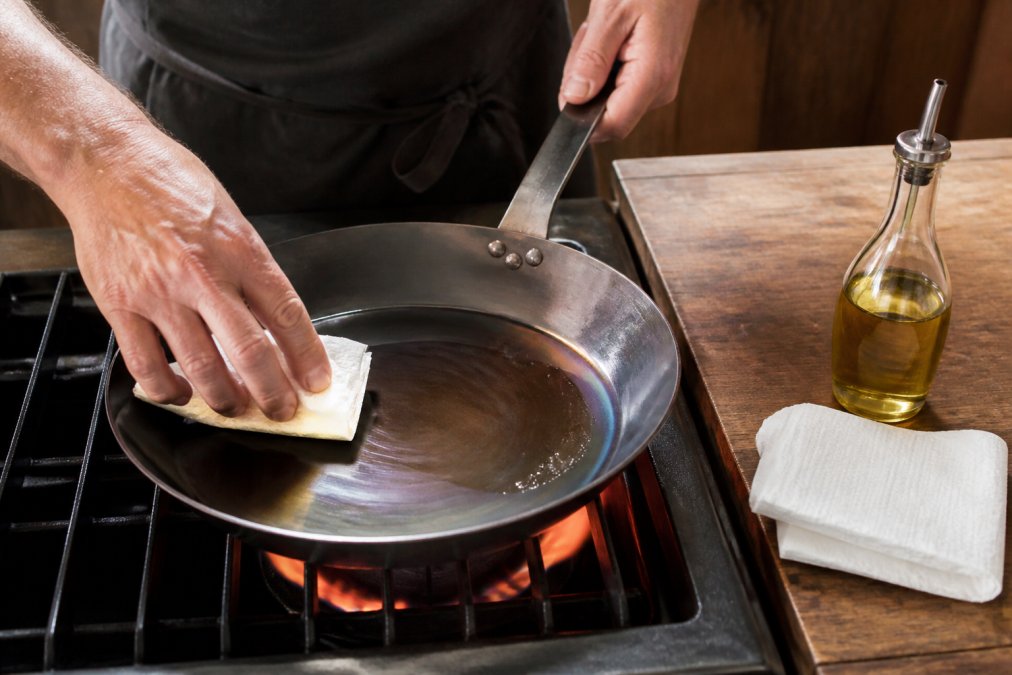
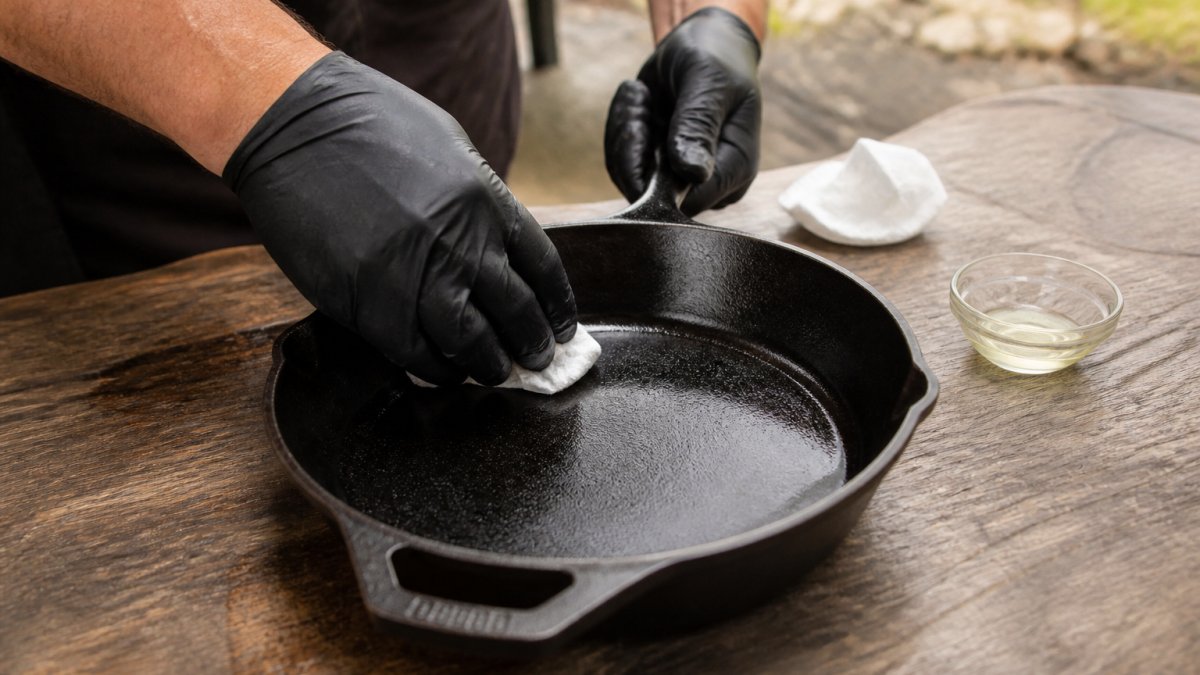
The most common mistake is applying too much oil. A thick coat turns sticky and gummy instead of hardening into a smooth polymer layer. Use less oil than you think you need. A few drops spread across the entire surface with a paper towel, then buffed almost completely off, is correct.
Step-by-Step Seasoning Process
Follow these steps for your first seasoning session. Repeat three to four times before your first cook for the best results.
- Preheat your oven or campfire to approximately 230-260°C, or use a stovetop burner on medium-high heat.
- Apply a thin coating of oil to the entire pan surface, inside and out, including the handle if it's carbon steel.
- Buff the oil almost completely off with a clean paper towel. The surface should look nearly dry, not wet or shiny.
- Heat the pan until it begins to smoke. On a stovetop, this takes two to three minutes. In an oven, place the pan upside down and bake for one hour.
- Let the pan cool fully before handling. Do not rush this step with cold water; thermal shock can warp the metal.
- Repeat the oil application and heating cycle three to four more times. Each layer adds depth to the seasoning.
After the final cycle, the pan should show a light amber to dark brown tone. This is the beginning of your patina, which will deepen to near-black with regular use.
Best Oil for Carbon Steel Seasoning: A Smoke Point Comparison
Choosing the right oil comes down to smoke point. Polymerization happens when oil reaches and sustains a temperature above its smoke point. According to [EXTERNAL_LINK: the Culinary Institute of America's cooking science resources | ciachef.edu], the quality of the polymerized layer depends on both the oil's fatty acid composition and the temperature at which it's applied. Oils high in unsaturated fats tend to polymerize more effectively.
| Oil | Approximate Smoke Point | Seasoning Result | Availability in Canada |
|---|---|---|---|
| Flaxseed oil | 107°C | Hard, thin layers; excellent patina | Health food stores |
| Grapeseed oil | 216°C | Smooth, durable coating | Most grocery stores |
| Canola oil | 204°C | Reliable, widely available | Every grocery store |
| Avocado oil | 271°C | Very durable at high heat | Specialty grocers |
| Coconut oil | 177°C | Good but leaves mild scent | Most grocery stores |
Flaxseed oil produces exceptionally hard layers but can flake if applied too thickly. Grapeseed oil is a practical choice for Canadian cooks, neutral in flavor, widely available, and producing a smooth, durable polymer layer. Canola oil is the most accessible option and performs reliably. Avoid olive oil for seasoning; its variable smoke point tends to leave a sticky, uneven residue.
Daily Maintenance Routine for Heavy Duty Carbon Steel Cookware
The right daily maintenance routine is simpler than most people expect. The goal after every cook is to remove food residue, protect the surface, and prevent moisture from sitting on the metal.
After each use:
- While the pan is still warm, use a stiff nylon brush or folded paper towel to wipe out any residue.
- For scorched food, add coarse salt and scrub with a paper towel. The salt acts as a gentle abrasive that lifts residue without damaging the seasoning.
- Rinse briefly with hot water if needed. Dry immediately and thoroughly with a cloth or paper towel.
- Place the pan back on a stovetop burner over low heat for one to two minutes to drive off remaining moisture.
- Apply a very light coating of neutral oil, buff it almost completely off, and store.
This entire process takes about five minutes. Consistency is what builds a durable, beautiful patina over months and years of use.
As documented in [EXTERNAL_LINK: Health Canada's guidance on safe cookware materials | canada.ca], carbon steel and cast iron are among the safest metal cookware materials for food contact.
What to Avoid: Dish Soap, Dishwashers, and Thermal Shock
Dish soap strips the polymer layer. Hot water and a brush handle 99% of cleaning tasks without soap.
Dishwashers will strip seasoning completely and leave raw metal exposed to oxidation within hours. Carbon steel is hand-wash only.
Thermal shock from plunging a hot pan into cold water can cause warping, especially with thin-gauge carbon steel. Always let the pan cool before rinsing.
Removing Rust From Carbon Steel Pans and Restoring the Surface
Rust on carbon steel is not permanent, it's reversible oxidation.
For light surface rust:
- Scrub the affected area with coarse salt and a damp cloth or nylon brush.
- Rinse with hot water and dry immediately and thoroughly.
- Heat the pan on the stovetop to drive off all moisture.
- Apply a light coating of oil and begin a seasoning cycle.
For heavier rust:
- Submerge the pan in a vinegar bath (equal parts white vinegar and water) for no longer than 30 minutes.
- Scrub with a nylon brush to remove loosened rust.
- Rinse thoroughly with hot water, then neutralize any remaining acid by scrubbing with a paste of baking soda and water.
- Dry completely on a stovetop burner.
- Re-season with three to four full seasoning cycles before cooking.
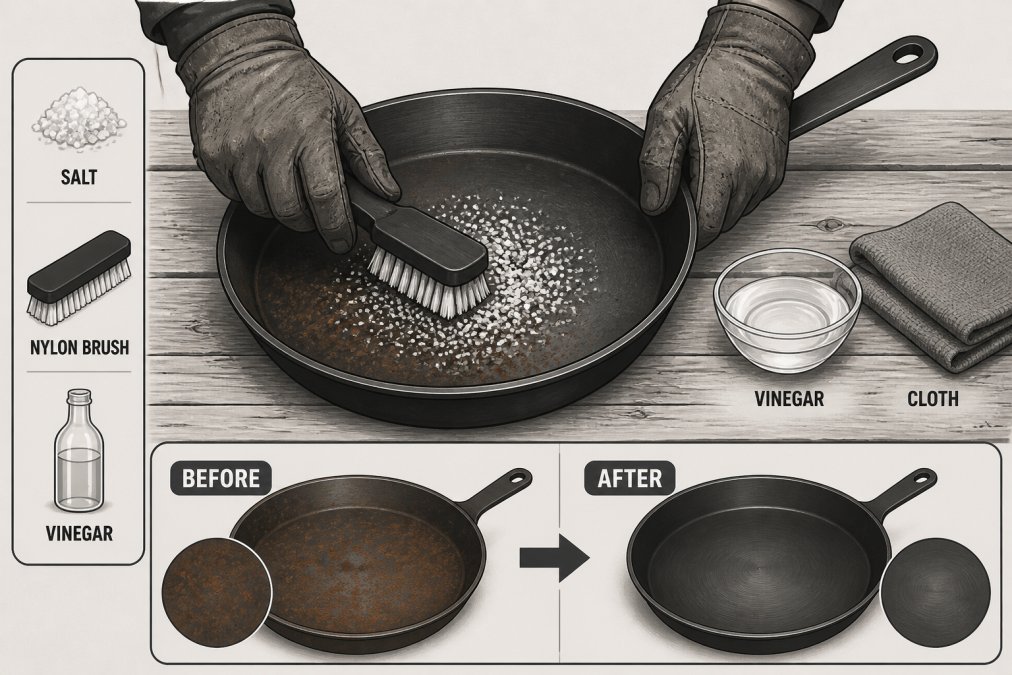
According to [EXTERNAL_LINK: the Canadian Conservation Institute's guidance on metal corrosion and surface treatment | canada.ca/cci], surface oxidation on iron-based metals is typically superficial and fully reversible with mechanical removal and appropriate surface treatment.
Storage Tips: Preventing Oxidation in Humid Canadian Climates
Storage is where most carbon steel care routines fall apart, particularly for Canadian outdoor cooks dealing with humid summer conditions or wet coastal environments.
For short-term storage (days to weeks):
- Store the pan in a dry location with good air circulation. Avoid sealed plastic containers.
- Apply a very light coating of neutral oil before storing.
- Place a paper towel inside the pan if stacking with other cookware to prevent moisture transfer.
For long-term storage (months, between seasons):
- Clean and season the pan thoroughly before putting it away.
- Apply a slightly heavier oil coating than you would for short-term storage, then buff it down to a thin, even film.
- Store in a cloth bag or wrap in clean cotton cloth rather than plastic. Cotton breathes; plastic traps humidity.
- If storing in a humid region, consider adding a small silica gel desiccant packet near the pan to absorb ambient moisture.
- Check the pan every few weeks during long storage. If you see early-stage surface rust, address it immediately.
Carbon steel's thinness means it can show surface rust more quickly in high-humidity environments than cast iron. This makes the light oil coating before storage especially important for carbon steel users in coastal British Columbia, the Great Lakes region, or Atlantic Canada where summer humidity is consistently high.
The Browns Outpost ANVIL Grill is built from hand-crafted raw carbon steel designed to handle exactly these conditions. Proper storage between uses extends the life of any carbon steel cookware significantly.
Good carbon steel cookware, properly maintained, genuinely lasts a lifetime. The challenge most outdoor cooks face isn't the maintenance itself; it's building the habit and knowing what to do when things go wrong. The Browns Outpost ANVIL Grill, built from hand-crafted raw carbon steel and backed by a lifetime warranty, is designed for exactly the kind of demanding, over-the-fire use this guide covers. With free shipping on orders over $75 CAD, it's a straightforward investment in cookware that rewards consistent care with decades of reliable performance. Add it to your kit and cook with confidence.
Frequently Asked Questions
Should I oil my carbon steel pan after every use?
Yes, applying a very light coating of neutral oil after each use is the best way to protect the polymer layer and prevent oxidation between cooks. Wipe the pan dry after washing, heat it briefly on the stovetop to drive off any moisture, then rub a few drops of oil across the surface with a paper towel. This keeps the patina building consistently and stops rust from forming, especially important in Canada's humid summer months or damp camping conditions.
Can I use soap to clean carbon steel cookware?
A small amount of mild dish soap used occasionally will not ruin a well-seasoned carbon steel skillet, but regular soap use strips the polymer layer you've built up through seasoning. For daily cleaning, hot water and a nylon brush or non-scratch pad remove residue without damaging the patina. For scorched food, coarse salt works as a gentle abrasive scrub. Re-oil after every wash to maintain the non-stick surface and protect against rust.
How do I prevent rust on my carbon steel pans in humid Canadian climates?
Moisture is the main threat to carbon steel cookware in Canada's wet seasons and coastal regions. Always thoroughly dry your pan on the stovetop after washing before storing it. Apply a light coating of high smoke point oil before putting it away. In high-humidity storage areas, place a folded paper towel inside the pan to absorb ambient moisture. For long-term storage, a thin layer of beeswax provides extra protection against oxidation without affecting future seasoning.
How do you bring a carbon steel pan back to life after heavy rust?
Heavy rust is fully reversible on carbon steel cookware. Start with a vinegar bath, mixing equal parts white vinegar and water, and soak the pan for no more than 30 minutes to loosen oxidation. Scrub with a coarse salt and nylon brush to remove remaining rust without scratching the metal. Rinse, dry immediately on a hot stovetop, then re-season with two to three thin oil layers. The pan will regain its non-stick surface within a few cooking sessions.
This article was written using GrandRanker