 ultimate-guide
Rust Resistant Camping Cookware Guide
Table of Contents
- Why Rust Resistant Camping Cookware Matters
- Material Comparison: Stainless Steel vs. Aluminum vs. Carbon Steel
- Carbon Steel vs. Stainless Steel Camping Cookware
- How to Season Carbon Steel Cookware for Long-Term Protection
- Maintaining Cast Iron and Carbon Steel Outdoors
- Essential Cookware Pieces for Backcountry and Backyard Cooking
- Key Factors for Choosing Rust Resistant Camping Cookware
- Conclusion
- Frequently Asked Questions
Last Updated: August 31, 2026
Why Rust Resistant Camping Cookware Matters
Rust resistant camping cookware is the difference between a reliable meal in the backcountry and a frustrating cleanup battle at home. Moisture, acidic foods, and prolonged exposure to elements create the perfect storm for corrosion. The wrong material choice means spending half your trip scrubbing rust instead of enjoying your meal.
Rust resistance depends on material composition, seasoning and maintenance, and which foods you're cooking. A properly seasoned carbon steel skillet outperforms unseasonable stainless steel in durability and heat control, but becomes a liability when cooking acidic stews without proper protective layers.
At Browns Outpost, we've built our cookware line around materials that genuinely resist rust and oxidation when properly maintained. Our hand-crafted raw carbon steel responds to seasoning by creating a protective patina over time, meaning your gear gets better with use, not worse.
Below, we'll walk you through the materials that actually resist rust, how to season and maintain them in the field, and which cookware pieces are worth the weight in your pack.
Material Comparison: Stainless Steel vs. Aluminum vs. Carbon Steel
Choosing the right material is the foundation of rust resistance. Each option trades off corrosion protection, weight, heat conductivity, and durability differently.
Stainless Steel: Corrosion Resistance vs. Heat Conductivity
Stainless steel earns its reputation through a passive oxide layer that regenerates when exposed to oxygen, making it genuinely rust-proof in most conditions. The trade-off is heat conductivity: stainless steel conducts heat slowly and unevenly, creating hot spots and cold zones. You'll spend more time managing temperature and rotating cookware over the fire.
For backcountry trips with simple meals and longer cooking times, stainless steel works. It requires minimal maintenance and no seasoning. But for serious outdoor cooks wanting responsive heat control and proper searing, stainless steel frustrates more than it delivers.
Aluminum: Weight and Thermal Efficiency Trade-offs
Hard-anodized aluminum is lightweight and conducts heat exceptionally well, making it popular for backpacking. The protective oxide layer resists scratches and corrosion, but can wear through with use. Aluminum reacts with acidic foods like tomato sauce or lemon juice, potentially leaching metal into your food.
For ultralight trips with dehydrated meals and simple proteins, anodized aluminum works. For anything involving fresh acidic ingredients or long-term durability, the material shows its limitations quickly.
Carbon Steel: Durability and Oxidation Prevention
Carbon steel occupies the middle ground: lighter than cast iron, heats more evenly than stainless steel, and responds to seasoning like cast iron does. When properly seasoned, it develops a polymerized oil layer that protects against rust and improves non-stick properties over time (peer-reviewed research). It's initially reactive to acidic foods, but the seasoning layer buffers that reactivity.
The catch: carbon steel requires consistent maintenance. But if you're willing to season it regularly and protect it in wet conditions, carbon steel delivers superior cooking performance and durability that improves with use.
Carbon Steel vs. Stainless Steel Camping Cookware
Stainless steel is genuinely maintenance-free. You can leave it in a damp tent for days and move on. No seasoning, no special protocols.
Carbon steel demands more attention but delivers more in return. It heats faster, distributes heat more evenly, and allows you to achieve the sear and control that transforms a meal from adequate to memorable. The seasoning layer isn't just protection, it's a non-stick surface that improves with every use.
The real difference comes down to cooking style. If you're boiling water for pasta and rehydrated meals, stainless steel's heat distribution problem barely matters. If you're searing venison steaks or building flavor through proper browning, carbon steel's responsiveness becomes essential. Most serious outdoor cooks choose carbon steel because the performance gap justifies the maintenance commitment.
How to Season Carbon Steel Cookware for Long-Term Protection
Seasoning is the foundation of rust resistance in carbon steel. It's building layers of polymerized oil that protect the metal and improve non-stick properties.
Initial Seasoning Steps
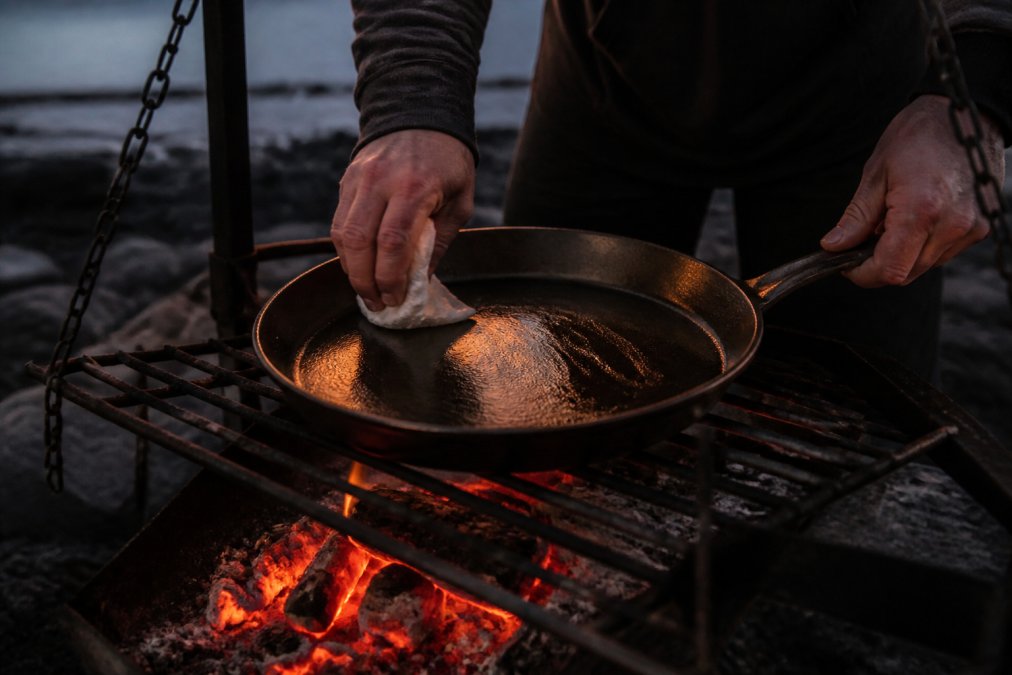
Start with a clean surface. Wash new cookware thoroughly with hot water and dish soap to remove manufacturing residue. Dry it completely, any moisture left behind will cause rust before seasoning begins.
Apply a very thin layer of high-heat oil (grapeseed, avocado, or canola) to the entire surface. Wipe away excess aggressively; you want barely a visible sheen, not a glossy coating. Heat the cookware over medium-high heat until it just begins to smoke lightly. This polymerizes the oil into a hard, protective layer. Let it cool completely, then repeat 3-5 times. Each layer builds on the last, creating increasingly durable protection.
Maintenance Seasoning Between Trips
After each use, clean the cookware while still warm with hot water and a soft brush. For stuck-on food, use coarse salt and a small amount of oil to gently scrub it away. Dry immediately and completely, then apply a very light coat of oil to the entire surface while still warm. This replaces oils stripped during cooking and maintains the protective layer.
Before your next trip, inspect for rust spots. Small rust can be removed with a paste of coarse salt and oil, rubbed gently with a cloth. If rust has penetrated deeper, re-season that section by applying oil and heating it again.
Maintaining Cast Iron and Carbon Steel Outdoors
Outdoor conditions present challenges that home kitchens don't. Moisture, temperature swings, and constant water exposure make rust prevention an active process.
Cleaning Methods That Preserve the Seasoning
In the field, avoid using soap on carbon steel or cast iron, it breaks down the protective oil layer. Instead, rinse with hot water while still warm and scrub gently with a brush. For stubborn food, use coarse salt as an abrasive. If you must use soap, follow up immediately with oil application and gentle heating to restore the protective layer.
Never let cookware sit wet. Dry it thoroughly after every cleaning, then apply a thin coat of oil before storing. In humid or wet conditions, check frequently. Even well-seasoned pans can develop rust spots if exposed to moisture for extended periods without maintenance.
Handling Acidic Foods and Chemical Reactivity
Acidic foods, tomato sauce, citrus, vinegar-based marinades, react with bare carbon steel and can damage seasoning. A well-seasoned pan can handle acidic foods for reasonable cooking times without damage. Tomato sauce simmered for 30 minutes rarely causes problems.
The strategy is simple: don't store acidic foods in your cookware. Cook the meal, serve it, then clean the pan immediately. If making a stew that will sit for hours, use stainless steel instead or transfer the finished meal to a separate container.
Rust Prevention Protocols for Wet Conditions
In wet conditions, treat your cookware like it's in a hostile environment. After every use, dry it thoroughly with cloth, not just air-dry. Store cookware in a dry bag or wrapped in moisture-wicking cloth. Never store wet cookware in a sealed container, which traps moisture.
If rust develops, remove it immediately. Make a paste of coarse salt and oil, scrub the affected area gently, then re-season that section by applying fresh oil and heating it. This stops rust progression and restores protection.
Essential Cookware Pieces for Backcountry and Backyard Cooking
Not all cookware serves the same purpose. Building a functional kit means choosing pieces that handle the meals you actually cook.
Skillet and Fry Pan Sets
A 25-centimeter skillet is the workhorse of outdoor cooking. It's large enough for searing meat and cooking breakfast for multiple people, while balancing capacity with packability. Smaller skillets (15-20 centimeters) handle individual meals and sides.
For backcountry trips where weight matters, a single 25-centimeter skillet often handles everything. For car camping or backyard cooking, multiple sizes let you cook more efficiently. Browns Outpost offers a 3-piece fry pan set with 25, 20, and 15-centimeter pans, covering every cooking scenario without redundancy.

Dutch Ovens and Cauldrons
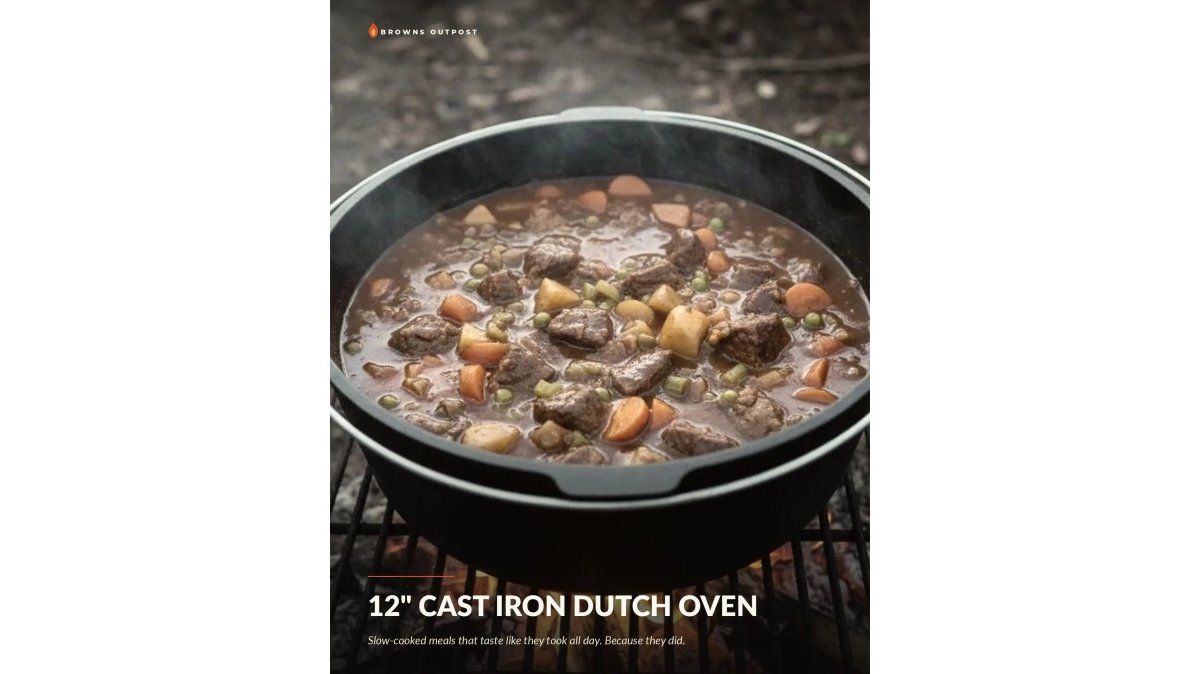
A Dutch oven is the second piece most serious outdoor cooks add. The enclosed environment and thermal mass create conditions for braising, stewing, and baking that aren't possible in skillets. A 30-centimeter Dutch oven handles meals for four to six people and doubles as a pot for boiling water or simmering soups.
Cauldrons with reversible lids offer similar functionality with a different form factor. The deep belly and wider opening make them easier to stir and manage over a fire. For hunters or groups cooking large quantities, cauldrons are often more practical than traditional Dutch ovens.
Both pieces are heavy, so they're best suited for car camping or base camps. But the meals they enable, slow-cooked stews, baked bread under coals, braised meats, justify the weight for trips where cooking quality matters.
Adjustable Campfire Grills
An adjustable grill lets you dial in exact heat over any fire. Instead of moving cookware closer to or farther from flames, you raise or lower the grate itself. This control transforms open-fire cooking from guesswork to precision.
The Browns Outpost ANVIL grill uses heavy carbon steel and adjusts smoothly, allowing you to shift from high-heat searing to gentle simmering without moving pans. It stakes into the ground, works over any fire, and requires no assembly. For backyard grilling or car-camping trips, an adjustable grill is the single best investment after basic skillets.
Key Factors for Choosing Rust Resistant Camping Cookware
Not every piece of cookware suits every situation. Understanding the trade-offs helps you build a kit that actually works for how you cook.
Weight vs. Performance Trade-offs
Backpacking demands lightweight gear. Carbon steel weighs roughly half what cast iron does, and anodized aluminum weighs even less. But lighter materials often sacrifice heat distribution and durability. The lightest cookware rarely develops the seasoning and non-stick properties that make outdoor cooking enjoyable.
For trips under three days where you're hiking daily, ultralight cookware makes sense. For base camps or car camping where you'll cook multiple meals, heavier cookware that performs better is worth the weight.
Heat Distribution and Cooking Control
Uneven heat creates frustration. Thin aluminum distributes heat quickly but unevenly. Cast iron and carbon steel distribute heat slowly but very evenly once heated. Thicker cookware (6 millimeters or more) distributes heat better than thin cookware, but weighs more. Medium-weight carbon steel skillets strike the balance.
Durability, Warranty, and Repairability
Quality cookware lasts decades with proper care. Cheap cookware often has weak handles, thin walls that dent easily, and coatings that flake off after a season. The upfront cost difference between quality and budget cookware is often recouped in the first few years of use.
Look for cookware with warranties that reflect confidence in durability. Browns Outpost backs all cookware with a lifetime warranty, meaning if something fails through normal use, replacement is covered. Repairability also matters for remote trips. A broken handle on quality cookware can often be repaired or replaced.
| Factor | Carbon Steel | Cast Iron | Stainless Steel | Anodized Aluminum |
|---|---|---|---|---|
| Rust Resistance | Excellent (when seasoned) | Excellent (when seasoned) | Excellent | Very Good |
| Weight | Light | Heavy | Medium | Very Light |
| Heat Distribution | Excellent | Excellent | Fair | Excellent |
| Maintenance | Regular seasoning | Regular seasoning | Minimal | Minimal |
| Cost | Moderate | Moderate | Higher | Lower |
| Durability | 20+ years | Lifetime | 10-15 years | 5-10 years |
Conclusion
Rust resistant camping cookware isn't about buying the most expensive gear or the latest technology. It's about understanding how materials behave under outdoor conditions and choosing pieces that match how you actually cook. Carbon steel and properly maintained cast iron deliver the performance and durability that transform outdoor cooking from tolerable to genuinely enjoyable.
The Browns Outpost 3-piece fry pan set ($47.99 CAD) covers most cooking scenarios without redundancy, while the 30-centimeter Dutch oven ($52.99 CAD) adds versatility for group meals and braised dishes. For precise heat control, the ANVIL adjustable campfire grill ($174.99 CAD) stakes into any fire and adjusts smoothly from searing to simmering. All pieces are hand-crafted raw carbon steel backed by a lifetime warranty, with free shipping on orders over $75 CAD. Start with a quality skillet, add pieces as your cooking needs expand, and maintain them consistently. Your cookware will improve with use, not deteriorate, and that's the mark of gear built to last.

Frequently Asked Questions
What is the best material for rust resistant camping cookware?
Carbon steel and cast iron offer superior rust resistance when properly seasoned, while stainless steel resists oxidation without seasoning but conducts heat less efficiently. Carbon steel combines the durability of cast iron with lighter weight, making it ideal for backcountry trips. Stainless steel works well for car camping where weight isn't critical. The choice depends on your cooking style and willingness to maintain seasoning.
How do you prevent rust on carbon steel camping gear?
Season your cookware regularly with a thin layer of oil, clean it immediately after cooking, and dry it completely before storage. Avoid leaving food residue overnight, especially acidic items like tomatoes or lemon. Store cookware in a dry location with oil-soaked cloth between pieces. When camping in wet conditions, wipe down gear daily and apply a light oil coating before bed to prevent moisture from causing oxidation.
How do I clean and season my camping cookware to prevent oxidation?
Clean cast iron and carbon steel with hot water and a stiff brush immediately after cooking, then dry thoroughly. For stubborn food, use coarse salt as a gentle abrasive. Once dry, apply a thin layer of high-heat cooking oil while the pan is still warm, then wipe away excess. Repeat this seasoning step after every few uses. Avoid harsh soaps that strip the protective coating; eco-friendly plant-based cleaners work well without damaging the seasoning.
Is stainless steel or carbon steel better for open-fire cooking?
Carbon steel outperforms stainless steel for open-fire cooking because it heats faster, distributes heat more evenly, and develops a natural non-stick patina with seasoning. Stainless steel requires more heat to reach cooking temperature and doesn't benefit from seasoning. However, stainless steel requires no maintenance and won't rust if neglected, making it better for casual backyard grilling. For serious campfire cooking, carbon steel delivers superior results.
What are the benefits of using heavy-duty carbon steel for camping?
Heavy-duty carbon steel withstands direct flame without warping, distributes heat evenly for consistent cooking results, and becomes more non-stick with use as seasoning builds up. It's lightweight enough for backpacking yet durable enough for expedition-grade use. The material is repairable if scratched or damaged, and proper seasoning makes it rust-proof even in wet backcountry conditions. A quality carbon steel pan lasts decades with minimal maintenance.
How much does quality rust resistant camping cookware cost?
Professional-grade rust resistant camping cookware ranges from $30 to $175 CAD depending on size and type. A 25-centimeter skillet costs around $32.99 CAD, a 3-piece fry pan set runs $47.99 CAD, and a 30-centimeter Dutch oven is $52.99 CAD. Heavy-duty adjustable campfire grills designed for open-fire cooking typically cost $174.99 CAD. Lifetime warranty coverage adds significant long-term value compared to cheaper alternatives that require replacement.
This article was written using GrandRanker