 listicle
Top 5 Portable Campfire Grills for Camping in 2026
Table of Contents
- Quick Comparison: Top 5 Portable Campfire Grills for Camping
- 1. The Lifetime Warranty ANVIL Grill: Best Overall Portable Campfire Grill
- 2. 12" Roasting Pan: Best for Deep-Walled Campfire Cooking
- 3. 16"×9" Griddle: Best Tabletop Grill for Feeding a Crowd
- 4. 10" Shallow Skillet: Best Lightweight Cast Iron for Solo Campers
- 5. 3-Piece Fry Pan Set: Best Versatile Camping Cookware Set
- How We Evaluated: Testing the Best Heavy Duty Campfire Grill Grate
- Key Features to Consider for Portability and Cooking Surface Area
- Frequently Asked Questions
Last Updated: September 19, 2026
Quick Comparison: Top 5 Portable Campfire Grills for Camping
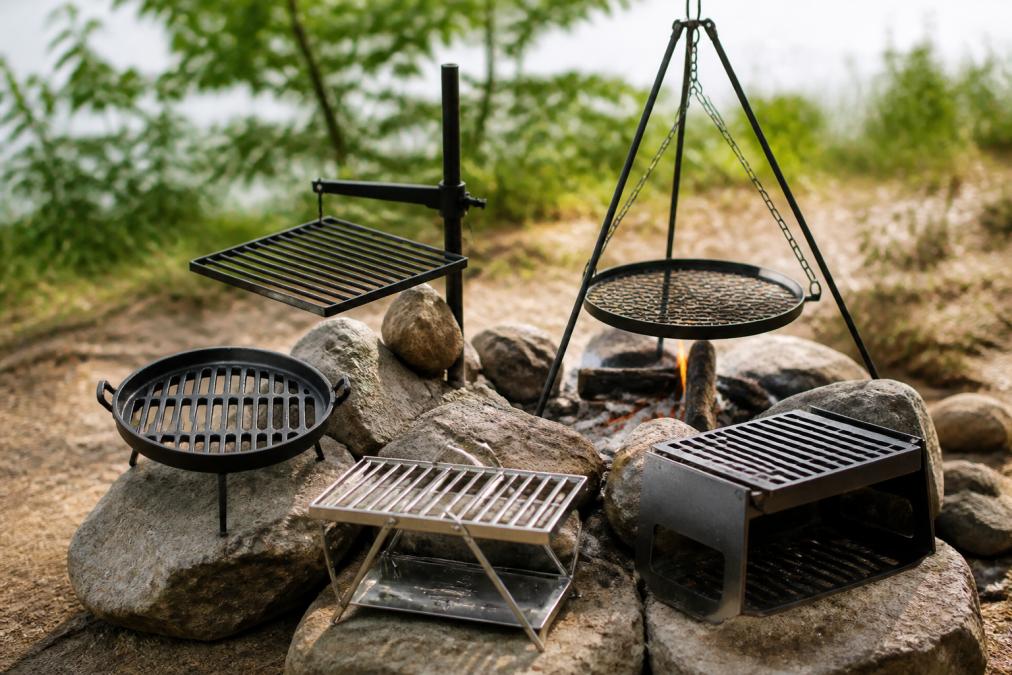
Choosing the top 5 portable campfire grills for camping comes down to matching the cooking surface to how you cook. This guide from Browns Outpost breaks down five campfire grills and cast iron pieces, from a solo breakfast to feeding a full campsite.
| Product | Price | Material | Best For |
|---|---|---|---|
| ANVIL Grill | $174.99 | Carbon steel | Best overall |
| 12" Roasting Pan | $48.99 | Cast iron | Deep-walled cooking |
| 16"×9" Griddle | $37.99 | Cast iron | Feeding a crowd |
| 10" Shallow Skillet | $32.99 | Cast iron | Solo campers |
| 3-Piece Fry Pan Set | $47.99 | Cast iron | Versatile cookware |
1. The Lifetime Warranty ANVIL Grill: Best Overall Portable Campfire Grill
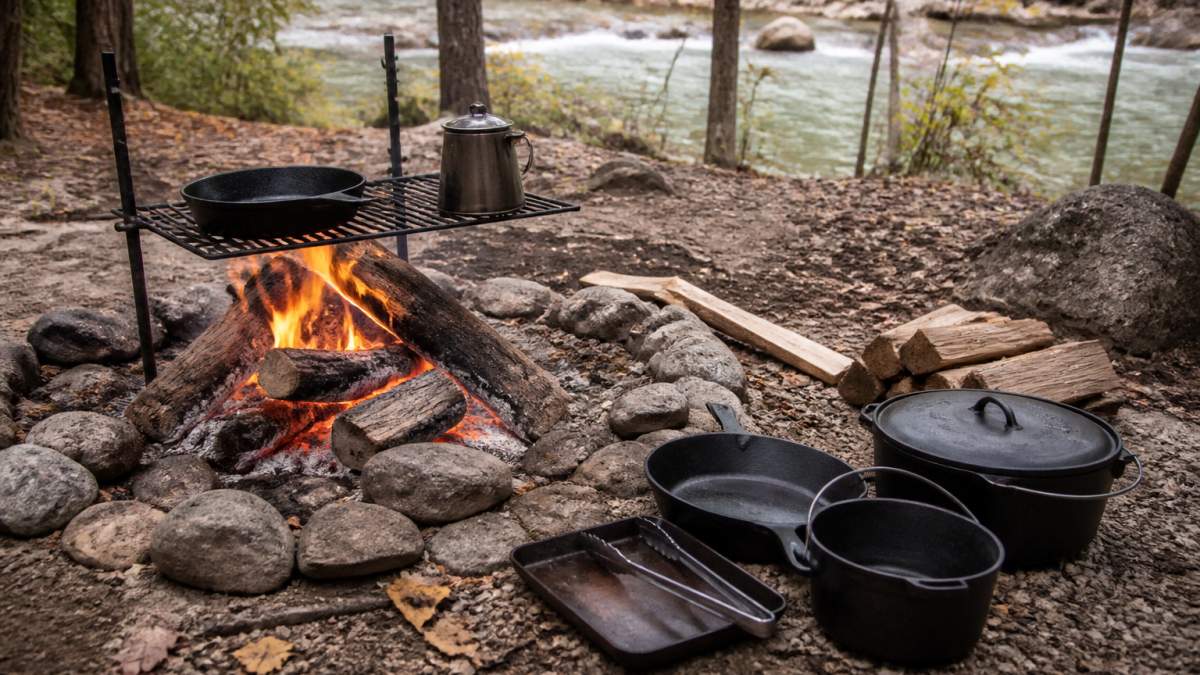
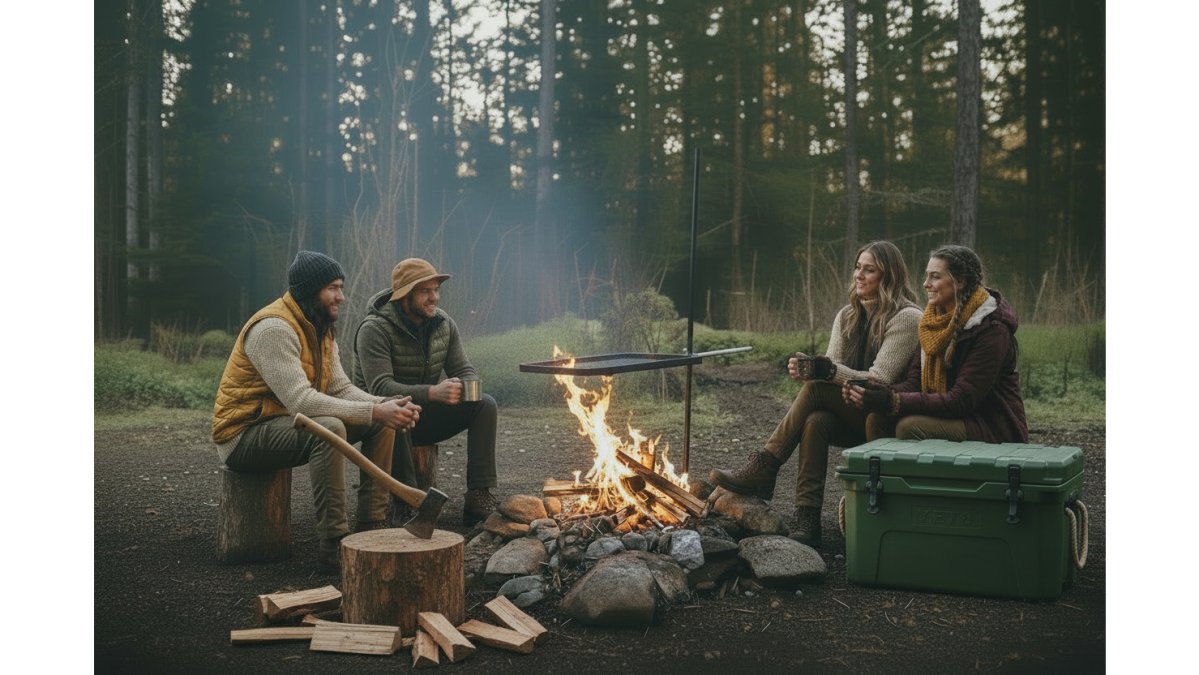
The ANVIL Grill is the best overall portable campfire grill because it adjusts to any fire and packs flat. Its 15 x 20 inch (38 x 50 cm) carbon steel grate handles 40 lb (20 kg) without flexing, and the stake design needs no assembly.

Key Specs and Pricing
- Surface: 15 x 20 inches (38 x 50 cm) carbon steel
- Load capacity: 40 lb (20 kg)
- Weight: 16.5 lbs
- Adjustability: Variable height, all-position
- Warranty: Lifetime against manufacturing defects
- Price: $174.99
One honest limitation: at 16.5 lbs, this is not a backpacking grill. It's built for car camping, base camps, and backyard firepits where weight isn't the deciding factor.
2. 12" Roasting Pan: Best for Deep-Walled Campfire Cooking
The tradeoff is weight: a 12-inch deep pan isn't one you'll carry far. For campers who drive to their site and cook real meals, that weight buys better searing and sauces.
3. 16"×9" Griddle: Best Tabletop Grill for Feeding a Crowd
The 16"×9" Griddle is the best tabletop option for feeding a group because it cooks a full breakfast at once. At 16 x 9 inches (40.6 x 22.9 cm), pancakes, eggs, and bacon share one surface instead of waiting on a single skillet.

4. 10" Shallow Skillet: Best Lightweight Cast Iron for Solo Campers
The limitation is capacity. It's a one-person pan, or a two-person pan at a push. For a group, the griddle or the fry pan set makes more sense.
5. 3-Piece Fry Pan Set: Best Versatile Camping Cookware Set
The 3-Piece Fry Pan Set is the most versatile option because it covers every size you'll reach for. It includes 10, 8, and 6 inch cast iron fry pans, so you stop packing pans you don't need.

How We Evaluated: Testing the Best Heavy Duty Campfire Grill Grate
We evaluated each piece on how it performs over an open fire, not on spec sheets. The criteria that separated the picks were heat control, cooking surface area, packability, and how the material holds up to repeated fire use.
The Test Protocol
Every piece went through the same four-stage routine over a live fire, repeated across three sessions to smooth out weather and fuel variation:
- Cold-start sear. A 1-inch steak on a bed of coals, grate set low. We watched how fast the surface recovered heat and whether the crust formed evenly or in hot spots.
- Load test. We distributed 40 lb (18 kg) of weight across the grate, the rated capacity, and checked for flex, sag, and whether the stake lock slipped under load.
- Height sweep. We moved the grate through its full adjustment range mid-cook to confirm the lock held and the surface stayed level at every position.
- Cleanup and re-season. Hot water rinse, dry on heat, oil while warm, then a repeat cook the next day to see whether the seasoning survived.
What We Measured
- Heat recovery time. How long the surface took to return to searing temperature after food went on. Cast iron recovered faster than thin steel because of its mass.
- Hot-spot spread. We mapped where food browned first. A flat griddle over coals browned more evenly than a grate with wide bar spacing.
- Pack footprint. Measured as the volume each piece takes in a camp box once broken down or nested, not just its weight.
- Seasoning durability. How the surface held up after three wash-and-oil cycles, judged by whether eggs released cleanly without added fat.
Terrain Suitability: Car Camping vs. Hike-In vs. RV
- Car camping and base camps. Weight is a non-issue. The ANVIL Grill's 16.5 lb frame and the 16"×9" griddle both earn their place because you're cooking real meals for real groups and hauling gear a few steps from the trunk.
- Hike-in and paddle-in sites. Every pound counts. The 10" Shallow Skillet is the only piece here that makes sense on a portage or a trail; it's a single pan that covers breakfast and dinner, and it nests against a stove or a pot.
- RV and trailer travel. Storage volume beats weight. The 3-Piece Fry Pan Set nests into the footprint of one pan, and the flat-packing ANVIL Grill slides into a compartment without a dedicated case.
We also weighed portability honestly. A 16.5 lb grill and cast iron pans are not ultralight gear; they're built for campers who value durability and cooking results over shaving grams, and for the hike-in crowd, that trade-off is the whole decision.
Key Features to Consider for Portability and Cooking Surface Area
Cooking surface area and weight decide which grill fits your trip. A larger surface feeds more people but adds weight, and the right balance depends on whether you're car camping or carrying gear to a site.
Fuel Type Comparison: What You're Actually Burning
Most guides frame this as propane versus charcoal and stop there. Over an open fire, the fuel decision is different, and it shapes both your cooking results and your environmental footprint.
- Wood and split hardwood. The traditional campfire fuel. It gives you the widest heat range and the most control through coal management, but heat output varies with species and moisture. Seasoned hardwood burns hotter and cleaner than softwood or green wood.
- Charcoal briquettes and lump charcoal. More consistent than wood, easier to bank into a steady coal bed, and predictable for griddle cooking. Lump burns hotter and leaves less ash; briquettes hold shape longer for low-and-slow.
- Propane and butane. Not a campfire fuel, but worth naming for comparison: instant, clean-burning, and banned in some fire-restricted zones where open flame is prohibited. If a fire ban is in effect, a portable gas grill may be your only legal option.
- Bio-fuel and eco-friendly alternatives. This is the angle most roundups skip. Some campers now burn processed bio-logs, wood pellets in a compatible basket, or reclaimed hardwood offcuts instead of felled timber. These options can reduce smoke and particulate output, and they sidestep the leave-no-trace concern of gathering deadwood from a site. Check whether your campground permits them; many do, and some require them during burn restrictions.
Long-Term Maintenance and Repairability
Competitors focus on out-of-the-box performance; the real test is year three. Here's how each material holds up and what you can fix.
- Carbon steel (the ANVIL Grill). The grate is a single piece of steel with a stake-and-lock assembly. If the lock loosens, it's a matter of tightening or replacing a pin rather than replacing the whole unit. Re-seasoning after a deep clean restores the surface. Carbon steel can be sanded back to bare metal and re-seasoned if rust takes hold.
- Cast iron (pans, griddle, skillet, set). Cast iron is effectively repairable forever. Surface rust comes off with steel wool and a re-oil. A cracked pan is the one failure you can't fix, which is why avoiding thermal shock matters more than any cleaning routine. Never plunge a hot pan into cold water.
- Seasoning as maintenance. A well-seasoned surface is your non-stick coating, your rust barrier, and your flavor layer. Re-oil after every wash while the metal is still warm; the pores open and absorb the oil better.
- Storage. Store cast iron with a paper towel between stacked pans to wick moisture, and keep the ANVIL Grill's stake assembly dry and lightly oiled to prevent rust at the joints.
Frequently Asked Questions
What features should I look for in portable campfire grills?
Focus on four things: cooking surface area, adjustability, material, and packability. A grate like the ANVIL gives you 15 x 20 inches of space, which handles a full meal. Adjustable height lets you control heat without moving coals. Carbon steel or cast iron holds heat better than thin stainless. Finally, check that legs or stakes fold or detach so the grill packs flat in your vehicle.
How do I maintain a raw carbon steel grill to prevent rust?
Raw carbon steel needs a thin coat of oil after every use. Burn off food residue over the fire, brush the grate clean while it is still warm, then wipe on a light layer of neutral oil. Store the grill dry between trips. If rust appears, scrub it off with steel wool and re-season the surface. This routine keeps the steel protected and ready for the next fire.
Is carbon steel better than stainless steel for campfire cooking?
Carbon steel wins on heat retention and weight. It heats faster than cast iron and holds temperature better than thin stainless steel, which means better sear marks and more consistent cooking. The trade-off is maintenance: carbon steel requires oiling and dry storage to prevent rust. Stainless steel resists rust with less care, but it does not hold heat as well over an open fire.
Are adjustable campfire grills worth the investment?
Yes, if you cook more than hot dogs. An adjustable grate lets you raise or lower the cooking surface to control heat, so you can sear a steak at low height or slow-cook a roast at high height. That flexibility replaces the need for multiple grills. A fixed-height grate forces you to move coals or wait for flames to die down, which adds time and inconsistency.
How do I clean burnt camping cookware without damaging the seasoning?
Never use soap or a dishwasher on seasoned cast iron or carbon steel. For burnt residue, boil water in the pan over the fire or stove for a few minutes to loosen the crust, then scrape it with a wooden spatula or stiff brush. Dry the pan immediately on heat, then apply a thin coat of oil. This method removes burnt food without stripping the seasoning.
A campfire grill only earns its place if it survives the trip and the seasons after it. Browns Outpost builds the ANVIL Grill and a full range of cast iron cookware for exactly that: an adjustable carbon steel grate that dials in heat over any fire, cast iron that holds temperature and improves with use, and a lifetime warranty on every piece. Free shipping applies on orders over $75 CAD. Get started with Browns Outpost and cook pro results over the fire for a lifetime.