 comparison
Vevor Adjustable Grill vs Competitors: 2026 Comparison
Table of Contents
- Vevor Adjustable Grill vs Competitors: Quick Comparison Table
- Is an Adjustable Campfire Grill Worth It?
- The ANVIL Grill: Adjustable Height and Carbon Steel Construction
- Carbon Steel vs Stainless Steel Grill: What's the Real Difference?
- Heavy Duty Campfire Grill Grate: Materials and Durability
- Cleaning, Maintenance, and Long-Term Durability
- Price-to-Performance: Where Each Grill Wins
- Conclusion
Last Updated: August 17, 2026
Vevor Adjustable Grill vs Competitors: Quick Comparison Table
When shopping for an adjustable campfire grill, the choice between a Vevor adjustable grill vs competitors comes down to build quality, heat control, and whether the price justifies durability. This guide from Browns Outpost breaks down the real differences between top contenders.

| Grill | Starting Price | Material | Adjustability | Best For | Warranty |
|---|---|---|---|---|---|
| ANVIL (Browns Outpost) | $174.99 CAD | Carbon Steel | Variable height, all-position | Professional outdoor cooks, hunters | Lifetime |
| Vevor Adjustable Grill | ~$120-180 CAD | Stainless Steel | Height adjustment | Budget-conscious campers | 1-2 years |
| Carolina Cooker | ~$200-280 CAD | Cast Iron | Fixed height | Backyard entertaining | Limited |
| Agawa Canyon | ~$150-220 CAD | Carbon Steel | Swing-arm design | Portability-focused | 1 year |
Cheaper grills sacrifice either adjustability or durability. The ANVIL grill sits at the sweet spot: professional-grade carbon steel with true variable height control and a lifetime warranty.
Is an Adjustable Campfire Grill Worth It?
An adjustable campfire grill is worth the investment if you cook over open flame regularly and want consistent results without constantly repositioning cookware. The ability to dial in exact height and heat exposure transforms campfire cooking from guesswork into precision.
Fixed-height grills force you to choose between searing steaks hot or slow-smoking ribs. An adjustable grill lets you do both on the same day with the same equipment. If you're cooking over fire two or three times a year, a basic fixed grate works fine. If you're hunting, camping regularly, or running a backyard fire pit setup, the precision pays for itself in better food and fewer burnt meals.
Temperature control and airflow management are the core benefits. An adjustable grill lets you raise the grate to reduce heat or lower it to sear harder, giving you real control over every cook.
The ANVIL Grill: Adjustable Height and Carbon Steel Construction
The ANVIL grill from Browns Outpost represents the professional end of the adjustable grill market. Built from heavy carbon steel with a lifetime warranty, it's engineered for cooks who treat fireside cooking as seriously as their kitchen at home.
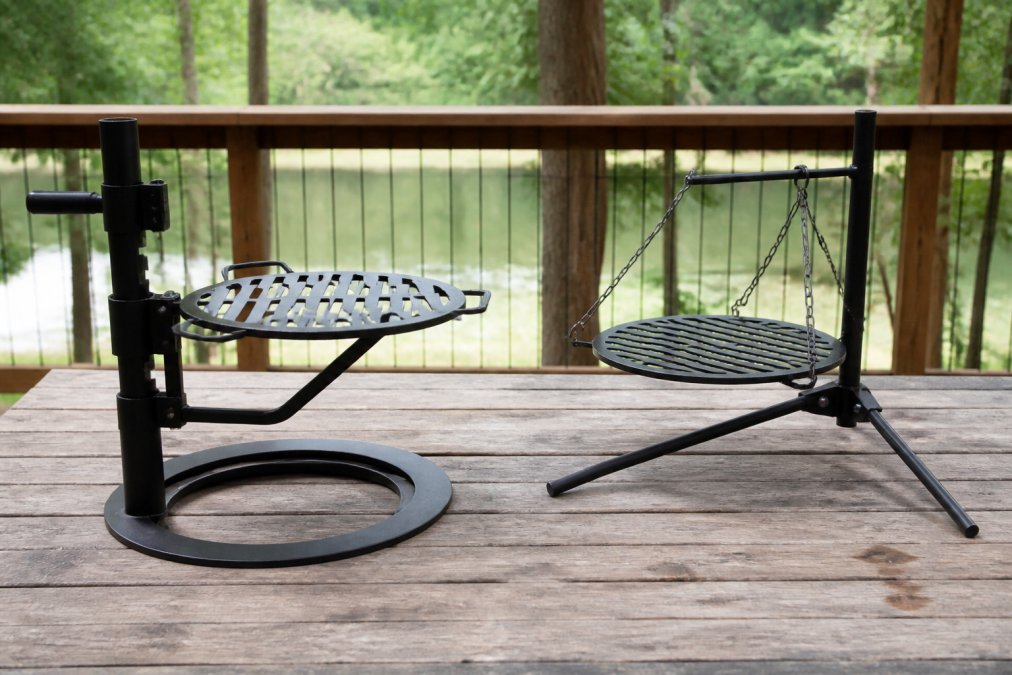
The adjustable stake mechanism is the core innovation. Rather than a fixed height, the grate slides and locks along a vertical stake, giving you infinite height positions between ground level and roughly 45 centimeters (approximately 18 inches) above the fire. This design lets you raise the grate for low-and-slow smoking or drop it for a hard sear, all without moving the grill itself.
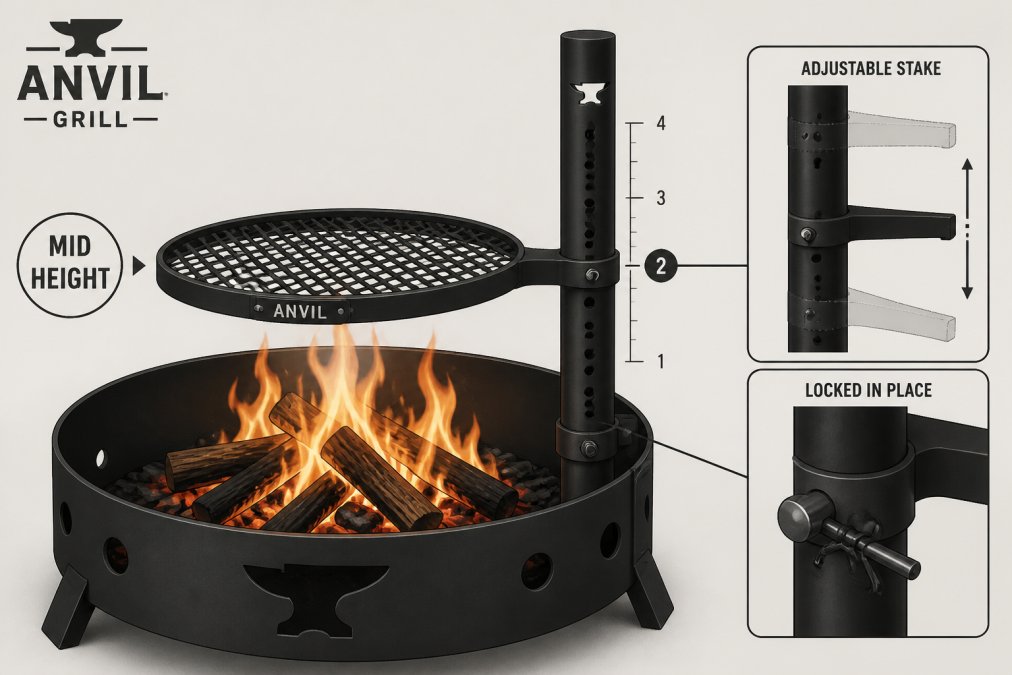
The carbon steel construction is the second strength. Carbon steel holds heat aggressively and develops a natural seasoning layer over time, much like cast iron but lighter. It doesn't warp under direct flame contact the way thin stainless steel can. The ANVIL's grate is thick enough to store real thermal mass, so heat distribution stays even across the cooking surface.
Temperature Control and Cooking Performance
The ANVIL's adjustability gives you precise temperature control that fixed grills can't match. Lower the grate close to the flame for searing, you'll get a hard crust on a steak in minutes. Raise it 30 centimeters (approximately 12 inches) up for indirect heat, perfect for smoking ribs low and slow without charring the exterior.
The ANVIL's heavy carbon steel grate holds temperature well, so food cooks evenly even if flames flicker. A thin stainless steel grate cools down the second you place cold meat on it, losing your sear window. The ANVIL's thermal mass keeps the grate hot enough to recover quickly, maintaining consistent cooking temperature throughout the meal.
You can position the grate low enough that flames almost touch the meat, creating the Maillard reaction that builds flavor. Then raise it for the second phase of cooking to finish without burning. Fixed grills force a compromise that adjustable grills eliminate.
Build Quality and Portability
The ANVIL's build quality reflects its price point. Hand-crafted raw carbon steel grate, heavy-duty stake, and minimal moving parts mean fewer failure points. The grate doesn't bolt to anything, it slides and locks, so assembly takes seconds and there's nothing to break.
Carbon steel outperforms stainless in one critical way: it improves with use. Every cook seasons the steel slightly, building a non-stick patina that stainless never develops. After a season of use, the ANVIL gets easier to cook on, not harder.
The ANVIL disassembles into two pieces, so it fits in a truck bed or backpack. It's heavier than swing-arm designs but lighter than full cast iron setups. The lifetime warranty backs the build quality claim, signaling confidence in the construction. Most competitors offer 1-2 year warranties, a significant difference if your grill fails mid-trip.
Carbon Steel vs Stainless Steel Grill: What's the Real Difference?
The choice between carbon steel vs stainless steel grill fundamentally changes how your equipment ages and performs.
Stainless steel is corrosion-resistant by design and requires minimal maintenance. But stainless steel is a poor conductor of heat compared to carbon steel. It cools down faster when you place food on it, recovers slower, and distributes heat unevenly across the grate surface.
Carbon steel conducts heat aggressively, develops a natural seasoning layer with use, and improves as a cooking surface over time. But it requires maintenance: oil it after each use or rust will develop, especially in wet camping conditions. The payoff is superior heat retention, better searing capability, and a non-stick surface that rivals cast iron.
For outdoor cooking, carbon steel wins on performance but demands discipline. Stainless steel wins on convenience but compromises on results. Most professional outdoor cooks choose carbon steel and accept the maintenance because the cooking results justify it.
A properly seasoned carbon steel grate resists rust effectively. The key is burning off residue after cooking, brushing while warm, and applying a light oil coat. This is why hunting camps often rotate their grills; they use one while another seasons and dries.
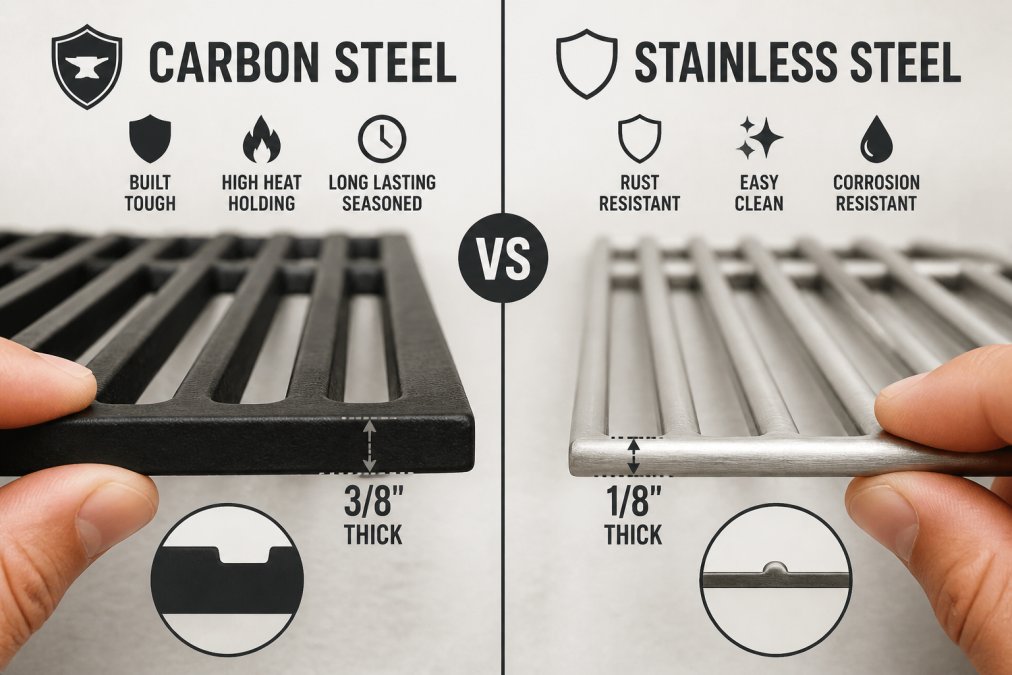
Thermal efficiency matters more than most buyers realize. A carbon steel grate at 260°C (500°F) will sear a steak in 2-3 minutes. A stainless steel grate at the same temperature takes 4-5 minutes because it loses heat faster to the meat. Over a full meal, that efficiency compounds into real savings on fuel.
The long-term cost calculation favors carbon steel for serious cooks. Buy a carbon steel grill for $175, maintain it properly, and it lasts 20+ years. Buy a stainless steel grill for $120, replace it every 5-7 years when the welds fail or the grate warps, and you spend more over time. The ANVIL's lifetime warranty makes this math even clearer.
Heavy Duty Campfire Grill Grate: Materials and Durability
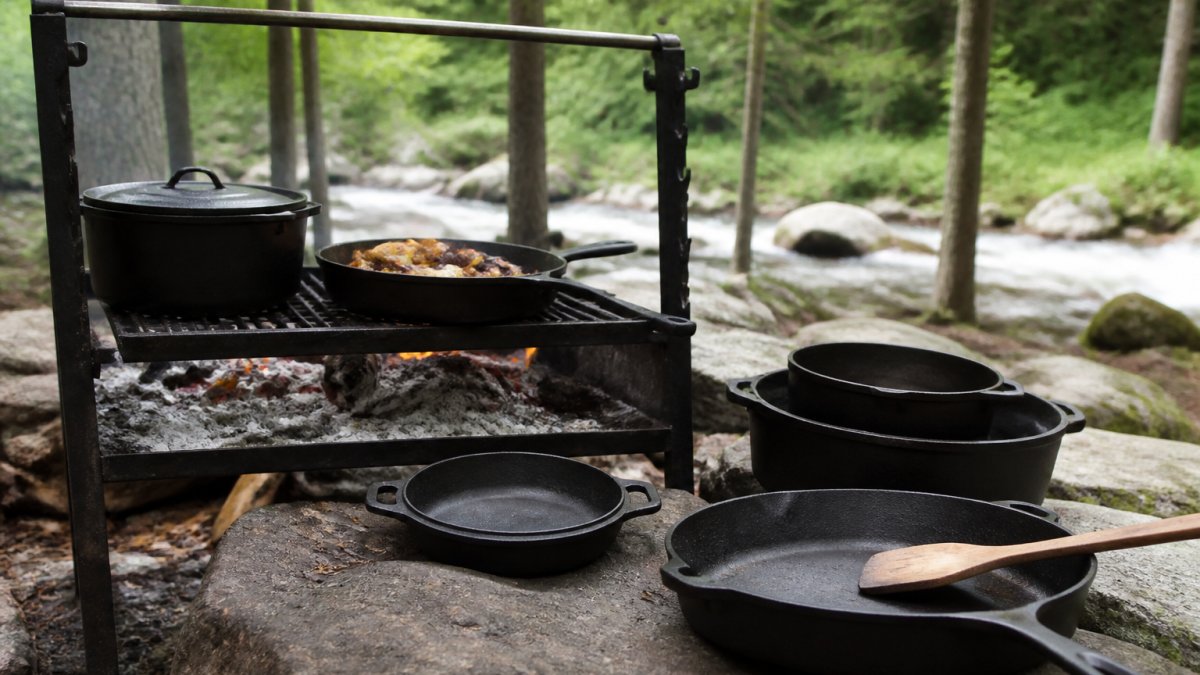
A heavy duty campfire grill grate is the foundation of everything else. Cheap grates warp under heat, thin grates cool down instantly, and poorly welded grates fail mid-season. The material and thickness determine how long your grill actually lasts.
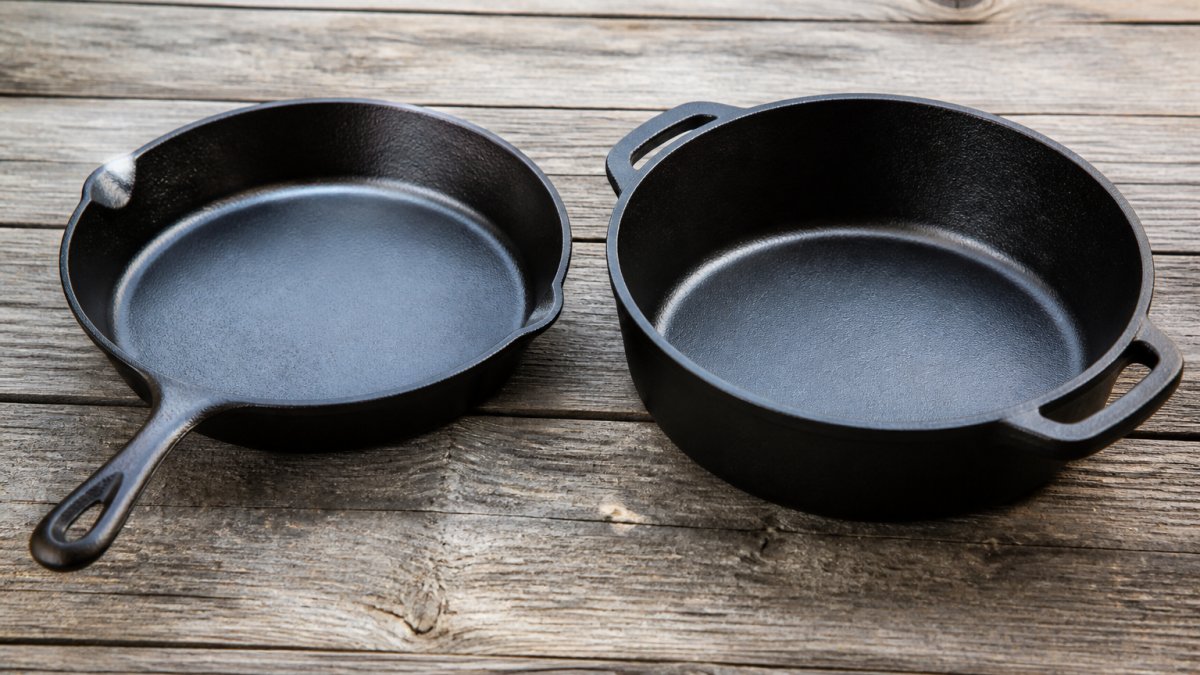
Heavy-duty grates use either cast iron, carbon steel, or high-grade stainless steel. Cast iron is nearly indestructible but heavy and prone to rust. Carbon steel is lighter, seasons faster, and conducts heat better. Stainless steel is maintenance-free but doesn't conduct heat as effectively and can warp under extreme direct flame.
Grate thickness is the hidden factor separating professional equipment from budget gear. A thin 3mm stainless grate cools down the second you place cold meat on it. A thick 8mm carbon steel grate maintains temperature and distributes heat evenly. This difference shows up immediately in cooking results.
The ANVIL grill uses a heavy carbon steel grate thick enough to handle direct flame contact without warping. This thickness is why it costs more than thin-steel alternatives; you're buying thermal mass and durability.
Budget grills often fail at the welds, where grate bars connect to the frame. Poor welding creates stress points that crack under thermal cycling. Professional grills use full-penetration welds that distribute stress evenly. The ANVIL's stake design requires minimal welds because the grate sits on the stake and locks in place, eliminating failure points.
An open grate design lets ash fall through and air flow freely, preventing hot spots. Most serious cooks prefer open designs for better heat distribution and easier temperature control.
Cleaning, Maintenance, and Long-Term Durability
Cleaning and maintenance separate grills that last decades from grills that fail in a few seasons.
The ANVIL's maintenance routine is straightforward: burn off residue after cooking, brush clean while warm, apply a light oil coat. This takes 5-10 minutes per cook. Carbon steel requires active maintenance; it's not a set-it-and-forget-it tool.
Long-term durability depends on storage conditions. A grill stored wet in a shed will rust faster than one stored dry in a garage. A grill used in coastal or high-humidity environments requires more frequent maintenance than one used in dry climates.
The lifetime warranty from Browns Outpost covers manufacturing defects, not maintenance neglect. If the grate warps or the stake breaks under normal use, it's covered. If you store it wet for six months and rust develops, that's on you.
Stainless steel grills require almost no maintenance but develop other problems: welds fail, the grate warps under extreme heat, and the surface becomes dull and scratched. Carbon steel grills require regular maintenance but improve with age, developing a non-stick patina that makes cooking easier over time.
User feedback consistently mentions that the grill gets better with use, the seasoning improves, the heat distribution becomes more predictable, and the non-stick surface develops naturally. This is the opposite of cheap grills, which degrade with use.
The ANVIL disassembles into two pieces, so it stores in a small space. If you're storing multiple pieces of gear in limited space, the ANVIL's compact design wins.
Price-to-Performance: Where Each Grill Wins
The ANVIL at $174.99 CAD sits in the middle of the market price-wise but delivers professional-grade performance. You're paying for carbon steel construction, adjustable height control, and a lifetime warranty. This price point makes sense if you cook over fire regularly and want results that justify the investment.
Budget alternatives at $100-130 CAD offer basic adjustability and stainless steel construction. They work fine for casual backyard grilling, but they sacrifice heat retention and durability. You'll replace them in 5-7 years.
Premium grills at $250-400 CAD add features like side tables or integrated thermometers. These are excellent for permanent backyard setups, but they're overkill for camping and hunting where portability matters.
The value proposition for the ANVIL is clear: professional-grade performance at a mid-market price, backed by a lifetime warranty. You're not paying for unnecessary features, and you're not compromising on core functionality.
A thick carbon steel grate requires less fuel to reach and maintain high temperatures because it stores heat effectively. A thin stainless grate requires more fuel because heat dissipates faster. Over a season of regular use, this compounds into real savings on charcoal or wood.
The warranty comparison is decisive. ANVIL's lifetime coverage versus 1-2 year warranties from competitors means your long-term risk is lower. If something fails in year three, you're covered.
Conclusion
The choice between a Vevor adjustable grill vs competitors ultimately depends on whether you prioritize convenience or performance. If you cook over fire regularly and want professional results, the ANVIL grill from Browns Outpost delivers adjustable height control, carbon steel durability, and a lifetime warranty that backs every purchase. At $174.99 CAD with free shipping over $75 CAD, it's positioned as the best value for serious outdoor cooks who refuse to compromise on build quality or cooking performance. Add to cart and experience the difference that real adjustability and heavy carbon steel construction make in your next cook.
Frequently Asked Questions
Is an adjustable campfire grill worth the investment for camping trips?
An adjustable campfire grill is worth it if you cook over open fire regularly. The ability to raise or lower the grate gives you precise temperature control, essential for searing steaks low and hot or slow-cooking ribs high. Fixed-height grills force you to work around one position, wasting fuel and producing inconsistent results. For weekend campers cooking once monthly, a basic grill works. For serious outdoor cooks, adjustable height pays for itself through better food and fuel efficiency over time.
What's the actual difference between carbon steel and stainless steel grills?
Carbon steel retains heat better and develops a seasoned patina that improves with use, similar to cast iron. Stainless steel resists rust without seasoning but conducts heat less efficiently and can feel slippery when wet. Carbon steel requires light oiling between trips; stainless needs no maintenance. For campfire cooking where heat retention matters, carbon steel outperforms stainless. The trade-off is that carbon steel demands slightly more care in damp conditions, but that care is minimal (dry and oil).
How do you choose a heavy duty campfire grill grate?
Look for grates made from thick carbon steel or cast iron, at least 3-5 mm thick. Thin grates warp over direct flame and cool quickly. Check the grate's weight, heavier means more material for heat retention. Verify it handles your fire size: a grate sized for small campfires will struggle over a large pit. Test the adjustment mechanism if it's adjustable; it should lock firmly at every height. Finally, confirm it fits your cooking style: wider spacing works for whole fish and vegetables, tighter spacing for smaller cuts.
Do I need to worry about rust on a carbon steel grill in wet camping conditions?
Carbon steel will rust if left wet, but rust prevention is straightforward: dry it immediately after use while still warm, apply a light coat of neutral oil, and store it dry between trips. Most rust forms from extended moisture exposure, not brief dampness. If you're camping in heavy rain, wipe the grate dry after cooking and before packing. A thin oil coat acts as a barrier. Many outdoor cooks use carbon steel in wet conditions year-round without issues by following these steps consistently.
This article was written using GrandRanker