 comparison
Vevor vs Carolina Cooker: Cast Iron Comparison
Table of Contents
- Vevor vs Carolina Cooker: What This Cast Iron Comparison Covers
- Vevor Cast Iron Cookware Review: Burners, Griddles, and Build
- Carolina Cooker Cast Iron Cookware Review: Cast Quality and Surface Flatness
- Side-by-Side Specs, Total Cost, and Warranty Comparison
- Propane, BTU, and Heat Output: Matching a Cooker to Your Cooking
- Best Cookware for Campfire Cooking: Picking by Use Case
- How to Season Cast Iron Cookware and Keep It Rust-Free
- Which One Should You Buy?
- Frequently Asked Questions
Last Updated: October 21, 2026
Vevor vs Carolina Cooker: What This Cast Iron Comparison Covers
Shopping for an outdoor cooker means weighing two very different paths: mass-market value or long-term build.
Here is the short version before the details. Vevor wins on upfront price and burner count. Carolina Cooker wins on cast quality and surface flatness.
That gap matters because a burner is only half the setup. The pan you put on it decides whether heat spreads evenly or scorches one side of dinner.
Vevor Cast Iron Cookware Review: Burners, Griddles, and Build
Vevor is best understood as a value-first outdoor cooking brand. Their propane stoves and griddles cover a huge range of sizes, from single-burner camp stoves to triple-burner patio cookers, and the pricing undercuts most specialty brands by a wide margin.
Build quality varies by model, and that is the honest headline of any Vevor cast iron cookware review. The cast iron griddle tops and burner frames are functional and heavy enough for family cooking, but you should expect rougher casting, thinner seasoning from the factory, and hardware that needs checking and tightening on arrival.
Where Vevor genuinely delivers:
- Burner count options that suit everything from camping to a full backyard setup
- Large cooking surface area per dollar
- Griddle plates that fit multiple burner configurations
Where Vevor Fits and Where It Falls Short
Vevor fits the buyer who wants maximum cooking capacity on a tight budget and accepts a break-in period. Surface flatness is the weak point. Warped or uneven griddle plates show up in customer reviews often enough that you should check flatness with a straightedge before your first cook.
Assembly is the second friction point. Many Vevor cookers ship partially disassembled, and the instructions are thin. Plan an evening for setup and keep a wrench handy.
Carolina Cooker Cast Iron Cookware Review: Cast Quality and Surface Flatness
Carolina Cooker sits on the other side of the value equation. This is a heritage-style brand built around heavy cast iron, and the difference shows the moment you lift the lid off a Dutch oven or run a hand across a griddle.

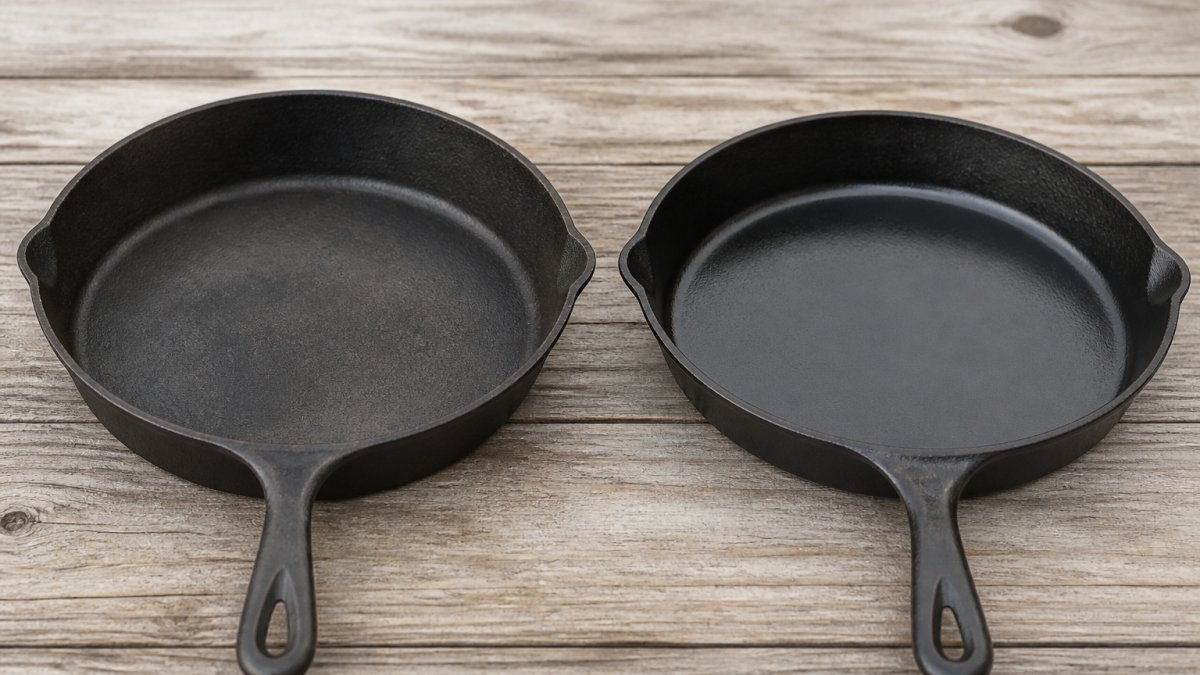
A fair Carolina Cooker cast iron cookware review has to start with the casting. The iron is thick, the walls are consistent, and the cooking surfaces come flatter than most budget competitors. That flatness is not cosmetic.
The trade-offs are real:
- Higher price per unit than Vevor
- Heavy weight that limits portability
- Longer preheat times on thick cast pieces
Pros and Cons of the Carolina Cooker Line
Pros: excellent cast quality, flat cooking surfaces, strong heat retention, durable construction that holds up over years of outdoor cooking.
Cons: heavier and pricier than value brands, slower to heat, and the lineup leans toward large-format cookers that suit a permanent backyard setup more than a campsite.
Side-by-Side Specs, Total Cost, and Warranty Comparison
Here is the comparison most reviews skip. Total cost means the cooker plus the cookware plus the fuel plus the replacement cycle, not just the sticker on the box.
| Category | Vevor (single/double/triple burner propane cookers) | Carolina Cooker (double/triple burner cast iron cookers) |
|---|---|---|
| Typical entry price | Lowest in category; single-burner units often under $100 CAD, triple-burner units commonly $150-$250 CAD | Mid to high; double- and triple-burner units commonly $250-$500 CAD depending on size and accessories |
| Burner options | Single, double, triple | Mostly double and triple |
| Burner output | Often rated 50,000-75,000 BTU per burner on high-pressure models; lower on low-pressure camp models | Commonly 60,000-100,000 BTU total across the frame, with individual burner ratings published per model |
| Regulator and pressure | High-pressure regulators common on outdoor models; low-pressure on camp stoves. Confirm the regulator included matches the burner rating | High-pressure regulators standard on most outdoor models; replacement regulators and hoses sold separately |
| Cast quality | Functional, variable; rougher casting and thinner factory seasoning | Consistently thick and flat; heavier walls and more uniform cooking surfaces |
| Surface flatness | Check on arrival with a straightedge | Reliable out of the box on griddle plates and Dutch ovens |
| Cooking surface | Large surface area per dollar; griddle plates sized to fit multiple burner configurations | Large-format surfaces; griddle and pot supports sized for family and group cooking |
| Weight and portability | Lighter frames; most models break down for transport | Heavier cast components; better suited to a permanent backyard setup |
| Assembly required | Often partial; instructions are thin | Minimal |
| Warranty | Limited, varies by model; commonly excludes rust, warping, and burner assemblies | Standard manufacturer terms; confirm coverage of cast components versus burner hardware |
| Replacement parts | Widely available; regulators, hoses, and burner parts easy to source | Available but less broadly stocked; order ahead of need |
| Best for | Budget family cooking, camping, high burner count per dollar | Backyard setups, long-term use, flat cast surfaces |
Neither brand publishes a lifetime guarantee on the cooker itself.
Shipping and parts access also belong in the total-cost math.
This is exactly where we built Browns Outpost differently: our ANVIL Grill carries a lifetime warranty against manufacturing defects at $174.99 CAD, and free shipping applies over $75 CAD.

Propane, BTU, and Heat Output: Matching a Cooker to Your Cooking
Propane and BTU ratings decide what you can actually cook, not how impressive the spec sheet looks. Low-pressure burners give you finer control for simmering, Dutch oven braising, and family cooking where nothing should scorch.
The Lifetime Warranty ANVIL Grill →

A practical way to read the numbers: a single high-pressure burner in the 50,000-75,000 BTU range is enough for wok cooking and fast searing; a double-burner frame rated 60,000-100,000 BTU total covers griddle breakfasts and family pots; a triple-burner frame at the top of that range handles large pots and group boils but drinks fuel. Match the burner to the job:
- Wok cooking and fast searing: high heat output, high-pressure regulator, wide burner head
- Dutch oven and stews: low pressure, steady flame, heavy cast pot to buffer the heat
- Griddle breakfasts: double burner with a flat plate and even heat across the surface
Fuel consumption follows heat output. A triple-burner cooker running wide open will empty a standard 20 lb propane tank far faster than a low-pressure double burner at moderate output.
Cast iron changes this math.
Setup and safety matter as much as the spec sheet.
Best Cookware for Campfire Cooking: Picking by Use Case
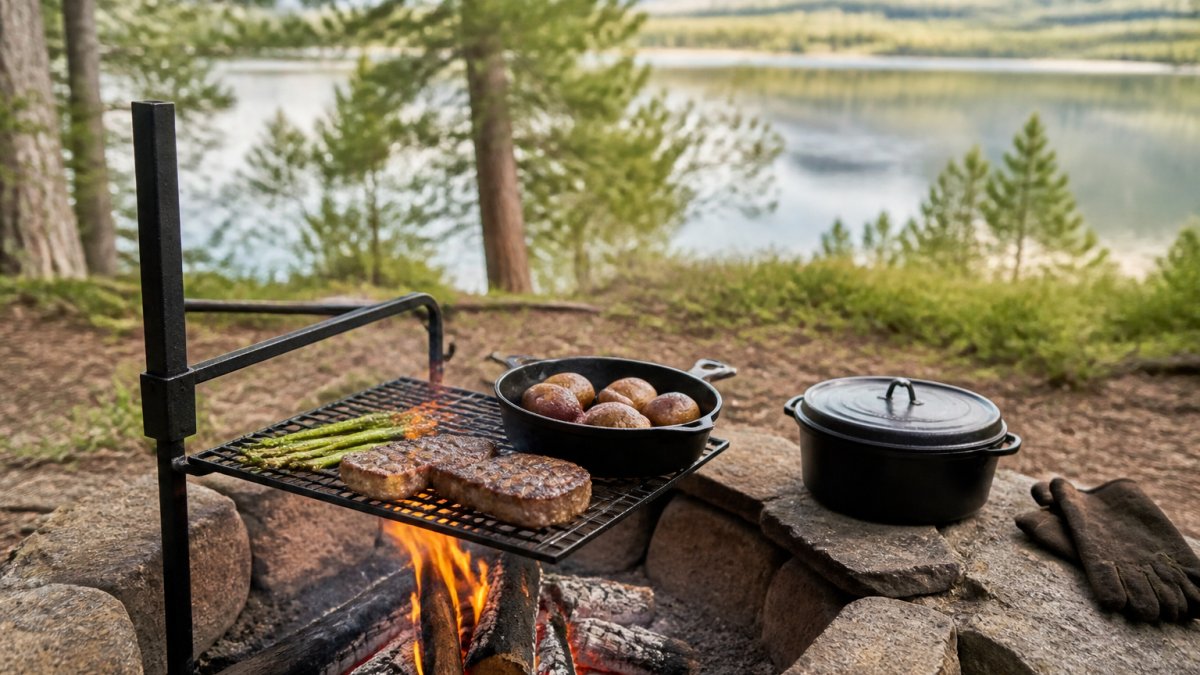
The best cookware for campfire cooking is heavy cast iron with a flat base and a lid that holds coals, because it holds heat through wind, uneven flames, and long cooks. Here is how we would pick by use case.
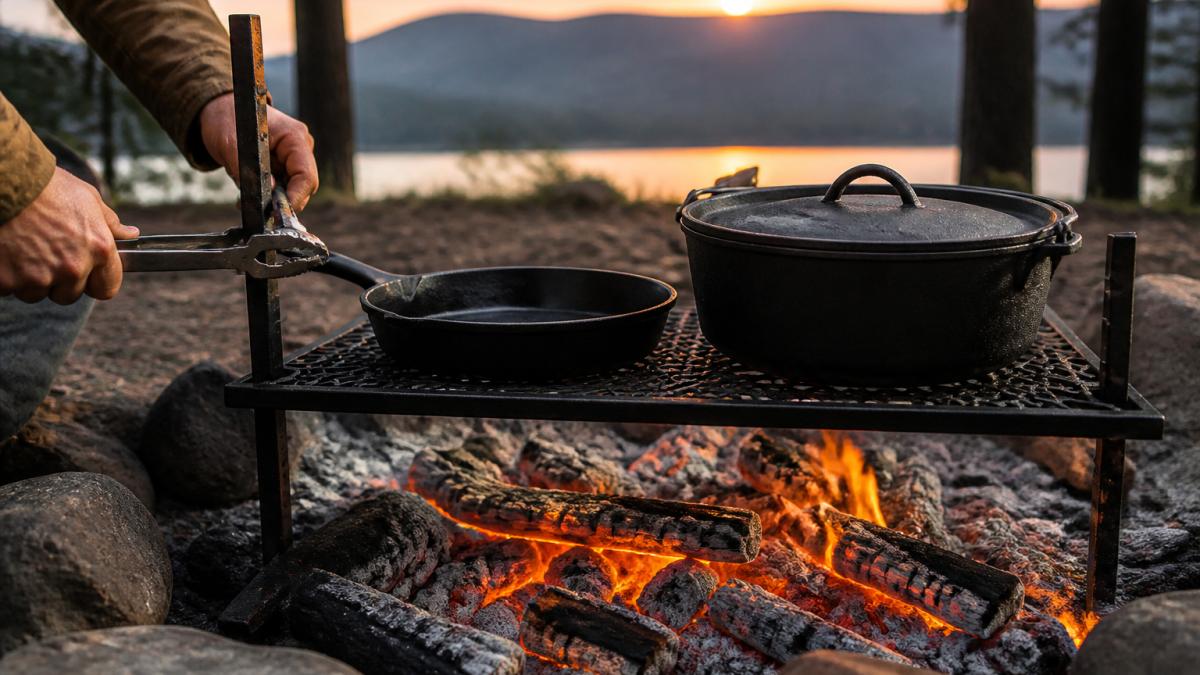
For a family or group, the 12" Dutch Oven at $52.99 CAD handles four to six servings and doubles as a camp oven with coals on the flanged lid. For two-person trips, the 8" Dutch Oven with Lid at $45.99 CAD packs smaller without losing heat retention.
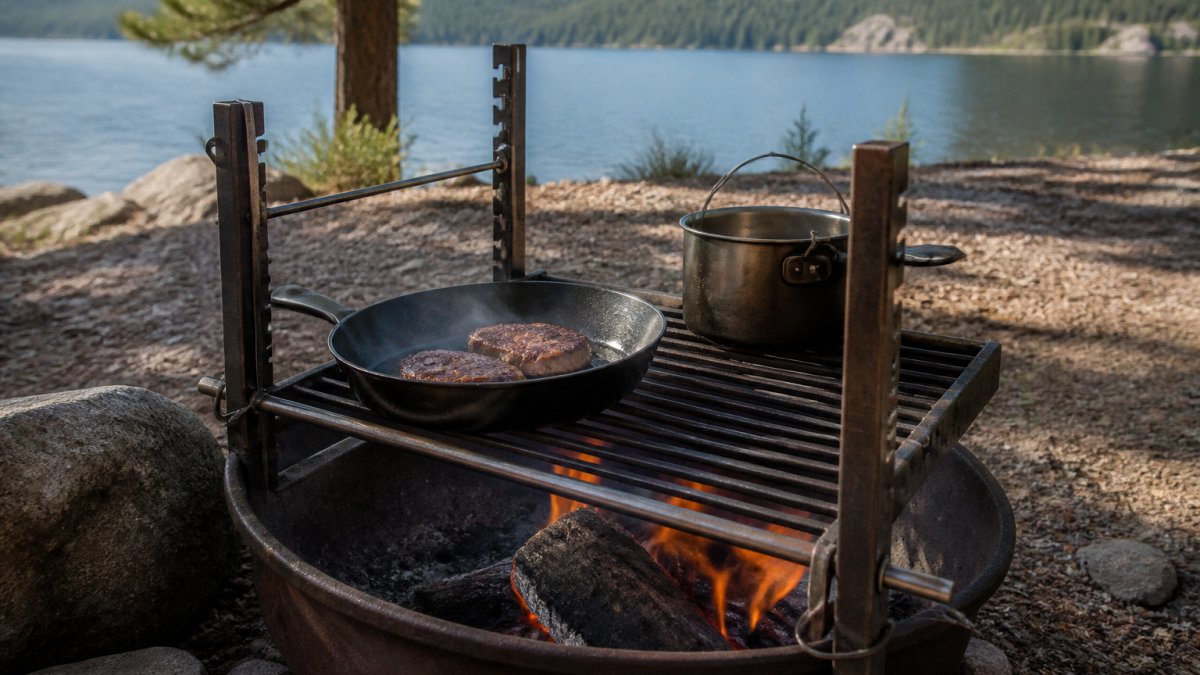
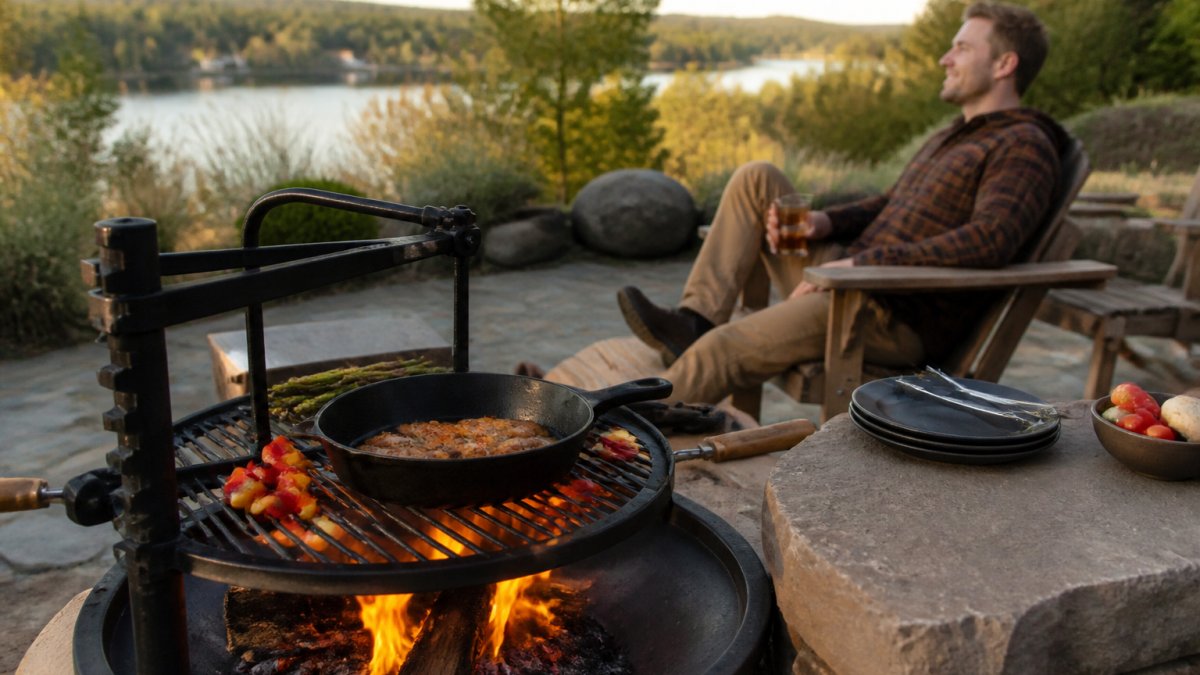
For fast breakfasts and searing, the 10" Shallow Skillet at $32.99 CAD gives maximum surface contact. If you want every size covered, the 3-Piece Fry Pan Set at $47.99 CAD nests for packing. Pair any of these with the adjustable-height ANVIL Grill and you can raise or lower the grate to dial in exact heat over any fire.
How to Season Cast Iron Cookware and Keep It Rust-Free
Seasoning is a layer of polymerized oil bonded to the iron, and it is what makes cast iron non-stick and rust-resistant. Here is the routine we recommend.
- Scrub the new piece with hot water and a stiff brush. No soap needed.
- Dry it completely on heat so no water sits in the pores.
- Coat thinly with a neutral oil inside and out.
- Heat it until the oil smokes, then let it cool. Repeat two or three times.
- Cook fatty foods first. Bacon, sausage, and shallow frying build seasoning fast.
- After every use: rinse with hot water, dry on heat, and wipe on a thin oil coat.
- Store dry with a paper towel in humid conditions.
Never put cast iron in a dishwasher. One cycle strips seasoning and starts rust. For camping in wet weather, dry the piece over the fire before packing and oil it before it goes in the bag.
Which One Should You Buy?
Buy Vevor if budget is the deciding factor and you want maximum burner count for family cooking and camping. Check surface flatness on arrival and expect to spend an evening on assembly.
Neither brand solves the cookware half of the equation, and that is where we would spend differently. Browns Outpost builds hand-crafted raw carbon steel and cast iron gear for over-the-fire cooking, backed by a lifetime warranty and free shipping over $75 CAD.
The real challenge is not choosing between two cookers. Browns Outpost solves that with the ANVIL Grill, a 15 x 20 inch carbon steel grate that handles 40 lb, adjusts to any height over the fire, and packs down flat for transport. Add a 12" Dutch Oven for slow cooks and a 10" Shallow Skillet for searing, and you have a camp kitchen that lasts a lifetime.
Frequently Asked Questions
How does Vevor cookware compare with Carolina Cooker?
Vevor leans toward propane burner systems, griddles, and outdoor cookers with high BTU output, so its strength is heat volume and large cooking surfaces. Carolina Cooker focuses on heavy cast iron pots, skillets, and flat-bottom cookware built for open fire and outdoor cooking. In a cast iron comparison, Vevor suits buyers who want a burner-plus-griddle setup, while Carolina Cooker suits buyers who want thick cast pieces for coals and campfire heat. Check surface flatness, pot size, and warranty terms before choosing either.
Is Vevor cast iron cookware worth buying?
It depends on what you plan to cook. Vevor's outdoor cooker and griddle lineup gives you burner count, BTU output, and a wide cooking surface at a low entry price, which works well for backyard gatherings and family cooking. The trade-offs show up in surface flatness, seasoning consistency, and long-term warranty support. If you cook over propane most weekends and want volume, it can be worth it. If you cook over open fire and want generational durability, heavy cast iron from a brand with a lifetime warranty is the better long-term value.
Are Vevor and Carolina Cooker products suitable for open-fire cooking?
Carolina Cooker cast iron is designed for coals, campfire rings, and outdoor cooking, so it handles open flame well. Vevor's propane cookers and griddles are built around a burner, not a fire, and running them over open flame is not what they are made for. For campfire cooking, choose cast iron with thick walls and a flat base that sits stable on coals, and pair it with an adjustable grate so you can control height and heat distribution instead of guessing.
How do you season and care for cast iron cookware?
Wash with hot water only, dry it immediately on heat so no water spot gets a chance to rust, then apply a thin coat of neutral oil while the metal is warm. Repeat after every use. Never put cast iron in a dishwasher, since one cycle strips seasoning. For campfire pieces, burn off residue over the fire and brush clean while warm. Store dry, and re-oil before long storage. Done consistently, seasoning builds into a slick, non-stick surface that improves each trip.
Which brand offers better value for outdoor cooking?
Value depends on how you cook. A propane cooker with a high BTU burner gives fast, controllable heat for large batches, and that suits backyard cooking for a crowd. Cast iron gives even heat distribution, works on coals and open fire, and lasts decades with basic maintenance. Factor in total cost, not just the sticker price: warranty coverage, replacement parts, and how many pieces you need to buy to cover the same meals all change the math.