 ultimate-guide
Why Choose Hand Crafted Cookware: A 2026 Guide
Table of Contents
- What Sets Hand Crafted Cookware Apart
- Hand Forged Carbon Steel Pan Benefits for Outdoor Cooking
- Cast Iron vs Carbon Steel for Outdoor Cooking
- Heat Retention and Thermal Performance
- How to Season Hand Crafted Cookware Properly
- Durability and Investment Value Over Time
- Environmental Impact of Artisanal Production
- Conclusion
Last Updated: August 24, 2026
What Sets Hand Crafted Cookware Apart
Hand crafted cookware differs fundamentally from mass-produced alternatives in construction, performance, and longevity. Artisan-forged pieces are built through deliberate processes that create strength throughout the metal, rather than stamped or cast items churned out on automated lines.
The difference shows immediately in weight distribution and heat responsiveness. Hand forged carbon steel and cast iron respond faster to temperature changes because the metal has been worked to consistent density. Mass produced cookware often has weak points where stamping or casting shortcuts created stress zones that become failure points over time.

At Browns Outpost, we've built our reputation on hand crafted cookware because that construction method delivers the durability and culinary performance serious outdoor cooks need. Our pieces are forged raw carbon steel with no synthetic nonstick coating and no shortcuts. They demand proper seasoning and care, but reward that care with decades of reliable service.
Hand crafted cookware is premium because the forging process itself creates metallurgical advantages. The hammer work aligns the metal grain, reduces internal stress, and builds thermal mass that mass produced pieces cannot match.
Hand Forged Carbon Steel Pan Benefits for Outdoor Cooking
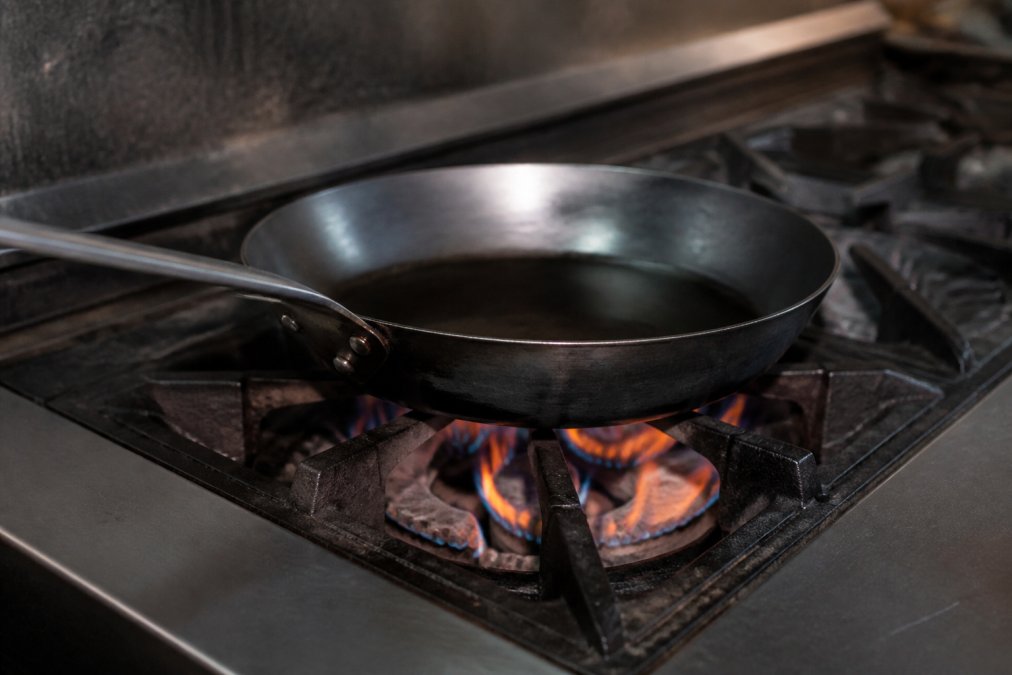
A hand forged carbon steel pan excels in outdoor cooking where reliability and heat control matter most. Carbon steel offers the thermal responsiveness of stainless steel with the heat retention of cast iron, without the brittleness that makes cast iron prone to cracking over open flame.
For campfire cooking, responsiveness is key. When you adjust your pan's height over coals, carbon steel reacts within seconds. Cast iron takes longer to shed heat; stainless steel distributes heat unevenly. Carbon steel finds the middle ground: it heats quickly, cools quickly, and maintains even heat distribution. You can sear meat hard and fast, then pull the pan back to hold a gentle simmer without constant adjustments.
Hand forged carbon steel also weighs roughly half what an equivalent cast iron piece would, a significant advantage for backcountry trips where every pound matters, yet it performs nearly identically in heat retention and durability (peer-reviewed research).
Seasoning a carbon steel pan creates a nonstick surface that rivals synthetic coatings and improves with use. Each cook adds a microscopic layer of polymerized oil. After a season of regular use, a well-maintained carbon steel pan develops a dark patina that outperforms most commercial nonstick surfaces and won't flake off because it's bonded to the metal itself.
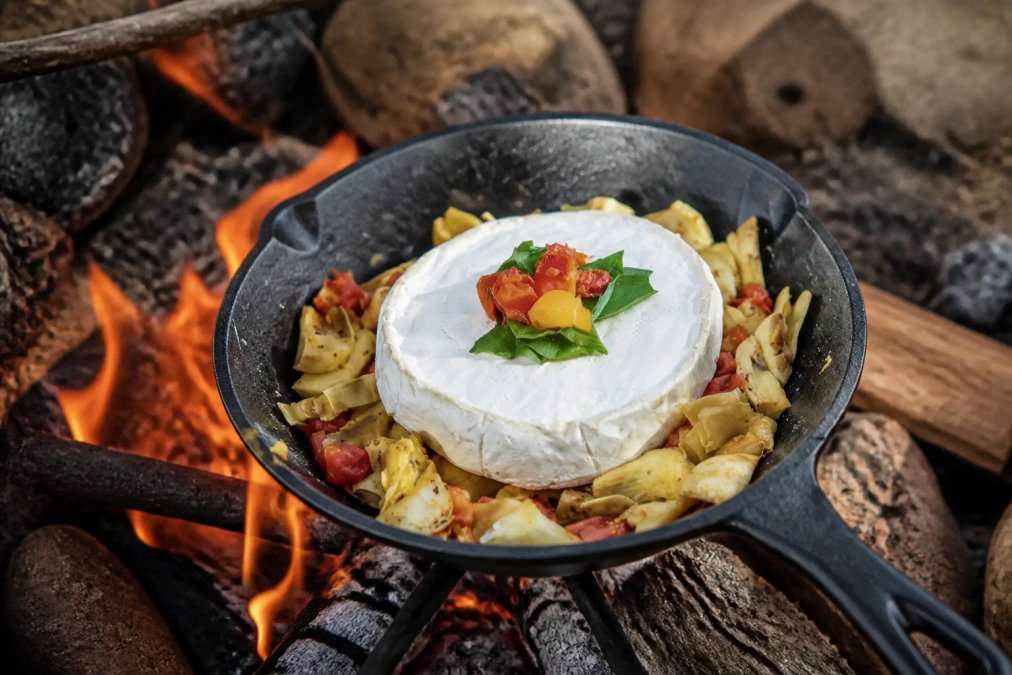
For hunters and wilderness cooks, carbon steel's corrosion resistance matters too. While cast iron rusts aggressively if left wet, hand forged carbon steel resists surface rust far better. A quick wipe-down after cooking and a light oil coat keeps it protected through wet camping conditions.
Cast Iron vs Carbon Steel for Outdoor Cooking
Both materials perform well over open flame but excel in different situations. Cast iron holds heat longer and distributes it more evenly, making it ideal for slow-cooking: stews, braises, breads baked under coals, and dishes benefiting from sustained, gentle heat. Once it reaches temperature, it stays there, absorbing and releasing heat steadily.
The downside is weight and fragility. A 30-centimeter cast iron skillet weighs significantly more than a carbon steel equivalent, and cast iron can crack if it experiences rapid temperature swings. Drop a cold cast iron pan onto hot coals or pour cold water into a screaming-hot skillet, and you risk a fracture that renders it unusable.
Carbon steel responds faster to heat adjustments, making it better for cooking requiring active temperature control: searing steaks, pan-frying fish, stir-frying vegetables. It also tolerates thermal shock better. You can pull a carbon steel pan from intense heat and set it on a cool rock without worrying about cracking.
For portability, carbon steel wins decisively. The weight difference matters on multi-day trips. For established campsites where you're cooking multiple meals daily, cast iron's superior heat retention often justifies the extra weight.
Heat Retention and Thermal Performance
Thermal performance separates truly durable cookware from pieces that merely look the part. Hand crafted cookware performs at a completely different level than thin, stamped alternatives because of how the metal conducts and stores heat.
Heat retention refers to how long a pan holds temperature after removal from heat. Heat distribution refers to how evenly that heat spreads across the cooking surface. Both depend on metal thickness and density.
A hand forged carbon steel pan or cast iron skillet maintains consistent temperature across its entire surface because the forging process aligns the metal grain and eliminates weak zones. Thin, mass-produced pans develop hot spots that burn food in some areas while leaving others undercooked.
Thermal conductivity (how quickly heat moves through metal) and thermal mass (how much heat the metal stores) work together. Carbon steel has higher thermal conductivity, so heat spreads faster. Cast iron has higher thermal mass, so it stores more heat per unit volume. A hand forged carbon steel pan reaches cooking temperature faster; a cast iron pan holds that temperature longer without additional heat input.
For open-fire cooking, this distinction matters practically. You adjust height rather than fine-tuning temperature. A carbon steel pan's responsiveness means small height adjustments create noticeable temperature changes. Cast iron's thermal mass requires larger adjustments to shift temperature meaningfully.
According to materials science research on cookware thermal properties, the thickness of the base is the single largest factor in heat distribution evenness. Hand crafted pieces typically feature bases 3-5 mm thick; mass-produced cookware often uses 1-2 mm bases. That thickness difference compounds over repeated use cycles.
How to Season Hand Crafted Cookware Properly
Seasoning builds the nonstick surface that makes hand crafted cookware perform. Unlike synthetic coatings, seasoning is a living finish that improves with proper use and care.
Seasoning works through polymerization: applying a thin layer of oil and heating it until oil molecules bond to the metal surface. Each layer is microscopic; you're building a finish one coat at a time. After dozens of cooking sessions, those layers accumulate into a dark, slick patina rivaling commercial nonstick surfaces.
Start with a clean surface. For new cookware, scrub with hot water and a stiff brush to remove manufacturing residue. Dry thoroughly. Apply a thin, even coat of neutral oil with high smoke points: vegetable, canola, or grapeseed oil work well. Avoid olive or coconut oil, whose lower smoke points break down before polymerization occurs. Wipe off excess so the surface looks almost dry.
Heat the pan. For stovetop seasoning, place the oiled pan on medium heat for 3-5 minutes until it stops smoking. For oven seasoning, place it in a 230°C oven for 15 minutes. For campfire seasoning, hold it near hot coals for several minutes. The goal is reaching the oil's smoke point, when polymerization happens.
Cool completely before using or storing. Repeat this process 3-4 times before first use, then maintain seasoning by cooking with fat regularly. Each time you cook with butter, oil, or meat fat, you're adding microscopic layers.
The best seasoning comes from cooking. A well-used hand forged carbon steel pan or cast iron skillet develops better seasoning from regular cooking than from any stovetop maintenance routine.
Durability and Investment Value Over Time
Hand crafted cookware represents a fundamentally different investment than disposable kitchen tools. A quality piece costs more upfront but appreciates in value and utility over decades, sometimes generations.
Durability comes from construction. Hand forged cookware is built to last because the forging process creates metal resisting fatigue and failure. Thermal cycling weakens mass-produced cookware through repeated stress on weak points. Hand forged pieces handle hundreds of thermal cycles without degradation because forging eliminated those weak points.
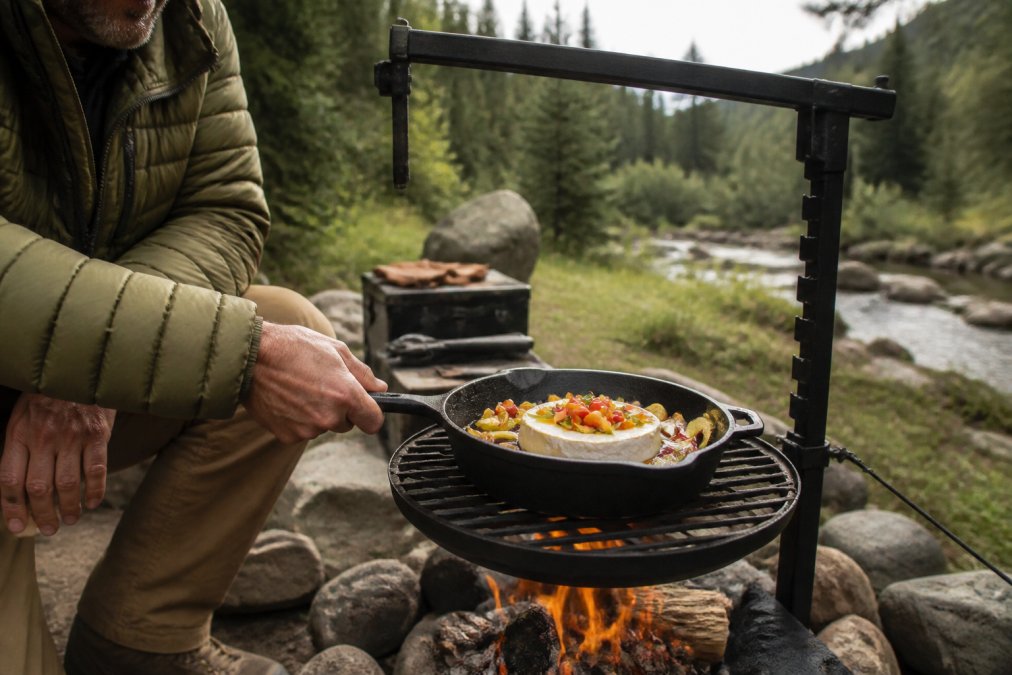
Real durability means repair is possible. If a hand forged carbon steel pan gets a dent, you can hammer it out. If seasoning wears thin, you re-season it. If a handle cracks, a blacksmith can repair or replace it. A mass-produced pan with a broken handle goes in the trash.
Browns Outpost backs every piece with a lifetime warranty because hand crafted cookware doesn't wear out in normal use. Our customers report using the same pieces for 20, 30, or 40 years with no performance degradation.
Over time, durability translates to cost savings. A $50 disposable skillet bought every 5-7 years costs $300-400 over 30 years. A $120 hand forged skillet used for 30 years costs $120 total plus minimal maintenance. The hand crafted piece is cheaper per year of use and performs better throughout its life.
On multi-day backcountry trips or remote hunting expeditions, your cookware needs to work reliably. Hand forged cookware delivers that reliability because it was built for exactly those conditions.
Environmental Impact of Artisanal Production
Artisanal cookware production has a different environmental footprint than mass manufacturing. Hand forged cookware requires less energy-intensive manufacturing than stamped or cast alternatives. Artisanal forging uses smaller, more efficient heat sources and relies on skilled labor rather than energy consumption. Over a piece's lifecycle, hand crafted items typically consume less total energy.
Durability compounds that advantage. A disposable pan used for 5 years and discarded requires replacement, meaning multiple manufacturing cycles over 30 years. A single hand forged pan used for 30 years requires one manufacturing cycle. From a lifecycle perspective, durability is the most significant environmental advantage.
Material waste differs too. Mass production generates scrap from stamping and casting. Artisanal forging produces minimal scrap because the process works with the material rather than cutting away excess.
When a mass-produced pan fails, it typically ends up in a landfill. Hand crafted cookware can be repaired, refinished, or passed to the next generation. Some pieces in active use today were forged 50+ years ago. That longevity dramatically reduces environmental cost per year of use.
lifecycle assessment research on cookware environmental impact demonstrates that product durability is the dominant factor in environmental cost, more significant than manufacturing method or material choice. A durable product used for decades has far lower environmental impact than a disposable product replaced multiple times.
Hand crafted cookware solves a problem disposable kitchen tools can't: the need for reliable, durable equipment that improves with use rather than degrading. If you're serious about outdoor cooking, you need gear that won't fail when it matters.
Browns Outpost's hand forged carbon steel and cast iron cookware, backed by a lifetime warranty, delivers exactly that. Our pieces are built for tough conditions and serious cooks. Start with our 3-Piece Fry Pan Set ($47.99 CAD) for everyday cooking, or invest in our 30 cm Dutch Oven ($52.99 CAD) for slow-cooked meals. For serious outdoor cooks, our Lifetime Warranty ANVIL Grill ($174.99 CAD) offers adjustable height control and heavy carbon steel construction designed for campfire cooking. Free shipping on orders over $75 CAD means you can build a complete outdoor kitchen setup without extra costs.


Frequently Asked Questions
What are the benefits of hand forged cookware over stamped metal?
Hand forged cookware is shaped through heat and hammer work, creating denser metal with superior strength and heat responsiveness. Stamped cookware is cut from sheets, resulting in thinner, less durable construction. Hand forged pieces develop a natural patina, distribute heat more evenly, and resist warping under high campfire temperatures. The forging process also creates unique surface texture that seasons better and lasts decades longer than mass-produced alternatives.
Is hand crafted cookware worth the higher price point?
Yes, when you calculate lifetime cost. Hand crafted cookware costs more upfront but lasts 20-30 years or longer with proper care, while stamped cookware typically needs replacement every 5-10 years. A hand forged pan from Browns Outpost comes with a lifetime warranty, meaning you're making a single investment rather than repeated purchases. For outdoor enthusiasts and hunters who cook regularly over fire, the durability, heat control, and reliability justify the premium.
Does hand crafted cookware require special maintenance?
Hand crafted cookware requires basic but consistent maintenance. After each use, clean with hot water and a brush, dry thoroughly, and apply a light oil coating to prevent rust. Unlike non-stick cookware, hand crafted pieces improve with use as the seasoning layer builds. Avoid prolonged soaking and acidic foods that can strip seasoning. This straightforward routine keeps your cookware performing for decades and is simpler than replacing cheaper cookware repeatedly.
Why do professional chefs prefer hand crafted carbon steel?
Professional chefs choose hand crafted carbon steel for its heat responsiveness and control. Carbon steel heats quickly and cools fast, allowing precise temperature adjustments during cooking. The hand forging process creates superior thermal conductivity and even heat distribution, essential for searing, sautéing, and complex camp cooking. Professional-grade hand crafted pieces also withstand the demands of high-heat outdoor cooking and heavy daily use without degrading, making them ideal for chefs who depend on reliable equipment.
This article was written using GrandRanker