 ultimate-guide
Why Choose Heavy-Duty Camping Cookware
Table of Contents
- Why Heavy-Duty Camping Cookware Matters
- Material Comparison: Cast Iron, Carbon Steel, and Aluminum
- How to Cook Over Open Fire With Heavy-Duty Gear
- Benefits of Cast Iron for Camping
- Heat Distribution, Conductivity, and Cooking Performance
- Maintaining Outdoor Cooking Gear for Long-Term Use
- Heavy-Duty Cookware for Different Camping Styles
- Why Heavy-Duty Cookware Is a Long-Term Investment
Last Updated: August 23, 2026
Why Heavy-Duty Camping Cookware Matters
Heavy-duty camping cookware is the difference between a meal that tastes like camp food and one that tastes like something you'd serve at home. When cooking over an open fire, equipment matters as much as technique. Cast iron, carbon steel, and heavy aluminum each conduct heat differently and wear differently over years of use.
Heavy-duty cookware excels in three areas: heat distribution, durability, and reliability. Thin cookware warps over direct flames and fails when you need it most. Heavy-duty pieces hold their shape, conduct heat evenly, and often outlast the person using them. At Browns Outpost, we've built our entire product line around this principle: gear that gets better with use, not worse.
Most campers start with whatever they have at home, a regular non-stick pan or thin aluminum pot. These work fine for a weekend, but spend weeks cooking over coals and lightweight cookware shows its limits. Heavy-duty gear doesn't just survive these conditions, it thrives in them.
Material Comparison: Cast Iron, Carbon Steel, and Aluminum
Cast Iron: Heat Retention and Durability
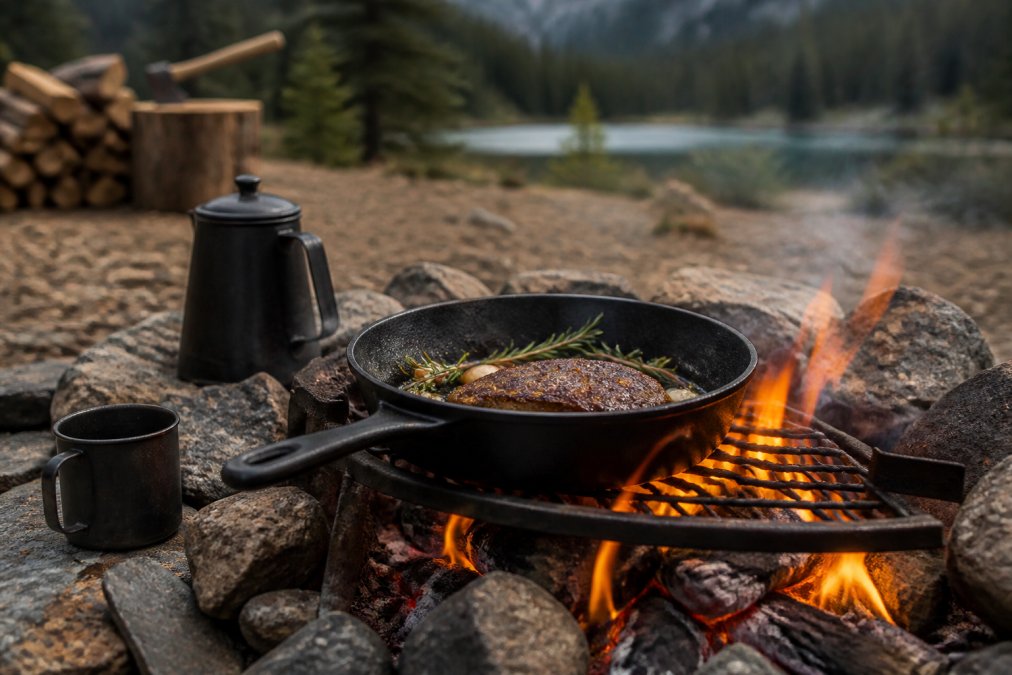
Cast iron is the oldest outdoor cooking material still in widespread use. Once seasoned, it becomes naturally nonstick and improves with age. A cast iron skillet holds a steady temperature even when moved away from direct flames.
The durability is unmatched. A cast iron pan can survive being dropped, dragged, or used over coals for decades without losing structural integrity. Unlike coated cookware, cast iron doesn't chip or peel. The Browns Outpost 30-cm Dutch oven and 25-cm cauldron with reversible lid arrive seasoned and ready to use, backed by a lifetime warranty.

The trade-off is weight. Cast iron is heavy, a 30-cm Dutch oven weighs more than most backpacking gear. For car camping and base camp cooking, this weight is an asset for thermal stability. For backpacking, it's a liability. Heat retention also means cast iron takes longer to cool, which is useful for keeping food warm but requires care around the campfire.
Carbon Steel: Lightweight Strength
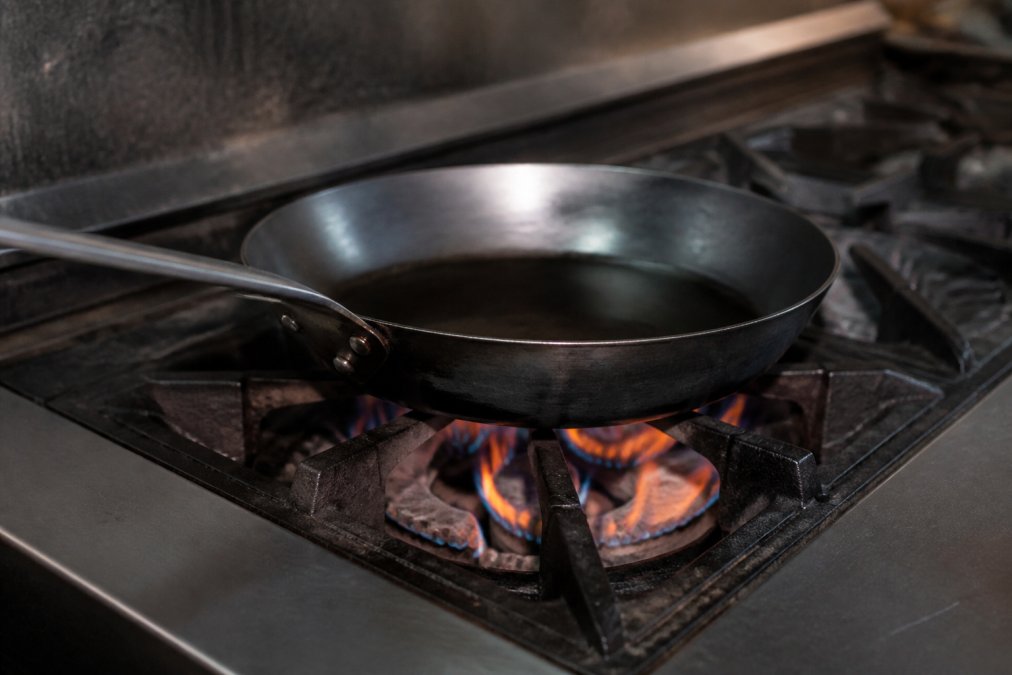
Carbon steel sits between cast iron and aluminum in weight and performance. It's lighter than cast iron but stronger than aluminum, with better heat conductivity than cast iron. Carbon steel requires seasoning like cast iron but heats up and cools down faster, making it more responsive to flame adjustments.
The Browns Outpost ANVIL adjustable campfire grill uses hand-crafted raw carbon steel for its grate. Carbon steel can handle the direct stress of an adjustable stake system without warping. It's tough enough to support heavy loads yet responsive enough to adjust heat precisely by moving the grate up or down.
Carbon steel cookware also nests efficiently, taking up less space than cast iron of the same capacity. For mixed camping styles where you need versatility without excessive weight, carbon steel is the practical middle ground. It develops patina over time, a darkened protective layer that improves its nonstick properties.
Aluminum: The Trade-Off Between Weight and Performance
Aluminum is the lightest option and heats up fastest, ideal for backpacking where every ounce counts. However, aluminum has lower heat retention than cast iron or carbon steel, making temperature control trickier. It also dents and warps more easily under repeated thermal shock.
Anodized aluminum resists corrosion better than bare aluminum, but the coating can scratch or wear away with use. Once compromised, the underlying aluminum is exposed to oxidation.
How to Cook Over Open Fire With Heavy-Duty Gear
Cooking over an open fire is fundamentally different from cooking on a stovetop. You work with the fire you have and adjust by moving cookware up or down or rotating it to hotter or cooler zones.
Heavy-duty cookware is designed for this reality. Cast iron and carbon steel distribute heat evenly across the cooking surface, preventing hot spots that create burnt patches. The thermal mass means the cookware itself becomes part of your temperature control, move it closer to flames for faster cooking, farther away for gentler heat.
Start with a bed of coals rather than open flames for steadier, more controllable heat. If using the Browns Outpost ANVIL grill, the adjustable stake system lets you dial in exact height, lower for searing, higher for slow cooking or keeping food warm.
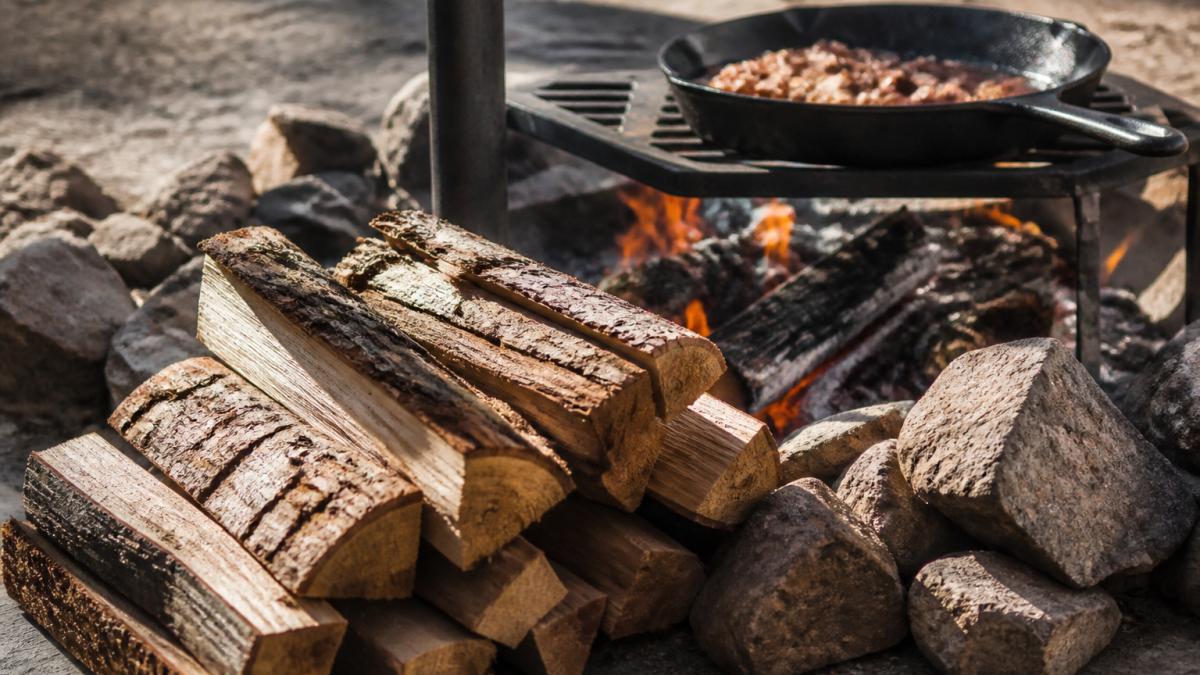
For a Dutch oven, position it directly in coals and place coals on the lid to create an oven effect, allowing you to bake bread, roast vegetables, or braise meat. The heavy cast iron walls insulate the food, preventing the bottom from burning while the top cooks evenly.
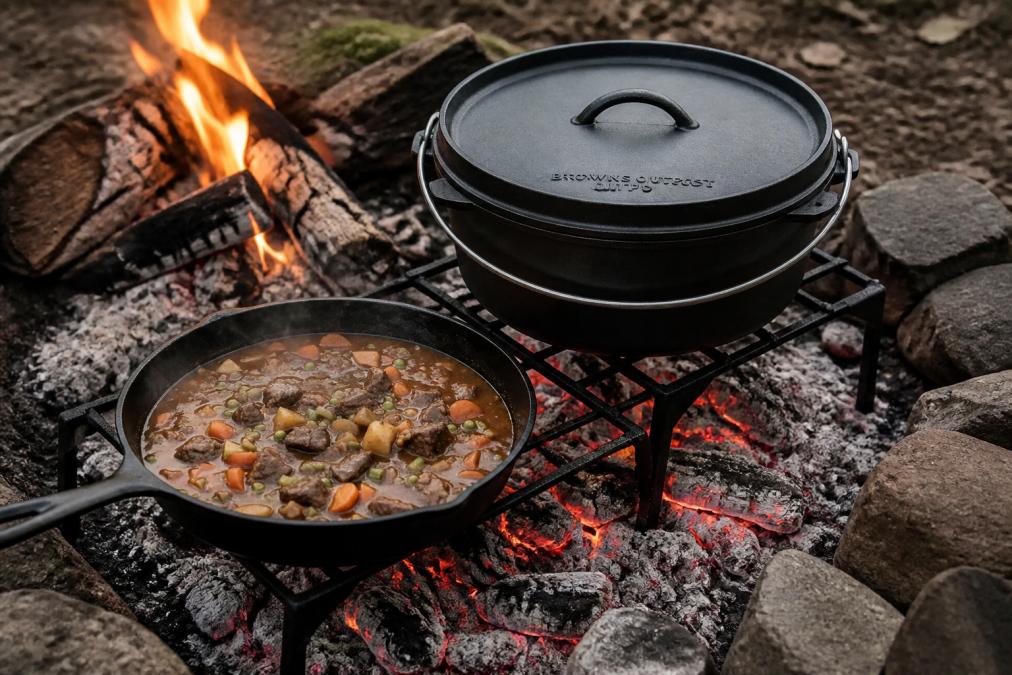
Use long-handled tools to keep your hands away from heat and smoke. The Browns Outpost 3-piece fry pan set gives you multiple sizes for different tasks: the 25-cm for main dishes, the 20-cm for sides, the 15-cm for individual portions or heating small amounts.

Thermal efficiency improves with heavy cookware. A thin pan loses heat constantly. A heavy piece retains it, meaning you use less fuel and cook more efficiently. Over weeks of camping, this adds up.
Benefits of Cast Iron for Camping
Cast iron has specific advantages for outdoor cooking. First is seasoning, a well-seasoned cast iron piece is naturally nonstick without synthetic coatings. There's nothing to chip, peel, or degrade. The seasoning improves with use.
Heat retention is the second major benefit. Cast iron absorbs heat slowly but holds it for extended periods, invaluable when cooking over inconsistent flames. The cookware itself becomes a heat buffer, smoothing out temperature fluctuations.
Durability is the third. Cast iron can be dropped, dragged, or used roughly without losing function. A dented cast iron pan still cooks perfectly. This matters in remote camping where replacing damaged gear isn't an option.
Cast iron also works on any heat source, open flames, coals, gas stoves, electric burners. It's the most versatile camping cookware. The lifetime warranty offered by Browns Outpost on cast iron cookware reflects this durability. Cast iron doesn't wear out in the traditional sense. It lasts generations if maintained properly.
Heat Distribution, Conductivity, and Cooking Performance
Heat conductivity determines how quickly cookware responds to flame changes. Aluminum conducts heat fastest. Carbon steel is moderate. Cast iron conducts heat slowly but retains it longest (peer-reviewed research).
For camping, heat retention matters more than conductivity. You want cookware that doesn't cool down the moment you move it from the flame. Cast iron and carbon steel both excel here, maintaining stable temperatures so you can focus on cooking rather than managing heat loss.
Heat distribution refers to how evenly heat spreads across the cooking surface. Thin cookware develops hot spots where flames concentrate. Heavy cookware distributes heat uniformly. A thick cast iron skillet heats evenly from edge to center.
This is why heavy-duty cookware produces better results. The structural mass creates thermal stability. The Browns Outpost ANVIL grill's carbon steel grate is engineered for even heat distribution across the entire surface. The hand-crafted construction ensures consistent thickness, which means consistent heat patterns.
Maintaining Outdoor Cooking Gear for Long-Term Use
Maintenance determines whether heavy-duty cookware lasts decades or deteriorates in years. Cast iron and carbon steel require seasoning, a protective oil layer that prevents rust and creates nonstick properties.
After each use, clean cookware while it's still warm. Use hot water and a stiff brush or steel wool. Dry thoroughly. Apply a thin layer of neutral oil (vegetable, canola, or specialized cast iron oil). Wipe away excess, you want a thin coating, not a slick layer.
Store cast iron in a dry place. If camping long-term, oil it between uses. If storing at home for months, oil it before putting it away. Cast iron stored in damp conditions will develop surface rust if not protected ([EXTERNAL_LINK: Government of Canada's food safety guidelines | inspection.gc.ca]).
Carbon steel maintenance is identical to cast iron. The hand-crafted raw carbon steel used in the Browns Outpost ANVIL grill develops a patina over time, a darkened protective layer that improves with use.
For the adjustable stake system, check that joints move smoothly and the mechanism holds firm under load. Wipe down the stake after use if exposed to moisture. A light oil coating protects the metal.
Never store cast iron or carbon steel cookware wet. Never use harsh soaps or dishwashers, these strip seasoning. Never leave cookware soaking. These practices damage the protective coating and accelerate rust.
Heavy-Duty Cookware for Different Camping Styles
Car Camping and Base Camp Cooking
Car camping changes the equation. You have vehicle space, so weight doesn't matter. You stay in one location, so you're not moving cookware constantly. You're cooking for groups, often for extended periods.
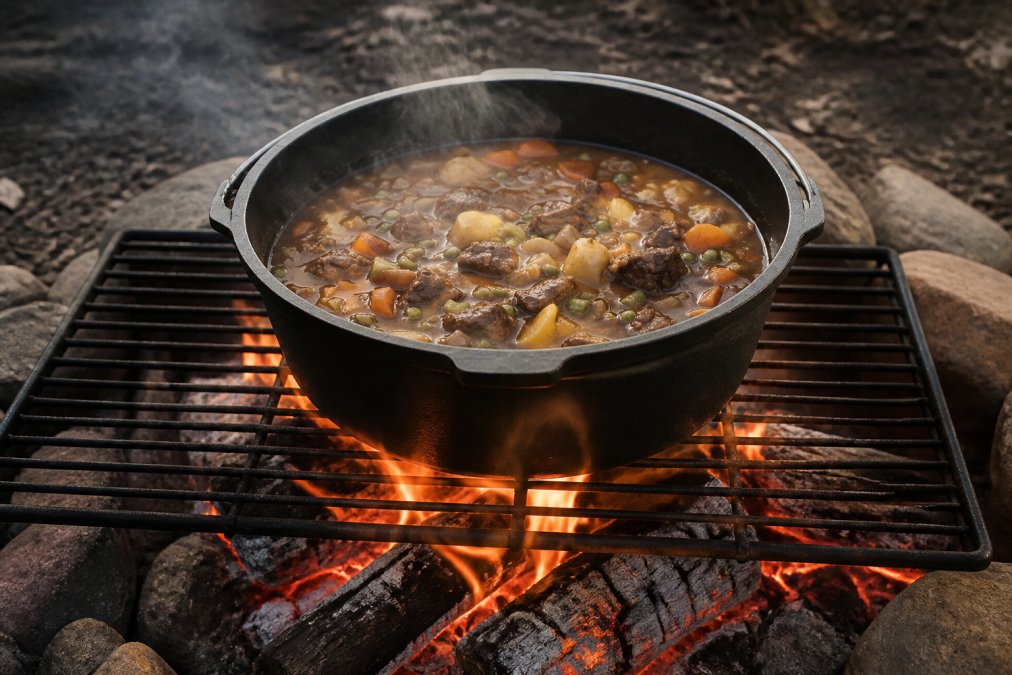
This is where cast iron and carbon steel excel. The Browns Outpost 30-cm Dutch oven is purpose-built for base camp cooking. It's heavy enough to provide thermal stability, large enough to feed groups, and versatile enough to bake bread, braise meat, or simmer stew. The reversible lid functions as a griddle, expanding cooking options.

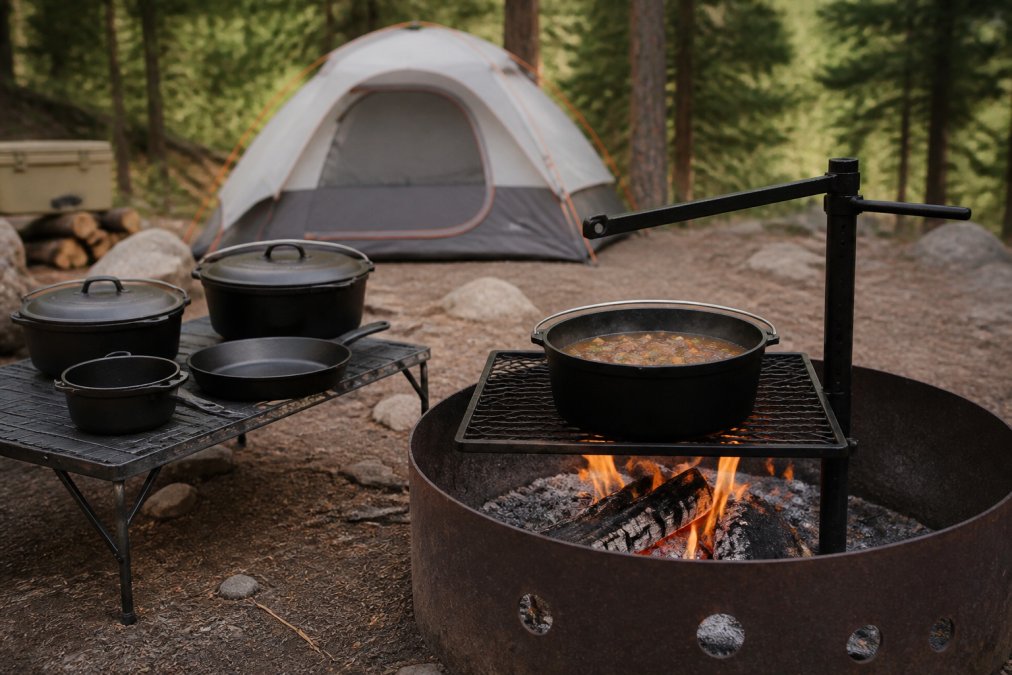
For car camping, the ANVIL adjustable grill is the centerpiece. The adjustable stake system lets you set exact cooking height, crucial when cooking for multiple people with different timing needs. The 3-piece fry pan set covers most cooking needs: the 25-cm for main dishes, the 20-cm for sides, the 15-cm for individual portions.
Heavy cookware is an asset in base camp cooking. The weight means stability, and the thermal mass means you're cooking with professional-grade equipment that responds predictably.
Backpacking and Portability
Backpacking prioritizes weight and pack space. You're carrying everything on your back, so every ounce and cubic centimeter matters. This is where lightweight carbon steel cookware makes sense.
However, "lightweight" in the context of heavy-duty cookware still means durable, heat-conductive gear, just optimized for weight. A carbon steel backpacking pan is lighter than cast iron but heavier than disposable aluminum cookware. It's the compromise that delivers durability without excessive weight.
For backpacking, nesting design matters. Cookware that stacks efficiently takes less pack space. Most backpackers use a single pot and pan system, a pot for boiling water or simmering meals, a pan for frying. This minimalist approach works because the cookware is versatile and efficient.
Why Heavy-Duty Cookware Is a Long-Term Investment
The cost of heavy-duty cookware is higher upfront than disposable alternatives. But a well-maintained cast iron piece outlasts the person using it. It can be passed down. It doesn't degrade with age; it improves.
When you calculate cost per use over decades, heavy-duty cookware becomes the economical choice. You buy once, use for a lifetime, and never replace it.
The Browns Outpost lifetime warranty on all cast iron and carbon steel cookware reflects this philosophy. The company stands behind the durability because the gear is built to last. Heavy-duty cookware also performs better, which means better meals. You're not just buying equipment that lasts; you're buying equipment that makes cooking easier and results better.
For outdoor enthusiasts who spend significant time in the backcountry or at base camp, heavy-duty cookware becomes essential. The reliability eliminates one variable from the equation. You know the gear will perform.
Heavy-duty camping cookware transforms outdoor cooking from a compromise into a genuine culinary experience. Whether you're car camping for a week or cooking over coals in remote areas, the right gear makes the difference between meals that sustain and meals that satisfy.
Browns Outpost delivers this with cast iron and carbon steel cookware engineered for durability and performance. The 30-cm Dutch oven, 25-cm cauldron with reversible lid, 3-piece fry pan set, and ANVIL adjustable grill are built for serious outdoor cooking. Each piece is backed by a lifetime warranty and designed for thermal efficiency and structural integrity. Start with the cookware that matches your camping style, and you'll have reliable gear for decades of use.
Frequently Asked Questions
What are the benefits of using heavy-duty cookware over lightweight options?
Heavy-duty cookware delivers superior heat retention, thermal efficiency, and structural stiffness compared to lightweight alternatives. Cast iron and carbon steel distribute heat evenly across the cooking surface, preventing hot spots and ensuring consistent results. Heavy-duty materials also withstand direct flame and coals without warping, maintain their nonstick properties longer, and resist corrosion better in wet camping conditions. For car camping and base camp cooking, the weight advantage of lightweight gear matters less than durability and cooking performance.
Is cast iron or carbon steel better for open-fire camping?
Both excel at open-fire cooking, but they serve different needs. Cast iron offers superior heat retention and durability, making it ideal for slow-cooked meals, bread baking, and long-term reliability. Carbon steel, like the ANVIL adjustable grill's heavy carbon steel construction, provides excellent heat conductivity while remaining slightly more manageable for some users. Cast iron develops a natural seasoning that improves with use, while carbon steel requires similar maintenance. For campfire cooking, cast iron's thermal mass and heat distribution make it the traditional choice, though carbon steel performs equally well with proper care.
Does heavy-duty camping cookware require special maintenance?
Heavy-duty cast iron and carbon steel cookware requires consistent care to prevent rust and maintain performance. After each use, wipe the cookware while still warm with a dry cloth or paper towel, then apply a light coat of oil to the cooking surface. Store in a dry location away from moisture. Avoid soaking in water or using soap, as this strips the seasoning. Periodically re-season by heating the cookware and applying a thin oil layer. With proper maintenance, heavy-duty cookware lasts a lifetime and improves with age as the seasoning layer deepens.
Why is heavy-duty cookware worth the investment for car camping?
Heavy-duty cookware justifies its cost through durability, performance, and versatility. Unlike lightweight alternatives that degrade after a few seasons, quality cast iron and carbon steel cookware withstands decades of use, making it a genuine long-term investment. Heavy-duty gear handles direct flame, coals, and high heat without damage, delivers professional culinary results through superior heat distribution, and nests efficiently for storage. A lifetime warranty protects your investment, and the weight penalty for car camping is minimal since you're not backpacking. Browns Outpost offers heavy-duty cookware starting at $45.99, making durability accessible.
This article was written using GrandRanker