 comparison
Carbon Steel vs Cast Iron for Outdoor Cooking
Table of Contents
- Carbon Steel vs Cast Iron: Core Differences for Outdoor Cooking
- Heat Retention and Thermal Responsiveness
- Weight, Portability, and Outdoor Performance
- How to Season Carbon Steel Pans for Open-Fire Cooking
- Best Cookware for Campfire Cooking: Durability and Longevity
- How to Clean Cast Iron After Camping and Prevent Rust
- Which Should You Choose for Your Outdoor Setup?
- Frequently Asked Questions
Last Updated: September 3, 2026
Carbon Steel vs Cast Iron: Core Differences for Outdoor Cooking
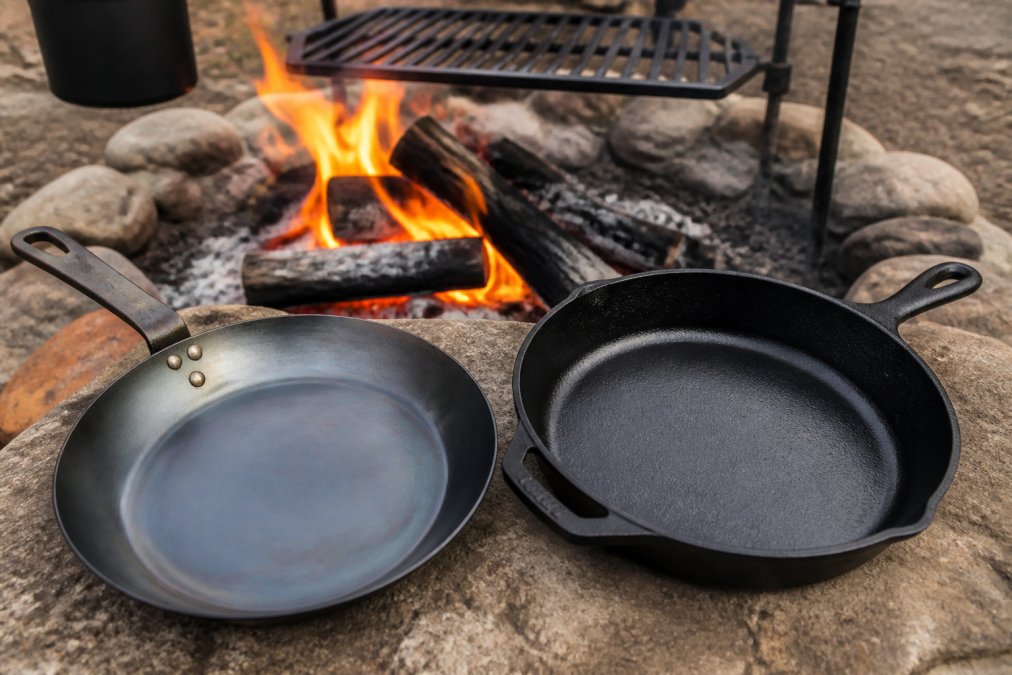
When you're planning a camping trip or setting up a permanent backyard fire pit, choosing between carbon steel vs cast iron for outdoor cooking comes down to understanding how each material behaves under real-world conditions. Both materials deliver exceptional heat retention and durability, but they respond differently to open flames, humidity, and the specific demands of field cooking.
The core difference is simple: cast iron is thicker and heavier, holding heat longer but taking more time to heat up. Carbon steel heats faster and weighs less, making it more responsive to temperature changes and easier to pack. For outdoor enthusiasts, this distinction matters enormously. A heavy cast iron griddle becomes a liability on a backcountry trip, while carbon steel's responsiveness can be the difference between a seared steak and a ruined dinner when you're cooking over inconsistent flame.
At Browns Outpost, we've tested both materials extensively in field conditions, from wet coastal camping to high-altitude hunting camps. The truth is that neither material is universally superior; your choice depends on your specific use case, how much weight you're willing to carry, and what kind of cooking you'll actually do.
Below, we'll walk you through the thermal characteristics, durability profiles, maintenance demands, and outdoor-specific performance of each material, so you can make an informed decision for your setup.
Heat Retention and Thermal Responsiveness
Cast iron's thermal mass is legendary for a reason. Once it's hot, it stays hot, sometimes for 10-15 minutes after you pull it off the fire (peer-reviewed research). This makes it exceptional for dishes that require sustained, even heat: slow-roasted meats, braising, or maintaining a consistent searing temperature.
Carbon steel tells a different story. It heats up in half the time cast iron does, but it also cools faster. This responsiveness is a feature, not a flaw. When you're cooking over a campfire with fluctuating flame intensity, carbon steel's ability to adjust quickly means you have more control. You can move the pan up to reduce heat or lower it for more intensity, and the pan responds immediately.
The practical implication: cast iron excels at low-and-slow cooking and maintaining high heat for searing. Carbon steel wins for techniques that demand quick adjustments, frying, sautéing, or cooking over an unpredictable open flame where flame intensity shifts constantly.
Thermal conductivity, how evenly heat distributes across the cooking surface, favors cast iron slightly due to its greater mass. A well-seasoned cast iron skillet distributes heat more uniformly, reducing hot spots. Carbon steel can develop hot spots more easily, especially over direct flame, but this is manageable with proper technique and pan rotation.
Weight, Portability, and Outdoor Performance
Here's where carbon steel dominates for outdoor applications. A 25 cm cast iron skillet weighs roughly 1.3 kg (2.9 lbs), while an equivalent carbon steel pan weighs around 0.7 kg (1.5 lbs), nearly half the weight.
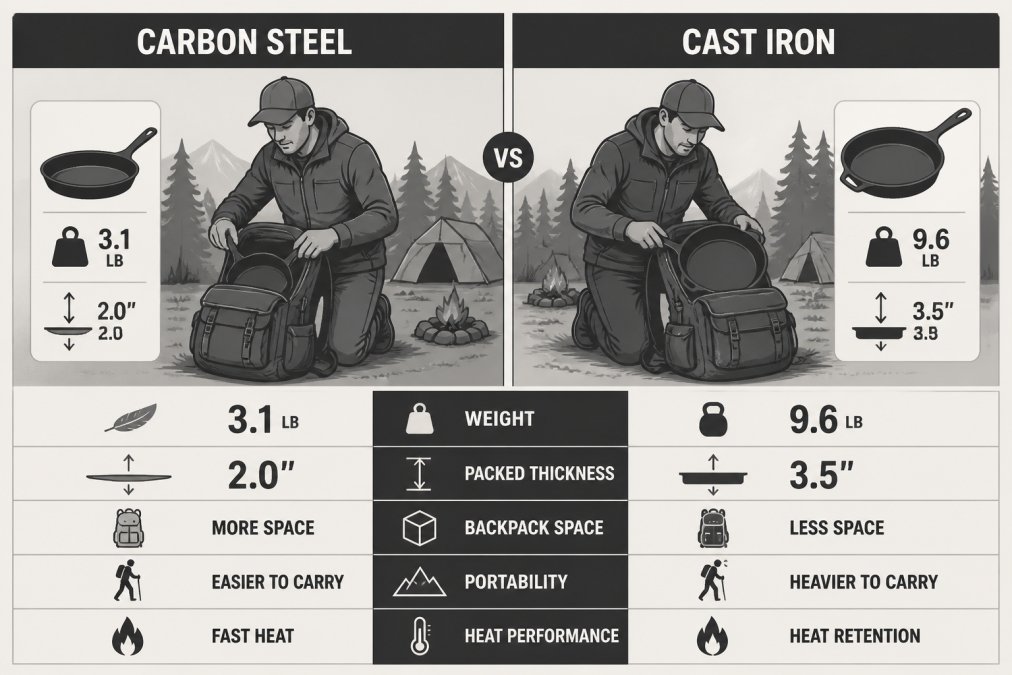
For backpackers and remote campers, weight-to-performance ratio becomes critical. You're not just carrying the cookware; you're carrying it uphill, across rivers, or through dense forest. A carbon steel pan set that delivers the same cooking capability as cast iron but weighs 40% less changes what's actually feasible on a trip.
Cast iron's weight isn't entirely a disadvantage in all outdoor contexts. For car camping, established campsites, or permanent backyard setups, the extra mass is irrelevant. Some hunters and wilderness explorers actually prefer cast iron's heft because it's less likely to shift in a pack or tip over near an open fire.
Portability also includes packability. Cast iron's shape is fixed and rigid, it takes up dedicated space. Carbon steel pans, especially quality ones, can nest together more efficiently and are easier to wrap for transport. The Browns Outpost ANVIL adjustable campfire grill ($174.99) demonstrates this principle: it's made from heavy carbon steel but stakes apart flat, eliminating bulk during transport while maintaining durability for over-fire cooking.

Corrosion resistance in humid outdoor environments slightly favors carbon steel. Cast iron rusts faster when exposed to moisture and salt air, requiring more frequent maintenance in coastal or wet climates. Carbon steel can rust, but its thinner surface means rust develops more slowly and is easier to remove without damaging the underlying metal. Neither material is truly rust-proof without proper seasoning and care.
How to Season Carbon Steel Pans for Open-Fire Cooking
Seasoning carbon steel for campfire use differs slightly from kitchen seasoning because you're building a patina under extreme heat conditions. The goal is a durable, non-stick surface that can withstand direct flame and repeated heating cycles.
Start with a clean, dry pan. If it's new, wash it with hot water and a small amount of dish soap (this is the only time soap is acceptable), then dry it thoroughly. For used pans, scrub away any rust or debris with a brush or steel wool, then dry completely.
Apply a very thin layer of neutral oil, vegetable, canola, or grapeseed work well. The key word is "thin." Excess oil will smoke heavily over the fire and create a sticky, uneven coating. Use a cloth or paper towel to wipe the oil until the pan looks almost dry.
Heat the oiled pan over moderate flame for 2-3 minutes, until it just begins to smoke slightly. Don't let it smoke heavily; that indicates too much oil. Remove it from the heat and let it cool. Repeat this process 3-4 times before your trip.
In the field, maintain seasoning by oiling the pan lightly after each use. Do this while the pan is still warm (but cool enough to handle). A thin coat of oil, wiped to near-dryness, polymerizes during the next heating cycle, building up your patina over time.
The Browns Outpost approach uses hand-crafted raw carbon steel. The lifetime warranty covers manufacturing defects, so you're investing in a pan built to last decades of field use.
Best Cookware for Campfire Cooking: Durability and Longevity
Cast iron's reputation for lasting generations is earned. A properly maintained cast iron pan can genuinely last 100+ years (Smithsonian Institute research on cast iron longevity). The material doesn't fatigue, doesn't warp under high heat, and doesn't degrade from repeated thermal cycling. Cast iron can handle thermal shock, going from a roaring fire directly into cold water, better than thin steel cookware, though it's still not ideal practice.
Carbon steel is equally durable in terms of material longevity, though it requires more consistent maintenance. A well-seasoned carbon steel pan will outlast most people who own it, but it demands attention. Neglect it for a season, and you'll face rust that requires aggressive restoration.
For outdoor applications, durability also means resistance to damage from camp conditions. Cast iron's thickness makes it nearly impossible to dent or deform, even with rough handling. Carbon steel, being thinner, can dent if struck hard, though dents don't affect cooking performance, they're purely aesthetic.
The real durability question in outdoor contexts is corrosion resistance. Cast iron develops rust more readily in wet, salty, or humid environments. Carbon steel rusts too, but the rust is typically surface-level and easier to remove. In dry climates, this distinction matters less. In coastal or tropical camping, carbon steel has a practical advantage.
Browns Outpost's cast iron cookware comes with a lifetime warranty against manufacturing defects, covering products like the 25 cm Shallow Skillet ($32.99) and the 40 cm x 23 cm Griddle ($37.99). This reflects confidence in the durability of cast iron when properly maintained. The warranty doesn't cover misuse or neglect, but it does signal that these pans are built for multi-decade ownership.

Longevity also depends on how you use the cookware. Cast iron's superior heat retention makes it better for sustained cooking sessions. Carbon steel's lighter weight makes it better for frequent transport and repeated setup/breakdown cycles. A pan that's used hard but properly maintained will outlast one that sits unused for years.
How to Clean Cast Iron After Camping and Prevent Rust
The most important rule: never leave cast iron wet. Clean it immediately after cooking, while it's still warm. Hot water and a stiff brush are your primary tools. Soap strips seasoning, so avoid it unless the pan is genuinely filthy, and even then, use minimal amounts.
Scrub the pan thoroughly with hot water and a brush, removing all food residue. For stubborn buildup, use a metal scraper or steel wool. Dry the pan completely with a cloth, then place it over low heat for 1-2 minutes to evaporate any remaining moisture.
Once dry, apply a very thin coat of neutral oil while the pan is still warm. Use a cloth to wipe it until it's nearly dry, excess oil attracts dust and creates a sticky surface. Let it cool completely before packing.
For field cleaning at a campsite, you may not have hot water. In that case, wipe the pan clean with a cloth or leaves while it's still warm, then heat it over the fire briefly to burn off any moisture. Apply oil while it's warm, the same as at home.
If you do develop surface rust despite best efforts, which happens in humid environments, don't panic. Scrub it off with steel wool or a brush, re-season the affected area, and move forward. Light surface rust doesn't compromise the pan's integrity; it's purely a seasoning issue.
Carbon steel follows the same cleaning protocol. Hand-wash immediately, dry thoroughly, and oil while warm. Carbon steel's thinner surface means rust removal is faster if needed, but prevention is still the priority.
Which Should You Choose for Your Outdoor Setup?
Choose cast iron if you're doing permanent or semi-permanent outdoor cooking, a backyard fire pit, established hunting camp, or car-camping setup where weight isn't a limiting factor. Cast iron's superior heat retention, even heating, and durability make it ideal for slow-roasted game, braising, and sustained high-heat searing. The Browns Outpost 30 cm Roasting Pan ($48.99) is built for exactly this use case: deep enough for roasts, thick enough to deliver steakhouse-quality sears over an open fire.

Choose carbon steel if you're backpacking, remote camping, or moving between multiple campsites. Its lighter weight, faster heat response, and easier portability make it the practical choice for trips where every kilogram matters. The ANVIL adjustable campfire grill ($174.99) uses carbon steel specifically because it needs to be transported flat and set up quickly without adding excessive weight to your pack.
The hybrid approach works too. Many serious outdoor cooks carry both: a carbon steel skillet for daily cooking and quick meals, and a cast iron griddle for breakfast when the camp is established and weight is less critical. The Browns Outpost 3-Piece Fry Pan Set ($47.99) offers multiple sizes in cast iron, giving you flexibility within a single material choice.
Consider your climate. In dry regions, cast iron's slightly higher maintenance burden is minimal. In humid, coastal, or tropical environments, carbon steel's faster rust removal and slower rust development give it a practical edge.
Consider your cooking style. If you're doing mostly high-heat searing, frying, and quick meals, carbon steel's responsiveness serves you better. If you're braising, slow-roasting, or maintaining consistent heat for extended periods, cast iron's thermal mass is worth the extra weight.
Consider your budget and long-term plans. Both materials last decades with proper care. Cast iron requires less frequent re-seasoning but more careful rust prevention in wet climates. Carbon steel requires more consistent maintenance but is more forgiving in humid conditions. Neither is cheaper over a lifetime, you're choosing based on use case, not cost.
The choice between carbon steel vs cast iron for outdoor cooking isn't about which material is objectively better. It's about matching the material to your actual camping style, climate, and cooking needs. Cast iron delivers unmatched heat retention and durability for established camps and slow-roasted meals. Carbon steel offers responsiveness, portability, and practicality for moving camps and variable conditions. At Browns Outpost, we've built both into our lineup, the heavy-duty cast iron skillets and griddles for base camps, and the ANVIL grill in carbon steel for adventurers who need adjustable, packable, reliable gear. Whichever you choose, commit to the maintenance routine it demands, and you'll have a pan that outlasts the trips you take it on.
=== FAQ ANSWERS (audit these too, same rules) ===
Frequently Asked Questions
Is it better to cook in cast iron or carbon steel for outdoor use?
Both excel outdoors, but for different reasons. Cast iron holds heat longer and delivers superior non-stick properties over time, making it ideal for searing meat and slow-cooking over coals. Carbon steel heats faster, responds more quickly to temperature changes, and weighs less, advantages when you're camping where portability matters. For serious outdoor cooks prioritizing durability and heat retention, cast iron wins; for backpackers who value weight-to-performance ratio, carbon steel edges ahead. The ANVIL Grill uses carbon steel specifically because its adjustable height design demands quick heat responsiveness.
Does carbon steel hold up to wet outdoor conditions and humidity?
Carbon steel is more corrosion-resistant than cast iron in humid environments because it has a tighter, denser surface finish when properly seasoned. Cast iron's porous surface can trap moisture and rust faster in damp conditions, especially in coastal or high-humidity areas. However, both require the same maintenance routine: dry immediately after use, apply a light oil coating, and store in a dry location. For camping in wet climates, carbon steel requires less vigilant care, but neither material is truly 'set and forget' outdoors. Proper seasoning and regular maintenance are non-negotiable for both.
What's the real difference in maintenance between cast iron and carbon steel when camping?
Cast iron demands hand-washing only, immediate drying on heat, and re-oiling after every use to maintain its seasoning. It builds a thicker, glossier patina over time, which improves non-stick performance. Carbon steel follows the same basic routine but develops a thinner, harder surface finish that's less forgiving if you skip a maintenance step. Both require storing dry between trips. For camping trips where you're cooking daily over open fire, cast iron's superior heat retention makes the extra care worthwhile; for weekend trips, carbon steel's lower maintenance burden saves frustration.
Which material is actually more durable for outdoor cooking over an open fire?
Cast iron is more durable long-term because it doesn't warp under extreme heat and its thick construction resists damage from thermal shock. Carbon steel can warp if exposed to rapid temperature swings (plunging hot steel into cold water, for example) and is thinner, making it more prone to denting. Cast iron's seasoning can improve with use and age, while carbon steel's surface finish can degrade if not maintained consistently. For lifetime durability, cast iron wins, many cast iron pieces last generations. Carbon steel lasts decades with proper care but isn't quite as forgiving of abuse. Browns Outpost backs both with a lifetime warranty, so manufacturing defects are covered either way.
This article was written using GrandRanker