 ultimate-guide
Professional Culinary Results Over Open Fire
Table of Contents
- What Open-Fire Cooking Is and Why It Delivers Professional Results
- Open-Fire Cooking Techniques That Build Flavor and Control
- Open-Fire Cooking Temperature Control: Mastering Heat and Distance
- Best Foods to Cook Over an Open Fire
- Campfire Cooking Equipment: Choosing Gear for Consistent Results
- Fuel Selection and Smoke Management for Flavor Development
- Fire and Food Safety: Preventing Common Mistakes Over Open Flame
- Troubleshooting and Repeatable Results: From First Cook to Mastery
- Frequently Asked Questions
Last Updated: October 20, 2026
What Open-Fire Cooking Is and Why It Delivers Professional Results
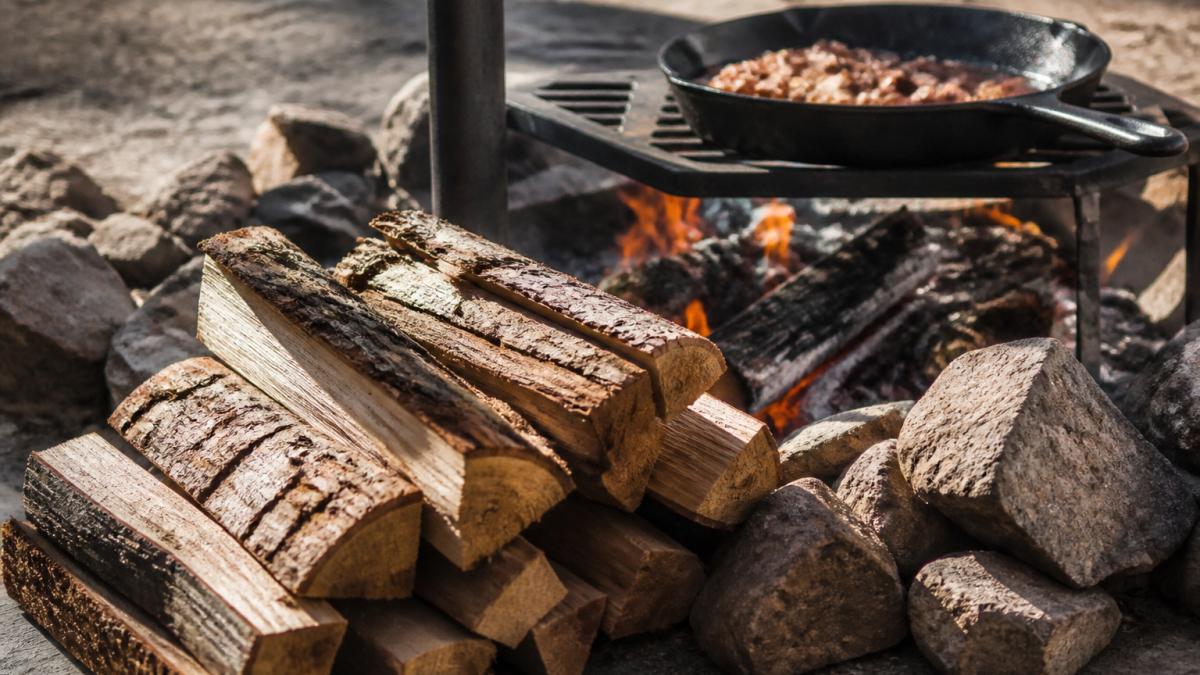
Open-fire cooking means preparing food directly over flames, embers, or hot coals without a stovetop or oven.
Direct flame triggers the Maillard reaction, developing complex flavors and a crispy exterior that's nearly impossible with conventional methods. Smoke infuses depth, and controlled char adds richness that transforms ordinary ingredients.
Open-fire cooking isn't intuitive or forgiving. Professional culinary results over open fire demand precision, heat zones, fuel management, and knowing when food is done.
Open-Fire Cooking Techniques That Build Flavor and Control
Two techniques form the foundation: direct heat and indirect heat. Knowing when to use each separates amateurs from consistent restaurant-quality cooks.
Direct Heat Searing and High-Temperature Grilling
Direct heat means placing food directly over active flames or hot coals. This is where searing happens, the crispy, caramelized exterior that creates flavor.
For searing, position your grate 5-7.5 cm above active coals or flames.
The critical mistake is moving food too early or too often; each flip interrupts browning.
For peppers, zucchini, or eggplant, direct heat creates char marks and softens the flesh.
Indirect Heat and Slow-Roasting Over Embers
To set up indirect heat, push coals to one side of your fire pit or raise your grate to 15-20 cm above the heat source, then place food on the cooler side.
Whole chickens, large roasts, and thick fish fillets are ideal. A 4-pound chicken takes 45-60 minutes over medium-indirect heat; a beef roast may take 90 minutes or more.
Embers are your secret weapon for slow cooking. A bed of glowing coals radiates consistent, even heat and cools more gradually than active flames.
Open-Fire Cooking Temperature Control: Mastering Heat and Distance
Professional culinary results over open fire hinge on controlling temperature.
Distance as your primary control: The closer your grate to the heat, the hotter it gets.
Reading the heat without a thermometer: Hold your hand 7.5 cm above the grate.
- If you can hold it for 2 seconds or less: high heat (above 450°F / 230°C)
- If you can hold it for 3-4 seconds: medium heat (350-400°F / 175-200°C)
- If you can hold it for 5+ seconds: low heat (below 350°F / 175°C)
This hand-test method isn't precise, but it's reliable enough for consistent results.
Fuel management: Hardwoods like oak, maple, and hickory burn hotter and longer than softwoods; charcoal burns hotter than wood with less smoke.
Best Foods to Cook Over an Open Fire
Not all foods suit open-fire cooking. Some benefit enormously; others are better left to conventional methods.
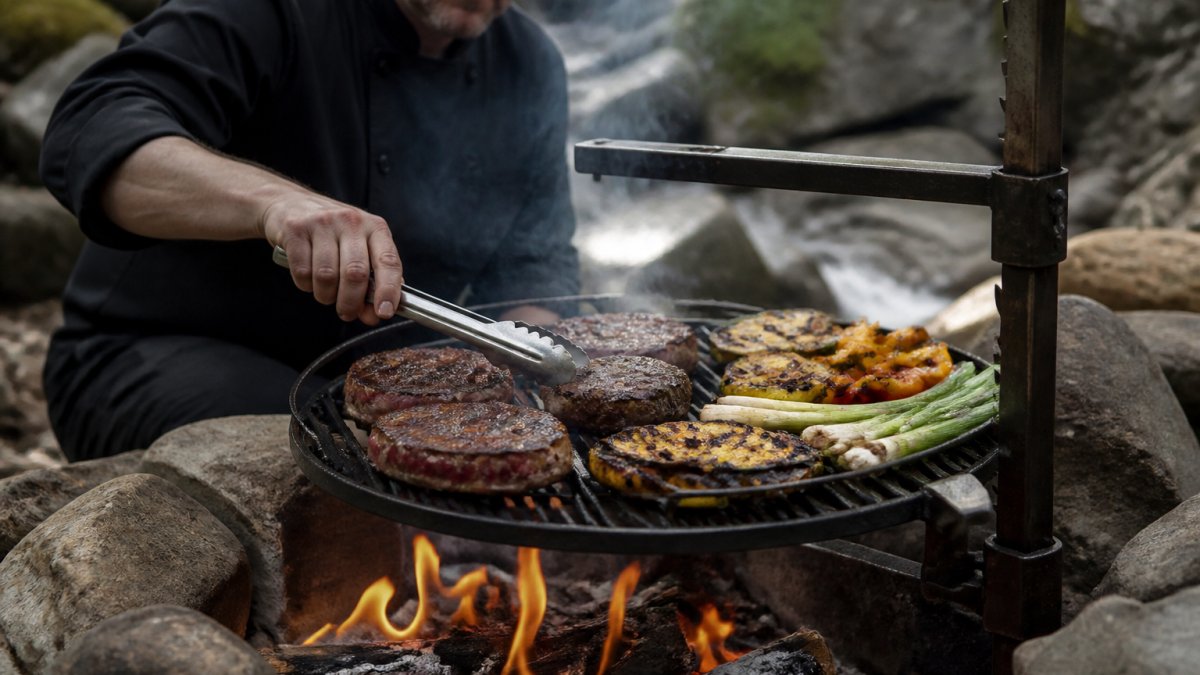
Meat and Seafood for Direct Flame and Coals
Meat is where open-fire cooking shines; high heat creates flavor unavailable from other methods.
Steaks and chops (1.5 to 2 inches thick) are ideal for direct-heat searing.
Whole fish and thick fillets work beautifully over indirect heat or a bed of embers, which cooks the flesh evenly without drying it out.
Burgers and sausages also thrive on direct heat.
Chicken is trickier.
Vegetables and Fruit That Thrive in Flames and Smoke
Vegetables are often overlooked, but smoke and char create some of the most interesting flavors.
Peppers (bell, poblano, or hot) blacken beautifully over direct flame. The skin chars and peels away to reveal tender, smoky flesh.
Zucchini, eggplant, and summer squash benefit from high heat. Slice lengthwise, brush with oil, and place on a hot grate for 4-5 minutes per side.
Fruit over fire is underutilized. Peaches, pears, and melons develop caramelized, concentrated sweetness.
Campfire Cooking Equipment: Choosing Gear for Consistent Results
Professional culinary results over open fire depend on having the right tools.
The Lifetime Warranty ANVIL Grill →
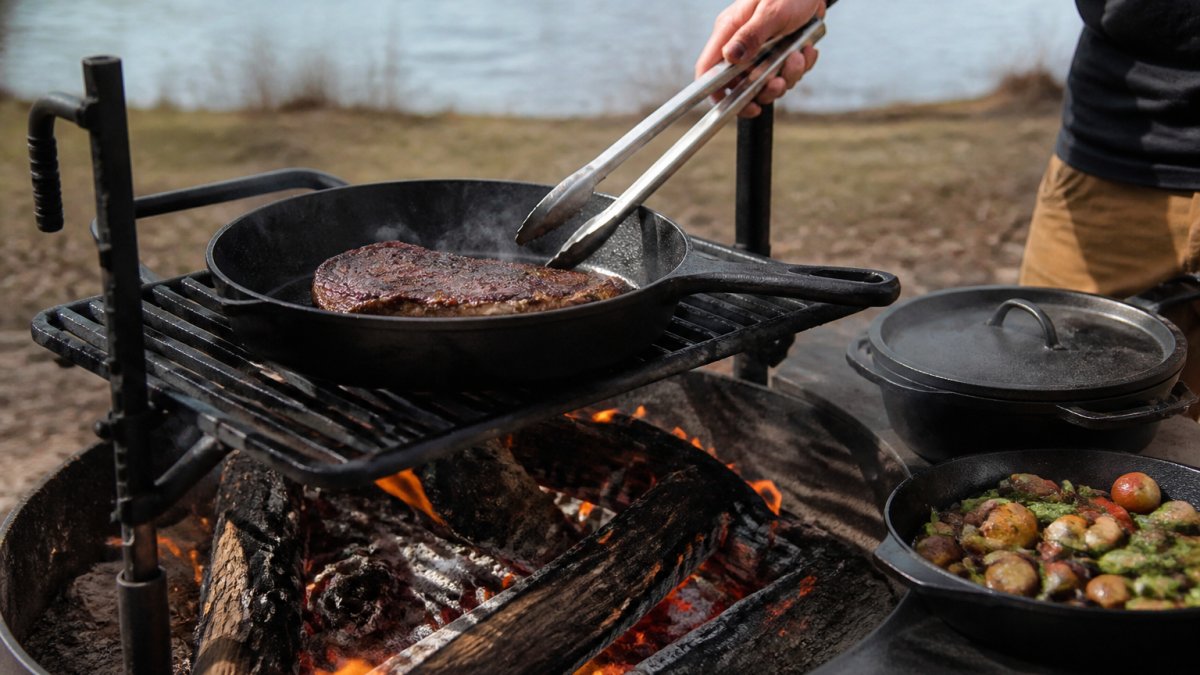
The adjustable grill grate is non-negotiable. A fixed grate leaves you with one heat level.
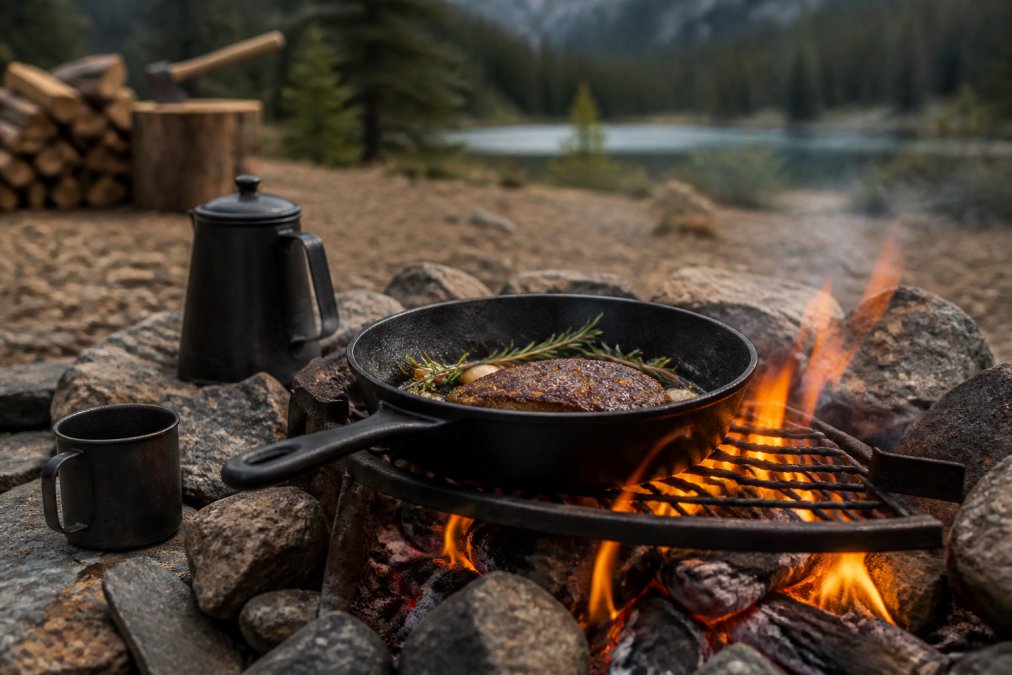
Cast iron cookware transforms open-fire cooking. Cast iron distributes heat evenly, retains temperature, and develops a natural non-stick seasoning over time.
Long-handled tongs and a sturdy spatula are essential.
A grill brush for cleaning your grate between cooks prevents sticking and removes buildup that can impart off-flavors.
| Tool | Purpose | Why It Matters |
|---|---|---|
| Adjustable grill grate | Heat control through distance | Lets you move between searing and slow-cooking without relocating |
| 12" cast iron skillet or roasting pan | Searing, roasting, pan sauces | Distributes heat evenly; retains temperature; develops seasoning |
| Dutch oven with lid | Braising, baking, slow-cooking | Traps heat and moisture; doubles as a camp oven with coals on lid |
| Long-handled tongs (16"+) | Food handling | Keeps hands safe; gives precise control |
| Grill brush | Grate maintenance | Prevents sticking; removes residue between cooks |
Fuel Selection and Smoke Management for Flavor Development
What you burn shapes the flavor of your food.
Hardwoods (oak, maple, hickory, apple, cherry) burn hotter and longer than softwoods and produce cleaner smoke with less creosote.
Softwoods (pine, fir, spruce) produce resinous smoke that tastes unpleasant and can coat food with creosote.
Smoke management: Fresh smoke from newly lit wood tastes acrid, so let wood burn down to coals before cooking.
If your fire produces too much smoke, move your grate higher or to the side.
Fire and Food Safety: Preventing Common Mistakes Over Open Flame
Open-fire cooking carries real risks. Professional results require professional safety awareness.
Flare-ups and burns: Fat dripping onto flames creates sudden flare-ups. Move food to the cooler side immediately. Don't pour water on the fire; it can spread burning fat.
Undercooked meat: High heat can brown the exterior while leaving the inside dangerously undercooked. Use a meat thermometer to verify doneness:
- Beef steaks and roasts: 130-135°F (54-57°C) for medium-rare
- Pork: 145°F (63°C) minimum
- Chicken and poultry: 165°F (74°C) minimum
- Fish: 145°F (63°C) minimum
A digital thermometer is inexpensive and eliminates guesswork. Carry one in your camp kit.
Cross-contamination: Use separate tongs or utensils for raw meat and vegetables.
Fire safety: Never leave an active fire unattended (Fire safety in your home).
Troubleshooting and Repeatable Results: From First Cook to Mastery
Even with good technique, things go wrong. Here's how to diagnose and fix common problems.
Problem: Meat is charred outside but raw inside. Fix: Heat is too high.
Problem: Food sticks to the grate. Fix: Your grate isn't hot enough or isn't oiled.
Problem: Smoke flavor is too strong or tastes acrid. Fix: You're cooking over fresh flames or green wood.
Professional culinary results over open fire aren't a mystery; they're a skill built on precision and the right gear. At Browns Outpost, we've designed equipment specifically for this: the ANVIL adjustable campfire grill gives you heat control through distance, and our cast iron cookware holds heat like a furnace.
Frequently Asked Questions
How do you control the heat when cooking over an open fire?
Heat control comes down to three factors: distance from the flame, fire intensity, and fuel type. Raise the grate higher for lower temperatures (indirect heat around 120-150°C), lower it closer to flames for searing (200°C+). An adjustable grill like the ANVIL lets you dial in exact height without moving the fire. Use hardwood coals for steady, predictable heat; manage flame intensity by adjusting fuel or airflow. Start with the grate 20-25 cm above coals and adjust upward or downward in 5 cm increments until you can hold your hand at grate level for 3-4 seconds (medium heat).
What cookware works best for open-fire cooking?
Cast iron is the professional standard because it retains heat evenly and handles direct flame without warping. A deep roasting pan works for searing and braising; a Dutch oven with a flanged lid lets you bake bread or braise large cuts; fry pans in multiple sizes give you flexibility for proteins and sides. Carbon steel grates like the ANVIL ($174.99) are ideal for grilling because they heat fast and allow precise height adjustment. Avoid thin steel or aluminum; they warp and create hot spots. Pre-seasoned cast iron from Browns Outpost arrives ready to cook and improves with use over time.
What is the best food to cook over open flames?
Fatty meats thrive over open fire: ribeye, brisket, duck, and salmon develop superior crust and smoke flavor. Whole vegetables like peppers, eggplant, peaches, and melons char beautifully and become caramelized. Shellfish like scallops and mussels cook fast over high heat. Root vegetables (potatoes, carrots) benefit from longer, indirect heat. Avoid lean cuts and delicate fish; they dry out quickly. The key is matching the protein's fat content and thickness to your heat: high-fat cuts over direct flame, leaner cuts and vegetables over embers or at higher grate positions.
How do you know when a campfire is ready for cooking?
A cooking fire needs coals, not active flames. Wait until your wood burns down to a bed of glowing embers (usually 20-30 minutes after lighting). The embers should be white or gray on the surface with red glowing underneath. If you see tall flames, it's too hot; wait longer or push flames to the side. Test readiness by holding your hand at grate level: you should be able to hold it there for 3-4 seconds (medium heat) or 1-2 seconds (high heat). For gentle cooking, let coals cool slightly so you can hold your hand there for 8+ seconds. Never cook directly over active flames unless you're searing for 1-2 minutes.
How do you clean cast iron after cooking over a fire?
Clean immediately while the pan is still warm. Rinse with hot water only (no soap; it strips seasoning). Use a stiff brush or cloth to scrub away food residue. Dry completely on the heat source or wipe dry with a cloth immediately. Once dry, apply a thin coat of neutral oil (vegetable, canola, or cast iron seasoning oil) with a cloth to the entire surface. This re-seasons the pan and prevents rust. Store in a dry location. Never use soap or put cast iron in a dishwasher; both remove seasoning and cause rust. Proper care after each use means your Browns Outpost cast iron improves with every cook.
Can I cook complete meals in one pot over an open fire?
Yes. A 12-inch Dutch oven or 10-inch cauldron with reversible lid ($45.99-$52.99) lets you braise meat, simmer stew, bake bread, or cook a full one-pot meal for 4-6 people. Place it directly on coals or on a grate over embers for even heat. The lid traps moisture for braising; flip it flat-side up to griddle biscuits or sear sides. Cast iron's heat retention means the meal keeps cooking and stays hot after you pull it from the fire. Plan 45 minutes to 2 hours depending on the recipe and coal temperature.
What fuel produces the best flavor when cooking over an open fire?
Hardwoods like oak, hickory, and maple produce clean-burning coals and mild smoke flavor. Fruitwoods (apple, cherry) add subtle sweetness. Softwoods and pine create excessive smoke and resinous flavor; avoid them. Charcoal burns hotter and more predictably than wood, making it ideal for precise temperature control. For maximum flavor, let hardwood burn to coals first, then add a small piece of fruitwood toward the end for subtle smoke. Never cook directly over flames; cook over the coals they create. The goal is steady, moderate smoke, not billowing clouds.
How do I get a restaurant-quality sear on meat over a campfire?
Searing requires high heat and a heavy pan. Use a cast iron roasting pan ($48.99) on a grate positioned 10-15 cm above hot coals (test: you can hold your hand there for only 1-2 seconds). Pat meat dry; moisture prevents browning. Place the pan directly on the grate until it's smoking, then add meat. Don't move it for 2-3 minutes; this builds the crust. Flip once, sear the other side 2-3 minutes, then move the pan to cooler coals to finish cooking to doneness. Cast iron holds heat so well that the crust develops even over a campfire, delivering the same sear you'd get at a steakhouse.