 listicle
Easy Cleanup Outdoor Cooking Gear for Camping
Table of Contents
- Quick Comparison: Easy-Cleanup Camp Cookware at a Glance
- How to Cook Over Open Fire Without Creating a Cleanup Nightmare
- How to Clean Cast Iron While Camping (Without Scrubbing for an Hour)
- Eco-Friendly Camp Dish Soap and Water-Scarce Cleaning Techniques
- Best Browns Outpost Pieces for Fast Camp Kitchen Cleanup
- Post-Trip Deep Cleaning and Gear Storage
- Conclusion
- Frequently Asked Questions
Last Updated: September 13, 2026
Quick Comparison: Easy-Cleanup Camp Cookware at a Glance
The best easy cleanup outdoor cooking gear for camping shares one trait: a surface that releases food instead of gripping it. Browns Outpost builds its entire camp line around hand-crafted raw carbon steel and cast iron, and the difference shows up at the wash basin.
Here is how the pieces compare before we get into technique.
| Piece | Price (CAD) | Best For | Cleanup Reality |
|---|---|---|---|
| 10" Shallow Skillet | $32.99 | Fast breakfasts, searing | Rinse, wipe, re-oil |
| 16"×9" Griddle | $37.99 | Feeding a whole campsite | One flat surface, one wipe |
| 3-Piece Fry Pan Set | $47.99 | Versatile cooking, nesting | Three pans, one routine |
| 10" Cauldron with Reversible Lid | $45.99 | Stews, chili, camp bread | Lid doubles as a griddle |
| 7.5" Sauce Pan with Lid | $37.99 | Sauces, sides, rice | Fitted lid, less splatter |
| 8" Dutch Oven with Lid | $45.99 | Braises for one or two | Flanged lid, deep clean |
A common mistake is buying factory non-stick cookware for camp use. Those coatings degrade fast over open flame, and once they flake, the pan is done (canada.ca). Bare cast iron has no coating to fail: seasoning is the non-stick surface, rebuilt every time you cook.

How to Cook Over Open Fire Without Creating a Cleanup Nightmare
Cleanup starts before the food hits the grate. Control the fire, control the mess.
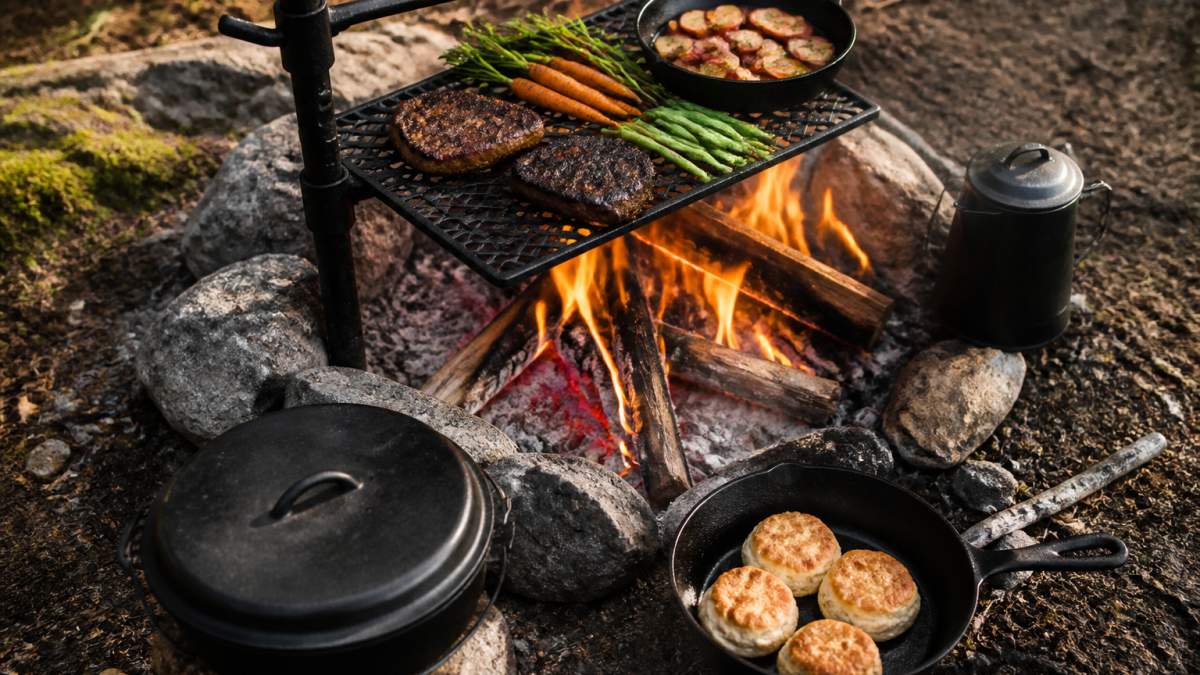
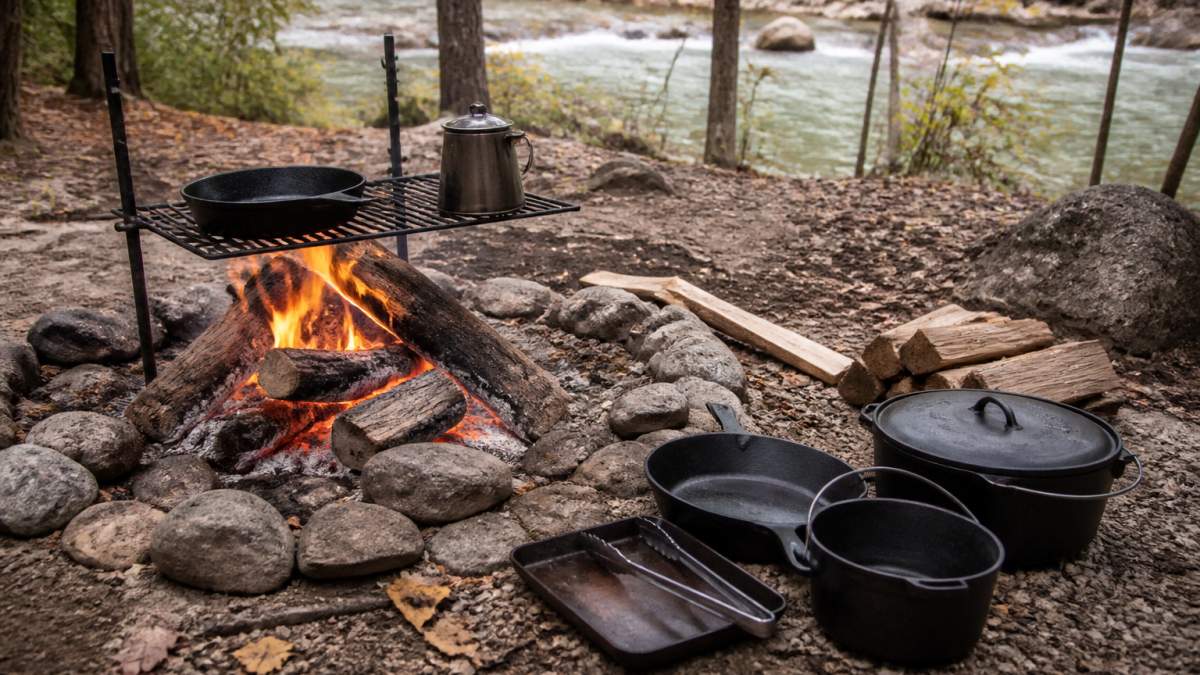
Build a coal bed rather than a flame. Flames deposit soot on every pot and pan, and soot is the part of camp dishwashing nobody warns you about. Coals give steady heat with almost no blackening. On an adjustable campfire grill, set the grate above the flame tips and let the coals work.
Two more habits that save scrubbing time:
- Preheat the pan properly before adding food. A cold pan grabs; a hot pan releases.
- Cook fattier foods first and use the rendered fat as your cooking medium for what follows. Less added oil means less residue.
- Keep a dedicated scraper or metal spatula on hand to deglaze the pan with a splash of water while it is still hot. Most of the stuck-on layer lifts right there.
The same logic applies whether you are using a shallow skillet for a quick sear or a griddle for a full camp breakfast. The Leave No Trace guidelines on campfire cooking recommend keeping fires small and using established fire rings, which also happens to keep ash and grit off your cookware.
How to Clean Cast Iron While Camping (Without Scrubbing for an Hour)
Cleaning cast iron at camp takes about three minutes if the pan was seasoned before you left home: hot water, a cloth or scrubber, dry on heat, re-oil. Soap is not required, and a dishwasher strips seasoning in a single cycle.
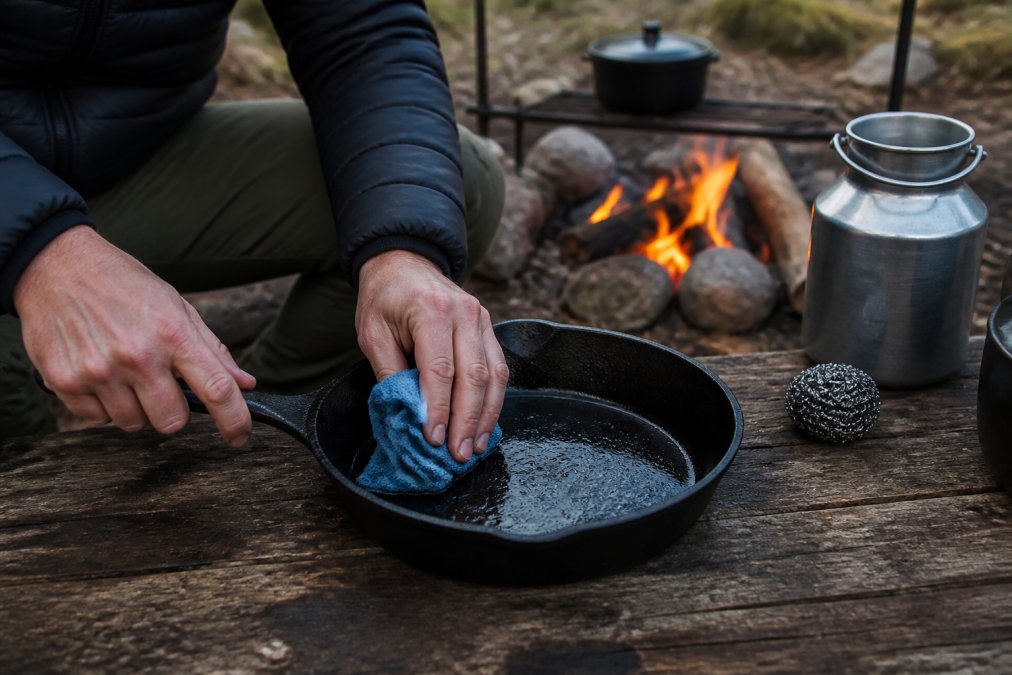
Here is the sequence that works in the field:
- Pour a small amount of hot water into the still-warm pan.
- Scrape with a metal spatula or a pot scrubber. Avoid abrasive sponge pads on a fresh seasoning layer.
- Wipe with a microfiber cloth or paper towel.
- Return the pan to the coals for a minute to drive off every trace of moisture.
- Rub in a thin coat of neutral oil while the pan is still warm.
That last step is the one people skip and the one that matters most. Water is the enemy, not food residue. Dry the pan on heat every time and rust never gets a foothold, even on a wet trip.
Eco-Friendly Camp Dish Soap and Water-Scarce Cleaning Techniques
Biodegradable camp dish soap is the right default, but the bigger win is using less water, and in arid conditions, almost none. A rinse station built around a collapsible wash basin and a small water jug can clean a full camp kitchen on two litres. Strain food particles out, then scatter greywater widely away from camp, water sources, and trails.
For cast iron, you often need no soap at all, hot water and a scrubber handle nearly everything. Reserve biodegradable soap for silicone utensils, plates, and the griddle after a greasy cook.
Dry cleaning: when you have no water to spare
Most guides assume a lake or full jug nearby. In desert, alpine, and late-season trips, that fails. Clean in stages, using as little liquid as possible:
- Scrape first, always. A metal spatula or a stiff plastic scraper removes 80-90% of residue while the pan is still warm. That residue goes into your trash bag, not your wash water.
- Wipe with a dry cloth or paper towel. A dedicated grease rag absorbs the oil film that would otherwise demand soap. Keep it in a sealed bag and wash it at home.
- Use a splash, not a basin. Pour roughly 60-120 ml of warm water into the pan, bring it back to the coals for a few seconds, and wipe. That single splash cleans most seasoned cookware.
- Heat-sanitize instead of soap-sanitize. Returning a pan to the coals for a minute kills the bacteria soap would have addressed, and it dries the surface at the same time.
- Save the soap for porous items. Silicone spatulas, wooden spoons, and plastic plates hold residue that dry wiping cannot lift. Those are the only items that justify a soap-and-rinse cycle on a water-scarce trip.
A common pattern among backcountry travelers is to designate one 'wet' item per meal, usually a single bowl or pot, and eat everything else off the pan or a dry plate. Fewer wet items means fewer litres carried and less greywater.
Soap choice and greywater rules
When you do use soap, choose a biodegradable, phosphate-free camp soap and dilute it heavily, a few drops in a litre is plenty. 'Biodegradable' does not mean 'safe to dump in a lake.' The Leave No Trace dishwashing guidance is clear that even biodegradable soap should never go directly into a lake, river, or stream. Strain food particles, carry the greywater away from camp and water sources, and scatter it widely over dry ground.
A note on cold water
Cold-water scrubbing is the most common complaint at a camp basin, and it is largely a surface problem, not a soap problem. A well-seasoned pan releases food with a warm splash and a wipe; a scratched non-stick pan fights you no matter how much soap you add. If you are scrubbing hard in cold water, the fix is upstream, better seasoning, a hotter pan, or a controlled coal bed rather than a flame.
Best Browns Outpost Pieces for Fast Camp Kitchen Cleanup
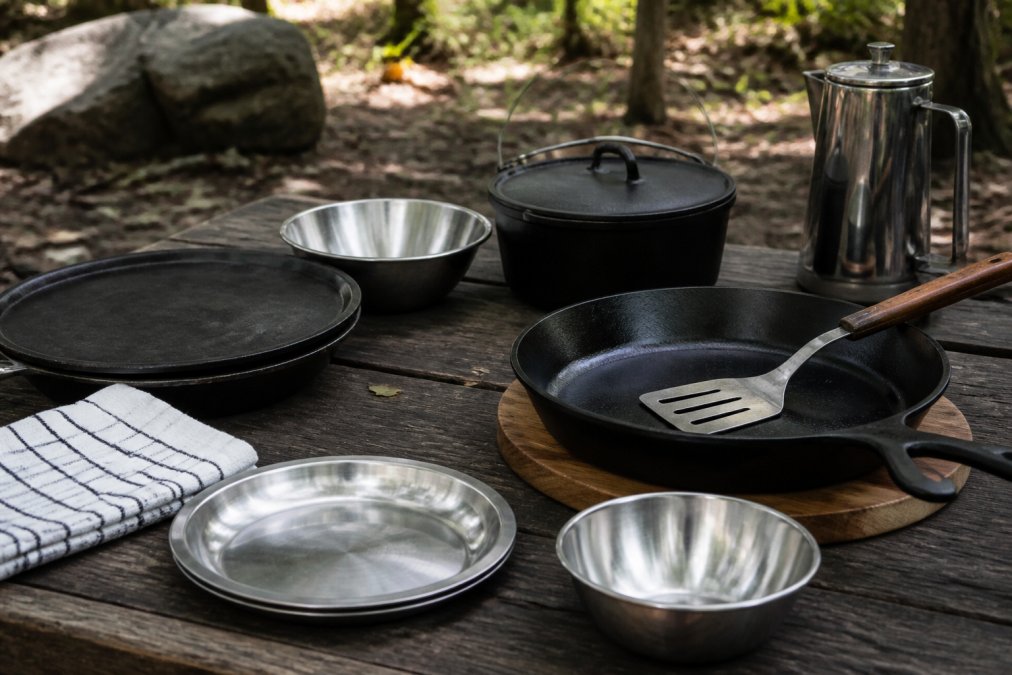
Browns Outpost designs its camp kitchen around one principle: fewer surfaces, less scrubbing. Every piece in the line is cast iron or hand-crafted raw carbon steel, hand-wash-only, and built to be re-oiled rather than replaced. The lifetime warranty backs that up.
The 10" Shallow Skillet is the workhorse. Shallow walls mean maximum contact with heat and a surface that releases eggs and bacon cleanly once seasoned. At $32.99, it is the single pan most campers should start with.
For group trips, the 16"×9" Griddle(/products/16-9-griddle) handles pancakes, eggs, and bacon on one flat surface at once. One pan to clean instead of three, and no rim to fight when you slide food off. The 3-Piece Fry Pan Set nests into barely more space than a single pan, so you stop guessing which size to pack.
The 10" Cauldron with Reversible Lid earns its spot on one-pot meals. Flip the lid flat-side up and it becomes a second cooking surface, which means one fewer pan in the wash pile. The 7.5" Sauce Pan with Lid keeps sauces and sides contained, and the fitted lid cuts splatter on the fire. For minimalist trips, the 8" Dutch Oven with Lid delivers a real braise in a two-person footprint.


Post-Trip Deep Cleaning and Gear Storage
The trip is over, but the cleanup is not. Post-trip care is where cast iron either lasts a lifetime or starts rusting in the cupboard, the step most camp-cooking guides skip.
Step 1: Strip the exterior
Soot and ash build up on every pan that saw open flame. Scrub it off with hot water and a scouring pad. Baked-on soot traps moisture against the metal, and that moisture drives surface rust between trips. Pay attention to the rivets, handle junction, and rim, where soot collects and water hides.
Step 2: Re-season the cooking surface
Warm the pan on a stove or in an oven at roughly 200°C (about 400°F), apply a thin coat of neutral oil across the cooking surface, and let it cool. Thin is the key word: too much oil pools, turns tacky, and flakes the next time you cook. Wipe the oil on, then wipe most of it back off with a clean cloth before the pan cools.
Step 3: Dry completely, then store dry
Water is the enemy, not food residue. The storage rules that prevent most cast iron problems:
- Store dry, always. If a pan went into the bag damp, re-dry it on heat at home before it goes on the shelf.
- Place a paper towel between stacked pans to absorb any residual moisture and to protect the seasoning from the pan above.
- Keep pans out of damp basements and unheated garages for long-term storage. Temperature swings cause condensation on cold metal.
- Never stack a wet pan on a dry one. The dry pan picks up the moisture and both start rusting.
- Leave the lid off any Dutch oven or cauldron in storage. A closed, humid interior is the fastest route to mold on the seasoning layer.
Step 4: Check the rest of the kit
Post-trip care is not just pans. Wipe down and lightly oil the hinges and joints on any adjustable campfire grill. Wash and fully dry collapsible wash basins, scrubbers, and microfiber cloths before storage; a damp scrubber in a sealed bag grows mold fast. Empty, rinse, and air-dry water jugs and dispensers so no water sits in the seams.
Step 5: Store for the season
For long-term storage, give every piece a fresh thin coat of oil, stack with paper towels between pans, and keep the kit in a dry, ventilated spot. Check it once mid-season. If you spot rust, it is not a lost pan, scrub back to bare metal with steel wool, wash, dry on heat, and re-season. Cast iron recovers completely from neglect.
Conclusion
The frustration of cold-water scrubbing at a camp basin comes down to two things: the surface you cooked on and the habits you built before the food went in. Seasoned cast iron, a controlled coal bed, and a three-minute wash routine solve most of it. Browns Outpost builds camp cookware for that routine, with hand-crafted raw carbon steel, a lifetime warranty, and free shipping over $75 CAD. Every piece is hand-wash-only by design, which is exactly why it lasts. Get started with Browns Outpost and spend less of your trip at the wash basin.
Frequently Asked Questions
How do you clean cookware while camping without harming the environment?
Use biodegradable camp dish soap and scrape food scraps into a waste bag instead of rinsing them into the ground. Carry water to a designated wash area at least 60 metres from lakes or streams, then strain greywater through a fine mesh and pack out the solids. For cast iron, hot water and a stiff brush usually do the job without soap at all, which keeps both your seasoning and the campsite intact.
Is cast iron or carbon steel easier to clean at a campsite?
Both clean up with hot water and a scrubber, but cast iron holds heat longer, so food releases more easily after cooking. Carbon steel heats faster and weighs less, which suits backpacking. For car camping and open-fire cooking, cast iron like the Browns Outpost 10-inch shallow skillet gives you a durable finish that improves with every use and rarely needs more than a rinse and re-oil.
What are the easiest camp cooking hacks to reduce cleanup?
Cook in one vessel when possible, use a reversible-lid cauldron so the lid doubles as a griddle, and line your fire pit with a grease trap or foil to catch drippings. Bring a collapsible wash basin and a quick-dry towel so you can wash, rinse, and dry in one station. Pre-oil your cookware before packing, and use silicone utensils to protect the seasoning and cut down on scrubbing.