 comparison
Vevor Grill Alternatives: Heavy Duty Campfire Grill Picks
Table of Contents
- Why Look Beyond Vevor for a Grill That Lasts?
- What to Check Before Buying a Heavy Duty Adjustable Campfire Grill
- The ANVIL Grill: A Direct Vevor Grill Alternative for Outdoor Cooking
- Comparison: ANVIL Grill vs. Typical Vevor Offerings
- How to Clean Burnt Camping Cookware and Maintain Your Gear
- Repairability, Warranty, and Long-Term Maintenance
- Which Heavy Duty Grill Is Right for Your Cooking Style?
- Final Verdict: Invest in a Grill That Outlasts the Season
- Frequently Asked Questions
Last Updated: September 7, 2026
Why Look Beyond Vevor for a Grill That Lasts?
Budget grills from online marketplaces often arrive with thin steel, wobbly legs, and coatings that flake off after a few fires. When you search for vevor grill alternatives, the real question isn't price; it is how many seasons the unit will survive before rust takes over.
The most common failure point on cheap adjustable grills is the material. Many use painted or zinc-coated steel that burns off, leaving bare metal exposed to moisture. A vevor grill alternative built from raw carbon steel develops a protective seasoning layer the more you use it, preventing rust and creating a natural non-stick surface.
What to Check Before Buying a Heavy Duty Adjustable Campfire Grill
A heavy duty adjustable campfire grill needs to survive intense heat, frequent transport, and wet weather. Check the material thickness, the adjustability mechanism, and how the unit packs down for storage.
Material: Raw Carbon Steel vs. Coated Steel
Raw carbon steel handles direct flame without releasing toxic fumes, while coated steel burns and peels. Carbon steel also responds to seasoning, improving its surface for searing and pan-frying with each use.
Adjustability and Heat Control
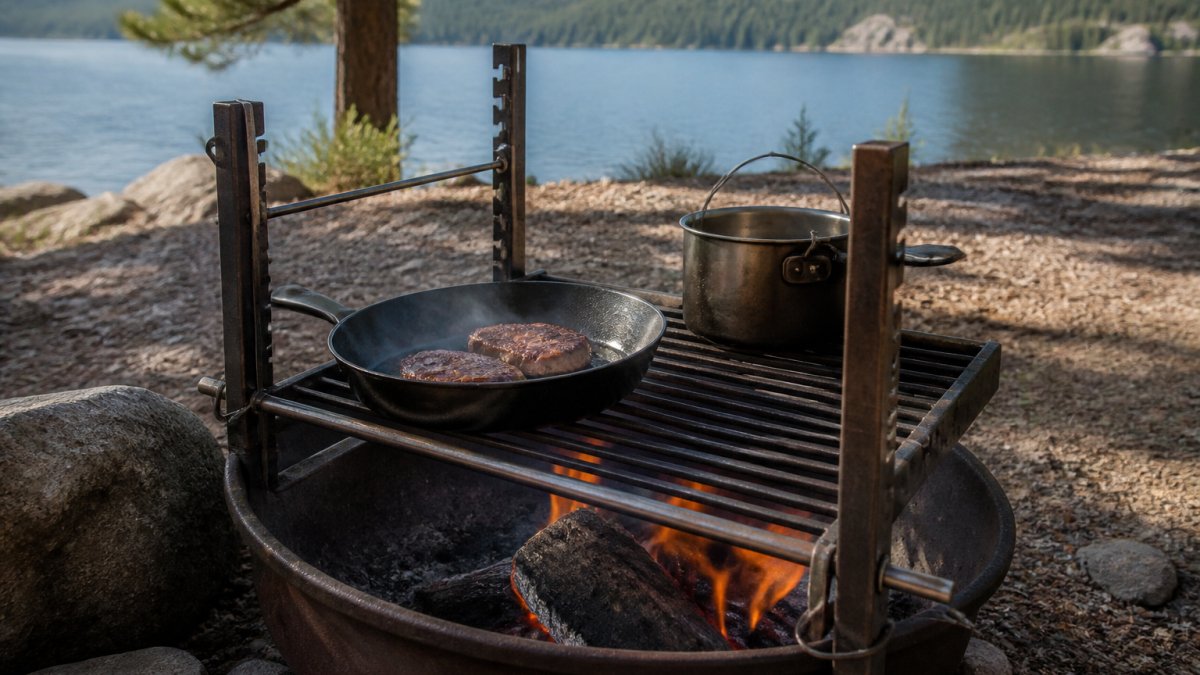
Height adjustment is the difference between charring a steak and slow-cooking a roast. Look for a grate that slides and locks along its stake at any position for precise temperature control.
The ANVIL Grill: A Direct Vevor Grill Alternative for Outdoor Cooking
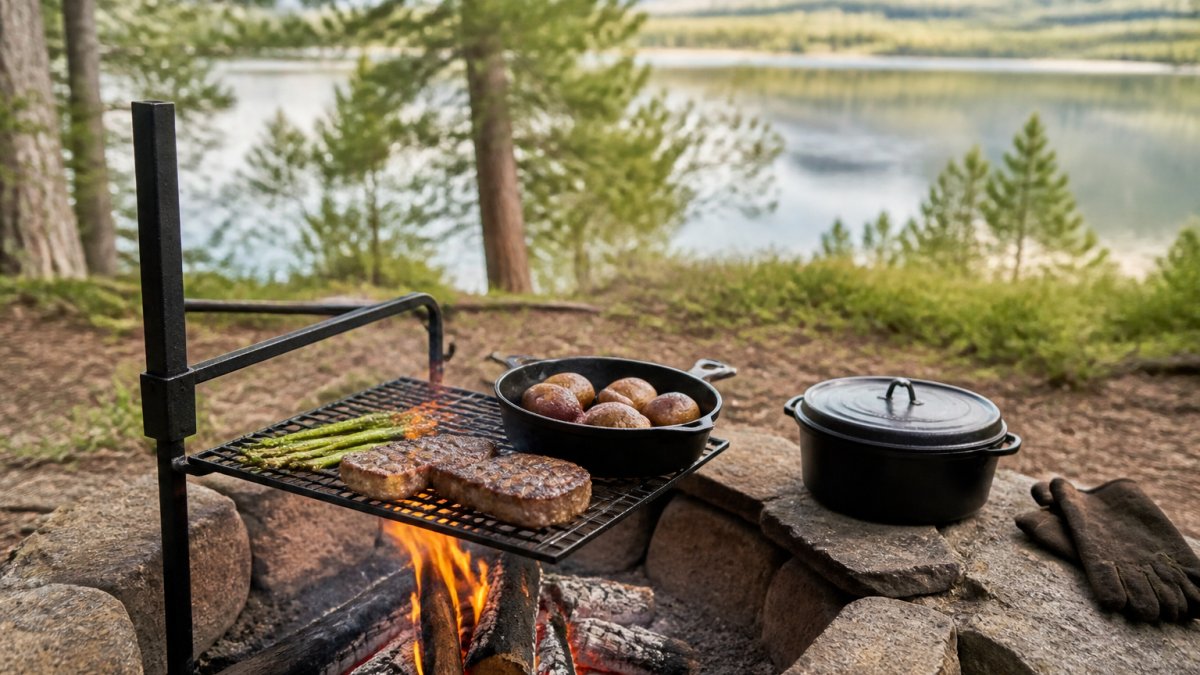
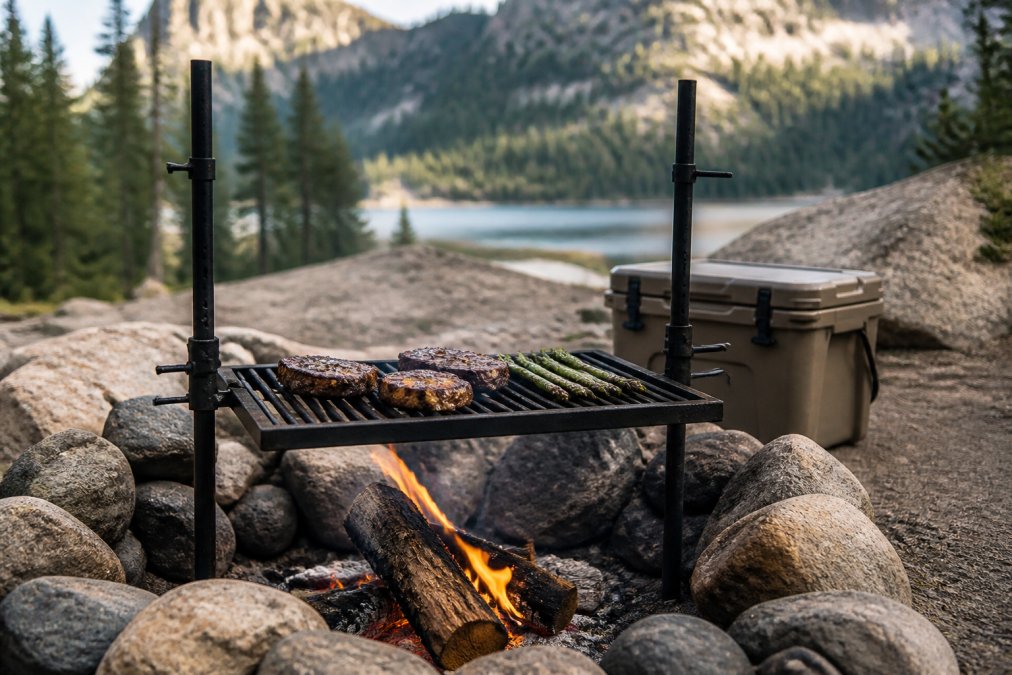
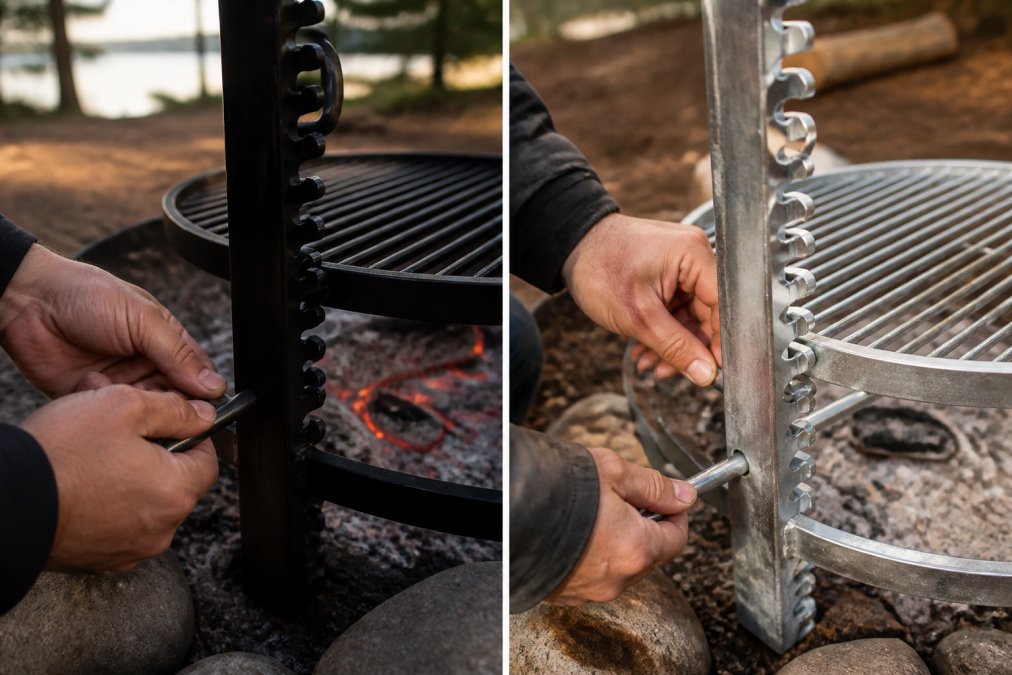
The ANVIL Grill from Browns Outpost is our top recommendation for anyone seeking a vevor grill alternative for outdoor cooking that prioritizes durability over disposability. It offers a 15 x 20 inch (38 x 50 cm) heavy carbon steel grilling surface, handles 40 lb (20 kg), and stakes directly into the ground, no cart to assemble, no legs to wobble.

The grate slides and locks along the stake for variable height and all-position adjustability. It packs down flat with the stakes removed, ideal for backcountry trips. The acid-bathed, pre-seasoned surface has no chemical coatings or Teflon.
Comparison: ANVIL Grill vs. Typical Vevor Offerings
Most cheap grills rely on a folding tripod design with thin wire grates, while the ANVIL uses a solid steel stake and a heavy grate that holds heat properly. The table below summarizes the key differences for a heavy duty adjustable campfire grill.
| Feature | ANVIL Grill | Typical Budget Import |
|---|---|---|
| Material | Raw carbon steel | Painted or coated steel |
| Cooking surface | 15 x 20 in (38 x 50 cm) | Varies, often smaller |
| Adjustability | All-position slide lock | Fixed or limited positions |
| Setup | Stake into ground | Tripod assembly required |
| Warranty | Lifetime | Usually none or 1 year |
If a weld breaks on a cheap import, you throw the whole unit away. With the ANVIL, the simple design means parts are straightforward, and the lifetime warranty covers defects.
How to Clean Burnt Camping Cookware and Maintain Your Gear
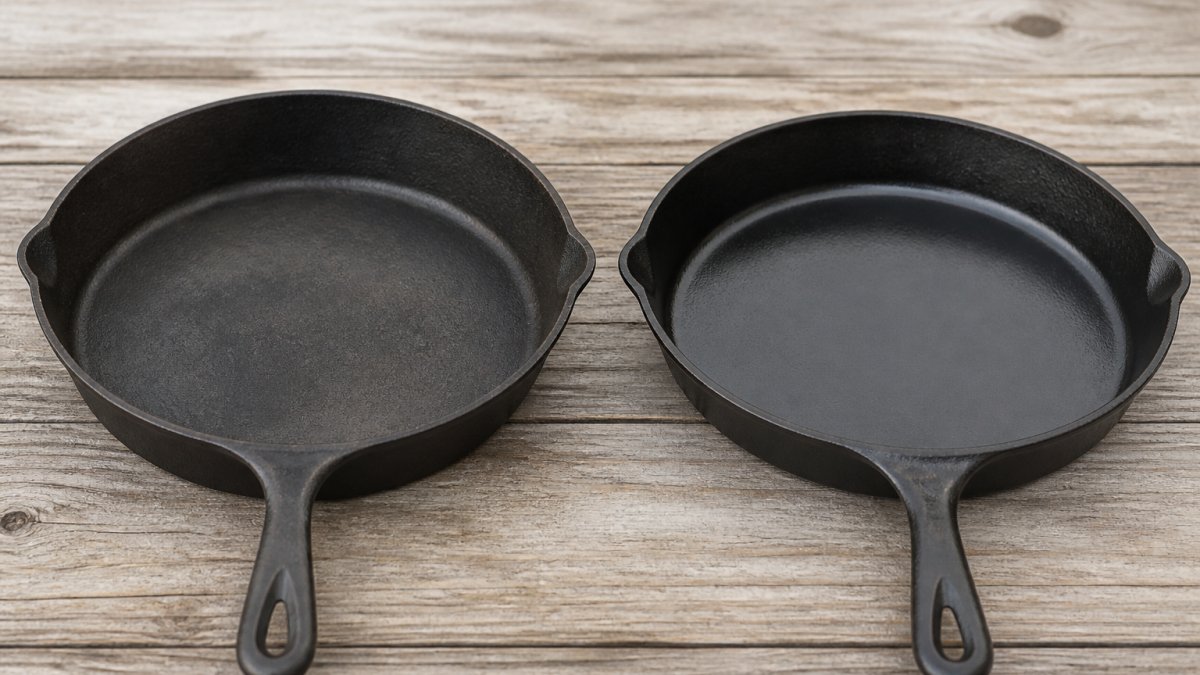
Knowing how to clean burnt camping cookware is essential if you want your gear to last. The method differs from home cookware because dish soap and a scrub brush won't fix a burnt-on mess. The most effective technique is to burn it off: place the grate or pan back over a hot fire and let the residue carbonize to ash. Once cooled slightly, brush it clean while warm with a stiff wire brush. For cast iron pieces like the 12" Roasting Pan or the 10" Shallow Skillet, rinse with hot water only, dry immediately over heat, and apply a thin coat of neutral oil.

The Complete Burn-Off Procedure for Carbon Steel
A rushed burn-off leaves a sticky residue rather than clean ash. The correct sequence:
- Preheat gradually. Place the grate over a medium fire, not roaring flames. A sudden extreme temperature shock can warp thin steel.
- Let the residue carbonize. Allow the burnt food to turn to gray ash. This takes 10-15 minutes of steady heat, not just a quick pass over the flames.
- Cool slightly, then brush. Remove the grate and let it cool for 2-3 minutes. Brushing while the metal is still warm but not scorching hot lifts the ash without spreading it. Use a stiff-bristled stainless steel brush, not a brass one, which can leave deposits that accelerate rust.
- Wipe with a dry cloth. After brushing, wipe the surface with a lint-free cloth to remove any remaining ash dust before oiling.
Seasoning: The Long-Term Rust Prevention Strategy
Owners who get a decade of use from carbon steel follow a disciplined seasoning routine after every cleaning. The five-minute process prevents the rust that claims most budget grills:
- Heat the grate over the fire or on a stove burner until it is warm to the touch but not smoking.
- Apply a paper-thin layer of flaxseed oil or grapeseed oil, both have high smoke points and polymerize well. Avoid olive oil for seasoning; it creates a gummy surface that attracts moisture (peer-reviewed research on cooking oils).
- Heat until the oil smokes. This is the polymerization point where the oil bonds to the steel. Let it smoke for 2-3 minutes, then remove from heat.
- Cool and store. Once cool, the surface should feel dry and slightly slick. If it feels tacky, you applied too much oil, wipe it down and reheat.
Material-Specific Maintenance Differences
| Material | Cleaning Method | Drying | Storage Oil | Re-seasoning Frequency |
|---|---|---|---|---|
| Raw Carbon Steel (ANVIL Grill) | Burn-off + wire brush | Heat over fire until fully dry | Flaxseed or grapeseed | Every 3-4 uses or after any wet storage |
| Cast Iron (Roasting Pan, Skillet) | Hot water rinse + stiff brush (no soap) | Dry over low heat on stove | Neutral oil (canola or vegetable) | After every use |
| Coated Steel (typical budget import) | Gentle scrub with mild soap | Towel dry immediately | None, coating prevents rust | Not applicable, coating will eventually flake |
The Hidden Risk: Storing Gear While Damp
A leading cause of premature rust is improper storage after cleaning. Even a few drops of water trapped between the grate bars or in the stake channel will create a rust spot within 48 hours in humid conditions. After cleaning and oiling, always store the grate vertically or hanging so air circulates around all surfaces. Never store it flat on a concrete floor, concrete wicks moisture and transfers it to the steel.
A Seasonal Deep-Clean Routine
Once per season, or after any extended period of non-use, perform a deeper restoration:
- Strip the old seasoning by placing the grate in a very hot fire for 20-30 minutes until all oil layers burn to ash.
- Cool and brush thoroughly to remove all ash.
- Inspect for rust spots. If you find any, scrub them with fine steel wool until the bare metal is exposed.
- Re-season from scratch with three thin layers of flaxseed oil, heating to the smoke point between each layer.
This routine takes about an hour and effectively resets the cooking surface to factory condition.
Repairability, Warranty, and Long-Term Maintenance
The warranty is where vevor grill alternatives truly separate themselves. Browns Outpost backs the ANVIL Grill with a lifetime warranty against manufacturing defects, so you buy once and never worry about replacing a warped grate or broken stake.
The Right-to-Repair Advantage: What to Look For
Most budget grills are engineered for disposal, spot-welded so component replacement is impossible, and the manufacturer does not sell individual parts. The ANVIL Grill, by contrast, uses a modular design where the grate, stake, and locking mechanism are separate components. If the locking collar wears out, you replace that single part rather than the entire unit.
When evaluating any grill for repairability, ask:
- Are replacement parts available for purchase? If the manufacturer does not list individual components on their website, assume the unit is disposable.
- Is the assembly mechanical or welded? Mechanical connections (bolts, screws, locking pins) can be serviced. Welded connections cannot.
- Does the warranty cover shipping both ways? Some warranties are worthless because the return shipping costs more than the product. A lifetime warranty only matters if the process is practical.
Space-Saving Storage Solutions for Small Patios and Apartments
Many cooks have a small balcony or a shared courtyard with minimal storage. The ANVIL Grill's stake-in design solves this elegantly:
The Vertical Lean: After cooling and cleaning, lean the grate against a wall with the cooking surface facing outward. The 15 x 20 inch footprint takes up less wall space than a folding chair; the stake stores separately beside it.
The Under-Bed Flat Pack: With the stake removed, the ANVIL grate is completely flat, sliding under a bed, behind a sofa, or into a hall closet, a significant advantage over tripod designs that do not store flat.
The Balcony Corner Stack: Stack the ANVIL grate flat, then place the 16"x9" Griddle on top, followed by the 10" Shallow Skillet. The flat surfaces nest into a single stack roughly 4 inches tall, fitting in a milk crate or small weatherproof deck box.

The Wall Hook Solution: Install two heavy-duty utility hooks on an interior wall or shed door and hang the ANVIL grate vertically by its edge. This keeps it off the ground, allows air circulation, and takes up zero floor space.
The 5-Minute Pre-Season Inspection
Before the first cook of each season, spend five minutes inspecting your gear:
- Check the locking mechanism. Slide it through its full range of motion. If it sticks, apply a food-safe lubricant (mineral oil) to the moving parts.
- Inspect the stake tip. If it has dulled from repeated ground strikes, sharpen it with a file. A sharp tip makes setup easier and reduces the force needed to secure the grill.
- Examine the cooking surface for rust spots. Surface rust is not a reason to replace the unit. Scrub with steel wool, re-season, and continue using it.
- Test the structural integrity. Apply firm pressure to the center of the grate. If it flexes more than a quarter-inch, the steel may have fatigued. Contact Browns Outpost for a warranty assessment.
Why a Lifetime Warranty Matters More Than Price
A common pattern among budget grill buyers is the "replace every two years" cycle. At $60-$80 per replacement, that is $180-$240 over six years, plus disposal costs for rusted, non-recyclable coated steel. The ANVIL Grill, at a higher initial price, carries a lifetime warranty and is built from recyclable raw carbon steel. Its total cost of ownership over ten years is significantly lower, and the environmental impact is reduced.
Which Heavy Duty Grill Is Right for Your Cooking Style?
Your cooking style dictates the right setup. If you primarily sear steaks and cook large cuts like a deer rear quarter, the ANVIL Grill's 15 x 20 inch surface and adjustable height give you the versatility you need. For breakfast crowds, pair it with the 16"x9" Griddle.
For hunters processing large game, the ANVIL handles the weight and provides professional-grade searing. Backyard cooks wanting a commercial-grade feel without a permanent installation will appreciate the stake-in design that works over any fire pit.
Final Verdict: Invest in a Grill That Outlasts the Season
Cheap grills fail because they treat rust as an inevitability rather than a design flaw. A vevor grill alternative for outdoor cooking built from raw carbon steel, with a simple adjustable mechanism and a lifetime warranty, is the smarter investment for regular outdoor cooks.
The ANVIL Grill delivers professional results over any open fire, whether searing a steak for the family or slow-cooking a large roast for a hunting crew. It is versatile, easy to use, and backed by a lifetime warranty. Pair it with cast iron cookware from Browns Outpost for a complete outdoor kitchen that will serve you for decades.
Frequently Asked Questions
Are Vevor grills good quality for long-term outdoor use?
Vevor grills often work fine for occasional use, but many models use thinner steel that can warp under high heat or rust quickly when exposed to the elements. A heavy duty adjustable campfire grill made from raw carbon steel handles repeated high-heat exposure without warping. For long-term outdoor use, look for thicker materials, a chemical-free cooking surface, and a warranty that actually covers manufacturing defects beyond the first year.
What features should I look for in a heavy duty adjustable campfire grill?
Focus on three things: material thickness, height adjustability, and a flat-pack design. A grill made from heavy carbon steel (around 16.5 lbs) holds heat better and resists warping. Adjustable height lets you move from high-heat searing to low-and-slow cooking without moving the fire. A design that stakes into the ground and packs down flat makes setup and transport easier than bulky cart-style grills.
How does the ANVIL grill compare to cheaper Vevor alternatives?
The main differences are material quality, adjustability, and warranty. Vevor alternatives often use thinner steel with painted or coated surfaces that can chip. The ANVIL grill uses acid-bathed raw carbon steel with no coatings or Teflon, so there is nothing to peel off. Its variable height adjustment works over any fire, and it comes with a lifetime warranty against manufacturing defects.
How do you clean burnt camping cookware without ruining the seasoning?
Burn off leftover residue by placing the cookware back over a hot fire for a few minutes. Once the burnt bits turn to ash, brush the surface clean while it is still warm. Avoid soap and water, which strip seasoning. After brushing, apply a light coat of neutral oil to the cooking surface while it is warm. This keeps the seasoning strong and prevents rust, especially in wet camping conditions.