 how-to
Outdoor Cooking Tips for Beginners: Start Here
Table of Contents
- What You Need to Start Cooking Outdoors
- Campfire Cooking Gear Essentials for Your First Trip
- How to Control Heat Over a Campfire
- Easy Campfire Recipes for Beginners
- Troubleshooting Common Cooking Failures
- Cleaning and Maintenance: The Right Way
- Conclusion: Your First Campfire Meal
- Frequently Asked Questions
Last Updated: September 5, 2026
What You Need to Start Cooking Outdoors
Cooking over an open flame is one of the most rewarding parts of a camping trip, but it can intimidate first-timers. The essential outdoor cooking tips for beginners start with a simple truth: you need the right heat source, a solid pan, and a plan for managing fire.
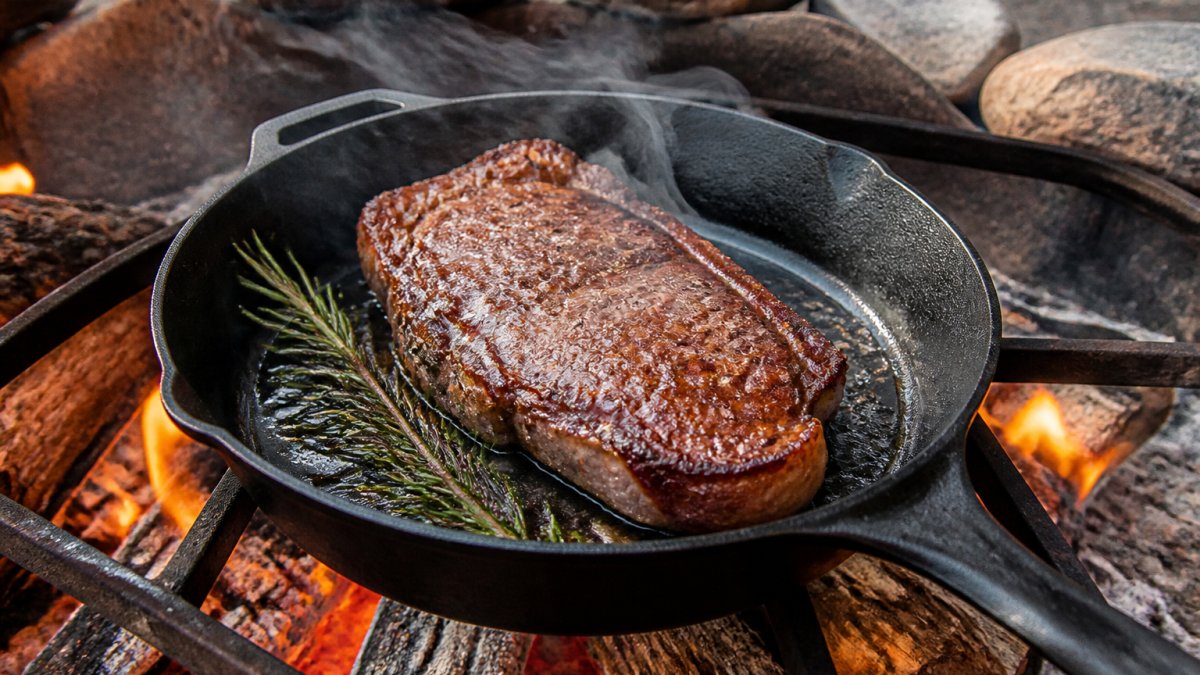
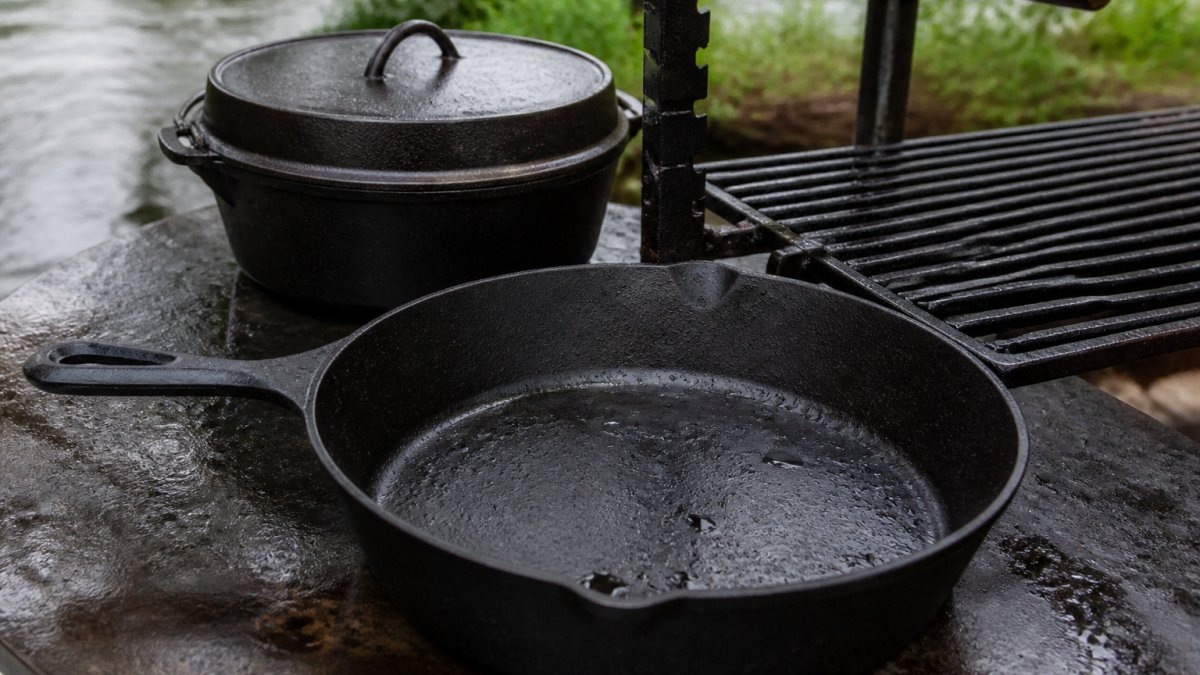
Forget the complicated setups you see online. A beginner needs three things: a reliable fire or camp stove, a cast iron skillet or Dutch oven, and basic utensils like a spatula and long-handled tongs. Cast iron is the workhorse of camp cooking because it holds heat evenly and survives the rough conditions of the wilderness. Before you leave home, season your cookware and pack ingredients in labeled containers to keep prep work simple at the site.

Campfire Cooking Gear Essentials for Your First Trip
A common mistake is packing too much equipment when a few versatile pieces will do the job. For most beginners, a 25 cm skillet covers breakfast and dinner, while a 30 cm Dutch oven lets you braise, simmer, and bake under the coals.

The campfire cooking gear essentials for your first trip include a heat-resistant spatula, a pair of long tongs, and heavy-duty gloves for adjusting hot cookware. You will also want a wind screen or a natural windbreak like a log or rock wall to protect your flame. A camp stove is a smart backup when fire bans are in effect or wet weather makes kindling difficult.
When choosing cookware, look for pieces that can handle direct flame without warping. Browns Outpost builds its cast iron from hand-crafted raw carbon steel, giving you tough, durable construction that lasts. The Leave No Trace Center for Outdoor Ethics recommends choosing durable equipment and minimizing campfire impacts, which means investing in quality gear you will use repeatedly rather than disposable alternatives.
How to Control Heat Over a Campfire
Controlling heat over a campfire is the single most important skill in outdoor cooking. Unlike a kitchen stove, a fire has no dial, so you manage temperature by moving food closer to or farther from the coals.
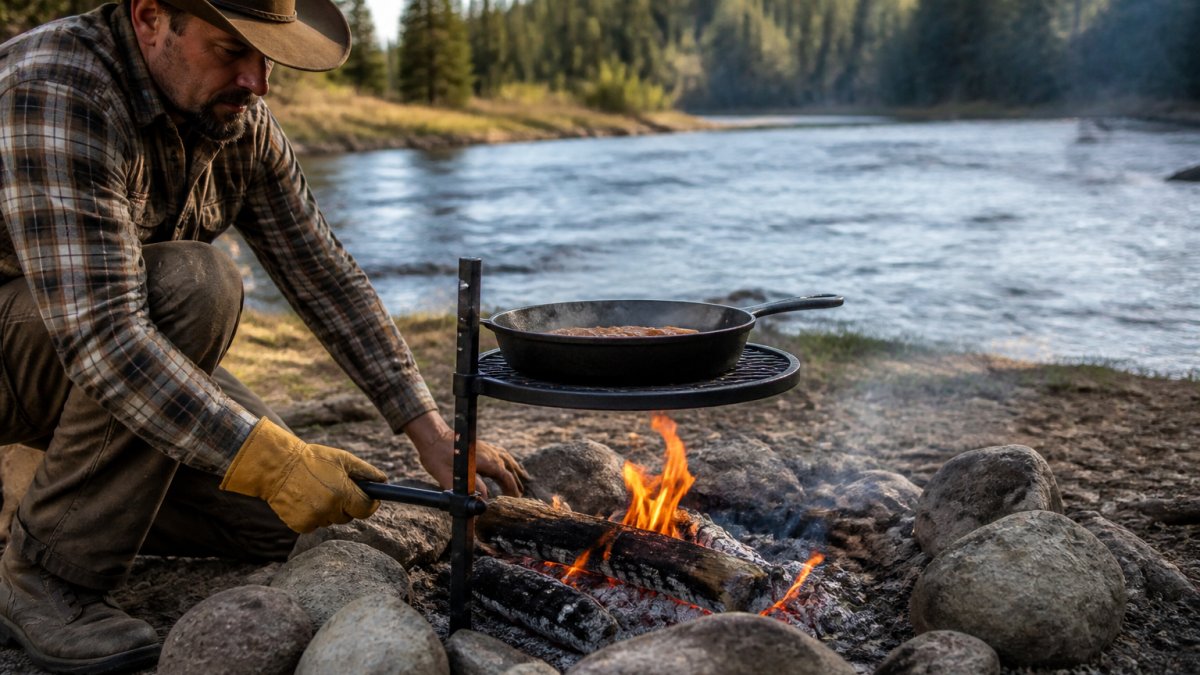
The hottest zone sits directly over glowing coals, while the outer edges provide gentle, indirect heat. For most cooking, wait until the flames die down and the coals glow orange-red. Place your skillet directly on a grill grate or use a tripod to suspend it at different heights. A simple test: hold your hand about 15 cm above the cooking surface. If you can keep it there for five seconds, you have medium heat; if you must pull away sooner, the fire is too hot.
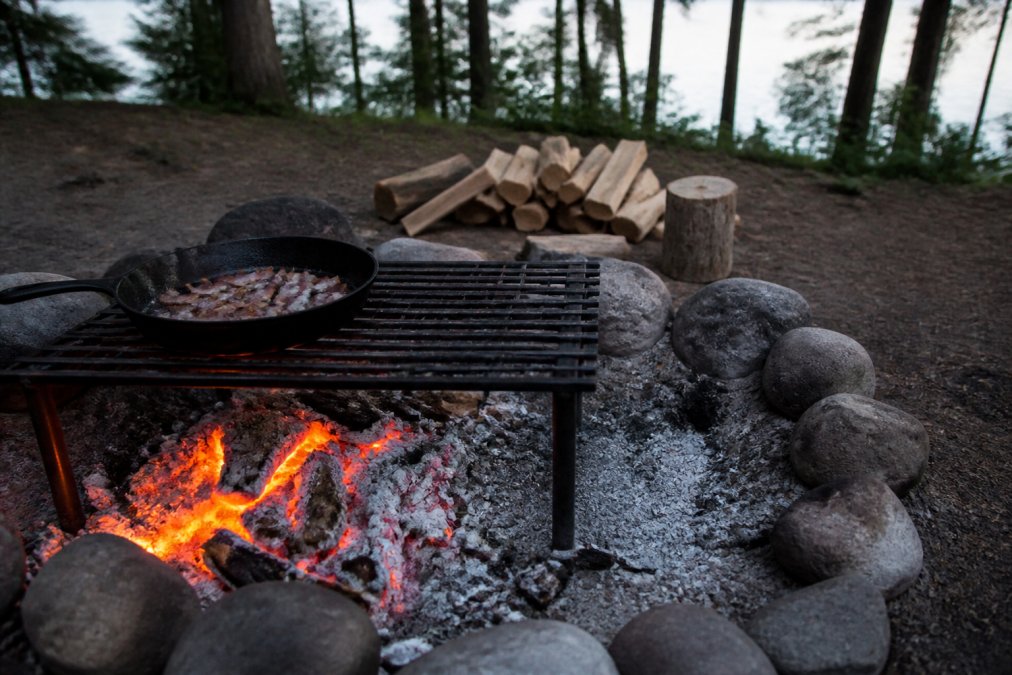
A common mistake is cooking over open flames instead of coals. Flames create hot spots that burn the outside of your food while leaving the center raw. For even cooking, spread the coals into a single layer beneath your pan and rotate the skillet occasionally. If you are using a Dutch oven, place a few coals on the lid as well to create an oven-like environment. This temperature control technique is what separates okay camp meals from genuinely good ones. The Public Health Agency of Canada guidelines on safe minimum cooking temperatures remind us that using a food thermometer is the only reliable way to confirm meat is safely cooked, regardless of your heat source.
Easy Campfire Recipes for Beginners
Start with forgiving recipes that do not demand precise timing. Foil packets are the easiest campfire cooking method for beginners: layer sliced vegetables, protein, and seasoning on heavy-duty foil, seal the edges, and place the packet near the coals for 15 to 20 minutes. No cleanup beyond tossing the foil, and the ingredients steam in their own juices.
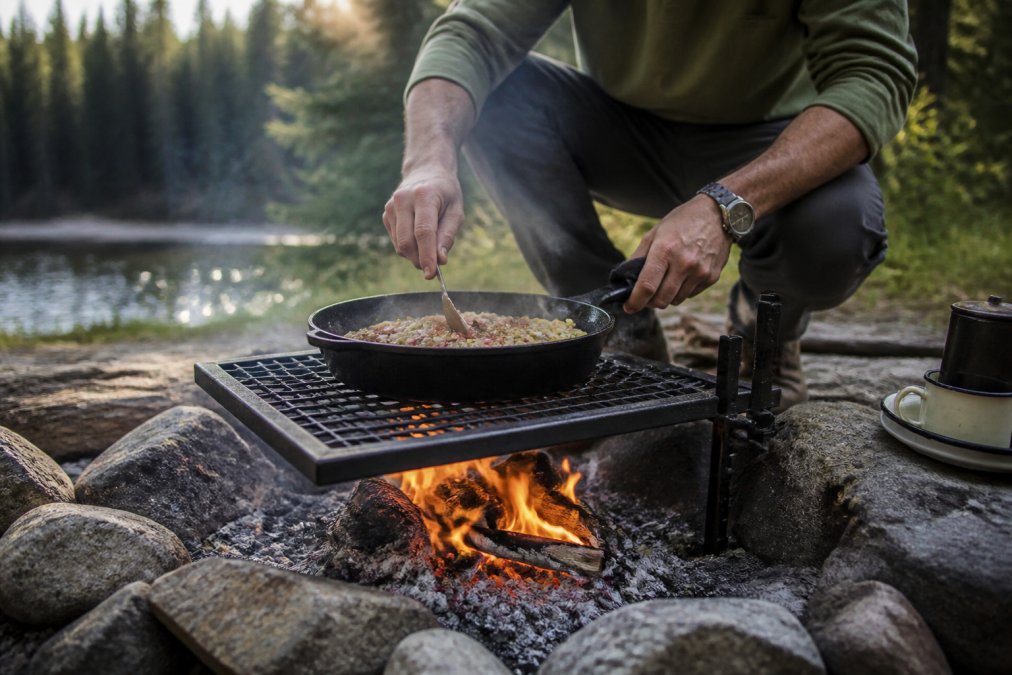
Easy campfire recipes for beginners include breakfast hash, one-pot chili, and campfire nachos. For a simple first dinner, try this:
- Chop potatoes, onions, and bell peppers into even chunks.
- Heat a cast iron skillet over medium coals with a splash of oil.
- Add the potatoes first, then the onions and peppers after five minutes.
- Season with salt, pepper, and your favorite spice blend.
- Cook for 15 to 20 minutes, stirring occasionally, until potatoes are fork-tender.
- Top with cheese and serve straight from the pan.
A Dutch oven expands your options significantly. The 30 cm Dutch oven from Browns Outpost is large enough to braise a shoulder of lamb or simmer a stew for six people, and its heavy construction holds steady heat for slow cooking. For baking, place the oven on a few coals and stack additional coals on the lid, rotating the pot every 10 minutes to prevent hot spots.
A 2023 survey by Dalhousie University's Agri-Food Analytics Lab found that nearly one-third of Canadians are actively reducing their meat consumption, and an estimated 2.5 million Canadians live with celiac disease or gluten sensitivity. Planning meals that accommodate these needs is practical for group trips.
Vegan and Vegetarian Campfire Meals
Plant-based cooking over a fire is simpler than many assume. The key is choosing ingredients with enough fat and moisture to stand up to high, dry heat. Portobello mushrooms, halloumi (if vegetarian), and firm tofu all hold their shape on a grill grate. For a hearty vegan foil packet, combine cubed sweet potato, chickpeas, red onion, and olive oil with smoked paprika and cumin. The sweet potato needs about 25 minutes near the coals, so start it first and add quicker-cooking greens in the final five minutes.
A Dutch oven shines for plant-based one-pot meals. A lentil chili with canned tomatoes, kidney beans, corn, and chili powder simmers beautifully with a dozen coals underneath and a dozen on the lid. Lentils cook in roughly 20 to 25 minutes at a gentle simmer, making them a reliable protein source that does not require refrigeration.
Gluten-Free and Allergy-Aware Cooking
The biggest hidden risk for gluten-free campers is cross-contamination from shared utensils and cookware. Even a well-seasoned cast iron pan that has cooked wheat-based dishes can carry trace gluten. If you are cooking for someone with celiac disease, dedicate a separate cast iron skillet or line the pan with parchment paper or heavy-duty foil before cooking.
For breakfast, a gluten-free pancake mix from brands like Bob's Red Mill or Kinnikinnick Foods (both widely available at Canadian grocers like Loblaws and Save-On-Foods) works well in a cast iron skillet. Just add water, pour, and flip. For dinner, rice noodles are a lightweight, shelf-stable base for a stir-fry with pre-chopped vegetables and a soy sauce alternative like coconut aminos or tamari.
Nut-Free Considerations
Nut allergies are among the most severe, and trail mixes and granola bars are common culprits at campsites. If anyone in your group has a nut allergy, check every label for "may contain" statements and avoid pre-made sauces that often use peanut or tree nut oils. Sunflower seed butter is a reliable substitute for peanut butter in sauces and spreads, and it packs the same calorie density for energy on the trail.
Troubleshooting Common Cooking Failures
Burnt outsides with raw centers mean your heat was too high; move the cookware to the cooler edge of the fire and give the food more time. Food sticking to the pan indicates your cast iron needs better seasoning or more oil.
Troubleshooting common cooking failures also covers smoke and flare-ups. If your pan starts smoking heavily, the fire is too hot or the oil is burning. Remove the pan from the heat, let it cool slightly, and wipe out the excess oil before continuing. For undercooked food in a Dutch oven, add a few more coals to the lid and give it another 10 minutes before checking again.
A wind problem is the most overlooked issue. Even a light breeze can push heat away from your pan and make cooking times unpredictable. Set up your cooking area behind a natural windbreak or use a portable wind screen. For group cooking, consider the adjustable campfire grill design from Browns Outpost, which lets you raise or lower the cooking surface to fine-tune heat without moving the fire.
Cleaning and Maintenance: The Right Way
Clean your cookware while it is still warm, not hot. Scrape out food residue with a stiff brush, rinse with a small amount of hot water, and dry thoroughly. Never use soap on a well-seasoned pan, and never leave cast iron to soak.
Cleaning and maintenance the right way means re-seasoning after each trip. Apply a thin layer of cooking oil to the entire surface, inside and out, then heat the pan until the oil smokes and bonds to the metal. This protective layer prevents rust and creates the non-stick surface you will rely on for future meals. Store your cookware in a dry place with a paper towel between pieces to absorb any moisture.
Many campers worry about rust in wet conditions. If your pan develops rust spots, scrub them off with steel wool, wash, dry, and re-season immediately. The pan is not ruined, and proper care will restore it. Browns Outpost backs its cast iron with a lifetime warranty, so a defect in material or workmanship is covered for as long as you own the piece.
But cleaning your cookware is only half the job. The other half is cleaning up your campsite in a way that protects the environment you came to enjoy. The Leave No Trace Center for Outdoor Ethics principles are the standard for responsible outdoor recreation, and Principle 3, Dispose of Waste Properly, directly applies to cooking. Parks Canada enforces these standards across national parks, and wardens can issue fines for improper food waste disposal.
The Gray Water Problem
Beginners often dump dishwater straight into the bushes or a nearby stream. Soap, even biodegradable soap, can harm aquatic life and contaminate water sources, and food particles attract wildlife. The correct method is to strain your dishwater first with a small mesh strainer or fine cheesecloth, then pack those solids out in a sealed bag or burn them in a hot fire if you are in a backcountry site with fire pits.
For the strained gray water, the Leave No Trace standard is to disperse it at least 60 meters from any water source, campsite, or trail. Use a small collapsible bucket to carry the water away and scatter it widely so it filters through the soil rather than pooling in one spot. This distance is roughly 70 adult steps, easy to estimate without a measuring tape.
Washing Without Running Water
A three-basin system works well at a campsite, just as it does in a commercial kitchen: one basin with hot water and biodegradable soap for washing, a second with clean hot water for rinsing, and a third with a diluted bleach solution (one teaspoon of bleach per liter of water) for sanitizing if you are cooking for a large group. For most solo or small-group trips, a simpler two-bucket approach is sufficient.
If you are at a site with no running water, heat water in your kettle or Dutch oven and pour it into your wash basin. Use a scrub brush with stiff bristles to remove food residue. For greasy pans, wipe them out with a paper towel or newspaper first to remove the bulk of the oil before washing. This reduces the soap you need and keeps your wash water cleaner for longer.
Packing Out Trash and Food Waste
Everything you pack in must go out, including food scraps. An apple core tossed into the woods takes months to decompose and teaches wildlife to associate humans with food. Carry a dedicated trash bag or a bear-resistant container for food waste, and double-bag anything with strong odors. In bear country, which includes most of the Canadian Rockies and parts of Ontario and Quebec, store all food, trash, and scented items in a bear cache or hang them properly at night.
Grease and oil are particularly problematic. Do not pour cooking oil onto the ground or into a fire pit. Let it cool, then pour it into a sealable container like an empty jar or a dedicated grease bottle to pack out. Many municipal transfer stations in Canada accept used cooking oil for recycling, so you can dispose of it properly once you are home.
Conclusion: Your First Campfire Meal
Your first campfire meal does not need to be elaborate to be memorable. Start with a simple foil packet or a skillet hash and focus on managing your coals.
The outdoor cooking tips for beginners in this guide give you a solid foundation, but the real learning happens at the fire. Browns Outpost makes that process easier with heavy-duty cast iron cookware and the ANVIL adjustable campfire grill, both built for tough, durable construction and backed by a lifetime warranty. Free shipping applies on orders over $75 CAD. Get started with Browns Outpost and cook your first meal over an open fire with confidence.
Frequently Asked Questions
What is the 2 2 2 rule in outdoor cooking?
The 2 2 2 rule is a simple safety guideline for food storage, not a cooking technique. It means you should not keep raw meat at room temperature for more than 2 hours, refrigerate it within 2 hours of purchase, and use or freeze it within 2 days. In the backcountry, this translates to keeping perishables in a cooler with ice packs and cooking them early in your trip to avoid spoilage.
What is the easiest meal to cook while camping?
Foil packet meals are the easiest option for beginners. Place protein like chicken or sausage, chopped vegetables, and seasonings on a sheet of heavy-duty foil, wrap it tightly, and cook it over hot coals for 20-30 minutes. There is no pot to scrub and the packet traps moisture, so the food steams instead of burning.
How do you safely extinguish a campfire after cooking?
Pour water over the fire and stir the ashes with a shovel. Repeat until the hissing stops and no steam rises. The ashes should be cool to the touch before you leave the site. Never bury a fire, since coals can stay hot for hours and smolder underground. Check local fire bans and regulations before lighting any fire.
How do you manage heat control when cooking over a fire?
Cook over glowing coals, not open flames. Flames produce uneven heat and char the outside while leaving the inside raw. Rake coals into a flat bed and adjust the distance between your cookware and the coals to change temperature. Lift the pan higher for lower heat, or push it closer for a sear. A cast iron skillet holds steady heat, which makes temperature control more forgiving.
This article was published by Browns Outpost, a Canadian supplier of professional-grade cast iron cookware and outdoor cooking equipment.
This article was written using GrandRanker
Frequently Asked Questions
Q: What is the 2 2 2 rule in outdoor cooking?
A: The 2 2 2 rule is a simple safety guideline for food storage, not a cooking technique. It means you should not keep raw meat at room temperature for more than 2 hours, refrigerate it within 2 hours of purchase, and use or freeze it within 2 days. In the backcountry, this translates to keeping perishables in a cooler with ice packs and cooking them early in your trip to avoid spoilage.
Q: What is the easiest meal to cook while camping?
A: Foil packet meals are the easiest option for beginners. Place protein like chicken or sausage, chopped vegetables, and seasonings on a sheet of heavy-duty foil, wrap it tightly, and cook it over hot coals for 20-30 minutes. There is no pot to scrub and the packet traps moisture, so the food steams instead of burning.
Q: How do you safely extinguish a campfire after cooking?
A: Pour water over the fire and stir the ashes with a shovel. Repeat until the hissing stops and no steam rises. The ashes should be cool to the touch before you leave the site. Never bury a fire, since coals can stay hot for hours and smolder underground. Check local fire bans and regulations before lighting any fire.
Q: How do you manage heat control when cooking over a fire?
A: Cook over glowing coals, not open flames. Flames produce uneven heat and char the outside while leaving the inside raw. Rake coals into a flat bed and adjust the distance between your cookware and the coals to change temperature. Lift the pan higher for lower heat, or push it closer for a sear. A cast iron skillet holds steady heat, which makes temperature control more forgiving.