 ultimate-guide
Why Use Carbon Steel for Camping Grills
Table of Contents
- Why Carbon Steel Wins for Camping Grills
- Carbon Steel vs Cast Iron for Camping
- Heat Distribution and Thermal Performance
- Weight, Portability, and Durability
- How to Season Carbon Steel Cookware for Outdoor Use
- Hand-Crafted Carbon Steel Skillet Benefits
- Maintenance and Rust Prevention in the Field
- Conclusion
Last Updated: August 28, 2026
Why Carbon Steel Wins for Camping Grills
A carbon steel camping grill delivers superior heat retention, durability, and versatility compared to traditional options for outdoor cooking. The material's ability to handle direct flame, maintain consistent temperatures, and develop a natural non-stick patina makes it the choice for serious outdoor enthusiasts who demand reliable performance in remote settings.
What sets carbon steel apart isn't just durability, it's the combination of weight-to-strength ratio and thermal conductivity that separates weekend backyard grilling from professional-grade backcountry cooking. A carbon steel grill weighs significantly less than cast iron while offering comparable heat distribution. It won't crack under thermal shock from sudden temperature swings, and it seasons faster than cast iron, creating a polymerization layer that improves with every use.
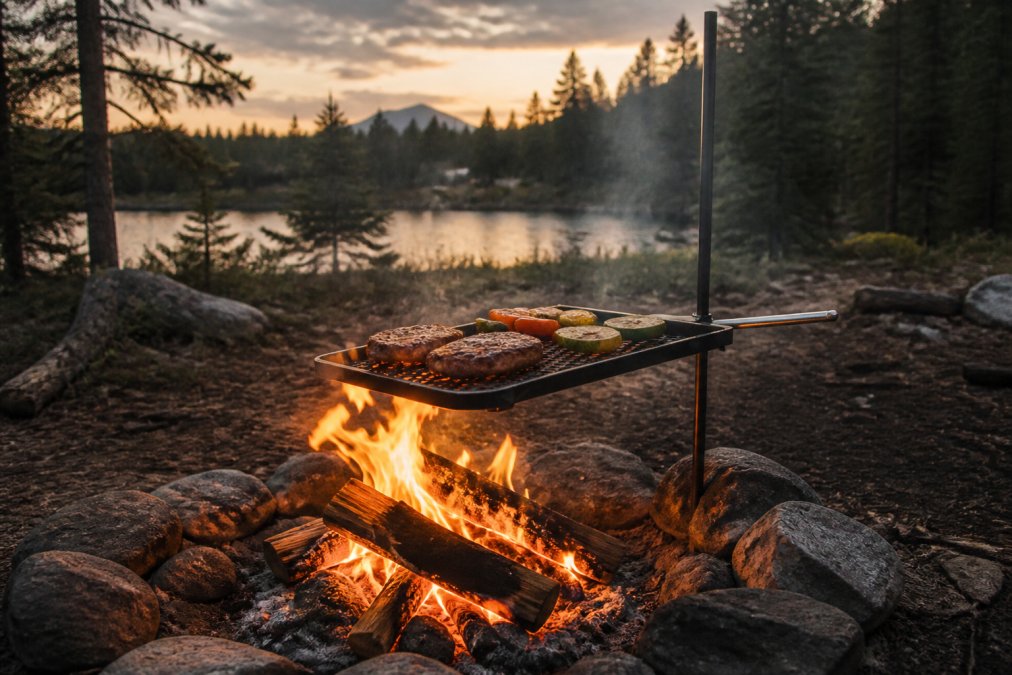
The real advantage becomes obvious once you're in the field. Carbon steel develops usable seasoning quickly. Temperature control is immediate, no waiting for the grill to stabilize. And when conditions get wet or harsh, carbon steel recovers faster from moisture exposure than traditional materials.
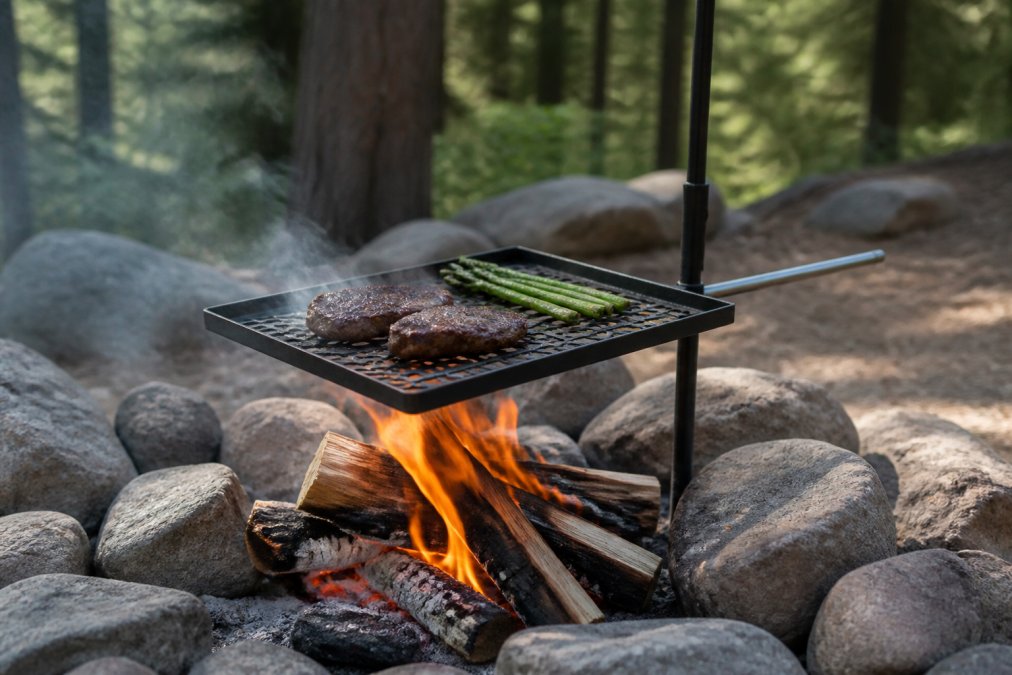
Browns Outpost designed the ANVIL grill specifically for this reality. The adjustable stake system lets you dial in exact height and heat for everything from searing steaks low and hot to slow-smoking ribs up high. The hand-crafted raw carbon steel takes seasoning quickly and handles the abuse of backcountry cooking without warping or cracking. With a lifetime warranty backing every cook, you're not replacing equipment mid-trip, you're investing in a tool that outlasts the trips themselves.

Carbon Steel vs Cast Iron for Camping
Cast iron has earned its reputation for durability, but it's the wrong tool for camping. The comparison reveals why carbon steel dominates for outdoor use: cast iron is heavier, seasons slower, and cracks under thermal shock when you move it between campfire heat and cold night air.
| Factor | Carbon Steel | Cast Iron |
|---|---|---|
| Weight | Lighter (easier to pack) | Heavier (burdensome for travel) |
| Seasoning Time | 3-5 days to usable | 4-8 weeks to usable |
| Thermal Shock Resistance | High (handles temperature swings) | Low (prone to cracking) |
| Heat Retention | Excellent | Excellent |
| Rust Recovery | Fast (hours) | Slow (days) |
| Portability | High | Low |
| Gauge Thickness | Thinner, more responsive | Thicker, slower to heat |
Cast iron's main advantage, supreme heat retention, matters less when you're camping. You're not holding heat for hours; you're cooking a meal and moving on. Carbon steel heats faster, responds to temperature changes instantly, and handles the moisture-rich environment of backcountry cooking without the rust complications that plague cast iron in wet conditions.
The weight difference compounds over multi-day trips. A cast iron skillet adds unnecessary bulk when you're already carrying a tent, sleeping bag, and food. Carbon steel delivers the same cooking performance at half the weight. For hunters and wilderness explorers hauling gear to remote camps, that difference matters.
Heat Distribution and Thermal Performance
Carbon steel's thermal conductivity creates even heat distribution across the cooking surface, eliminating hot spots that plague thinner materials. The metal conducts heat uniformly from the flame to every edge of the grill, so your sear is consistent whether you're cooking in the center or toward the rim.
The gauge thickness of quality carbon steel, typically 2-3mm, strikes the optimal balance. Thicker material (like cast iron) takes longer to heat and responds slowly to temperature adjustments. Thinner materials warp under direct flame. Carbon steel's sweet spot means the grill reaches cooking temperature quickly and maintains it without warping, even when you're working over a roaring campfire.
High-heat tolerance is where carbon steel excels. The material handles smoke point temperatures that would damage lighter cookware. You can sear at extreme temperatures without degradation. This matters for hunters preparing large game, you need a cooking surface that won't fail when you're rendering fat or searing a fresh kill at high heat.
The seasoning layer amplifies thermal performance. As the polymerization builds, the non-stick surface becomes more efficient at releasing food. This means less oil needed, better searing, and less sticking over time. The grill improves with use rather than degrading.
Weight, Portability, and Durability
For car camping, the ANVIL's adjustable stake design keeps weight minimal while delivering full cooking capability. The hand-crafted carbon steel construction weighs a fraction of comparable cast iron grills, making it practical for trips where every kilogram matters. The adjustable grill head fits in a pack without taking up excessive space, and the stake drives into any ground, no tripod legs or bulky stands required.
Durability under rough use is where carbon steel proves its worth. Drop a cast iron grill on rocks, and you risk cracks that are impossible to repair in the field. Carbon steel flexes without breaking. Drag it across rough ground, and the material resists denting better than softer metals. The surface-area-to-weight ratio means you get maximum cooking space without carrying excess material.
This durability translates to reliability on extended trips. A grill that fails mid-expedition isn't just inconvenient, it's dangerous. You need protein cooked properly in remote conditions. The Browns Outpost ANVIL was engineered for hunters and wilderness explorers who can't afford equipment failure. The lifetime warranty ensures that if something does go wrong, you're covered for life.
Versatility is the unspoken durability advantage. A carbon steel grill works on any fuel, wood, charcoal, propane, without modification. Carbon steel adapts to whatever's available at your campsite. From backcountry to car camping, from stovetop to campfire, the same tool delivers consistent results.
How to Season Carbon Steel Cookware for Outdoor Use
Seasoning carbon steel for camping requires a different approach than indoor cookware. Start with a clean surface, scrub away any factory coating or rust with steel wool and hot water. Dry completely with cloth or heat over low flame. Moisture is the enemy of good seasoning.
Apply a thin layer of high-smoke-point oil, grapeseed or avocado oil works well for outdoor use. Wipe away excess until the surface looks almost dry. Too much oil creates a sticky residue that attracts dirt and debris in the field. The goal is a light, even coating that polymerizes into a durable non-stick layer.
Heat the oiled grill over moderate flame for 3-5 minutes until it stops smoking. The heat triggers polymerization, the oil bonds to the metal at the molecular level. Let it cool completely before packing. This single session creates usable seasoning. Repeat this process after the first 3-4 cooking sessions, and your grill develops a strong patina that improves with every use.
In the field, maintain seasoning by cooking with fat. Rendered fat from meat, bacon grease, or oil in your cooking process continuously builds the seasoning layer. Wipe the hot grill with cloth after cooking to distribute residual oils. This field maintenance is easier than indoor seasoning and happens naturally as you cook.
Hand-Crafted Carbon Steel Skillet Benefits
Hand-crafted construction matters more than most outdoor cooks realize. Factory-stamped grills often have uneven thickness, creating hot spots and weak points. Hand-forged carbon steel is hammered to consistent gauge, ensuring uniform heat distribution across the entire cooking surface. This consistency is why many professional outdoor chefs value hand-crafted equipment.
The craftsmanship also means better edge finishing. Machine-stamped grills often have sharp, unfinished edges that snag on packing materials and catch skin during handling. Hand-finished edges are smooth and safe. The grill handle is reinforced at stress points where the cooking surface connects, the exact location where cheap grills fail under heavy use.
Raw carbon steel, not pre-seasoned or coated, gives you control over the seasoning process. Pre-seasoned cookware often has an inferior initial layer that flakes or peels. Raw steel lets you build seasoning from scratch, creating a durable, personalized patina. You know exactly what's on your cooking surface because you put it there.
The Browns Outpost ANVIL demonstrates hand-crafted benefits in its adjustable design. The stake mechanism adjusts smoothly because each component is fitted precisely, not mass-produced to loose tolerances. The grill head sits flat on the stake without wobbling because the connection is engineered for durability. These details compound, a grill that's stable and responsive makes every cook easier and safer.
Maintenance and Rust Prevention in the Field
Rust prevention in wet camping conditions starts with understanding oxidation. Carbon steel exposed to moisture will oxidize, but the process is reversible if caught early. The key is drying the grill after exposure and restoring the seasoning layer.
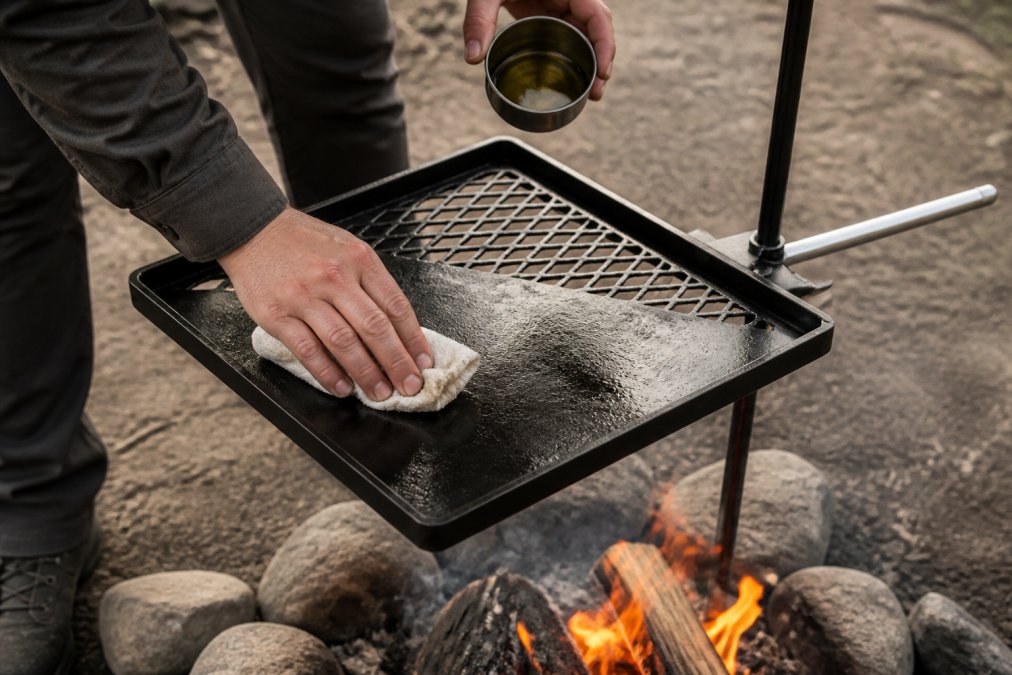
After cooking, while the grill is still warm, wipe it thoroughly with cloth to remove food residue and moisture. The residual heat helps evaporate any water trapped in the surface. If you've cooked with fatty foods, the remaining oil provides immediate rust protection. For extended trips, store the grill in a dry location, inside your tent or vehicle, rather than exposed to dew overnight.
If rust spots appear despite prevention, address them immediately. Heat the grill over flame to dry the rust completely. Use steel wool to scrub the affected area while the metal is warm. Apply oil and heat again to restore the seasoning. This field repair takes minutes and prevents rust from spreading. The key is not ignoring small spots, catch them early and they're gone.
For multi-week expeditions, plan a maintenance day. Scrub the entire grill with steel wool to remove any surface oxidation. Re-season the entire cooking surface with oil and heat. This refresh takes 30 minutes and keeps the grill in peak condition for the remainder of your trip. Think of it as preventive maintenance rather than repair.
Storage between trips requires the same attention. Clean the grill thoroughly and dry it completely. Apply a light oil coating and store in a dry location. A thin layer of oil prevents oxidation during months of storage. When you retrieve the grill for the next trip, the seasoning is intact and ready to cook.
Conclusion
Carbon steel grills deliver the combination of durability, weight efficiency, and thermal performance that serious outdoor cooks demand. The material handles thermal shock, seasons quickly, and improves with every use. Whether you're car camping with family or hunting in remote backcountry, a carbon steel grill responds to your needs without the limitations of heavier alternatives.
The Browns Outpost ANVIL brings this performance to life with hand-crafted construction, adjustable heat control, and a lifetime warranty. The raw carbon steel takes seasoning quickly, the adjustable stake system lets you dial in exact cooking temperatures, and the durable design handles years of rough use without failure. With free shipping on orders over $75 CAD, investing in professional-grade outdoor cooking equipment is practical. Add the ANVIL grill to your next camping trip and cook like a professional, every time.
Frequently Asked Questions
Is carbon steel lighter than cast iron for camping?
Yes. Carbon steel weighs significantly less than cast iron while maintaining similar heat retention and durability. This weight advantage doesn't compromise performance, carbon steel still distributes heat evenly and handles direct flame cooking effectively.
How do you properly season a carbon steel grill for outdoor use?
Start with a clean surface, then apply a thin layer of high-smoke-point oil (grapeseed or avocado oil works well). Heat the grill over flames until the oil polymerizes and turns dark. Repeat this process 3-5 times to build a durable non-stick patina. In the field, maintain seasoning by wiping the cooking surface with oiled cloth after each use.
Does carbon steel rust easily when exposed to outdoor elements?
Carbon steel will rust if left wet or exposed to moisture without protection. However, a properly seasoned surface with a polymerized oil layer resists rust far better than bare steel. Store your grill in a dry location, dry it immediately after use in wet conditions, and maintain the seasoning regularly. The key difference from cast iron is that carbon steel's thinner construction makes rust prevention simpler, less material to penetrate, so consistent maintenance prevents problems.
What are the main advantages of using carbon steel over cast iron for camping?
Carbon steel offers superior weight-to-strength ratio, faster heat-up times, and easier portability without sacrificing durability or heat retention. It handles thermal shock better (sudden temperature changes from cold water or rain), and seasons faster. Carbon steel also distributes heat more evenly across thinner surfaces, giving you better searing performance and more precise temperature control over direct flame, critical for campfire cooking where you're adjusting height and distance constantly.
This article was written using GrandRanker